第2名 ruflo:给一个 agent 配一支会协作的队伍No. 2 ruflo: Give One Agent a Whole Team That Cooperates
星数 72,999,兼容工具榜第 2,MIT 协议。
72,999 stars, No. 2 on the compatible tools list, MIT license.

星数 72,999,兼容工具榜第 2,MIT 协议。
它是什么
ruflo 自己有句话:agent 等于模型加框架,模型负责写,框架给它工具、记忆、循环、沙盒和控制。ruflo 干的就是框架这一层——它是套在编程 agent 外面的"元框架",Claude Code、Codex 都能套,也能集成到 DeepSeek Harness 里。
装完之后最直观的变化:你手下不再是一个 agent,而是一支队伍。
能干什么
- 100 多个专用 agent:完整安装那套带约 98 个 agent、60 多条命令、30 个技能,各自有分工
- 群组协作:agent 按拓扑结构自己组织成群,规划、编码、测试、迭代一条链路走下来
- 自学习记忆:从每次任务里学,跨会话记住成功的模式
- 跨机器联邦通信:让不同机器上的 agent 安全对话,不漏数据
- 企业级安全护栏:合并前检查、交接协议、安全规则和记忆命名空间
上手是一条命令:在项目目录里跑 npx ruflo init,所有支持的平台就都配好了。它还有一个公开的插件市场,能浏览加装扩展。装完可以跑 ruflo verify,用密码学方式校验你装的二进制和官方签名对不对得上,管供应链这一段。
兼容 DSH 到什么程度
ruflo 本身就是跨 agent 平台设计的,DSH 是它支持的平台之一。集成方式是把执行层加进 DSH 环境,让群、记忆、护栏这些能力在 DSH 里生效。它不是独立产品被 DSH 简单调起,而是反过来增强你正在用的 agent——这点和第 1 名那种"双向引擎"的关系不一样。
谁适合用
- 独立开发者:想用一条 init 给 agent 配上规划、测试、记忆的完整回路
- AI 团队:要多个 agent 按分工协作,还得有合并前门禁这类工程约束
- 研究人员:搭多 agent 协作系统、试联邦通信
两个前置条件得知道:它需要 Node.js 环境,大模型的 API 密钥得你自己备,工具本身不带;完整安装会在工作区写入 .claude、.claude-flow、CLAUDE.md 等文件,只想试单个插件命令的话,官方建议走轻量的插件路径,别直接上完整安装。
它官方给的工作循环是规划、行动、检查、学习四步,中间由你掌控:
图为 ruflo 文档里的循环示意:规划、行动、检查、学习,中心锁标代表控制权在使用者手里。
它也有网页界面来下达编码目标,可选 agent 类型、命令,还能按安全、重构、测试等焦点优化提示词:
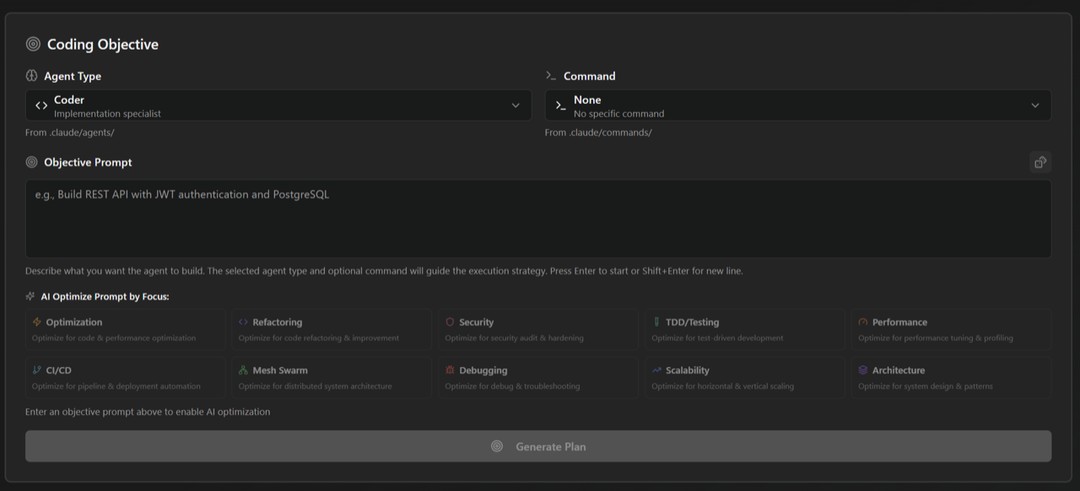
图为 ruflo 的 Coding Objective 面板,选定 Coder 类 agent 和目标提示词后生成计划。
品牌标识是个霓虹灯样式:

图为 ruflo 的官方标识。
推荐理由
第 1 名解决"出设计稿",ruflo 解决的是另一件事:让一个 agent 不再单打独斗。如果你的痛点是任务复杂到一个 agent 顾不过来、想要记忆能跨任务留、还要多机协作和安全门禁,它在这个榜里没有更直接的替代。星数第二、MIT 协议、一条命令起步,试错成本很低。
数据来源:DSH 插件市场兼容工具榜及 ruvnet/ruflo 仓库,星数为 2026 年 9 月 22 日快照。
72,999 stars, No. 2 on the compatible tools list, MIT license.
What it is
ruflo has a line of its own: an agent equals a model plus a framework — the model writes, and the framework gives it tools, memory, loops, sandboxes, and control. ruflo works at exactly that framework layer: it is a "meta-framework" wrapped around coding agents, able to wrap Claude Code and Codex, and also able to integrate into DeepSeek Harness.
The most immediate change after installing it: you no longer command a single agent, but a team.
What it can do
- 100+ specialized agents: the full installation ships roughly 98 agents, 60+ commands, and 30 skills, each with its own role
- Swarm cooperation: agents organize themselves into groups by topology, running planning, coding, testing, and iteration as one chain
- Self-learning memory: it learns from every task and remembers successful patterns across sessions
- Cross-machine federated communication: lets agents on different machines talk securely without leaking data
- Enterprise-grade safety guardrails: pre-merge checks, handoff protocols, safety rules, and memory namespaces
Getting started is one command: run npx ruflo init in your project directory and every supported platform is configured. It also has a public plug-in marketplace where you can browse and install extensions. After installing you can run ruflo verify to cryptographically check that the binaries you installed match the official signatures, which covers the supply chain side.
How compatible it is with DSH
ruflo was itself designed as a cross-agent platform, and DSH is one of the platforms it supports. Integration means adding its execution layer into the DSH environment so that swarms, memory, and guardrails take effect inside DSH. It isn't a standalone product that DSH merely invokes; instead it enhances the agent you are already using — a different relationship from the "two-way engine" one held by No. 1.
Who it's for
- Independent developers: who want one init command to give an agent a full loop of planning, testing, and memory
- AI teams: that need multiple agents cooperating by role, plus engineering constraints like a pre-merge gate
- Researchers: building multi-agent collaboration systems and experimenting with federated communication
Two prerequisites to know about: it needs a Node.js environment, and you have to supply your own LLM API key — the tool doesn't include one; the full installation writes .claude, .claude-flow, CLAUDE.md, and other files into your workspace, so if you only want to try a single plug-in command, the official recommendation is to take the lightweight plug-in path rather than going straight to the full install.
Its official working loop is four steps — plan, act, check, learn — with you in control throughout:
The image shows the loop diagram from the ruflo documentation: plan, act, check, learn, with the lock symbol in the center representing that control stays with the user.
It also has a web interface for issuing coding objectives, where you can choose the agent type and commands and even optimize the prompt around focuses like safety, refactoring, and testing:
The image shows ruflo's Coding Objective panel, generating a plan after selecting a Coder-type agent and a goal prompt.
Its brand mark is a neon style:
The image shows ruflo's official logo.
Why it's recommended
No. 1 solves "producing design deliverables," while ruflo solves something else: making sure an agent no longer works alone. If your pain point is that tasks are too complex for one agent to handle, you want memory that survives across tasks, and you also need multi-machine collaboration and safety gates, there is no more direct alternative on this list. Second-highest star count, MIT license, one command to start — the cost of trying it is very low.
Data sources: the DSH Plugin Hub compatible tools list and the ruvnet/ruflo repository; star counts are a snapshot from September 22, 2026.