AI 与自动化是怎么分道扬镳的How AI and Automation Part Ways
人们总把 AI 和自动化两个词换来换去,而且这种口误也情有可原:两种情况下都是机器在干活,不必由人一步步操控。但在底层,二者遵循的是完全不同的原理。当你要判断某件活儿到底该用哪一个时,分清它们确实很有用。
People swap the words AI and automation constantly, and the slip is understandable: in each case a machine carries out work without a human steering every single move. Underneath, though, the two run on entirely separate principles, and telling them apart genuinely helps when you're choosing which one a given job truly demands.
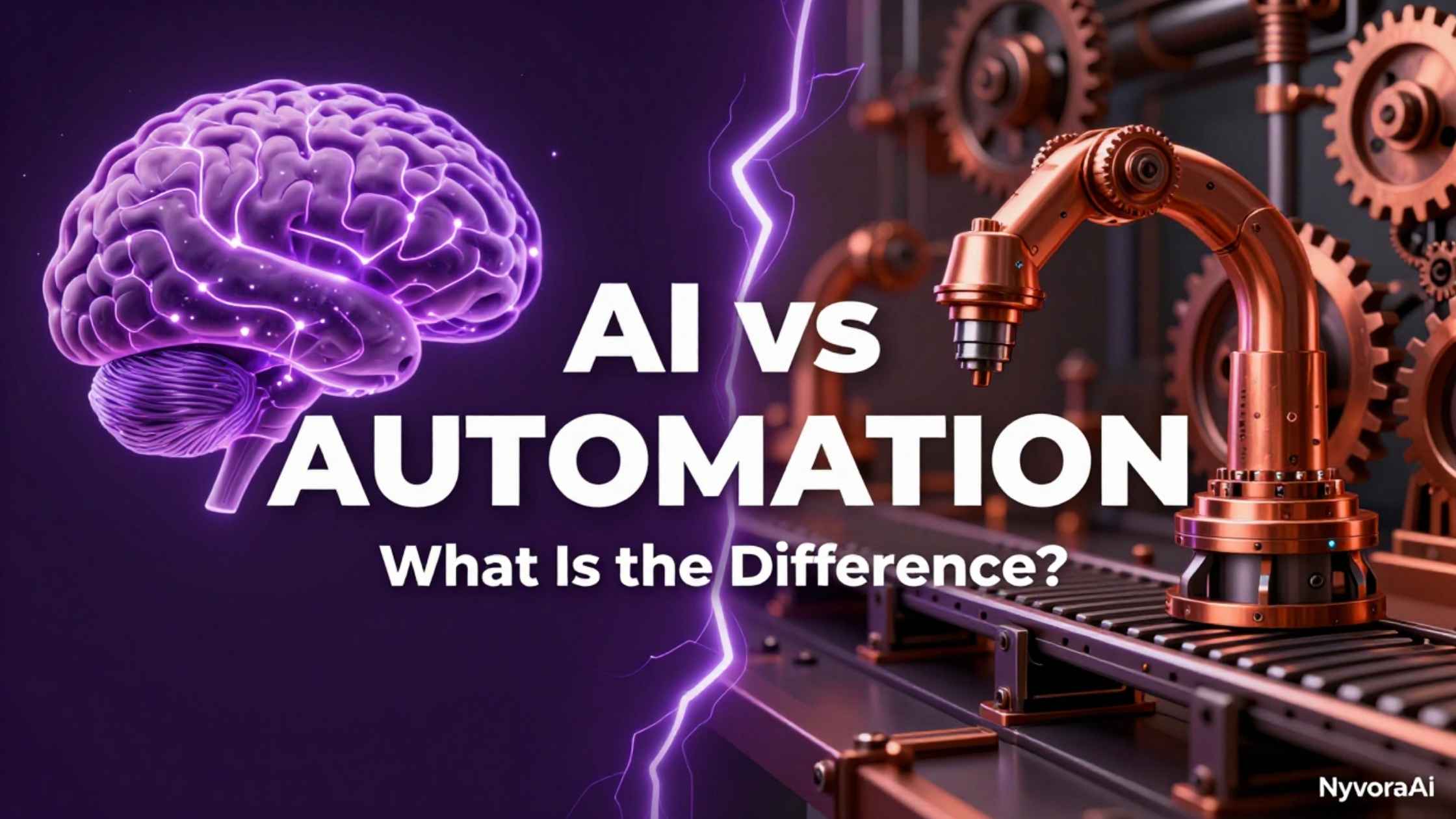
“我们整个流程现在都自动化了。”“我们给那条工作流加了 AI。”日常交谈里,这两句话常常被当成一回事,都在说机器接手了原本需要人在旁边盯着的活儿。可一旦抠字眼,AI 和自动化建立在截然不同的基础上,把二者混为一谈,就会对某个产品到底能做什么产生真实的误解。
简短地说:自动化每次都一模一样地执行预先设定的指令;AI 则从数据里学规律,遇到没人交代过的情形会调整自己的行为。其他几乎所有差异——日常用法上、成本上、各自适用的场合——都能追溯到这一条分界线。
本指南会厘清这条边界究竟画在哪里、人们为何如此容易把它抹糊,以及二者为何越来越多地协同配合,而不是争抢同一块地盘。
01简短定义
自动化是指动用技术自动完成某项工作,而它遵循的,是人事先写好的一套固定规则与指令。洗衣机跑选定的洗衣程序、邮件自动回复、工厂机械臂把同一个动作重复成千上万遍,都属于自动化。它的标志是可重复性:同样的输入,每次都返回一模一样的输出,整个过程没有任何学习和调整。
人工智能则是部署一个用数据训练出来的系统,让它识别规律、作出预测或选择,哪怕面对的情形从未被明确编写过。自动化需要把每种可能性都事先写明,AI 却能从训练中吸收的例子出发进行推断,对新鲜、陌生的输入也能应付得相当不错。
| 特征 | 自动化 | AI |
|---|---|---|
| 决策方式 | 执行事先写好的固定规则 | 从训练数据中提取规律 |
| 面对新情况 | 只能应对明确编过程的 | 能够对陌生输入进行推断 |
| 输出稳定性 | 每次都完全相同 | 可能浮动,由概率驱动 |
| 通常的搭建成本 | 更低,也更易预测 | 更高,需要训练数据 |
| 理想场景 | 稳定、重复、定义清晰的工作 | 需要判断的多变工作 |
02用大白话说清核心区别
把自动化想象成一份被严格照做的菜谱。每一步该做什么、出现这种情况就那样办,都由人事先写得清清楚楚,机器只是逐字逐句执行。没有解读,也不权衡其他选项,只有对一份预先固定的脚本的精确交付。
AI 走的则是另一条路。AI 模型并不是执行某个人写好的脚本,而是被喂进大量示例,自己去发现那些往往能导向正确答案的统计关系。正是这种学习规律的本领,让 AI 能够完成诸如理解人类语言这样的任务——这类工作变化太多、又太依赖语境,靠任何一套僵硬的自动化规则都无法框定。
03二者如何处理同一项工作
为了说得更具体,我们看看同一项任务——分拣收到的客户邮件——先经过规则驱动的系统、再经过 AI 驱动的系统时,分别会发生什么。
- 1
一封新邮件到达
1 两套系统的起点完全相同:收件箱里躺着一封未读邮件。
- 2
自动化系统寻找精确匹配的关键词
2 规则驱动的系统扫描某个指定词,比如 refund,只有当这个词精确出现时才会转走邮件。
- 3
AI 通读整封邮件、判断意图
3 AI 模型权衡整封邮件,连同语气和措辞,即便预期的关键词始终没出现,也能预测最可能的类别。
- 4
自动化返回一个固定、相同的结果
4 同一封邮件提交两次,每次都会被转到同一个文件夹,结果完全可以预见。
- 5
AI 返回它最有把握的统计估计
5 AI 的分拣决定是一个按概率加权的预测,通常准确,但和自动化不同,它在数学上并没有保证。
04规则与学习:技术上的分野
在表面之下,自动化由显式、确定性的逻辑搭成——普通脚本、宏,或者常简称为 RPA 的机器人流程自动化——它实质上是复制人的点击和按键,从而在系统之间搬运数据。这一切都不依赖基于示例的训练。每一个精确条件都由开发者手写,机器则严格照做。
AI 则由一个拥有数百万乃至数十亿内部数值参数的模型搭成,这些参数在训练中被逐步调整,直到模型能对从未见过的输入稳定地给出有用结果。面向语言的 AI 工具尤其会先把你的输入切成名为 token(词元)的小片段再处理,这一步在什么是 AI 中的分词中有详细说明;这也是 AI 能灵活解读开放式文本的部分原因,而固定的自动化规则根本做不到这一点。
05分清二者为何真的重要
选对了不只是技术细节问题,它对成本和可靠性都有实在影响。自动化通常搭建更便宜、运行更快,也因为行为完全确定而更容易预测和排错。面对一项稳定、定义清晰的工作,自动化往往是更聪明、更经济的选择。
只有当工作带有固定规则无法完全预料的真实变化或判断时,AI 才配得上它更高的价格和额外的复杂性。但这种适应性也有其真实代价:按概率加权的结果意味着,AI 有时会以一种确定性自动化在结构上不可能的方式,自信地犯错。我们在AI 为何有时会给出错误答案中详细拆解了这一权衡;在你伸手去拿 AI、而更简单的自动化可能同样胜任之前,这一点值得认真掂量。
06关于 AI 与自动化的常见迷思
07现实世界中的例子并排对比
纯粹的自动化出现在重复单一动作的流水线机械臂、定时数据备份,以及每次都发送相同内容的邮件自动回复里。AI 则出现在那些太过开放、固定规则无法完全覆盖的工作中:根据文字描述生成一张原创图像(见 AI 如何把文字变成图像),或者以AI 翻译是如何工作的中所述的那种细腻,在两种语言之间传递含义。
数据录入
制造业
客服聊天机器人
推荐
日程安排
欺诈检测
08AI 与自动化的交汇之处
在现实世界里,AI 与自动化之间曾经清晰的边界已经变得模糊。一个不断壮大、被称为智能自动化(有时又叫超自动化)的领域把二者融合起来:一条僵硬的自动化工作流会在某个特定判断环节调用 AI 模型——比如读懂一封邮件背后的意图——随后再通过普通的确定性步骤执行剩余流程。
这种混合路线也有值得了解的真实局限。一旦输入与预期稍有偏离,纯自动化就会崩溃,因为它无法解读编程规则之外的任何东西。而混合系统里的 AI 部分仍带着自身的约束,包括AI 模型的上下文窗口中所述的那种工作记忆上限,它限制了工作流中 AI 部分一次最多能处理多少信息。
09接下来:边界持续模糊
正在重塑这一领域的新浪潮通常被称为智能体式 AI:这类系统把 AI 模型的推理能力,与亲自采取自动化行动的本事结合起来——订机票、改数据库、发送跟进邮件,都不必由人逐一批准。相比单纯的智能自动化,这是两种技术更深层的融合。
可以预期,对普通用户而言,这一实际区别会越来越无关紧要,尽管对真正构建这些系统的人来说它依然关键。大多数真实产品都会悄悄选用最适合每一小段工作的技术——普通自动化、AI 或某种二者的混合——而不是给整个产品贴上单一标签。
10常见问题
AI 和自动化究竟有什么不同?
自动化算 AI 的一种吗?
自动化可以借助 AI 吗?
AI 和自动化,哪个更胜一筹?
RPA 和 AI 是一回事吗?
自动化会被 AI 取代吗?
'Our whole process runs on automation now.' 'We layered AI into that workflow.' In everyday talk those lines frequently stand in for one another, both describing a machine taking over work that once needed a person watching close by. Dig beneath the wording, though, and AI and automation rest on genuinely different foundations, so treating them as synonyms breeds real misunderstandings about what a given product can deliver.
The gist, kept short: automation executes pre-set instructions identically on every run. AI instead picks up patterns from data and shifts its behaviour when it meets cases nobody spelled out for it. Nearly every other contrast — in day-to-day use, in cost, in where each one belongs — traces back to that one dividing line.
This guide maps out precisely where that boundary falls, why people blur it so readily, and the ways the two increasingly operate hand in hand instead of contesting the same turf.
01The Short Definition
Automation means deploying technology to carry out a job on its own, guided by a fixed body of rules and instructions a person wrote beforehand. A washer running a chosen cycle, an email auto-reply, or a factory arm performing one identical movement thousands of times over all qualify. The tell is repeatability: hand it the same input and the identical output returns every time, with no learning and no adjustment anywhere in the loop.
Artificial intelligence means fielding a data-trained system that spots patterns and renders predictions or choices, even for cases it was never expressly coded to meet. Where automation needs each possibility written out beforehand, AI extrapolates from the examples it absorbed while training and copes reasonably with fresh, unfamiliar input.
| Characteristic | Automation | AI |
|---|---|---|
| The way it reaches a decision | Executes fixed rules written in advance | Extracts patterns from training data |
| Response to novel cases | Only those expressly coded for | Able to extrapolate to unfamiliar input |
| How steady the output is | Identical on every run | Can fluctuate, driven by probability |
| Usual build cost | Lower and easier to forecast | Steeper, training data required |
| Ideal setting | Stable, repetitive, sharply defined work | Variable work calling for judgment |
02The Central Distinction in Everyday Terms
Picture automation as a recipe obeyed down to the last detail. A person spelled out precisely what happens at each stage, when this occurs do that, and the machine merely carries those directions out to the letter. Nothing is interpreted, no alternatives are weighed; there is only exact delivery of a script fixed in advance.
AI follows an altogether different route. Rather than executing a script a person wrote, an AI model is fed vast banks of examples and discovers for itself the statistical relationships that tend to yield the correct answer. That same gift for picking up patterns is what lets AI carry out feats such as making sense of human language — work so varied and so dependent on context that no rigid body of automation rules could ever pin it down.
03How the Two Handle One Identical Job
To make this tangible, watch what unfolds when a single job, triaging incoming customer emails, passes first through a rule-driven setup and then through an AI-driven one.
- 1
A fresh message lands
1 Each setup starts from the identical point: a single unread message sitting in the inbox.
- 2
The automated setup hunts for an exact keyword
2 A rule-driven setup scans for a chosen term, say refund, and diverts the message solely when that precise word shows up.
- 3
The AI sweeps the whole message for intent
3 An AI model weighs the message in full, tone and wording included, to forecast the likeliest bucket even when the expected keyword never appears.
- 4
Automation hands back one fixed, identical outcome
4 Send that same message twice and it lands in the identical folder on every pass, perfectly foreseeable.
- 5
AI returns its strongest statistical estimate
5 The AI's routing call is a probability-weighted forecast, usually on target yet, unlike automation, never mathematically assured.
04Rules Against Learning: The Technical Divide
Beneath the surface, automation is assembled from explicit, deterministic logic — plain scripts, macros, or robotic process automation, usually shortened to RPA — which literally reproduces a person's clicks and keystrokes to shift data between systems. None of it draws on example-based training. A developer hand-writes each precise condition and the machine adheres to them exactly.
AI is assembled from a model holding millions or billions of internal numerical parameters, nudged gradually throughout training until it reliably returns useful results for input it has never encountered. Language-oriented AI tools in particular reduce your input to small fragments named tokens before working on it, a step detailed in our explainer on tokenization in AI; this is part of why AI can interpret open-ended text flexibly in a manner fixed automation rules simply cannot match.
05Why Telling Them Apart Genuinely Counts
Choosing correctly is no mere technical nicety; it carries genuine consequences for cost and dependability. Automation generally costs less to build, runs faster, and is far simpler to predict and debug because its conduct is wholly deterministic. Given a job that stays stable and sharply defined, automation usually proves the shrewder, more economical route.
AI justifies its steeper price and added complexity precisely when a job carries real variation or judgment that a fixed rule cannot fully anticipate. That adaptability brings a genuine cost of its own: probability-weighted results mean AI can at times be assuredly wrong in a fashion deterministic automation structurally cannot be. We unpack that tradeoff at length in our piece on why AI occasionally returns wrong answers, and it deserves real weight before you reach for AI when plainer automation might serve just as well.
06Widely Believed Myths, Set Straight
07Everyday Examples Placed Side by Side
Pure automation appears in assembly-line arms repeating a single movement, in scheduled data backups, and in email auto-replies that dispatch the identical message each time. AI appears wherever work is too open-ended for a fixed rule to cover completely: producing an original image from a written description, as outlined in how AI turns text into images, or carrying meaning across two languages with the subtlety described in how AI translation works.
Data Entry
Manufacturing
Support Chatbots
Recommendations
Scheduling
Fraud Detection
08Where AI and Automation Converge
In the real world, the once-sharp boundary between AI and automation has softened. A swelling field known as intelligent automation, sometimes labelled hyperautomation, fuses the two: a rigid workflow that runs itself turns to an AI model for one particular judgment call, perhaps reading the intent behind an email, and then resumes the remainder of the process through ordinary deterministic steps.
This blended route carries genuine limits worth understanding. Pure automation collapses the moment an input strays even slightly from what was anticipated, since it cannot interpret anything beyond its coded rules. And the AI piece inside a blended setup still bears its own constraints, including the working-memory ceiling described in what the context window means in AI models, which caps how much information the AI portion can hold at any one time.
09What Lies Ahead: A Boundary That Keeps Softening
The wave now remaking this field often goes by agentic AI: setups that pair an AI model's reasoning with the ability to take automated actions themselves, booking a flight, amending a database, or sending a follow-up email with no human approving each move. That is a deeper fusion of the two technologies than intelligent automation alone achieves.
Expect the practical distinction to fade in importance for everyday users even as it stays essential for the people actually engineering these systems. Most real products will quietly pick whichever technology, plain automation, AI, or some blend, best suits each fragment of the job rather than pledging one label across the whole product.