2026 年 AI 会取代内容写手吗?Are Content Writers Being Replaced by AI in 2026?
几乎每个写手都在凌晨一点偷偷问过自己这个问题——尤其是亲眼看到一款 AI 工具九秒钟就写出一篇过得去的博文之后。诚实的回答不是简单的会或不会:某一类写作确实已经在被替代,而另一类写作正因 AI 变得更值钱。下文只摆真实数据,既不贩卖恐慌,也不跟风吹捧。
It's the thought running through nearly every writer's head at one in the morning, right after watching an app knock out a decent post in nine seconds. The truthful response refuses a tidy yes-or-no: one category of writing is already being taken over, while another category grows more valuable precisely because of AI. What follows rests on the evidence itself, stripped of both panic and hype.
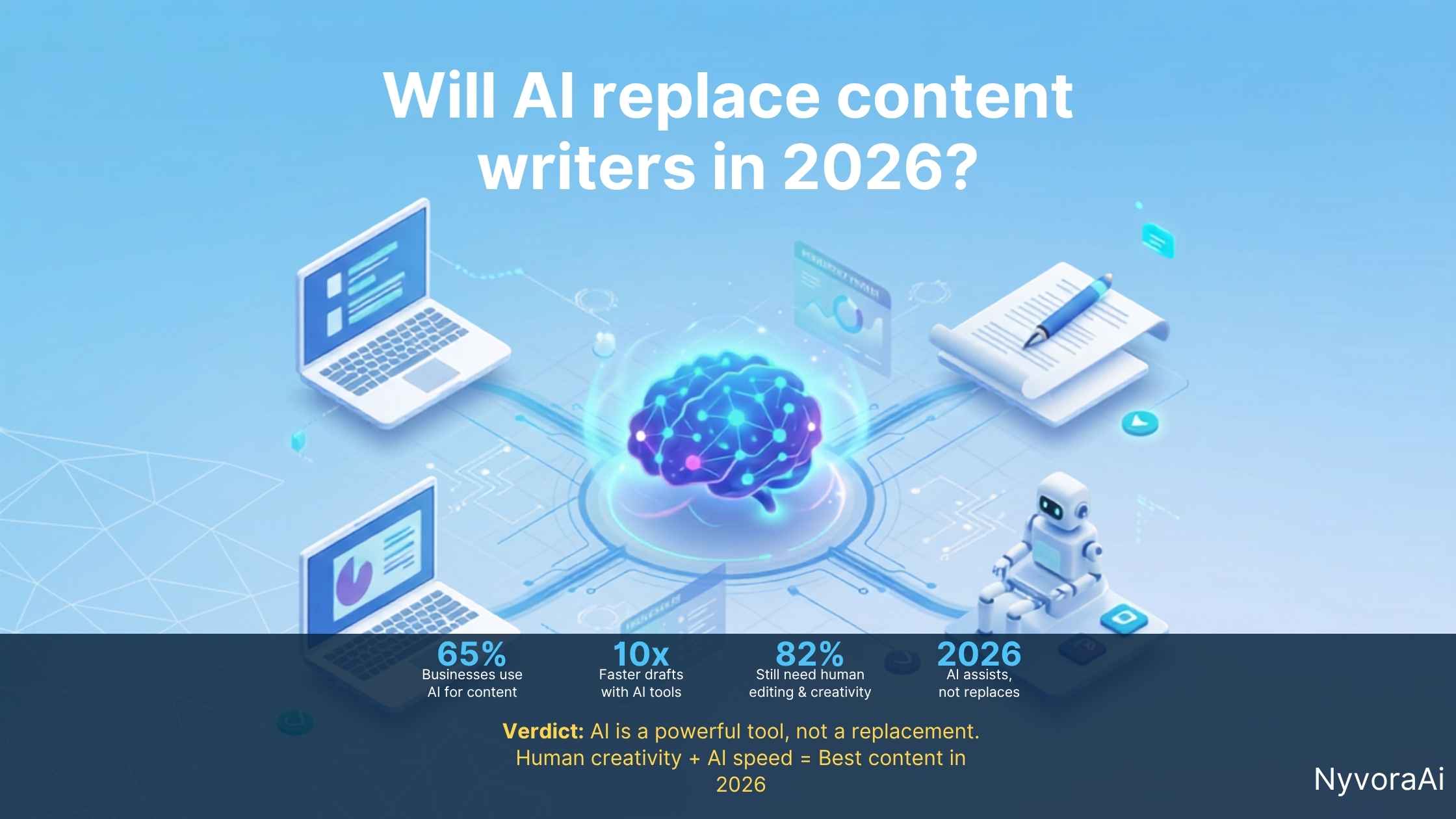
每隔几个月就有标题宣告内容写作已死,紧接着又有报道说某公司开出比被裁写手更高的薪水招聘「AI 内容策略师」。两条标题从不同侧面描述的是同一场转变:走量、套模板的那一端真的在萎缩;讲策略、靠专业的那一端保持稳定甚至在增长。这场讨论里大多数混乱,都源于把「内容写作」当成一个命运单一的工种。
01简短结论
靠编辑掌舵、品牌发声、实地报道和深厚领域权威吃饭的写手,看到需求持平或走高;而只拼执行、在产量上跟 AI 对打的人,则感受到真实、可测量的挤压。真正有帮助的问题不是「机器会不会取代写手」,而是「这工作的哪几块它已经吞掉,哪几块仍然需要人」。
02内容写作领域正在发生什么
数据呈现的是一个真实的双面故事,两半都值得认真对待,而不是只挑印证自己既有看法的那一半。自生成式 AI 工具普及以来,自由撰稿岗位数量大幅下降;行业分析预测,这个十年余下时间里数字营销内容写手和记者岗位将明显收缩。受访的数字营销人中很大比例认为 AI 威胁写作岗位,而这种焦虑并非空穴来风——它是对商品化内容生产方式真实转变的理性反应。
但更宏观的劳动力市场研究,给整个行业描绘的图景没那么戏剧化。针对内容营销的分析指出,制约需求的主要是营销预算和战略优先级,而非 AI 能不能写;与此同时,受众分化反而促使品牌需要更多(而非更少)精准内容,尽管生产确实更快了。招聘板上「AI 内容策略师」「文档工程师」等岗位快速涌现,说明这个行业正围绕 AI 重组,而不是简单消失。对在职内容营销人的多数调查也支持这一点:大多数人把 AI 用于构思、提纲和初稿,只有一小部分声称自己的工作已完全由 AI 完成。
03什么真正决定一个写作岗位是否危险
产出有多模板化
是否需要原创调研
声音需要多独特
工作需要多少判断力
诚实地拿这四个因素掂量自己的写作工作:完全围绕批量生产可替换文章的岗位,与围绕特定受众对你判断力与专业之信任的岗位,处境截然不同。
04按 AI 暴露程度给写作工作排座次
| 工作类型 | 暴露级别 | 理由 | 到 2026 年的前景 |
|---|---|---|---|
| 千篇一律的 SEO 拼盘文 | 暴露严重 | 套路僵硬,几乎不需要新鲜思考 | 只负责执行的人手买家变少 |
| 大路货产品简介 | 暴露严重 | 同一套形状在无尽商品目录里反复使用 | 机器生成正大规模吞并这块 |
| 社交帖子配文 | 暴露中等 | 靠公式驱动,但品牌专属的调味仍有价值 | 机器加人工的混合审核模式在铺开 |
| 实地报道与人物访谈 | 暴露有限 | 需要软件伪造不出的接触和临场判断 | 需求从持平到攀升 |
| 编辑掌舵与品牌语调 | 暴露有限 | 靠读懂受众,而非只产句子 | 在扩张,并催生新的 AI 监督职责 |
几乎每一份严谨考察都重复着同一规律:自生成式 AI 普及以来,例行、易自动化的写作岗位在变稀,而对分析型、策略型、差异化鲜明的创意产出的需求在同期走高。这并不保证哪个具体角色免疫,但在精确度上胜过一刀切的判决。
05让写作职业生涯抵御未来的五个动作
- 1
盘点你的产出有多少跑在模板上
1 坦诚面对:产出中有多少靠重复,多少靠临场判断。
- 2
培育一个边界清晰的权威领域
2 对单一行业或话题的深厚掌握,远比泛泛的写作功底更难被商品化。
- 3
学会驾驭并重塑机器写的草稿
3 提示、评判、重塑 AI 草稿,正独立变成一门受重视、有市场的手艺。
- 4
把原创采访织进你的作品
4 对话、亲手试验和专有数据,让你的产出成为机器确实模仿不了的东西。
- 5
塑造读者认得出来的声音
5 属于自己的观点,是避免混同于通用 AI 文本最结实的盾牌之一。
06机器作为写手仍然交不出答卷的地方
- 文字背后没有亲身经历:它能口述一次产品测试,却从不像人类评测者那样真碰过那件东西。
- 在大体量下保持同一种独特调子,它办不到;缺少强力引导,文案便滑向乏味的平均值。
- 没有人为它负责,而活作者的署名为正确性与判断背书,这是纯 AI 文本给不了的。
- 什么该丢进剪辑室地板,它做不了主;受众、时机、语域仍要等人类编辑。
- 搜索引擎对流水线文案的嗅觉越来越灵,所以随着时间推移,可互换的 AI 文字往往落在原创、有权威背书的作品后面。
07这对读者与企业意味着什么
想随着事态发展跟进——新产品、就业数据、平台规则变动一落地就知晓?我们的 DSH Plugin Hub 人工智能新闻台实时报道每一个转折,而不是留到年度总结再说,因为脚下的地一直在动,盯得最紧的人适应得最快。
想持续追踪这场转变如何演进——新工具、劳动力市场数据、平台政策变化——我们的 DSH Plugin Hub AI 新闻:最新人工智能头条会在事件发生时即时报道,而不是等年度盘点。现实是这是个移动靶,密切关注其演化的写手和企业,适应得最快。
08写手与企业当下常犯的错误
- 在原始成稿速度上与 AI 赛跑——没人能赢,这也是选错了优化指标。
- 不经过编辑就大量发布 AI 文案:可互换、未把关的文字往往排名难看,并慢慢耗尽读者曾经抱有的信任。
- 出于原则完全无视 AI:拒绝用它做构思或初稿,往往只是干得更慢,换不来真正的竞争优势。
- 以为每种写作岗位风险相同:模板执行型与策略、专业驱动型工作眼下面对的是截然不同的现实。
- 等到火烧眉毛才考虑专业化:专业积累和独特声音都需要时间,早起步本身就是优势。
09常见问题
2026 年 AI 会取代内容写手吗?
哪类内容写作受 AI 威胁最大?
哪些内容写作技能最不容易被 AI 替代?
2026 年还适合入行做内容写手吗?
Google 如何应对 AI 生成内容?
10结语
那么,2026 年内容写手会被取代吗?作为一个整体行业不会,但其中一个明确且可观的板块已经被取代,假装没有并不利于任何人做规划。模板化、走量优先的写作确实承压;策略型、专业驱动、原创的写作守住了阵地,部分还在增长——恰恰因为 AI 让通用内容唾手可得,差异化本身成了稀缺资源。
问「我是不是要被换掉」,不如问「我的工作哪几块在照套路的一侧,哪几块在策略一侧」。有意识地向第二个阵营漂移——全新研究、真才实学、读者认得的声音、冷静的编辑判断——证据表明,通向的是机器确实难以自动化的工作,而非正被悄悄吞没的工作。
Every few months brings a headline pronouncing content writing deceased, chased almost at once by a report of some firm recruiting an "AI Content Strategist" for pay above the writer slot being phased out. Both headlines capture one transition from opposite ends. The volume-heavy, template-driven portion really contracts; the strategic, expertise-led portion holds or expands. Most confusion in this argument starts from treating "content writing" as a single job carrying a single fate.
01The Short Version
Writers whose living comes from editorial steering, a brand's sound, field reporting, and deep field authority watch demand hold or climb; meanwhile pure execution hands fighting on volume against AI take genuine, measurable heat. The question that actually helps isn't "will machines replace writers" but "which slices of this job has it swallowed already, and which still call for a human."
02The Current Reality Inside Content Writing
The evidence genuinely points two ways, and both halves deserve attention rather than whichever flatters existing beliefs. Freelance writing postings have fallen hard since generative AI went mainstream, and industry projections show notable shrinkage ahead this decade for digital-marketing writers and reporters. Large shares of surveyed digital marketers see writing jobs under threat, and the worry is rational — a sane reaction to a real change in how commodity writing gets made.
Broader labor evidence, though, makes the profession's overall outlook less dramatic. Analyses of content marketing find demand bounded more by budgets and strategic priorities than by whether AI can write, while audience fragmentation pushes brands toward more targeted output, not less, even as production accelerates. Listings for AI Content Strategist and Documentation Engineer multiply quickly, implying a restructuring around AI rather than an extinction. Surveys of working marketers reinforce it: most use AI for ideation, outlines, and rough drafts, with only a small minority reporting fully AI-made work.
03What Actually Puts a Writing Role at Risk
How Formula-Bound the Output Is
Whether Original Research Enters the Work
How Individual the Voice Must Sound
How Much Judgment the Job Demands
Hold your own writing up honestly against those four tests. A job defined by churning interchangeable articles at high volume sits nowhere near a job defined by a specific audience trusting your judgment.
04Writing Work, Ranked by How Exposed It Is to AI
| Kind of Work | Level of Exposure | Reasoning | Prospects Through 2026 |
|---|---|---|---|
| Cookie-cutter SEO roundups | Severe exposure | Rigid pattern with almost no call for fresh thinking | Fewer buyers for hands that only execute |
| Run-of-the-mill product blurbs | Severe exposure | Same shape reused through endless catalogs | Machine generation is swallowing this at scale |
| Lines for social posts | Medium exposure | Formula-driven, yet brand-specific seasoning still adds value | Hybrid machine-plus-human review setups spread |
| Field reporting and interviews | Limited exposure | Demands access no software can fake and on-the-spot judgment | Demand ranges from flat to climbing |
| Editorial steering and brand tone | Limited exposure | Depends on reading an audience, not just producing sentences | Expanding, and spawning fresh AI-supervision duties |
Across nearly every rigorous examination, one pattern repeats: openings for routine, easily automated writing have thinned since generative AI went mainstream, while call for analytical, strategic, sharply differentiated creative output has climbed over the same stretch. That promises no individual role immunity, yet it beats a blanket verdict in precision.
05Five Moves That Make a Writing Career Future-Resistant
- 1
Map out how much of your output runs on templates
1 Confront honestly what share of your output runs on repetition versus live judgment.
- 2
Grow one sharply defined field of authority
2 Deep mastery of a single industry or topic is far harder to turn into a commodity than generic writing chops.
- 3
Learn to steer and reshape machine-written drafts
3 Prompting, judging, and reshaping AI drafts is turning into a prized, marketable craft on its own.
- 4
Weave original reporting into your pieces
4 Conversations, hands-on trials, and proprietary data make your output something machines truly cannot mimic.
- 5
Shape a voice readers recognize
5 A viewpoint of your own is one of the sturdiest shields against blending into generic AI text.
06Where the Machine Still Comes Up Short as a Writer
- No first-hand living behind the words: it can narrate a product test, but it never touched the item the way a human reviewer does.
- Holding one distinctive note across large volumes defeats it; without firm guidance, copy drifts to a bland average.
- Nobody is answerable for it, whereas a living author's name stakes a claim to correctness and judgment that bare AI text cannot.
- Deciding what belongs on the cutting-room floor is beyond it; audience, moment, and register still wait on a human editor.
- Search engines keep sharpening their nose for assembly-line copy, so interchangeable AI prose tends to fall behind original, authority-backed pieces as time passes.
07What This Means for Readers and Businesses
Want to follow this story as it develops — fresh products, jobs data, platform-rule moves as they land? Our DSH Plugin Hub artificial-intelligence news desk reports each twist in real time instead of saving it for a yearly wrap-up, since the ground never stops shifting and the fastest adapters are those watching closest.
To keep tracking how this unfolds — fresh tools, labor evidence, and platform-rule shifts in real time — our AI News section at DSH Plugin Hub reports developments as they land rather than waiting on yearly roundups, since the terrain keeps moving and the writers and businesses watching closely adapt first.
08Mistakes Writers and Businesses Keep Making Right Now
- Racing AI on raw drafting speed — a contest no human wins and the wrong metric to optimize.
- Mass-posting AI copy without an editor's pass: interchangeable, unvetted text tends to rank poorly and slowly drains the trust readers once held.
- Shunning AI on principle: refusing it for ideation or rough drafts commonly means slower work with no real competitive edge.
- Treating every writing role as equally exposed: template execution and strategic, expertise-led work face sharply different realities.
- Delaying specialization until it feels urgent: expertise and a distinctive voice mature slowly, so starting early is a genuine edge.
09Common Questions
Will content writers be replaced by AI in 2026?
Which form of content writing faces AI's biggest threat?
Which writing skills stay safest from AI?
Does entering content writing in 2026 still make sense?
How is Google handling AI-generated content?
10Closing Thoughts
So, are content writers being replaced in 2026? Not as an entire profession, though a definite, sizable slice has already been replaced, and pretending otherwise helps nobody prepare. Template-driven, volume-first work sits under genuine pressure, while strategic, expertise-led, original writing holds its line and sometimes grows — precisely because AI has made generic output so effortless that differentiation itself is now scarce.
Asking "am I about to be swapped out" helps less than asking "which slices of my work sit on the pattern-following side, which on the strategic side." A deliberate drift toward the second camp — fresh studies, genuine know-how, a voice readers recognize, sober editorial judgment — points, the evidence suggests, toward work machines find genuinely hard to automate, rather than work being quietly swallowed.