accpowered/dsh-auto-review
LLM approval answerer for DeepSeek Harness: deterministic filter + clean-context LLM review for sandbox escalations (requires the patched core, patches included)
项目介绍Project Overview
dsh-auto-review 是 DeepSeek Harness 的自动审批插件:在 approval 策略为 auto 时,对超出 workspace-write 的沙箱提权请求,先用确定性正则过滤,再交由小模型做隔离上下文安全评审,仅在不确定或出错时转人工,且默认失败即拒绝。适用于希望减少审批打断、又保留人工兜底的自动化会话。注意:它无法在原版 harness 上运行,必须先按序应用 core-patches 中的两个补丁并配置 auto-review 预设。
dsh-auto-review is a DeepSeek Harness plugin that auto-answers sandbox escalation approvals when the approval policy is auto. It first applies deterministic hardline/deny/allow regex rules, then sends gray-zone commands to a small reviewer model with a fixed prompt, temperature 0, and no conversation context; humans are asked only on UNSURE or configured fallbacks, and errors fail closed. Use it to reduce approval prompts while retaining human fallback. Caveat: it requires patched harness core patches and the auto-review permission preset; on stock upstream it stays inert.
请帮我了解并安装插件:【dsh-auto-review】【https://github.com/accpowered/dsh-auto-review】把上面这条消息直接发给当前会话里的 DSH,让它帮你了解并安装。安装命令不一定准确,发给 DSH 更稳。Send this message to DSH in your current session. CLI install commands may not be accurate across systems — DSH will figure it out for you.
或使用命令行安装(适合开发者)Or use CLI install (for developers)
命令行安装CLI Install
dsh plugin --profile web add github:accpowered/dsh-auto-review把 accpowered/dsh-auto-review 加入你的 DSH 配置(web profile)即可启用。
READMEREADME
dsh-auto-review
English | 简体中文

LLM auto-review approval answerer for DeepSeek Harness: when a session's approval policy is 'auto', sandbox escalations beyond workspace-write (sandbox_permissions: "danger-full-access" + justification) are decided without a human prompt — a human is asked only when the reviewer is unsure, and every error path fails closed.
Two decision layers, in order:
- Deterministic filter — hardline (always-deny) + deny/allow regex rules over a normalized command (
~/$HOMEexpansion, comment stripping, whitespace collapse, macOS private-path folding). A hardline or deny match rejects immediately; an allow match grants immediately; neither runs the LLM. Deterministic denials are FINAL — operator policy is never appealed. - Clean-context LLM safety review — the gray zone goes to a small reviewer model with a fixed constant system prompt,
temperature: 0, a single-word verdict (ALLOW/DENY/UNSURE), and a tight output cap. The user message carries ONLY the tool name, the justification, and the XML-wrapped command — never the conversation.
Appeal mode (context: 'appeal-user-prompts', the default): an LLM-voiced DENY is re-judged ONCE with the session's genuine user prompts attached as intent evidence — extracted deterministically (never LLM-summarized) from user/message events whose source kind is exactly 'user'. Appeals can only RELAX a denial, never tighten an allowance: they reduce false positives; they are not a detection upgrade.
The answerer registers with { prepend: true } on approval/request, so it runs before any human/machine channel, and delegates with next() whenever the effective policy is not 'auto' or the request carries no action. The reviewer is defense-in-depth against an honest-but-wrong model, never a sandbox-widening mechanism: workspace-write remains the boundary until a grant lands. An optional consecutive-denial circuit breaker (denialBreakerThreshold) short-circuits retry loops before any further LLM cost.
⚠ Requires a patched harness core
This plugin cannot run on stock upstream deepseek-harness. It needs three patched-core surfaces, shipped in core-patches/ as two git patches with a rebase guide (authored against upstream base commit 47f943859b, merge PR #2519):
0001-approval-auto-policy-and-escalation-action.patch— the'auto'approval policy,ApprovalRequest.action,ApprovalService.effectivePolicyFor, and the tool/sandbox/permission-presets wiring that carries the escalation action.0002-llm-auto-review-request-purpose.patch— the'auto-review'LLM request purpose.
Apply them with git am (or git apply) in order after syncing upstream; if upstream conflicts, resolve and regenerate — see core-patches/README.md.
On vanilla upstream the plugin is deliberately inert: the policy gate never resolves to 'auto', so every escalation lazily delegates (next()) to the normal human answerers. Nothing breaks, nothing is auto-decided — but you get no auto-review until the patched core is in place.
Install
Prerequisites: a patched harness build (above), and the profile's permission presets must include the auto-review preset (sandbox: workspace-write + approval: auto) — patch 0001 adds it to the harness's permission-presets package.
From GitHub (builds on install via its prepare script; pnpm will ask you to allow the build once):
dsh plugin --profile web add github:accpowered/dsh-auto-review
If pnpm prints an allowBuilds prompt, add the printed key under allowBuilds in the profile's pnpm-workspace.yaml and re-run the add — this is install-time code execution permission, so only allow sources you trust (pinning a commit, github:accpowered/dsh-auto-review#<sha>, is recommended).
From a local checkout:
dsh plugin --profile web add ./dsh-auto-review
Restart dsh web (or your profile). The bundle patch (cordis.patch.yml) inserts one host row with a default reviewer route (deepseek-official / deepseek-v4-flash). To use a different reviewer, restate the row in your profile's cordis.patch.yml — provider and model are required and a patch replaces the row's whole config:
- id: auto-review
  name: dsh-auto-review
  config:
    provider: my-provider      # any registered LLM route
    model: my-small-model
Configuration
All knobs (composition = the cordis.patch.yml row config; user = live override through the auto-review settings namespace):
| Key | Default | Composition | User-overridable | Purpose |
|---|---|---|---|---|
provider |
— (required) | ✓ | ✓ | Reviewer route (a registered provider) |
model |
— (required) | ✓ | ✓ | Reviewer model id on that route |
hardline |
shipped list | ✓ | — | Always-denied regex patterns; never bypassed while policy is auto |
deny |
shipped list | ✓ | ✓ | Configurable deny regex patterns |
allow |
shipped list | ✓ | ✓ | Configurable allow regex patterns (conservative, side-effect-free only) |
maxTokens |
512 |
✓ | — | Reviewer output-token cap (single-word verdict + headroom) |
timeoutMs |
15000 |
✓ | — | End-to-end reviewer deadline (ms) |
onError |
deny |
✓ | ✓ | Reviewer-failure fallback: deny (fail closed) or ask (human) |
onUnsure |
ask |
✓ | ✓ | UNSURE-verdict fallback: ask (human) or deny |
denialBreakerThreshold |
0 (off) |
✓ | ✓ | Consecutive-denial circuit breaker |
context |
appeal-user-prompts |
✓ | ✓ | appeal-user-prompts or minimal (command alone, v1 behavior) |
appealMaxPrompts |
0 (unbounded) |
✓ | ✓ | Appeal budget: newest user prompts attached (first prompt exempt) |
appealMaxChars |
0 (unbounded) |
✓ | ✓ | Appeal budget: total user-prompt characters attached |
hardline, maxTokens, and timeoutMs are composition-only by design. The shipped filter defaults are documented in src/index.ts (DEFAULT_HARDLINE_PATTERNS / DEFAULT_DENY_PATTERNS / DEFAULT_ALLOW_PATTERNS).
Live user-layer overrides
User-tunable keys live in the auto-review settings namespace (registered through installSettingsSection; the namespace name stays auto-review so existing user settings documents keep applying). The composition entry is the base layer; a committed user-layer change re-resolves and recompiles the rule patterns on the very next decision — no restart. A write carrying an invalid regex is refused at the settings seam, so a bad pattern can never reach the compiled filter.
Uninstall
dsh plugin --profile web remove dsh-auto-review
The answerer and the settings section detach with the plugin fiber. Log-only auto-review/decision events already on session logs are left untouched, and sessions on the auto-review preset fall back to the human answerers.
Development
pnpm install
pnpm build       # tsc declarations (lib/types) + tsdown (lib/index.js)
pnpm test        # vitest: filter/verdict/appeal flows, settings lifecycle (local approval stub)
Layout: src/index.ts (the whole plugin — answerer, config schema, settings section, exported pure functions), tests/auto-review.spec.ts + tests/stubs.ts (the stub replicates the patched ApprovalService's dispatch semantics; the npm rc.1 package predates the 'auto' policy), core-patches/ (the two required core patches + rebase guide).
License
MIT
相关推荐Related
-
 nexu-io/open-design
🎨 Best DeepSeek Harness Design Plugin. The open-source Claude Design alternative. 🖥️ Local-first desktop app. 🖼️ Your…
nexu-io/open-design
🎨 Best DeepSeek Harness Design Plugin. The open-source Claude Design alternative. 🖥️ Local-first desktop app. 🖼️ Your…
-
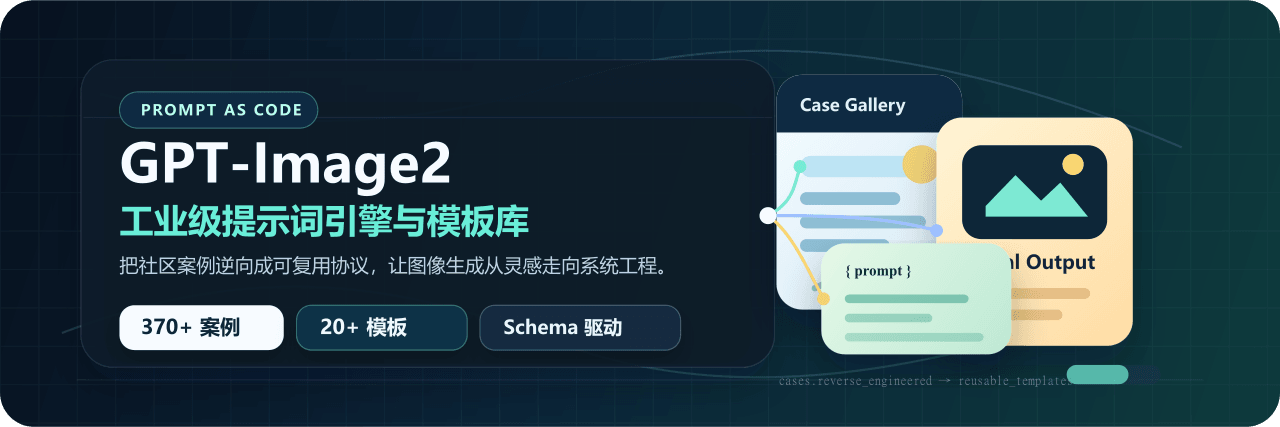 freestylefly/awesome-gpt-image-2
Prompt as Code | GPT-Image2 工业级提示词引擎与模板库,530+ 个案例逆向工程,20+ 套工业级模板,并提炼出Skills,持续更新中
freestylefly/awesome-gpt-image-2
Prompt as Code | GPT-Image2 工业级提示词引擎与模板库,530+ 个案例逆向工程,20+ 套工业级模板,并提炼出Skills,持续更新中
-
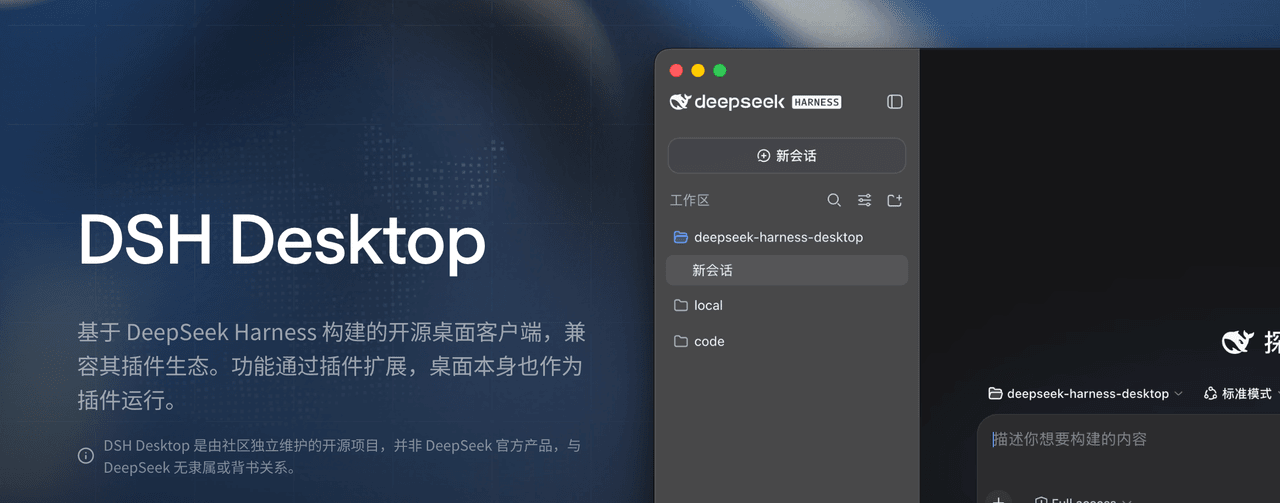 anywhere-labs/dsh-desktop
为 DeepSeek Harness (DSH) 插件生态打造的现代化桌面端解决方案。万物皆「插件」,桌面本身也是「插件」。
anywhere-labs/dsh-desktop
为 DeepSeek Harness (DSH) 插件生态打造的现代化桌面端解决方案。万物皆「插件」,桌面本身也是「插件」。
- Nagi-ovo/voyager Enhancement suite for Gemini, AI Studio, Claude & ChatGPT — plus a prompt manager for any web UI, DeepSeek Harness inclu…
-
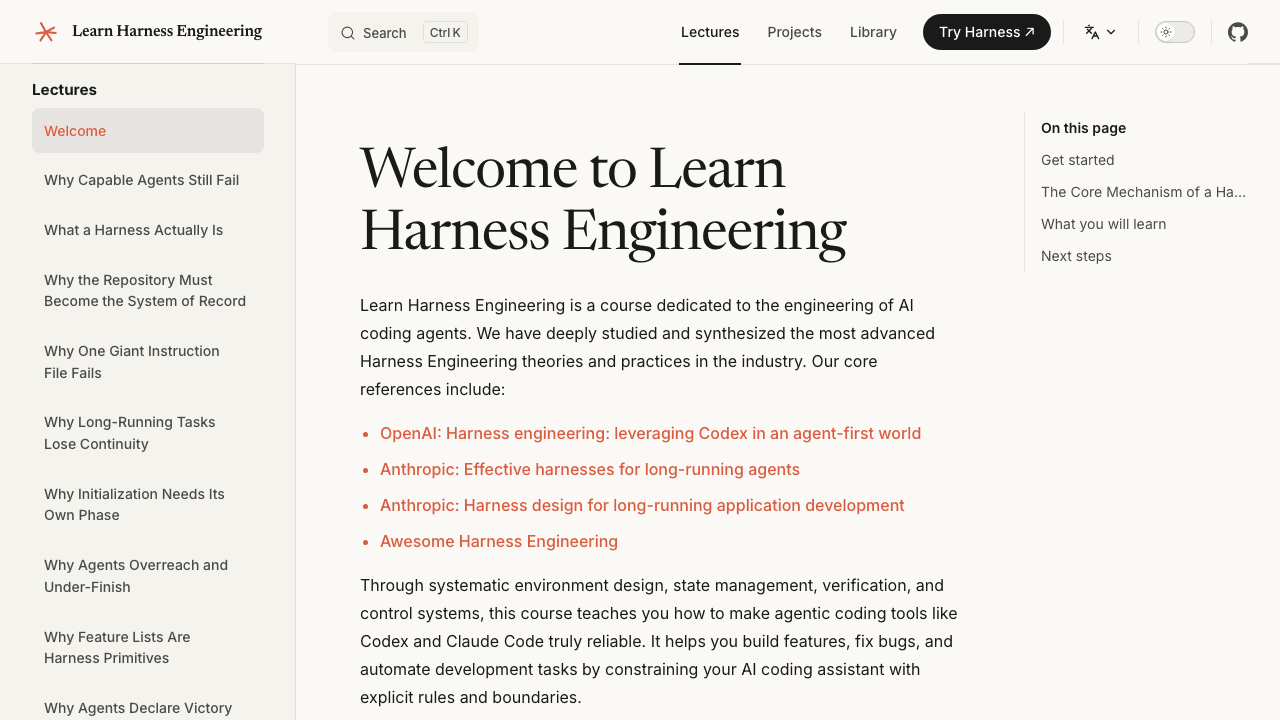 walkinglabs/learn-harness-engineering
Harness engineering beginner tutorial, from 0 to 1
walkinglabs/learn-harness-engineering
Harness engineering beginner tutorial, from 0 to 1
-
 awesome-dsh-plugin/awesome-dsh-plugin
A curated list of plugins for DeepSeek Harness (dsh) · DeepSeek Harness 插件精选列表
awesome-dsh-plugin/awesome-dsh-plugin
A curated list of plugins for DeepSeek Harness (dsh) · DeepSeek Harness 插件精选列表
-
 MemTensor/MemOS
Self-evolving memory OS for LLM & AI Agents: ultra-persistent memory, hybrid-retrieval, and cross-task skill reuse, with…
MemTensor/MemOS
Self-evolving memory OS for LLM & AI Agents: ultra-persistent memory, hybrid-retrieval, and cross-task skill reuse, with…
- yjh051108/dsh-routing-suite dsh-routing-suite — injector + router-standard kit: install the runtime injector first, then the task-aware reasoning-mo…