agentrq/agentrq
AgentRQ:面向AI Agent的人机协同实时对话任务管理器。支持自托管!无论身在何处,都能通过移动端、网页端和桌面端掌控您的Agent。专为与您自己的Claude订阅及任意框架无缝协作而设计。
项目介绍Project Overview
AgentRQ 是一款基于模型上下文协议(MCP)的人机协作任务平台。核心能力是通过 MCP 将工作区任务、权限请求与消息以工具形式暴露给 AI 代理,代理可自动领取任务并实时同步状态。适用于需要让 Claude 等模型在受控工作区中自主执行并接受人工审批的场景。注意:每个工作区需配置独立的 dsh 配置文件,工作区间切换即切换 profile。
AgentRQ is a Model Context Protocol platform for human-agent task collaboration. It exposes workspace tasks, permission requests, and chat as MCP tools, letting agents autonomously pull work, update status, and request approval in real time. Use it when Claude or similar models need to operate inside a governed workspace with human oversight. Note: each workspace requires its own DSH profile; switching workspaces means switching profiles.
请帮我了解并安装插件:【agentrq】【https://github.com/agentrq/agentrq】把上面这条消息直接发给当前会话里的 DSH,让它帮你了解并安装。安装命令不一定准确,发给 DSH 更稳。Send this message to DSH in your current session. CLI install commands may not be accurate across systems — DSH will figure it out for you.
或使用命令行安装(适合开发者)Or use CLI install (for developers)
命令行安装CLI Install
npx @deepseek-ai/dsh plugin --profile web add @agentrq/dsh-plugin-agentrq把 agentrq/agentrq 加入你的 DSH 配置(web profile)即可启用。
READMEREADME
AgentRQ ── Agent-Human Collaboration Platform

AgentRQ is a modern, high-performance platform designed for seamless collaboration between human operators and AI agents. It leverages the Model Context Protocol (MCP) to allow AI models (like Claude) to interact directly with your workspace's task management system.
🚀 Overview
Think of AgentRQ as a shared workspace where humans and AI agents work together seamlessly. You can break down complex goals into manageable tasks, and delegate work directly to your AI agents.
Because agents "see" the workspace state via MCP, they can autonomously pull their assigned tasks, update statuses, request permissions for sensitive actions, and communicate with you—all synchronized instantly across the platform in real-time.
✨ Features
Real captures from the running app — no mockups.
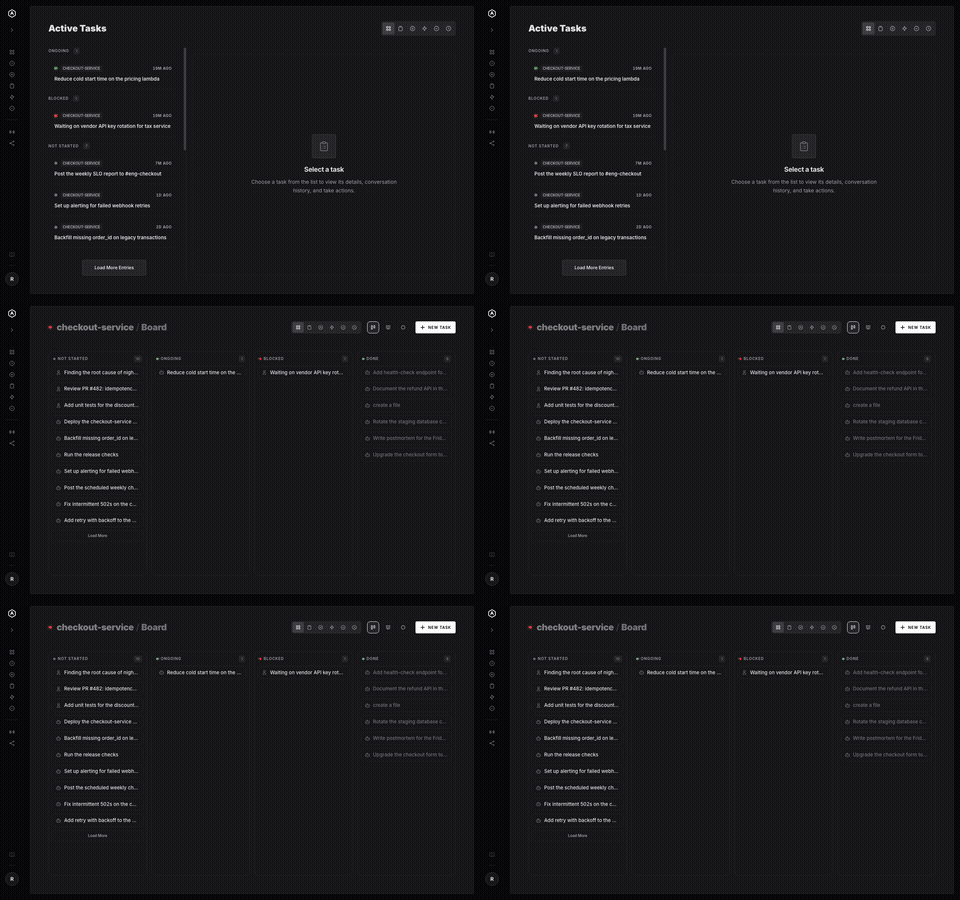
Visual Task BoardEvery task Claude creates appears instantly on your board. See what it's working on, what it needs, and what it just finished — all from a clean, fast dashboard you can open on any device, as a list or a Kanban. |
 |
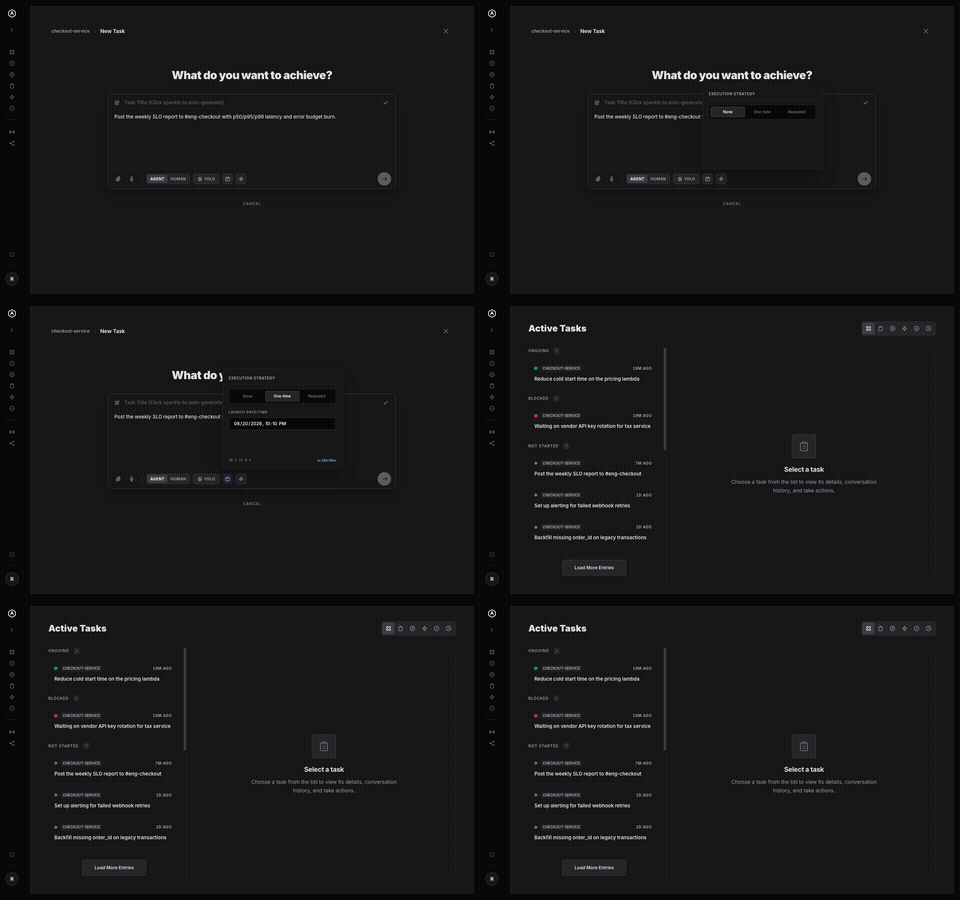 |
Task SchedulingGive any task a launch date, or a recurring cadence — every 15 minutes, hourly, daily, weekly, custom days. A background poller ticks every minute and spawns the task the instant it's due, no server or agent needing to stay awake and wait. |
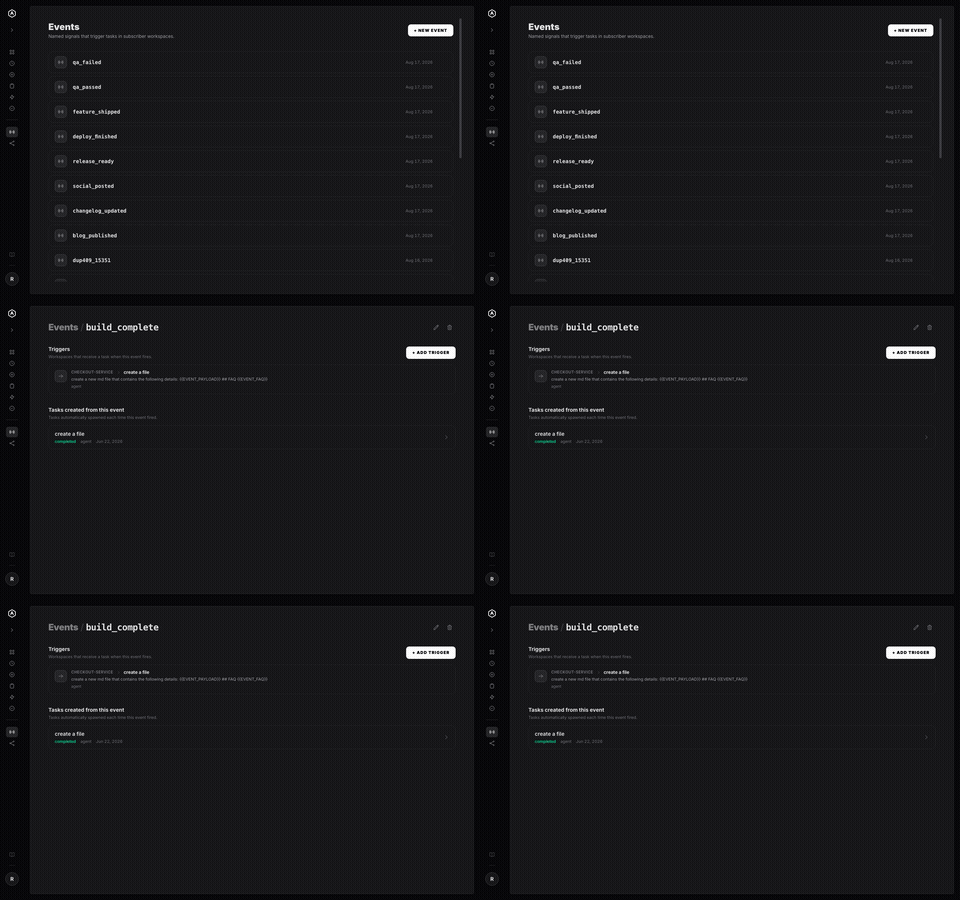
EventsEvents are named signals — |
 |
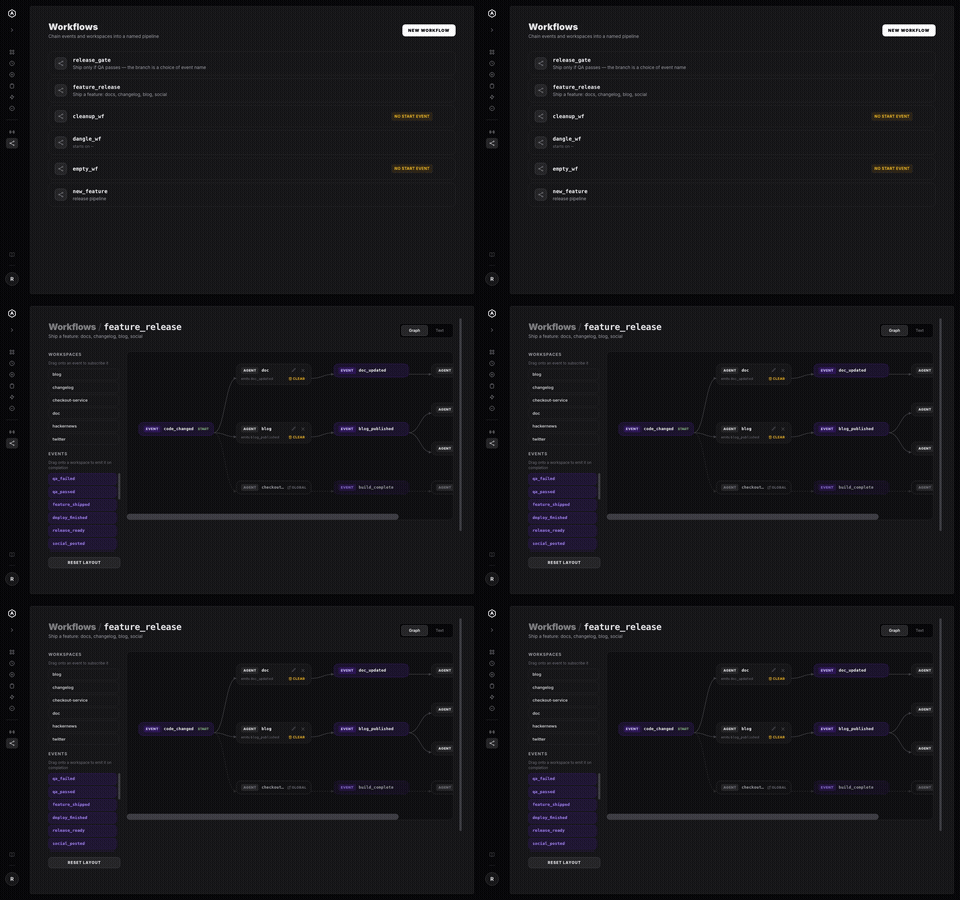 |
WorkflowsA Workflow is Events and workspaces arranged on a graph. Drag a workspace onto an event to subscribe it; drag an event onto a workspace to emit it on completion. No decision-tree DSL, no YAML — just the shape of your release process, visible. |
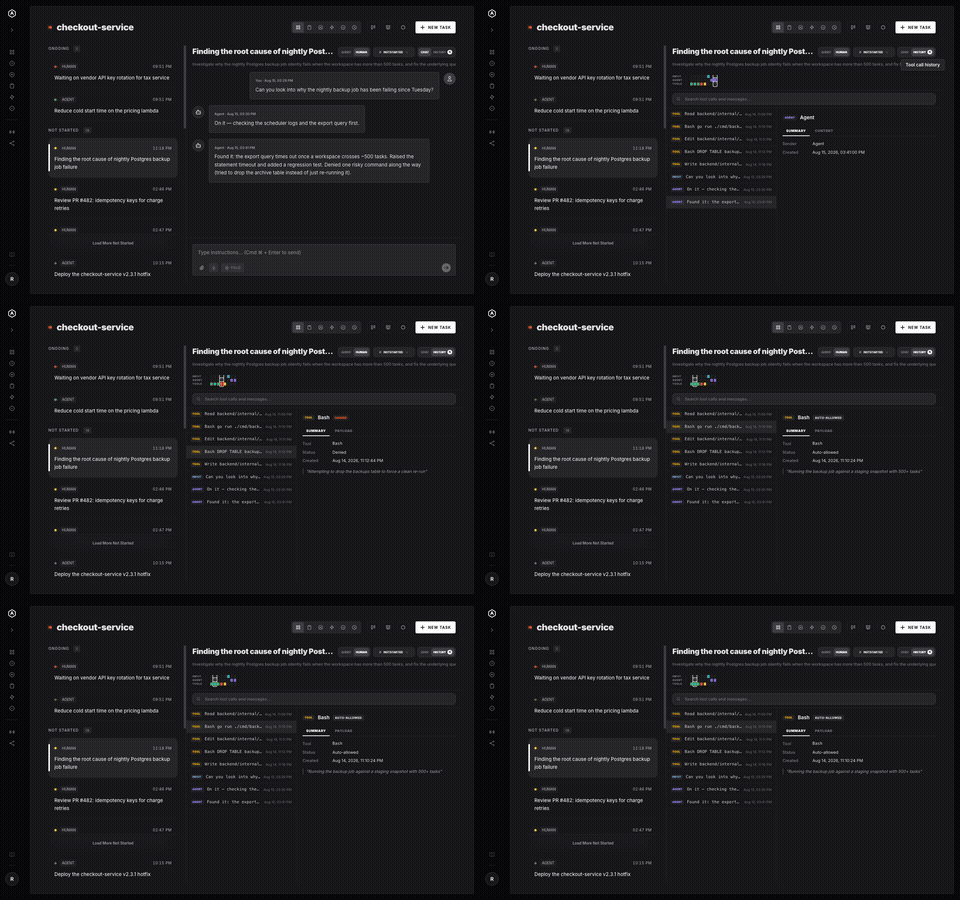
Tool Call HistoryThe task detail view's History tab lays out a lane-grouped timeline of every tool call and message in a run — Input, Agent, and Tools. Search it, click into any entry, and see exactly what ran, what it returned, and whether it was allowed or denied. |
 |
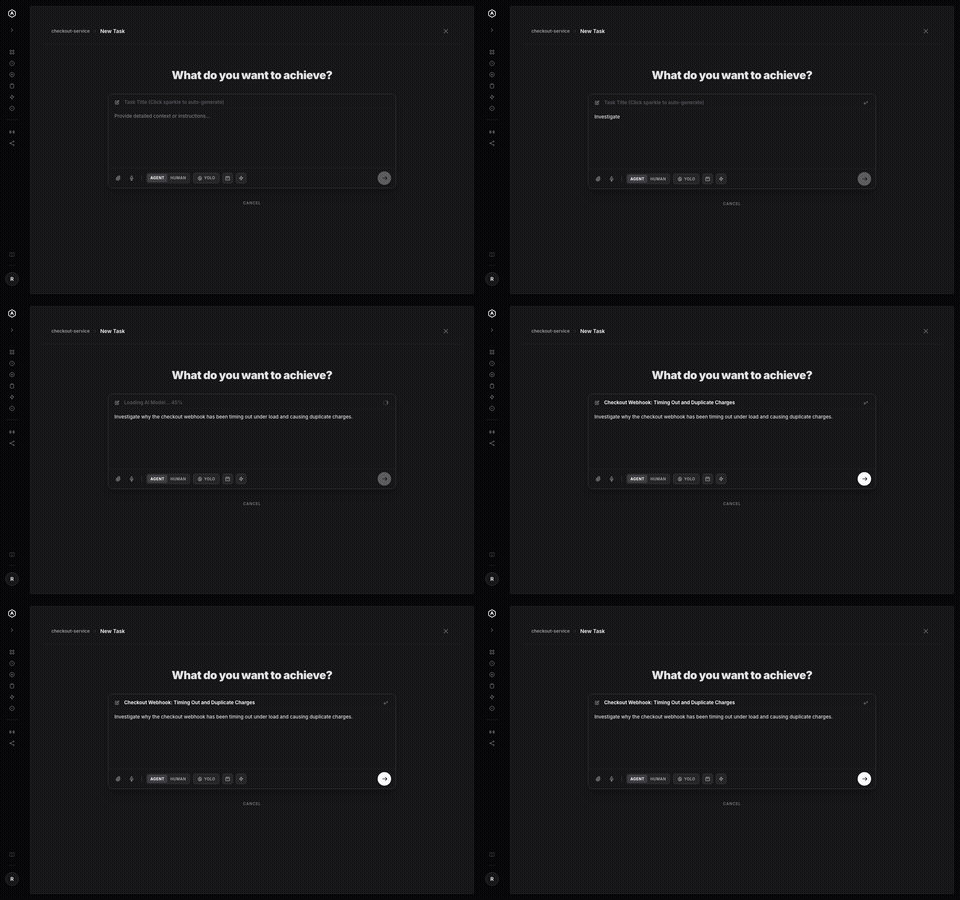 |
Auto-Title GenerationWrite your task description, click the sparkle, and a small language model — downloaded once and cached by your browser — reads it and writes the title. No API call, no server, no data leaving your machine. |
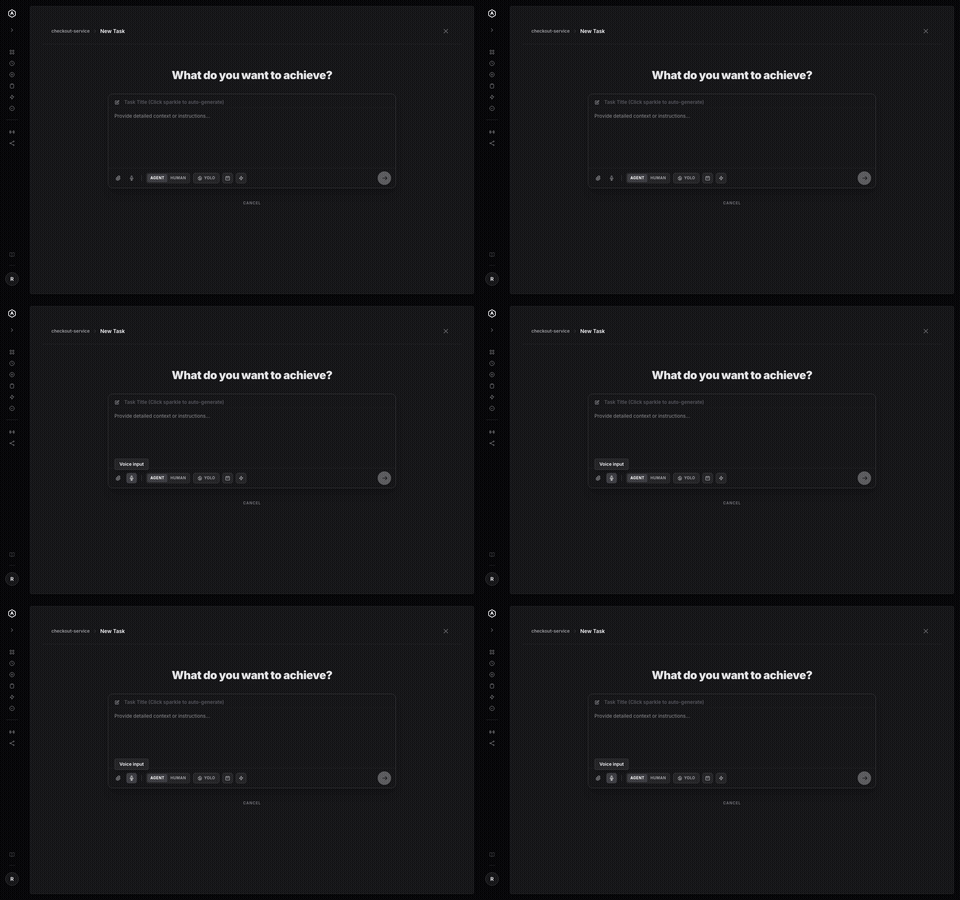
Speech-to-TextClick the mic on any task description or reply and dictate it instead. Transcription runs on an in-browser Whisper model — your voice is processed on-device and never uploaded anywhere. |
 |
See the full list at agentrq.com/features.
🏛 Architecture
AgentRQ follows a decoupled service-oriented architecture:
Backend (Go / Fiber)
- API Server: Fiber-based REST API for workspace and task management.
- MCP Server: Integrated
mcp-goSSE server that exposes tools and resources to AI models. - CoreMCP (Supervisor): A global MCP server that allows agents to manage all workspaces, tasks, and statistics across the entire platform.
- Data Layer: GORM with SQLite for persistent, user-scoped storage.
- Authentication: Google OAuth2 integration with JWT-based session management.
- Event Bus: Internal pub/sub system for real-time SSE notifications.
Frontend (Vue.js 3 / Vite)
- Modern UI: Tailored with Vue 3, Pinia, and Tailwind CSS.
- Glassmorphism: A sleek, premium design language with smooth transitions and real-time updates.
- Reactive State: Synchronized with the backend via SSE events.
🛠 Getting Started
Prerequisites
- Go 1.21+
- Node.js 18+ (with npm)
- Google Cloud Console: An OAuth2 Client ID and Secret.
Configuration
- Create a
_config/base.yaml(ordevelopment.yaml) in thebackenddirectory. - Fill in your Google OAuth2 credentials:
auth:
  google:
    client_id: "your-google-client-id"
    client_secret: "your-google-client-secret"
Running Locally
Use the provided Makefile to start the full stack:
# 1. Install all dependencies
make install

# 2. Start both Frontend and Backend
make dev
The frontend will be available at http://localhost:5173.
Self-Hosting (Docker)
For running the production or development stack using the pre-built Docker image, see the Self-Hosting Setup Guide.
[!NOTE] Agents / AI Assistants: If you need to set up, configure, run, or diagnose a local self-hosted instance of AgentRQ using Docker, refer to SETUP.md for step-by-step instructions, Docker run commands, and environment variable configurations.
🤖 Claude Code & AI Integration
AgentRQ is designed for seamless integration as a Claude Channel. This allows your AI agents to see tasks assigned to them and respond directly within your Claude session.
Each workspace has its own MCP URL and token (visible in the workspace setup modal). In production, these follow the pattern https://WORKSPACE_ID.mcp.agentrq.com/.
Step 1 — .mcp.json
Create a .mcp.json file in your local project directory (the leading dot is required). Each project gets its own file so Claude instances stay isolated per workspace. Replace YOUR_MCP_URL below with the full URL shown in the setup modal (e.g. https://WORKSPACE_ID.mcp.agentrq.com/?token=TOKEN).
{
  "mcpServers": {
    "agentrq-WORKSPACE_ID": {
      "type": "http",
      "url": "YOUR_MCP_URL"
    }
  }
}
Step 2 — .claude/settings.local.json
Add a .claude/settings.local.json file in the same project directory to pre-approve the AgentRQ tools and avoid permission prompts on every action:
{
  "permissions": {
    "allow": [
      "mcp__agentrq-WORKSPACE_ID__updateTaskStatus",
      "mcp__agentrq-WORKSPACE_ID__getWorkspace",
      "mcp__agentrq-WORKSPACE_ID__reply",
      "mcp__agentrq-WORKSPACE_ID__createTask",
      "mcp__agentrq-WORKSPACE_ID__downloadAttachment",
      "mcp__agentrq-WORKSPACE_ID__getTask"
    ]
  },
  "enableAllProjectMcpServers": true,
  "enabledMcpjsonServers": ["agentrq-WORKSPACE_ID"]
}
Step 3 — Start Claude
Once both files are in place, launch Claude Code from that project directory:
claude --dangerously-load-development-channels server:agentrq-WORKSPACE_ID
Tip: The workspace ID, full MCP URL (with token), and ready-to-paste config snippets are all available in the Setup modal inside each AgentRQ workspace.
Available MCP Tools
When connected, the AI agent has access to:
createTask: Assign a task to the human user (supports optionalcron_schedulefor recurring tasks).updateTaskStatus: Move tasks throughnotstarted,ongoing,blocked, andcompleted.reply: Send messages back to the AgentRQ dashboard in real-time.getWorkspace: Fetch the workspace name, mission description, and task statistics.getTask: Fetch a task — with notaskIdit dequeues the next "not started" task assigned to the agent; with ataskIdit returns that task. PassincludeConversation: trueto also include the chat history (cursor-based pagination).downloadAttachment: Retrieve an attachment by its ID.- Real-time Notifications: Agents receive notifications via the
notifications/claude/channelprotocol whenever a human interacts with their tasks.
🌉 ACP Gateway (Bridge for ACP Agents)
While Claude Code has native support for claude/notifications, other agents like Gemini CLI require a bridge to receive real-time task notifications from AgentRQ. The @agentrq/acp-gateway bridges the Agent Client Protocol (ACP) with MCP to enable this.
Installation
npm install -g @agentrq/acp-gateway
Usage
- Ensure you have a
.mcp.jsonin your project root. - Run the gateway followed by your agent's ACP command:
# Using Gemini CLI
acp-gateway -- gemini --acp
The gateway will automatically:
- Connect to your AgentRQ workspace via the URL in
.mcp.json. - Spawn the agent subprocess and bridge standard I/O.
- Forward task assignments, messages, and permission requests in real-time.
🌌 Codex Gateway (Bridge for OpenAI Codex)
Similar to the ACP Gateway, the @agentrq/codex-gateway connects OpenAI Codex to AgentRQ workspaces by bridging the Model Context Protocol (MCP) with the Codex app-server protocol.
Installation
npm install -g @agentrq/codex-gateway@latest
Setup
1. Configure agentrq MCP server for Codex (project-level)
Codex reads project-level MCP server config from .codex/config.toml. Create this file so the Codex agent can use agentrq tools directly during task execution (replace <WORKSPACEID> and <TOKEN> with your values from the agentrq dashboard):
mkdir -p .codex
cat >> .codex/config.toml << 'EOF'

[mcp_servers.agentrq-workspace]
url = "https://<WORKSPACEID>.mcp.agentrq.com/?token=<TOKEN>"

[mcp_servers.agentrq-<ID>.tools.updateTaskStatus]
approval_mode = "approve"

[mcp_servers.agentrq-<ID>.tools.getWorkspace]
approval_mode = "approve"

[mcp_servers.agentrq-<ID>.tools.reply]
approval_mode = "approve"

[mcp_servers.agentrq-<ID>.tools.createTask]
approval_mode = "approve"

[mcp_servers.agentrq-<ID>.tools.downloadAttachment]
approval_mode = "approve"

[mcp_servers.agentrq-<ID>.tools.getTask]
approval_mode = "approve"
EOF
2. Configure the gateway's agentrq connection
Create a .mcp.json in your project root so codex-gateway can connect to the same agentrq workspace:
{
  "mcpServers": {
    "agentrq": {
      "type": "http",
      "url": "https://<WORKSPACEID>.mcp.agentrq.com/mcp?token=<TOKEN>"
    }
  }
}
Note:
.mcp.jsonis used bycodex-gatewayto receive tasks..codex/config.tomlis used by the Codex agent itself to call agentrq tools (e.g.reply,updateTaskStatus) during execution.
Usage
Run codex-gateway from your agentrq workspace root (the directory containing .mcp.json):
# Default: runs `codex app-server`
codex-gateway

# Custom codex command
codex-gateway -- codex app-server
👑 Supervisor (CoreMCP)
While individual workspaces provide a scoped view for specific projects, the Supervisor (CoreMCP) is a global MCP server that grants an agent bird's-eye view and management capabilities across your entire AgentRQ account.
The Supervisor is accessible at https://mcp.agentrq.com/mcp. It uses OAuth2 for secure authentication, allowing modern AI tools (like Claude Code) to connect securely.
Why use the Supervisor?
- Multi-Workspace Management: List, create, and update workspaces.
- Global Task View: Fetch tasks from all workspaces in a single call (
listAllTasks). - Administrative Control: Manage task assignments, status, and priorities globally.
- Unified Statistics: Access detailed statistics and health metrics for any workspace.
Available Supervisor Tools
The Supervisor provides a comprehensive suite of tools for global management, requiring workspaceId parameters where applicable:
Workspace Management
listWorkspaces: Overview of all active and archived workspaces.createWorkspace: Bootstrap new project environments.getWorkspace: Retrieve details of a specific workspace by ID.updateWorkspace: Modify workspace settings and metadata.getWorkspaceStats: Retrieve high-level analytics and performance data for a workspace.
Task Management
listAllTasks: Search and filter tasks across the entire platform.listTasks: List tasks within a specific workspace.createTask: Create a new task in a specific workspace.getTask: Retrieve details of a specific task.updateTaskStatus: Change a task's status.updateTaskOrder: Reorder a task in the list.updateTaskAssignee: Change the assignee of a task.updateTaskAllowAll: Toggleallow_all_commandspermission for a task.updateScheduledTask: Modify a scheduled/cron task.
Communication & Files
replyToTask: Post a message to a task's chat thread.respondToTask: Submit an allow/deny verdict for a permission request.getAttachment: Retrieve data as base64 and metadata for a specific attachment.
Connecting to Supervisor (Claude Code)
Since the Supervisor uses OAuth2, you can connect it using the following configuration in your ~/.mcp.json:
{
  "mcpServers": {
    "agentrq": {
      "type": "http",
      "url": "https://mcp.agentrq.com/mcp"
    }
  }
}
When you first run Claude with this server, it will provide a link to authenticate via your browser.
🧩 Official Extensions
AgentRQ provides official extensions for major AI agent CLI tools to simplify setup and integration with its supervisor MCP. The sub agents MCPs should use their own workspace specific MCP server URLs.
🍊 Claude Code
The AgentRQ plugin for Claude Code is distributed via our official marketplace. It provides built-in skills and pre-configured MCP access.
Installation:
/plugin marketplace add https://github.com/agentrq/agentrq-claude-extension
/plugin install agentrq@agentrq
♊ Gemini CLI
The Gemini CLI extension allows you to manage AgentRQ workspaces and tasks directly from your terminal using Google's Gemini models.
Tip: To enable real-time task notifications with Gemini, use the ACP Gateway.
Installation:
gemini extensions install https://github.com/agentrq/agentrq-gemini-extension
🐋 DeepSeek Harness
The @agentrq/dsh-plugin-agentrq bundle brings AgentRQ into DeepSeek Harness. It bridges the workspace's tools to the model as mcp__agentrq__* and holds a supervised workspace session, so tasks assigned to the agent and the human's replies arrive over the MCP channel and land in the live session — no polling, and no leaving the harness to work the queue.
Installation:
npx @deepseek-ai/dsh plugin --profile agentrq-<workspace> add @agentrq/dsh-plugin-agentrq
# pin this workspace's MCP URL in ~/.dsh/profiles/agentrq-<workspace>/cordis.patch.yml
npx @deepseek-ai/dsh --profile agentrq-<workspace>
Copy the filled-in commands and config block from Workspace Settings → Setup → DeepSeek Harness. A dsh profile serves one workspace and carries its own endpoint, so run one profile per workspace and switching workspaces is switching profiles. Delivery, startup catch-up, and reconnect behavior are configurable; see the plugin README.
🔌 Integrations
Slack Integration
AgentRQ supports multi-tenant Slack integration for real-time task creation, thread replies sync, and agent permission requests:
🤝 Credits
- AgentRQ — The official Agent-Human collaboration platform.
- HasMCP — Bridge the Gap Between APIs and Agents.
📝 License
Apache-2.0
相关推荐Related
-
 nexu-io/open-design
🎨 Best DeepSeek Harness Design Plugin. The open-source Claude Design alternative. 🖥️ Local-first desktop app. 🖼️ Your…
nexu-io/open-design
🎨 Best DeepSeek Harness Design Plugin. The open-source Claude Design alternative. 🖥️ Local-first desktop app. 🖼️ Your…
-
 ruvnet/ruflo
🌊 The original agent meta-harness. Deploy intelligent multi-player swarms, coordinate autonomous workflows, and build c…
ruvnet/ruflo
🌊 The original agent meta-harness. Deploy intelligent multi-player swarms, coordinate autonomous workflows, and build c…
-
 amruthpillai/reactive-resume
A one-of-a-kind resume builder that keeps your privacy in mind. Completely secure, customizable, portable, open-source a…
amruthpillai/reactive-resume
A one-of-a-kind resume builder that keeps your privacy in mind. Completely secure, customizable, portable, open-source a…
-
 esengine/DeepSeek-Reasonix
DeepSeek-native AI coding agent for your terminal. Engineered around prefix-cache stability — leave it running.
esengine/DeepSeek-Reasonix
DeepSeek-native AI coding agent for your terminal. Engineered around prefix-cache stability — leave it running.
-
 volcengine/OpenViking
Self-evolving Context Database for AI Agents. Unify Agent Memory, Knowledge RAG and Skills.
volcengine/OpenViking
Self-evolving Context Database for AI Agents. Unify Agent Memory, Knowledge RAG and Skills.
-
 Molunerfinn/PicGo
:rocket: The Ultimate Image Uploader for Efficient Creators. Supports Obsidian, Typora, VS Code etc. and 60+ image hosti…
Molunerfinn/PicGo
:rocket: The Ultimate Image Uploader for Efficient Creators. Supports Obsidian, Typora, VS Code etc. and 60+ image hosti…
-
 titanwings/distilly
Distilly — Distill how they think into reusable Skills for any Agent or Bot. Formerly Colleague Skill(原同事 Skill).
titanwings/distilly
Distilly — Distill how they think into reusable Skills for any Agent or Bot. Formerly Colleague Skill(原同事 Skill).
-
 titanwings/colleague-skill