
agentscope-ai/ReMe
🧠 ReMe turns conversations and resources into readable, editable, searchable, and interconnected Markdown memory. Agents such as QwenPaw, OpenClaw, Hermes, and Claude Code can share the same workspace to retrieve, maintain, and evolve knowledge, while users retain control of the durable files.
catalog 简介 / catalog descriptioncatalog description:ReMe: Memory Management Kit for Agents - Remember Me, Refine Me.
项目介绍Project Overview
ReMe 是面向 AI 智能体的本地优先、自演化个人知识库插件,将对话与资源沉淀为可读、可编辑、可搜索、带 wikilink 的 Markdown 记忆,并通过 BM25、可选向量检索和链接扩展做上下文召回。适合多个智能体共享工作区、长期维护事实与流程时使用;需 Python 3.11+,索引和元数据依赖本地文件重建。
ReMe is a local-first, self-evolving personal knowledge-base plugin for AI agents. It turns conversations and resources into readable, editable, searchable Markdown memory with frontmatter and wikilinks, using BM25, optional embeddings, and link expansion for context-aware recall. Use it when multiple agents need a shared workspace for long-term facts, preferences, and procedures. It requires Python 3.11+, and indexes are rebuilt from local files.
请帮我了解并安装插件:【ReMe】【https://github.com/agentscope-ai/ReMe】把上面这条消息直接发给当前会话里的 DSH,让它帮你了解并安装。安装命令不一定准确,发给 DSH 更稳。Send this message to DSH in your current session. CLI install commands may not be accurate across systems — DSH will figure it out for you.
或使用命令行安装(适合开发者)Or use CLI install (for developers)
命令行安装CLI Install
dsh plugin --profile web add github:agentscope-ai/ReMe把 agentscope-ai/ReMe 加入你的 DSH 配置(web profile)即可启用。
READMEREADME











A local-first, self-evolving personal knowledge base for AI agents.
Previous versions: 0.3.x · 0.2.x · MemoryScope
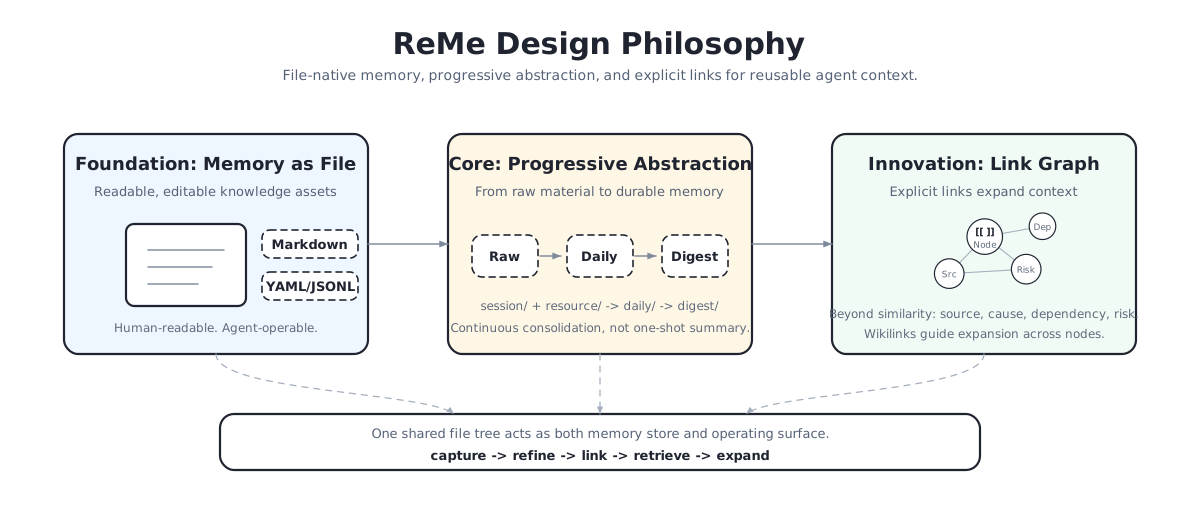
✨ Why ReMe?
🧠 ReMe turns conversations and resources into readable, editable, searchable, and interconnected Markdown memory. Agents such as QwenPaw, OpenClaw, Hermes, and Claude Code can share the same workspace to retrieve, maintain, and evolve knowledge, while users retain control of the durable files.
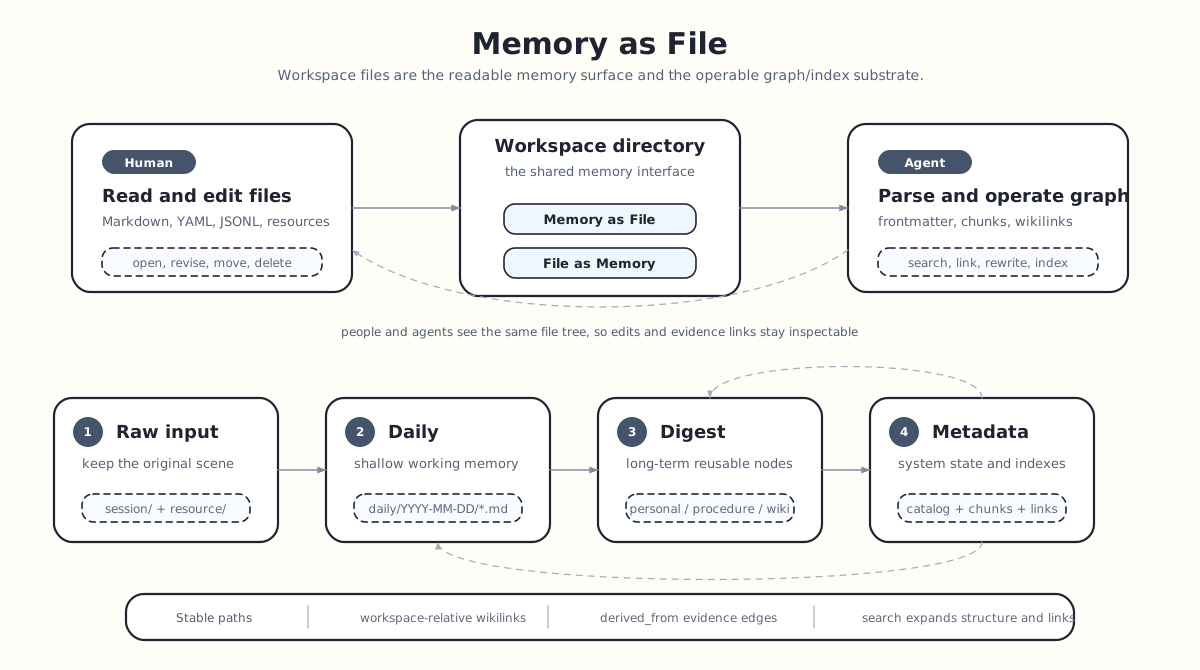
- Memory as File, File as Memory: ReMe stores durable memory as ordinary Markdown with frontmatter and wikilinks. Users and agents can inspect, edit, move, sync, and back it up with familiar tools, while indexes and generated metadata remain rebuildable.
- Self-evolving knowledge base: ReMe progressively turns conversations and resources into daily notes and long-term knowledge, preserving sources while refining facts, preferences, procedures, and relationships over time.
- Recall is precise and context-aware. BM25, optional embeddings, and wikilink expansion retrieve relevant line-level passages and their relationships without loading the entire knowledge base into the agent context.
- One memory workspace works across agents. Personal assistants, coding agents, and other agent runtimes can share the same local workspace through native integrations, SKILL.md, CLI, HTTP, MCP, or Python APIs.
📰 Latest Updates
- [2026.08] - Published
@agentscope-ai/reme, providing a native ReMe memory integration for DeepSeek Harness. - [2026.08] - Published the ReMe blog, an end-to-end introduction to its local-first memory architecture, self-evolving workflows, hybrid search, proactive discovery, and benchmark results.
- [2026.08] - Experience-driven enhancement method of agent tool-use execution built on ReMe is available on arXiv:2608.03403.
- [2026.07] - Introduced optional plugins: Daily Paper for paper discovery and analysis, and Auto Fin for researching the latest 24 hours of topic-related CLS news with local-memory search and validated historical wikilinks.
- [2026.07] - Our paper Remember Me, Refine Me: A Dynamic Procedural Memory Framework for Experience-Driven Agent Evolution has been accepted to Findings of ACL 2026.
🚀 Quick Start
Installation
ReMe requires Python 3.11+.
Install from pip:
pip install "reme-ai[core]"
Install from source:
git clone https://github.com/agentscope-ai/ReMe.git
cd ReMe
pip install -e packages/reme_ai_studio -e ".[core]"
cd website
npm ci
npm run build:static
cd ..
The static build requires Node.js 22.13 or newer and makes Studio available from the source tree.
Start the Service
reme start
The default service address is 127.0.0.1:2333. If the port is occupied, specify another port:
reme start service.port=8181
# reme start workspace_dir=/tmp/reme-demo service.port=8181
reme version
reme health_check
reme help
curl -s http://127.0.0.1:2333/version -H 'Content-Type: application/json' -d '{}'
5-Minute Memory Demo
With the service running, write a memory node, let ReMe index it, then retrieve it:
reme write \
  path=digest/wiki/quick-start-demo \
  name="Quick Start Demo" \
  description="A first ReMe memory node" \
  content="# Quick Start Demo

ReMe stores agent memory as readable Markdown.

Related: [[digest/wiki/memory-as-file.md]]"

reme search query="agent memory markdown" limit=5
reme read path=digest/wiki/quick-start-demo start_line=1 end_line=20
The generated file is ordinary Markdown with frontmatter:
---
name: Quick Start Demo
description: A first ReMe memory node
---

# Quick Start Demo

ReMe stores agent memory as readable Markdown.

Related: [[digest/wiki/memory-as-file.md]]
ReMe Studio (Optional)
The core installation includes Studio. After starting ReMe, open http://127.0.0.1:2333/ to browse, edit, and search
the workspace. To add Studio to a base installation, use pip install "reme-ai[web]". See the
ReMe Studio guide for source builds, configuration, and development.
Optional Model Configuration
Configure environment variables when you want LLM-powered memory evolution or embedding retrieval. Embeddings are disabled by default, so the default setup does not start an embedding model or require an embedding API key.
cat > .env <<'EOF'
# Optional: used only after embedding components are explicitly enabled in the config.
# EMBEDDING_API_KEY=sk-xxx
# EMBEDDING_BASE_URL=https://dashscope.aliyuncs.com/compatible-mode/v1

# Required for auto_memory, auto_resource, and auto_dream.
LLM_API_KEY=sk-xxx
LLM_BASE_URL=https://dashscope.aliyuncs.com/compatible-mode/v1
EOF
Basic file operations, BM25 search, wikilink traversal, and reading proactive topics can run without LLM credentials.
[!NOTE] To enable embedding-based semantic retrieval, uncomment
components.as_embeddingandcomponents.embedding_storeinreme/config/default.yaml, then changecomponents.file_store.default.embedding_storefrom""todefault. See the memory search guide for details.
🤝 Use ReMe with Your Agent
ReMe can run as a local memory service accessed through the CLI, HTTP API, or MCP server, or it can be embedded in the host process through its Python API. Host integrations can add memory guidance, recall, and capture to the agent lifecycle according to the capabilities of each runtime.
| Agent | Recommended path | Available after integration |
|---|---|---|
| DeepSeek Harness | Install @agentscope-ai/reme with dsh plugin --profile web add @agentscope-ai/reme. |
Long-term memory guidance, the reme_search tool, and automatic capture of completed main-agent turns. |
| OpenClaw | Install @agentscope-ai/reme with openclaw plugins install @agentscope-ai/reme. |
Native memory tools, recall before user-triggered runs, and automatic turn capture. |
| QwenPaw | Embed ReMe in-process through its Python API. | Reuse the host lifecycle and model config while keeping memory local and file-based. |
| Claude Code | Start the streamable HTTP MCP service and install the ReMe plugin. | MCP recall tools, the reme-memory skill, and a Stop hook that records sessions automatically. |
| Hermes | Start the HTTP service and install the ReMe provider. | Recall before model calls and asynchronous auto_memory after each completed turn. |
| Codex and other CLI agents | Install or copy the ReMe Memory skill. | Search, read, and write memory through the CLI; automatic capture requires host lifecycle integration. |
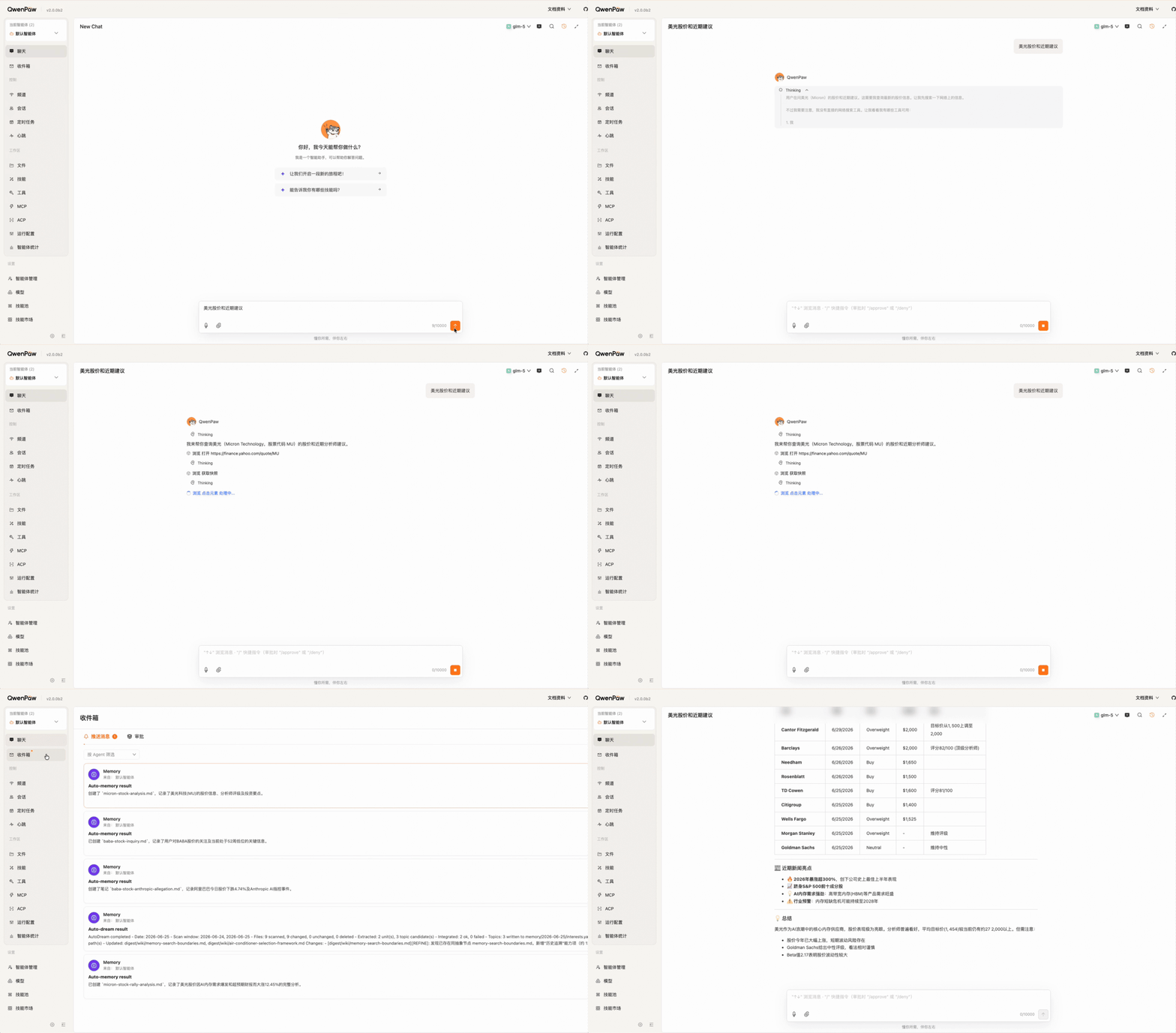
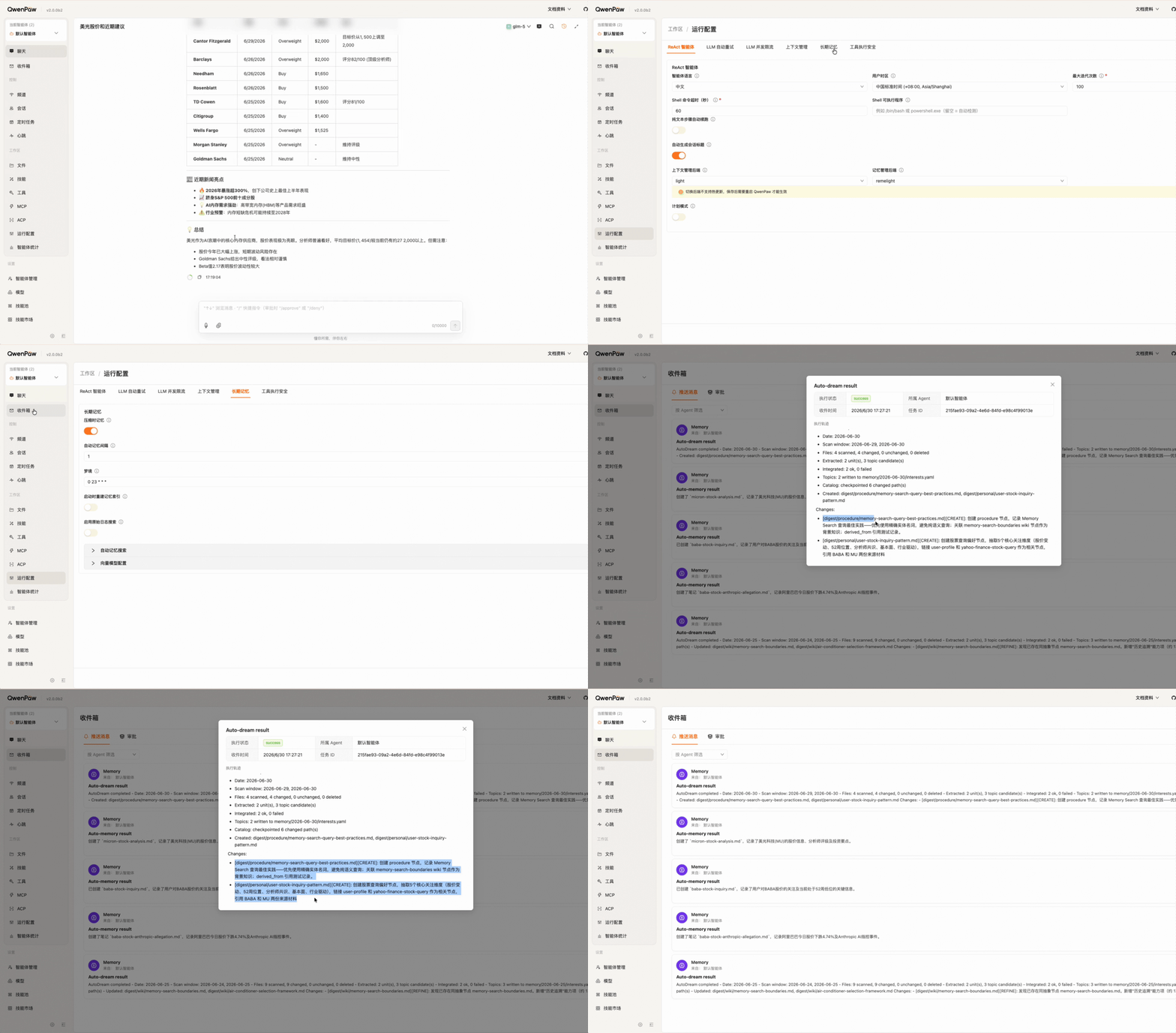
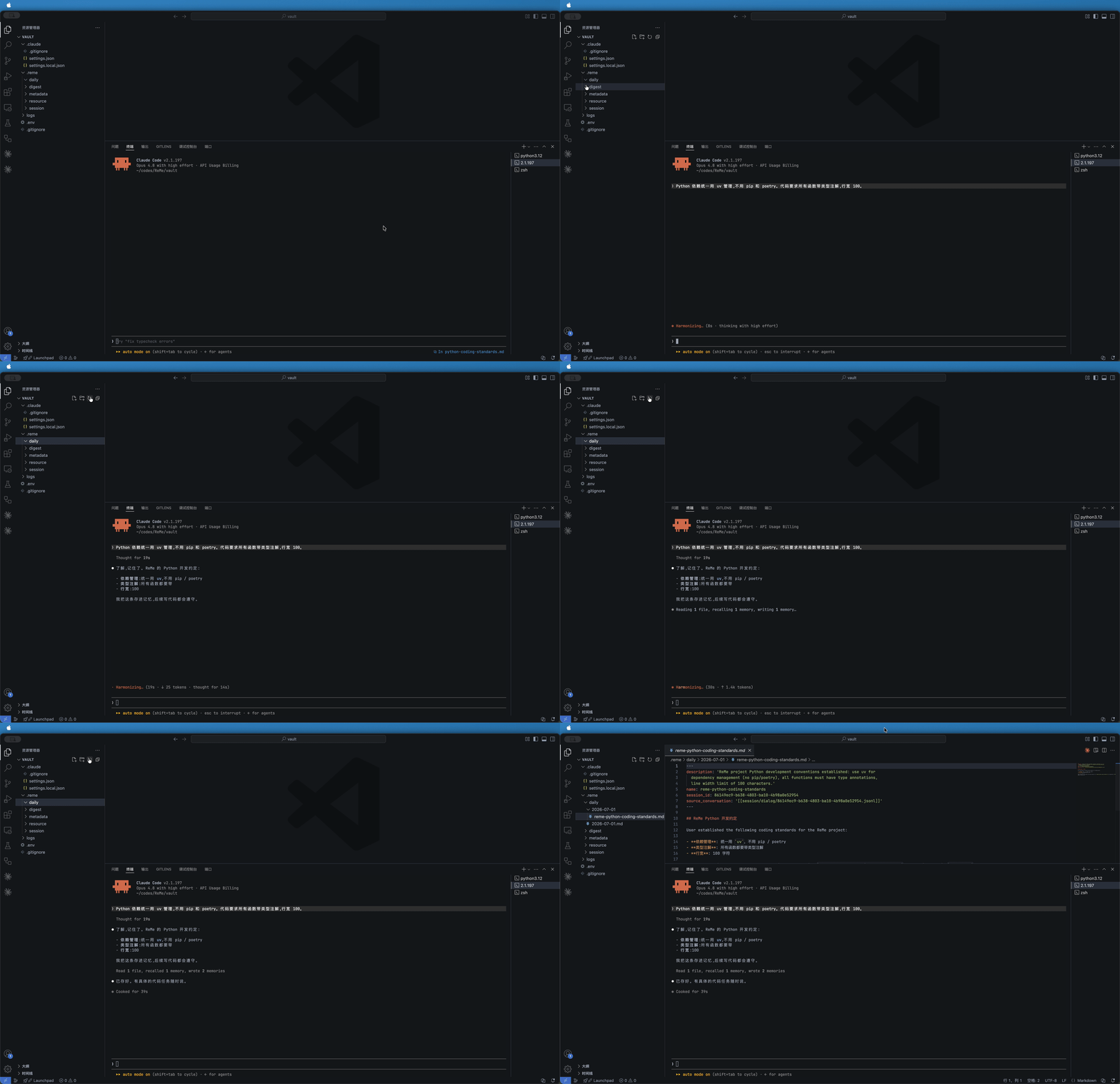
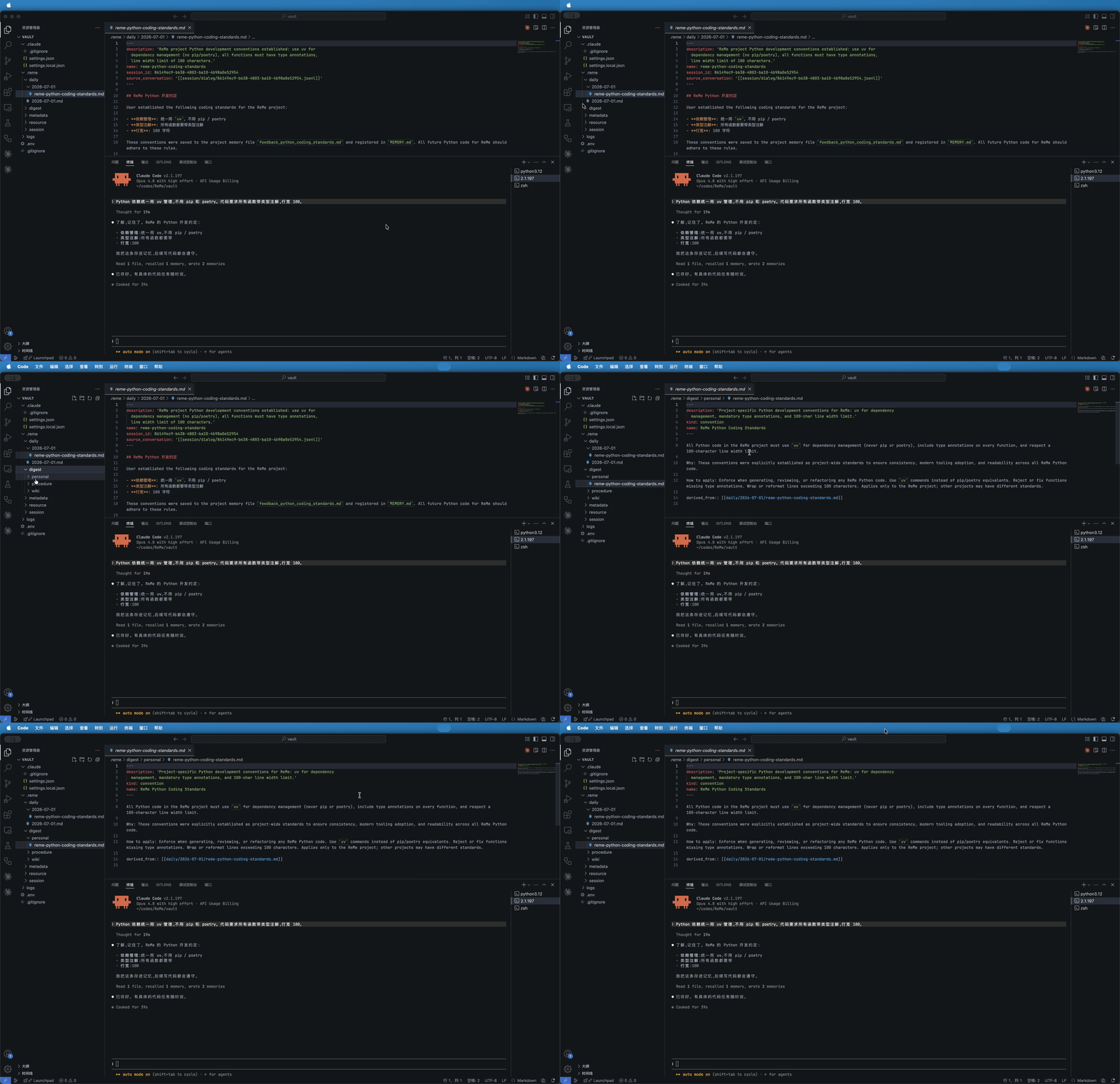
Integration demos
| Auto Memory | Auto Dream | |
| QwenPaw |
|
|
| Claude Code |
|
|
🧠 How ReMe Works
Memory as File, File as Memory.
ReMe treats memory as files, progressively processing filtered conversation source records and external resources
from session/ and resource/ into daily/, then digest/. The default workspace is .reme/ under the current
directory; workspace_dir=... selects a different user-owned location.
Workspace Layout
<workspace_dir>/
├── metadata/       # Rebuildable indexes, graphs, catalogs, and caches
├── session/        # Conversation source records and agent sessions
│   ├── dialog/
│   │   └── <session_id>.jsonl  # Source messages saved by auto_memory
│   └── claude_code/
│       └── <session_id>.jsonl  # ReMe copy used by auto_memory_cc
├── mem_session/    # Generated agent-wrapper sessions/config, not user memory
│   ├── agentscope/
│   ├── claude_config/
│   └── codex/
├── resource/            # External raw materials
│   ├── <resource>.<ext>  # Root-level files enter today's daily layer
│   └── YYYY-MM-DD/
│       └── <resource>.<ext>
├── daily/               # Lightly processed memory: daily facts, conversation summaries, resource readings
│   ├── YYYY-MM-DD.md
│   └── YYYY-MM-DD/
│       ├── <generated_name>.md  # Topic-named conversation or resource card
│       └── interests.yaml
└── digest/              # Long-term memory: personal facts, procedural experience, knowledge nodes
    ├── personal/
    │   └── {topic/event}.md
    ├── procedure/
    │   └── {topic/event}.md
    └── wiki/
        └── {topic/event}.md
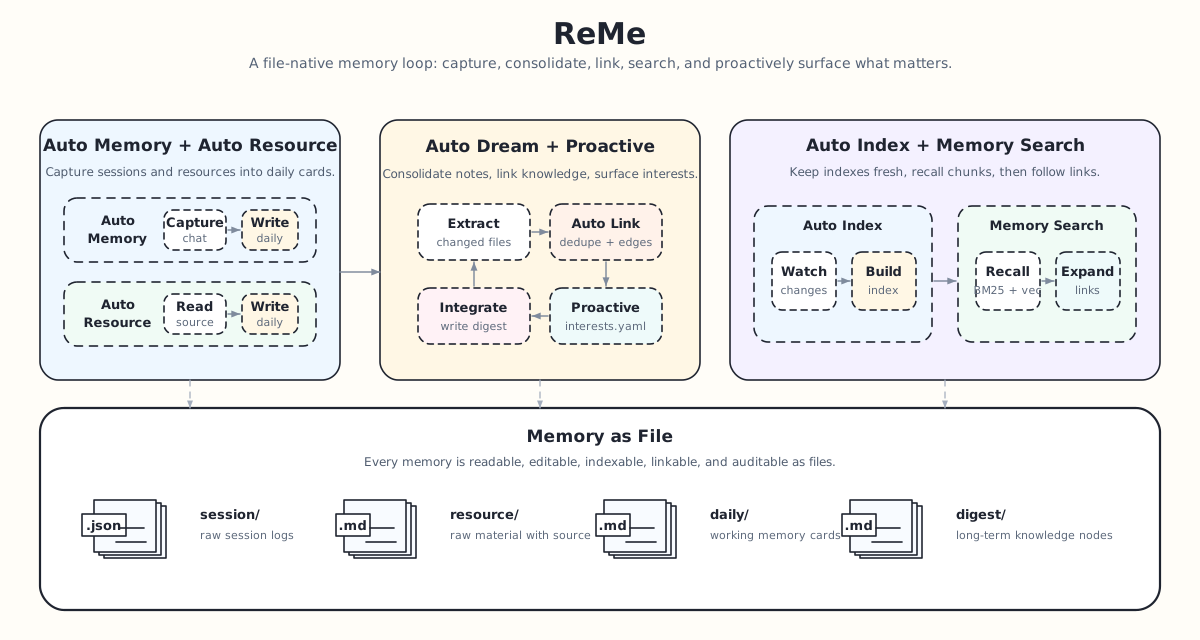
Memory Lifecycle
ReMe follows a capture → index → consolidate → recall loop. Workspace files remain the durable source of truth;
everything under metadata/ is rebuildable.
| Capability | Entry point | What it does | Output |
|---|---|---|---|
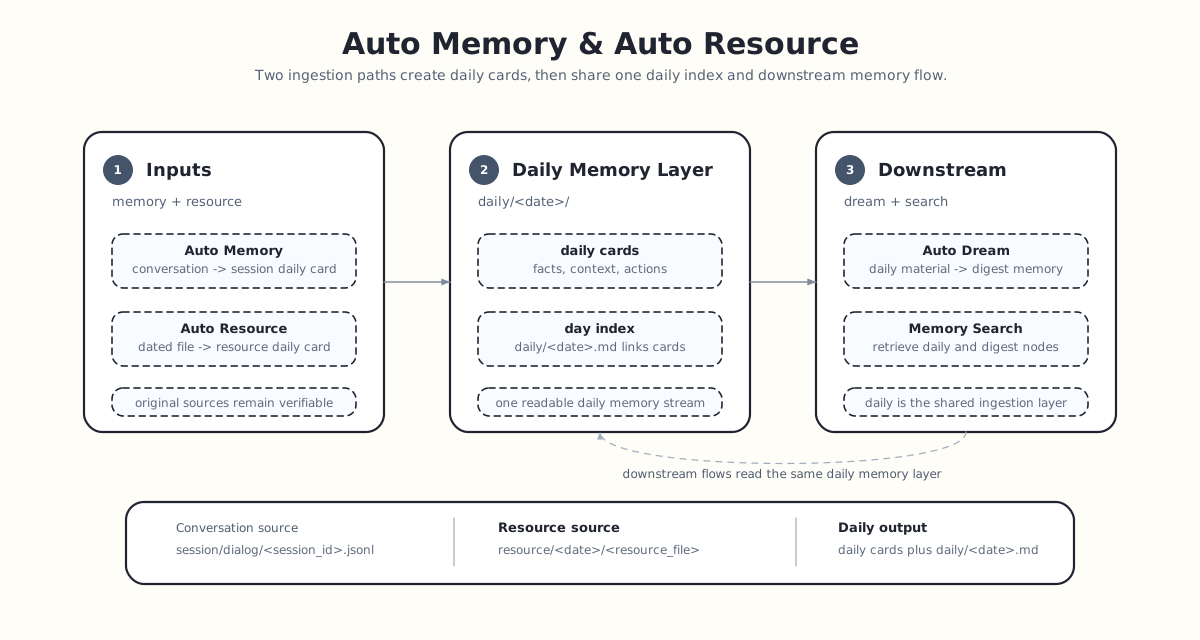
auto_memory |
Agent hook or reme auto_memory |
Distills useful conversation facts while preserving a filtered conversation source record. | session/dialog/*.jsonl, daily/<date>/<generated-name>.md |
auto_resource |
Resource watcher or reme auto_resource |
Turns files under resource/ into source-linked, content-named daily cards. |
daily/<date>/<resource-card>.md |
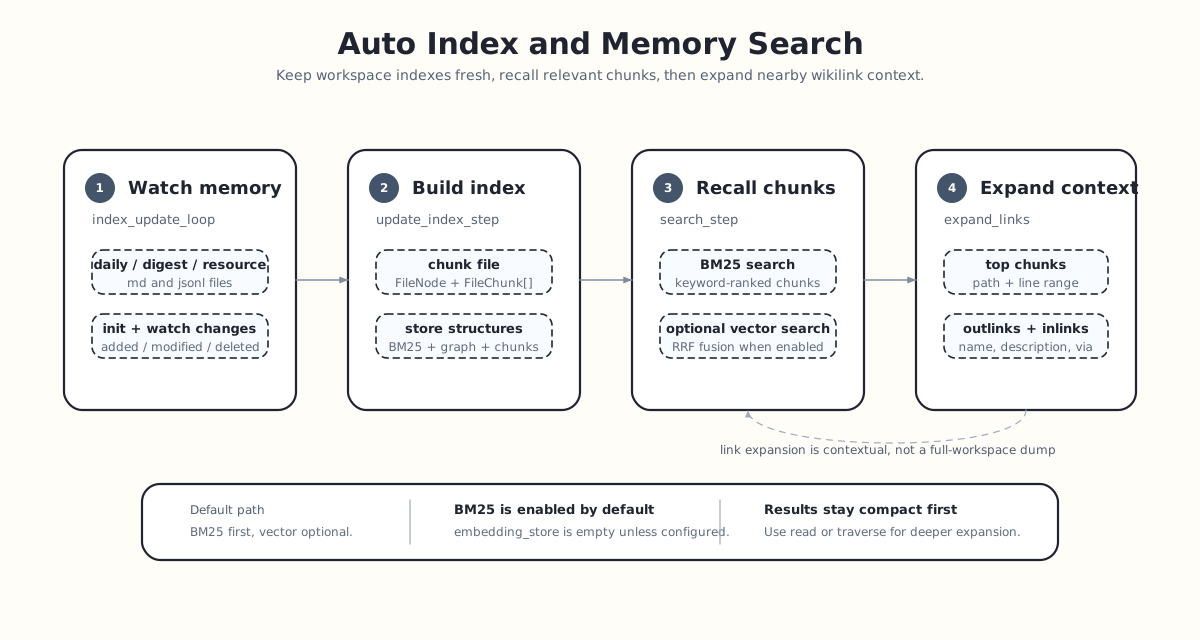
auto_index |
Background watcher or reme reindex |
Live-indexes Markdown in daily/ and digest/; a full rebuild also scans resource/ and JSONL. |
Searchable chunks, BM25, wikilink graph, and optional vectors |
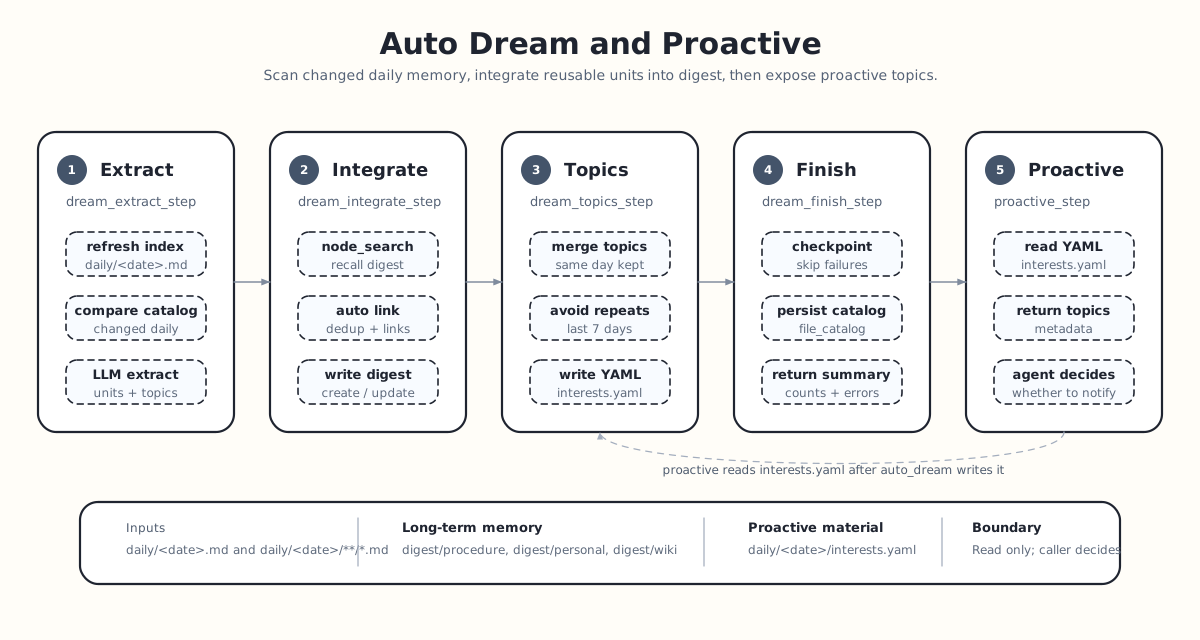
auto_dream |
dream_cron or reme auto_dream |
By default, extracts up to five reusable units from changed files in the latest two-day window, then creates, corroborates, refines, or corrects digest nodes. | digest/**, daily/<date>/interests.yaml |
proactive |
reme proactive before an agent decides to act |
Reads topics generated by auto_dream; the host agent decides whether and how to mention them. |
Structured topics from daily/<date>/interests.yaml |
|
|
|
|
Search returns matching chunks with line ranges and bounded wikilink neighbors. Optional vector results are fused with BM25 through reciprocal rank fusion (RRF).
[!IMPORTANT]
proactiveonly reads and exposes interest topics produced by Auto Dream. It does not independently browse the web, send notifications, or rewrite the knowledge base; the host agent decides whether and how to act on a topic.
📊 Benchmarks
ReMe evaluates multi-session and long-context memory with agentic search-and-read workflows. The figures below are the published reference runs in this repository; model, prompt, dataset, and judging details are documented with each benchmark.
| Benchmark | Setting | Sample size | Agentic score | Focus |
|---|---|---|---|---|
| LongMemEval cleaned-s | Overall | 500 questions | 89.4% | Cross-session retrieval, knowledge updates, and temporal reasoning |
| BEAM | 100K context | 20 cases / 400 questions | 66.1% | Ten types of long-context memory tasks |
| BEAM | 1M context | 35 cases / 700 questions | 65.0% | Ultra-long conversation settings |
ReMe also achieved a 0.580 PROC score across five user personas in the repository's π-Bench evaluation, 2.4% above NanoBot under the same test-model configuration. PROC measures proactive handling of hidden intent, clarification, cross-session preferences and conventions, task dependencies, and underspecified requests.
🧩 Extensions and Workflows
Plugins are optional Python distributions that contribute Component, Step, or Job backends and configuration. They are
installed separately and enabled explicitly by configuration. Daily Paper and Auto Fin are independently packaged
plugins; their source distributions live under plugins/.
| Plugin | Capability |
|---|---|
| Daily Paper | Discover and rank papers, analyze PDFs with an agent, and generate file-native notes and a five-minute brief. |
| Auto Fin | Fetch topic-related CLS news, search ReMe history, and generate wikilink-backed Markdown reports. |
See Plugin Management to install, inspect, validate, enable, and uninstall ReMe plugins.
📚 Documentation
These guides cover the main user workflows and the runtime contracts implemented by the current code.
| Guide | What you will learn |
|---|---|
| Quick Start | Install ReMe, start the service, and run the first file and memory operations. |
| Memory as File | Understand workspace layers, frontmatter, wikilinks, chunks, and the file-as-source-of-truth model. |
| Auto Memory | Preserve source conversations and distill reusable daily memory cards. |
| Auto Resource | Import supported text resources and turn them into source-linked daily cards. |
| Auto Dream and Auto Link | Consolidate daily notes into evolving digest nodes and readable wikilink relationships. |
| Memory Search | Use BM25, optional vectors, RRF fusion, line-range recall, and progressive link expansion. |
| Proactive | Read interest topics safely and integrate them into a host agent's decision flow. |
| Agent Integration Scenarios | Choose among CLI/SKILL.md, HTTP, MCP, and embedded Python integration. |
| Framework | Understand Application, Job, Step, Component, service, configuration, and lifecycle boundaries. |
| ReMe Blog | Read the product story, design rationale, examples, and benchmark summary. |
🛠️ Common Commands
Run reme help for the full job list. Common workspace and maintenance commands are:
| Command | Purpose |
|---|---|
reme status |
Show stateful data-component memory estimates and process RSS. |
reme search |
Retrieve memory with BM25 and wikilinks by default, plus vectors when enabled. |
reme read / reme write / reme edit |
Inspect and maintain Markdown memory files. |
reme traverse / reme graph_snapshot |
Explore wikilink neighborhoods or the category-rooted digest graph. |
reme chat |
Stream a read-only, workspace-aware agent conversation. Requires LLM credentials. |
reme reindex |
Rebuild search and wikilink indexes from existing files. |
🤝 Community and Contributing
- Issues, requests, and help: Check Open Issues first. If there is no related discussion, open one with the background, expected behavior, and impact scope.
- Code contributions: Before making changes, read the contribution guide. Source, schemas, and tests are the authoritative architecture and extension guide.
- Documentation contributions: Submit user-facing documentation changes to the
unified documentation repository under
reme/<version>/{en,zh}/. - Commit convention: Conventional Commits are recommended, for example
feat(search): add link expansion optionordocs(zh): update quick start. - Pre-submit checks: Before submitting a PR, try to run
pre-commit run --all-filesandpytest. If tests that depend on LLMs, embeddings, or external services cannot run, explain that in the PR. - Documentation: Visit reme.agentscope.io.
Contributors
Thanks to everyone who has contributed to ReMe:
📄 Citation
@software{ReMe2026,
  title = {Remember me, Refine me: Memory Management Kit for Agents},
  author = {ReMe Team},
  url = {https://reme.agentscope.io},
  year = {2026}
}
⚖️ License
This project is open source under the Apache License 2.0. See LICENSE for details.
相关推荐Related
-
 nexu-io/open-design
🎨 Best DeepSeek Harness Design Plugin. The open-source Claude Design alternative. 🖥️ Local-first desktop app. 🖼️ Your…
nexu-io/open-design
🎨 Best DeepSeek Harness Design Plugin. The open-source Claude Design alternative. 🖥️ Local-first desktop app. 🖼️ Your…
-
 ruvnet/ruflo
🌊 The original agent meta-harness. Deploy intelligent multi-player swarms, coordinate autonomous workflows, and build c…
ruvnet/ruflo
🌊 The original agent meta-harness. Deploy intelligent multi-player swarms, coordinate autonomous workflows, and build c…
-
 amruthpillai/reactive-resume
A one-of-a-kind resume builder that keeps your privacy in mind. Completely secure, customizable, portable, open-source a…
amruthpillai/reactive-resume
A one-of-a-kind resume builder that keeps your privacy in mind. Completely secure, customizable, portable, open-source a…
-
 esengine/DeepSeek-Reasonix
DeepSeek-native AI coding agent for your terminal. Engineered around prefix-cache stability — leave it running.
esengine/DeepSeek-Reasonix
DeepSeek-native AI coding agent for your terminal. Engineered around prefix-cache stability — leave it running.
-
 volcengine/OpenViking
Self-evolving Context Database for AI Agents. Unify Agent Memory, Knowledge RAG and Skills.
volcengine/OpenViking
Self-evolving Context Database for AI Agents. Unify Agent Memory, Knowledge RAG and Skills.
-
 Molunerfinn/PicGo
:rocket: The Ultimate Image Uploader for Efficient Creators. Supports Obsidian, Typora, VS Code etc. and 60+ image hosti…
Molunerfinn/PicGo
:rocket: The Ultimate Image Uploader for Efficient Creators. Supports Obsidian, Typora, VS Code etc. and 60+ image hosti…
-
 titanwings/distilly
Distilly — Distill how they think into reusable Skills for any Agent or Bot. Formerly Colleague Skill(原同事 Skill).
titanwings/distilly
Distilly — Distill how they think into reusable Skills for any Agent or Bot. Formerly Colleague Skill(原同事 Skill).
-
 titanwings/colleague-skill