AL-spiritphoenix/dsh-auto-model
项目介绍Project Overview
dsh-auto-model 是 DeepSeek Harness 的插件,为模型选择器新增 Auto 选项。会话选用 auto 时,每轮先用 Flash 小调用分类任务复杂度,再路由到 deepseek-v4-flash 或 deepseek-v4-pro,同轮后续步骤复用该判定,分类失败默认回退 Pro。适合希望按任务难易自动切换模型的 web 会话。注意:含图片会话无法选择 auto,分类调用不计入 token 计量,重启后按日志中的具体模型恢复。
dsh-auto-model is a DeepSeek Harness plugin that adds an Auto model option. When a session selects auto, it classifies each turn with a small Flash call and routes simple tasks to deepseek-v4-flash and complex tasks to deepseek-v4-pro, reusing the decision for later steps in that turn; classifier errors default to Pro. Use it when web sessions should switch models by task complexity. Caveat: image sessions cannot select auto, the classifier call is not metered, and restarts resume from the logged concrete model.
请帮我了解并安装插件:【dsh-auto-model】【https://github.com/AL-spiritphoenix/dsh-auto-model】把上面这条消息直接发给当前会话里的 DSH,让它帮你了解并安装。安装命令不一定准确,发给 DSH 更稳。Send this message to DSH in your current session. CLI install commands may not be accurate across systems — DSH will figure it out for you.
或使用命令行安装(适合开发者)Or use CLI install (for developers)
命令行安装CLI Install
dsh plugin --profile web add github:AL-spiritphoenix/dsh-auto-model把 AL-spiritphoenix/dsh-auto-model 加入你的 DSH 配置(web profile)即可启用。
READMEREADME
dsh-auto-model
English | 中文
A DeepSeek Harness bundle that adds an Auto model option. When a session selects auto, the plugin classifies each turn with a small Flash call and routes it to deepseek-v4-flash (SIMPLE) or deepseek-v4-pro (COMPLEX).
It is a plain-JavaScript bundle, so it installs straight from a git host with no build step. It uses only shipped core APIs and runs against an unmodified harness.
Install
Install into the web profile (the profile the dsh web command boots):
From a local checkout:
dsh plugin --profile web add ./dsh-auto-model
From GitHub:
dsh plugin --profile web add github:AL-spiritphoenix/dsh-auto-model
Then boot it:
dsh web
dsh web is the web profile's alias, so no --profile flag is needed. The model selector now lists Auto alongside Flash and Pro. The concrete model the router chooses is what the session log records in each request header.
How it works
- The plugin registers its own
deepseek-autoprovider route, whoselistModels()returns theautoentry at runtime. The directory entry is therefore independent ofllm-deepseek'smodelsconfig, so asettings.yamloverride cannot hide it. - The plugin listens on the root
agent/requestwaterfall (outsideinstallModelSelection) and rewritesauto— whichever provider carried it — to a concreteprovider/modelbefore dispatch. - Each turn's first step sends one auxiliary classifier call to
classifierModel(defaults to the fast model); later steps of the same turn reuse the decision. A failed call falls back toonClassifierError(defaultslow).
Configuration
All fields are optional and default to the DeepSeek V4 pair:
| Key | Default | Meaning |
|---|---|---|
provider |
deepseek-official |
Provider route the concrete requests are routed to. |
model |
auto |
Virtual model id shown and submitted; never dispatched. |
providerName |
DeepSeek(Auto) |
Selector group label. |
name |
Auto |
Selector model label. |
description |
(built-in) | Selector detail. |
fastModel |
deepseek-v4-flash |
Model for SIMPLE tasks. |
slowModel |
deepseek-v4-pro |
Model for COMPLEX tasks. |
classifierModel |
fastModel |
Model serving the classifier call. |
classifierPrompt |
(built-in) | Classifier system prompt. |
classifierMaxTokens |
16 |
Classifier output-token cap. |
classifierTimeoutMs |
10000 |
Classifier call deadline. |
contextBudgetChars |
4000 |
Maximum task characters fed to the classifier. |
onClassifierError |
slow |
Target when classification fails or returns an unknown token. |
Override them in the web profile's cordis.patch.yml:
- id: auto-model
  config:
    fastModel: deepseek-v4-flash
    slowModel: deepseek-v4-pro
    onClassifierError: slow
Limitations
autois advertised as a text model, so an image-containing session cannot select it.- The classifier call is an auxiliary dispatch and is not counted by the token meter.
autois session-local: after a restart, a non-blank session resumes from the logged concrete model rather than re-classifying.
相关推荐Related
-
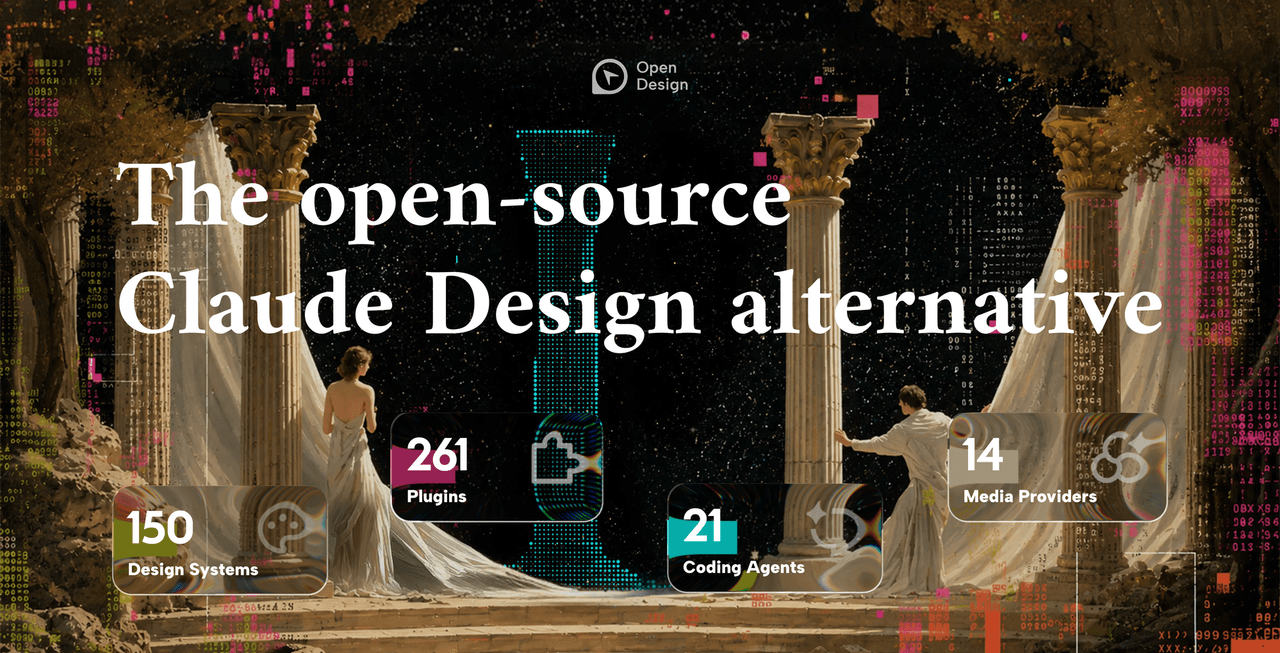 nexu-io/open-design
🎨 Best DeepSeek Harness Design Plugin. The open-source Claude Design alternative. 🖥️ Local-first desktop app. 🖼️ Your…
nexu-io/open-design
🎨 Best DeepSeek Harness Design Plugin. The open-source Claude Design alternative. 🖥️ Local-first desktop app. 🖼️ Your…
-
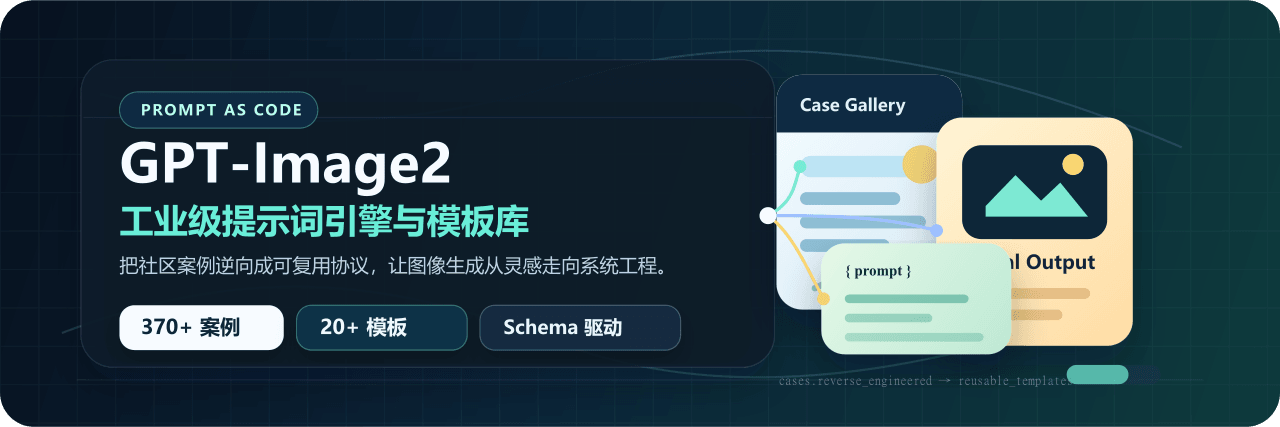 freestylefly/awesome-gpt-image-2
Prompt as Code | GPT-Image2 工业级提示词引擎与模板库,530+ 个案例逆向工程,20+ 套工业级模板,并提炼出Skills,持续更新中
freestylefly/awesome-gpt-image-2
Prompt as Code | GPT-Image2 工业级提示词引擎与模板库,530+ 个案例逆向工程,20+ 套工业级模板,并提炼出Skills,持续更新中
-
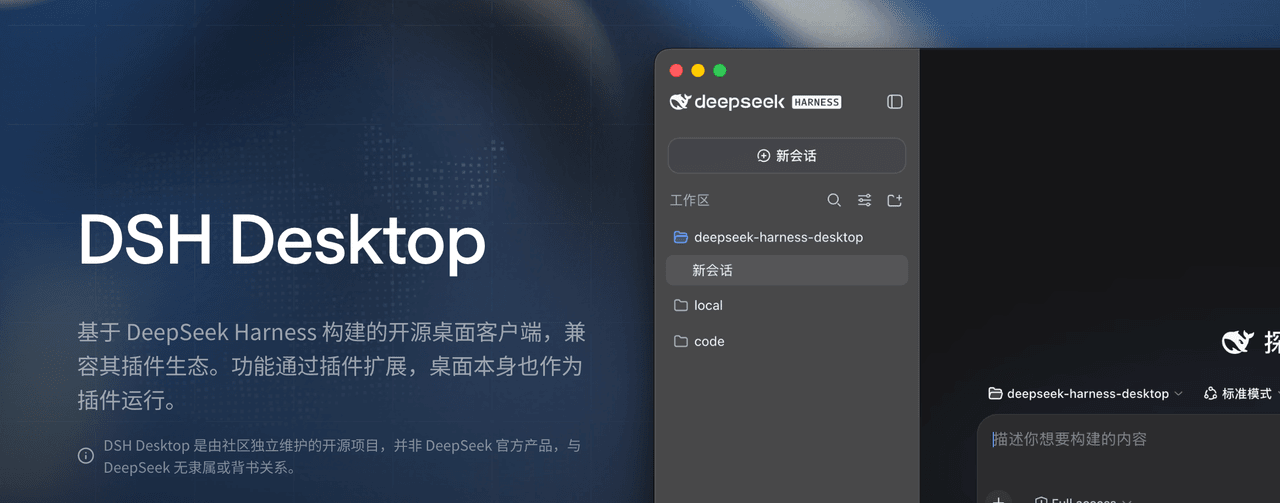 anywhere-labs/dsh-desktop
为 DeepSeek Harness (DSH) 插件生态打造的现代化桌面端解决方案。万物皆「插件」,桌面本身也是「插件」。
anywhere-labs/dsh-desktop
为 DeepSeek Harness (DSH) 插件生态打造的现代化桌面端解决方案。万物皆「插件」,桌面本身也是「插件」。
- Nagi-ovo/voyager Enhancement suite for Gemini, AI Studio, Claude & ChatGPT — plus a prompt manager for any web UI, DeepSeek Harness inclu…
-
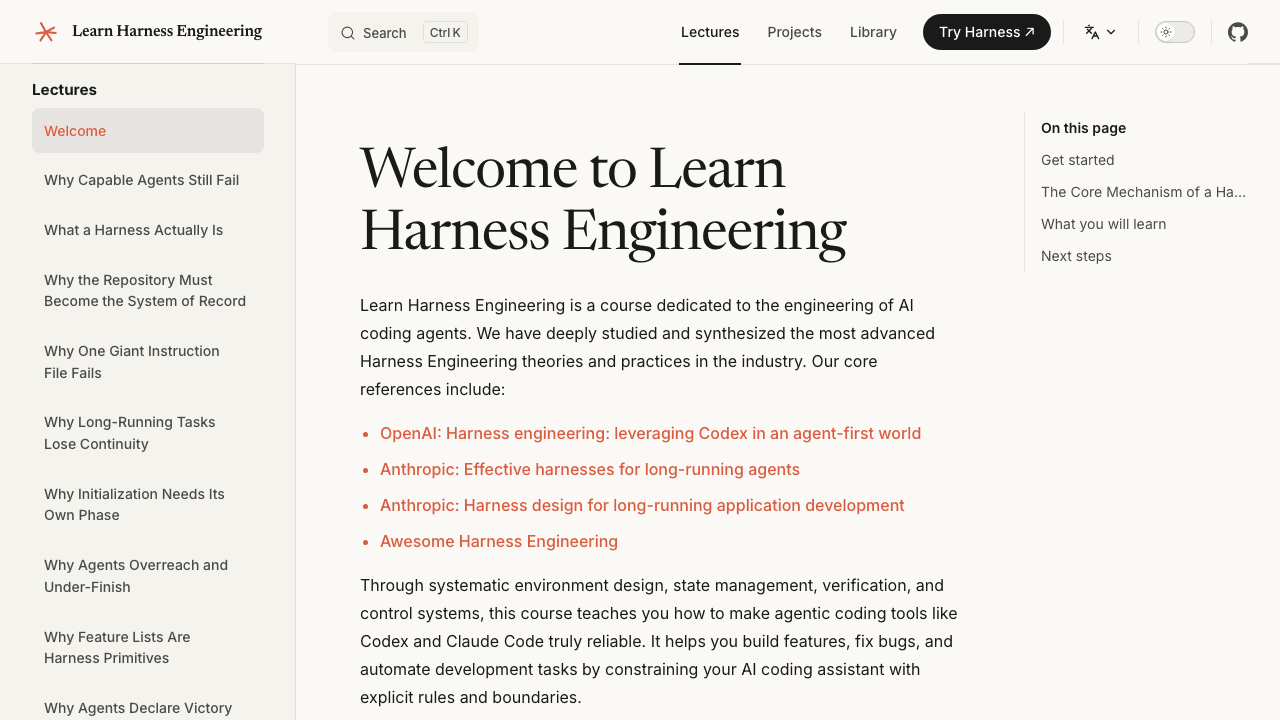 walkinglabs/learn-harness-engineering
Harness engineering beginner tutorial, from 0 to 1
walkinglabs/learn-harness-engineering
Harness engineering beginner tutorial, from 0 to 1
-
 awesome-dsh-plugin/awesome-dsh-plugin
A curated list of plugins for DeepSeek Harness (dsh) · DeepSeek Harness 插件精选列表
awesome-dsh-plugin/awesome-dsh-plugin
A curated list of plugins for DeepSeek Harness (dsh) · DeepSeek Harness 插件精选列表
-
 MemTensor/MemOS
Self-evolving memory OS for LLM & AI Agents: ultra-persistent memory, hybrid-retrieval, and cross-task skill reuse, with…
MemTensor/MemOS
Self-evolving memory OS for LLM & AI Agents: ultra-persistent memory, hybrid-retrieval, and cross-task skill reuse, with…
- yjh051108/dsh-routing-suite dsh-routing-suite — injector + router-standard kit: install the runtime injector first, then the task-aware reasoning-mo…