AlexKaiqi/dsh-multi-model-provider
Model catalog, portraits, Agent selection, and multimodal runtimes for DeepSeek Harness
项目介绍Project Overview
这是 DSH 多模型目录插件:注册语言与图像、语音、视频、嵌入、重排等任务模型,维护证据型画像和速度探针,并从实时语言目录选择新建 Agent 的主模型。需要统一模型清单、画像或默认 Agent 模型时使用。注意:安装本身不会让任务或实时模型可调用,仍需对应运行时适配器与凭据。
This DSH plugin provides a multi-model catalog: it registers language and task models for image, speech, audio, video, embedding, and reranking; maintains evidence-backed portraits and speed probes; and selects the primary language model for new Agents. Use it for unified model discovery, portraits, or default Agent-model selection. Installing it does not make task or realtime models callable; runtime adapters and credentials are still required.
请帮我了解并安装插件:【dsh-multi-model-provider】【https://github.com/AlexKaiqi/dsh-multi-model-provider】把上面这条消息直接发给当前会话里的 DSH,让它帮你了解并安装。安装命令不一定准确,发给 DSH 更稳。Send this message to DSH in your current session. CLI install commands may not be accurate across systems — DSH will figure it out for you.
或使用命令行安装(适合开发者)Or use CLI install (for developers)
命令行安装CLI Install
dsh plugin --profile web add 'dsh-multi-model-provider@0.1.0-rc.18'把 AlexKaiqi/dsh-multi-model-provider 加入你的 DSH 配置(web profile)即可启用。
READMEREADME
dsh-multi-model-provider
English | 中文
This plugin has three capabilities:
- Register models — language models stay in
@deepseek-ai/dsh-llm-pi-ai; image, speech, audio, video, embedding, and reranking models live in this plugin's task-model catalog. The built-inrealtimeModelRuntimeowns effective Realtime route selection, credential references, adapter/profile registries, and bounded session assembly. Provider plugins register wire adapters; product plugins register role profiles. - Assist with portraits — evidence-backed profiles plus an explicit eight-token speed probe. Settings owns these writes.
- Select the Agent model —
selectAgentModel()/select_default_modelpicks the primary language model for newly created Agents from the live language catalog. It does not auto-route task models.
Peer plugins inject modelCatalog and call snapshot() to read every registered model, portrait, and last probe. Installing this package does not make image, speech, or realtime models callable; dsh-realtime-voice supplies the GPT and Doubao full-duplex adapters.
Capabilities
1. Registration
Language routes use configure_model_route / list_model_routes. Task routes use register_task_model / list_task_models. A task-model registration describes a route; a separate runtime adapter is still required to invoke it. select_task_models with ids: [] disables every route on that connection without fallback.
For a declared language route, contextWindow describes model capacity. Leave requestMaxTokens unset unless the deployment intentionally wants that exact output limit sent on every request. Discovery-only maxTokens metadata is validated but is not persisted as a request default; this prevents large advertised capacities from becoming invalid max_output_tokens values at compatible gateways.
2. Portraits
Portrait work is on demand for models already registered or selected in the current profile; the plugin no longer pre-researches unconfigured built-in catalog entries. prepare_model_portraits returns seed facts, gaps, and official documentation URLs for those configured targets. The Agent opens those pages and calls ingest_portrait_research with http(s) source URLs; price rates must cite that evidence. lastProbe is recorded only by an explicitly approved Agent call to validate_model_portrait(liveProbe=true), never copied from documentation.
The portrait settings selector is the same snapshot().languageModels collection used by DSH's session model picker; task-model registry entries are not mixed into that Agent-model list. The catalog retains exact-id portrait fallbacks, but they are used only after the same model is registered or selected in the current profile. A fallback neither creates a portrait target nor starts advance research. A stored user portrait always wins. Route portraits may contain effective-dated provider prices; portable portraits deliberately leave pricing empty because API and infrastructure cost depend on the selected deployment. Neither kind fabricates benchmark scores, latency ranges, or lastProbe results.
Specialized task routes are a separate layer. The built-in capability catalog covers Google Gemini Omni Flash Preview and Veo 3.1 Standard / Fast / Lite; MiniMax H3 and Hailuo 2.3 / Fast; OpenAI Sora 2 / Pro; MiniMax Speech 2.8 HD / Turbo, Music 3.0, and image-01. These catalog entries become portrait targets only after the user registers or selects them. H3 is a video-generation route with native audio output, not an Agent LLM. Routes remain registered-only until their declared runtime adapters and credentials are available. Sora 2 / Pro and Music 3.0 remain disabled because their provider APIs are legacy or unavailable to new users.
3. Agent model
Selection is built on the catalog, not a parallel list:
export const inject = ['modelCatalog']

const snapshot = await ctx.modelCatalog.snapshot()
await ctx.modelCatalog.selectAgentModel({
  provider: 'volcengine',
  model: 'doubao-seed-1-6',
})
snapshot().languageModels is the live Agent-model candidate list, with stored or exact-match bundled portraits attached when they exist. portraitSource reports stored or bundled. selectAgentModel() refuses task models and unknown ids. It only affects newly created Agents.
Other plugins that only need the directory can stop at snapshot(). Do not scrape settings.yaml, and do not ask the Agent to call tools just to read the catalog.
Agent tools
list_model_routes,configure_model_route, andselect_default_modelmanage primary language models through llm-pi-ai.inspect_volcengine_providerreturns safe credential state, the authenticated Ark catalog, selections, task routes, and correct invocation paths.select_volcengine_language_modelsreplaces the Ark language/VLM selection; an empty array explicitly disables the route.list_task_modelsinspects non-language registrations and reports registration separately from callability.discover_task_modelsqueries a connection's authenticated provider catalog without registering anything.select_task_modelsreplaces the enabled set;ids: []explicitly disables every route on that connection.register_task_modelcreates or updates a task-model route and its reusable connection profile.prepare_model_portraitsbuilds an on-demand research plan only for models configured in the current profile; unconfigured built-in catalog ids are rejected.fetch_portrait_sourceopens an exact first-party URL approved by that target's research plan.ingest_portrait_researchmerges Agent-researched facts that have http(s) source URLs.get_model_portrait,upsert_model_portrait, andvalidate_model_portraitmanage evidence-backed model profiles.invoke_task_modelinvokes a callable non-Realtime request/response route through its runtime adapter. Realtime speech usesrealtimeModelRuntimeand a provider-owned session transport.summarize_model_usageaggregates native LLM and task-model observations from the current durable session.
Registration tools accept credential references such as OPENAI_API_KEY, never API-key values. Doubao Realtime uses the single DOUBAO_API_KEY reference. The user enters actual values only in secure Settings credential fields; the Agent can fill provider, URL, model catalog, and profile metadata.
Settings UI and data model
Installation leaves the shipped Models Settings section as the only model-management surface. Volcengine Ark is contributed through DSH's native configurable-language-provider directory, so DeepSeek and Ark keep the shipped provider rows, editors, model lists, and delete behavior. The plugin does not register a second Models section or append a parallel provider editor. It also adds a flat, read-only Model portraits Settings page with two tabs: collect and view. Its selector lists only models registered or selected in the current profile; unconfigured built-in catalog entries remain hidden. Collection invokes the bundled collect-model-portraits skill in the current Session; it does not create a background Agent, Session, or Temporary Workspace.
Ark uses ARK_API_KEY and the official https://ark.cn-beijing.volces.com/api/v3 base URL. On upgrade, a legacy VOLCENGINE_API_KEY value is safely copied to the standard ARK_API_KEY reference when the latter is missing; the legacy reference is retained and the secret is never logged or written to ordinary settings. Doubao keeps the fixed Realtime protocol model 1.2.6.1 and voice as separate task-profile fields. DSH 0.1.1-rc.2 exposes no third-party provider-editor or per-model-field slot in its Models page, so this package does not fake native integration by mounting another editor. Doubao registration and selection remain available through the task catalog and Agent tools until DSH exposes that extension contract.
Ark language models are written to llm-pi-ai.providers.volcengine; Doubao Speech task models and all portrait bindings are written to multi-model-provider; credential values never enter ordinary settings.yaml. ChatVoice only selects registered Realtime routes and does not own provider credentials.
Ark and DeepSeek can be edited or removed through the shipped Models page. Doubao is deliberately not represented there as an LLM provider, because doing so would pollute the Agent language-model picker and misrepresent its Realtime protocol.
The conversation model dropdown is searchable by provider, model id, display name, and description, so a large registry does not turn into an unscannable list.
Example task-model registration:
multi-model-provider:
  connections:
    openai:
      provider: openai
      displayName: OpenAI
      credentialRef: OPENAI_API_KEY
      baseURL: https://api.openai.com/v1
      profile: {}
    doubao-speech:
      provider: doubao-speech
      displayName: Doubao Speech
      credentialRef: DOUBAO_API_KEY
      credentialRefs:
        apiKey: DOUBAO_API_KEY
        realtimeApiKey: DOUBAO_API_KEY
      profile:
        product: doubao-speech
  models:
    openai/gpt-image-2:
      connection: openai
      model: gpt-image-2
      displayName: GPT Image 2
      task: image-generation
      runtimeAdapter: openai-images
      input: [text, image]
      output: [image]
      execution: request-response
      capabilities: [image.generate]
      operations: [generate, edit]
      roles: [image-generator]
      profile: {}
The visible built-in catalog includes Google Gemini Omni Flash Preview and Veo 3.1 Standard / Fast / Lite; OpenAI Sora 2 / Pro, gpt-image-2, and gpt-realtime; MiniMax H3, Hailuo 2.3 / Fast, Speech 2.8 HD / Turbo, Music 3.0, and image-01; plus 25 documented Realtime S2S-O/SC 2.0 voice profiles. Doubao fixes session.model to 1.2.6.1; its task profile keeps that protocol model independent from the selected voice, and the runtime maps the voice automatically. The routes belong to independent provider connections and appear in list_task_models, not in the language-model picker. Generative-media routes remain registered-only until their adapters are installed; legacy Sora and Music API routes are disabled by default. Former ASR/TTS entries remain migration-only.
Supported tasks cover image understanding/generation, speech synthesis/transcription/translation/analysis, voice conversion/cloning/design, podcasts, realtime speech, audio/video generation, embedding, and reranking. Routes also declare Lore-compatible capability ids such as speech.transcribe.file, speech.synthesize.short, and speech.realtime_session; file is a distinct input modality. Input/output modalities, operations, and execution lifecycle remain separate so task semantics are not conflated with modality.
volcengine and doubao-speech are separate providers because their protocols, credentials, catalogs, and probes differ. Ark catalog discovery uses ARK_API_KEY; Realtime Duplex uses the new Speech console's single DOUBAO_API_KEY. Ark /models is not a speech-entitlement catalog, while Volcengine's ListSpeakers/ServiceStatus OpenAPI requires cloud-account AK/SK and cannot use the Speech API Key. The one-key provider therefore carries the documented Realtime catalog and verifies access with a minimal session probe.
The built-in Doubao catalog is capability metadata, not user configuration. Web Settings keeps the shipped Models entry untouched; task and Realtime providers are not appended as a second UI. A future native Doubao editor requires a DSH provider-editor/per-model extension point so DSH can keep ownership of the row, lifecycle, and common fields while the plugin contributes only speech-specific fields such as voice.
Every task route has an explicit enabled state. Selection is replacement-based, and an empty selection remains empty: it never falls back to the full provider catalog. Disabled routes stay inspectable for portrait work but are not callable.
Portraits, invocation, and routing evidence
A portrait keeps one sectioned qualitative Markdown description, structured pricing, and an explicit performance.lastProbe observation separate from long-term measured usage. Portraits cover task route ids and LLM ids in llm:<provider>/<model> form. Price rates carry operation, billing unit, currency, effective dates, and an evidence id so stale claims can be detected. Registration remains authoritative for capabilities, input/output modalities, execution mode, and operations.
The starter set is intentionally selective but has no fixed size: cover widely adopted providers, then include current flagships, workhorses, specialized models, and commonly self-hosted models with distinct hardware footprints. Usage, open-weight adoption, and deployment form are selection signals; every model claim and price cites first-party documentation. Matching has two exact layers: provider/model route profiles may carry route pricing, while an explicitly enumerated exact model id may receive a provider-independent capability profile. There is no fuzzy alias guessing and no price transfer across providers. Runtime reachability, time to first token, and latency remain separate probe/usage observations.
The Model portraits page collects or refreshes the currently selected model by sending an explicit /collect-model-portraits <id> invocation to the current Session and closing Settings. The skill receives model- and task-specific first-party sources, opens them through fetch_portrait_source, saves findings through ingest_portrait_research, and runs validate_model_portrait(liveProbe=false). The source reader follows only same-site documentation redirects and extracts document-center JSON payloads instead of treating an empty JavaScript shell as research content. The View tab displays the resulting portrait, evidence, validation, and latest probe. Paid or traffic-producing live probes require a separate explicit user approval before the Agent may call validate_model_portrait(liveProbe=true).
Request/response providers implement TaskModelRuntimeAdapter; full-duplex speech providers implement RealtimeModelSessionAdapter against realtimeModelRuntime. invoke_task_model records privacy-safe task metrics. LLM observations reuse native durable Harness request/header, step/start, and assistant/message.usage events, so no wrapper or duplicate content log is added. summarize_model_usage aggregates counts, success, latency, tokens, and cost without copying prompts, responses, media, or credentials.
Runtime boundary
- This plugin owns registration, portraits, Settings schemas, safe credential references, request/response task invocation,
realtimeModelRuntime, and privacy-safe invocation observations. - llm-pi-ai owns language-model protocol adaptation and execution.
- Independent provider adapters execute image/audio/video routes and handle binary artifacts through
TaskModelRuntimeAdapter; routes without one remain registered-only. - A peer plugin should inject
modelCatalogand callsnapshot(). It must not scrapesettings.yaml, and it should not ask the Agent to call these tools just to read the catalog. selectAgentModel()/select_default_modelchooses the Agent language model fromsnapshot().languageModels. It does not auto-route task models and only affects newly created Agents.
Install
This is a community composition bundle for DeepSeek Harness 0.1.1-rc.2. It is not an official DeepSeek package. Host and Web runtime files are committed, so a Git install does not need prepare or allowBuilds.
The bundled collect-model-portraits skill and its allowlisted source reader are installed with this package; portrait collection has no peer-plugin requirement.
For a reproducible Git install, append the reviewed release commit SHA to the GitHub spec (#<release-commit-sha>). Do not pin an earlier commit merely because it reports the same prerelease version.
Follow main (moves when the branch moves):
dsh plugin --profile web add github:AlexKaiqi/dsh-multi-model-provider
Install from a local checkout while developing:
git clone https://github.com/AlexKaiqi/dsh-multi-model-provider.git
cd dsh-multi-model-provider
dsh plugin --profile web add "$PWD"
After the package is published to npm:
dsh plugin --profile web add 'dsh-multi-model-provider@0.1.0-rc.18'
Prerelease versions are published under the npm next tag.
Through dsh.pub, once listed:
npx dshpub add AlexKaiqi/dsh-multi-model-provider --profile web
Verify the bundle layer, then restart Web and open a new Agent task so tools and system-prompt guidance load:
dsh --profile web --dump-config   # look for "# == dsh-multi-model-provider"
dsh web --profile web
Remove it from the profile:
dsh plugin --profile web remove dsh-multi-model-provider
Updates are explicit:
dsh plugin --profile web update dsh-multi-model-provider
Development
pnpm install --frozen-lockfile --ignore-scripts
pnpm check
Requires Node.js ^22.19.0 || >=24.0.0 and pnpm 11.7.0.
相关推荐Related
-
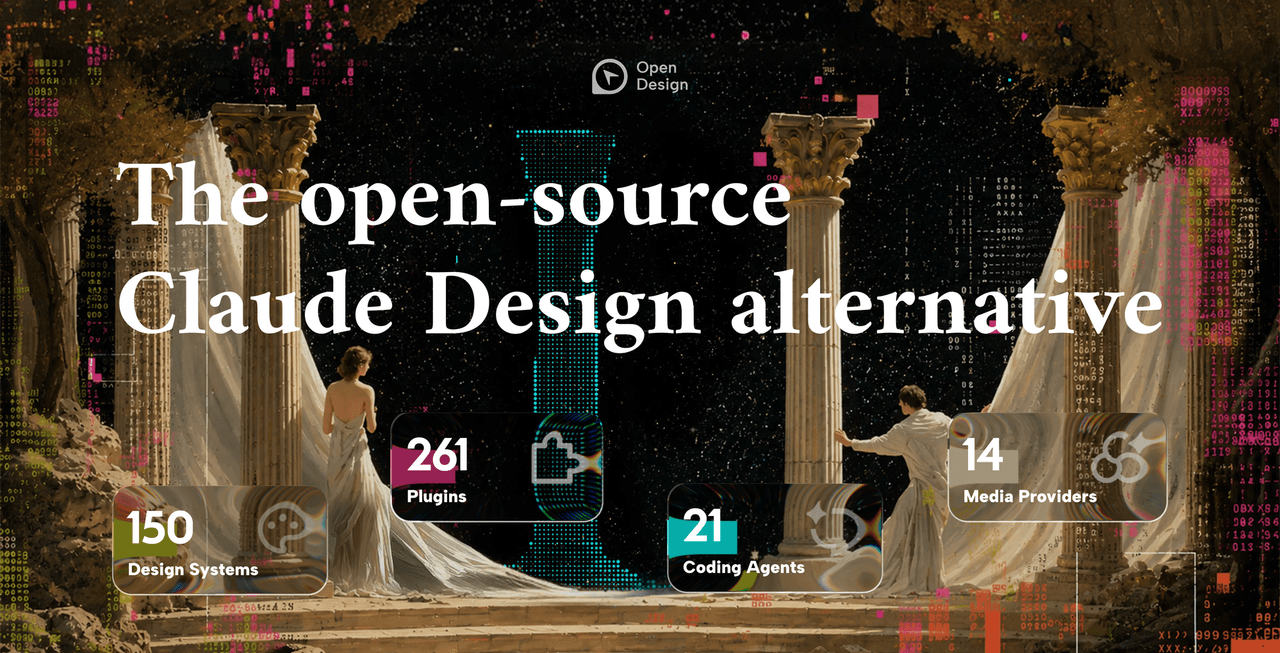 nexu-io/open-design
🎨 Best DeepSeek Harness Design Plugin. The open-source Claude Design alternative. 🖥️ Local-first desktop app. 🖼️ Your…
nexu-io/open-design
🎨 Best DeepSeek Harness Design Plugin. The open-source Claude Design alternative. 🖥️ Local-first desktop app. 🖼️ Your…
-
 ruvnet/ruflo
🌊 The original agent meta-harness. Deploy intelligent multi-player swarms, coordinate autonomous workflows, and build c…
ruvnet/ruflo
🌊 The original agent meta-harness. Deploy intelligent multi-player swarms, coordinate autonomous workflows, and build c…
-
 amruthpillai/reactive-resume
A one-of-a-kind resume builder that keeps your privacy in mind. Completely secure, customizable, portable, open-source a…
amruthpillai/reactive-resume
A one-of-a-kind resume builder that keeps your privacy in mind. Completely secure, customizable, portable, open-source a…
-
 esengine/DeepSeek-Reasonix
DeepSeek-native AI coding agent for your terminal. Engineered around prefix-cache stability — leave it running.
esengine/DeepSeek-Reasonix
DeepSeek-native AI coding agent for your terminal. Engineered around prefix-cache stability — leave it running.
-
 volcengine/OpenViking
Self-evolving Context Database for AI Agents. Unify Agent Memory, Knowledge RAG and Skills.
volcengine/OpenViking
Self-evolving Context Database for AI Agents. Unify Agent Memory, Knowledge RAG and Skills.
-
 Molunerfinn/PicGo
:rocket: The Ultimate Image Uploader for Efficient Creators. Supports Obsidian, Typora, VS Code etc. and 60+ image hosti…
Molunerfinn/PicGo
:rocket: The Ultimate Image Uploader for Efficient Creators. Supports Obsidian, Typora, VS Code etc. and 60+ image hosti…
-
 titanwings/distilly
Distilly — Distill how they think into reusable Skills for any Agent or Bot. Formerly Colleague Skill(原同事 Skill).
titanwings/distilly
Distilly — Distill how they think into reusable Skills for any Agent or Bot. Formerly Colleague Skill(原同事 Skill).
-
 titanwings/colleague-skill