baixinghao/intent-gate
Stop AI coding agents from guessing. MCP server + Claude Code plugin that enforces intent alignment BEFORE coding: PRD → intent-confidence gate → Mermaid contracts (state machines / sequence diagrams / decision tables) → mechanical lint with zero CRITICAL → then code. Human-in-the-loop, file-persisted, zero-config.
Project Overview项目介绍
Intent Gate is a Model Context Protocol (MCP) server designed to stop AI coding agents from guessing ambiguous requirements during the requirement analysis stage. It runs as a simple stdio subprocess, requires no running daemon, no stored user credentials, and zero additional configuration to work fully out of the box. It supports any MCP-compatible AI coding agent, including Claude Code, Cursor, and DeepSeek Harness, and integrates directly into existing vibe-coding development workflows. It focuses exclusively on the requirement analysis pipeline stage, and leaves all coding, testing, and deployment work to downstream interchangeable agents.
The core workflow of Intent Gate uses a three-level funnel to resolve unstated requirement gaps early in the development process. First, it scans the input PRD text to flag any explicit ambiguities that the original author missed. Next, it generates a draft Mermaid contract diagram that marks any undetermined elements as TBD placeholders instead of filling gaps with plausible guesses. Finally, it asks the user to clarify any open items, and only allows coding to start after a mechanical lint check confirms there are zero critical errors remaining.
Intent Gate is distributed via PyPI, requires Python 3.11 or newer to run correctly, and is released under the permissive MIT open source license. To install it manually, you clone the repository, create a local virtual environment, add the package source path to the PYTHONPATH environment variable, and update your MCP client configuration to point to the virtual environment’s Python interpreter. The project includes full documentation of its architecture, design, and file structure, and can integrate with a sister project, intent-gate-service, to add support for interactive decision-making in DingTalk groups.
这是一个用于在AI编码代理开始编写代码前强制做意图对齐的MCP服务器,能够提前捕获PRD中的模糊需求,防止代理自行猜测填补需求缺口,最终输出带有技术标注的Mermaid需求契约图。它支持所有兼容MCP协议的AI编码代理,包括Claude Code、Cursor和DeepSeek Harness,以stdio子进程方式运行,无需守护进程、凭证和额外配置,开箱即用。
它专门负责AI开发流程中的需求分析阶段,不介入后续的编码、评审或部署环节。工作流程分为三层:首先扫描PRD文本找出明确的歧义点,然后绘制草稿图,将无法确定的内容标记为TBD占位符而非自行猜测,最后提示用户确认清除这些缺口。只有经过lint检查达到零严重错误后,才允许进入编码阶段。
该项目基于Python 3.11+开发,以MIT许可证开源,可通过PyPI安装。配置时只需将MCP客户端的命令指向虚拟环境的Python解释器,设置PYTHONPATH环境变量即可接入使用。项目自带完整的需求分析规则手册和配套工作流指南,还可对接姐妹项目intent-gate-service,支持钉钉群互动决策。
请帮我安装这个 DSH 插件。安装前先完成【兼容性检查 + 安全性检查】,检查通过再动手。

插件:intent-gate(baixinghao/intent-gate)
仓库:https://github.com/baixinghao/intent-gate
本站详情页:https://www.yhbd.top/plugins/baixinghao-intent-gate/
本站登记:类型 plugin · 归类 多平台兼容工具(非 DSH 原生) · 许可证 MIT · ⭐ 3 · 最近提交 2026-09-19 · 主语言 Python · 未检测到 DSH 插件清单

按下面顺序执行,每步先把结论告诉我,再进入下一步:

【1 兼容性检查】
① 我这边:DSH 版本、Node 版本、操作系统、当前 profile(web / desktop)。
② 读它的 README、package.json、插件 manifest,列出它要求的 DSH 版本 / Node 版本 / 操作系统 / 外部依赖 / 需要另外先装的运行时。
③ 逐条比对,结论只写「满足 / 不满足 / 未知」三种;不满足的给出可行替代方案。
④ 检查是否和我已装的插件冲突:命令名重复、skill / tool 重名、端口占用、重复注册的 MCP server。

【2 安全性检查】
① 仓库可信度:和上面「本站登记」是否一致;star / fork 数、创建时间、最近提交,是否归档或长期停更。
② 安装脚本:逐行看 package.json 的 preinstall / install / postinstall,以及 install.sh、setup.ps1 之类脚本。出现 curl|bash、下载后直接执行、混淆代码、访问与插件功能无关的域名,立刻停下来告诉我,不要继续装。
③ 依赖:列出新增依赖,标出无人维护、或与知名包拼写近似的可疑包(typosquatting)。
④ 权限与副作用:它会读写哪些目录、访问哪些域名、需要哪些 DSH 权限(filesystem / network / shell / clipboard 等),以及怎么卸载和回滚。
⑤ 如果它要求 sudo / 管理员权限,或权限明显超出功能所需,先停下来问我。

【3 安装】
上面两步没有「不满足」和「高危项」时才执行;用官方推荐方式安装,不要自行提权。

【4 汇报】
用表格输出:检查项 / 结论 / 依据 / 是否需要我决策。拿不准的一律写「未知」并说明要我怎么确认——不要猜,也不要替我决定。
Send this message to DSH in your current session: it verifies compatibility and security first (answering met / not met / unknown item by item) and only installs once everything checks out — it will stop and ask you if it finds a high-risk item. The box scrolls; the copy is the full prompt. CLI install commands may not be accurate across systems, so DSH is the safer route.把上面这条消息直接发给当前会话里的 DSH:它会先核对兼容性与安全性(逐条给「满足 / 不满足 / 未知」),确认没问题再安装,有高危项会停下来问你。框内可滚动,复制到的是完整提示词;安装命令不一定准确,发给 DSH 更稳。
- Only 3 stars - very few users, little community feedback星标只有 3,几乎没人在用,遇到问题缺少社区反馈
- No DSH plugin manifest detected - it may only carry the dsh-plugin topic, so the install method must be confirmed on the spot未检测到 DSH 插件清单:可能只是打了 dsh-plugin 话题,安装方式要现场确认
- Not DSH-native: a multi-platform tool that may require Node / Electron or another runtime first非 DSH 原生,是多平台兼容工具:可能要先装 Node / Electron 等运行时
DSH walks through these 9 checksDSH 会逐条核对这 9 项
Compatibility兼容性
- DSH, Node, OS and profile requirementsDSH 版本 / Node 版本 / 操作系统 / profile 是否满足要求
- External dependencies and runtimes (Electron / Python / Docker, ...)外部依赖与运行时(Electron / Python / Docker 等)是否齐备
- Conflicts with installed plugins: command names, skill / tool names, ports, duplicate MCP registration与已装插件是否冲突:命令名、skill / tool 重名、端口占用、重复 MCP 注册
Security安全性
- Repo matches the facts registered here; archived or abandoned?仓库是否与页面登记一致,是否归档或长期停更
- Safety of preinstall / install / postinstall and install.sh / setup.ps1preinstall / install / postinstall 与 install.sh、setup.ps1 是否安全
- curl|bash, download-then-execute, obfuscation, unrelated domains → stop immediatelycurl|bash、下载即执行、混淆代码、无关域名 → 立刻停止
- Typosquatting or unmaintained packages among the new dependencies新增依赖里有没有 typosquatting 或无人维护的包
- Requested permissions vs. what the feature actually needs申请了哪些权限、是否超出功能所需(filesystem / network / shell / clipboard)
- Any sudo / admin requirement, plus uninstall and rollback是否要求 sudo / 管理员权限,以及卸载与回滚方式
Anything uncertain must be marked unknown with a note on how to confirm it. This site's signal screen is a static snapshot, not a security audit.拿不准的必须标「未知」并说明要我怎么确认。本站的信号筛查是静态快照,不能替代安全审计。
Or use CLI install (for developers)或使用命令行安装(适合开发者)
CLI Install命令行安装
dsh plugin --profile web add github:baixinghao/intent-gate把 baixinghao/intent-gate 加入你的 DSH 配置(web profile)即可启用。
READMEREADME
intent-gate
English | 简体中文




Stop AI coding agents from guessing.
Complex business requirements. A thin or sloppy PRD. No legacy code to reference. That is exactly where coding agents start inventing: "happy path only, no failure flow", "idempotency with no server-side design" — gaps get silently filled with plausible-looking guesses, and you find out far too late.
intent-gate moves intent alignment before coding, into the requirement-analysis stage: a PRD goes through an intent-confidence gate → gaps are resolved through a three-level funnel → the output is technically annotated Mermaid contracts (state machines / sequence diagrams / decision tables) → a mechanical lint gate must reach zero CRITICAL → only then is coding allowed to begin.
It runs as an MCP server (stdio subprocess) — plug-and-play with Claude Code and other MCP clients. No daemon, no credentials, zero config — full workflow out of the box.
Where it sits in a vibe-coding workflow
intent-gate owns exactly one stage of the pipeline, the requirement-analysis stage:
PRD ──▶ [ intent-gate: confidence gate → intent alignment → Mermaid contracts ]
          ──▶ summary.md (every edge technically annotated, lint CRITICAL = 0)
          ──▶ coding agent (Claude Code / Cursor / any agent) ──▶ tests ──▶ ship
The leverage is asymmetric: if the contracts land well, the coding stage is a free win — every edge, step and rule already has a home, so any competent agent can implement the spec. That is why intent-gate deliberately does NOT touch coding, review or deployment: downstream agents are interchangeable; the input contract is not.
Dual-layer intent alignment
The diagram is the instrument, not a deliverable. Layer 1 (reading): sweep the
PRD text for explicit ambiguities. Layer 2 (drawing): hard-draw draft diagrams in
the FIRST turn — every node/edge that can't be drawn yet becomes a TBDn
placeholder, never a guess (every edge is a forced decision). Placeholders route
by kind: technical gaps go to code evidence, business gaps go to a structured
human question — and may only be cleared by code evidence or a human ruling.
A placeholder left in a delivered diagram is a lint CRITICAL (L13).
Showing the opening section of the README — the full document lives in the repository以上为 README 开头摘要,完整文档在仓库内 · View the full README on GitHub →在 GitHub 查看完整 README →
Related相关推荐
-
 esengine/DeepSeek-Reasonix
A reliable coding agent for complex software engineering tasks.
esengine/DeepSeek-Reasonix
A reliable coding agent for complex software engineering tasks.
-
 strukto-ai/mirage
The World's First Virtual Terminal for AI Agents
strukto-ai/mirage
The World's First Virtual Terminal for AI Agents
-
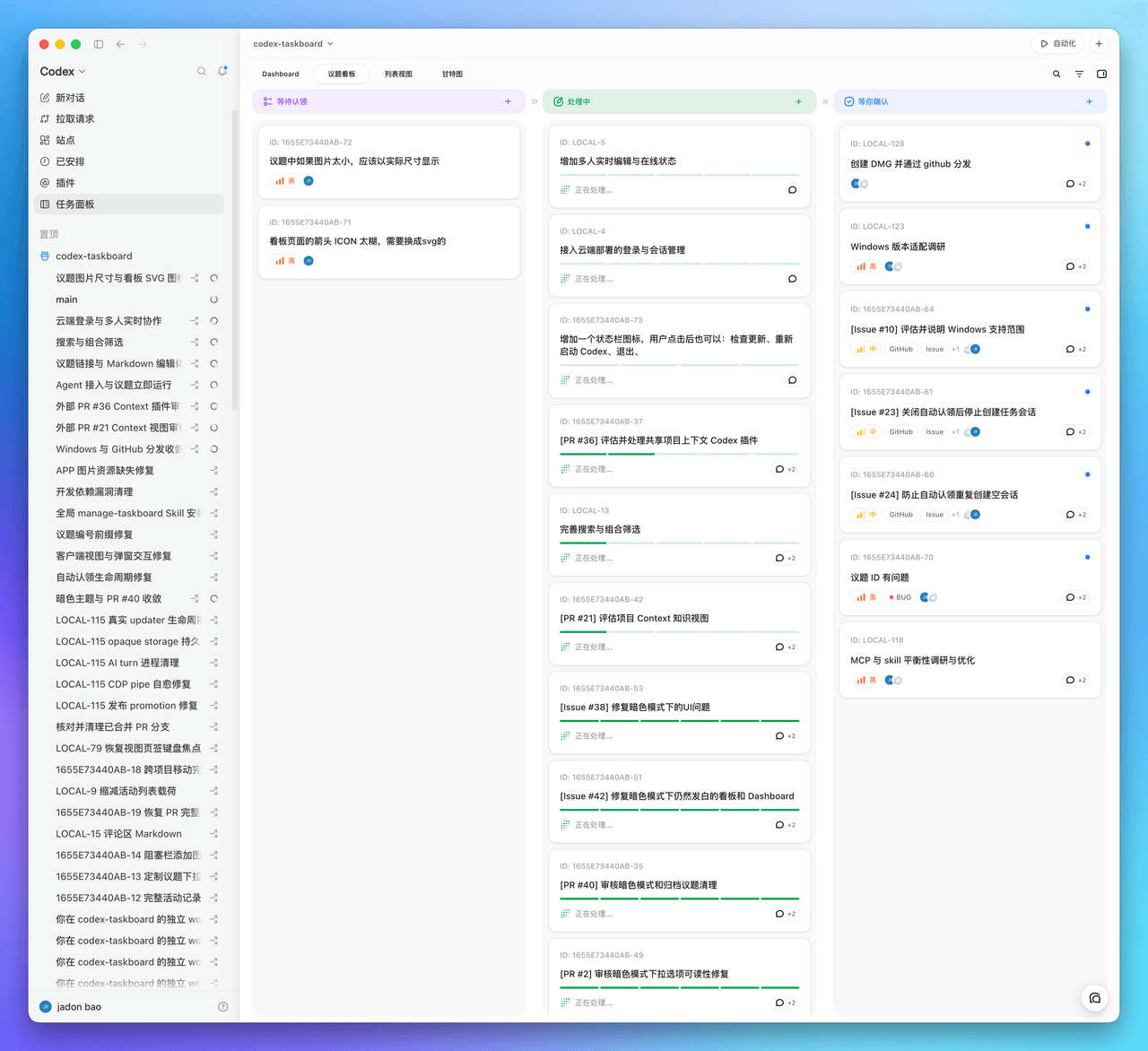 chuspeeism/dashi-taskboard
现代化可灵活嵌入的任务面板,支持 Codex、DeepSeek Harness
chuspeeism/dashi-taskboard
现代化可灵活嵌入的任务面板,支持 Codex、DeepSeek Harness
-
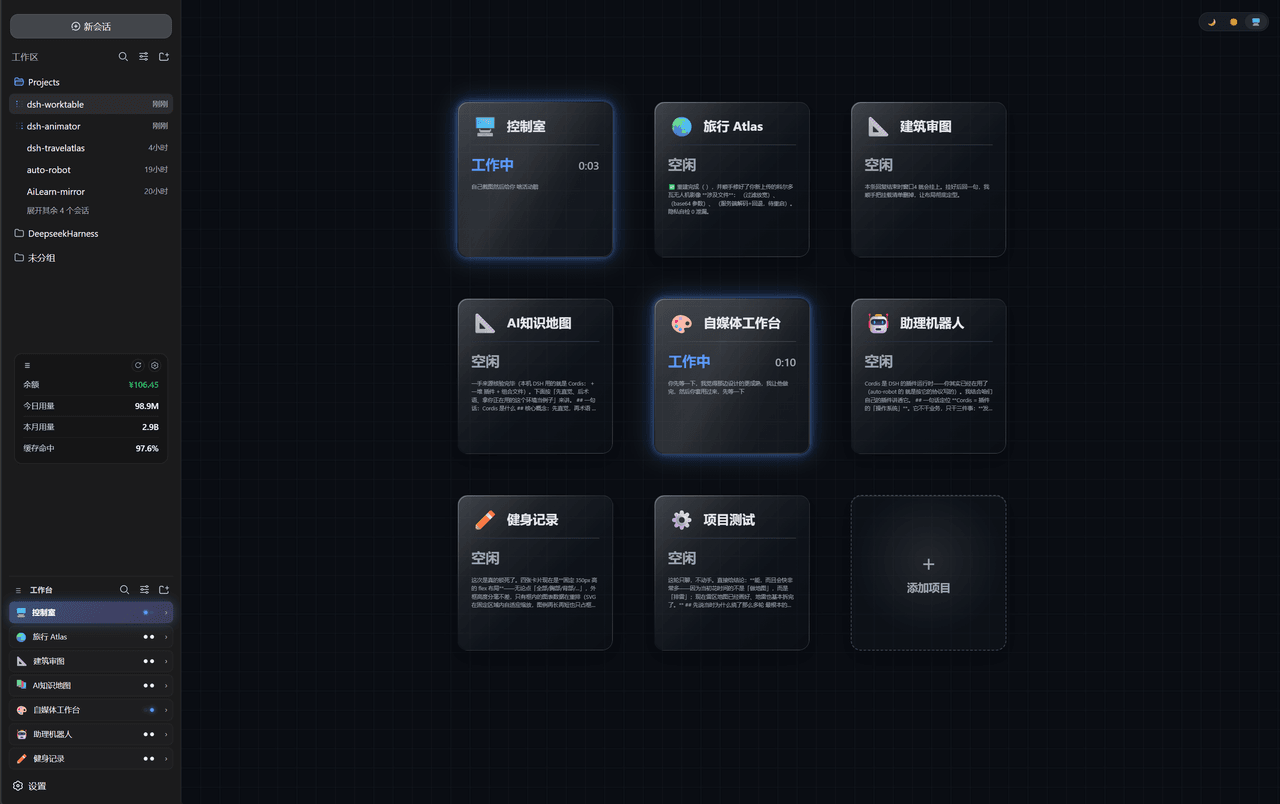 Aisland-SJL/dsh-worktable
🖥️ Agent-project workbench for DeepSeek Harness — sidebar app drawer + dockable split workspace + a live control room w…
Aisland-SJL/dsh-worktable
🖥️ Agent-project workbench for DeepSeek Harness — sidebar app drawer + dockable split workspace + a live control room w…
-
 ccch1mneyyy/working-activity
Lively Working-line extension for pi CLI and DSH
ccch1mneyyy/working-activity
Lively Working-line extension for pi CLI and DSH
-
 zhoushoujianwork/easyeda-agent
嘉立创EDA专业版(EasyEDA Pro)自动化:给 AI harness 装上画板的「手」—— 一套 typed 原理图/PCB 动作,CLI / Agent Skill / stdio MCP 三形态融合接入。承接嘉立创「不以卖板赚钱…
zhoushoujianwork/easyeda-agent
嘉立创EDA专业版(EasyEDA Pro)自动化:给 AI harness 装上画板的「手」—— 一套 typed 原理图/PCB 动作,CLI / Agent Skill / stdio MCP 三形态融合接入。承接嘉立创「不以卖板赚钱…
-
 pulseaiclub/phi
a coding agent, rpc plugin, sub-agents, hashline edits, and mcp
pulseaiclub/phi
a coding agent, rpc plugin, sub-agents, hashline edits, and mcp
-
 Ikalus1988/MisakaNet
📚 A zero-dependency, git-backed micro-lesson library for AI Agents to asynchronously share and search verified debuggin…
Ikalus1988/MisakaNet
📚 A zero-dependency, git-backed micro-lesson library for AI Agents to asynchronously share and search verified debuggin…