Cyning12/SpecWave
SpecWave — multi-host coding CLI + P0 gates/Harness (Cursor/Claude/DSH). Formerly SpecGate / dsh-coding-kit. npx spec-wave
Project Overview项目介绍
SpecWave is a multi-host coding discipline DSH plugin. It provides ICVO (Inform, Constrain, Verify, Orchestrate) standardized coding process assets deployable to Cursor, Claude Code and DSH. Use it when you need unified coding rules across multiple hosts. Config files are only generated after you explicitly run host apply, not automatically on install.
SpecWave是一款适配多宿主的DSH编码规范插件,提供信息、约束、验证、编排统一编码流程资产,可部署到Cursor、Claude Code和DSH。需要给现有仓库统一多宿主编码规范时使用,注意必须显式执行host apply才会生成对应主机的配置文件,不会自动写入。
请帮我了解并安装插件:【SpecWave】【https://github.com/Cyning12/SpecWave】Send this message to DSH in your current session. CLI install commands may not be accurate across systems — DSH will figure it out for you.把上面这条消息直接发给当前会话里的 DSH,让它帮你了解并安装。安装命令不一定准确,发给 DSH 更稳。
Or use CLI install (for developers)或使用命令行安装(适合开发者)
CLI Install命令行安装
dsh plugin --profile web add spec-wave把 Cyning12/SpecWave 加入你的 DSH 配置(web profile)即可启用。
READMEREADME
SpecWave
简体中文 | English
SpecWave (spec-wave@2.4.2) is a multi-host coding CLI — one declarative adapt table lands natively on 13 hosts (Cursor · Claude Code · optional DSH · agents · Copilot · Codex · Windsurf · Gemini CLI · opencode · Roo Code · Zed · Cline · aider) — with P0 gate / Harness process commands and IDE landing. Formerly SpecGate / dsh-coding-kit. Discipline assets remain ICVO (Inform · Constrain · Verify · Orchestrate).
Loading ≠ injecting. Installing or loading the optional DSH plugin does not automatically rewrite the system prompt.
apply()only registers tools. Only after you or the model callsapply_coding_standardswill later turns' runtime context contain# Coding Standards.New here? First-hour terms —
task.md/ Harness / hats /kit-*— are defined in GLOSSARY.md (bilingual).
Which entry to choose
| Who you are | Entry | Do NOT |
|---|---|---|
| Cursor / Claude Code / CI on existing repos | npx spec-wave (+ optional host apply) |
Don't treat the plugin init_coding_kit and the CLI init as the same entry |
| DSH session / model calling tools (optional) | dsh plugin add spec-wave (dsh-coding-kit deprecated — do not add the old name) |
Don't just npm install (without the bundle layer the tools won't appear) |
Primary entry is npx spec-wave from npm package spec-wave@2.4.2. Transition bins specgate and dsh-coding-kit still work. The plugin surface and the CLI surface do not replace each other.
Multi-host in one package (F6 · 2.0 + skills/orch · 2.1 · tools UX · 2.1.1 · hosts ×13 · 2.2/2.3)
One declarative table → native landing on several hosts (always_on + skills + commands). Verify truth stays in the CLI (failClosed exit 2); IDE slash/commands only orchestrate. Installing the npm package does not materialize IDE files (no postinstall); run init --tools / host apply explicitly.
| Host | What host apply writes (profile core) |
|---|---|
| Cursor | .cursor/rules/*.mdc · .cursor/commands/kit-*.md · .cursor/skills/ |
| Claude Code | CLAUDE.md product marker block · .claude/commands/kit/<verb>.md → /kit:verb · .claude/skills/ |
| DSH | .dsh/skills/ — hat skills + orchestration kit-* (discoverable via /; no .dsh/commands/) |
| agents (optional) | AGENTS.md fragment · .agents/skills/ |
| Copilot | AGENTS.md fragment (shared marker block) · .github/skills/ |
| Codex | AGENTS.md fragment (shared marker block) · .agents/skills/ |
| Windsurf | AGENTS.md fragment (shared marker block) · .windsurf/skills/ |
| Gemini CLI | GEMINI.md (same host-neutral fragment) · .gemini/skills/ |
| opencode | AGENTS.md fragment (shared marker block) · .agents/skills/ |
| Roo Code | AGENTS.md fragment (shared marker block; loaded per official-repo merged PR) · no skills dir (no official convention) |
| Zed | AGENTS.md fragment (shared marker block) · .agents/skills/ |
| Cline | AGENTS.md fragment (shared marker block) · .cline/skills/ |
| aider (injection layer) | AGENTS.md fragment (injection-layer support: aider does not auto-load AGENTS.md — use aider --read AGENTS.md or .aider.conf.yml with conventions-file: AGENTS.md) · no skills dir (no official convention) |
2.2 W6 / 2.3 W6 host additions (same package): the nine hosts above reuse the agents asset face (zero new assets); each landing follows the host's official docs, and hosts without an official skills convention get no skills directory (never fabricated). aider is a documented downgrade — injection layer only.
2.1 additions (same package): Claude /kit: namespace UX · DSH .dsh/skills/kit-* orchestration · optional --profile expanded for kit-hat-* thin shells (default remains core).
2.1.1 · install / upgrade UX (aligned with OpenSpec init --tools):
| Topic | Behavior |
|---|---|
| Sticky | Successful --yes write of host apply / host update / init (when materializing) updates .coding-kit/host-tools.json (host_ids + profile). Dry-run does not write sticky. |
--tools |
LIST (e.g. cursor,claude,dsh) · all (every host_id in the adapt table) · none (init only: process root, no host materialize). host apply always requires --tools. |
host update (scheme A) |
Resolve order: CLI --tools → sticky → else exit 1. With sticky, host update --yes refreshes only selected hosts. BREAKING (small) vs 2.1.0 “omit --tools = full table”. |
init |
TTY without --tools → asks (multi-select / all / none). Non-TTY / CI without --tools → exit 1. tools≠none and not --no-host-adapt → in-process host apply + sticky. --no-host-adapt → no apply and no sticky. |
Shortest path (dry-run first, then write):
npx spec-wave@2.4.2 host validate
npx spec-wave@2.4.2 host apply --tools cursor,claude,dsh --profile core
npx spec-wave@2.4.2 host apply --tools cursor,claude,dsh --profile core --yes
# optional: --profile expanded   # kit-hat-* thin shells
# optional: --tools all

# After upgrading the package: refresh sticky hosts (no need to re-list --tools)
npx spec-wave@2.4.2 host update --yes

# First-time / CI: init + host selection (process-root only: --tools none)
npx spec-wave@2.4.2 init --preset harness-only --tools cursor,claude,dsh --yes
After --yes, Cursor Command Palette should see kit-verify / kit-gate-status / …; Claude Code should see /kit:verify etc.; DSH should list matching .dsh/skills/kit-*. Full matrix: assets/ide/host-adapt/README.md · dogfood/recording: docs/guides/DOGFOOD_host_adapt_cursor_claude_录屏清单_v1_zh.md · plan: docs/roadmap/PLAN_2_1_1_host_tools_ux_v1_zh.md.
The @deepseek-ai/cordis and @deepseek-ai/dsh-tools entries in peerDependencies are the DSH host plugin contract (needed only when the host loads this package as a plugin; not needed for CLI-only use), and are marked optional in peerDependenciesMeta.
Core objects
The Harness process revolves around two file-level objects. verify --task <https://github.com/Cyning12/SpecWave/blob/HEAD/task.md> / gate-check --task <https://github.com/Cyning12/SpecWave/blob/HEAD/task.md> / task close all operate on the first one — this section defines both before you meet them in the command list.
task.md — one executable, verifiable unit of work
- What it is: a single Markdown file for one unit of work: background/goal, scope, non-goals, failure paths, acceptance criteria, Harness metadata (
test_strategy,wiki_delta, …) and the human-gate table.HG-AUDIT-R1must beapprovedin that table before hat 30 may change code;npx spec-wave verify --task <https://github.com/Cyning12/SpecWave/blob/HEAD/task.md>reads the table as truth (chat claims do not count). - Where it comes from: copy
docs/harness/templates/TASK_TEMPLATE.md, materialized bynpx spec-wave sync prompts --yes. The CLI never writes example tasks into yourdocs/tasks/— creating the file is always your explicit action. - Where it lives:
docs/tasks/active/task_<slug>.mdwhile in flight;npx spec-wave task close --file <task> --yesarchives it todocs/tasks/done/.
Minimal skeleton (full field list in the template):
# Task: add login rate limiting

> **状态**:`draft`

## Harness 元信息
| 字段 | 值 |
|------|-----|
| **task_slug** | `login-rate-limit` |
| **test_strategy** | `required` |
| **wiki_delta** | `none` |

### 人工闸
| human_gate_id | status | blocks_hats |
|---------------|--------|-------------|
| HG-AUDIT-R1 | pending | 30 |

## 范围 / ## 非范围 / ## 失败路径 / ## 验收标准
(逐节照模板填写;验收须含可跑命令)
spec.md — the requirement a task traces back to
- What it is: the signed-off requirement spec (background / scope / non-scope / acceptance / failure paths) that a task references via
关联 SPEC.npx spec-wave verify --spec <https://github.com/Cyning12/SpecWave/blob/HEAD/SPEC.md>gates that a written review exists before implementation. - Where it comes from: written by you or your agent (hat 10 flow) — the CLI does not materialize spec files.
- Where it lives:
docs/spec/(this repo keeps specs underdocs/spec/<topic>/, e.g.docs/spec/2_2-closed-loop-start/).
The same three-step chain is printed by npx spec-wave init (quickstart) — step 3 requires your project to be a git repository (run git init first if needed; verify checks git-root ownership). Terminology (Harness / hats / gates / S2) is collected in GLOSSARY.md (bilingual glossary — links back to this section).
Entry A · DSH plugin
Prefer npm (prebuilt, no allowBuilds needed):
dsh plugin --profile web add spec-wave
dsh-coding-kitis deprecated. Usespec-waveas the DSH plugin package name (same product).
Fallback: install from GitHub (needs a Node build; pnpm 10+ may require allowBuilds):
dsh plugin --profile web add github:Cyning12/SpecWave#main
Confirmation layer
dsh --profile web --dump-config
After a successful install, the profile's package.json will show the spec-wave dependency, and dsh.profile.bundles will contain the package name. Users generally don't need to hand-edit bundles; dsh plugin add maintains them.
Activation and invocation
- Start DSH with that profile (e.g.
dsh --profile web/dsh --profile web web). - Say in the conversation: Please apply the coding standards (or "write code per the coding-kit standards").
- The model should call the
apply_coding_standardstool. - On success, later turns' runtime context contains
# Coding Standards.
Optional parameters: profile=l1|l1+l2|full (default l1+l2); persist=false returns the body only in the current tool result.
Profile tier semantics:
| Tier | Content |
|---|---|
l1 |
L1 standards + coding_wiki |
l1+l2 (default) |
all standards + coding_wiki |
full |
equivalent to l1+l2 in the current version; the enum value is reserved for future bundle extensions (differentiated injected content) |
Override root lookup rule (since 1.3.0): apply_coding_standards probes upward from the current working directory for .coding-kit and .dsh/coding-kit, stopping at the nearest ancestor directory containing .git (the git root) — so starting DSH from a monorepo subdirectory still hits the repo-root override, and directories above the git root are never picked up by mistake. Without .git, lookup continues to the filesystem root. The tool output's source=override|package and root= lines make the actual hit observable.
When injected content exceeds 24k characters it is truncated at file boundaries: the cut only falls between files, never injecting half a file; skipped files can be derived from the full set under root minus the tool output's files list, and truncated=true carries the truncation marker.
Initializing the project template (plugin surface)
Initialization goes through the init_coding_kit tool (not the CLI init).
Conversation: Please initialize the coding-kit templates into this project → the model calls init_coding_kit.
Then edit .coding-kit/ and call apply_coding_standards again (source=override). init_coding_kit never overwrites existing files.
Note (asymmetric read/write roots, made explicit in 1.3.0): the read side (apply_coding_standards) looks up to the git root; the write side (init_coding_kit) still writes into the current working directory. Call init_coding_kit from a repo-root conversation, to avoid initializing in a monorepo subdirectory while the read side hits the repo root.
Some IDEs / yaml-language-server treat the root cordis.patch.yml as an RFC6902 JSON Patch and report missing op / path / value. This is a false positive and can be ignored; the file must keep the - insert form — do not convert it to JSON Patch.
Entry B · CLI (Cursor / Claude Code / CI)
P0 gates and G1–G7 (delivered in 1.2.0):
npx spec-wave init [--preset NAME] [--tools all|none|LIST] [--profile core|expanded] [--host-adapt|--no-host-adapt] [--yes]   # NAME vocabulary: harness-only (the only legal value)
npx spec-wave upgrade --yes
npx spec-wave refresh-ide-blocks [--target PATH] [--dry-run] [--yes] [--json]
npx spec-wave check
npx spec-wave verify --task <https://github.com/Cyning12/SpecWave/blob/HEAD/task.md> [--with-wiki-lint]   # pre-30 gate; since 2.3: review file must also carry a machine-readable passing conclusion (G2)
npx spec-wave verify --spec <https://github.com/Cyning12/SpecWave/blob/HEAD/SPEC.md>   # SPEC-to-00 review-existence gate (mutually exclusive with --task; --with-wiki-lint applies here too)
npx spec-wave verify   # bare mode (2.3+): repo-wide reviews scan over both review dirs — done tasks fail-closed, active tasks info-only; legacy exemptions via docs/harness/legacy-gate-exempt.yaml
npx spec-wave gate-check --task <https://github.com/Cyning12/SpecWave/blob/HEAD/task.md>
npx spec-wave audit --task <https://github.com/Cyning12/SpecWave/blob/HEAD/task.md>
npx spec-wave task lint --file <https://github.com/Cyning12/SpecWave/blob/HEAD/task.md>
npx spec-wave task close --file <https://github.com/Cyning12/SpecWave/blob/HEAD/task.md>
npx spec-wave status [--target] [--task] [--json] [--check]
npx spec-wave timeline --task FILE
npx spec-wave lifecycle show [--json]
npx spec-wave lifecycle dry-run --transition ID --from STATE
npx spec-wave discipline show [--json]
npx spec-wave graph yaml compile|check|export
npx spec-wave graph ingest|snapshot|axioms
npx spec-wave sync index
npx spec-wave sync prompts [--target PATH] [--yes] [--force] [--json]
npx spec-wave skills install [--target DIR] [--out DIR] [--global] [--force] [--with-execute-hats]
npx spec-wave skills build [--with-execute-hats]
npx spec-wave skills check
npx spec-wave host validate [--file PATH] [--json]
npx spec-wave host apply --tools cursor,claude --profile core [--target PATH] [--file PATH] [--json] [--dry-run|--yes]
npx spec-wave host update [--tools LIST|all] [--profile core] [--target PATH] [--file PATH] [--json] [--dry-run|--yes] [--force]
npx spec-wave wiki export --json
npx spec-wave task lint-done
npx spec-wave task lint-wiki-delta
npx spec-wave task check --file PATH
host apply / host update sniff the host-adapt table version and optional @deepseek-ai/dsh-tools peer (U-01): mismatch → exit 2 and no writes (--json includes contract.status). --tools dsh keeps commands=[] (no .dsh/commands/) and lands orchestration as .dsh/skills/kit-*. host update without --tools uses sticky .coding-kit/host-tools.json (else exit 1). See Multi-host in one package above.
This source repo dogfoods graph yaml compile|check|export against docs/_tech_graph/ (not shipped in the npm package; https://github.com/Cyning12/SpecWave/tree/main/docs/_tech_graph).
init / upgrade / sync index / skills build never overwrite the S2 process domain (docs/tasks/, docs/harness/reviews/, docs/harness/invokes/by-task/, plus legacy bare reviews/ / invokes/by-task/). S2 prefix truth is a single shared constant (S2_TRUTH_PREFIXES in cli-shared; F1 / 1.x MVP). sync prompts writes only the Starter whitelist under docs/harness/prompts/ (11 files) and docs/harness/templates/TASK_TEMPLATE.md — default dry-run; existing files with different content are listed as conflicts and are not overwritten unless you pass --force.
verify --with-wiki-lint (opt-in, non-breaking): appends the lint-wiki-delta check (default tier, scope=all) on top of the existing gates — effective in both --task and --spec modes. On a gap, verify is BLOCKED, lists the issues (which may come from sibling active/done tasks), and prints the exact same rerun command as PR CI: npx --yes spec-wave task lint-wiki-delta --target . (see assets/ci/samples/lint-wiki-delta.yml.example). --json gains a wiki_lint block (ok / issues / scanned). A target without docs/tasks/ directories scans 0 files and never false-blocks. Without the flag, verify behaves exactly as before.
Since 1.7.0 the graph-facing behavior of graph yaml export / graph yaml check is corrected: ① export writes graph_id from the yaml-declared value (data.graph_id, e.g. 00_main) as the single source of truth into graphs/nodes/edges, no longer the path-namespaced id (e.g. l0/00_main) — path ids remain input-compat only (--graph-id / file discovery); ② check --all filters graph.json slices with the same declared-value source as export output, so kit-produced root graph.json and check mutually recognize each other; ③ export preserves edge labels for every mark type (?> / ~> / ::… / […]) — topology-protocol marks are carried as edge attributes instead of dropping the label text; ④ the Mermaid class block emitted by compile is driven by nodes[].kind (flow/struct/external → phase/doc/infra), with id-based inference kept as a fallback for nodes without kind. Exit codes are unchanged. Consumer note: consumers depending on the old export output (namespaced graph_id / dropped labels) must re-run graph yaml export.
check compares manifest.version against the package version three ways (up-to-date / upgradeable / higher). Since 1.5.2, when the manifest carries a non-null from_version (i.e. it was migrated from the old @cyning/harness product line), a "higher" comparison reports a cross-product-line migration (@cyning/harness X → spec-wave Y — version numbers are not comparable across product lines) and suggests npx spec-wave upgrade --yes, instead of a misleading "possible downgrade" warning; since 1.7.0 this criterion is narrowed so only a from_version in the old product line's vocabulary (the 2.x series) takes the migration wording — a kit-line (1.x) from_version and from_version: null both keep the original three-way wording. The exit code is unchanged (always 0).
refresh-ide-blocks (R-07 · literal refresh of stale commands in existing IDE blocks)
IDE blocks embedded by the wizard marker merge in the old @cyning/harness era (<!-- cyning-harness:begin --> … <!-- cyning-harness:end -->) may still hold stale command literals. refresh-ide-blocks performs whitelisted literal replacement only inside such product marker block bodies:
Dry-run by default: with no flag (or an explicit
--dry-run) it only scans + reports — zero writes, exit 0; only--yeswrites to disk.Discovery surface (frozen whitelist): repo-root
AGENTS.md,CLAUDE.md,.cursor/rules/*.mdc(single level). Files outside the discovery surface are not processed even if they contain markers.Mapping table (frozen · effective only inside block bodies):
Group Rule Behavior A1 npx @cyning/harness→npx spec-waveauto-replaced; subcommand and arguments preserved verbatim A2 npx @cyning/harness@<version>→npx spec-waveauto-replaced; the version pin is dropped entirely (report records dropped_pin) A3 npx --yes @cyning/harness[@<version>]→npx --yes spec-waveauto-replaced; --yeskept, pin droppedA4 bare-bin forms harness skills build/harness skills check→npx spec-wave skills build/npx spec-wave skills checkauto-replaced (re-run guard when the line prefix already contains npx spec-wave)A5 npx dsh-coding-kit→npx spec-waveauto-replaced (B-REFRESH · SpecWave rename) A6 npx dsh-coding-kit@<version>→npx spec-waveauto-replaced; pin dropped (dropped_pin) A7 npx --yes dsh-coding-kit[@<version>]→npx --yes spec-waveauto-replaced; --yeskept, pin droppedB1–B5 CYNING_HARNESS/--with-scripts/wizard/paths /harness:<name>script names / other bare@cyning/harnessreferencesreported as "manual only", never replaced Discipline: marker lines and out-of-block content stay byte-untouched;
<!-- cyning-harness-local:begin -->blocks are never rewritten;docs/tasks/,docs/harness/reviews/,docs/harness/invokes/by-task/(S2) are always write-refused.preflight (--yes-only fail-fast, exit 2, zero writes): a dirty git tree / mixed old-and-new literals in one file (MIXED) / malformed marker pairing (MALFORMED) / any S2 assertion gate hit → refuse to write. The dirty-tree check follows
git status --porcelainsemantics — untracked files count as dirty, so commit orgit stash -ubefore--yes.Backup and rollback: before
--yeswrites, the original bytes are backed up to.coding-kit/backups/refresh-ide-blocks/<UTCts>/(keeping the latest 5 generations); for rollback prefergit checkout -- <path>, or copy back from the backup in non-git repos. Backups are for local rollback only — consumers should add.coding-kit/backups/to.gitignore(do not commit them). Legacy.cyning-harness/backups/may still exist on older trees; new writes do not target it.Marker-less files (report-only, never rewritten): discovery-surface files with 0 product blocks are scanned read-only with the same A/B rule set; hits appear in a "无 marker 检出(仅报告,不刷写)" human-report section and in the top-level
plain_mentions: [{path, rule, count}]JSON field (schema stays@1— additive, backward-compatible). They never trigger the preflight fail-fast and never change the exit code.Idempotent: re-running on already-refreshed files yields 0 group-A hits,
files_written=0, unchanged bytes, exit 0.--jsonprints a single-line machine report (schemadsh-coding-kit/refresh-ide-blocks-report@1; since 1.5.2 it additively includesplain_mentions/totals.plain_mentions).
D5 test-artifact detection boundary (audit / verify · test_strategy=required)
When a task declares test_strategy=required, audit / verify run the D5 hard check: the target repo must contain real test artifacts, otherwise exit 2. D5 is artifact detection — it does not execute test commands. Detection scope (tightened in 1.3.0):
Strong-signal probes (presence = PASS)
- Directories:
test/tests/spec/specs/__tests__/ - Config files:
jest.config.{js,ts}vitest.config.{js,ts}playwright.config.{js,ts}cypress.config.jspytest.ini - Test file names (within 3 levels of the repo root):
*.(test|spec).(js|ts|mjs|cjs),*_test.py,test_*.py
CI detection: every *.yml|*.yaml under .github/workflows/ is read as text; CI counts as having tests only if it hits one of these test-step patterns: pytest vitest jest npm (run )?test pnpm (run )?test yarn test node --test go test cargo test tox unittest, or a step name: containing test.
Known false positives and the escape hatch
pyproject.toml/setup.pyare no longer treated as test artifacts (every modern Python repo has them, regardless of whether tests exist).- Pure lint / pure deploy workflows (no test step) no longer pass.
- Detection depth is 3 levels from the repo root; for deeper monorepo layouts or custom test commands (e.g.
make test) that miss the whitelist, drop any strong-signal file into the repo (e.g. atests/directory,*_test.py). - WARN transition hardened (1.5.0): the transitional branch from 1.3.0–1.4.0 — "new detection fails but the old heuristic passes →
D5: WARN transitionexit 0, non-blocking" — has been removed; since 1.5.0 that situation is always a FAIL (verify BLOCKED / audit FAIL, exit 2). Before upgrading, add real test artifacts to the repo (e.g.tests/,*_test.py,*.test.ts, or CI with a test step).
P0 gate exit codes (failClosed · F2 / 1.x MVP)
| Code | Meaning | Typical commands |
|---|---|---|
| 0 | Pass / informational | check always exits 0 (version advice only) |
| 1 | Usage error or non-blocking failure | Missing required flags, unknown args |
| 2 | Gate BLOCKED — failClosed; do not proceed | verify / gate-check / audit P0 failure; D5 missing artifacts when test_strategy=required |
failClosed: a P0 gate failure exits 2. CI and agents must treat 2 as hard stop (same family as Claude Code hook exit 2). Do not remap 2→0 locally to “keep going”.
Layered enforcement (document-level · 1.x — no cloud policy engine):
- Mechanical gate result in the consumer repo (
verify/gate-check/auditexit 2) outranks local habit of skipping gates. - Task
HG-AUDIT-R1=approvedis required before hat 30 may change code. - Host hooks are not required for kit P0 — judgment is in-process CLI logic.
Migrating from @cyning/harness
Full checklist, layout rules (F4 scheme B), and published EOS / deprecate calendar: see MIGRATION.md.
After pinning spec-wave@2.4.2 you can drop @cyning/harness. Minimal path, three steps (required, in order):
- Replace the
devDependency@cyning/harnesswithspec-wave(pin2.4.2; formerlydsh-coding-kit). - Run
npx spec-wave upgrade --yesat the repo root (reads.coding-kit/manifest.jsonif present, else legacy.cyning-harness/manifest.json; writes.coding-kit/manifest.jsonwithversionpinned at 2.4.2 andfrom_versionrecording the old number; does not delete.cyning-harness/). - In CI / scripts, replace
npx @cyning/harness/npx dsh-coding-kitwithnpx spec-wave.
Layout: new kit process files land under .coding-kit/. .cyning-harness/ remains legacy read-only. Do not treat .cyning-harness as the new standard root.
Skill installation is recommended, not required (the minimal path does not depend on DSH scanning skills). Commands are always npx spec-wave. @cyning/harness is deprecated on npm (2026-09-10 · maintainer-only); pin spec-wave@2.4.2 and migrate via MIGRATION.md.
FAQ · pnpm peer
If pnpm install still fails on the peer chain (e.g. resolving to an unpublished host package): set auto-install-peers=false at the repo root (or one-shot pnpm add -D spec-wave --config.auto-install-peers=false). Even though 1.2.2 already marked cordis / dsh-tools as optional, keeping this fallback is recommended.
Copy-paste Prompt (for agents maintaining existing repos)
Paste the whole block:
You = the maintenance agent of this repository. Migrate this repo from @cyning/harness to spec-wave@2.4.2.

Minimal path (required, in order):
1. package.json devDependency: delete @cyning/harness, replace with spec-wave (pinned at 2.4.2; formerly dsh-coding-kit).
2. Run at the repo root: npx spec-wave upgrade --yes
   (reads .coding-kit/manifest.json or legacy .cyning-harness/manifest.json; writes .coding-kit/manifest.json; version pinned at 2.4.2, from_version records the old number; never deletes .cyning-harness/; never overwrites docs/tasks, reviews, invokes/by-task.)
3. Replace every npx @cyning/harness and npx dsh-coding-kit in CI and scripts with npx spec-wave.
Commands are always npx spec-wave. Never write npx @cyning/harness skills build again.
See MIGRATION.md for layout (.coding-kit vs legacy) and EOS calendar (pending human gates).

Recommended (not required · skill installation):
- In-repo: npx spec-wave skills install
  Copies the pre-generated skills from the npm package (excluding 30/40 by default) into this repo's .dsh/skills. Existing files are not overwritten by default; add --force to overwrite.
- User-level: npx spec-wave skills install --global
  Writes to $HOME/.dsh/skills (HOME is expanded; do not treat ~ as a relative path).

Path reference (never mix them up):
- .dsh/skills or $HOME/.dsh/skills = skill installation target (this command).
- .claude/skills or ~/.claude/skills = Claude Code's skill directory (this command does not write there by default; if you use Claude, copy separately or use --out).
- .dsh/coding-kit or .coding-kit = standards override (apply_coding_standards / init_coding_kit), NOT a skill directory.

Verified (against DSH upstream source): the DSH runtime automatically scans this repo's .dsh/skills and $HOME/.dsh/skills and loads them on demand. A skill is a <name>/SKILL.md directory package or a flat <name>.md file; frontmatter must include name/description; evidence anchors are in the README "Scan verification" section.

Do NOT: GitHub Archive; npm publish / deprecate; make apply auto-inject at load time; install 30/40 by default; copy skills into .dsh/coding-kit.
Path reference
| Path | Purpose | Written by |
|---|---|---|
Product package assets/skills |
source of truth for generated artifacts; the comparison root of skills check |
maintainer skills build (G5 freeze) |
<repo>/.dsh/skills |
consumer skill installation target | skills install |
$HOME/.dsh/skills |
user-level installation target | skills install --global |
<repo>/.claude/skills or ~/.claude/skills |
Claude Code skill directory | user copies separately or uses --out; not written by default |
<repo>/.dsh/coding-kit or .coding-kit |
standards override (standards / wiki) | init_coding_kit; forbidden as a skill dest |
Scan verification (checked against DSH upstream source)
Verified (2026-08-22 · against DSH upstream source deepseek-harness@141eb6f, i.e. dsh 0.1.0-rc.8): the DSH runtime automatically scans <repo>/.dsh/skills and $HOME/.dsh/skills and loads them on demand — these are exactly the two installation targets of this package's skills install. Evidence anchors:
packages/skill/skill-filesystem/src/index.ts:246— scans<projectRoot>/.dsh/skills(source=project-dsh, rank 100); same file:253— scans<dshHome>/skills($DSH_HOMEor~/.dsh, source=user-dsh, rank 400).docs/subsystems/skills.md"Local discovery priority" table says the same (the rank 100/400 rows); loading mechanism: skill summaries are injected into the session catalog, and the model pulls the full body on demand via theskill({ name })tool (the "Session catalog and tool contract" section of that document).
Structure and frontmatter requirements (same source): directory package <name>/SKILL.md or flat <name>.md (index.ts:724-728); frontmatter must include name/description, and name must be kebab-case (index.ts:810-816); projectRoot = the nearest ancestor directory containing .git (index.ts:937-947).
Note: scanning/loading is a behavioral contract of the DSH runtime and evolves with upstream versions; the anchors above correspond to 0.1.0-rc.8. This package's responsibility ends at writing skills to the correct target and keeping frontmatter valid (skills check).
Host usage (product Chat / communication agent)
Skills do not cover the full process surface. A Host that nests Harness process needs a Process Kernel object + CLI Capability + PromptAssembly slots — not a Skills copy alone.
Recommended Capability allowlist (Policy / H2 required: default off · explicit Host-env grant · no arbitrary shell):
npx --yes spec-wave@<pin> verify …npx --yes spec-wave@<pin> task …
| Capability | Covered by Skills? |
|---|---|
| 10/20 audit guidance | Yes (default install) |
| 00 delegate-only | Weak: full 00 is not default; short delegate-only Skill is |
| 30/40 execute | Weak: not default (pre-T1); still needs verify |
| Gates / pre-30 / may_start_30 | No: CLI verify (or Host wrapping the same CLI) |
| Always-on hat system prompt | No: Skills are on-demand, not system |
| Host product Q&A | No: product Prompt Pack, not a harness Skill |
Three surfaces, not interchangeable: System/Re-anchor = short identity; full prompts = load on hat switch; verify = mechanical.
Releasing (maintainers)
Current package: spec-wave@2.4.2 — published (latest · tag v2.4.2 ↔ bump commit 2557119 · 2026-09-15). Prior: 2.4.1 (acceptance-fixes patch) · 2.4.0 (gate strength) · 2.3.1 (acceptance-fixes patch) · 2.3.0 (wiring completion) · 2.2.1 (acceptance-fixes patch) · 2.2.0 (closed-loop start).
Release process: see RELEASING.md — hard pre-publish checklist (commit-before-publish · four green gates · version pins · Agent may bump/tag · human-only npm publish; institutionalizes the DEF-001 lesson).
GitHub topics
This repository's current GitHub topics: dsh-plugin (DSH's official discovery tag — see upstream deepseek-harness README.md and CONTRIBUTING.md; there is no app store), deepseek-harness, dsh-plugins, dsh. The npm keywords in package.json likewise include dsh-plugin and deepseek-harness.
License
MIT
Related相关推荐
-
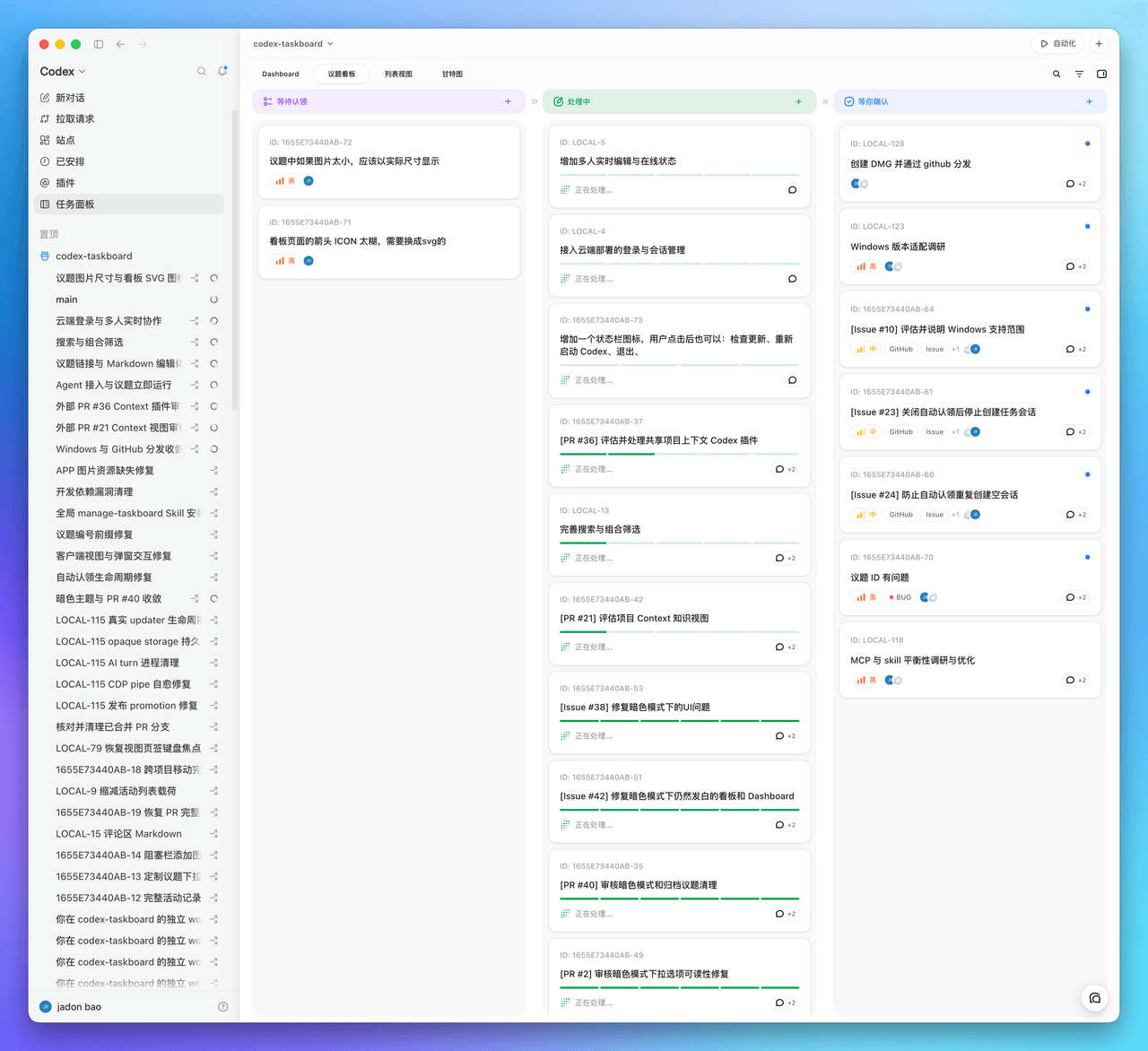 chuspeeism/dashi-taskboard
现代化可灵活嵌入的任务面板,支持 Codex、DeepSeek Harness
chuspeeism/dashi-taskboard
现代化可灵活嵌入的任务面板,支持 Codex、DeepSeek Harness
-
 ccch1mneyyy/working-activity
Lively Working-line extension for pi CLI and DSH
ccch1mneyyy/working-activity
Lively Working-line extension for pi CLI and DSH
-
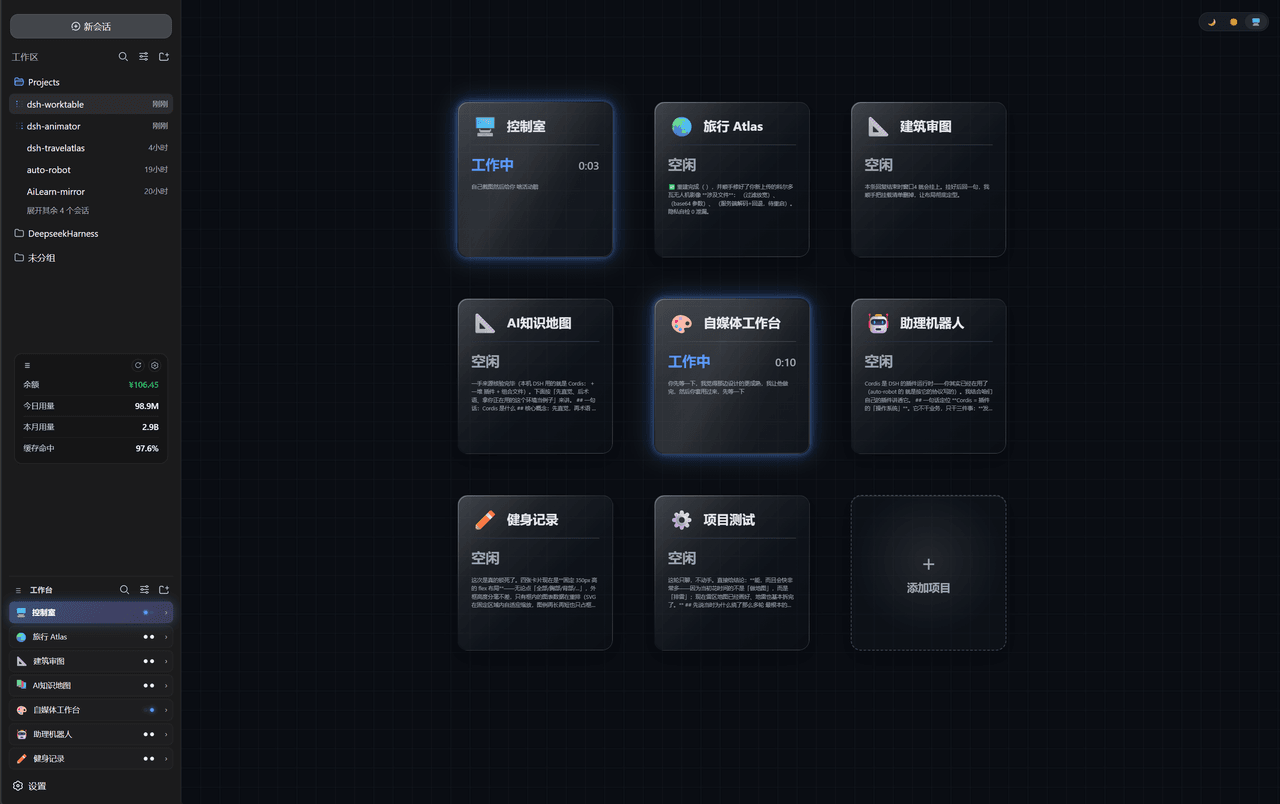 Aisland-SJL/dsh-worktable
🖥️ Agent-project workbench for DeepSeek Harness — sidebar app drawer + dockable split workspace + a live control room w…
Aisland-SJL/dsh-worktable
🖥️ Agent-project workbench for DeepSeek Harness — sidebar app drawer + dockable split workspace + a live control room w…
-
 zhoushoujianwork/easyeda-agent
嘉立创EDA专业版(EasyEDA Pro)自动化:给 AI harness 装上画板的「手」—— 一套 typed 原理图/PCB 动作,CLI / Agent Skill / stdio MCP 三形态融合接入。承接嘉立创「不以卖板赚钱…
zhoushoujianwork/easyeda-agent
嘉立创EDA专业版(EasyEDA Pro)自动化:给 AI harness 装上画板的「手」—— 一套 typed 原理图/PCB 动作,CLI / Agent Skill / stdio MCP 三形态融合接入。承接嘉立创「不以卖板赚钱…
-
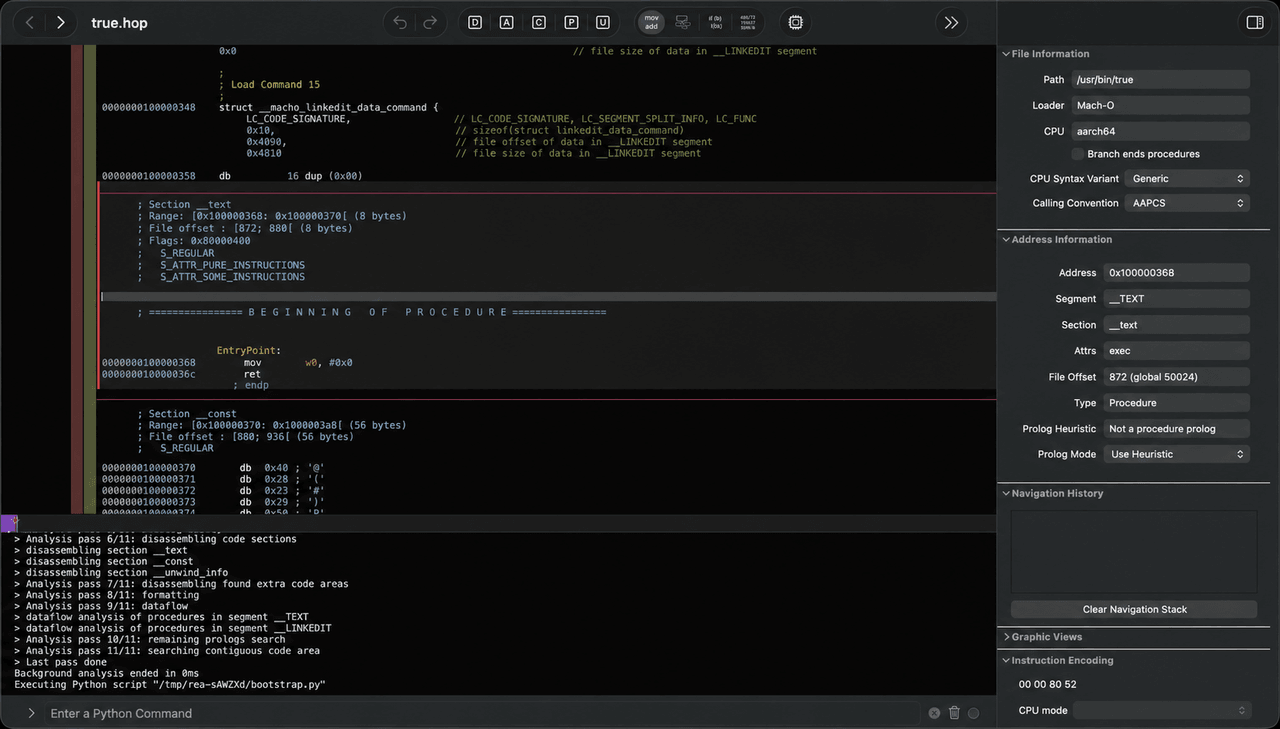 morluto/rea
Reverse engineer anything with agents, from app behavior down to native binaries.
morluto/rea
Reverse engineer anything with agents, from app behavior down to native binaries.
-
 linhay/harmony-next.skills
Offline HarmonyOS NEXT developer skill library for AI coding assistants. Covers API 12–26 declarations, ArkTS/ArkUI, NDK…
linhay/harmony-next.skills
Offline HarmonyOS NEXT developer skill library for AI coding assistants. Covers API 12–26 declarations, ArkTS/ArkUI, NDK…
- pax-beehive/dsh-hub-cli Open-source CLI, schemas, resolver, and DSH agent tools for DSH Plugin Hub
- ericshang98/Perfect-Web-Clone Pixel-perfect clones of any webpage. Paste a URL, get a measured Vite + React replica.