dpskh/dsh-a2a
Harness 的 Agent2Agent 网格
Project Overview项目介绍
@dpskh/a2a 0.3 is a DSH entry plugin providing a realtime Agent2Agent mesh: ctx.a2aHub (project registry, append-only message history, optional WebSocket hub server on /v1/connect, requires a routed dsh-storage a2a domain), ctx.a2aMesh (one live socket per joined agent, serial inbound injection), the a2a_peers / a2a_message / a2a_history tools, and the /a2a command surface. Use it for trusted private-network agent chat and broadcasts. Caveat: hub endpoints are unauthenticated — never expose to public or untrusted networks.
@deepseek-ai/dsh 的 @dpskh/a2a 0.3 插件提供实时 A2A mesh:ctx.a2aHub 维护项目注册表与不可变消息历史(需挂载 dsh-storage 域),可选监听 WebSocket 中心;ctx.a2aMesh 为每个加入的代理维持一个连接并按序列注入。还提供 a2a_peers / a2a_message / a2a_history 工具与 /a2a 命令。适用于受信私网内代理间实时会话。限制:仅限在线接收方,无离线投递;中心不鉴权,勿暴露公网。
请帮我了解并安装插件:【dsh-a2a】【https://github.com/dpskh/dsh-a2a】Send this message to DSH in your current session. CLI install commands may not be accurate across systems — DSH will figure it out for you.把上面这条消息直接发给当前会话里的 DSH,让它帮你了解并安装。安装命令不一定准确,发给 DSH 更稳。
Or use CLI install (for developers)或使用命令行安装(适合开发者)
CLI Install命令行安装
dsh plugin --profile web add github:dpskh/dsh-a2a把 dpskh/dsh-a2a 加入你的 DSH 配置(web profile)即可启用。
READMEREADME
@dpskh/a2a — Agent2Agent realtime mesh for the DeepSeek Harness
English | 中文
One package, one entry plugin. Mounting @dpskh/a2a 0.3 provides the realtime A2A mesh: the hub host (ctx.a2aHub: project registry + immutable message history over the storage domain, with an optional listening hub server that also serves the realtime WebSocket), the mesh client (ctx.a2aMesh: one WebSocket presence per joined agent with serial injection), the a2a_peers / a2a_message / a2a_history tools, and the /a2a command surface. Presence is a live socket; messages are the durable record — realtime chat on a trusted private network.
Configuration
- id: a2a
  name: '@dpskh/a2a'
  config:
    hub:                      # optional: run the mesh hub server
      host: 127.0.0.1
      port: 43123             # base bind port
      maxPort: 43223          # optional: walk up on EADDRINUSE
    mesh:                     # optional: mesh client
      project: main           # project to connect to (defaults to main)
      agentId: main           # local agent this presence belongs to
      name: main              # roster name; defaults to the agent id
      autoConnect: true       # connect when the configured agent registers
      persistConnections: false # remember each session's last connection and rejoin it
      reconnectMs: 500        # initial reconnect delay (doubles to 10 s)
The hub needs a routed storage backend: mount @deepseek-ai/dsh-storage, a backend (storage-json or storage-sqlite), and @deepseek-ai/dsh-storage-domain with the backend routed to the a2a domain. The entry plugin composes the hub host service (ctx.a2aHub), the mesh client (ctx.a2aMesh), and — when a mesh is configured — the tool and command plugins (cordis activates them by their inject dependencies). Removed 0.2 mesh fields (persistBindings, autoRejoin, pollIntervalMs, heartbeatMs, caps) are ignored for compatibility with copied 0.2 configs.
The mesh
- Hub (
ctx.a2aHub): authoritative project registry and the append-only message history (per-project monotonic sequences, project-scopedmessageRefs likedemo:42). The optional hub server serves the project/history routes over HTTP and the realtime WebSocket at/v1/connect(protocol version 3). - Presence: a presence exists if and only if one WebSocket is alive. Claimed roster names are unique per project; a same-named later connection is a new presence and inherits nothing. Hub restart clears every presence while the message history survives.
- Messages: immutable, idempotent by
messageId(retrying the same body returns the original message; reusing the id for different content fails withMessageIdConflictError). Direct sends resolve the recipient's current presence at accept time and fail immediately when absent; project broadcasts freeze the current presence snapshot (excluding the sender) and never backfill later joiners.replyToprovides causality inside the same project history. Text and attachments share a 4 MiB decoded-content budget; up to eight attachments per message travel as base64 (gzip when it shrinks). - Delivery: in-memory outcomes reported to the sender —
deliveredproves the receiving client injected the message,faileda materialization/injection error,disconnecteda socket that closed before acknowledging. - Mesh client (
ctx.a2aMesh): each joined agent owns one connection (project + roster name). Inbound messages are pushed serially in hub-assigned sequence and injected into the owning agent's session (follow-up turn when idle, plain context when busy), with attachments materialized under the system temp dir. Unexpected drops auto-reconnect with backoff while the connection is desired; a rejected claim (name in use, unknown project, protocol mismatch) stops wanting the connection.a2a/presence-changedevents announce local connect/disconnect;a2a/deliveryevents announce delivery outcomes. Disposed agents drop their presence automatically. WithpersistConnections, each successful connect recordsagentId → (project, name)in thea2a-connectionssettings namespace, and an agent registering with a stored record rejoins it — the GUI path, where session ids are dynamic and no staticagentIdis configured; an explicit disconnect forgets the record. Each membership also tracks a local conversation-activity view (idle/conversing/working, inferred from sends, deliveries, and inbound messages — no activity state crosses the hub wire) and exposes it instatus()for the connection-graph animations; activity transitions emita2a/changeso the browser refreshes live.
Tools and commands
a2a_peers— list the exact roster names currently present in this project.a2a_message— send to one current peer (target: {type: 'agent', name}) or broadcast to all current peers (target: {type: 'project'}), with optionalreplyTo, attachment file paths, and an idempotencymessageId. The reply arrives passively — never wait or poll after send.a2a_history— review earlier project messages usingbefore,after,limit, orfrom(past context only)./a2a hub,/a2a project create|list|delete,/a2a connect <project> [--as <name>],/a2a disconnect,/a2a status,/a2a peers,/a2a history [--before <ref>] [--after <ref>] [--limit <n>] [--from <name>],/a2a help.
Web collaboration controls
@dpskh/ui-a2a consumes one Host a2a.snapshot per session: connection identity, the live roster, and projects. Local and remote roster changes emit host/a2a-changed; the browser refetches the snapshot so its Overview page, Projects page, badge, and quick panel stay on one state source. The roster is primary; the auxiliary topology uses an orbit for up to six peers and a grid above that threshold, and hides on narrow layouts. The browser never connects to the Hub WebSocket.
Trust model
The mesh assumes a fully trusted private network: hub endpoints do not authenticate callers, and caller-supplied project and member identities are trusted claims. Do not expose a hub to the public Internet or an untrusted network.
Model Experience
Indirectly, through the a2a_* tools, the /a2a command, and injected inbound envelopes: project member ids, message refs, join outcomes, and delivered messages can enter the conversation.
KV Cache effect
Prefix-stable while the plugin config and tool definitions are unchanged; project, roster, or history changes do not alter the schemas.
Known Limitations and Deferred Work
- Live recipients only — direct sends fail immediately when the recipient is not currently present; there is no offline delivery or durable roster.
- Single hub per client — a mesh client connects to one hub at a time; multi-hub fan-out is deferred.
- In-memory delivery outcomes —
delivered/failed/disconnectedare not persisted; rich delivery metadata is deferred. - Temp-dir attachment materialization — inbound attachments land under the system temp directory; a configurable session-scoped location is deferred.
Related相关推荐
- Momojie-S/dsh-workspace-mcp DSH 插件: 按 workspace 加载 MCP server (agent-scoped)
- fenxin-fx/dsh-default-workspace-plugin
- baisama-cloud/dsh-composer-history Command history for the DeepSeek Harness (DSH) web GUI composer — press ↑ / ↓ to cycle through your previously sent inst…
- LittleBlackTong/dsh-plugin-heartbeat
- lehhair/dsh-html-artifact
- 2031814001yuyue-tech/dsh-side-chat dsh-plugin
-
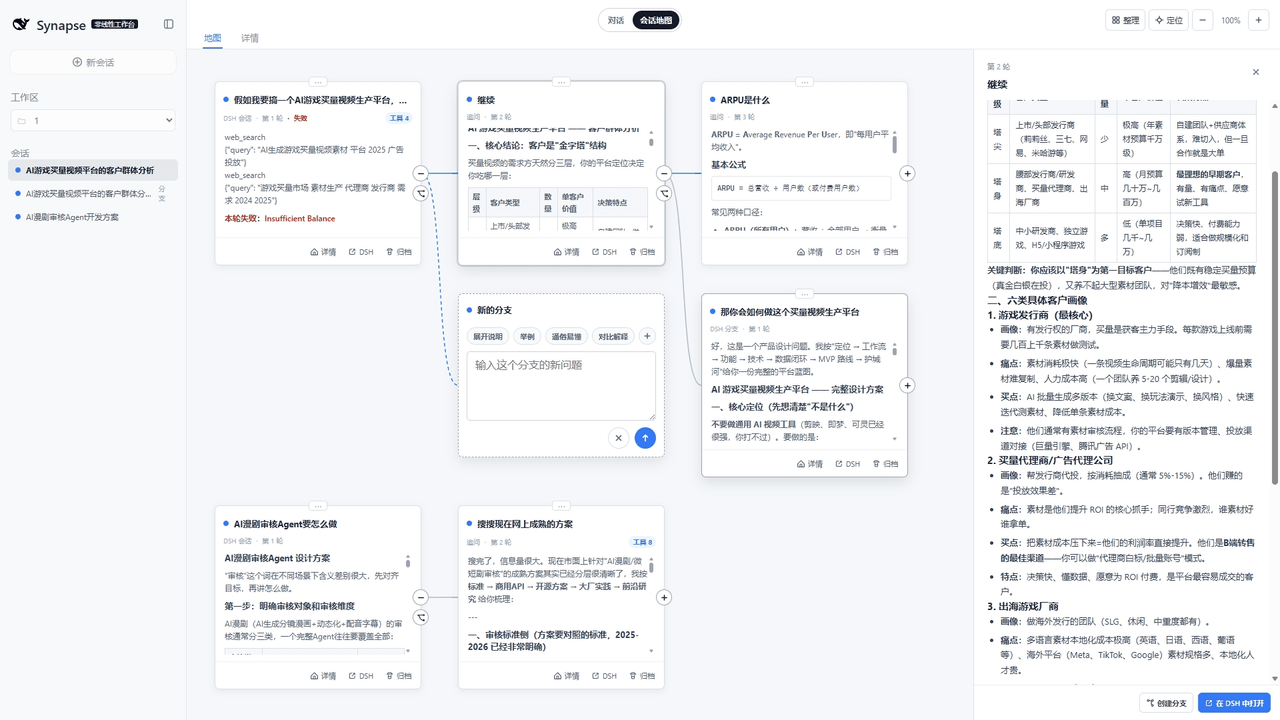 liangmianya/dsh-synapse
A visual, non-linear conversation workspace plugin for DeepSeek Harness ; A canvas-based session explorer and branching …
liangmianya/dsh-synapse
A visual, non-linear conversation workspace plugin for DeepSeek Harness ; A canvas-based session explorer and branching …
-
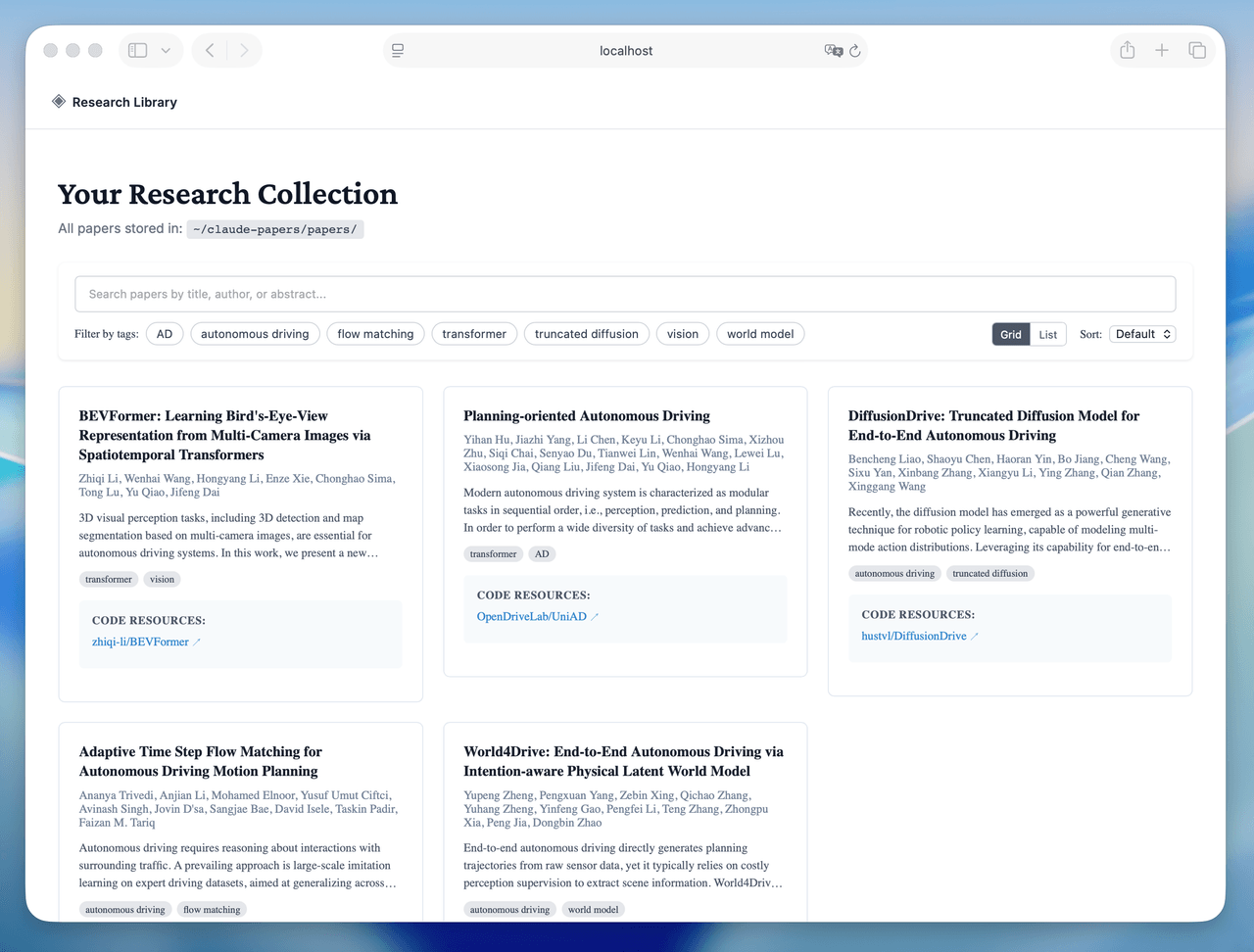 alaliqing/claude-paper
📖 Cross-agent research paper toolkit for Claude Code, Codex, OpenCode, and DeepSeek Harness—quick summaries, deep study…
alaliqing/claude-paper
📖 Cross-agent research paper toolkit for Claude Code, Codex, OpenCode, and DeepSeek Harness—quick summaries, deep study…