dushaobindoudou/dsh-refine
DeepSeek Harness (dsh) plugin — /refine command + settings panel for the dsh-continual-harness self-refinement engine. npm: dsh-refine
Project Overview项目介绍
dsh-refine is a UX refinement layer plugin for DeepSeek Harness. It provides the /refine command and a settings panel supporting entry browsing, refinement history, one-click rollback, and auto-gate audit. It works with the continual harness refinement engine. The engine dsh-continual-harness is required to trigger actual refinements, though it is optional at runtime.
dsh-refine 是 DeepSeek Harness 的精炼 UX 层插件,提供 /refine 命令和设置面板,支持条目浏览、精炼历史查看、一键回退和自动审计,用于配合持续优化引擎工作。需要注意,若要触发实际精炼操作,必须额外安装可选的 dsh-continual-harness 引擎。
请帮我了解并安装插件:【dsh-refine】【https://github.com/dushaobindoudou/dsh-refine】Send this message to DSH in your current session. CLI install commands may not be accurate across systems — DSH will figure it out for you.把上面这条消息直接发给当前会话里的 DSH,让它帮你了解并安装。安装命令不一定准确,发给 DSH 更稳。
Or use CLI install (for developers)或使用命令行安装(适合开发者)
CLI Install命令行安装
dsh plugin --profile web add github:dushaobindoudou/dsh-refine把 dushaobindoudou/dsh-refine 加入你的 DSH 配置(web profile)即可启用。
READMEREADME
dsh-refine
English | 简体中文




A refinement UX layer for the DeepSeek Harness (dsh): the /refine human
command plus a settings panel with entry browsing, a refinement history
timeline, one-click rollback, and auto-gate audit. It drives the
dsh-continual-harness
engine, which is optional at runtime — when the engine is not mounted,
every operation degrades into an actionable instruction instead of an error.
The plugin is the shell, and since 1.2.0 it mounts the engine itself:
dsh-continual-harness starts as a child plugin under ctx.isolate('commands'),
so the engine's own /refine adapter never registers and dsh-refine keeps the
full command surface (status / list / history / rollback / triggers)
while forwarding the engine's --global / --local grammar to it. List only
dsh-refine in your profile's dsh.profile.bundles; a profile that still
mounts dsh-continual-harness as its own row keeps working — the shell detects
the already-registered engine, skips its own mount, and falls back to the
engine's /refine.
This project is a port and practical adaptation of the
prime-agent /refine idea
for the dsh ecosystem.
Features
/refinecommand —status/list [kind]/history [n]/rollback <id>, plus free-text refinement instructions (owned by the engine when it is mounted; provided by dsh-refine otherwise)- Settings panel — harness timeline, entry browsing, one-click rollback, auto-gate audit
- Bilingual & themed — the panel reads the host locale (Simplified Chinese / English) and adapts to the dark and light themes through dsh design tokens with no hardcoded colors
- Session-history compatibility — the
harness/refinementsession event written by older engine builds is registered into the host reader so legacy refined-session logs stay loadable (the 0.3.0 engine self-registers and no longer writes it; dsh-refine keeps an idempotent defensive registration) - Host gap bridging — where the installed engine's turn-time code reads
session.eventsbut the dsh host only exposessnapshotEvents(), dsh-refine installs a guardedeventsgetter so the engine's projection/planner stops crashing withCannot read properties of undefined (reading 'length') - Engine optional — without the engine you get actionable setup guidance; nothing errors out, nothing pollutes the session
Requirements
- Node.js ≥ 18
- dsh 0.1.2-rc.1+ (aligned
@deepseek-ai/dsh-home-pathsand@deepseek-ai/dsh-typert-protocol)
Installation
Mount this package and the engine in your dsh profile (e.g.
~/.dsh/profiles/web/cordis.yml):
plugins:
  - dsh-continual-harness   # the engine (optional, but required to actually trigger refinements)
  - dsh-refine              # this UX layer (required)
Or point at a local checkout with link: during development:
plugins:
  - link:/path/to/dsh-refine
Restart dsh web to apply (host-side changes need a restart; client panel
changes hot-reload while pnpm run dev:web is running).
Usage
Command
| Input | Description |
|---|---|
/refine status |
Overview of engine/rollback state |
/refine list [kind] |
List current entries (filter by prompt/memory/skill/subagent) |
/refine history [n] |
Recent refinement history (default 10, max 50) |
/refine rollback <id> |
Roll back one committed refinement (ids from history) |
/refine <any text> |
Trigger an engine refinement; returns immediately, results appear later in the panel / history |
/refine <text>treats the text as a refinement instruction handed to the engine's planner. For ordinary chat, just type in the input box without the/prefix. Whendsh-continual-harness@0.3.0+is mounted it owns/refine(plan + rollback); the panel below still offers the browse / timeline / one-click-rollback views.
Panel
Settings → Refine Harness: a settings-style overview of engine and state
path, browse prompt / memory / skill / subagent entries, inspect the
history timeline and roll back with one click, and audit auto-gate decisions.
How it works
engine mounted (dsh-continual-harness@0.3.0+):
  /refine  ──► engine's own /refine ──► coordinator ──► harness_state.json / refinements.jsonl

engine absent:
  /refine  ──► dsh-refine /refine ──► tools.execute('harness_refine') ──► actionable setup instruction

panel (always): 设置 → 精炼 Harness ──► refineUx data/rollback ──► ESP files + harness_refine
- Instruction triggers are background fire-and-forget: the engine and agent
are validated synchronously, then the command acks immediately so the input
box is never frozen for a planner round-trip; engine results land in the
panel timeline and
/refine history. - Rollback is synchronous: it applies the stored inverse edits only, with no LLM round-trip.
- Session-event compatibility:
lib/compat.jsregistersharness/refinementinto the host reader's known event-type set (KNOWN_SESSION_EVENT_TYPES) — one registration keeps logs from older engine builds loadable; as of 0.3.0 the engine no longer writes the event and self-registers the type itself.
Development
npm install
npm run lint    # ESLint (lib/ + smoke-host.mjs)
npm test        # smoke suite — no engine required; extra host-registration
                # assertions run when dsh is on PATH
The smoke suite is hermetic: minimal engine ESP fixtures are bootstrapped
automatically when ~/.dsh/harness lacks them, and it also exercises the real
dsh install paths for compatibility regression (skipped gracefully when dsh
is not on PATH). Run DSH_HOME=/tmp/fresh npm test to reproduce the CI
environment in a clean directory.
See CONTRIBUTING.md for commit style, changelog policy, and the release process; see SECURITY.md for reporting vulnerabilities.
License
MIT © dushaobindoudou
Related相关推荐
-
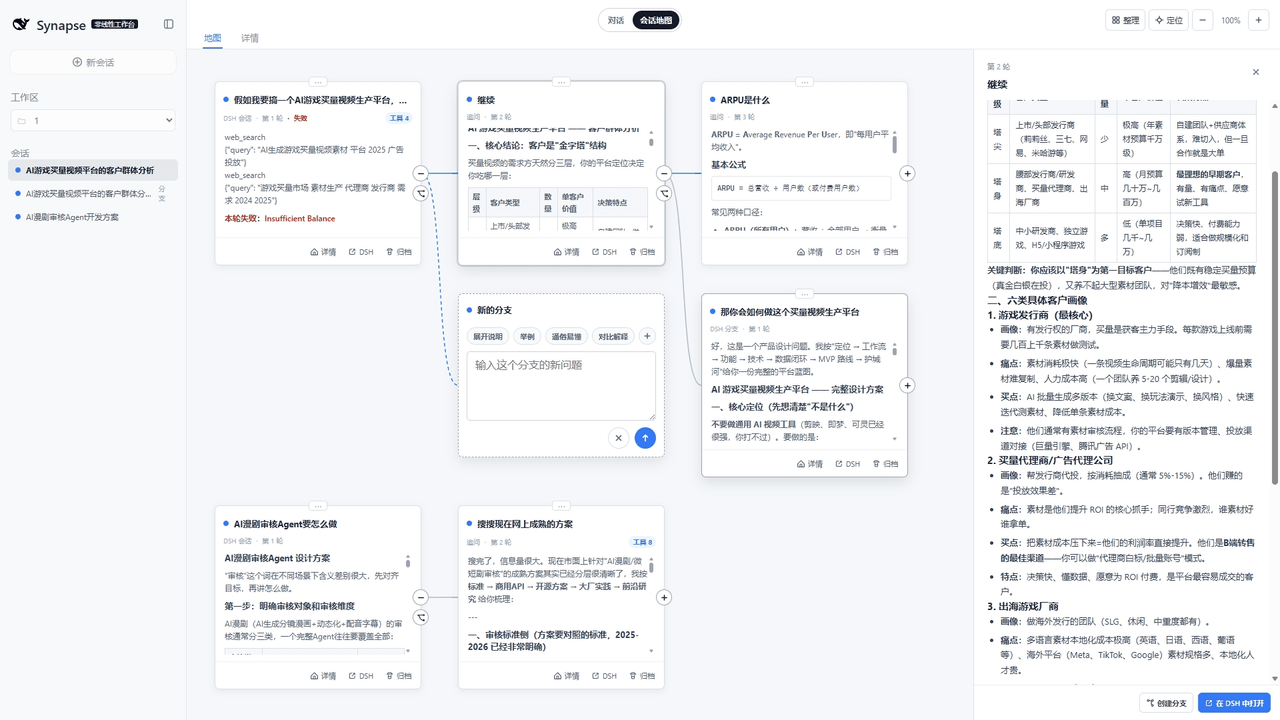 liangmianya/dsh-synapse
A visual, non-linear conversation workspace plugin for DeepSeek Harness ; A canvas-based session explorer and branching …
liangmianya/dsh-synapse
A visual, non-linear conversation workspace plugin for DeepSeek Harness ; A canvas-based session explorer and branching …
-
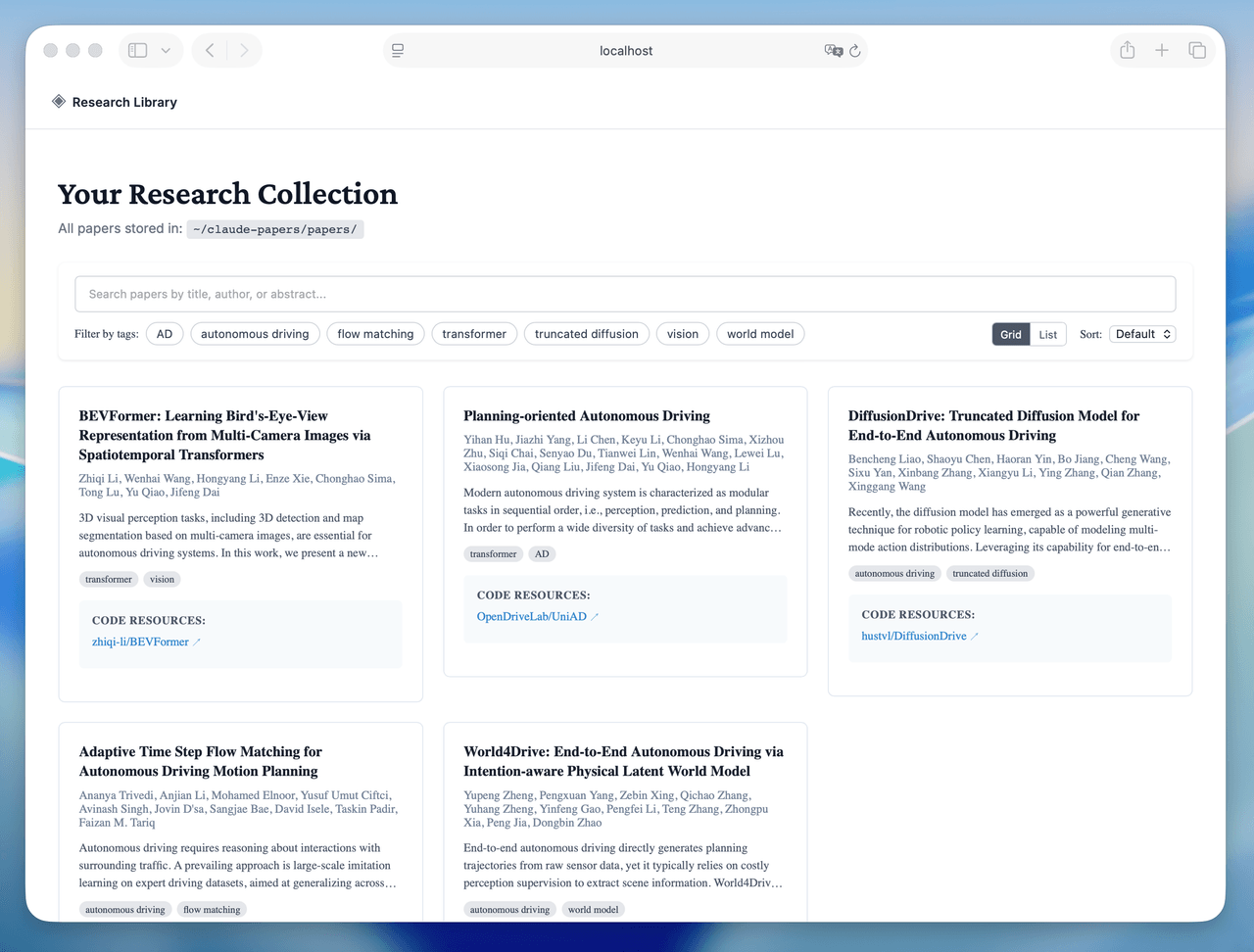 alaliqing/claude-paper
📖 Cross-agent research paper toolkit for Claude Code, Codex, OpenCode, and DeepSeek Harness—quick summaries, deep study…
alaliqing/claude-paper
📖 Cross-agent research paper toolkit for Claude Code, Codex, OpenCode, and DeepSeek Harness—quick summaries, deep study…
-
 omdsh-dev/dsh-annotation
DSH Web 选中批注插件:选文字→批注→回车随消息发送;气泡隐藏批注块(零闪烁);回复按 Annotation N 逐条对照(可悬浮芯片)。官方 bundle,零核心改动
omdsh-dev/dsh-annotation
DSH Web 选中批注插件:选文字→批注→回车随消息发送;气泡隐藏批注块(零闪烁);回复按 Annotation N 逐条对照(可悬浮芯片)。官方 bundle,零核心改动
-
 Anionex/dsh-turn-rewind
deepseek harness对话和代码状态回退插件 | DSH — rewind conversation and workspace state, powered by a persistent Change Ledger
Anionex/dsh-turn-rewind
deepseek harness对话和代码状态回退插件 | DSH — rewind conversation and workspace state, powered by a persistent Change Ledger
-
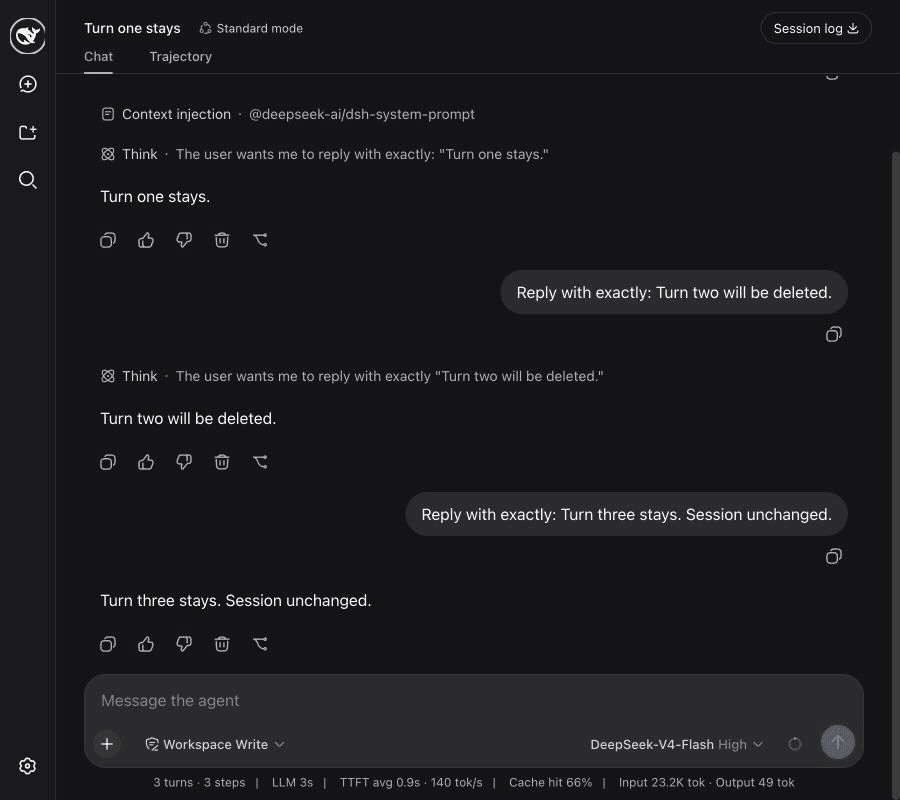 hanshenmesen/dsh-turn-delete
Delete one complete turn from a DeepSeek Harness session without deleting the session
hanshenmesen/dsh-turn-delete
Delete one complete turn from a DeepSeek Harness session without deleting the session
-
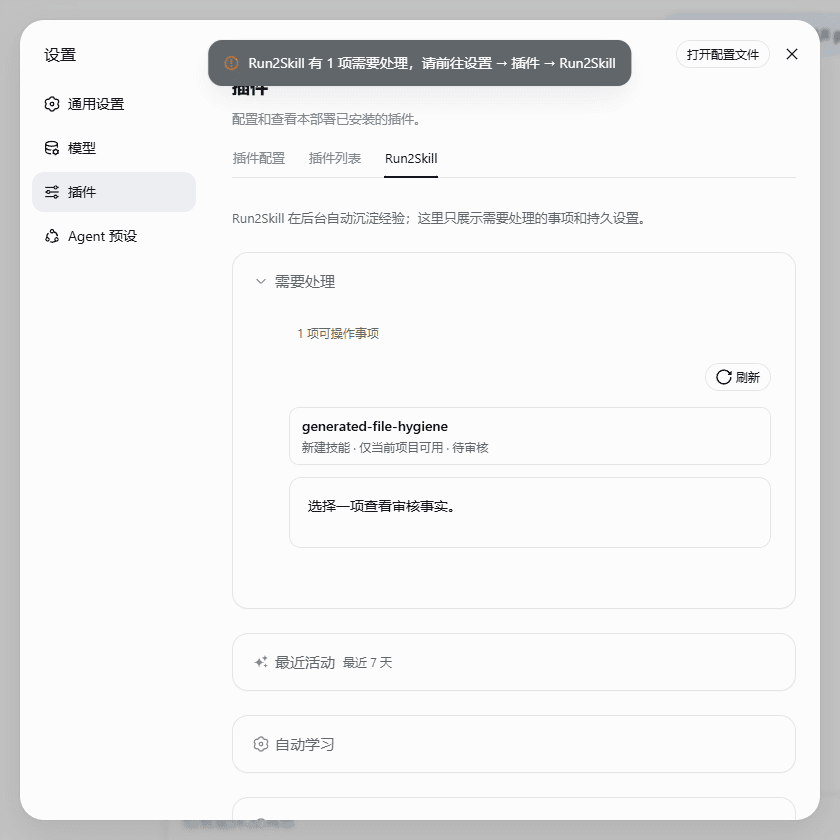 qkycir-123/dsh-run2skill
Automatically turn successful DeepSeek Harness sessions into reusable, reviewable Agent Skills.
qkycir-123/dsh-run2skill
Automatically turn successful DeepSeek Harness sessions into reusable, reviewable Agent Skills.
-
 Tyan66666/billion-context-dsh
Model-driven context management (Active Context Pruning / ACP) for the DeepSeek Harness — the model decides when and wha…
Tyan66666/billion-context-dsh
Model-driven context management (Active Context Pruning / ACP) for the DeepSeek Harness — the model decides when and wha…
-
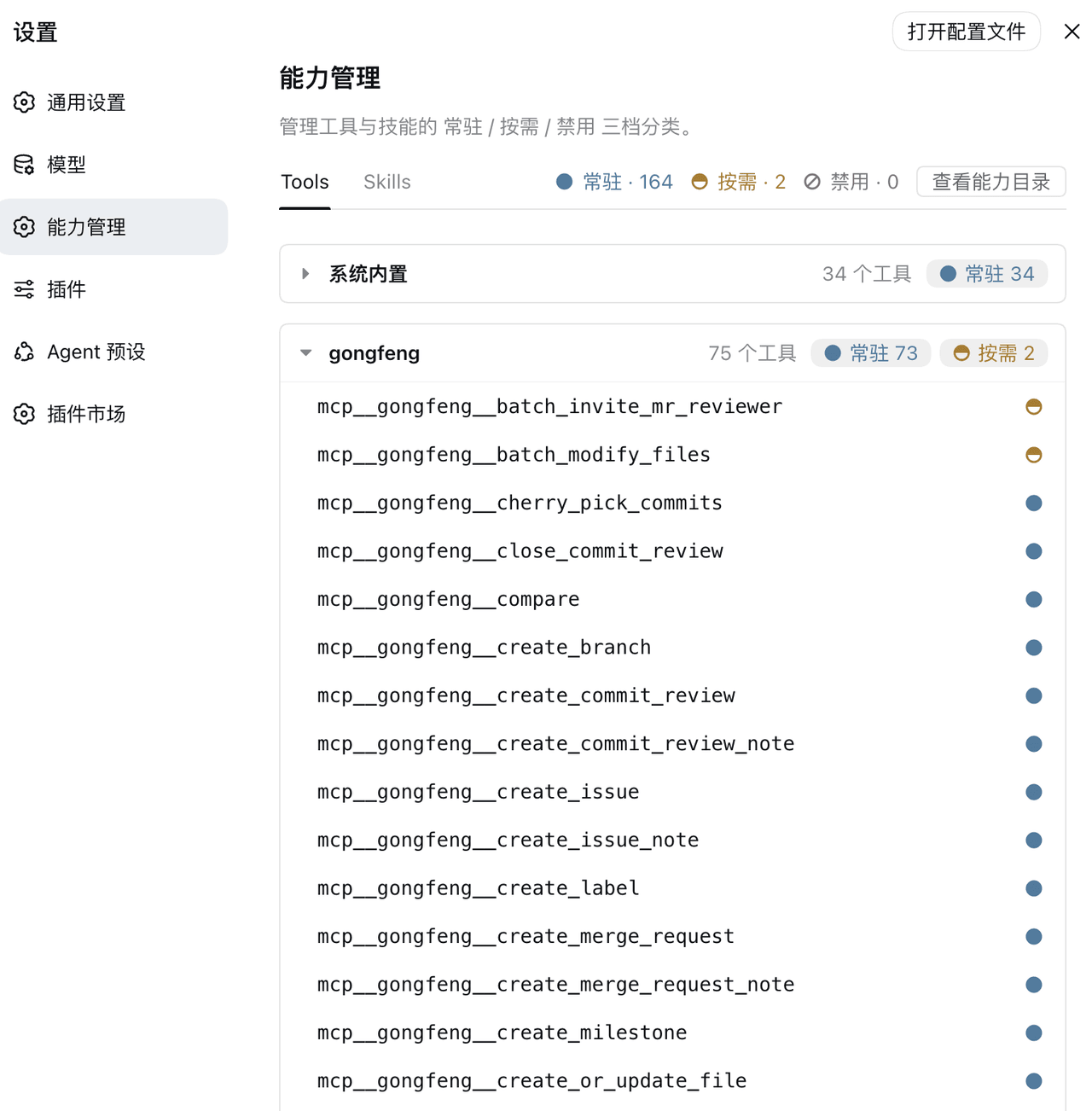 PKUfudawei/dsh-capability-menu
Unified capability menu for DeepSeek Harness: manage exposure level (context footprint) and execution mode of MCP tools …
PKUfudawei/dsh-capability-menu
Unified capability menu for DeepSeek Harness: manage exposure level (context footprint) and execution mode of MCP tools …