EvilIrving/dsh-proof
DeepSeek Harness 的只读验收层:验证器对每一轮进行把关,并将差距引导回代理。
项目介绍Project Overview
dsh-proof 是 DSH 的只读验收插件:在每轮顶层回合结束前,启动只读验证子代理,按结构化结论判断是否通过;未通过或证据不足时,把缺口与证据回注给主代理继续处理。适合需要自动确认“任务是否真的完成”的流程。注意:验证器依赖 subagents 服务,denyTools 必须匹配实际注册工具;启动失败会降级为空操作,不会阻断回合。
dsh-proof is a read-only acceptance plugin for DSH. Before each top-level turn closes, it spawns a read-only verifier subagent, collects its structured verdict, and injects any non-pass gaps or evidence back to the driving agent. Use it when a turn needs an independent “is it actually done?” check. It requires the subagents service, and denyTools must match deployed tools; verifier spawn failures degrade to a logged no-op rather than failing the turn.
请帮我了解并安装插件:【dsh-proof】【https://github.com/EvilIrving/dsh-proof】把上面这条消息直接发给当前会话里的 DSH,让它帮你了解并安装。安装命令不一定准确,发给 DSH 更稳。Send this message to DSH in your current session. CLI install commands may not be accurate across systems — DSH will figure it out for you.
或使用命令行安装(适合开发者)Or use CLI install (for developers)
命令行安装CLI Install
dsh plugin --profile web add github:EvilIrving/dsh-proof把 EvilIrving/dsh-proof 加入你的 DSH 配置(web profile)即可启用。
READMEREADME
dsh-proof
Independent read-only acceptance layer for the DeepSeek Harness.

Before each top-level turn closes, dsh-proof spawns a read-only verifier
subagent, collects its structured verdict, and steers any non-pass gaps back
into the driving agent. It is the harness's missing "is the agent actually
done" gate — no other plugin can substitute for it.
Install
dsh plugin --profile <name> add github:EvilIrving/dsh-proof
Or, from a checkout:
dsh plugin --profile <name> add ./dsh-proof
The bundle patch inserts one plugin row (dsh-proof); it needs the
subagents service (the official dsh-subagent providers), which the base
profile already mounts.
How it works
| Step | Mechanism |
|---|---|
| Intercept "about to close" | agent/turn-stopping (serial, awaited before the turn commits) |
| Spawn a read-only verifier | ctx.subagents.start('spawn', …) with toolFilter.deny + outputSchema |
| Block recursion | delegationDepthOf(agent) > 0 filter + maxDepth: 0 |
| Steer gaps back | agent.inject(gap details) + agent.steer(followup) on fail / insufficient-evidence |
The verifier inherits the parent's tool set and is narrowed by the deny list
(see deny list); it never sees a whitelist that could
accidentally hide a newly added read-only tool. A verifier that ends with
stopReason !== 'completed' or a missing structured result is treated as
"no objection", so a failed proof never fails the user's turn.
Config
export interface Config {
  providerName: string          // default 'spawn'
  maxAttemptsPerTurn: number    // default 3
  denyTools: string[]           // default mutating-tool deny list
  verifierPrompt: string        // read-only acceptance instruction
  followupInstruction: string   // steering text after a failed verdict
}
Set any field from cordis.yml:
plugins:
  dsh-proof:
    config:
      maxAttemptsPerTurn: 2
      denyTools: [write, edit, str_replace_editor, bash, run_code, subagent]
Deny list
toolFilter.deny removes tools from the verifier's inherited full set.
tools.restrict validates every name loudly, so denyTools must name tools the
deployment actually registers. The default is
write, edit, str_replace_editor, bash, run_code, subagent, which keeps
read-only discovery tools (read, read_image, glob, grep) available. A
deployment that adds its own mutating tools must extend the list; a deployment
that forbids even shell/read access should switch to an explicit allow
whitelist (set denyTools and verifierPrompt to match, or extend the plugin
for an allowTools field).
Model Experience
Request context and condition
What the model sees
The top-level agent receives an injected user message listing the verifier's
gaps and evidence, followed by the configured followupInstruction. Only a
non-pass verdict injects anything; a passing turn adds nothing.
Token effect
Zero-direct effect on passing turns. A failing turn adds one bounded injected message (gaps + evidence) plus the short follow-up line.
KV Cache effect
Append-only: the injected context and follow-up are appended as new user messages, never rewriting earlier request tokens.
Known Limitations and Deferred Work
- Deny list must match the deployment's tools —
tools.restrictfails loud on unknown names, so a mismatched default blocks verifier startup. The exact mutating-tool set is deployment-specific and is resolved at first install. - No evidence normalization — the verifier gathers evidence itself; this
plugin does not re-implement diff/test/typecheck/lint. A deployment wanting
specific evidence channels should extend
verifierPrompt. - Best-effort spawn — a provider that is absent or rejects the request degrades to a no-op (logged), rather than failing the user's turn.
相关推荐Related
-
 nexu-io/open-design
🎨 Best DeepSeek Harness Design Plugin. The open-source Claude Design alternative. 🖥️ Local-first desktop app. 🖼️ Your…
nexu-io/open-design
🎨 Best DeepSeek Harness Design Plugin. The open-source Claude Design alternative. 🖥️ Local-first desktop app. 🖼️ Your…
-
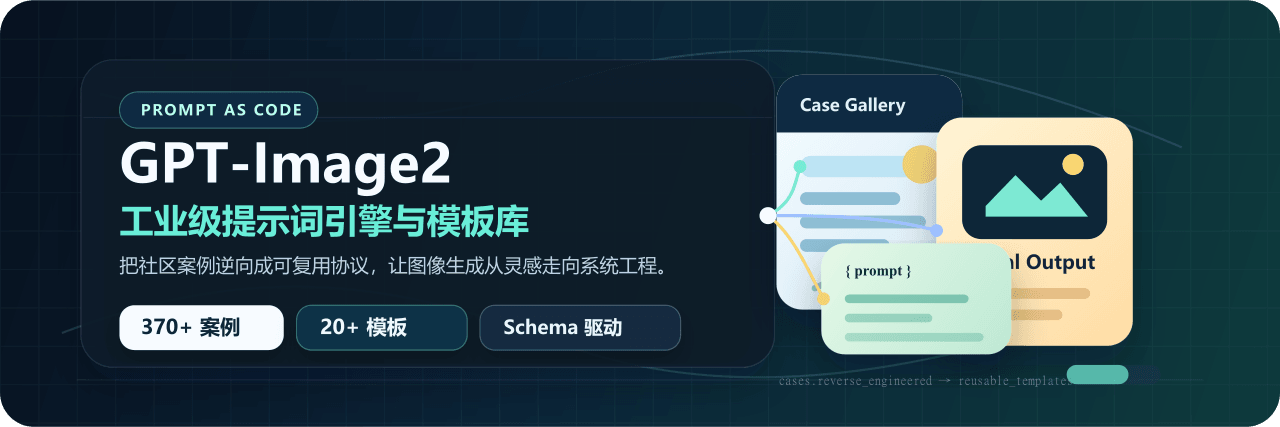 freestylefly/awesome-gpt-image-2
Prompt as Code | GPT-Image2 工业级提示词引擎与模板库,530+ 个案例逆向工程,20+ 套工业级模板,并提炼出Skills,持续更新中
freestylefly/awesome-gpt-image-2
Prompt as Code | GPT-Image2 工业级提示词引擎与模板库,530+ 个案例逆向工程,20+ 套工业级模板,并提炼出Skills,持续更新中
-
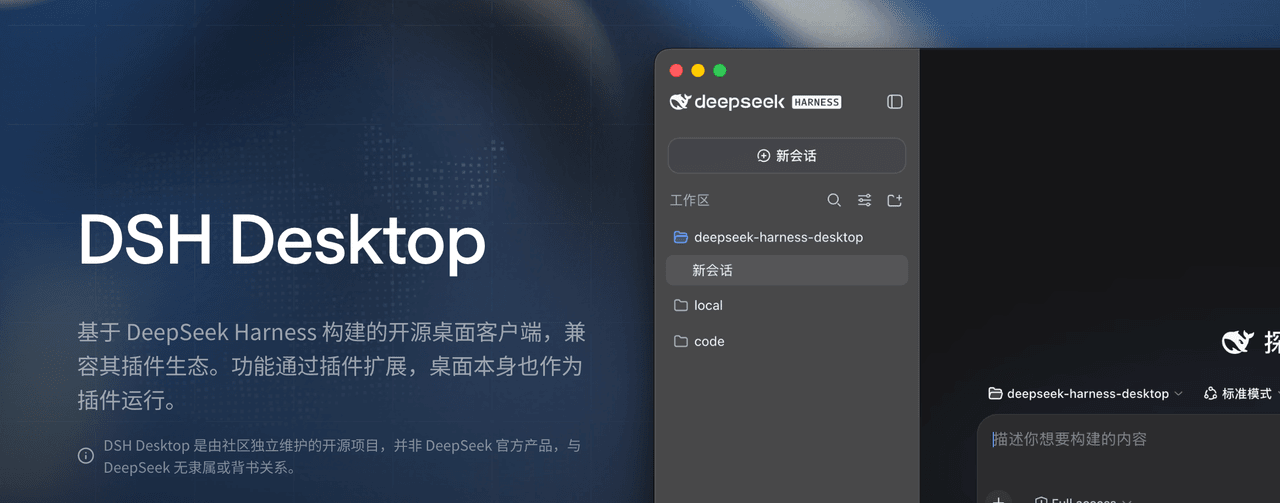 anywhere-labs/dsh-desktop
为 DeepSeek Harness (DSH) 插件生态打造的现代化桌面端解决方案。万物皆「插件」,桌面本身也是「插件」。
anywhere-labs/dsh-desktop
为 DeepSeek Harness (DSH) 插件生态打造的现代化桌面端解决方案。万物皆「插件」,桌面本身也是「插件」。
- Nagi-ovo/voyager Enhancement suite for Gemini, AI Studio, Claude & ChatGPT — plus a prompt manager for any web UI, DeepSeek Harness inclu…
-
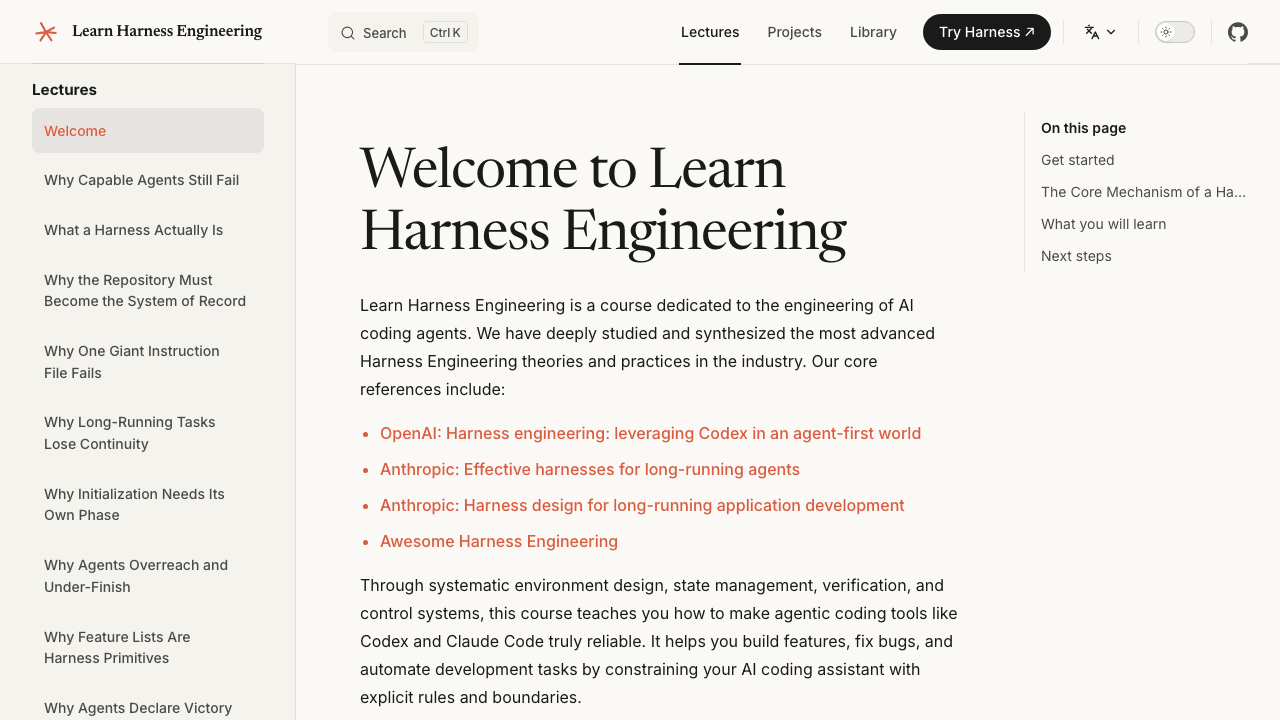 walkinglabs/learn-harness-engineering
Harness engineering beginner tutorial, from 0 to 1
walkinglabs/learn-harness-engineering
Harness engineering beginner tutorial, from 0 to 1
-
 awesome-dsh-plugin/awesome-dsh-plugin
A curated list of plugins for DeepSeek Harness (dsh) · DeepSeek Harness 插件精选列表
awesome-dsh-plugin/awesome-dsh-plugin
A curated list of plugins for DeepSeek Harness (dsh) · DeepSeek Harness 插件精选列表
-
 MemTensor/MemOS
Self-evolving memory OS for LLM & AI Agents: ultra-persistent memory, hybrid-retrieval, and cross-task skill reuse, with…
MemTensor/MemOS
Self-evolving memory OS for LLM & AI Agents: ultra-persistent memory, hybrid-retrieval, and cross-task skill reuse, with…
- yjh051108/dsh-routing-suite dsh-routing-suite — injector + router-standard kit: install the runtime injector first, then the task-aware reasoning-mo…