jaaty/dsh-gsd-bundle
A plugin bundle for DeepSeek Harness (dsh) that reimplements opengsd-core — Git Ship Done (GSD) — as a set of host-plane Cordis plugins. It replaces the default agent-loop behaviour with the GSD phase loop, so every session becomes a disciplined, artefact-driven engineering loop.
catalog descriptioncatalog 简介 / catalog description:A DeepSeek Harness bundle reimplementing opengsd-core (Git Ship Done) as host-plane Cordis plugins, replacing the default agent-loop behaviour with the GSD phase loop.
Project Overview项目介绍
This is a plugin bundle for DeepSeek Harness that reimplements the openGSD Git Ship Done (GSD) workflow. It replaces the default agent loop with a disciplined, artifact-driven phase-based engineering loop, persists cross-session state on disk and uses subagents to keep the main session lean. Use it for structured development projects. Note that only core openGSD capabilities are ported; some extended ecosystem is not included.
这是DeepSeek Harness的Git Ship Done (GSD)插件包,重新实现opengsd-core的阶段式工作流,替换默认代理循环为规范的制品驱动工程循环,跨会话持久化任务状态到磁盘,通过子代理处理重任务保持主会话清爽。适合需要规范工程流程的开发项目,注意仅移植了核心能力,opengsd的部分扩展生态未包含。
请帮我了解并安装插件:【dsh-gsd-bundle】【https://github.com/jaaty/dsh-gsd-bundle】Send this message to DSH in your current session. CLI install commands may not be accurate across systems — DSH will figure it out for you.把上面这条消息直接发给当前会话里的 DSH,让它帮你了解并安装。安装命令不一定准确,发给 DSH 更稳。
Or use CLI install (for developers)或使用命令行安装(适合开发者)
CLI Install命令行安装
dsh plugin --profile web add @dsh-gsd/bundle把 jaaty/dsh-gsd-bundle 加入你的 DSH 配置(web profile)即可启用。
READMEREADME
dsh-gsd-bundle


A plugin bundle for DeepSeek Harness (dsh) that reimplements opengsd-core — Git Ship Done (GSD) — as a set of host-plane Cordis plugins. It replaces the default agent-loop behaviour with the GSD phase loop, so every session becomes a disciplined, artefact-driven engineering loop.
Spec → Discuss → (UI design, optional) → Plan → Execute → Verify → Ship
Every unit of work is a phase that moves through these steps in order, wrapped by advisory soft gates (gap-analysis after Plan, code-review and UI-review after Execute, validate before Ship). State survives across sessions and context resets on disk under .planning/, with STATE.md as the navigation spine. Heavy work (research, planning, execution, verification, review) runs in fresh-context subagents spawned by the orchestrator, so the main session stays lean.
Release status
Milestone core-loop-helpers v3.1 is complete and released as v3.1.0 — this final 8-phase delta (phases 52–59) completes the bundle's parity with upstream opengsd-core's command surface: phase management, smart entry, freeform routing, quick batching, fast mode, MVP scoping, bounded node repair, and the rebuilt code-review fix companion. It follows the v3.0 upstream-parity milestone, which brought the full upstream step surface (spec, gap-analysis, code-review, UI-review, validate, undo, health, milestone-audit, learnings, graphify, mempalace, assumption-delta, pause/resume-work, autonomous, add-tests, and the direct phase-branch clean-PR model). The earlier v2.2 public-launch, v2.1 public-release-readiness, v2.0 graceful-removal, and v1.7 job-intel-multiwindow milestones remain prior releases. The surface today: 28 Cordis plugin rows (1 override + 27 inserts), 37 gsd_* tools, and 34 /gsd-* commands — all proven by the mount and per-plugin removal suites.
v3.1 release note — core-loop-helpers
The v3.1 milestone adds eight core-loop helper commands, completing the phase-loop tooling surface. It delivered:
- Phase-management —
gsd_phase(/gsd-phase-manage): add, insert, remove, reorder, and edit phases directly inROADMAP.mdwith validation and integrity checks;ROADMAP.md, its## Progresstable, andSTATE.mdprogress stay consistent and commit atomically. - Smart-entry —
gsd_next(/gsd-next): detect the current project state and route to the best next action, with an auto-advance option. - Freeform-routing —
gsd_route(/gsd-route): parse a plain-English intent and dispatch it to the most appropriate GSD command — recommend-only; never auto-runs. - Quick-batch —
gsd_quick_batch(/gsd-quick-batch): run multiple quick tasks in a single batch with per-task results and failure isolation. - Fast-mode —
gsd_fast_mode(/gsd-fast-mode): a lightweight single-pass fast path (auto-derive CONTEXT → execute → summary → verify → ship) for simple phases. - MVP-phase —
gsd_mvp_phase(/gsd-mvp-phase): an interactive propose-then-confirm scoping flow that produces a realPLAN.mdand delegates to the normal loop; refuses completed phases and never auto-retries on failure. - Node-repair —
gsd_repair(/gsd-repair): bounded automatic recovery for a phase whose verification returned gaps — up to 2 rounds ofgsd_plan --gaps→gsd_execute --gaps-only→gsd_verify --gaps, stopping with clear causes; writes<NN>-REPAIR.md. - Review-fix-companion — the
gsd_code_review --fixcompanion rebuilt on a bounded anchor-edit contract: per-fix atomic commits with real commit hashes, skip-and-continue fault isolation, anode --checkparse gate before write, andREVIEW-FIX.mdreporting that works in live sessions.
v3.0 release note — upstream-parity
The v3.0 milestone brings the bundle to full parity with upstream opengsd-core's phase loop and step surface. It delivered:
- Spec-phase —
gsd_spec_phase: a spec step that produces aSPEC.mdwith falsifiable Current/Target/Acceptance requirements, gated by an ambiguity-scoring score (≤ 0.20 across four weighted clarity dimensions). - Gap-analysis —
gsd_gap_analysis: a post-planning coverage tool emitting a deterministic REQ-ID/D-ID vs plan-body coverage table (<NN>-COVERAGE.md). - Code-review —
gsd_code_review: a post-execute review pass producingREVIEW.mdwith severity-classified findings (BLOCKER/WARNING/INFO). - UI-review —
gsd_ui_review: a retroactive 6-pillar UI audit producingUI-REVIEW.md(overall /24). - Validate-phase —
gsd_validate_phase: a retro audit mapping each phase requirement to the test infra, classifying COVERED/PARTIAL/MISSING/Manual-Only (<NN>-VALIDATION.md). - Undo —
gsd_undo: a safe rollback path viagit revertwith dependency checks and a dry-run-by-default confirmation gate. - Health —
gsd_health: a.planning/integrity diagnostic (phase/plan numbering, orphan SUMMARYs, STATE/ROADMAP disagreement) with non-destructive config-only repair. - Milestone-audit —
gsd_milestone_audit: the milestone close-gate aggregating per-phase verifications, plus a cross-phase UAT outstanding-items list. - Learnings —
gsd_extract_learnings: cross-phase learnings extraction into a carrying-forward.planning/LEARNINGS.md. - Graphify —
gsd_graphify: a project knowledge graph in.planning/graphs/with build/query/status modes. - Mempalace — cross-session memory capture/recall (see Mempalace).
- Assumption-delta — an advisory architecture checkpoint wired into
gsd_plan(plan:pre): when a phase makes something plural/optional/chosen that used to be singular/required/derived, it surfaces one identity-model question (promote vs add-alongside). Gated byworkflow.assumption_delta; a pure deterministic scan, never an LLM judgment. - Pause-resume-work —
gsd_pause_work/gsd_resume_work: a structured mid-phase context handoff (HANDOFF.json+ a.continue-here.mdpointer, committed as a WIP commit) and its resume counterpart. - Autonomous —
gsd_autonomous: drives every remaining incomplete phase of the active milestone end-to-end (discuss → plan → execute → verify per phase) without per-phase manual prompting; stops on a hard failure, never ships. - Add-tests —
gsd_add_tests: a test generator creating Unit/Integration tests for a completed phase from its SUMMARY/CONTEXT/VERIFICATION and implementation, committed atomically (<NN>-ATEST.md). - Drop-clean-branch —
gsd_shipnow pushes and PRs the phase-<NN>branch directly (one branch per phase); no separate clean review branch is built.
v2.2 release note — public-launch
The v2.2 milestone makes the GSD bundle publish-ready for npm and surfaces its health at a glance. It delivered:
- Provenance/health badge row — the README now carries a single-line row of three clickable badges directly under the H1: the whole CI workflow status, the MIT license, and an npm-version badge statically pinned to the released version.
- Repo discoverability — repository topics and the
homepageare configured so the package is findable on GitHub and the npm registry. - README-linked documentation shipped — the npm
fileswhitelist was expanded to shipDISTRIBUTION.md,CONTRIBUTING.md,CODE_OF_CONDUCT.md, andCHANGELOG.mdin the package. - Security + contribution surface — a
SECURITY.mdand GitHub issue/PR templates were added so the repo is ready for external contributors. - Released as
v2.2.0— the@dsh-gsd/bundlepackage is published with full npm metadata (repository, homepage, bugs, keywords, engines, author).
v2.1 release note — public-release-readiness
The v2.1 milestone hardens the GSD bundle for public release — licensing and attribution, repository hygiene, CI and security, distribution research, and a deterministic pre-ship verification gate. It delivered:
- License-and-attribution — added an MIT
LICENSE, verified opengsd-core attribution and license compliance inNOTICE, and fixed the broken opengsd-core reference in the README. - Repo-hygiene — added
CHANGELOG.md,CONTRIBUTING.md, andCODE_OF_CONDUCT.md, and applied the.planning/keep-vs-gitignore-vs-curate decision. - Ci-and-security — added a GitHub Actions test workflow (
.github/workflows/ci.yml) running the suite on pull requests and push tomain, committed apackage-lock.jsonfor reproduciblenpm ciinstalls, and added a gitleaks secret-scan guard that fails a PR if a new secret is introduced. - Publish-research — a research-backed distribution decision for the bundle, recorded in
DISTRIBUTION.md. - Pre-ship-verify — a new deterministic pre-ship verification gate in
gsd_shipthat runsnpm ci+npm testin a temp copy of the repo before pushing, skippable via a flag.
v2.0 release note — graceful-removal
The v2.0 milestone proves the whole GSD plugin bundle is swappable and customizable — every step plugin can be retired and the loop keeps working. It delivered:
- Capability-services — each step plugin publishes a capability service declaring the loop step it provides; the persona and slash-command layer declare coeffects on the capabilities they need.
- Reactive-loop-rendering — the persona, runtime-context snapshot, and
gsd_statusre-render from the available step capabilities, so absent steps are skipped and no missing tool is ever instructed. - Removal-verification — an automated per-plugin removal test proving every single step plugin can be retired with its effects reverted and the remaining loop still functional end-to-end.
- Composability-hardening — the background-job live registry is effect-scoped to its owning fiber so unload/HMR cancels running jobs, and the subagents coeffect is declared in every consuming plugin so temporal and spatial composability hold for the job runtime and subagent paths.
Features
The phase loop, as model-facing tools:
- Spec → Discuss → (UI) → Plan → Execute → Verify → Ship — every step is a tool:
gsd_spec_phase(optional falsifiable SPEC.md),gsd_discuss(CONTEXT.md),gsd_ui_phase(UI-SPEC.md),gsd_plan(researcher → planner → plan-checker, dependency waves),gsd_execute(fresh-context executors, atomic commits, checkpoint-resume),gsd_verify(VERIFICATION.md + status routing),gsd_ship(preflight, capability gates, pre-ship-verify, PR). - Advisory soft gates around the loop —
gsd_gap_analysis(post-plan coverage table),gsd_code_review(REVIEW.md, with an optional--fixcompanion that applies findings as per-fix atomic commits into REVIEW-FIX.md),gsd_ui_review(6-pillar UI audit),gsd_validate_phase(requirement→test coverage audit). Each is gated by its ownworkflow.*config flag and never blocks the next loop step. - Bounded auto-recovery —
gsd_repairruns up to 2 rounds of plan(gaps) → execute(gaps-only) → verify(gaps) for a phase whose verification found gaps, stopping with clear causes on anything it cannot recover from. - Autonomous path —
gsd_autonomousdrives all remaining incomplete phases of the active milestone end-to-end (auto-deriving CONTEXT when absent) and reports a per-phase STATUS; it stops on a hard failure, never ships, and never runs milestone lifecycle. - Orientation helpers —
gsd_init,gsd_status,gsd_progress,gsd_next(state detection + next-action routing, with auto-advance),gsd_route(recommend-only plain-English intent dispatch),gsd_progress, andgsd_new_milestone. - Sub-threshold quick path —
gsd_quickfor single-turn tasks, plusgsd_quick_batchfor many with failure isolation,gsd_fast_modefor simple phases, andgsd_mvp_phasefor propose-then-confirm minimal-viable scoping. - Phase management + out-of-band tools —
gsd_phase(add/insert/remove/reorder/edit phases with ROADMAP/STATE integrity checks),gsd_undo(git-revert rollback with dependency checks),gsd_health(.planning/integrity diagnostic),gsd_pause_work/gsd_resume_work(mid-phase handoff + resume), andgsd_intel_updater(targeted codebase-map re-map of drifted paths).
Milestone close-out and memory:
- Milestone-audit, learnings, graphify —
gsd_milestone_audit(close-gate audit report),gsd_extract_learnings(carrying-forwardLEARNINGS.md), andgsd_graphify(a project knowledge graph in.planning/graphs/with build/query/status). - Mempalace — opt-in cross-session memory: deliberate recall before discuss/plan (
MEMORY-RECALL.md) and verbatim artifact capture at phase boundaries, through an injectable CLI seam. - Add-tests —
gsd_add_testsgenerates unit/integration tests for a completed phase from its artifacts and commits them atomically. - Assumption-delta checkpoint — a rarely-firing advisory identity-model question surfaced by
gsd_planwhen a phase generalizes a previously singular/required/derived concept.
Platform properties (carried from earlier milestones):
- A durable
.planning/artefact model —PROJECT.md,ROADMAP.md,REQUIREMENTS.md,STATE.md,config.json, per-phase artefacts, milestone audit reports, the codebase map, and the knowledge graph (see the full tree below). - Checkpoint-resume & conversational UAT — an interrupted
gsd_executeresumes from its last checkpoint; acheckpoint:decision/checkpoint:human-actiontask surfaces a human-facing question and the plan resumes with the answer applied. - Capability gates & pre-ship-verify —
gsd_shipruns the security / broken-windows / TDD-audit gates (with askip_gatesescape hatch) and a deterministicnpm ci+npm testverification in a temp copy of the repo before pushing. - Real background-job runtime —
gsd_joblaunches shell/subagent jobs with timeouts, cancellation, and retry; lifecycle is tracked in theasync-jobs.jsonmanifest and reflected throughgsd_status. - Window ledger — a root-level
WINDOWS.mdmulti-window ledger, surfaced throughgsd_status. - Brownfield codebase mapping —
gsd_map_codebaseanalyses an existing codebase with parallel fresh-context mappers (7 documents), answers--queryquestions against the map, detects drift, and re-maps targeted paths viagsd_intel_updater. - Capability-services & reactive rendering — every step plugin publishes a capability service; the persona, runtime-context snapshot, and
gsd_statusre-render from the available capabilities, so a retired or replaced step is simply skipped. - Swappable & customizable — an automated per-plugin removal suite proves every step plugin can be retired with its effects reverted and the loop still functional end-to-end.
- Two driving UXes — natural language (the persona makes the agent a GSD driver) and the
/gsd-*slash-command layer.
Prerequisites
- DeepSeek Harness (dsh) with the
dshCLI available onPATH. - Node.js ≥ 20 (declared via the package's
enginesfield). - A git repository for the project you want to drive with GSD (the loop commits atomically and ships PRs via the
ghCLI). - The GitHub CLI (
gh) installed and authenticated if you wantgsd_shipto create pull requests.
Install
See DISTRIBUTION.md for the research-backed distribution decision.
Add the bundle to a dsh profile (it layers after dsh-base). The primary install path is the npm registry:
dsh plugin --profile <name> add @dsh-gsd/bundle
dsh --profile <name> web   # or tui / headless
Alternative — install from source
If you prefer a local/git checkout over the registry package, clone this repo and point dsh plugin add at the checkout path (pnpm resolves the local spec the same way it resolves the registry name):
git clone https://github.com/jaaty/dsh-gsd-bundle.git
dsh plugin --profile <name> add <path-to-this-bundle>
dsh --profile <name> web   # or tui / headless
The bundle's cordis.patch.yml overrides the host agent-loop row to configure a gsd agent and inserts the 27 GSD plugin rows. CLI profiles get the gsd startup agent; web sessions are created on demand and inherit the GSD persona + tools.
About the peer dependencies: @deepseek-ai/dsh-tools and @deepseek-ai/dsh-llm are imported directly by the bundle's modules. @deepseek-ai/schemastery and @deepseek-ai/cordis are host-contract peers — no module imports them; they are declared so npm installs a compatible host runtime, and the host supplies them via the injected ctx (tools/provide/get) at runtime. Both declarations are intentional.
Quickstart
In a session on a profile with the bundle mounted:
- Bootstrap —
gsd_initto create the.planning/project (name, milestone, requirements, ordered phases). - Orient —
gsd_status(orgsd_next//gsd-next) to see where the loop stands and what to do next. - Run the loop —
gsd_spec_phase(optional) →gsd_discuss→ (optionalgsd_ui_phase) →gsd_plan→gsd_execute→gsd_verify→gsd_ship, with the advisory soft gates (gsd_gap_analysis,gsd_code_review,gsd_ui_review,gsd_validate_phase) between steps when you want them.
Or just say "let's build X with GSD" — the persona already makes the agent a GSD phase-loop driver, pausing at decision points. You can also drive individual steps directly: "plan phase 1", "execute phase 1", "verify phase 1" — or let gsd_route recommend the right command for a plain-English intent.
The gsd_* tools
All tools are registered by the bundle's plugins and available to the model in any session on a mounted profile (37 tools across 27 plugins, proven by the mount test).
Orientation & entry (gsd-core-tools)
| Tool | Purpose |
|---|---|
gsd_init |
Bootstrap a .planning/ project (name, milestone, requirements, phases). |
gsd_status |
Read STATE.md + ROADMAP.md; surface the loop position, windows, and async jobs. |
gsd_progress |
Per-phase plan completion counts and next recommended action. |
gsd_new_milestone |
Start a new milestone and append its phases to ROADMAP.md. |
gsd_next |
Detect the current project state and route to the best next action, with auto-advance. |
gsd_route |
Parse a plain-English intent and dispatch it to the most appropriate GSD command (recommend-only). |
gsd_pause_work |
Pause mid-phase: write HANDOFF.json + a .continue-here.md pointer as a WIP commit. |
gsd_resume_work |
Resume from HANDOFF.json (or detect incomplete work) with a full status + next action. |
gsd_job |
Launch and manage background shell/subagent jobs (status, cancel, retry). |
Loop steps
| Tool | Plugin | Purpose |
|---|---|---|
gsd_spec_phase |
gsd-spec |
Produce a falsifiable SPEC.md (Current/Target/Acceptance) gated by an ambiguity score ≤ 0.20. |
gsd_discuss |
gsd-discuss |
Seal the phase's HOW decisions into CONTEXT.md (7 blocks, D-NN decisions, canonical refs). |
gsd_ui_phase |
gsd-ui |
Produce a UI-SPEC.md design contract for a phase with a visual component. |
gsd_plan |
gsd-plan |
Research + decompose into bounded PLAN.md files in dependency waves (researcher → planner → plan-checker). |
gsd_execute |
gsd-execute |
Run the plans wave by wave with fresh-context executors, atomic commits, checkpoint-resume, conversational UAT. |
gsd_verify |
gsd-verify |
Verify the goal was actually achieved; write VERIFICATION.md and route on its status. |
gsd_ship |
gsd-ship |
Preflight + capability gates + pre-ship-verify, push the branch, create the PR, mark the phase shipped. |
Advisory soft gates
| Tool | Plugin | Purpose |
|---|---|---|
gsd_gap_analysis |
gsd-gap-analysis |
Deterministic REQ-ID/D-ID vs plan-body coverage table (<NN>-COVERAGE.md), run after gsd_plan. |
gsd_code_review |
gsd-code-review |
Fresh-context review producing REVIEW.md (BLOCKER/WARNING/INFO); fix: true applies findings as per-fix atomic commits into REVIEW-FIX.md. |
gsd_ui_review |
gsd-ui-review |
Retroactive 6-pillar UI audit producing UI-REVIEW.md (overall /24). |
gsd_validate_phase |
gsd-validate-phase |
Requirement→test coverage audit (COVERED/PARTIAL/MISSING/Manual-Only) writing <NN>-VALIDATION.md. |
Repair & orchestration
| Tool | Plugin | Purpose |
|---|---|---|
gsd_repair |
gsd-repair |
Bounded (≤ 2 round) automatic recovery: gsd_plan --gaps → gsd_execute --gaps-only → gsd_verify --gaps. |
gsd_autonomous |
gsd-autonomous |
Drive all remaining incomplete phases end-to-end; stops on a hard failure, never ships. |
Out-of-band & close-out
| Tool | Plugin | Purpose |
|---|---|---|
gsd_phase |
gsd-phase-management |
Add/insert/remove/reorder/edit phases in ROADMAP.md with validation; ROADMAP + STATE stay consistent. |
gsd_undo |
gsd-undo |
Roll back a phase's or plan's commits via git revert; dry-run by default, dependency-checked. |
gsd_health |
gsd-health |
.planning/ integrity diagnostic (dry-run by default) with non-destructive config-only repair. |
gsd_milestone_audit |
gsd-milestone-audit |
Milestone close-gate aggregating per-phase verifications + cross-phase UAT outstanding items. |
gsd_extract_learnings |
gsd-learnings |
Extract decisions/lessons/patterns into a per-phase <NN>-LEARNINGS.md + carrying-forward LEARNINGS.md. |
gsd_graphify |
gsd-graphify |
Build/query/inspect a project knowledge graph in .planning/graphs/. |
gsd_add_tests |
gsd-add-tests |
Generate unit/integration tests for a completed phase and commit them atomically. |
Onboarding, quick work & memory
| Tool | Plugin | Purpose |
|---|---|---|
gsd_map_codebase |
gsd-map-codebase |
Map an existing codebase with parallel fresh-context mappers → .planning/codebase/ (7 docs); also answers --query questions. |
gsd_intel_updater |
gsd-map-codebase |
Targeted re-map of drifted map paths (auto-detected or explicit). |
gsd_quick |
gsd-quick |
Sub-threshold lightweight path for work too small to warrant the full loop. |
gsd_quick_batch |
gsd-quick |
Run multiple quick tasks in one batch with per-task results and failure isolation. |
gsd_fast_mode |
gsd-quick |
Lightweight single-pass fast path for a simple phase. |
gsd_mvp_phase |
gsd-quick |
Propose-then-confirm minimal-viable-phase scoping, then delegate to the normal loop. |
gsd_mempalace_recall |
gsd-mempalace |
Deliberate recall before discuss/plan — produces MEMORY-RECALL.md from the MemPalace CLI. |
gsd_mempalace_capture |
gsd-mempalace |
Files CONTEXT/PLAN/SUMMARY verbatim into the palace at phase boundaries. |
Slash-commands
The gsd-commands plugin registers the /gsd-* commands as thin routers — each injects a user message telling the agent to run the matching tool, then returns a short ack:
| Command | Tool |
|---|---|
/gsd-init [brief] |
gsd_init |
/gsd-status |
gsd_status |
/gsd-progress [phase] |
gsd_progress |
/gsd-next |
gsd_next |
/gsd-route <intent> |
gsd_route |
/gsd-pause-work |
gsd_pause_work |
/gsd-resume-work |
gsd_resume_work |
/gsd-spec-phase <N> [--auto] |
gsd_spec_phase |
/gsd-discuss-phase <N> |
gsd_discuss |
/gsd-ui-phase <N> |
gsd_ui_phase |
/gsd-plan-phase <N> |
gsd_plan |
/gsd-gap-analysis <N> |
gsd_gap_analysis |
/gsd-execute-phase <N> [--wave N] [--gaps-only] |
gsd_execute |
/gsd-code-review <N> |
gsd_code_review |
/gsd-ui-review <N> [--mode=re-audit|view] |
gsd_ui_review |
/gsd-verify-work <N> |
gsd_verify |
/gsd-validate-phase <N> [--auto] |
gsd_validate_phase |
/gsd-undo <N> [plan <PP>] [--confirm] |
gsd_undo |
/gsd-health <N> [--repair] |
gsd_health |
/gsd-ship <N> |
gsd_ship |
/gsd-quick <task> |
gsd_quick |
/gsd-quick-batch <task1> | <task2> | ... |
gsd_quick_batch |
/gsd-fast-mode <N> |
gsd_fast_mode |
/gsd-mvp-phase <N> |
gsd_mvp_phase |
/gsd-repair <N> [--rounds 1|2] |
gsd_repair |
/gsd-autonomous |
gsd_autonomous |
/gsd-add-tests <N> |
gsd_add_tests |
/gsd-phase-manage add|insert|remove|reorder|edit ... |
gsd_phase |
/gsd-map-codebase [--fast [--focus tech|arch|quality|concerns|tech+arch]] [--paths p1,p2] |
gsd_map_codebase |
/gsd-extract-learnings <N> [--force] |
gsd_extract_learnings |
/gsd-graphify build|status|query <term> |
gsd_graphify |
/gsd-mempalace-recall <N> |
gsd_mempalace_recall |
/gsd-mempalace-capture <N> <CONTEXT|PLAN|SUMMARY> |
gsd_mempalace_capture |
/gsd-new-milestone <name> <version> |
gsd_new_milestone |
e.g. /gsd-plan-phase 1 routes to gsd_plan; /gsd-ship 2 --draft routes to gsd_ship; /gsd-next tells you the best next action at any point.
Mempalace (cross-session memory)
The gsd-mempalace plugin adds a cross-session memory integration that performs deliberate recall before discuss/plan and verbatim capture at phase boundaries, talking to the external MemPalace service through an injectable CLI exec seam. It is an advisory soft gate: it never advances STATE and never blocks a loop step — every auto-hook is onError: skip, so an unreachable palace writes a stub and the loop continues.
Two tools:
gsd_mempalace_recall({ phase })— performs deliberate recall (wake-up + search via the MemPalace CLI) and writesMEMORY-RECALL.mdin the phase directory with Prior decisions / Patterns / Surprises sections, each item carrying provenance. When the CLI is unreachable, it writes an 'unavailable' stub naming the native fallback and continues.gsd_mempalace_capture({ phase, artifact })— files the named artifact (CONTEXT/PLAN/SUMMARY) verbatim into the appropriate palace room (decisions/planning/milestones) via staging +mempalace mine. Capture is idempotent (content-hash dedup) and never writes lossy summaries.
Auto-hooks are wired into the loop tools, gated by mempalace.enabled and the relevant sub-key: recall at discuss:pre / plan:pre, capture at discuss:post / plan:post / verify:post / ship:post. The standalone tools remain for manual invocation.
Config surface
Opt-in via mempalace.enabled in config.json (default false — the loop is unchanged when unset):
| Key | Default | Meaning |
|---|---|---|
mempalace.enabled |
false |
Master opt-in gate for the whole plugin. |
mempalace.memory_mode |
"augment" |
Recall mode. augment is fully implemented: the palace is an additive recall layer alongside native memory (.planning/graphs/, LEARNINGS.md, STATE), which stays authoritative. kg_backend and replace are accepted in config but treated as additive this phase. |
mempalace.wing |
"" |
The MemPalace wing to recall from / mine into. Falls back to project_code, then the repo directory name. |
mempalace.recall_on_discuss |
true |
Fire recall at discuss:pre. |
mempalace.recall_on_plan |
true |
Fire recall at plan:pre. |
mempalace.capture_artifacts |
true |
Fire capture at phase boundaries. |
mempalace.mirror_kg |
true |
Whether to mirror knowledge-graph facts. Note: KG mirroring requires MCP (mempalace_kg_add) — unavailable in this CLI-only bundle; mirror_kg is config-accepted but the actual KG write is a documented no-op until a later MCP-capable phase. |
How it works
What "replace the default agent loop plugin" means
The mechanical turn machine in @deepseek-ai/dsh-agent-loop (tool scheduling, context assembly, session preparation) stays — that is DeepSeek Harness's core runtime, and a session cannot run without it. The bundle replaces the agent loop's behaviour:
cordis.patch.ymloverrides the hostagent-looprow'sconfig(last-write-wins per row), replacingagents: []with a configuredgsdagent.gsd-personainstalls opengsd's phase-loop mental model as the system-prompt section every session reads (order -100, before the deployment persona) and a runtime-context contribution that orients every model step at the currentSTATE.mdposition.- The
gsd_*phase tools are the loop steps.
Plugins
All plugins are subpath exports of this one package (@dsh-gsd/bundle/<name>), the same pattern the shipped presets use (e.g. @deepseek-ai/dsh-tool-subagent-control/list-agents). The table lists the 27 inserted rows in patch order (the 28th row is the agent-loop override).
| Row | Subpath | Provides / registers |
|---|---|---|
gsd-persona |
./persona |
systemPrompt section gsd:persona + context gsd:state |
gsd-state |
./state |
the gsdState host service — .planning/ artefact + STATE.md/ROADMAP.md/REQUIREMENTS.md manager, WINDOWS.md ledger, async-jobs manifest |
gsd-core-tools |
./core-tools |
gsd_init, gsd_status, gsd_progress, gsd_new_milestone, gsd_next, gsd_route, gsd_pause_work, gsd_resume_work, gsd_job |
gsd-discuss |
./discuss |
gsd_discuss — seals CONTEXT.md (7 blocks, D-NN decisions, canonical_refs) |
gsd-spec |
./spec |
gsd_spec_phase — falsifiable SPEC.md, ambiguity-score gate |
gsd-plan |
./plan |
gsd_plan — researcher → planner → plan-checker fresh-context subagents, 3-iteration revision loop; wires the assumption-delta plan:pre checkpoint |
gsd-gap-analysis |
./gap-analysis |
gsd_gap_analysis — deterministic REQ-ID/D-ID vs plan coverage table |
gsd-execute |
./execute |
gsd_execute — wave-based fresh-context executors, atomic commits, checkpoint-resume, conversational UAT |
gsd-code-review |
./code-review |
gsd_code_review — REVIEW.md findings + the --fix anchor-edit companion |
gsd-ui-review |
./ui-review |
gsd_ui_review — 6-pillar UI audit → UI-REVIEW.md |
gsd-verify |
./verify |
gsd_verify — verifier subagent → VERIFICATION.md, status decision tree routing |
gsd-validate-phase |
./validate |
gsd_validate_phase — requirement→test coverage audit → VALIDATION.md |
gsd-undo |
./undo |
gsd_undo — git-revert rollback, dry-run by default |
gsd-health |
./health |
gsd_health — .planning/ integrity diagnostic + non-destructive repair |
gsd-phase-management |
./phase-management |
gsd_phase — ROADMAP phase CRUD with integrity checks |
gsd-milestone-audit |
./milestone-audit |
gsd_milestone_audit — milestone close-gate audit |
gsd-learnings |
./learnings |
gsd_extract_learnings — carrying-forward LEARNINGS.md |
gsd-graphify |
./graphify |
gsd_graphify — project knowledge graph |
gsd-mempalace |
./mempalace |
gsd_mempalace_recall / gsd_mempalace_capture — cross-session memory |
gsd-autonomous |
./autonomous |
gsd_autonomous — drives remaining phases end-to-end |
gsd-add-tests |
./add-tests |
gsd_add_tests — test generator for a completed phase |
gsd-repair |
./repair |
gsd_repair — bounded auto-recovery rounds |
gsd-ship |
./ship |
gsd_ship — preflight + capability gates + pre-ship-verify, PR body assembly, gh pr create, STATE update |
gsd-ui |
./ui |
gsd_ui_phase — UI-SPEC.md (ui-researcher + ui-checker) |
gsd-quick |
./quick |
gsd_quick, gsd_quick_batch, gsd_fast_mode, gsd_mvp_phase — sub-threshold + lightweight paths → .planning/quick/ |
gsd-map-codebase |
./map-codebase |
gsd_map_codebase (map + --query intel) and gsd_intel_updater — parallel mappers → .planning/codebase/ (7 docs) |
gsd-commands |
./commands |
the /gsd-* slash-commands — thin routers that inject a user message telling the agent to run the matching tool |
Extending the bundle
You're encouraged to author your own plugins for your bundle and swap them in/out as you see fit. Each plugin is a subpath export of the package (@dsh-gsd/bundle/<name>) that publishes a capability service and registers its tools/commands via apply(ctx). To add or replace a step:
- Write a plugin module following the same pattern — a
name, aninjectcoeffect list, and anapply(ctx)that registers tools and publishes a capability. - Add it as a row in your
cordis.patch.yml, or override an existing row'snameto point at your module. - Because the persona, runtime-context snapshot, and
gsd_statusrender reactively from the available capabilities, a retired or replaced step is simply skipped — the remaining loop keeps working.
The automated per-plugin removal suite proves this: every step plugin can be retired with its effects reverted and the loop still functional end-to-end.
.planning/ artefacts (faithful to opengsd-core)
.planning/
├── PROJECT.md
├── ROADMAP.md            milestone + phase table (#, Phase, Goal, Requirements)
├── REQUIREMENTS.md      numbered acceptance criteria (REQ-IDs)
├── STATE.md             YAML frontmatter (machine) + Markdown body (human), <100 lines
├── config.json          workflow + model configuration
├── LEARNINGS.md         carrying-forward decisions/lessons/patterns (gsd_extract_learnings)
├── WINDOWS.md           root-level multi-window ledger (append-only; gitignored)
├── async-jobs.json      background-job manifest (running → done/failed; gitignored)
├── HANDOFF.json         pause/resume handoff (gsd_pause_work / gsd_resume_work)
├── codebase/            brownfield codebase map (written by gsd_map_codebase, pre-init)
│   ├── STACK.md                  technology stack
│   ├── INTEGRATIONS.md           external services & data storage
│   ├── ARCHITECTURE.md           system overview, layers, data flow
│   ├── STRUCTURE.md              directory layout, "where to add new code"
│   ├── CONVENTIONS.md            coding & naming patterns
│   ├── TESTING.md                test framework & patterns
│   └── CONCERNS.md               tech debt, bugs, fragility, coverage gaps
├── graphs/              project knowledge graph (gsd_graphify): graph.json + GRAPH_REPORT.md
├── milestones/<name>-AUDIT.md   milestone close-gate audit reports (gsd_milestone_audit)
└── phases/<NN>-<slug>/
    ├── <NN>-CONTEXT.md          7 blocks: domain, decisions (D-NN), canonical_refs, code_context, specifics, deferred
    ├── <NN>-SPEC.md             falsifiable requirements + ambiguity score (optional, gsd_spec_phase)
    ├── <NN>-RESEARCH.md         domain analysis, package legitimacy, risks, open questions, responsibility map, validation architecture; provenance tags
    ├── <NN>-<PP>-PLAN.md        YAML frontmatter (phase, plan, type, wave, depends_on, files_modified, autonomous, requirements, must_haves) + <objective>/<context>/<tasks> body
    ├── <NN>-<PP>-CHECKPOINT.md  persisted checkpoint state for resume (last_completed_task, decision_id, human_answer)
    ├── <NN>-<PP>-SUMMARY.md     execution record (status: complete)
    ├── <NN>-COVERAGE.md         post-planning REQ-ID/D-ID vs plan coverage table (gsd_gap_analysis)
    ├── <NN>-REVIEW.md           code-review findings (BLOCKER/WARNING/INFO) — with <NN>-REVIEW-FIX.md from the --fix companion
    ├── <NN>-UI-REVIEW.md        6-pillar UI audit scores + findings (gsd_ui_review)
    ├── <NN>-VERIFICATION.md     frontmatter (status: passed|gaps_found|human_needed, score, gaps, human_verification)
    ├── <NN>-VALIDATION.md       requirement→test coverage classification (gsd_validate_phase)
    ├── <NN>-ATEST.md            add-tests generator record (gsd_add_tests)
    ├── <NN>-REPAIR.md           bounded auto-recovery record (gsd_repair)
    ├── <NN>-UNDO.md             rollback record (gsd_undo)
    ├── <NN>-HEALTH.md           .planning/ integrity diagnostic (gsd_health)
    ├── <NN>-MEMORY-RECALL.md    MemPalace recall session (opt-in)
    ├── <NN>-UAT.md              persistent UAT session state
    └── <NN>-UI-SPEC.md          UI design contract (optional)
<NN> = zero-padded phase number; <PP> = zero-padded plan number within the phase. STATE.md frontmatter carries gsd_state_version, milestone, status, active_phase, next_action, progress, and session-continuity fields, matching the opengsd schema.
Curate, don't commit everything. The durable artefacts the GSD loop needs to orient — PROJECT.md, REQUIREMENTS.md, ROADMAP.md, STATE.md, config.json, the codebase/ map, and the per-phase CONTEXT / RESEARCH / PLAN / SUMMARY / VERIFICATION documents — are tracked in git. The volatile churn — async-jobs.json, WINDOWS.md, quick/ records, and the per-phase DISCUSSION-LOG.md files — is gitignored (see .gitignore). These volatile files stay on disk (the GSD tools keep writing them) but are not committed. Because the durable subset is committed, never paste real credentials or tokens into .planning/ artefacts.
Fresh-context subagents
Research, planning, execution, verification, review, and test-generation run as one-shot fresh-context subagents spawned through the host subagents service's in-process spawn provider (ctx.subagents.start('spawn', { prompt, parent, signal })) — exactly opengsd's fresh-context model. The role prompts (researcher, planner, plan-checker, executor, verifier, ui-researcher, ui-checker, codebase-mapper, code-reviewer, ui-auditor, add-tests-writer) are condensed faithfully from opengsd's agents/*.md: role, tools, inputs, outputs, the planner's goal-backward must_haves, the plan-checker's 12 dimensions and adversarial FORCE stance, the executor's atomic-commit + worktree discipline, the verifier's "do not trust SUMMARY.md" escalation gate with the 3-value status decision tree, and the codebase-mapper's focus→document templates with the forbidden-secrets rule.
Faithfulness and scope
This is a faithful reimplementation of opengsd-core's phase loop and artefact schemas, not a port of its CLI (gsd_run) or its full capability/gate ecosystem. Deliberate simplifications:
- No per-plan git worktrees. Executors run on the shared working tree. The plan-checker's same-wave non-overlap guarantee (Dimension 3) makes the shared tree safe; the post-merge regression gate becomes a per-wave test run rather than a worktree merge.
Clean-PR branch
gsd_ship pushes and PRs the phase-<N> branch directly — one branch per phase. The PR head is the current phase-<N> branch (no separate clean review branch is built or pushed), and the completion-state commit lands on phase-<N> and is pushed there only. The user squash-merges PRs, which already produces one clean commit on main.
gsd_runis not wrapped. The opengsd CLI query/check/state commands are reimplemented as in-processgsdStateservice methods (no separategsd_runprocess).- Capability gates are implemented as a focused set —
security,broken_windows,tdd_audit— run bygsd_shipbefore PR creation, with per-gate pass/fail reporting and askip_gatesescape hatch. The broader opengsd gate ecosystem (e.g.ui.safety-gate) is not ported. gsd_map_codebase--queryintel mode is implemented (theintel.enabledcapability ecosystem — drift detection via the.map-manifest.json, thegsd_intel_updatertargeted re-map, a structured answer object, and subtreequeryScopescoping). The full parallel map,--fastsingle-focus scan, and--pathsincremental-remap scoping are all implemented; the existing-check's interactive refresh/update/skip choice is surfaced asforce/pathsparameters (a tool cannot hold a multi-turn interview).- Slash-command-style flags (
--gaps,--tdd,--mvp,--no-tracer,--granularity,--wave,--gaps-only,--auto,--confirm,--repair,--rounds,--force) are exposed as tool parameters and command-line flags on the/gsd-*routers. - The bundle is deliberately swappable and customizable. Every step plugin publishes a capability service and the persona / runtime-context /
gsd_statusrender reactively from the available capabilities, so any step plugin can be retired (or replaced) and the remaining loop stays functional — proven by the automated per-plugin removal suite. This is a design property, not a limitation.
The reference used to build this is the opengsd-core repository.
Status
Milestone core-loop-helpers v3.1.0 is complete and released — all 59 phases across five milestones are shipped (v1.7 job-intel-multiwindow, v2.0 graceful-removal, v2.1 public-release-readiness, v2.2 public-launch, v3.0 upstream-parity, plus the eight v3.1 helper-command phases). The mount suite proves all 28 Cordis rows (1 override + 27 inserts) activate in patch order with 37 tools / 34 commands / 28 capability services registered with valid schemas; the removal suite proves every step plugin can be retired with the loop still functional; the full test suite (1,100+ tests) runs in CI on every pull request and push to main, alongside the gitleaks secret-scan guard.
Contributing
Contributions are welcome. Please read CONTRIBUTING.md for the development setup, how to run the test suite, the PR/contribution workflow, and a short explanation of the GSD phase loop that drives this repo. All participants are expected to follow the CODE_OF_CONDUCT.md. See CHANGELOG.md for the release history. Please report security vulnerabilities via SECURITY.md.
The test suite runs in CI via a GitHub Actions workflow (.github/workflows/ci.yml) on every pull request and on push to main, so PRs are gated and main is always verified. A gitleaks secret-scan guard also runs on pull requests and fails the PR if a new credential or token is introduced.
License
MIT
Related相关推荐
-
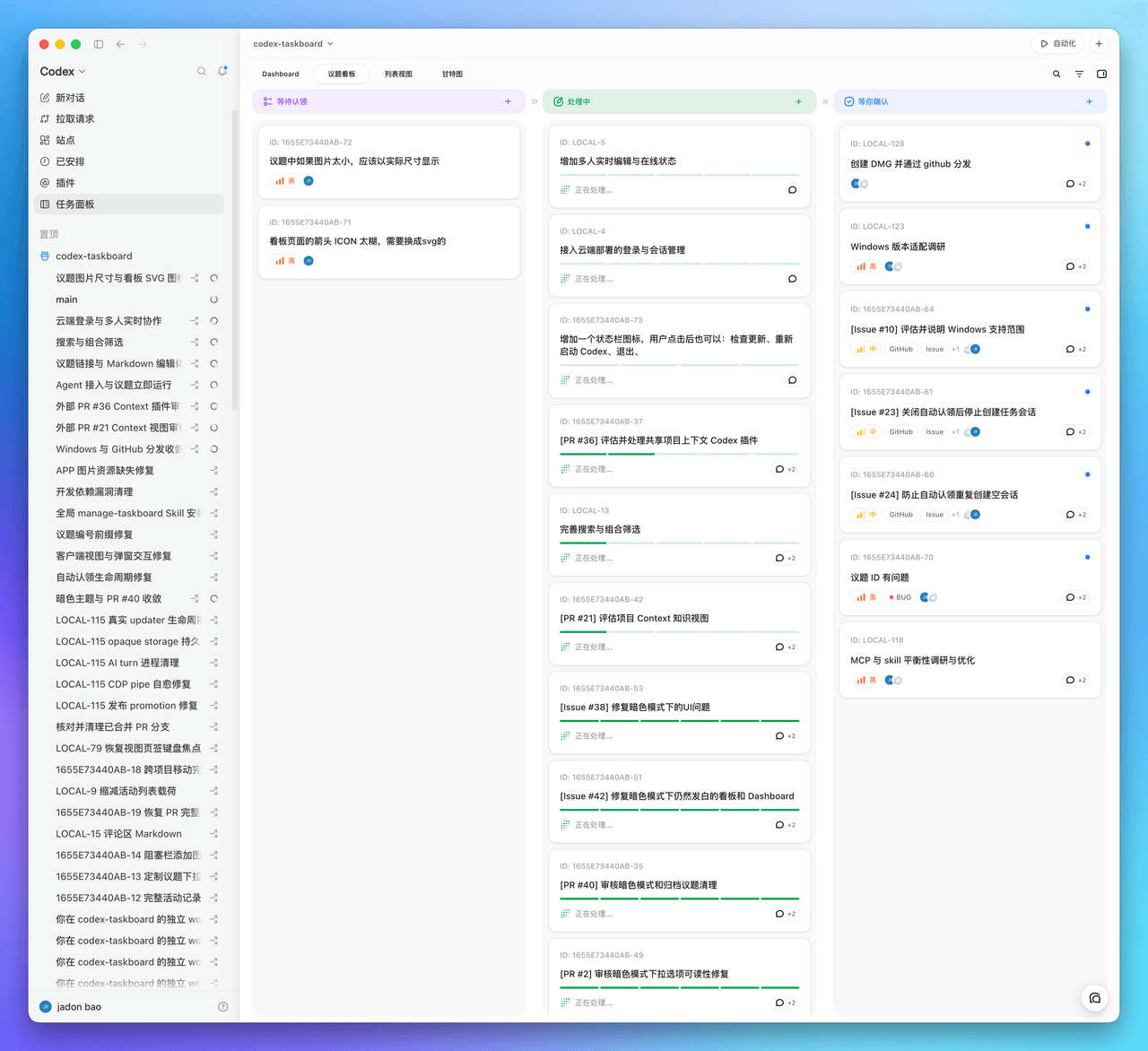 chuspeeism/dashi-taskboard
现代化可灵活嵌入的任务面板,支持 Codex、DeepSeek Harness
chuspeeism/dashi-taskboard
现代化可灵活嵌入的任务面板,支持 Codex、DeepSeek Harness
-
 ccch1mneyyy/working-activity
Lively Working-line extension for pi CLI and DSH
ccch1mneyyy/working-activity
Lively Working-line extension for pi CLI and DSH
-
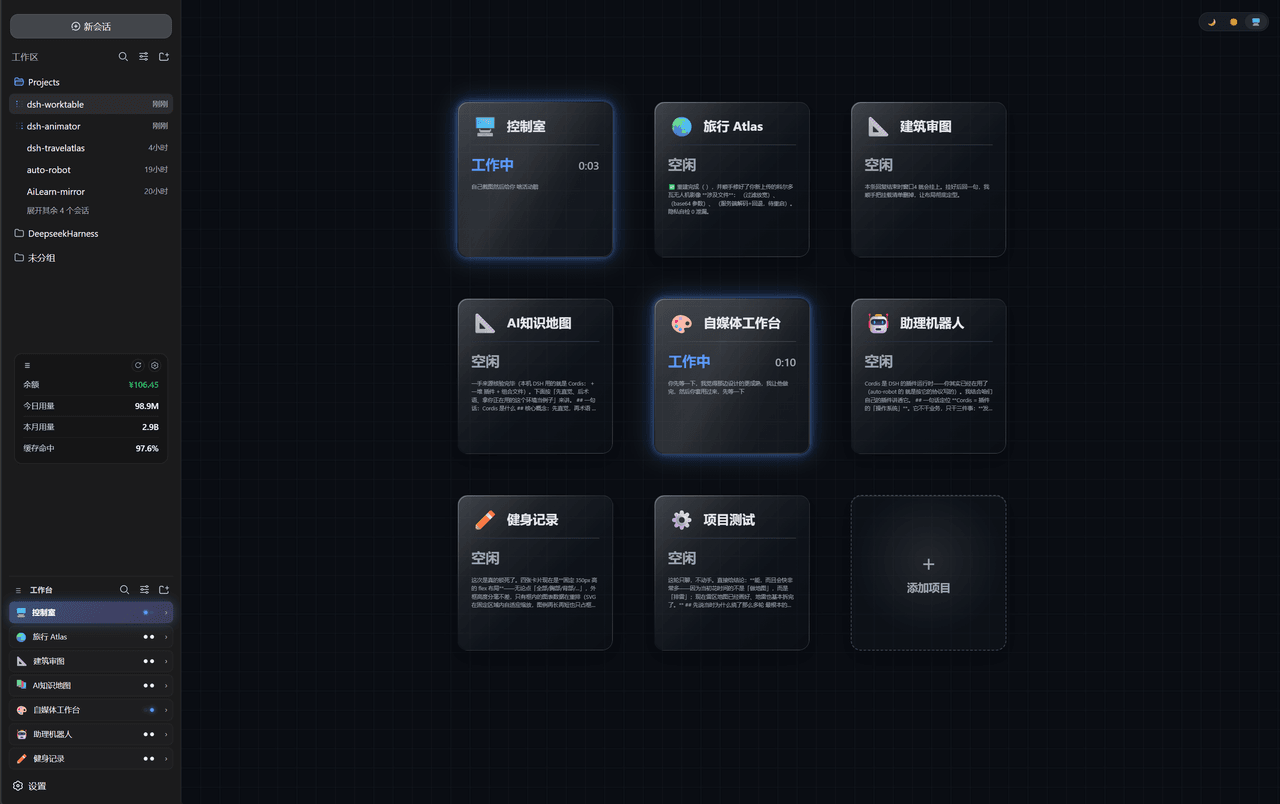 Aisland-SJL/dsh-worktable
🖥️ Agent-project workbench for DeepSeek Harness — sidebar app drawer + dockable split workspace + a live control room w…
Aisland-SJL/dsh-worktable
🖥️ Agent-project workbench for DeepSeek Harness — sidebar app drawer + dockable split workspace + a live control room w…
-
 zhoushoujianwork/easyeda-agent
嘉立创EDA专业版(EasyEDA Pro)自动化:给 AI harness 装上画板的「手」—— 一套 typed 原理图/PCB 动作,CLI / Agent Skill / stdio MCP 三形态融合接入。承接嘉立创「不以卖板赚钱…
zhoushoujianwork/easyeda-agent
嘉立创EDA专业版(EasyEDA Pro)自动化:给 AI harness 装上画板的「手」—— 一套 typed 原理图/PCB 动作,CLI / Agent Skill / stdio MCP 三形态融合接入。承接嘉立创「不以卖板赚钱…
-
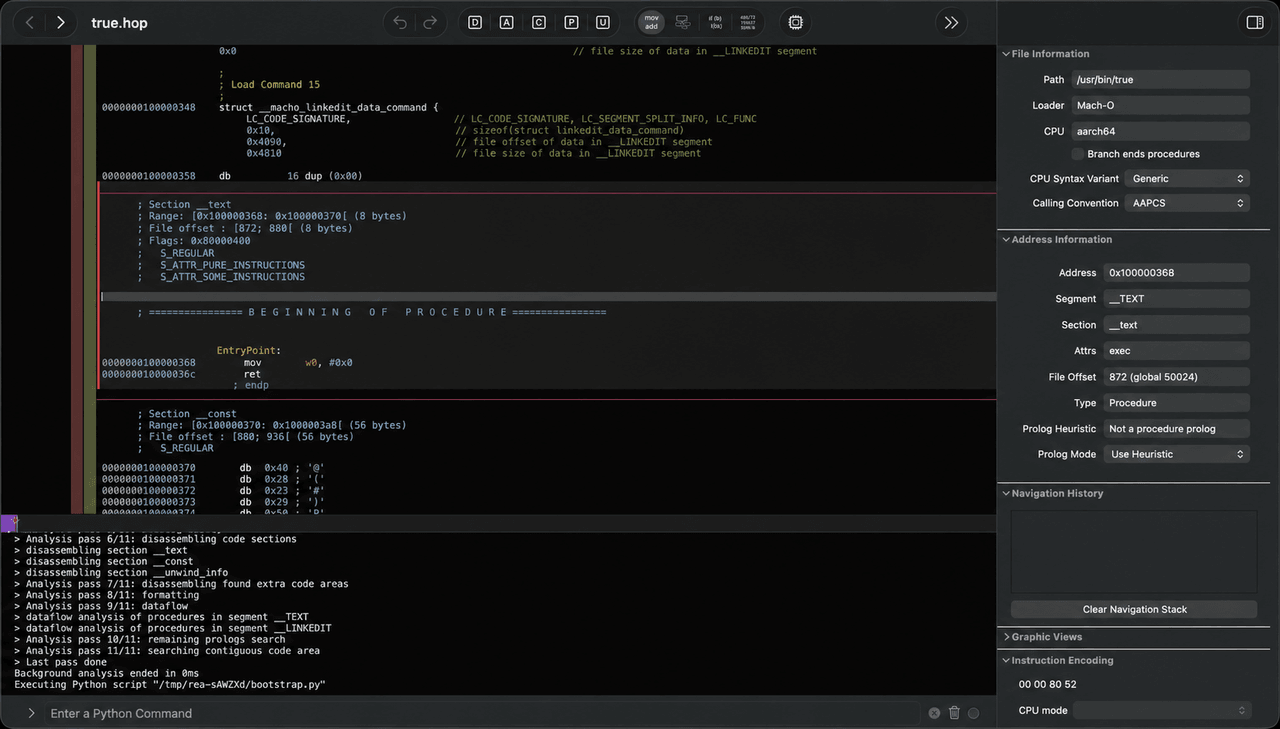 morluto/rea
Reverse engineer anything with agents, from app behavior down to native binaries.
morluto/rea
Reverse engineer anything with agents, from app behavior down to native binaries.
-
 linhay/harmony-next.skills
Offline HarmonyOS NEXT developer skill library for AI coding assistants. Covers API 12–26 declarations, ArkTS/ArkUI, NDK…
linhay/harmony-next.skills
Offline HarmonyOS NEXT developer skill library for AI coding assistants. Covers API 12–26 declarations, ArkTS/ArkUI, NDK…
- pax-beehive/dsh-hub-cli Open-source CLI, schemas, resolver, and DSH agent tools for DSH Plugin Hub
- ericshang98/Perfect-Web-Clone Pixel-perfect clones of any webpage. Paste a URL, get a measured Vite + React replica.