jiaererw/dsh-plugin-chrome
DeepSeek Harness browser visualization plugin: a visible Chrome window per session, 16 chrome_* agent tools, live view in the Web GUI. 浏览器可视化插件:每会话一个可见 Chrome 窗口,16 个 chrome_* 工具与实时画面。
项目介绍Project Overview
这是 DSH 浏览器可视化插件:为每个会话启动独立、可见的 Chrome 窗口,提供 16 个 chrome_* 工具,让代理导航、点击、填表、截图,并在 Web GUI 实时串流画面,可随时手动接管。适合需要观察或介入网页自动化时使用。注意每会话使用隔离浏览器资料,登录态不与日常浏览器共享;截图会向模型发送图片,纯文本模型可能无法继续响应。
This is a DSH browser visualization plugin. It launches a separate, visible Chrome window per session and exposes 16 chrome_* tools for navigation, clicking, typing, screenshots, tabs, and evaluation, while streaming the live view into the Web GUI for manual takeover. Use it when an agent needs observable or interactive web automation. Caveat: each session uses an isolated browser profile, and screenshots send image blocks, so text-only models may stop responding.
请帮我了解并安装插件:【dsh-plugin-chrome】【https://github.com/jiaererw/dsh-plugin-chrome】把上面这条消息直接发给当前会话里的 DSH,让它帮你了解并安装。安装命令不一定准确,发给 DSH 更稳。Send this message to DSH in your current session. CLI install commands may not be accurate across systems — DSH will figure it out for you.
或使用命令行安装(适合开发者)Or use CLI install (for developers)
命令行安装CLI Install
dsh plugin --profile web add github:jiaererw/dsh-plugin-chrome把 jiaererw/dsh-plugin-chrome 加入你的 DSH 配置(web profile)即可启用。
READMEREADME
dsh-plugin-chrome
A DeepSeek Harness browser visualization plugin: opens a real, visible Chrome window per session, lets the agent drive the browser through the
chrome_*tool suite, and streams the live view into a Chrome tab in the Web GUI — take over manually at any time.
 |
 |


Contents
Features
- A visible window per session: every DSH session gets its own Chrome window (a real window, not headless). Watch every agent action as it happens; the window uses an isolated user-data-dir, so it never mixes with your daily browser.
- Live view: the Chrome tab in the Web GUI streams the window through Chrome screencast (smooth while pages are active). A screenshot heartbeat keeps idle pages from freezing — a forced frame about every 2 seconds once the stream has been silent for 3 seconds.
- Complete agent tool suite (16 tools):
chrome_open/chrome_status/chrome_close/chrome_navigate/chrome_tabs/chrome_snapshot/chrome_screenshot/chrome_click/chrome_click_at/chrome_fill/chrome_type/chrome_press_key/chrome_hover/chrome_scroll/chrome_evaluate/chrome_wait.chrome_tabscovers list / new / close / select, and snapshots, screenshots and clicks always act on the selected tab. - Accessibility-tree snapshots:
chrome_snapshotreturns a compact a11y tree with stable element uids; clicks and fills target uids directly — far lighter than DOM dumps and robust against fragile selectors. - Dual-channel screenshots:
chrome_screenshotsends the image into the model context (as an image block) AND saves it to the session's screenshot history shown in the panel — history entries keep title/URL/size metadata across restarts. (Running a text-only model? See the FAQ.) - Security-minded: CDP never exposes a fixed port; the Web API rejects cross-site requests (Sec-Fetch-Site) and whitelist-validates sessionId; browser data is isolated per session.
- Resource governance: idle windows auto-close (default 10 min, configurable),
chrome_closecloses explicitly, and plugin unload / host shutdown closes every window it opened.
Install
Prerequisites: DeepSeek Harness (DSH) installed, and Chrome or Edge on the machine.
# Option 1: install from GitHub (recommended)
npx -p @deepseek-ai/dsh dsh plugin --profile web add github:jiaererw/dsh-plugin-chrome

# Option 2: local path (development)
npx -p @deepseek-ai/dsh dsh plugin --profile web add D:/harness/dsh-plugin-chrome
Restart DSH after installing — a Chrome tab appears at the top of every conversation.
If your profile's
cordis.patch.ymlstill carries an old manual mount line fordsh-plugin-chrome(from local development), remove it before installing through the CLI to avoid double-mounting.
Usage
For the agent (tools)
The agent gets the chrome_* suite automatically. Just ask it:
Open Chrome, go to https://example.com, take a screenshot, then click the "Login" button and fill in the username.
The agent will: chrome_open → chrome_navigate → chrome_screenshot (sees the image) → chrome_snapshot (gets uids) → chrome_click / chrome_fill.
For you (visualization)
- Open the Chrome tab at the top of the conversation:
- Live view: continuously shows the window. Native screencast frames flow while the page changes; a heartbeat fallback force-captures idle pages (about one frame every 2 seconds) so the picture never freezes.
- Tab management: create, switch or close tabs from the side list, in sync with the real window.
- Manual takeover: click around in the Chrome window yourself at any time — the agent sees your changes on its next tool call.
- Screenshot history: every
chrome_screenshotis stored in the panel; click a thumbnail to enlarge.
Window lifecycle & resilience
- Lazy start: Chrome launches only on the first
chrome_*call (or the panel's Open button). - Orphan adoption: if DSH died and left a Chrome behind (profile locked), the plugin reconnects through
DevToolsActivePortand takes the window over instead of failing (the same autoConnect idea as chrome-devtools-mcp). - Idle reaping: a window idle past
idleTimeoutMs(default 10 min) closes automatically — never while a Web UI viewer is watching. - Auto tab recovery: every operation makes sure a usable tab exists, so a window full of
chrome://internal pages never dead-ends.
Configuration
Override the plugin row in the profile's cordis.patch.yml (config is replaced wholesale):
- id: dsh-plugin-chrome
  config:
    headless: false            # keep false — a visible window is the point
    executablePath: ''         # empty auto-detects Chrome/Edge; or set an absolute path
    idleTimeoutMs: 600000      # idle auto-close (0 disables)
    windowWidth: 1280
    windowHeight: 900
    screencastFrameSkip: 4     # live-view frame decimation (1 = smoothest)
    screencastQuality: 70      # JPEG quality 1-100
    maxSnapshotText: 60000     # max chars per snapshot
    maxTabs: 16
    extraArgs: ''              # extra Chrome launch flags
Data directory (browser profiles & screenshots): ~/.dsh/data/dsh-plugin-chrome/sessions/<sessionId>/ (override with dataRoot).
FAQ
- The Chrome tab shows nothing: check the window is running (status dot at the top); the first launch takes a few seconds. Idle pages get a forced frame about every 2 seconds via the heartbeat (after 3 seconds without a real frame); activity raises the frame rate automatically.
- Agent says "unknown uid": the page changed — have it re-run
chrome_snapshot. - I closed the window myself: the panel shows "window closed"; any next
chrome_*call or the Open button relaunches it. - Login state: each session uses an isolated profile, so logins don't carry over from your daily browser — that's by design. To log in somewhere, let the agent complete the login (it persists for the session).
- Chrome stays open after DSH is killed: the orphan window is adopted on the next session call (or close it by hand); a clean DSH shutdown closes its windows.
- Screenshots stop a text-only model from responding:
chrome_screenshotdelivers the picture as an image block into the conversation history. If the session's model does not accept images, every following turn is rejected withUNSUPPORTED_CONTENT: does not accept image inputand the session no longer responds — retrying doesn't help. Use a vision-capable model for sessions that screenshot, or avoidchrome_screenshotthere. - Install blocked by pnpm (strict-dep-builds): add
dsh-plugin-chrome: truetoallowBuildsin the profile'spnpm-workspace.yamland retry the install.
Development
npm install
npm run typecheck   # host + client programs
npm test            # vitest unit tests
npm run test:e2e    # real-Chrome end-to-end smoke (pops a visible window)
npm run build       # lib/index.js + lib/index.d.ts (host), lib/client.js + lib/client.d.ts (client bundle)
npm run watch       # continuous build; client changes hot-reload, host changes need a DSH restart
Architecture: the host half (cordis plugin) drives the local Chrome through puppeteer-core, registers the chrome_* tools and the /dsh-chrome/* HTTP/WS API; the client half (browser bundle) registers the Chrome tab on conversation.view and consumes the API and the frame stream. The picture = native Chrome screencast (active pages) + screenshot heartbeat (idle fallback). The control layer borrows proven designs from chrome-devtools-mcp (CDP control, a11y snapshots with uid lookup, wait discipline, autoConnect adoption) and mcp-chrome (screenshot compression, CDP coordinate input, session refcounting).
License
MIT
相关推荐Related
-
 nexu-io/open-design
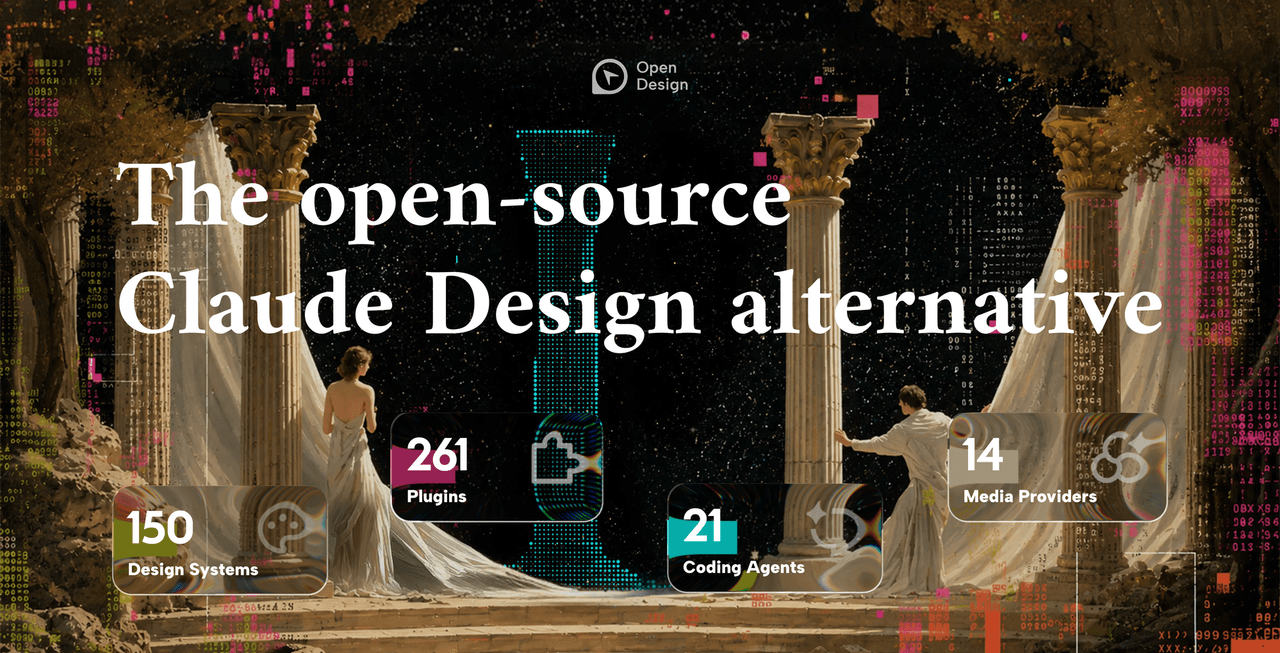
🎨 Best DeepSeek Harness Design Plugin. The open-source Claude Design alternative. 🖥️ Local-first desktop app. 🖼️ Your…
nexu-io/open-design
🎨 Best DeepSeek Harness Design Plugin. The open-source Claude Design alternative. 🖥️ Local-first desktop app. 🖼️ Your…
-
 ruvnet/ruflo
🌊 The original agent meta-harness. Deploy intelligent multi-player swarms, coordinate autonomous workflows, and build c…
ruvnet/ruflo
🌊 The original agent meta-harness. Deploy intelligent multi-player swarms, coordinate autonomous workflows, and build c…
-
 amruthpillai/reactive-resume
A one-of-a-kind resume builder that keeps your privacy in mind. Completely secure, customizable, portable, open-source a…
amruthpillai/reactive-resume
A one-of-a-kind resume builder that keeps your privacy in mind. Completely secure, customizable, portable, open-source a…
-
 esengine/DeepSeek-Reasonix
DeepSeek-native AI coding agent for your terminal. Engineered around prefix-cache stability — leave it running.
esengine/DeepSeek-Reasonix
DeepSeek-native AI coding agent for your terminal. Engineered around prefix-cache stability — leave it running.
-
 volcengine/OpenViking
Self-evolving Context Database for AI Agents. Unify Agent Memory, Knowledge RAG and Skills.
volcengine/OpenViking
Self-evolving Context Database for AI Agents. Unify Agent Memory, Knowledge RAG and Skills.
-
 Molunerfinn/PicGo
:rocket: The Ultimate Image Uploader for Efficient Creators. Supports Obsidian, Typora, VS Code etc. and 60+ image hosti…
Molunerfinn/PicGo
:rocket: The Ultimate Image Uploader for Efficient Creators. Supports Obsidian, Typora, VS Code etc. and 60+ image hosti…
-
 titanwings/distilly
Distilly — Distill how they think into reusable Skills for any Agent or Bot. Formerly Colleague Skill(原同事 Skill).
titanwings/distilly
Distilly — Distill how they think into reusable Skills for any Agent or Bot. Formerly Colleague Skill(原同事 Skill).
-
 titanwings/colleague-skill