krislavten/ai-sdk-provider-dsh
AI SDK provider that drives a DeepSeek Harness (dsh) runtime as a LanguageModelV3 — works on AI SDK v6 and v7
项目介绍Project Overview
这是一个 AI SDK Provider,将 DeepSeek Harness(dsh)运行时封装为 LanguageModel,可在 generateText/streamText 中驱动含工具、技能、MCP、会话的代理子进程,适用于想以 AI SDK 统一编排 dsh 代理的场景。注意 dsh 仍为开发者预览版,需 Node ≥22.19、仅 ESM,工具与采样由运行时掌控。
An AI SDK provider that wraps a DeepSeek Harness (dsh) runtime subprocess behind the LanguageModel interface, so generateText/streamText can drive a harness agent with tools, skills, MCP, and sessions while AI SDK stays the orchestration surface. Use it when you want dsh agents inside AI SDK v6/v7 apps. Caveat: dsh is developer-preview, requires Node ≥22.19 and ESM, and tools/sampling are runtime-controlled.
请帮我了解并安装插件:【ai-sdk-provider-dsh】【https://github.com/krislavten/ai-sdk-provider-dsh】把上面这条消息直接发给当前会话里的 DSH,让它帮你了解并安装。安装命令不一定准确,发给 DSH 更稳。Send this message to DSH in your current session. CLI install commands may not be accurate across systems — DSH will figure it out for you.
或使用命令行安装(适合开发者)Or use CLI install (for developers)
命令行安装CLI Install
dsh plugin --profile web add github:krislavten/ai-sdk-provider-dsh把 krislavten/ai-sdk-provider-dsh 加入你的 DSH 配置(web profile)即可启用。
READMEREADME
ai-sdk-provider-dsh
AI SDK provider that drives a DeepSeek Harness (dsh) runtime as a language model.
dsh is a full agent harness (agent loop, tools, skills, MCP, sessions) from DeepSeek AI. This provider wraps a dsh runtime subprocess behind the AI SDK LanguageModel interface, so you can drive a harness agent from AI SDK generateText / streamText the same way ai-sdk-provider-claude-code drives Claude Code — while keeping the AI SDK as the single orchestration surface.
Version Compatibility
This provider implements the LanguageModelV3 specification (specificationVersion: 'v3'), the interface shared across AI SDK majors. A single build serves both:
| AI SDK | @ai-sdk/provider |
Status |
|---|---|---|
ai@^6 |
@ai-sdk/provider@^3 |
✅ supported |
ai@^7 |
@ai-sdk/provider@^4 |
✅ supported (V3 models are first-class in v7) |
| Requirement | Value |
|---|---|
| Node.js | >=22.19 |
| Module format | ESM only |
| DeepSeek Harness family | pinned exact 0.1.0-rc.6 |
Upstream status:
dshis in developer preview (0.1.0-rc.x); DeepSeek documents breaking changes as their release policy. This provider pins the harness SDK family to exact versions, so the runtime version is a deliberate platform-side decision — upgrade the pin explicitly, never by range drift.
Install
npm install ai-sdk-provider-dsh
The dsh runtime is bundled: the package ships a default runtime composition (runtime/cordis.yml) plus the dsh-jsonrpc-agent bin (via @deepseek-ai/dsh-sdk-jsonrpc-demo), and all runtime plugins are pinned exact versions in dependencies. A provider instance spawns a working runtime out of the box — no separate install.
Credentials come from the runtime's environment:
export DEEPSEEK_API_KEY=sk-...                                        # required
export DEEPSEEK_BASE_URL=https://api.deepseek.com                     # optional; any OpenAI-compatible gateway works
Quick Start
streamText (AI SDK v7)
import { streamText } from "ai";
import { createDsh } from "ai-sdk-provider-dsh";

const dsh = createDsh({
  runtime: { provider: "deepseek-official", model: "deepseek-v4-flash" },
});

const result = streamText({
  model: dsh.languageModel("deepseek-v4-flash"),
  instructions: "You are a coding agent.",
  prompt: "run the tests",
});

const text = await result.text;
console.log(text);
streamText (AI SDK v6)
import { streamText } from "ai";
import { createDsh } from "ai-sdk-provider-dsh";

const dsh = createDsh({ runtime: { provider: "deepseek-official", model: "deepseek-v4-flash" } });

const result = streamText({
  model: dsh.languageModel("deepseek-v4-flash"),
  system: "You are a coding agent.", // v6 name; v7 uses `instructions`
  prompt: "run the tests",
});
generateText
import { generateText } from "ai";
import { createDsh } from "ai-sdk-provider-dsh";

const dsh = createDsh({ runtime: { provider: "deepseek-official", model: "deepseek-v4-flash" } });
const { text } = await generateText({
  model: dsh.languageModel("deepseek-v4-flash"),
  prompt: "say hello",
});
Provider factory
const dsh = createDsh(options);        // returns the provider
dsh.languageModel("deepseek-v4-flash") // the LanguageModel
dsh("deepseek-v4-flash")               // callable alias (AI SDK provider convention)
await dsh.close();                     // tear down the runtime subprocess (idempotent)
Runtime Options
| Option | Default | Meaning |
|---|---|---|
provider |
required | model provider route passed to the runtime handshake (deepseek-official, or a pi-ai catalog route) |
model |
required | model id passed to the runtime handshake |
env |
inherits process.env |
environment for the runtime subprocess: credentials (DEEPSEEK_API_KEY), DEEPSEEK_BASE_URL, DSH_CWD, DSH_SESSION_ROOT, … |
cwd |
process.cwd() |
subprocess working directory |
configPath |
bundled runtime/cordis.yml |
a different cordis.yml composition |
binPath |
bundled dsh-jsonrpc-agent |
a different runtime bin |
command / args |
node + [bin, config] |
full custom launch vector (set both together) |
maxTokens |
— | positive output-token cap per root-agent request |
requestTimeoutMs |
SDK default | per-request timeout for the JSON-RPC transport |
disposeEofGraceMs / disposeGraceMs |
SDK defaults | subprocess teardown ladders (EOF → SIGTERM → SIGKILL) |
sessionId |
fresh UUID | fixed session id; keep it to continue one harness session across turns |
The bundled runtime
The default composition (runtime/cordis.yml) exposes:
- bash (foreground), read/write/edit (fs), subagent, todo_write — tools execute inside the harness
- JSONL session persistence with automatic context compaction
$DSH_SYSTEM_PROMPTselects the deployment persona
For environments that cannot build node-pty (no Linux prebuild — e.g. minimal containers, WSL without libc6-dev), use the no-pty composition:
runtime: {
  provider: "deepseek-official",
  model: "deepseek-v4-flash",
  configPath: require.resolve("ai-sdk-provider-dsh/runtime/cordis.minimal.yml"),
}
How it works
- Each provider instance spawns (lazily) one
dshruntime subprocess speaking stdio JSON-RPC (the dsh SDK protocol). doGenerate/doStreamtranslate AI SDKLanguageModelV3CallOptionsinto a dsh prompt, then map the runtime'ssession.eventstream back into AI SDK stream parts (text-start/delta/end,reasoning-start/delta/end,tool-input-start/delta/end,tool-call,finish).- Tools execute inside the harness — the provider is a thin pass-through (like
ai-sdk-provider-claude-code): tool calls surface asproviderExecuted: trueparts and the AI SDK never re-executes them. - Multi-turn sessions: one provider instance keeps one runtime subprocess; with a fixed
sessionId, follow-up turns continue the same harness session (the runtime persists the session log). Verified end-to-end: turn 1 stores a secret code, turn 2 recalls it. - Abort: an aborted call surfaces the original abort reason (never a wrapped transport error); pre-aborted signals throw immediately; the abort listener is removed on completion.
Provider Metadata
Each response exposes dsh metadata under providerMetadata['dsh'] (AI SDK v7: result.finalStep.providerMetadata, or await stream.finalStep for streamText; v6: result.providerMetadata):
| Field | Type | Meaning |
|---|---|---|
sessionId |
string |
the harness session id this call ran on |
turnId |
number? |
last observed turn number |
terminalReason |
string? |
final turn end kind when not completed (aborted, error, max-tokens, blocked, interrupted) |
Error Diagnostics
Errors from the runtime boundary are classified into AI SDK APICallErrors. A sanitized stderr tail is appended to the message so CLI failures are visible in logs:
dsh runtime subprocess failed: runtime exited | stderr (tail): ...; ...
import { generateText } from "ai";
import { createDsh, getErrorMetadata, isAPICallError } from "ai-sdk-provider-dsh";

try {
  await generateText({ model: dsh.languageModel("deepseek-v4-flash"), prompt: "Hello!" });
} catch (error) {
  if (isAPICallError(error)) {
    console.error(getErrorMetadata(error)?.stderr);
    console.error("retryable:", error.isRetryable);
  }
}
Classification map:
| Runtime failure | AI SDK error | Retryable |
|---|---|---|
TransportClosedError (subprocess died / stdio closed) |
APICallError |
✅ |
RequestTimeoutError |
APICallError |
✅ |
SdkProtocolError (wire violation) |
APICallError |
❌ |
JsonRpcResponseError (runtime rejected request) |
APICallError |
❌ |
Node spawn failure (ENOENT bin, …) |
APICallError |
only EAGAIN/EMFILE |
| Missing/invalid API key | LoadAPIKeyError (via createAuthenticationError) |
— |
Limitations
- Requires Node.js
>=22.19; ESM only. - No mid-turn cancel on the SDK wire: aborting a turn rejects the current call; the runtime subprocess and session log remain for follow-up turns.
dsh.close()tears the subprocess down (EOF → SIGTERM → SIGKILL). - Skills use the dsh native mechanism (
SKILL.mdbundles discovered from.dsh/skills,.agents/skills,$DSH_HOME/skills) — the reskillskills.json/skills.lockconvention is not applied by this provider. - Tool execution is harness-internal: AI SDK
tools/toolChoiceare not executed by the AI SDK; configure tools through the runtime composition (cordis.yml) or$DSH_*env. - Some AI SDK call options are accepted but not forwarded to the harness:
temperature,topP,topK,stopSequences,seed— the harness owns sampling. dshis in developer preview; DeepSeek documents breaking changes as release policy. Pin the provider version and the harness family (0.1.0-rc.6) deliberately.- The bundled default runtime needs
node-ptyon Linux (compiled at install; no prebuild). Usecordis.minimal.yml(no bash) where that is unavailable.
Development
pnpm install
pnpm run check    # typecheck
pnpm run test     # unit tests (fake runtime) + e2e (real runtime, keyless replay)
pnpm run lint     # biome
pnpm run build    # tsup → dist/
Tests never need a real API key: unit tests drive a fake runtime with synthetic event streams (the ai-sdk-provider-claude-code philosophy), and e2e tests boot the real dsh runtime against recorded session fixtures replayed by @deepseek-ai/dsh-llm-replay.
Recording new fixtures (requires a live key)
DEEPSEEK_API_KEY=sk-... node scripts/record-fixture.mjs # writes tests/fixtures/*.jsonl
License
MIT
相关推荐Related
-
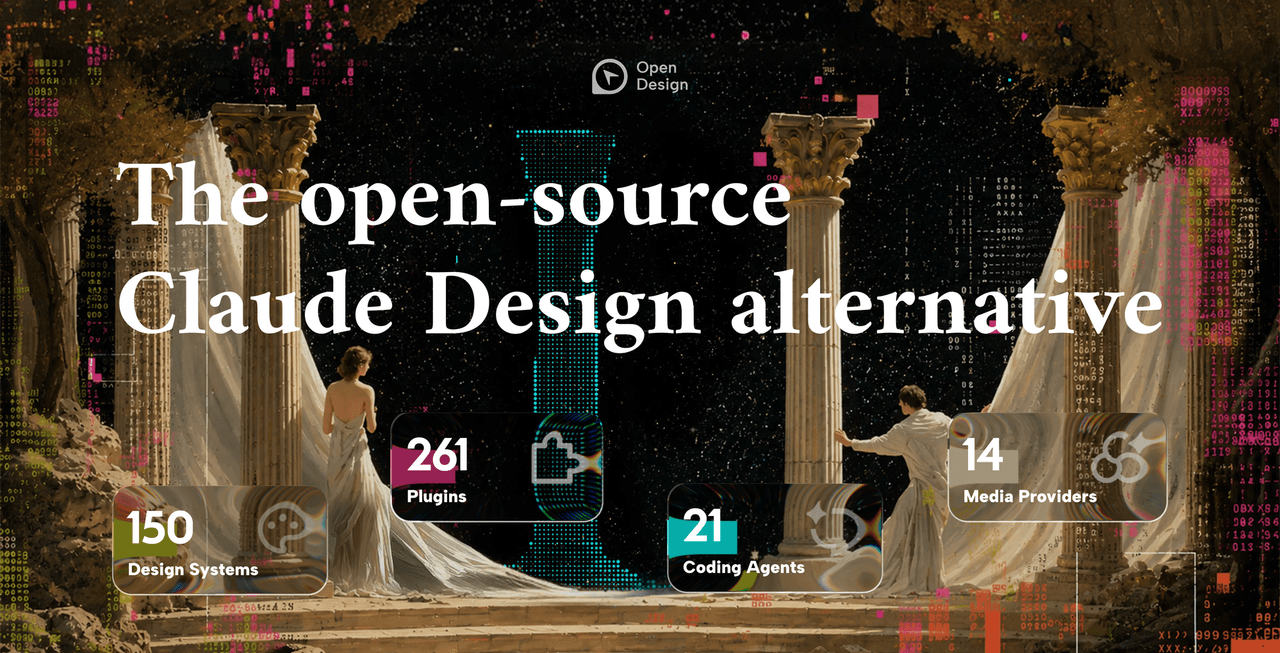 nexu-io/open-design
🎨 Best DeepSeek Harness Design Plugin. The open-source Claude Design alternative. 🖥️ Local-first desktop app. 🖼️ Your…
nexu-io/open-design
🎨 Best DeepSeek Harness Design Plugin. The open-source Claude Design alternative. 🖥️ Local-first desktop app. 🖼️ Your…
-
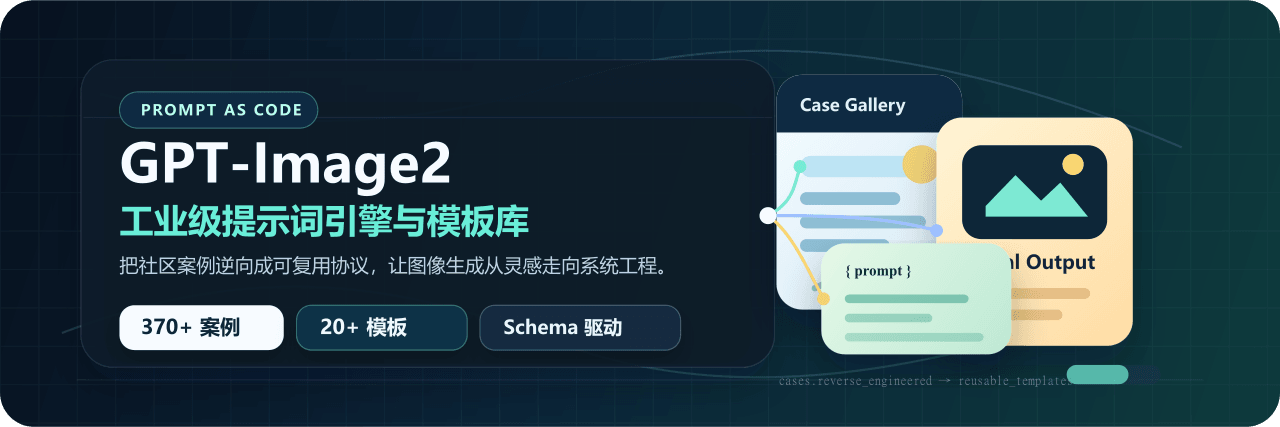 freestylefly/awesome-gpt-image-2
Prompt as Code | GPT-Image2 工业级提示词引擎与模板库,530+ 个案例逆向工程,20+ 套工业级模板,并提炼出Skills,持续更新中
freestylefly/awesome-gpt-image-2
Prompt as Code | GPT-Image2 工业级提示词引擎与模板库,530+ 个案例逆向工程,20+ 套工业级模板,并提炼出Skills,持续更新中
-
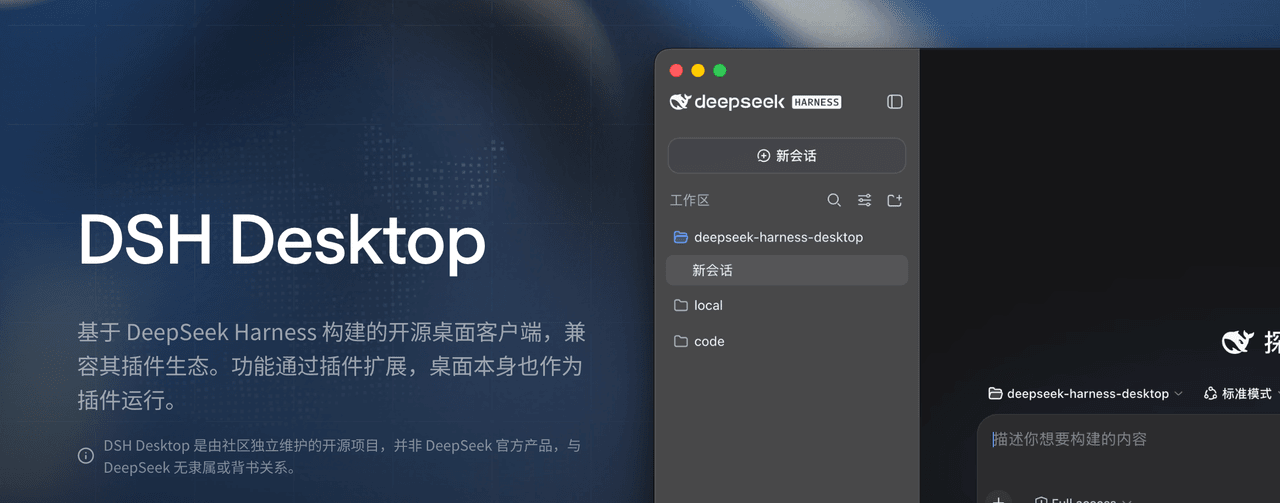 anywhere-labs/dsh-desktop
为 DeepSeek Harness (DSH) 插件生态打造的现代化桌面端解决方案。万物皆「插件」,桌面本身也是「插件」。
anywhere-labs/dsh-desktop
为 DeepSeek Harness (DSH) 插件生态打造的现代化桌面端解决方案。万物皆「插件」,桌面本身也是「插件」。
- Nagi-ovo/voyager Enhancement suite for Gemini, AI Studio, Claude & ChatGPT — plus a prompt manager for any web UI, DeepSeek Harness inclu…
-
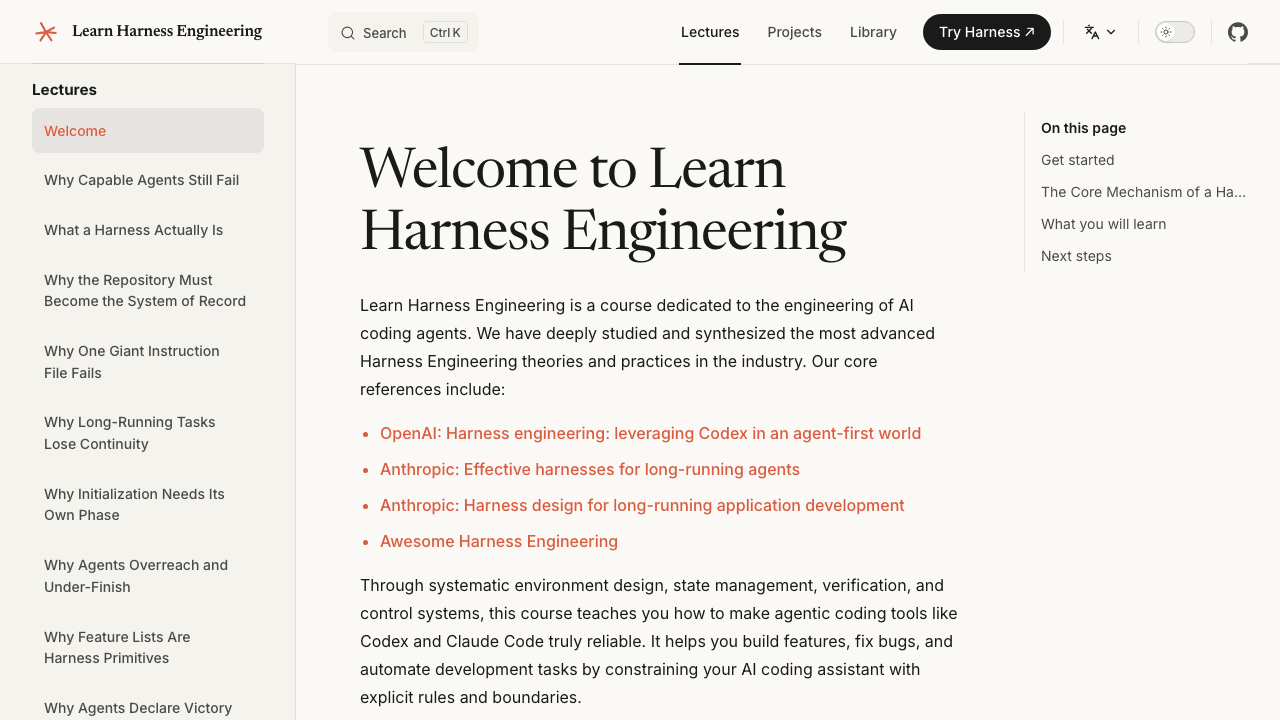 walkinglabs/learn-harness-engineering
Harness engineering beginner tutorial, from 0 to 1
walkinglabs/learn-harness-engineering
Harness engineering beginner tutorial, from 0 to 1
-
 awesome-dsh-plugin/awesome-dsh-plugin
A curated list of plugins for DeepSeek Harness (dsh) · DeepSeek Harness 插件精选列表
awesome-dsh-plugin/awesome-dsh-plugin
A curated list of plugins for DeepSeek Harness (dsh) · DeepSeek Harness 插件精选列表
-
 MemTensor/MemOS
Self-evolving memory OS for LLM & AI Agents: ultra-persistent memory, hybrid-retrieval, and cross-task skill reuse, with…
MemTensor/MemOS
Self-evolving memory OS for LLM & AI Agents: ultra-persistent memory, hybrid-retrieval, and cross-task skill reuse, with…
- yjh051108/dsh-routing-suite dsh-routing-suite — injector + router-standard kit: install the runtime injector first, then the task-aware reasoning-mo…