lispking/dsh-auto-evolve
A self-evolving plugin for DeepSeek Harness (dsh). It observes how the agent runs, proposes improvements to its own assets via the LLM, validates each proposal inside a sandboxed trial agent, and applies only verified mutations — with a versioned ledger and automatic rollback on regression.
项目介绍Project Overview
dsh-auto-evolve 是 DeepSeek Harness 的自进化插件:监听工具失败、重复调用与请求错误,达阈值后由 LLM 提出技能、后处理器、提示段、守卫策略的增改删,沙箱子代理对照基线重放验证,仅应用指标改善的变更,并以版本账本支持回滚。适合希望代理从运行信号中自我修复时使用;默认 observe 模式只观测不提议,自动应用仍受预算与试验上限约束。
dsh-auto-evolve is a self-evolving plugin for DeepSeek Harness. It observes tool failures, repeated calls, and request errors; asks the LLM to propose mutations to skills, post-processors, prompt sections, or guard policies; replays episodes in a sandboxed sub-agent against a baseline; and applies only changes that improve measured metrics, with a versioned ledger and rollback. Use it when an agent should adapt from runtime signals. By default it runs in observe-only mode, and auto-apply is bounded by budgets and trial limits.
请帮我了解并安装插件:【dsh-auto-evolve】【https://github.com/lispking/dsh-auto-evolve】把上面这条消息直接发给当前会话里的 DSH,让它帮你了解并安装。安装命令不一定准确,发给 DSH 更稳。Send this message to DSH in your current session. CLI install commands may not be accurate across systems — DSH will figure it out for you.
或使用命令行安装(适合开发者)Or use CLI install (for developers)
命令行安装CLI Install
dsh plugin --profile web add dsh-auto-evolve把 lispking/dsh-auto-evolve 加入你的 DSH 配置(web profile)即可启用。
READMEREADME
dsh-auto-evolve
A self-evolving plugin for DeepSeek Harness (dsh). It observes how the agent runs, proposes improvements to its own assets via the LLM, validates each proposal inside a sandboxed trial agent, and applies only verified mutations — with a versioned ledger and automatic rollback on regression.
The idea. Instead of shipping a static skill set, the plugin owns a small genome of evolvable assets (skills, tool-result post-processors, prompt sections, guard policies). Every runtime signal (tool failures, repeated calls, request errors) is collected; when a threshold crosses, a proposal cycle drafts a mutation, a sandboxed agent replays the failing episode with and without the change, and the change is applied only if the trial shows measurable improvement. Every mutation is versioned in a durable ledger and can be rolled back.
How it works
Observe ──▶ Propose ──▶ Validate ──▶ Apply ──▶ (observe again, for regressions)
  │             │            │            │
  tools/result  ctx.llm      sandboxed    ctx.skills.register + ledger
  request-error (stream)     sub-agent    disposer kept for rollback
The evolution loop
| Layer | Module | What it does |
|---|---|---|
| Observe | src/observe |
Listens on tools/result and agent/request-error; records deduplicated signals (tool failures, no-progress repeats, request errors) into the durable observations table; fires onTrigger when a threshold crosses. |
| Propose | src/propose |
A bounded cycle snapshots the genome + recent observations, calls ctx.llm.stream() with a strict prompt, and validates the model output against a closed mutation vocabulary (add / patch / retire over skill / post-processor / prompt-section / guard-policy). Anything that fails parsing or schema validation is discarded — never applied. Mutations whose content fingerprint already matches a pending candidate are dropped, so the same patch is never re-trialed while awaiting validation. |
| Validate | src/validate |
Replays the failing episode inside a fresh scoped sub-agent (ctx.agents.create + setup), once without the candidate mutations (baseline) and once with them (trial), then compares metrics: completion, tool failures, tool-call cost. Every kind with a runtime contribution — skill, tool-wrapper, guard-policy, post-processor — is exercised via the shared mutation applier (the same code the live apply path uses, so validation == deployment); prompt-section candidates are recorded but not auto-applied. |
| Apply | src/apply |
Promotes a validated candidate to the live genome: skills are registered on the plugin context via ctx.skills.register (immediately visible), the ledger records the apply with the previous content captured, and the disposer is kept for rollback. |
| Rollback | src/apply |
Unregisters the live contribution, restores the parent content as a fresh candidate, and writes a rollback ledger entry. On plugin disposal every live registration is torn down. |
Safety boundaries
- The mutation vocabulary is code, the content is model-generated. The LLM never invents asset kinds or operators; it only fills in payloads that pass the closed zod schema.
- Validation is by execution, not by self-claim. A proposal is applied only when a sandboxed trial beats the baseline on observable metrics.
- Cost is capped per cycle and per day. The budget gate (
maxCostPerCycle/dailyBudget) bounds the proposal call and every trial replay in auto-apply; an exhausted cap pauses the loop instead of silently burning tokens. - Rollback is first-class. Every applied mutation keeps its disposer and its parent content; regression reverts the exact previous state.
- Observe-only is the default. In
observemode the plugin never proposes — it just collects signals and logs triggers.
Installation
The plugin is a dsh bundle: install it with the official CLI in one command — no manual cordis.yml editing required.
# Install into the web profile (the default UI profile)
dsh plugin --profile web add dsh-auto-evolve

# Or into the TUI profile
dsh plugin --profile tui add dsh-auto-evolve
dsh plugin add initializes the profile if needed, installs the package, and automatically adds dsh-auto-evolve to the profile's bundle stack (dsh.profile.bundles). The bundled cordis.patch.yml registers the plugin row with the defaults below; restart dsh and the plugin is live.
Local development / source build:
git clone https://github.com/lispking/dsh-auto-evolve.git
cd dsh-auto-evolve
pnpm install
pnpm build
# Install your local checkout into a profile
dsh plugin --profile web add /absolute/path/to/dsh-auto-evolve
Custom configuration
The bundle applies a default config; to change it, override the row in your own profile patch (applied after every bundle layer):
# ~/.dsh/profiles/web/cordis.patch.yml
- id: self-evolve
  config:
    mode: auto-apply        # observe | propose | auto-apply
    observation:
      toolFailureThreshold: 3
      repeatThreshold: 3
      requestErrorThreshold: 3
      windowMs: 300000
    proposal:
      maxProposalsPerTrigger: 1
      maxEpisodesPerProposal: 5
      maxPromptChars: 24000
      maxTokens: 2000
    budget:
      maxCostPerCycle: 0       # 0 disables the per-cycle cap
      dailyBudget: 0           # 0 disables the daily cap
    validation:
      maxTrialMs: 30000
      maxToolCalls: 20
      maxTrialSteps: 12
      maxTrialTokens: 8000
    evolution:
      stallThreshold: 3
      stallPauseMs: 1800000
      cooldownMs: 600000
Note: a patch replaces the row's whole config rather than merging into it, so specify every field you want to keep. The plugin's peer services (storage, LLM, tools, skills) come from the dsh-base/web bundles — no extra setup.
Modes
| Mode | Behavior |
|---|---|
observe |
Collect signals, fire triggers, never propose. Safe default. |
propose |
Generate and persist candidate mutations when thresholds cross. Candidates await validation/application — manual approval via the evolve_apply operator tool, or via the exported API. |
auto-apply |
Run the full loop: observe → propose → validate → apply verified mutations automatically, with automatic rollback when the same failure key recurs after an apply (regression watch). After repeated stalled cycles the loop pauses (convergence) and each failed/rolled-back key enters a cooldown, so it cannot thrash propose → fail → propose. The regression watch is persisted, so applied fixes stay monitored across plugin restarts. |
Operator tools
The plugin registers a small set of agent-callable tools (dsh exposes no chat-command framework; in an agent harness the operator surface is tools). Ask the agent to inspect or drive the loop — no manual API calls needed:
| Tool | Params | What it does |
|---|---|---|
evolve_status |
— | Health summary: mode, generation, asset status counts, ledger/observation totals, convergence pause state, regression watch size. |
evolve_candidates |
— | List candidate mutations awaiting validation or manual application. |
evolve_apply |
assetId |
Apply one candidate immediately (manual approval), registering it live. |
evolve_rollback |
assetId |
Roll back an applied asset, restoring its previous content as a candidate. |
evolve_cycle |
— | Trigger one cycle manually: materialize candidates (propose) or run the full validate-and-apply loop (auto-apply). |
Availability by mode: all five tools are registered in every mode;
evolve_apply / evolve_rollback need the applier (mounted in propose and
auto-apply), and evolve_cycle needs an LLM provider and rejects in
observe mode.
Configuration
| Field | Default | Meaning |
|---|---|---|
mode |
observe |
Evolution mode (see above). |
observation.toolFailureThreshold |
3 |
Tool-failure burst count that triggers a cycle. |
observation.repeatThreshold |
3 |
Identical-call count treated as a no-progress loop. |
observation.requestErrorThreshold |
3 |
LLM request-error count that triggers a cycle. |
observation.windowMs |
300000 |
Rolling window (ms) over which signal counts aggregate. |
proposal.maxProposalsPerTrigger |
1 |
Max mutations per proposal. |
proposal.maxEpisodesPerProposal |
5 |
Max observations rendered into the proposal prompt. |
proposal.maxPromptChars |
24000 |
Prompt size cap (bounds cost). |
proposal.maxTokens |
2000 |
Max output tokens for one proposal call. |
budget.maxCostPerCycle |
0 (off) |
Max tokens spendable in one cycle: the proposal call plus every trial replay in auto-apply. 0 disables the cap. |
budget.dailyBudget |
0 (off) |
Max tokens spendable in one UTC day across all cycles. 0 disables the cap. |
validation.maxTrialMs / maxToolCalls |
30000 / 20 |
Trial wall-clock and tool-call caps. |
validation.maxTrialSteps / maxTrialTokens |
12 / 8000 |
Trial model-step and per-request token caps. |
evolution.stallThreshold |
3 |
Consecutive stalled cycles before auto-apply pauses. |
evolution.stallPauseMs |
1800000 |
How long an auto-apply pause lasts (ms) before it resumes. |
evolution.cooldownMs |
600000 |
Per-key cooldown (ms) after a failed or rolled-back cycle. |
Programmatic API
import { SelfEvolveStore, SelfEvolveApplier, runProposalCycle, validateMutations } from 'dsh-auto-evolve'

// Run one proposal cycle (persists candidate assets).
const materialized = await runProposalCycle(ctx, store, { provider, model, maxTokens: 2000 })

// Validate a candidate: baseline vs trial replay, returns the verdict.
const { baseline, trial, comparison } = await validateMutations(ctx, {
  provider,
  model,
  episode: 'replay of the failing scenario',
  mutations: [candidateAsset],
  bounds: { maxTrialMs: 30_000, maxToolCalls: 20 },
})

// Apply a validated candidate (registers the skill live) or roll it back.
await applier.applyCandidate(candidate.id, trialId, 'validated')
await applier.rollback(candidate.id, 'regression observed')
Development
pnpm build   # tsc + tsdown → lib/
pnpm test    # vitest (unit + integration over a memory storage backend)
The test suite covers the pure decision logic (metrics comparison, mutation schema, thresholds) and the full wiring (durable store, observation collector, proposal cycle with a scripted LLM adapter, apply/rollback with the real skill registry).
License
相关推荐Related
-
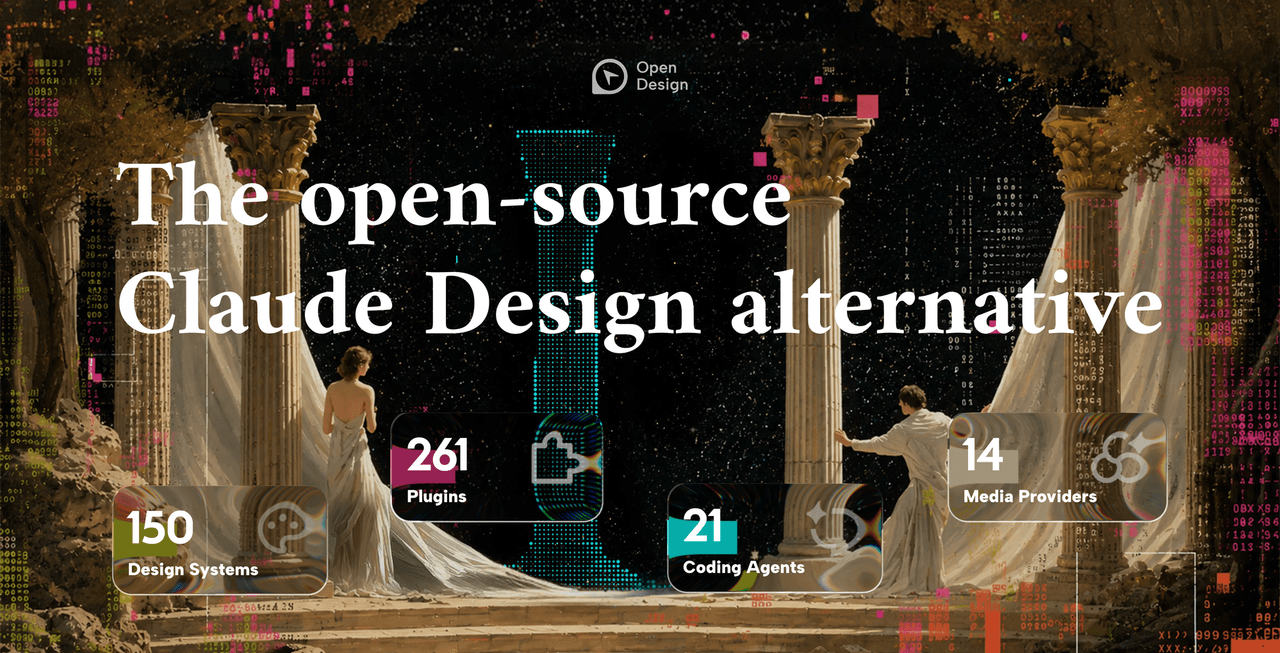 nexu-io/open-design
🎨 Best DeepSeek Harness Design Plugin. The open-source Claude Design alternative. 🖥️ Local-first desktop app. 🖼️ Your…
nexu-io/open-design
🎨 Best DeepSeek Harness Design Plugin. The open-source Claude Design alternative. 🖥️ Local-first desktop app. 🖼️ Your…
-
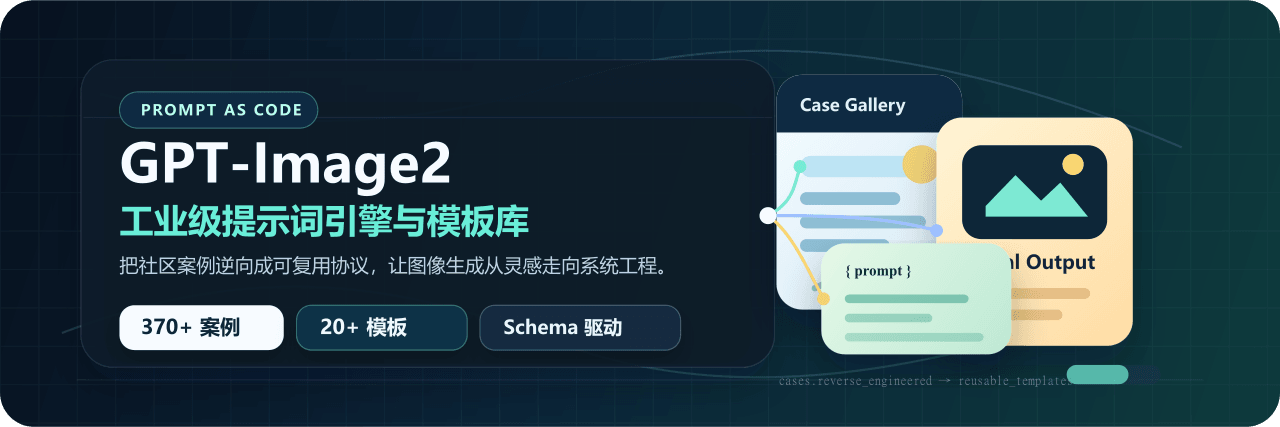 freestylefly/awesome-gpt-image-2
Prompt as Code | GPT-Image2 工业级提示词引擎与模板库,530+ 个案例逆向工程,20+ 套工业级模板,并提炼出Skills,持续更新中
freestylefly/awesome-gpt-image-2
Prompt as Code | GPT-Image2 工业级提示词引擎与模板库,530+ 个案例逆向工程,20+ 套工业级模板,并提炼出Skills,持续更新中
-
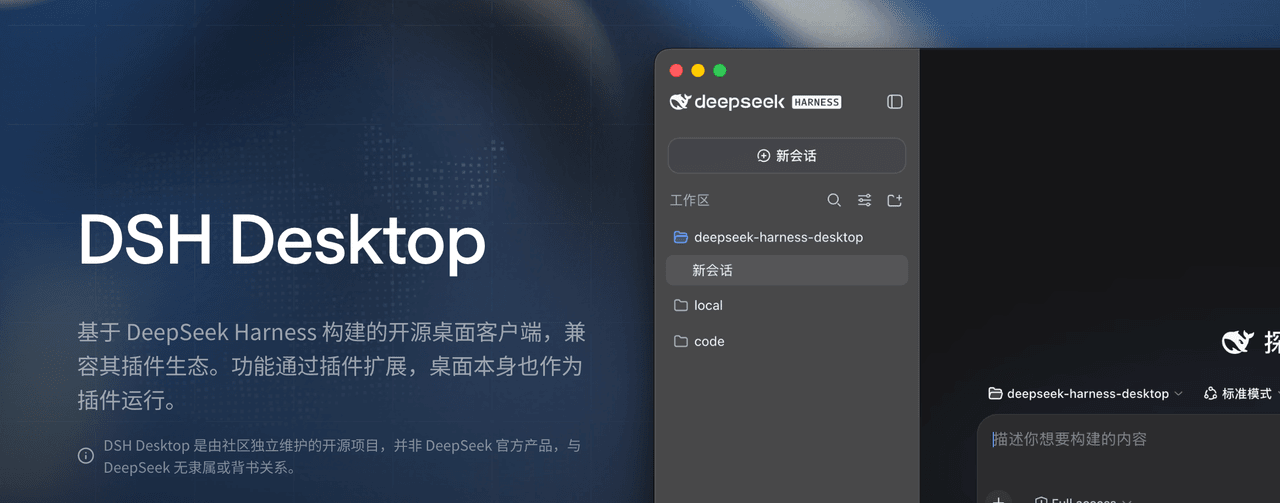 anywhere-labs/dsh-desktop
为 DeepSeek Harness (DSH) 插件生态打造的现代化桌面端解决方案。万物皆「插件」,桌面本身也是「插件」。
anywhere-labs/dsh-desktop
为 DeepSeek Harness (DSH) 插件生态打造的现代化桌面端解决方案。万物皆「插件」,桌面本身也是「插件」。
- Nagi-ovo/voyager Enhancement suite for Gemini, AI Studio, Claude & ChatGPT — plus a prompt manager for any web UI, DeepSeek Harness inclu…
-
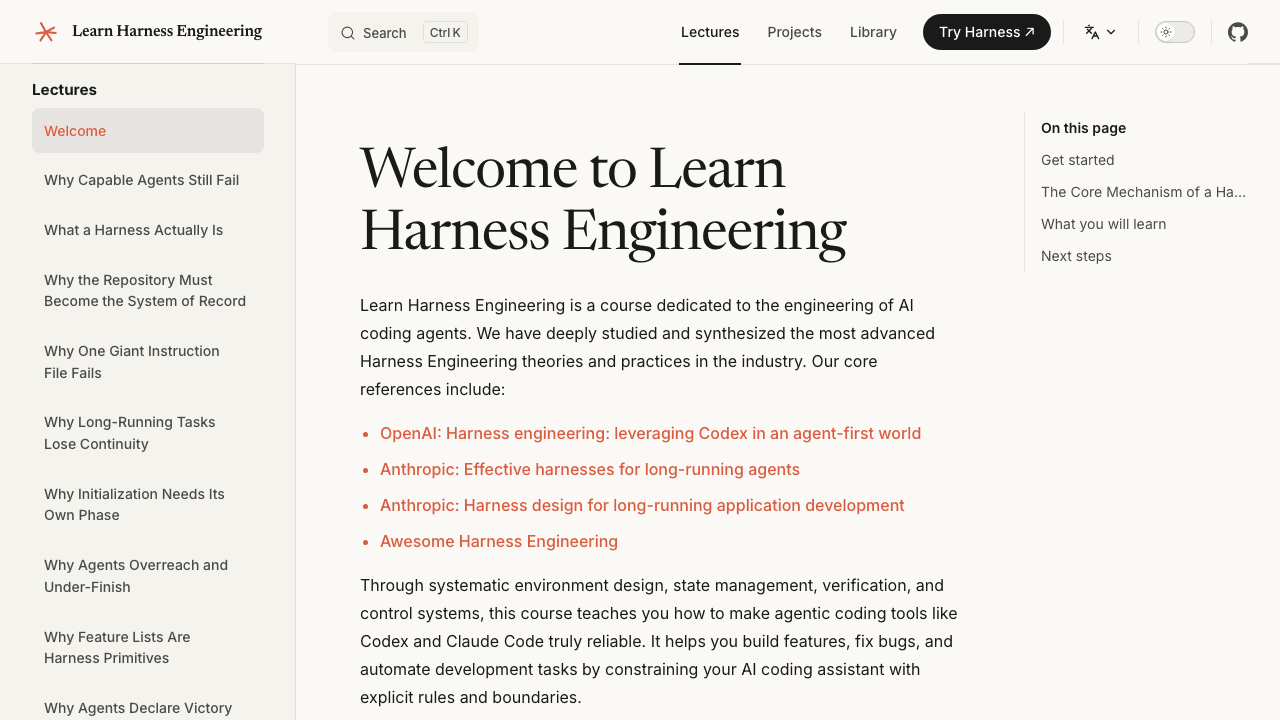 walkinglabs/learn-harness-engineering
Harness engineering beginner tutorial, from 0 to 1
walkinglabs/learn-harness-engineering
Harness engineering beginner tutorial, from 0 to 1
-
 awesome-dsh-plugin/awesome-dsh-plugin
A curated list of plugins for DeepSeek Harness (dsh) · DeepSeek Harness 插件精选列表
awesome-dsh-plugin/awesome-dsh-plugin
A curated list of plugins for DeepSeek Harness (dsh) · DeepSeek Harness 插件精选列表
-
 MemTensor/MemOS
Self-evolving memory OS for LLM & AI Agents: ultra-persistent memory, hybrid-retrieval, and cross-task skill reuse, with…
MemTensor/MemOS
Self-evolving memory OS for LLM & AI Agents: ultra-persistent memory, hybrid-retrieval, and cross-task skill reuse, with…
- yjh051108/dsh-routing-suite dsh-routing-suite — injector + router-standard kit: install the runtime injector first, then the task-aware reasoning-mo…