Lixiaoyiao/deepseek-harness-action
Community GitHub Action for DeepSeek Harness — AI Code Review · CI Diagnosis · Auto Fix · Issue → PR
项目介绍Project Overview
DeepSeek Harness for GitHub 是一个社区维护的 GitHub Action 插件,将 DeepSeek Harness 集成到拉取请求、议题、失败 CI 任务及维护者自动化中。其核心能力包括 PR 代码审查、CI 失败诊断与修复、议题转 PR 实现,并通过 strict、standard、custom 三种工具配置实现受控操作,输出符合 schema-v1 的结构化结果。适用于需要 AI 辅助代码审查、自动化修复及工作流编排的仓库。注意:该插件为社区项目,使用前应完整阅读安全策略,因其采用凭证隔离的 DSH 工作者与受信控制器分离的信任模型,且存在校验覆盖范围与网络行为的已知限制。
DeepSeek Harness for GitHub is a community-maintained GitHub Action that integrates DeepSeek Harness into pull requests, issues, failed CI jobs, and maintainer automations. Its core capabilities include PR review, CI failure diagnosis and repair, issue-to-PR implementation, and controlled tool profiles (strict, standard, custom) producing schema-v1 structured results. It suits repositories needing AI-assisted code review, automated fixing, and workflow orchestration. The installer scaffolds workflow files via npm create deepseek-harness-action@latest. Note: this is a community project, not an official DeepSeek or GitHub product; validation coverage, network behavior, and third-party extensions carry documented trust-model limitations requiring review of the security policy before enabling write mode.
请帮我了解并安装插件:【deepseek-harness-action】【https://github.com/Lixiaoyiao/deepseek-harness-action】把上面这条消息直接发给当前会话里的 DSH,让它帮你了解并安装。安装命令不一定准确,发给 DSH 更稳。Send this message to DSH in your current session. CLI install commands may not be accurate across systems — DSH will figure it out for you.
或使用命令行安装(适合开发者)Or use CLI install (for developers)
命令行安装CLI Install
dsh plugin --profile web add github:Lixiaoyiao/deepseek-harness-action把 Lixiaoyiao/deepseek-harness-action 加入你的 DSH 配置(web profile)即可启用。
READMEREADME
DeepSeek Harness for GitHub


Run DeepSeek Harness directly from GitHub pull requests, issues, failed CI jobs, and maintainer-authored automations.
GitHub PR / Issue / CI → DeepSeek Harness → Review / Diagnose / Fix / Issue → PR
The Action starts a credential-isolated DSH worker, validates its structured result, and lets a trusted Controller publish comments or validated changes. This is a community project, not an official DeepSeek or GitHub product. It is maintained by @Lixiaoyiao.
Core capabilities
| Capability | What it does |
|---|---|
| Pull request review | Reviews new commits, publishes one summary, and adds high-confidence inline findings |
| General tasks | Answers repository questions or performs an explicitly authorized coding task |
| CI diagnosis and repair | Reads failed checks and logs; trusted workflows may validate and publish a fix |
| Issue implementation | Turns an authorized Issue request into a validated branch and pull request |
| Composition modes | Keeps the existing controlled tool profile by default and offers an experimental native DSH mode |
| Controlled tools | Adds exact profiles for native, fixed-command, typed Controller GitHub, MCP, Bundle, and Plugin tools |
| Structured results | Keeps the schema-v1 audit envelope and can validate an optional maintainer-defined task result |
v0.8.0 ships the experimental dsh-mode: native path over the locked DSH 0.1.1-rc.2 runtime and its official ecosystem composition. Native MCP servers, Profile Bundles, direct Cordis Plugins, repository Skills, Subagents, and Workflows retain DSH-native discovery and behavior. controlled remains the compatible default, so workflows that omit dsh-mode retain their existing composition, permissions, tools, budgets, receipts, and outputs.
Native mode is not an unsafe mode. It returns ownership of DSH's internal headless composition, capability graph, and model-visible inventory to DSH. Native MCP servers load through official @deepseek-ai/dsh-mcp-client; Bundles become official Profile layers; direct Plugins load through Cordis; and repository Skills, Subagents, and Workflows retain DSH-native behavior. Its definition-only extension schema declares owners and process requirements, not Action tools, grants, or per-tool budgets. Dynamic ecosystem tools appear only in runtime observedTools, and native toolPolicy never claims Controller effectiveTools.
The Action still owns trusted-workflow admission, exact package pins, lifecycle-script suppression, runtime inventory audit, Docker and .git-less workspace boundaries, the run-scoped DeepSeek credential proxy, GitHub credential isolation, actor/repository trust, validation and deferred writes, deadlines, cancellation, and secret redaction. Native remains Docker-only. Bridge network and read/write mounts are whole-worker capabilities, not per-extension or per-tool sandboxes. A user-configured GitHub MCP with its own credential is a trusted external extension whose direct effects do not receive the Controller Gateway's binding, revalidation, validation, or deferred-mutation guarantees. Controller-owned command.* and github.* capabilities remain a separate, mode-independent plane.
The v0.8.0 behavior-preserving architecture cleanup makes the orchestrator a thinner typed lifecycle coordinator, converges Controller-owned GitHub authorization, deferred effects, revalidation, backend execution, reconciliation, and receipts in GitHubAuthorityGateway, and gives Controller-managed builtin tools one declarative capability contract and generic policy evaluator. Deterministic invariant/matrix tests harden cross-mode security while preserving the public JSON and output schemas. GitHubToolBackend remains transport-only; this release does not add an Action-owned GitHub MCP backend or Session/Resume, and it does not change the locked DSH version.
Live runs
These public runs show the comments and Actions logs produced by this repository.
| Scenario | Run |
|---|---|
| PR review, including a rerun without duplicate comments | PR #3 · Actions run |
| Diagnosis based on failed checks and logs | Actions run |
| Fix and validation in trusted write mode | Actions run |
| Issue implementation followed by a pull request | Issue #4 → PR #5 |
Quick Start
Run the installer from the root of the repository you want to configure:
npm create deepseek-harness-action@latest
Choose one of these modes:
- PR Review creates
.github/workflows/dsh-review.yml. - @dsh Coding Commands creates
.github/workflows/dsh-commands.yml. - Both creates both workflow files.
For CI or another non-interactive environment, pass the mode explicitly so the installer never waits for stdin:
npm create deepseek-harness-action@latest -- --mode both
For non-interactive use, omitting --dsh-mode keeps the compatible controlled
default. The interactive flow asks explicitly; choose Controlled there unless
native composition is intended:
npm create deepseek-harness-action@latest -- --mode both --dsh-mode native
The installer creates .github/workflows/ when needed and refuses to overwrite
an existing target workflow. It does not add secrets, commit or push changes,
or open a pull request. Installer v0.2.0 is built only from the formal v0.8.0
release identity and generates workflows pinned to immutable commit
86fff4c4527694c7eefdc65c6cf7a633b5ea8cb1, not a candidate SHA, floating tag,
or branch.
After installation, add DEEPSEEK_API_KEY under Settings → Secrets and variables → Actions. Open or update a non-draft pull request to trigger Review. For Coding Commands, put an @dsh command on the first line of an Issue or pull request comment. See Setup for the complete onboarding and security guide.
Manual installation
Add DEEPSEEK_API_KEY under Settings → Secrets and variables → Actions, then create .github/workflows/dsh-review.yml:
name: DSH review

on:
  pull_request_target:
    types: [opened, synchronize, ready_for_review, reopened]

permissions:
  contents: read
  pull-requests: write

jobs:
  review:
    if: github.event.pull_request.draft == false
    runs-on: ubuntu-latest
    timeout-minutes: 30
    steps:
      - uses: actions/checkout@11d5960a326750d5838078e36cf38b85af677262 # v4
        with:
          ref: ${{ github.event.pull_request.base.sha }}
          persist-credentials: false
          fetch-depth: 1
      - uses: Lixiaoyiao/deepseek-harness-action@v0.8.0
        with:
          deepseek-api-key: ${{ secrets.DEEPSEEK_API_KEY }}
          dsh-version: 0.1.1-rc.2
Open a non-draft pull request. The Action checks out only the trusted base SHA, reads the pull request through GitHub APIs, and never executes fork code.
For production, replace v0.8.0 with the full immutable release commit SHA. See Setup for permissions, pinning, checkout rules, and complete templates.
Common @dsh commands
Put the command on the first line of an Issue or pull request comment.
| Command | Purpose |
|---|---|
@dsh task --read <question> |
Explain code, inspect the repository, or answer a general question |
@dsh task --write <task> |
Request a coding task; every write gate must still pass |
@dsh review |
Review the current pull request again |
@dsh diagnose |
Diagnose failed checks and logs |
@dsh fix |
Repair a same-repository pull request in trusted write mode |
@dsh implement |
Implement an Issue and open a pull request |
--write, fix, and implement request capabilities; they do not grant them. The workflow must explicitly enable write mode and provide Controller-run validation. See Usage for commands and automation, and Configuration for the gates.
Maintainers can change the trigger phrase, add label/assignee routes, filter actors or historical comments, select a base branch, and choose a deterministic branch template. These settings change routing and naming only; GitHub authority still comes from the Controller policy and workflow token scopes.
Security
- The Agent receives neither the real
GITHUB_TOKENnor the real DeepSeek key. Only the Controller can call Action-ownedgithub.*mutation APIs; an explicitly configured external GitHub MCP uses its own credential and authority as described below. - Repository content, diffs, issues, pull requests, comments, logs, model output, and tool output remain untrusted data.
- Fork review uses a
.git-less, credential-free worker and must check out only the trusted base SHA withpersist-credentials: false. - Writes require a trusted same-repository context, authorized actors, Docker,
allow-write: "true", non-empty fixed validation commands, and successful validation. Protected-path and Validation Integrity checks still apply. - Typed
github.*mutations are exact-ID, entity-bound, deferred until Controller validation, and reconciled with bounded receipts. No arbitrary REST, GraphQL, URL, or credential pass-through exists. - Validation Integrity provides high-confidence weakening detection plus baseline replay for its supported entrypoints, scripts, test/config weakening, lock/toolchain controls, and known wrappers/interpreters; it is not complete cross-language dependency provenance or a formal proof.
- Validation may use Docker bridge networking. On self-hosted or corporate-network runners, repository validation code may reach runner-accessible network services; use dedicated runners and runner-level segmentation/egress controls.
- An approved Bundle, Plugin, or stdio MCP server is trusted worker code. Controlled ToolRuntime limits model-routed calls; native leaves routing and inventory to DSH. Neither model is a sandbox for extension startup, background work, or direct process I/O, and any bridge/RW capability applies to the whole worker.
github.*uses the Controller GitHub Gateway. A separately configured GitHub MCP uses its own external credential and is outside the Gateway's binding, revalidation, validation, and deferred-write guarantees.
Read the complete Security policy before enabling write mode, host execution, network access, or third-party extensions.
Documentation
| Guide | Contents |
|---|---|
| Setup · 中文 | Installer, manual setup, Secret, permissions, safe checkout, and templates |
| Usage · 中文 | @dsh commands, tasks, review, diagnose, fix, implement, and automation |
| Configuration | Inputs, permission profiles, tools, validation, extensions, and outputs |
| Troubleshooting | Denials, Docker, timeouts, cancellation, validation, and extension failures |
| Security policy | Trust model, credential boundaries, network behavior, and known limitations |
| Extension contracts | Deep technical contracts for MCP, Profile, Bundle, Plugin, ToolRuntime, and receipts |
| Maintainer release guide | Local checks, Core E2E, release canary, version updates, and publishing |
| Contributing · Changelog | Development workflow and release history |
Development
Node.js 24 is required.
npm ci
npm run check
See CONTRIBUTING.md. The Marketplace dist/ bundle is committed for releases and must not be edited by hand.
License
MIT. Third-party licenses are listed in THIRD_PARTY_NOTICES.md and BUNDLED_DEPENDENCIES.md.
DeepSeek Harness supplies the headless runtime and official extension mechanisms. The GitHub integration also draws on the MIT-licensed Claude Code Action patterns and the execution/publication separation described by Codex GitHub Action; exact attributions are recorded in the third-party notices.
相关推荐Related
-
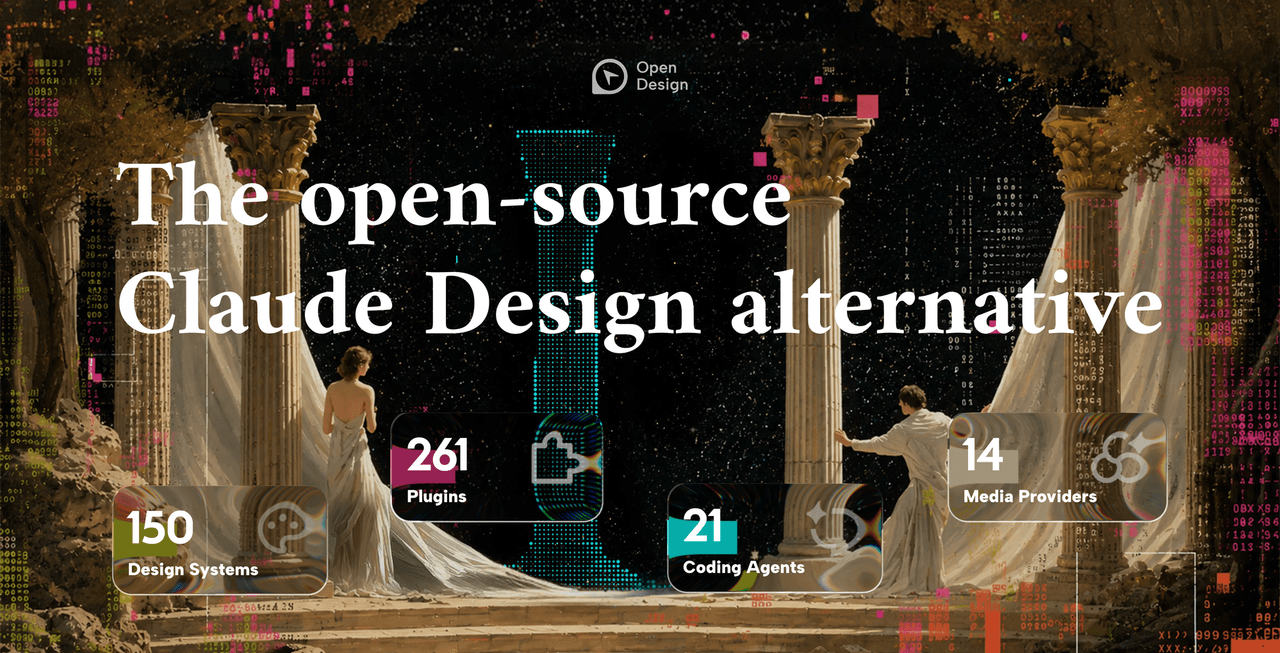 nexu-io/open-design
🎨 Best DeepSeek Harness Design Plugin. The open-source Claude Design alternative. 🖥️ Local-first desktop app. 🖼️ Your…
nexu-io/open-design
🎨 Best DeepSeek Harness Design Plugin. The open-source Claude Design alternative. 🖥️ Local-first desktop app. 🖼️ Your…
-
 ruvnet/ruflo
🌊 The original agent meta-harness. Deploy intelligent multi-player swarms, coordinate autonomous workflows, and build c…
ruvnet/ruflo
🌊 The original agent meta-harness. Deploy intelligent multi-player swarms, coordinate autonomous workflows, and build c…
-
 amruthpillai/reactive-resume
A one-of-a-kind resume builder that keeps your privacy in mind. Completely secure, customizable, portable, open-source a…
amruthpillai/reactive-resume
A one-of-a-kind resume builder that keeps your privacy in mind. Completely secure, customizable, portable, open-source a…
-
 esengine/DeepSeek-Reasonix
DeepSeek-native AI coding agent for your terminal. Engineered around prefix-cache stability — leave it running.
esengine/DeepSeek-Reasonix
DeepSeek-native AI coding agent for your terminal. Engineered around prefix-cache stability — leave it running.
-
 volcengine/OpenViking
Self-evolving Context Database for AI Agents. Unify Agent Memory, Knowledge RAG and Skills.
volcengine/OpenViking
Self-evolving Context Database for AI Agents. Unify Agent Memory, Knowledge RAG and Skills.
-
 Molunerfinn/PicGo
:rocket: The Ultimate Image Uploader for Efficient Creators. Supports Obsidian, Typora, VS Code etc. and 60+ image hosti…
Molunerfinn/PicGo
:rocket: The Ultimate Image Uploader for Efficient Creators. Supports Obsidian, Typora, VS Code etc. and 60+ image hosti…
-
 titanwings/distilly
Distilly — Distill how they think into reusable Skills for any Agent or Bot. Formerly Colleague Skill(原同事 Skill).
titanwings/distilly
Distilly — Distill how they think into reusable Skills for any Agent or Bot. Formerly Colleague Skill(原同事 Skill).
-
 titanwings/colleague-skill