Luck9Star/dsh-gateway-provider
DeepSeek Harness 的通用 LLM 网关提供商插件:newapi / LiteLLM / Higress / 任何兼容 OpenAI 的网关,通过 pi-ai SDK 支持多协议(OpenAI/Anthropic/Gemini),利用 models.dev 增强功能。
项目介绍Project Overview
dsh-gateway-provider 是 DeepSeek Harness 插件,把 newapi、LiteLLM、Higress 或任意 OpenAI 兼容网关的模型接入模型选择器。它自动读取网关模型列表,并用 models.dev 补全上下文窗口、输出上限与推理能力,按模型原生协议(OpenAI、Anthropic、Gemini)发起请求。适合模型集中托管在网关、希望免手工维护静态清单时使用。注意设置页需 web 配置文件,且密钥须放在凭据存储或环境变量中。
dsh-gateway-provider is a DeepSeek Harness plugin that exposes models behind newapi, LiteLLM, Higress, or any OpenAI-compatible gateway in dsh’s model picker. It fetches the gateway model list, enriches context window, output limits, and reasoning support from models.dev, and routes requests over each model’s native OpenAI, Anthropic, or Gemini protocol. Use it when models are centrally hosted behind a gateway. The settings UI requires the web profile, and API keys must stay in the credential store or environment.
请帮我了解并安装插件:【dsh-gateway-provider】【https://github.com/Luck9Star/dsh-gateway-provider】把上面这条消息直接发给当前会话里的 DSH,让它帮你了解并安装。安装命令不一定准确,发给 DSH 更稳。Send this message to DSH in your current session. CLI install commands may not be accurate across systems — DSH will figure it out for you.
或使用命令行安装(适合开发者)Or use CLI install (for developers)
命令行安装CLI Install
dsh plugin --profile web add dsh-gateway-provider把 Luck9Star/dsh-gateway-provider 加入你的 DSH 配置(web profile)即可启用。
READMEREADME
dsh-gateway-provider

中文文档:docs/README.zh.md
Use all the models behind your LLM gateway — newapi, LiteLLM, Higress, or any OpenAI-compatible endpoint — directly in DeepSeek Harness.
Install the plugin, paste your API key, and every gateway model shows up in dsh's model picker with its real parameters (context window, output cap, reasoning support) fetched from models.dev. Requests go out over each model's own native protocol — OpenAI, Anthropic, or Gemini — so tool calls and streaming behave the way that model's maker intended.
Why this exists
dsh ships one adapter per official provider. If your models live behind a gateway, the manual alternative is a hand-maintained static model list with guessed context windows and output caps. This plugin mounts the gateway itself instead:
- Nothing to maintain by hand — the model list is read from the gateway
(
GET /v1/models, with a management-API fallback for newapi); add a model on the gateway side and it appears in dsh, no re-deploy. - Real numbers, not guesses — models.dev data fills context window, output cap, reasoning levels, release date; config defaults only fill gaps.
- Every wire format, one plugin — each model routes over its own protocol (OpenAI chat completions / OpenAI responses / Anthropic messages / Gemini), handled by the same pi-ai SDK the official dsh adapter uses.
- Multiple gateways at once — a default
newapiroute plus onegateway:<id>route per extra gateway, each with its own cache and key. - A settings page instead of YAML — Settings → Gateway Models: add gateways from templates (NewAPI / LiteLLM / Higress / OpenAI-compatible / fully custom), test connections, sync models, hide or override any model, add custom models.
Requirements
- DeepSeek Harness (dsh) with a
webprofile (the settings page is a web-UI extension; the provider itself works in any profile). - A gateway API key (e.g. a newapi token).
Install
# 1. Install the plugin (dsh plugin add runs pnpm add under the hood)
dsh plugin --profile web add dsh-gateway-provider

# 2. Store your key — pick ONE of:
#    a) the dsh credentials file (recommended; created with mode 0600, hot-reloaded)
echo "NEWAPI_API_KEY: sk-REPLACE_WITH_YOUR_KEY" >> ~/.dsh/.credentials.yaml
#    b) or export it in the shell you launch dsh from:
#       export NEWAPI_API_KEY=sk-REPLACE_WITH_YOUR_KEY

# 3. Restart and open the settings page
dsh --profile web
# → Settings → Gateway Models
Expected result: the model picker gains a "NewAPI" route listing your
gateway's chat models, newest first. Click Test on the gateway card —
it should answer ✓ Connected — N models. Not using the public newapi
cloud? Set Base URL on the card (or baseURL in config) to your own
gateway address first.
Daily use
Everything lives in Settings → Gateway Models:
- Add more gateways — "Add Gateway", pick a template (LiteLLM, Higress, OpenAI-compatible, or fully custom with per-protocol URLs), point it at the base URL, name its key env var, Test, Sync. Each gateway becomes its own route in the picker.
- Tame the model list — non-chat models (image / speech / embedding / rerank …) are excluded by default regexes; hide or rename any model; add a custom model by hand if the gateway hides it; per-model protocol, context window, output cap, and reasoning levels are all editable.
- Keys live in dsh's credential store — the settings page shows a badge
(
✓ Key set · NEWAPI_API_KEY/⚠ No key set) and can write the key there for you.
Configuration reference
Optional — everything below has a working default. Config lives in the
llm-newapi: section of ~/.dsh/settings.yaml (the settings page edits
the same keys). The frequently used ones:
| Key | Default | Meaning |
|---|---|---|
baseURL |
https://api.newapi.ai |
Your gateway's base URL. Env fallbacks: NEWAPI_BASE_URL, NEWAPI_API_URL. |
apiKeyEnv |
NEWAPI_API_KEY |
Which env/credential variable holds the key. |
label |
NewAPI |
Route label shown in the picker. |
flavor |
newapi |
Template label only (newapi / litellm / higress / openai-compatible / custom). |
gateways |
— | Array of extra gateways: { id, baseURL, apiKeyEnv, label, … }, each becoming a gateway:<id> route. |
models |
— | Per-model overrides: { id, name, disabled, protocol, contextWindow, maxTokens, reasoningLevels }. |
useModelsDev / modelsUrl |
true / models.dev |
Parameter enrichment source (supports file: URLs for offline). |
excludePatterns |
image/speech/… | Regex list of model ids to keep out of the picker. |
sortModelsByRelease |
true |
Newest models first. |
catalogMode |
auto |
v1 (/v1/models only) / management (newapi user API) / auto. |
endpointPriority |
responses → anthropic → openai → gemini | Which protocol to prefer when a model supports several. |
openaiURL / responsesURL / anthropicURL |
— | Fully-custom gateways only: per-protocol endpoint URLs; unset = that protocol off. |
maxTokens / defaultContextWindow |
32768 / 128000 |
Fallbacks when models.dev has no data. |
streamIdleTimeoutMs |
600000 |
Idle timeout while streaming. |
headers |
— | Extra HTTP headers sent to the gateway. |
Troubleshooting
| Symptom | Cause → fix |
|---|---|
| Picker route exists but zero models | The plugin can't read your model list. Check the gateway base URL; try catalogMode: "management" for newapi gateways that restrict /v1/models. |
401 / auth errors on every request |
Key missing or wrong: check the badge in Settings → Gateway Models, or NEWAPI_API_KEY in ~/.dsh/.credentials.yaml. |
| A model's context window looks wrong | models.dev had no match. Edit the model on the settings page (or a models: override). |
| Wrong format answers / tool calls flaky for one model | That model is routed over a protocol it handles poorly. Pin protocol on the model (openai, openai-response, anthropic, gemini). |
| Custom gateway with separate endpoints | Use flavor: "custom" and set openaiURL / responsesURL / anthropicURL explicitly. |
How it works (one minute version)
At startup the plugin registers one provider route per gateway, pulls the
model list from the gateway, and fuzzy-matches each model id against
models.dev to fill in real parameters. When you pick a model, dsh's request
is translated to the pi-ai SDK's format and sent over that model's native
protocol; the streamed reply is translated back into dsh chunks. Catalogs
are cached (30 min by default) per gateway. No hand-written protocol code —
the bridge is lifted from the official dsh-llm-pi-ai adapter.
Development
git clone https://github.com/Luck9Star/dsh-gateway-provider
cd dsh-gateway-provider
npm run link              # symlink into your dsh profile (single instanceof safety)
npm run test:client       # settings-UI render, both locales
npm run test:urls         # URL/derivation units
npm run smoke             # live gateway round-trip (needs a real key)
Developing from a checkout: point the profile's package.json at
"dsh-gateway-provider": "link:/abs/path" and re-run pnpm install in the
profile. Do not also add an id: llm-newapi row to the profile's own
cordis.patch.yml — the bundle patch already provides it (duplicate row =
loader error).
References & credits
- pi-ai SDK — all
four wire protocols; the bridge reuses the official
dsh-llm-pi-aiadapter's translation layer. - models.dev — the parameter catalog (context windows, output caps, reasoning, release dates).
- new-api, LiteLLM, Higress — the gateways this plugin is tested against (any OpenAI-compatible endpoint works).
Security
Keys live in dsh's credential store or the launching environment — never in settings YAML. The repo runs gitleaks in CI and pre-commit to keep secrets out.
License
相关推荐Related
-
 nexu-io/open-design
🎨 Best DeepSeek Harness Design Plugin. The open-source Claude Design alternative. 🖥️ Local-first desktop app. 🖼️ Your…
nexu-io/open-design
🎨 Best DeepSeek Harness Design Plugin. The open-source Claude Design alternative. 🖥️ Local-first desktop app. 🖼️ Your…
-
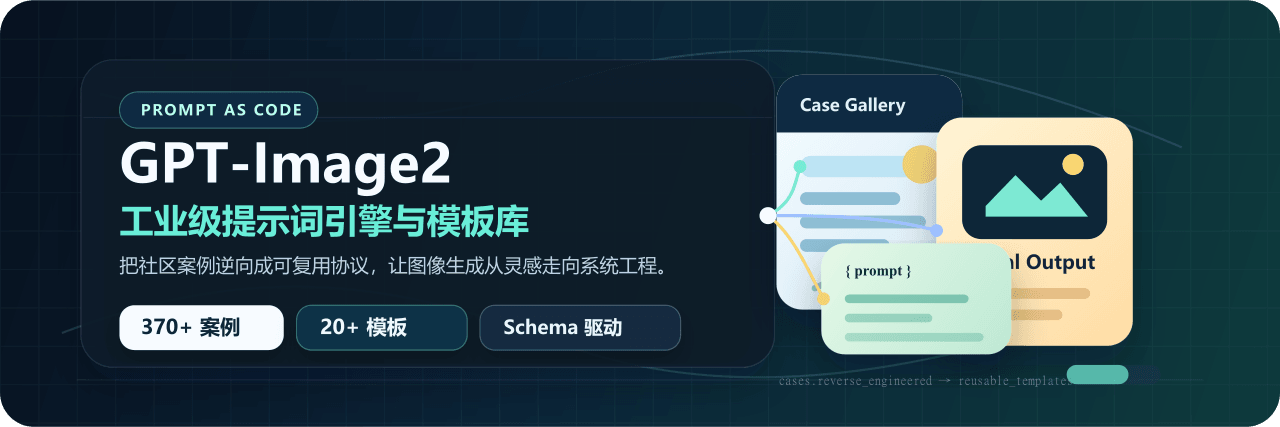 freestylefly/awesome-gpt-image-2
Prompt as Code | GPT-Image2 工业级提示词引擎与模板库,530+ 个案例逆向工程,20+ 套工业级模板,并提炼出Skills,持续更新中
freestylefly/awesome-gpt-image-2
Prompt as Code | GPT-Image2 工业级提示词引擎与模板库,530+ 个案例逆向工程,20+ 套工业级模板,并提炼出Skills,持续更新中
-
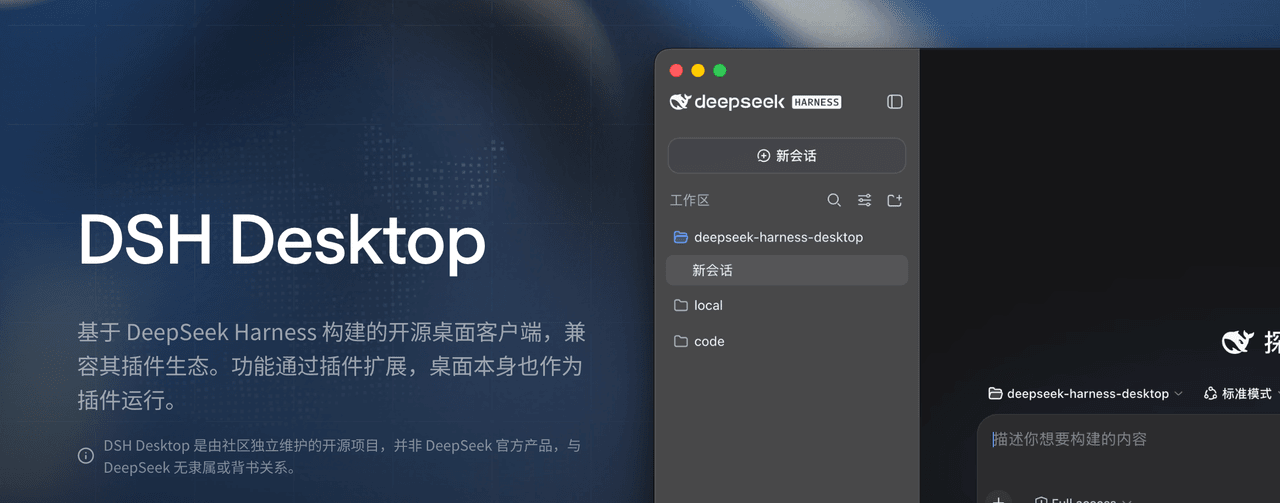 anywhere-labs/dsh-desktop
为 DeepSeek Harness (DSH) 插件生态打造的现代化桌面端解决方案。万物皆「插件」,桌面本身也是「插件」。
anywhere-labs/dsh-desktop
为 DeepSeek Harness (DSH) 插件生态打造的现代化桌面端解决方案。万物皆「插件」,桌面本身也是「插件」。
- Nagi-ovo/voyager Enhancement suite for Gemini, AI Studio, Claude & ChatGPT — plus a prompt manager for any web UI, DeepSeek Harness inclu…
-
 walkinglabs/learn-harness-engineering
Harness engineering beginner tutorial, from 0 to 1
walkinglabs/learn-harness-engineering
Harness engineering beginner tutorial, from 0 to 1
-
 awesome-dsh-plugin/awesome-dsh-plugin
A curated list of plugins for DeepSeek Harness (dsh) · DeepSeek Harness 插件精选列表
awesome-dsh-plugin/awesome-dsh-plugin
A curated list of plugins for DeepSeek Harness (dsh) · DeepSeek Harness 插件精选列表
-
 MemTensor/MemOS
Self-evolving memory OS for LLM & AI Agents: ultra-persistent memory, hybrid-retrieval, and cross-task skill reuse, with…
MemTensor/MemOS
Self-evolving memory OS for LLM & AI Agents: ultra-persistent memory, hybrid-retrieval, and cross-task skill reuse, with…
- yjh051108/dsh-routing-suite dsh-routing-suite — injector + router-standard kit: install the runtime injector first, then the task-aware reasoning-mo…