
Mikoribbit/odsh-bridge
A bridge that connects Openclaw and DeepSeek Harness
项目介绍Project Overview
ODSH Bridge 是连接 DeepSeek Harness 与 OpenClaw 的桥接插件:通过 WebSocket 完成 Ed25519 设备配对与 JSON-RPC 调用,并用共享目录信封加守护进程实现异步任务交接;v1.1 起还可经 SSH 调用 Cua Driver 操作真实 Windows 桌面。适合在 Docker agent-mesh 中让执行层调用大脑层或驱动桌面应用时使用。注意需自备两镜像、配对需在控制台审批,凭据须自行配置。
ODSH Bridge is a DSH plugin connecting DeepSeek Harness to OpenClaw. It pairs over WebSocket with Ed25519 signatures, calls gateway methods via JSON-RPC, and exchanges task envelopes through a shared directory watched by a daemon. Since v1.1 it can also SSH to a Windows host and use Cua Driver for focus-safe desktop actions. Use it in Docker agent-mesh setups needing OpenClaw access or Windows desktop control. Caveat: you must supply both images, approve pairing, and configure credentials yourself.
请帮我了解并安装插件:【odsh-bridge】【https://github.com/Mikoribbit/odsh-bridge】把上面这条消息直接发给当前会话里的 DSH,让它帮你了解并安装。安装命令不一定准确,发给 DSH 更稳。Send this message to DSH in your current session. CLI install commands may not be accurate across systems — DSH will figure it out for you.
或使用命令行安装(适合开发者)Or use CLI install (for developers)
命令行安装CLI Install
dsh plugin --profile web add github:Mikoribbit/odsh-bridge把 Mikoribbit/odsh-bridge 加入你的 DSH 配置(web profile)即可启用。
READMEREADME
ODSH Bridge — OpenClaw × DeepSeek Harness connectivity bridge




One-line positioning: lets DeepSeek Harness (DSH, the execution layer) reach the OpenClaw (brain/persona layer) gateway over WebSocket, hand off tasks reliably between the two containers through a shared directory bridge (envelope + daemon), and — since v1.1 — operate a real Windows desktop on the host machine via SSH + Cua Driver (no OpenClaw Desktop, no dedicated node daemon).
Everything here comes from a real integration that was run and verified in 2026-08 on the docker
agent-meshnetwork; anything not verified or speculative is marked⚠️ verify yourself. All credentials are placeholders — no real token/secret should ever appear in this repository.
Table of contents
- 1. Architecture
- 2. Verified features
- 3. Quick start
- 4. Configuration (.env fields)
- 5. Directory structure
- 6. Integration approaches
- 7. Windows desktop execution (Cua Driver)
- 8. Security notes
- 9. Troubleshooting (common failures)
- 10. Roadmap
- 11. Credits
- Maintenance notes
1. Architecture (text version)
┌────────────────────────────── agent-mesh (docker network) ────────────────────────────────┐
│                                                                                           │
│   deepseek-harness (DSH)                        openclaw (OpenClaw)                │
│   ├─ oc-invoke.mjs  ──┐                                                                    │
│   ├─ oc-send.mjs   ───┼── WebSocket(:18789) ─────▶ gateway (Device Pairing +          │
│   ├─ oc-client.mjs ───┘   explicit Origin / Ed25519   JSON-RPC-style methods)           │
│   │                      signed pairing / tools.invoke ├─ agents.list / status            │
│   └─ bridge-daemon.mjs                                ├─ doctor.memory.* (dreaming)      │
│         │                                             └─ message (Discord send/recv)      │
│   └─ oc-cua.mjs ─── SSH(:22, ed25519) ──────────────▶ Windows host                     │
│         │                                             └─ Cua Driver (cua-driver serve)    │
│         └── shared bridge mount: Input/ Output/ DSH-Workspace/ Openclaw-Workspace/         │
└────────────────────────────────────────────────────────────────────────────────────────────┘
There are three data flows:
- Realtime channel: A DSH script connects to the OpenClaw gateway on 18789 as a "paired device"
(HTTP Upgrade + origin allowlist + Ed25519 signature pairing +
connect.challenge→hello-ok), then calls methods in a JSON-RPC style. - Async bridge: Either side writes a task envelope to
Input/T-*.json→ the daemon watches and executes it → atomically writes backOutput/<taskId>_result.json, optionally notifying a Discord channel viaoc-send. - Windows desktop execution (v1.1+): DSH calls
oc-cua.mjs→sshinto the Windows host → invokescua-driver call <tool> '<json>'→ the driver operates the real desktop (snapshot, click/type/hotkey, browser via CDP, app launch) without stealing focus.
2. Verified features
Each item below was actually exercised and passed in the real environment.
- ✅ Gateway WebSocket handshake + Ed25519 device pairing: HTTP Upgrade (with explicit
Origin) →connect.challenge(nonce) → sign thev2claim string →connect→hello-ok; the device is approved through the Control UI (operator role + 5 scopes).deviceId = hex(SHA-256(Ed25519 public key))stays constant, so a device approved once stays approved forever. Known pitfall fixed: the claim anddevice.signedAtmust come from the sameDate.now()call (see docs/PROTOCOL.md §2.3). - ✅ Gateway method calls:
agents.list,status,health,talk.catalog,talk.session.create,tools.invoke(message send/read),config.schema.lookup— all pass. - ✅ Async bridge: envelope → daemon → result, with
.tmp → renameatomic writes and an idempotent.statestore; kindsecho / notify / run-command / write-file / read-file / bridge-status. - ✅ Windows desktop execution via Cua Driver (v1.1): verified from the DSH container over SSH:
cua-driver --version→ 0.21.0get_screen_size→ real host resolution (e.g. 2560×1440)get_accessibility_tree→ live desktop process tree via UIA- full tool surface:
get_desktop_state,browser_navigate/click/type/pointer,launch_app,kill_app,click/double_click/right_click/hotkey/type/scroll,list_apps,list_windows…
3. Deploy in minutes
Requires: Docker + two images — OpenClaw (official openclaw/openclaw:latest) and DSH
(no public image; build deepseek-harness:local from the DeepSeek Harness repo).
# 1. Clone, then scaffold the bridge with the interactive wizard
git clone https://github.com/Mikoribbit/odsh-bridge.git && cd odsh-bridge
chmod +x scripts/new-bridge.sh
./scripts/new-bridge.sh            # visual prompts; press Enter to keep defaults

# 2. Bring up OpenClaw + DSH (bridge daemon auto-starts inside DSH)
docker compose up -d              # uses the generated docker-compose.yaml

# 3. Pair once, then it just works
node src/oc-client.mjs connect    # approve the deviceId in the OpenClaw Control UI

# (optional) verify daemon health + a round-trip
node src/dshtrigger.mjs status
node src/dshtrigger.mjs send --kind echo --text "hello"
Full walkthrough, config, and optional Windows-desktop (Cua) setup: docs/QUICKSTART.md.
Documentation (split)
To keep this page short, the deep-dive sections moved into their own pages:
| Page | Covers |
|---|---|
| Quick Start | getting the project, bring up containers, deploy the daemon, optional Cua |
| Configuration | .env fields + directory structure |
| Integrations | standalone daemon vs Cordis plugin |
| Operations | Cua Windows desktop, security notes, troubleshooting |
| Roadmap | phase-gated long-term plan (ClawHub, plugin ecosystem, event bus) |
| Protocol | gateway handshake / JSON-RPC details |
| Bridge Spec | envelope format, state machine, zones |
| Maintenance | objectively-observed issues & fixes |
Support
If this project helps you, consider supporting its maintainer:

4. Docs quick index (one-liner)
- New to ODSH Bridge? → start with Quick Start.
- Anything about config/paths? → Configuration.
- Cua Windows desktop, security, errors? → Operations.
5. Credits
- odsh-interop (ClawHub) — the OpenClaw-side skill is published on
ClawHub (package:
odsh-interop); install withopenclaw skills install odsh-interop. - Cua — this project's Windows desktop execution layer is powered by Cua Driver (by the trycua team). Huge thanks for an open, cross-platform, focus-safe computer-use driver that lets agents drive desktop apps without stealing the user's cursor. The Cua Driver is independently licensed by their authors — see their repository for details.
Maintained by: ODSH Bridge contributors · License: MIT · Core Node >= 18 · SQLite audit store requires Node >=22.5 · Zero-dependency ESM
相关推荐Related
-
 nexu-io/open-design
🎨 Best DeepSeek Harness Design Plugin. The open-source Claude Design alternative. 🖥️ Local-first desktop app. 🖼️ Your…
nexu-io/open-design
🎨 Best DeepSeek Harness Design Plugin. The open-source Claude Design alternative. 🖥️ Local-first desktop app. 🖼️ Your…
-
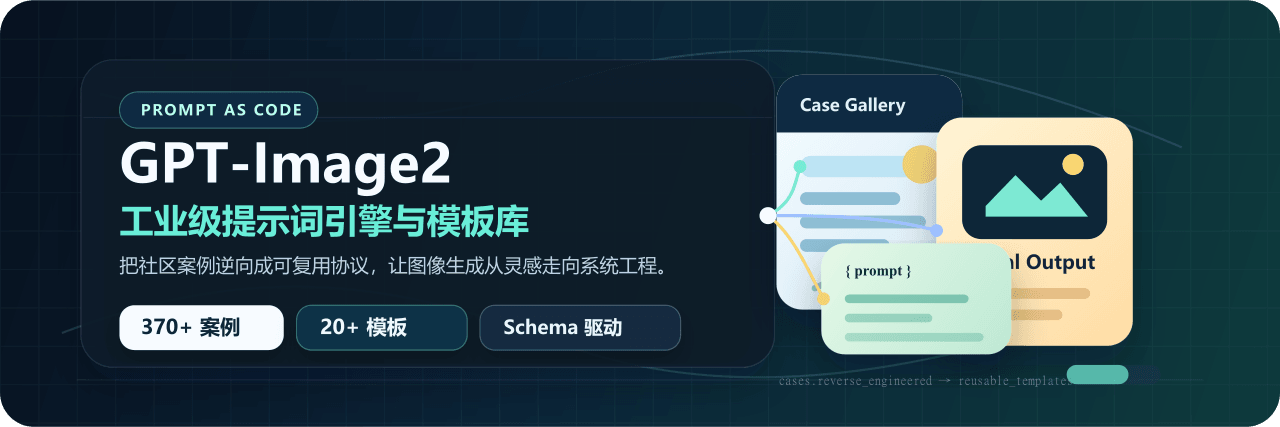 freestylefly/awesome-gpt-image-2
Prompt as Code | GPT-Image2 工业级提示词引擎与模板库,530+ 个案例逆向工程,20+ 套工业级模板,并提炼出Skills,持续更新中
freestylefly/awesome-gpt-image-2
Prompt as Code | GPT-Image2 工业级提示词引擎与模板库,530+ 个案例逆向工程,20+ 套工业级模板,并提炼出Skills,持续更新中
-
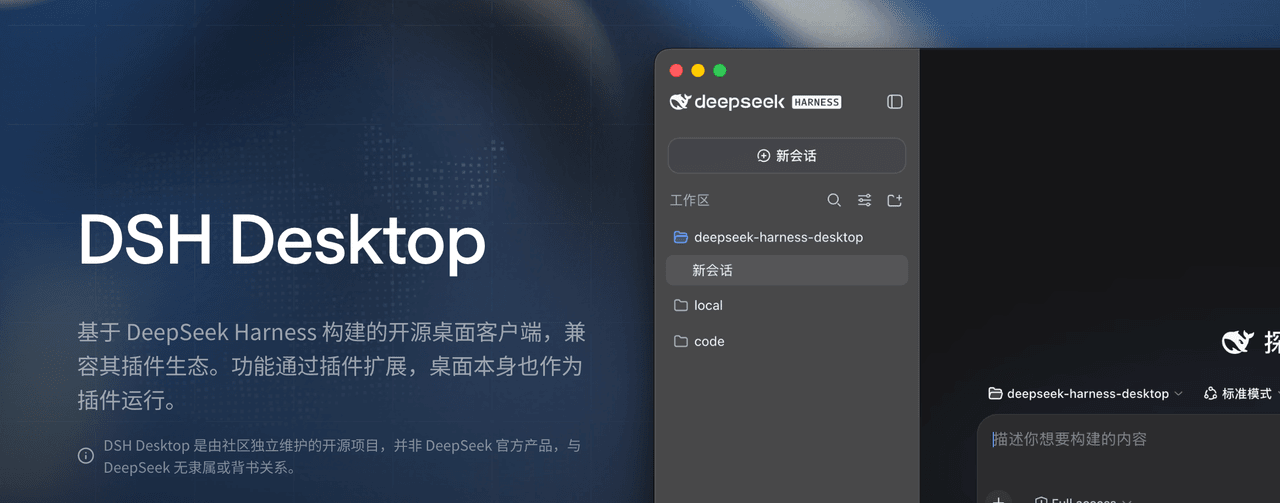 anywhere-labs/dsh-desktop
为 DeepSeek Harness (DSH) 插件生态打造的现代化桌面端解决方案。万物皆「插件」,桌面本身也是「插件」。
anywhere-labs/dsh-desktop
为 DeepSeek Harness (DSH) 插件生态打造的现代化桌面端解决方案。万物皆「插件」,桌面本身也是「插件」。
- Nagi-ovo/voyager Enhancement suite for Gemini, AI Studio, Claude & ChatGPT — plus a prompt manager for any web UI, DeepSeek Harness inclu…
-
 walkinglabs/learn-harness-engineering
Harness engineering beginner tutorial, from 0 to 1
walkinglabs/learn-harness-engineering
Harness engineering beginner tutorial, from 0 to 1
-
 awesome-dsh-plugin/awesome-dsh-plugin
A curated list of plugins for DeepSeek Harness (dsh) · DeepSeek Harness 插件精选列表
awesome-dsh-plugin/awesome-dsh-plugin
A curated list of plugins for DeepSeek Harness (dsh) · DeepSeek Harness 插件精选列表
-
 MemTensor/MemOS
Self-evolving memory OS for LLM & AI Agents: ultra-persistent memory, hybrid-retrieval, and cross-task skill reuse, with…
MemTensor/MemOS
Self-evolving memory OS for LLM & AI Agents: ultra-persistent memory, hybrid-retrieval, and cross-task skill reuse, with…
- yjh051108/dsh-routing-suite dsh-routing-suite — injector + router-standard kit: install the runtime injector first, then the task-aware reasoning-mo…