qiaoy01/dsh-mission
DeekSeek Harness Mission Plugin
项目介绍Project Overview
dsh-mission 是 DeepSeek Harness 的纯 TypeScript 长周期自主任务运行时插件,用事件溯源持久化任务依赖 DAG,支持租约回收、崩溃恢复、失败重规划,并由驱动自动领取、派发子代理、独立验证后原子提交。适合跨会话、需多日推进且结果可核验的长期目标。注意:代理报告不具权威性,任务须通过独立验证;浏览器 UI 尚未完成。
dsh-mission is a pure-TypeScript DeepSeek Harness plugin providing a long-horizon autonomous mission runtime. It persists a task dependency DAG as session events, then a driver claims tasks, dispatches subagents, independently verifies results, and commits atomically, with lease reclamation, crash recovery, and replanning. Use it for cross-session, multi-day objectives requiring verifiable progress. Caveat: agent reports are not authoritative; tasks must pass independent verification, and the browser UI is pending.
请帮我了解并安装插件:【dsh-mission】【https://github.com/qiaoy01/dsh-mission】把上面这条消息直接发给当前会话里的 DSH,让它帮你了解并安装。安装命令不一定准确,发给 DSH 更稳。Send this message to DSH in your current session. CLI install commands may not be accurate across systems — DSH will figure it out for you.
或使用命令行安装(适合开发者)Or use CLI install (for developers)
命令行安装CLI Install
dsh plugin --profile web add @qiaoy01/mission把 qiaoy01/dsh-mission 加入你的 DSH 配置(web profile)即可启用。
READMEREADME
dsh-mission
A long-horizon autonomous mission runtime for DeepSeek Harness — lets an agent drive a long-term objective over days: a cross-session, independently verifiable, replan-on-failure, crash-recoverable autonomous control loop. The dependency DAG is one of its driving mechanisms, not the runtime itself.
English | 中文


What it is
dsh-mission is a pure-TypeScript cordis plugin for DeepSeek Harness that
provides the long-horizon autonomous mission runtime dsh lacks: a durable,
verifiable, crash-recoverable control loop that breaks a long-term objective
into a dependency DAG of tasks and advances it autonomously — instead of
finishing everything in one conversation.
Core principle: agents propose, the environment adjudicates, the runtime commits.
- Agent plans, executions, and claims are never authoritative;
- For every work item:
task/reportis a declaration about the environment (not authoritative);task/verifyindependently aligns the declaration with environment feedback (authoritative); - Workers cannot self-certify — only state changes that pass deterministic validation and commit atomically as a single session event are authoritative.
Why dsh needs it
| What dsh already has | What dsh-mission adds |
|---|---|
| goal (single-objective ledger, caller self-certifies) | Dependency DAG + derived readiness/blocked, failed branches replan while DONE work is preserved |
| workflow (one-shot fan-out scripts) | Durable, resumable, cross-session task state machine |
| schedule (pure time triggers) | Dependency triggers (upstream DONE → downstream READY) |
| subagent (execution unit) | Independent verification — workers cannot self-certify, report ≠ verify |
| — | Lease ownership + lazy reclamation + crash recovery |
Features
- Event-sourced persistence:
mission/*session events; one event = one atomic commit; no separate database; - Version guard:
revisionCAS (mirrors dsh-goal'sGoalRefpattern); - Autonomous driver host (
mission-driver): listens tomission/changedand runs claim → subagent execute → report → verify → commit automatically; - Lazy lease reclamation: an expired, unreported claim can be reclaimed and redone; an in-flight task guard prevents duplicate dispatch;
- Replan on failure: a stuck mission gets a new revision while DONE tasks with unchanged specs carry over;
- Optional model strategies:
llmDecider(pick the next task) /llmReplanner(replan) /userApprovalGate(approval gate); - UI data plane: a
missionsession-projection unit; - Trigger companion (
mission-trigger): a soft-guidance prompt +/missionslash command that routes trigger phrases intomission_create/mission_plan; - Tolerant companion:
mission-invariantregisters its audit whenever theinvariantsservice exists, and is a no-op otherwise (production profiles load without extra configuration).
Event vocabulary (mission/*)
| Event | Meaning |
|---|---|
mission/created |
Create a mission |
mission/plan-committed |
Commit a full plan snapshot (revision +1; DONE tasks with unchanged specs carry over) |
mission/task-claimed |
Claim a task with a lease |
mission/task-reported |
The agent's declaration about the environment (never DONE by itself) |
mission/task-verified |
Independently align the declaration with environment feedback → DONE/FAILED |
mission/cancelled |
Explicit cancellation |
States: mission CREATED / RUNNING / COMPLETED / FAILED / CANCELLED;
tasks PENDING / CLAIMED / DONE / FAILED + derived READY / BLOCKED.
Install & use
# Install from npm (published; inserts a 6-row bundle patch into the composition)
dsh plugin --profile <name> add @qiaoy01/mission
Install from source (for contributors)
The published npm package ships prebuilt (lib/), so consumers only need the
one command above. Build from source when you want to modify or review the code:
git clone https://github.com/qiaoy01/dsh-mission.git
cd dsh-mission   # the bundle lives at this repo root
npm install                                # build deps, pinned to the running-harness peer versions
npm run build                              # typecheck + emit lib/
dsh plugin --profile <name> add file:.
file:.points at the repo root you justcd'd into — whosepackage.jsondeclaresdsh.bundle.patch→cordis.patch.yml. After changing source, re-runnpm run buildand re-add the package.
In a session, the agent drives the mission through four model tools:
mission_create (create a mission), mission_plan (commit a task DAG; revision
must equal current + 1), mission_status (read the current state), and
mission_cancel (cancel the mission).
After the model commits a plan, the runtime takes over: mission-driver
claims tasks, dispatches real subagents, and verifies independently. The model
should not execute tasks itself.
Quick start (30 seconds)
# 1. install the plugin into a dsh profile
dsh plugin --profile web add @qiaoy01/mission

# 2. in a session, ask the agent:
#    "mission: build a small web game. Use mission_create, then mission_plan,
#     then stop — the runtime will execute the tasks."
#
# The model creates and plans; mission-driver claims tasks, dispatches real
# subagents, and independently verifies each one until the mission is COMPLETED.
Defaults are conservative (deterministic task selection, no automatic replan — zero model cost). Enable model strategies via the profile row config:
- id: mission-driver
  config:
    decider: llm     # the model picks the next task
    replan: true     # the model replans when the mission is stuck
Build & test
npm run build          # auto-discovers a local tsc; typecheck + emit to lib/
# Six test suites, all run in isolation:
node --experimental-strip-types tests/domain.test.mjs    # pure domain model
node tests/service.test.mjs                               # runtime (real cordis/session/agent)
node tests/driver.test.mjs                                # driver loop (mock executor)
node tests/driver-host.test.mjs                           # driver host (stubbed subagents)
node tests/trigger.test.mjs                               # trigger companion (soft guidance + /mission)
node --experimental-strip-types tests/projection.test.mjs # session-projection unit
Status
- Stage A (domain model) ✅ · Stage B (service + tools + companion) ✅ · Stage C (driver loop) ✅ · Stage D (replan / lease reclamation / model decisions / approval gate) ✅ · Stage E (projection ✅, browser UI pending);
- Verified in a real composition: a 7-task DAG driven end-to-end by real subagents to COMPLETED, every task independently verified, zero failures and zero duplicate dispatches.
License
MIT — see LICENSE.
相关推荐Related
-
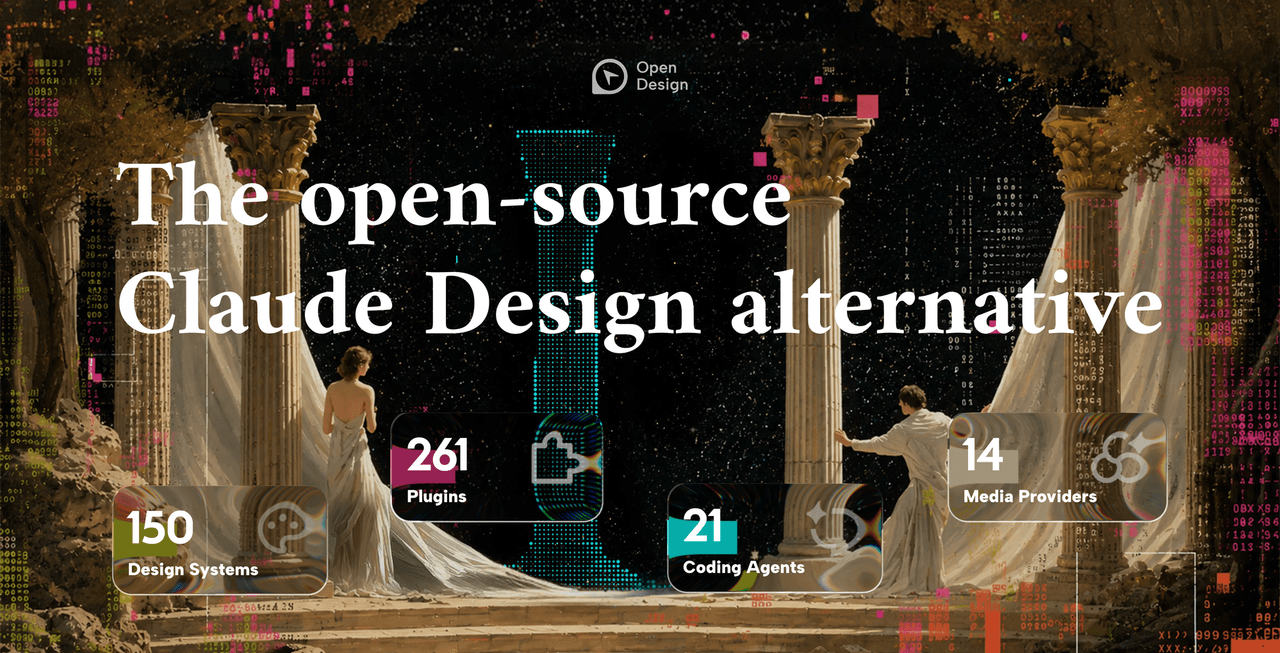 nexu-io/open-design
🎨 Best DeepSeek Harness Design Plugin. The open-source Claude Design alternative. 🖥️ Local-first desktop app. 🖼️ Your…
nexu-io/open-design
🎨 Best DeepSeek Harness Design Plugin. The open-source Claude Design alternative. 🖥️ Local-first desktop app. 🖼️ Your…
-
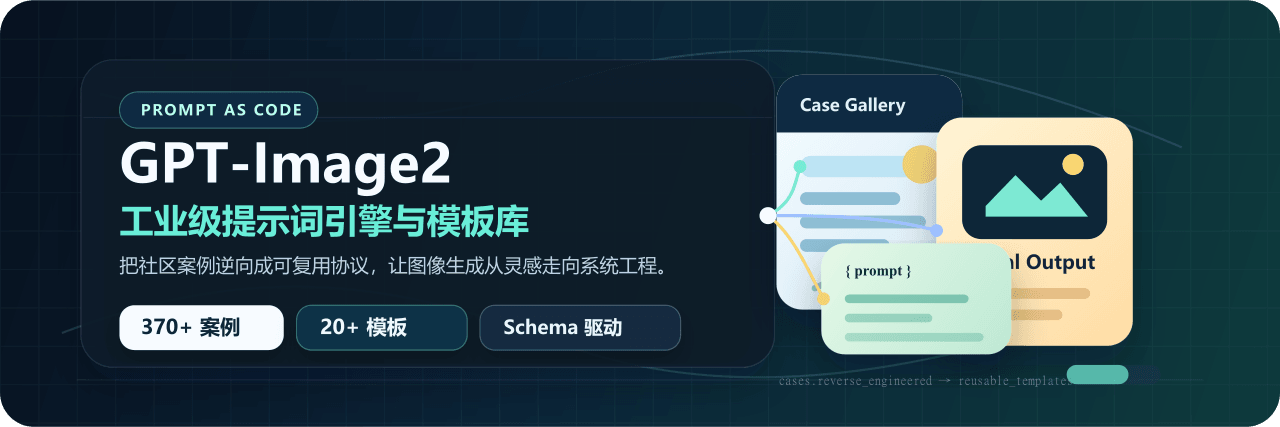 freestylefly/awesome-gpt-image-2
Prompt as Code | GPT-Image2 工业级提示词引擎与模板库,530+ 个案例逆向工程,20+ 套工业级模板,并提炼出Skills,持续更新中
freestylefly/awesome-gpt-image-2
Prompt as Code | GPT-Image2 工业级提示词引擎与模板库,530+ 个案例逆向工程,20+ 套工业级模板,并提炼出Skills,持续更新中
-
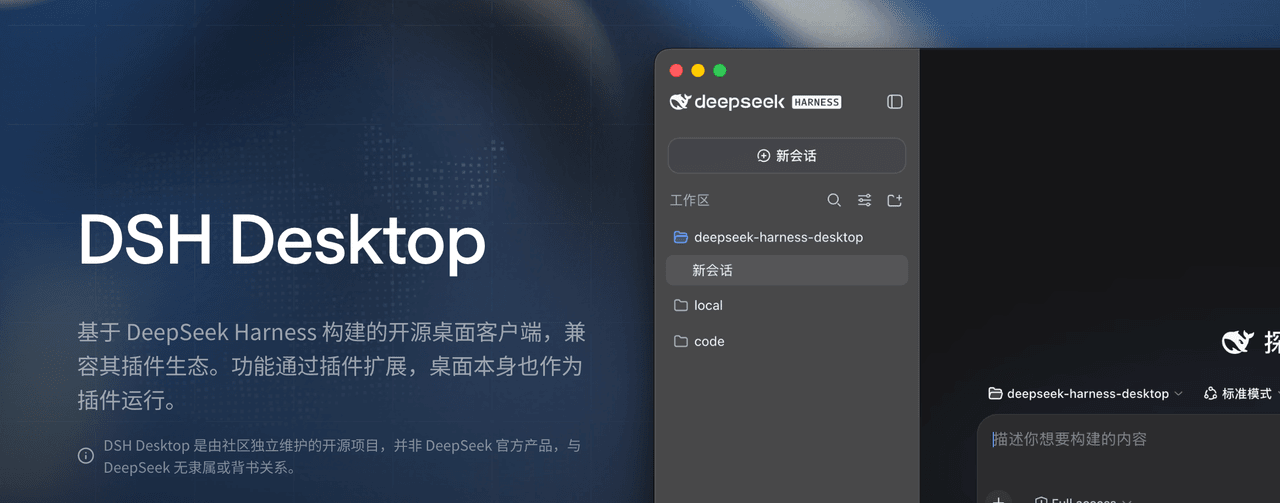 anywhere-labs/dsh-desktop
为 DeepSeek Harness (DSH) 插件生态打造的现代化桌面端解决方案。万物皆「插件」,桌面本身也是「插件」。
anywhere-labs/dsh-desktop
为 DeepSeek Harness (DSH) 插件生态打造的现代化桌面端解决方案。万物皆「插件」,桌面本身也是「插件」。
- Nagi-ovo/voyager Enhancement suite for Gemini, AI Studio, Claude & ChatGPT — plus a prompt manager for any web UI, DeepSeek Harness inclu…
-
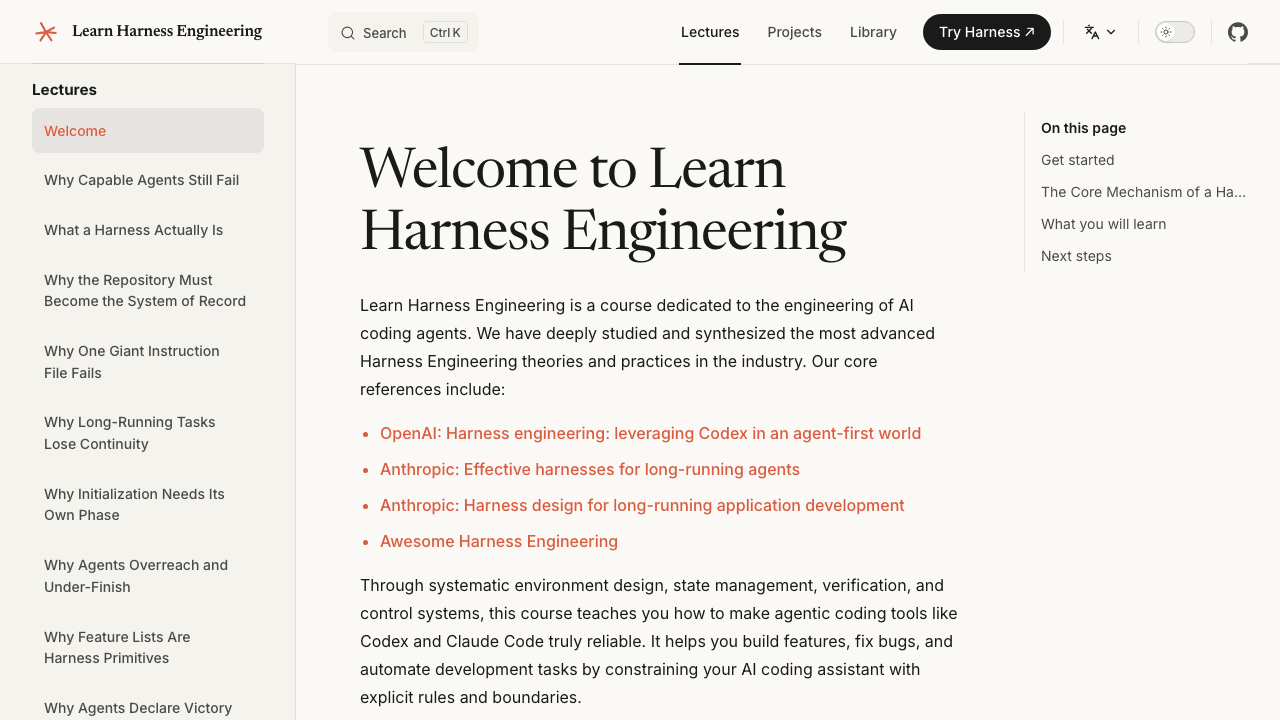 walkinglabs/learn-harness-engineering
Harness engineering beginner tutorial, from 0 to 1
walkinglabs/learn-harness-engineering
Harness engineering beginner tutorial, from 0 to 1
-
 awesome-dsh-plugin/awesome-dsh-plugin
A curated list of plugins for DeepSeek Harness (dsh) · DeepSeek Harness 插件精选列表
awesome-dsh-plugin/awesome-dsh-plugin
A curated list of plugins for DeepSeek Harness (dsh) · DeepSeek Harness 插件精选列表
-
 MemTensor/MemOS
Self-evolving memory OS for LLM & AI Agents: ultra-persistent memory, hybrid-retrieval, and cross-task skill reuse, with…
MemTensor/MemOS
Self-evolving memory OS for LLM & AI Agents: ultra-persistent memory, hybrid-retrieval, and cross-task skill reuse, with…
- yjh051108/dsh-routing-suite dsh-routing-suite — injector + router-standard kit: install the runtime injector first, then the task-aware reasoning-mo…