qubyyang/awesome-ios-sim
Simulator State as Code for iOS developers, CI, and AI agents—capture, diff, plan, and safely apply reproducible simulator profiles through a deterministic Swift CLI and MCP server.
项目介绍Project Overview
该插件将iOS模拟器状态转化为可版本化的配置文件,支持捕获、差异对比、计划与安全应用。提供确定性CLI和MCP stdio服务器,并可作为DSH插件安装。适用于iOS开发者、CI流水线和AI代理。注意:项目处于alpha阶段,应用计划前需审查,尤其涉及擦除或应用删除操作。
This plugin turns iOS Simulator state into versioned profiles that can be captured, diffed, planned, reviewed, and safely applied. It offers a deterministic CLI and an MCP stdio server, installable as a DSH plugin. Use it for reproducible test environments, CI pipelines, or AI agent automation. Caveat: it's alpha-stage; always review generated plans before applying, especially those involving erase or app removal.
请帮我了解并安装插件:【awesome-ios-sim】【https://github.com/qubyyang/awesome-ios-sim】把上面这条消息直接发给当前会话里的 DSH,让它帮你了解并安装。安装命令不一定准确,发给 DSH 更稳。Send this message to DSH in your current session. CLI install commands may not be accurate across systems — DSH will figure it out for you.
或使用命令行安装(适合开发者)Or use CLI install (for developers)
命令行安装CLI Install
dsh plugin --profile web add github:qubyyang/awesome-ios-sim把 qubyyang/awesome-ios-sim 加入你的 DSH 配置(web profile)即可启用。
READMEREADME
awesome-ios-sim
简体中文 · MCP guide · DeepSeek Harness · Signed distribution · Architecture


Simulator State as Code for iOS developers, CI pipelines, and AI agents.
awesome-ios-sim turns an iOS Simulator setup into a versioned profile that can be captured, diffed,
planned, reviewed, and safely applied. It provides both a deterministic CLI and an MCP stdio server.
It is also installable as a dsh-plugin bundle for DeepSeek Harness.
Project status: alpha. The state schema is
v1alpha1. Review generated plans before applying them, especially plans containingeraseor app removal operations.
Why this exists
Simulator automation is usually spread across shell scripts, undocumented defaults, and manual setup. That makes test environments difficult to reproduce and gives AI agents an unsafe, untyped shell surface.
This project introduces one workflow:
profile + current snapshot -> diff -> deterministic plan -> explicit confirmation -> audited apply
- Declarative: commit simulator profiles next to tests and application code.
- Reviewable: inspect the exact ordered operation plan before mutation.
- Agent-safe: MCP tools use JSON Schema and
simulator_applydefaults to dry-run. - Capability-aware: exact, best-effort, and unsupported state are reported explicitly.
- Public API only: mutations go through Apple's
xcrun simctl; no private CoreSimulator frameworks. - Local-first: no daemon, cloud account, telemetry, or API key.
Architecture
flowchart LR
    P[State profile] --> E[Pure Swift state engine]
    S[Live or saved snapshot] --> E
    E --> D[Diff]
    E --> PL[Ordered plan]
    PL --> C{Explicit confirm?}
    C -- No --> DR[Dry-run report]
    C -- Yes --> X[Typed simctl driver]
    X --> J[Execution receipts]
    CLI[CLI] --> E
    MCP[MCP stdio server] --> E
The state engine has no Xcode dependency and is tested with fixtures. Only SimctlDriver touches the
host process boundary. The CLI and MCP server share the same planner, validation, and apply gates.
Requirements
- macOS 13 or later.
- Swift 6.
- Full Xcode with an iOS Simulator runtime for live inventory, snapshot, or apply operations.
xcode-selectconfigured to the intended Xcode installation.
Command Line Tools alone can build the package, but they do not provide CoreSimulator or simctl.
Install
git clone https://github.com/qubyyang/awesome-ios-sim.git
cd awesome-ios-sim
swift build -c release
The executables are produced at:
.build/release/ios-sim-state
.build/release/ios-sim-state-mcp
Checksummed native archives for Apple Silicon and Intel macOS are published on the Releases page. These initial archives are not yet code-signed or notarized. Install the current release through this repository's explicit Homebrew tap:
brew tap qubyyang/awesome-ios-sim https://github.com/qubyyang/awesome-ios-sim
brew install qubyyang/awesome-ios-sim/awesome-ios-sim
On a prerelease macOS version that Homebrew has not identified yet, an internal packages.*_dunno API error can
be bypassed with Homebrew's source-tap mode:
HOMEBREW_NO_INSTALL_FROM_API=1 \
  brew install qubyyang/awesome-ios-sim/awesome-ios-sim
The next tagged distribution is gated on Developer ID signing and Apple notarization and will use one universal archive on both architectures. See the signed distribution guide for the trust model.
Quick start
List available simulators:
swift run ios-sim-state inventory
Capture one simulator:
swift run ios-sim-state snapshot --device <UDID> > simulator.snapshot.json
Compose a target profile from reusable state before planning:
swift run ios-sim-state compose \
  --profile Examples/ui-tests.profile.json \
  --preset clean-status-bar \
  --layer Examples/ui-tests.layer.json > simulator.composed.json
Generate an offline plan from the included example:
swift run ios-sim-state plan \
  --profile Examples/ui-tests.profile.json \
  --snapshot Examples/ui-tests.snapshot.json > simulator.plan.json
Preview apply behavior without mutation (the default):
swift run ios-sim-state apply --plan simulator.plan.json
Apply a reviewed plan and retain an execution journal:
swift run ios-sim-state apply \
  --plan simulator.plan.json \
  --confirm \
  --journal simulator.report.json
apply stops at the first failing operation. Each receipt contains the executed argument arrays, exit
code, stdout, stderr, and timestamps.
State profile
Profiles are JSON documents validated against
schemas/v1alpha1/simulator-state.schema.json.
Fields with safe defaults may be omitted.
{
  "apiVersion": "awesome-ios-sim/v1alpha1",
  "kind": "SimulatorState",
  "metadata": { "name": "ui-tests" },
  "target": {
    "name": "iPhone 17 Pro",
    "runtime": "com.apple.CoreSimulator.SimRuntime.iOS-27-0"
  },
  "spec": {
    "power": "shutdown",
    "applications": [
      {
        "bundleIdentifier": "com.example.app",
        "sourcePath": "/absolute/path/to/Example.app",
        "running": true,
        "launchArguments": ["--uitesting"]
      }
    ],
    "preferences": [
      {
        "domain": "com.example.app",
        "key": "hasSeenOnboarding",
        "value": false
      }
    ],
    "statusBar": { "time": "09:41", "batteryLevel": 100 }
  }
}
power: "unchanged" restores the original power state after temporary work. When an erase is planned,
a booted device is shut down first. Boot operations wait for simctl bootstatus -b before dependent work.
Profile decoding is strict: unknown fields and empty identifiers are rejected. statusBar accepts only the
public simctl status_bar overrides and validates enum values and numeric ranges before planning.
Reusable layers and presets
A SimulatorStateLayer contains only reusable spec
fields and deliberately has no target. Apply --layer <file> and --preset <name> to compose, diff, or
plan; repeat and interleave these options in the exact order they should be merged. The base profile keeps
its metadata and target.
Merge behavior is deterministic: later scalar values win; applications replace earlier entries with the same
bundleIdentifier; preferences replace the same domain + key; status-bar fields merge by key. Application
and preference arrays are sorted in the composed output. Absence means “no opinion”; use an application with
presence: "absent" when an uninstall is intended. There is no general delete/tombstone operator in
v1alpha1.
Built-in presets are booted, clean-status-bar, and shutdown. Run ios-sim-state presets to discover
their descriptions. Examples/ui-tests.layer.json is a complete layer example.
CLI
| Command | Mutation | Purpose |
|---|---|---|
inventory |
No | List runtimes and simulators as stable JSON. |
snapshot --device <UDID> |
No | Capture managed state and capability metadata. |
presets |
No | List built-in reusable presets. |
compose --profile <file> [overlays] |
No | Materialize a complete profile from ordered layers and presets. |
diff --profile <file> [overlays] [--snapshot <file>] |
No | Show desired/current differences. |
plan --profile <file> [overlays] [--snapshot <file> | --device <UDID>] |
No | Produce an ordered operation plan. |
apply --plan <file> |
No | Return a dry-run report. |
apply --plan <file> --confirm |
Yes | Execute the reviewed plan serially. |
All machine-facing output is JSON. Use --compact for one-line output.
MCP for AI agents
Build the MCP executable and point any stdio-capable MCP client at its absolute path:
{
  "mcpServers": {
    "awesome-ios-sim": {
      "command": "/absolute/path/awesome-ios-sim/.build/release/ios-sim-state-mcp"
    }
  }
}
The server exposes seven tools:
| Tool | Behavior |
|---|---|
simulator_inventory |
Read simulator inventory. |
simulator_snapshot |
Capture one simulator. |
simulator_presets |
List built-in reusable presets. |
simulator_compose |
Materialize a complete profile from ordered overlays. |
simulator_diff |
Compare a profile with saved or live state. |
simulator_plan |
Generate a typed, ordered plan. |
simulator_apply |
Dry-run by default; mutates only with confirm: true. |
The stdio server implements the MCP 2026-07-28 stateless request model, including
server/discover, per-request _meta, cacheable tool lists, resultType, and JSON Schema 2020-12.
It also accepts the legacy initialize handshake used by 2025-11-25, 2025-06-18, and 2024-11-05
tool clients. See the MCP guide for wire examples and the exact supported subset.
DeepSeek Harness plugin
Install the repository as a DSH bundle and start the Web profile:
dsh plugin --profile web add github:qubyyang/awesome-ios-sim
dsh web
Harness bridges the existing MCP server and exposes namespaced tools such as
mcp__ios_sim__simulator_inventory and mcp__ios_sim__simulator_plan. The adapter is currently tested
against @deepseek-ai/dsh 0.1.0-rc.7. Pin a tag or commit in reproducible environments because Harness
is still in developer preview.
See the DeepSeek Harness guide for configuration, development, tool names, uninstall steps, and the host-process security boundary.
State coverage
| State | Read | Write | Support |
|---|---|---|---|
| Power | Yes | Yes | Exact |
| Installed apps | Yes when listapps is available |
Yes | Best effort |
| App running state | Not completely exposed by simctl |
Launch/terminate | Best effort |
| Managed preference keys | No general readback | Scalar values and scalar arrays | Best effort |
| Status bar overrides | No complete readback | Yes, runtime-dependent | Best effort |
| Erase | N/A | Yes, explicit destructive operation | Exact mutation |
The planner never silently upgrades best-effort data to exact state. Missing readback produces capability metadata, repeated idempotent writes, or a warning rather than a false claim of convergence.
Safety model
- No shell is invoked; executable and arguments are passed separately.
diff,plan, and defaultapplycannot mutate a simulator.- CLI apply requires
--confirm; MCP apply requires booleanconfirm: true. - Operations are serialized and stop on first failure.
- A booted simulator is shut down before erase.
- Temporary boots restore the requested or original final power state.
- Tool schemas disallow unknown top-level arguments.
- No private framework loading, orphan-directory deletion, or filesystem cleanup is performed.
Treat plan files as executable intent. Review changes to target UDIDs, app paths, erase operations, and preference domains before confirmation.
Why Swift
Simulator work is dominated by Xcode and CoreSimulator process latency, not language-level CPU time.
Swift provides native macOS distribution, strong Codable models, and direct alignment with iOS tooling
without adding a runtime. Rust would be a strong choice for a portable, CPU-heavy indexer, but it would
not materially accelerate simctl boot, install, or erase. The package keeps the pure state engine and
process boundary separate so a specialized helper can be introduced later if profiling justifies it.
Development
swift build
swift test
npm ci
npm test
npm run pack:check
swift run ios-sim-state plan \
  --profile Examples/ui-tests.profile.json \
  --snapshot Examples/ui-tests.snapshot.json
Run the opt-in live suite against a real Xcode Simulator runtime:
DEVELOPER_DIR=/Applications/Xcode.app/Contents/Developer \
  Scripts/live-integration-test.sh
It creates and exclusively targets a uniquely named temporary simulator, verifies the CLI and MCP paths,
checks dry-run safety and confirmed reconciliation, then deletes that exact device. Existing simulators are
not selected or modified. The script requires jq; artifacts are retained under .build/live-integration/.
Build and inspect a versioned native release archive locally:
Scripts/release/verify-version.sh
Scripts/release/build-artifact.sh
GitHub automation can run an unpublished release candidate from the default branch. Tag-driven runs build separate arm64 and x86_64 slices, merge and validate a universal archive, then require Developer ID signing, Apple notarization, a checksum-bound Homebrew Formula, and GitHub provenance before publishing. See the compatibility contract, distribution contract, and bilingual release process. No release is created from an untagged branch build.
See CONTRIBUTING.md, SECURITY.md, and the architecture notes. Please do not add private CoreSimulator APIs.
Roadmap
- Expand capability-aware settings without private frameworks.
- Build a native SwiftUI companion app on top of the same state engine.
- Optionally enable Developer ID signing and notarization when protected release credentials are available.
License
MIT. See LICENSE.
相关推荐Related
-
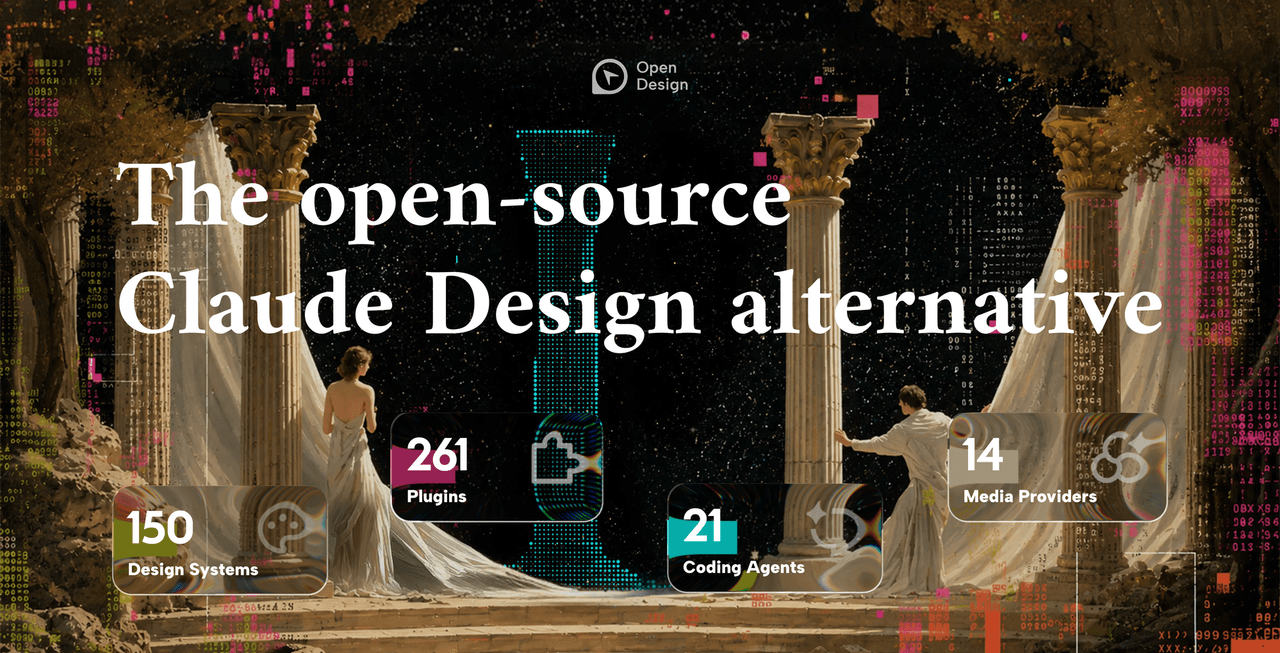 nexu-io/open-design
🎨 Best DeepSeek Harness Design Plugin. The open-source Claude Design alternative. 🖥️ Local-first desktop app. 🖼️ Your…
nexu-io/open-design
🎨 Best DeepSeek Harness Design Plugin. The open-source Claude Design alternative. 🖥️ Local-first desktop app. 🖼️ Your…
-
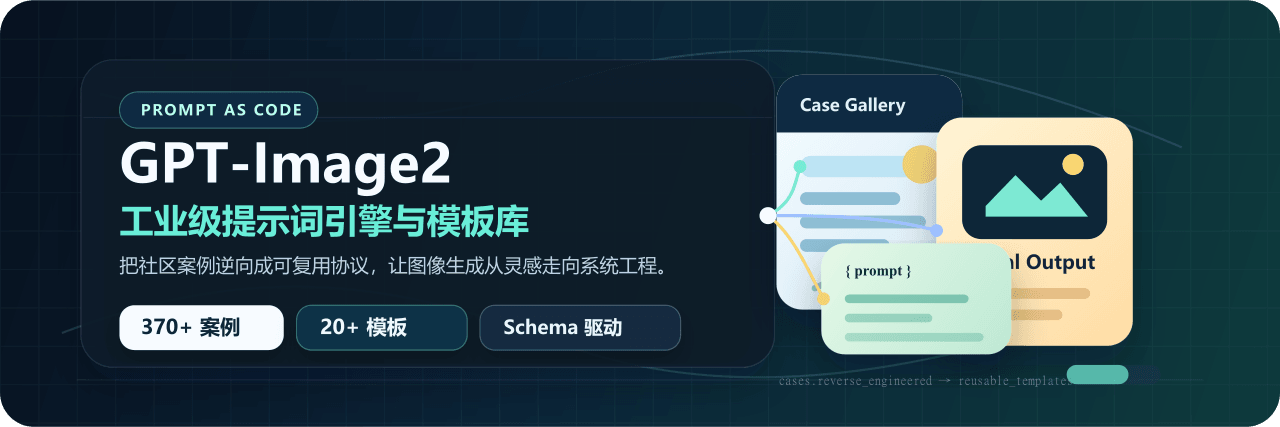 freestylefly/awesome-gpt-image-2
Prompt as Code | GPT-Image2 工业级提示词引擎与模板库,530+ 个案例逆向工程,20+ 套工业级模板,并提炼出Skills,持续更新中
freestylefly/awesome-gpt-image-2
Prompt as Code | GPT-Image2 工业级提示词引擎与模板库,530+ 个案例逆向工程,20+ 套工业级模板,并提炼出Skills,持续更新中
-
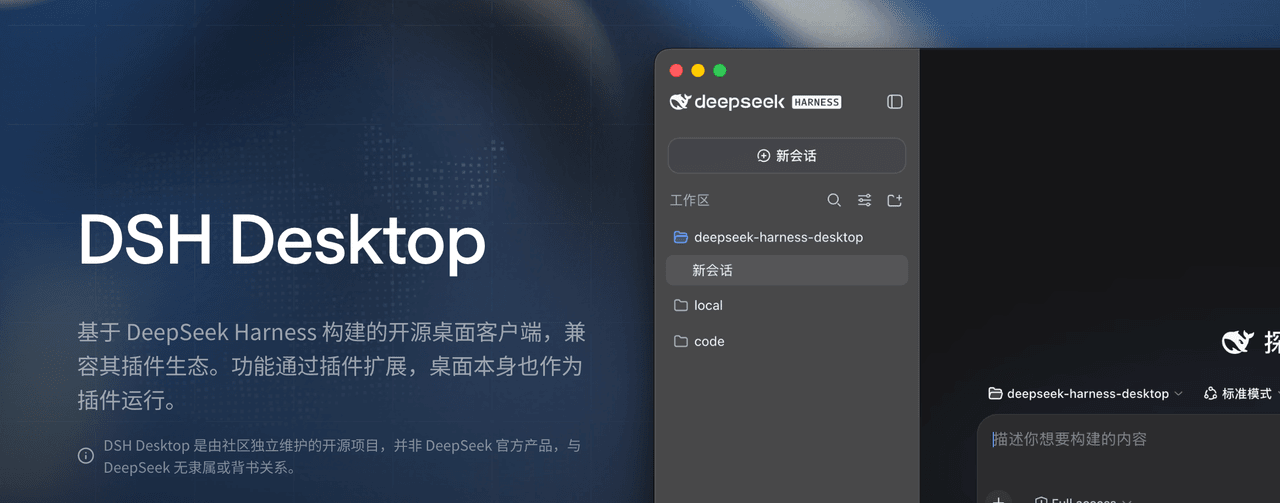 anywhere-labs/dsh-desktop
为 DeepSeek Harness (DSH) 插件生态打造的现代化桌面端解决方案。万物皆「插件」,桌面本身也是「插件」。
anywhere-labs/dsh-desktop
为 DeepSeek Harness (DSH) 插件生态打造的现代化桌面端解决方案。万物皆「插件」,桌面本身也是「插件」。
- Nagi-ovo/voyager Enhancement suite for Gemini, AI Studio, Claude & ChatGPT — plus a prompt manager for any web UI, DeepSeek Harness inclu…
-
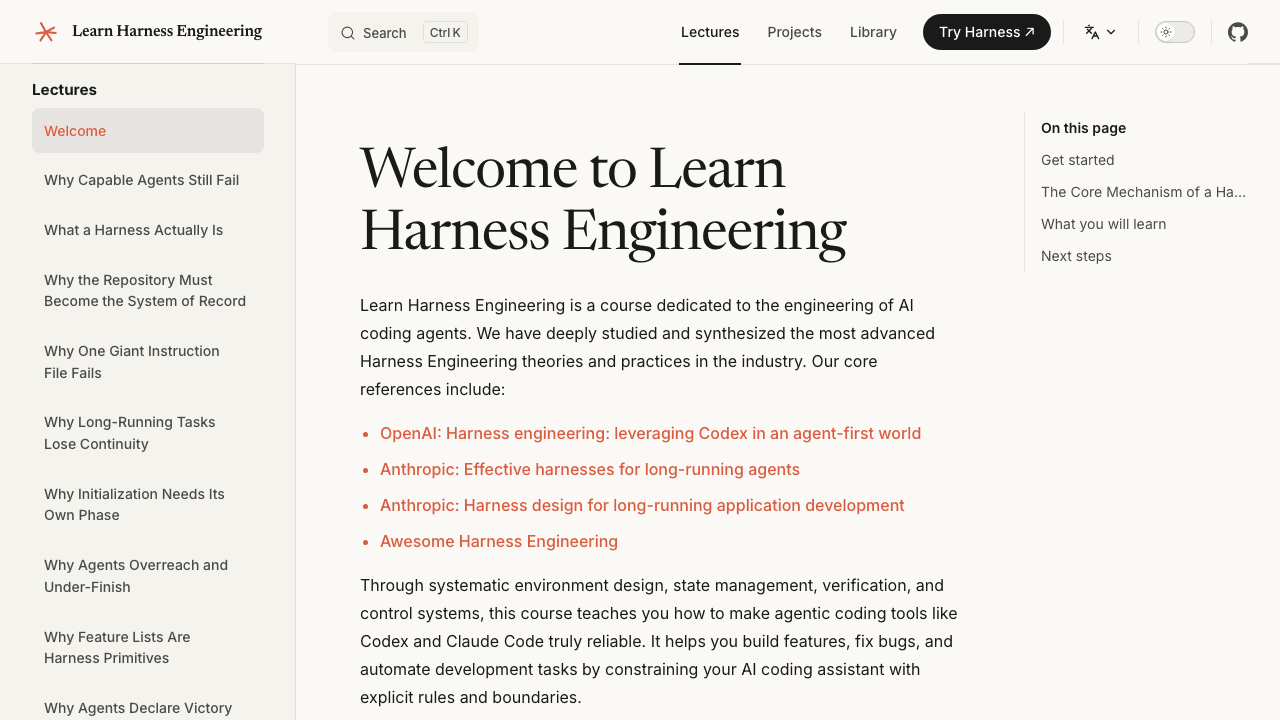 walkinglabs/learn-harness-engineering
Harness engineering beginner tutorial, from 0 to 1
walkinglabs/learn-harness-engineering
Harness engineering beginner tutorial, from 0 to 1
-
 awesome-dsh-plugin/awesome-dsh-plugin
A curated list of plugins for DeepSeek Harness (dsh) · DeepSeek Harness 插件精选列表
awesome-dsh-plugin/awesome-dsh-plugin
A curated list of plugins for DeepSeek Harness (dsh) · DeepSeek Harness 插件精选列表
-
 MemTensor/MemOS
Self-evolving memory OS for LLM & AI Agents: ultra-persistent memory, hybrid-retrieval, and cross-task skill reuse, with…
MemTensor/MemOS
Self-evolving memory OS for LLM & AI Agents: ultra-persistent memory, hybrid-retrieval, and cross-task skill reuse, with…
- yjh051108/dsh-routing-suite dsh-routing-suite — injector + router-standard kit: install the runtime injector first, then the task-aware reasoning-mo…