revive/dsh-git-credentials
DeepSeek Harness 插件:GitLab 和 GitHub API 令牌不进入模型上下文——静态加密(AES-256-GCM),按需工具,网页设置面板。
项目介绍Project Overview
dsh-git-credentials 是 DeepSeek Harness 的插件,用于管理 GitLab、GitHub、Gitee、Gitea 和 Bitbucket 的 API 令牌,令牌值不会进入模型上下文。工具仅携带令牌引用名,调用时从 AES-256-GCM 加密存储中解密,仅出现在 HTTP 授权头中。适合多平台或自托管场景。注意:密钥文件与数据文件同权限存放,同 UID 进程可读取。
dsh-git-credentials is a DeepSeek Harness plugin managing API tokens for GitLab, GitHub, Gitee, Gitea, and Bitbucket, keeping token values out of the model context. Tools carry only token reference names; values are decrypted from an AES-256-GCM encrypted store at call time and appear solely in outgoing HTTP Authorization headers. Use it for multi-forge setups or self-hosted instances. Caveat: the key file sits beside the data with identical permissions, so same-UID processes can read both.
请帮我了解并安装插件:【dsh-git-credentials】【https://github.com/revive/dsh-git-credentials】把上面这条消息直接发给当前会话里的 DSH,让它帮你了解并安装。安装命令不一定准确,发给 DSH 更稳。Send this message to DSH in your current session. CLI install commands may not be accurate across systems — DSH will figure it out for you.
或使用命令行安装(适合开发者)Or use CLI install (for developers)
命令行安装CLI Install
dsh plugin --profile web add github:revive/dsh-git-credentials把 revive/dsh-git-credentials 加入你的 DSH 配置(web profile)即可启用。
READMEREADME
dsh-git-credentials


An out-of-tree plugin for DeepSeek Harness that manages GitLab, GitHub, Gitee, Gitea, and Bitbucket API tokens so token values never enter the model context.
The model's tools carry only a token reference name (e.g. GITLAB_TOKEN); the value is decrypted from the plugin's own encrypted store at call time and appears only in the outgoing HTTP Authorization header. Changing a site or rotating a token takes effect on the very next call — no restart required.
Features
- Tokens stay out of the model context — never in tool arguments, return values, or error messages; only business data (
site,project,path, …) crosses the model boundary - Encrypted at rest — AES-256-GCM encrypted data file with a separate 32-byte random key file (
0600, atomic writes) - Per-provider tool scoping —
gitlab_*tools only see GitLab sites,github_*only GitHub sites, and likewise forgitee_*,gitea_*,bitbucket_*; unconfigured sites/tokens fail loud with the valid values listed in the error - Web settings panel — add, edit, and delete sites; store or clear token values; no response ever carries a token value, only configured state
- Hot load/unload — mounts and unmounts on a running GUI without restarting it
- Instant effect — each tool call reads a freshly decrypted snapshot, so edits and rotations apply immediately
Why not just an MCP server?
GitHub publishes an official MCP server, and the harness supports MCP clients natively — for GitHub-only automation, wiring up the official MCP server is the mainstream choice, and this plugin's github_* tools do overlap with it.
This plugin earns its place where MCP servers don't cover the gap:
| Official GitHub MCP | This plugin | |
|---|---|---|
| Forges | GitHub only (GitLab has an official server; Gitee / Gitea / Bitbucket rely on third-party servers of varying quality and maintenance) | One encrypted store, one settings panel, one tool set for GitLab, GitHub, Gitee, Gitea, and Bitbucket — including self-hosted Gitea / GitLab |
| Token handling | Plaintext environment variables per server, no management UI | AES-256-GCM encrypted storage, token reference names, settings-page management; token values never enter the model context |
| Integration | Extra MCP proxy process | Tools register directly in the harness tool registry |
Use the MCP route for a single hosted forge with standard token handling; use this plugin for multi-forge setups (especially Gitee or self-hosted Gitea), or when you want encrypted storage plus an in-product management page.
Security model
Storage
~/.dsh/git-credentials.json— data file, fully encrypted with AES-256-GCM (0600, atomic write)~/.dsh/git-credentials.key— 32-byte random key, stored as a separate file (0600)
Threat model
| Scenario | Protected? |
|---|---|
| A human copies/backs up/syncs the data file | ✅ Yes — ciphertext only; without the key file it cannot be decrypted |
| A same-UID process (e.g. the agent's bash/fs tools) reads both files | ❌ No — the key sits beside the data with the same permissions; same level as the harness's own key handling ("discretion, not a boundary") |
| The user deliberately asks the model to read the files | ❌ No — out of scope; no system can stop that |
Losing the key file means the data is unrecoverable (decryption fails loud and reports the key path); a copied data file alone is safe.
Installation
Option A: install the release tarball (recommended)
Download dsh-git-credentials-<version>.tgz from the releases page — the tarball ships the built browser bundle, so no harness checkout or build step is needed — then install it into a profile with the dsh CLI:
dsh plugin --profile <name> add ./dsh-git-credentials-0.2.2.tgz
The first use initializes the profile, pnpm links the package, and dsh appends the plugin to the profile's bundle layers. Verify the layer without booting:
dsh --profile <name> --dump-config # look for "# == dsh-git-credentials"
Installing a bundle does not hot-mount into a running GUI: bundle layers are composed at boot (HMR hot-applies only patch files), so restart the GUI process after
dsh plugin add. After the restart, the plugin appears under Settings → Git Credentials.
Option B: install from a source checkout
The plugin is a pure add-on — zero changes to harness code. Two entries under ~/.dsh are enough:
Symlink the plugin directory so every profile can resolve the package:
mkdir -p ~/.dsh/profiles/node_modules
ln -s /path/to/dsh-git-credentials ~/.dsh/profiles/node_modules/dsh-git-credentials
Add the plugin row to the home-layer overlay
~/.dsh/cordis.patch.yml(applies to every profile, web and headless alike):- insert: - id: git-credentials name: 'dsh-git-credentials'
The HMR watcher monitors the home layer: adding the row hot-mounts the plugin into a running GUI, removing it (or disabled: true) hot-unmounts it, and config edits hot-reconfigure it. Uninstalling = removing both entries.
The browser half (
lib/client.js) is a build artifact — after cloning, build it first (see Development). The release tarball already contains it.
Usage
Manage sites and tokens in Settings → Git Credentials:
- Add a site: provider (GitLab / GitHub / Gitee / Gitea / Bitbucket), site id, API base URL (defaults per provider:
https://api.github.com,https://gitee.com/api/v5,https://api.bitbucket.org/2.0; GitLab and Gitea are self-hosted and need their own address, e.g.https://gitlab.example.com/https://gitea.example.com/api/v1), token reference name (defaults toGITLAB_TOKEN/GITHUB_TOKEN/GITEE_TOKEN/GITEA_TOKEN/BITBUCKET_TOKEN), optional token value (write it with the dedicated Save Token button, or together with Add Site), optional default project - Each existing site: read-only by default (provider, base URL, token ref, default project, configured state) with an Edit button; edit mode reveals the inputs plus Save / Cancel, and lets you store or clear the token value, or delete the site
- The panel talks to same-origin
/git-credentials-admin/*JSON endpoints; token values never appear in any response - All changes take effect immediately — every tool call reads a fresh decrypted snapshot
Tools
One resource tool per provider, with an action parameter selecting the operation. All actions return the provider's canonical summary shapes (repos: {id, path, name, webUrl, visibility}; issues/PRs: {number|iid, title, state, webUrl, authorName}; file: {path, ref, content, truncated}). Write actions perform a real mutation — the model should confirm with the user before calling them.
| Tool | action |
Parameters |
|---|---|---|
gitlab_projects |
list, create |
list: search?, membership?, perPage? · create: name, description?, path?, visibility? |
gitlab_file |
read |
project, path, ref? |
gitlab_merge_requests |
list, create, merge, close |
project?, state?, perPage?, number, title, sourceBranch, targetBranch, body? |
gitlab_issues |
list, create, close, reopen, comment |
project?, state?, perPage?, number, title, body? |
github_repos |
list, create |
list: search?, perPage? · create: name, description?, private? |
github_file |
read |
project (owner/repo), path, ref? |
github_pull_requests |
list, create, merge, close |
project?, state?, perPage?, number, title, head, base, body? |
github_issues |
list, create, close, reopen, comment |
project?, state?, perPage?, number, title, body? |
gitee_repos |
list, create |
list: search?, perPage? · create: name, description?, private? |
gitee_file |
read |
project (owner/repo), path, ref? |
gitee_pull_requests |
list, create, merge, close |
project?, state?, perPage?, number, title, head, base, body? |
gitee_issues |
list, create, close, reopen, comment |
project?, state?, perPage?, number, title, body? |
gitea_repos |
list, create |
list: search?, perPage? · create: name, description?, private? |
gitea_file |
read |
project (owner/repo), path, ref? |
gitea_pull_requests |
list, create, merge, close |
project?, state?, perPage?, number, title, head, base, body? |
gitea_issues |
list, create, close, reopen, comment |
project?, state?, perPage?, number, title, body? |
bitbucket_repos |
list, create |
list: search?, perPage? · create: name, description?, private? |
bitbucket_file |
read |
project (workspace/repo), path, ref? |
bitbucket_pull_requests |
list, create, merge, close |
project?, state?, perPage?, number, title, head, base, body? |
bitbucket_issues |
list, create, close, reopen, comment |
project?, state?, perPage?, number, title, body? |
actiondefaults to the read operation (list, orreadfor file) — existing read callers keep working unchangednumberis the issue/PR number (iid on GitLab); required forclose/reopen/comment/mergestatevalues: GitLabopened/closed/all(mergedfor MRs), the othersopen/closed/allfilealways reads:project,path,ref?(defaults to the repository default branch; content over the byte cap is truncated and flagged)bitbucket_reposcreate needs the site'sdefaultProject(workspace/repo) to know which workspace to create in- Token reference names are POSIX identifiers (
GITLAB_TOKEN,GITHUB_TOKEN,GITEE_TOKEN,GITEA_TOKEN,BITBUCKET_TOKEN, …); multiple sites can share one reference or use their own - GitLab authenticates with the
PRIVATE-TOKENheader; GitHub, Gitee, and Bitbucket withAuthorization: Bearer(Gitee additionally falls back to theaccess_tokenURL parameter when the header form is rejected); Gitea withAuthorization: token - HTTP goes through Node's built-in
fetchdirectly —ctx.web.fetchis deliberately not used (URL-only, no header support)
How it works
~/.dsh/git-credentials.json (AES-256-GCM encrypted: sites + token values)
  → tool execution decrypts one snapshot, filters sites by provider, resolves tokenRef
  → fetch(baseUrl/<provider api path>, { headers: { PRIVATE-TOKEN | Bearer | token } })
  → tool arguments/returns/errors carry only business data (site, project, path, …)
Development
Prerequisites: a clone of deepseek-harness. The dev toolchain is harness-backed: point DSH_REPO at the checkout and put its node_modules/.bin on PATH (the harness's @deepseek-ai/* packages are private and resolve through its tsconfig paths).
export DSH_REPO=/path/to/deepseek-harness
export PATH="$DSH_REPO/node_modules/.bin:$PATH"

# Regenerate tsconfig.json paths for this checkout (gitignored — machine-specific)
pnpm gen:tsconfig

# Typecheck (including the browser half)
pnpm typecheck

# Keyless smoke: encrypted-store round-trip + boot assertions + loud failure
# for unconfigured tokens (no network, no model key)
DSH_REPO="$DSH_REPO" TSX_TSCONFIG_PATH="$DSH_REPO/tsconfig.json" \
  node --import "$DSH_REPO/node_modules/tsx/dist/esm/index.mjs" smoke.ts

# Rebuild the browser bundle after touching src/client/ (the live GUI hot-swaps it)
pnpm build
- Composition/config layers recombine via HMR immediately — no restart
- Client bundle is picked up by the webserver's stat-poll + client-hmr broadcast — rebuild and the browser hot-swaps it
- Host plugin source has no hot path (Node caches modules; the harness has no host-side watch) — and since the package entry is the built
lib/index.js, host-side edits need apnpm buildbefore the restart; or rename the plugin directory so module URLs change and hot-swap zero-restart
$DSH_REPO/node_modules/.bin/tsdown is a shell shim — run it directly (as pnpm build does), not via node .../.bin/tsdown.
Project structure
git-credentials/
  package.json            # dsh-git-credentials; peers: @deepseek-ai/{cordis,dsh-tools,dsh-schemastery}
                          # dsh.client manifest + exports["./client"] (browser half)
  cordis.patch.yml        # bundle patch layer (dsh.bundle.patch) — also the dev --patch overlay
  tsdown.config.ts        # self-contained build (node half + browser bundle, no harness checkout)
  smoke.ts                # keyless boot smoke (incl. encrypted-store round-trip assertions)
  tools/gen-tsconfig.mjs  # regenerates tsconfig.json paths for this checkout (DSH_REPO-driven)
  src/index.ts            # plugin entry: 8 tool registrations + admin route wiring
  src/store.ts            # AES-256-GCM encrypted storage (independent key, atomic write, 0600)
  src/http.ts             # shared HTTP helpers (token resolution, pagination, error detail)
  src/gitlab.ts           # GitLabClient (PRIVATE-TOKEN header)
  src/github.ts           # GitHubClient (Bearer header + User-Agent)
  src/gitee.ts            # GiteeClient (Bearer header, access_token URL fallback)
  src/gitea.ts            # GiteaClient (token header)
  src/bitbucket.ts        # BitbucketClient (Bearer header, 2.0 API)
  src/admin.ts            # /git-credentials-admin/* management endpoints
  src/invariant.ts        # invariant companion (out-of-tree rationale)
  src/client/             # browser half: the Settings → Git Credentials panel
  lib/                    # build output (node half + client bundle, gitignored)
Publishing
The package is shaped as a dsh bundle: dsh.bundle.patch points at cordis.patch.yml, so users install it with dsh plugin --profile <name> add dsh-git-credentials and it joins the profile's bundle layers. The runtime resolves the plugin's @deepseek-ai/* imports from the installation's flat fallback ($DSH_HOME/profiles/node_modules), so the peerDependencies declare the published version line (@deepseek-ai/cordis ^4.0.1-rc.1, @deepseek-ai/dsh-tools ^0.0.1-rc.1, @deepseek-ai/schemastery ^3.18.1-rc.1) — never the dev-workspace 0.1.0-rc.5 versions.
Every GitHub release attaches the packed tarball — that is the current distribution channel (npm publication is pending account 2FA). A release is produced like this:
# Build the node half + browser bundle (self-contained, no harness checkout
# needed), then pack
pnpm build
pnpm pack                       # -> dsh-git-credentials-<version>.tgz
Attach the tarball to the release (or install it locally):
dsh plugin --profile <name> add ./dsh-git-credentials-<version>.tgz
Once an npm account is available, publish the same tarball contents with npm publish --registry=https://registry.npmjs.org/, and users switch to dsh plugin add dsh-git-credentials.
Verify a tarball locally before publishing: dsh plugin --profile <name> add <tarball>, confirm dsh --profile <name> --dump-config shows the # == dsh-git-credentials layer, then boot the profile and check the eight tools register.
License
相关推荐Related
-
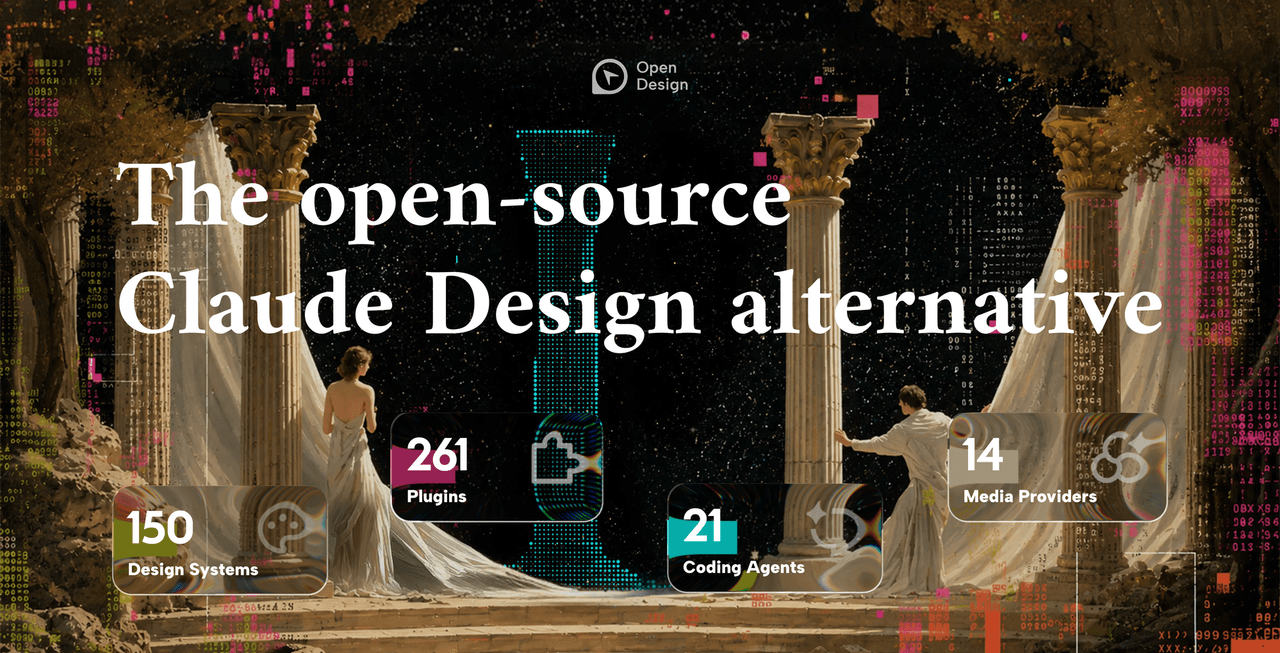 nexu-io/open-design
🎨 Best DeepSeek Harness Design Plugin. The open-source Claude Design alternative. 🖥️ Local-first desktop app. 🖼️ Your…
nexu-io/open-design
🎨 Best DeepSeek Harness Design Plugin. The open-source Claude Design alternative. 🖥️ Local-first desktop app. 🖼️ Your…
-
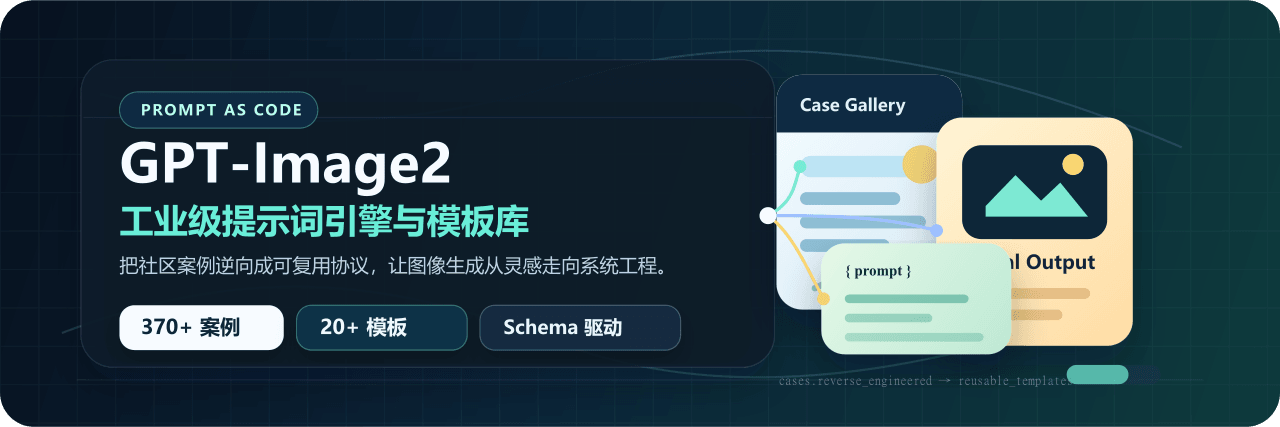 freestylefly/awesome-gpt-image-2
Prompt as Code | GPT-Image2 工业级提示词引擎与模板库,530+ 个案例逆向工程,20+ 套工业级模板,并提炼出Skills,持续更新中
freestylefly/awesome-gpt-image-2
Prompt as Code | GPT-Image2 工业级提示词引擎与模板库,530+ 个案例逆向工程,20+ 套工业级模板,并提炼出Skills,持续更新中
-
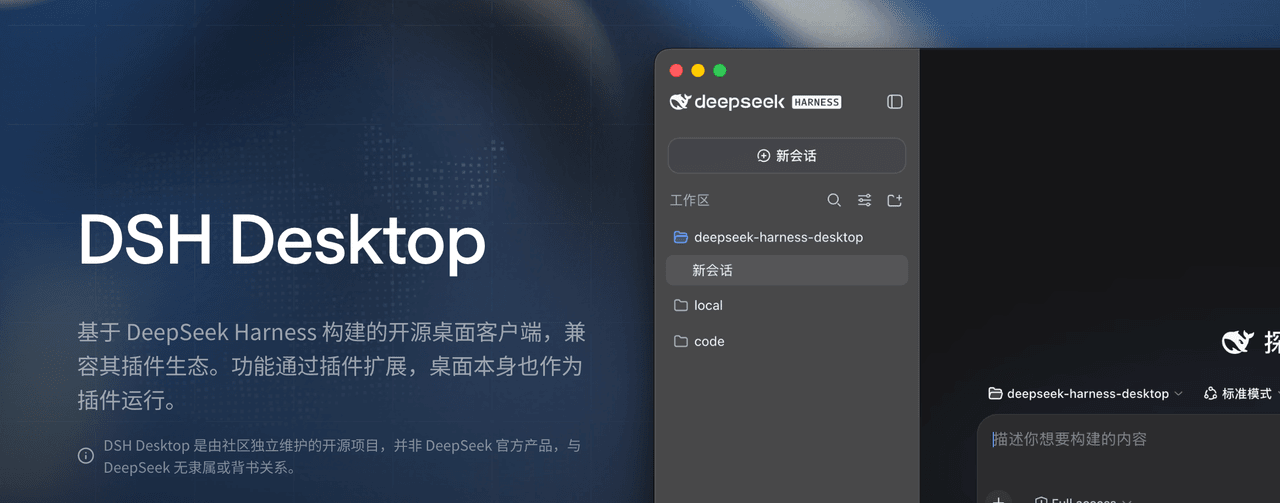 anywhere-labs/dsh-desktop
为 DeepSeek Harness (DSH) 插件生态打造的现代化桌面端解决方案。万物皆「插件」,桌面本身也是「插件」。
anywhere-labs/dsh-desktop
为 DeepSeek Harness (DSH) 插件生态打造的现代化桌面端解决方案。万物皆「插件」,桌面本身也是「插件」。
- Nagi-ovo/voyager Enhancement suite for Gemini, AI Studio, Claude & ChatGPT — plus a prompt manager for any web UI, DeepSeek Harness inclu…
-
 walkinglabs/learn-harness-engineering
Harness engineering beginner tutorial, from 0 to 1
walkinglabs/learn-harness-engineering
Harness engineering beginner tutorial, from 0 to 1
-
 awesome-dsh-plugin/awesome-dsh-plugin
A curated list of plugins for DeepSeek Harness (dsh) · DeepSeek Harness 插件精选列表
awesome-dsh-plugin/awesome-dsh-plugin
A curated list of plugins for DeepSeek Harness (dsh) · DeepSeek Harness 插件精选列表
-
 MemTensor/MemOS
Self-evolving memory OS for LLM & AI Agents: ultra-persistent memory, hybrid-retrieval, and cross-task skill reuse, with…
MemTensor/MemOS
Self-evolving memory OS for LLM & AI Agents: ultra-persistent memory, hybrid-retrieval, and cross-task skill reuse, with…
- yjh051108/dsh-routing-suite dsh-routing-suite — injector + router-standard kit: install the runtime injector first, then the task-aware reasoning-mo…