rj-jiangyichen/dsh-rules
项目介绍Project Overview
dsh-rules 是 DeepSeek Harness 的 glob 激活规则插件,在代理读取或编辑匹配文件时,将 .dsh/rules/*.md 或 CLAUDE.md/AGENTS.md 中 # Path: 段的内容作为 <rules> 快照注入对话;兼容 Claude Code 规则语法,支持 picomatch 通配、字节预算(默认 32KB)、多优先级合并与会话恢复。适用于任何 DSH 部署(桌面/Web/TUI/headless),通过 dsh plugin add dsh-rules 一键安装并自动激活。需注意:只有项目根目录内的文件能激活规则,路径含空格的仓库需通过无空格 junction 安装。
dsh-rules is a DeepSeek Harness plugin that activates rule prompts via glob patterns. When the agent reads or edits a matching file, it injects a <rules> snapshot from .dsh/rules/*.md or # Path: sections in CLAUDE.md/AGENTS.md. It supports picomatch globs with negation, a 32 KB byte budget, priority merging (project > user > sections), and session resume. Compatible with any DSH deployment, it installs via dsh plugin add dsh-rules. Caveat: only files inside the project root trigger rules, and repos with spaces in their path require a no-space junction.
请帮我了解并安装插件:【dsh-rules】【https://github.com/rj-jiangyichen/dsh-rules】把上面这条消息直接发给当前会话里的 DSH,让它帮你了解并安装。安装命令不一定准确,发给 DSH 更稳。Send this message to DSH in your current session. CLI install commands may not be accurate across systems — DSH will figure it out for you.
或使用命令行安装(适合开发者)Or use CLI install (for developers)
命令行安装CLI Install
dsh plugin --profile desktop add dsh-rules把 rj-jiangyichen/dsh-rules 加入你的 DSH 配置(web profile)即可启用。
READMEREADME
dsh-rules


English | 中文
Glob-activated rule prompts for DeepSeek Harness (DSH) — a Claude Code rules.md / # Path:-style mechanism. Each rule declares glob patterns; when the agent reads or edits a matching file, the rule activates and its content (any prompt or markdown document) is injected into the conversation as a superseding <rules> snapshot.
Works in every DSH deployment: desktop / web / tui / headless / custom profiles — nothing about this plugin is desktop-specific.
Contents
- Features
- How it works
- Installation
- Rule format
- Configuration
- Discoverability
- Limitations
- Development
- License
Features
- Glob activation — rules activate per file the agent touches:
**,*,?,{a,b},[abc], and!negation (picomatch). - Claude Code compatible — plain rule files (
.dsh/rules/*.md) and# Path:sections insideCLAUDE.md/AGENTS.md. - Visible & durable — active rules are injected as a user message the UI shows and the session log persists; each snapshot supersedes earlier ones, so the model always sees the current set.
- Budget-bounded — byte-budget rendering (32 KB default): low-priority rules are dropped first, then the last rule is truncated; content is escaped so it can never break out of the framing tags.
- Resume-friendly — on session resume the last snapshot and its matched files are restored from the log, preventing duplicate injection.
- Per-session tracking — every agent/session tracks its own touched files (subagents included); global rules (no
path:) are always active.
How it works
workspace
  .dsh/rules/*.md    ← rule definitions (frontmatter declares globs)
  ~/.dsh/rules/*.md  ← user-level rules (optional)
  CLAUDE.md          ← optional: # Path: sections (Claude Code compatible)

agent reads/edits a file (fs/observed) → record per-session touched path
  ↓ every step (agent/pre-step)
match touched paths against globs → collect active rules → render a <rules> snapshot into the conversation
- Injection point: an
agent/pre-stepwaterfall listener appends a<rules>-framed user message; a new message is only appended when the snapshot text changes. - Discovery & caching: rule sources are re-probed per step with version caching (
fs.stat().version, ormtimeMs:sizeon the Node fallback) — edits to rule files take effect on the next step. - Reads: prefer the harness
fsservice (containment-aware); fall back to Node's filesystem when nofsservice is mounted.
Installation
Any DSH deployment (generic)
Published on the npm registry — dsh plugin installs and activates the plugin in one step:
# Adjust the profile name: desktop / web / tui / headless
dsh plugin --profile desktop add dsh-rules
The package declares dsh.bundle.patch, so the reconcile pass of dsh plugin add appends dsh-rules to the profile's dsh.profile.bundles layer list automatically — no manual cordis.patch.yml edits are needed. Restart DSH (restart the desktop app; restart the web/headless process) and the plugin loads with the next Cordis composition.
Updates: dsh plugin --profile desktop update dsh-rules (or remove + add).
Installing from a local checkout (development):
# From the repo root — activates the bundle automatically, same as the registry install
dsh plugin --profile desktop add .
⚠️ pnpm splits
addarguments on spaces, so a repository path containing spaces must be installed through a no-space junction (see below).
DSH Desktop (Windows) one-click script
# 1. Clone this repository, then from the repo root:
node scripts\install-desktop.mjs

# 2. Restart DSH Desktop — the plugin loads with the next Cordis composition
The script creates a no-space junction to the repo and runs the desktop app's own dsh plugin add through it (pnpm splits add arguments on spaces, so a repository path containing spaces must go through the junction):
# 0) Create a no-space junction to the repository (needed when the path contains spaces)
mklink /J "C:\code_repos\dsh-rules" "C:\code_repos\dsh rules plugin"

# 1) Install via the desktop's own dsh command (through the junction path)
& "C:\Program Files\DSH Desktop\DSH Desktop.exe" --expose-internals `
  "C:\Program Files\DSH Desktop\resources\app.asar.unpacked\lib\desktop-cli.js" `
  plugin --profile desktop add "C:\code_repos\dsh-rules"
Per-profile configuration (optional): the plugin loads with its code defaults; to customize, override the entry's config in <profile>/cordis.patch.yml:
- id: dsh-rules
  name: dsh-rules
  config:
    includeClaudeSections: true
    projectRootMarkers: [".git", ".dsh"]
Uninstall: node scripts\install-desktop.mjs --uninstall (or dsh plugin --profile desktop remove dsh-rules), then restart the app. Installing/uninstalling never touches the DSH installation directory (resources\app.asar.unpacked) — only profile configuration, fully reversible.
Rule format
Source A: rule files (.dsh/rules/*.md and ~/.dsh/rules/*.md)
---
path:
  - "src/**/*.ts"
  - "!src/**/*.test.ts"
---
Rule body (markdown, injected verbatim when active — any prompt content works)
| Frontmatter field | Description |
|---|---|
path |
String or list of globs, relative to the project root, / separators; ! prefixes mark exclusion patterns. Absent or empty = always-active global rule (active for any session in the workspace). |
name |
Optional; rule identity (used for same-name deduplication). Defaults to the file name without .md. |
Source B: # Path: sections (requires includeClaudeSections: true)
Parses # Path: <globs…> headings out of AGENTS.md / CLAUDE.md (including .local.md variants and ~/.dsh/AGENTS.md):
# Project notes (content before the first heading is handled by the built-in agent-instructions baseline, not by this plugin)

# Path: src/**/*.ts, scripts/**
This section activates only when a file under src/**/*.ts or scripts/ is touched
- Each
# Path:heading starts a rule that runs until the next heading (or end of file). - Globs may be comma- or space-separated.
- Content before the first
# Path:heading is intentionally not injected by this plugin — DSH's built-inagent-instructionsalready injects the full AGENTS.md/CLAUDE.md baseline.
Precedence & deduplication
Project rules (rank 100) > user rules (rank 200) > # Path: sections (rank 300). Same-name rules keep the highest-priority entry; rendering order is (rank, name) — deterministic across steps.
Configuration
| Option | Default | Description |
|---|---|---|
dshHome |
$DSH_HOME / ~/.dsh |
Root for user rules and ~/.dsh/AGENTS.md |
projectRootMarkers |
[".git"] |
Marker files/dirs used to find the project root by walking up |
ruleDirNames |
[".dsh/rules"] |
Rule directories inside the project (relative to the project root, multiple allowed) |
includeUserRules |
true |
Enable ~/.dsh/rules/*.md |
includeClaudeSections |
false |
Parse # Path: sections |
instructionFileCandidates |
["AGENTS.md", "CLAUDE.md"] |
Candidate file names for # Path: sections |
localInstructionFileCandidates |
["AGENTS.local.md", "CLAUDE.local.md"] |
Per-directory candidate file names |
maxBytes |
32768 |
Per-injection render budget (UTF-8 bytes); <= 0 disables the plugin |
maxSourceBytes |
1048576 |
Per-rule source size cap; larger files are skipped |
maxTouchedPaths |
512 |
Touched-path cap per session (FIFO eviction) |
Discoverability
This plugin is discoverable through the GitHub dsh-plugin topic — the channel recommended by the DeepSeek Harness README ("Community and support": Add the dsh-plugin topic to your plugin repository for discoverability). Community plugin lists and marketplaces (e.g. awesome-dsh-plugin, dsh-plugin-marketplace) scan that topic to pick up new plugins; the tag can be viewed/edited in the repository's About section.
Limitations
- Only files inside the project root can activate rules; reads outside the root never trigger (avoids
../false positives). - The touched-path set is in-memory: after resuming a session, rules re-activate as the agent re-reads files (the previously matched list is restored from the log).
- Deployments with
includeRuntimeContext: falseare unaffected — this plugin injects its own message and does not depend on the runtime-context snapshot. - Rules are injected as "superseding snapshot" messages; the session log retains historical snapshots, but each snapshot is the complete current set and the model follows the latest one.
Development
pnpm install
pnpm test        # node --test: parsing / glob matching / precedence / budget / determinism / fs fallback
Layout:
lib/index.js— plugin entry (name/Config/apply):fs/observedtouch tracking,agent/pre-stepinjection,agent/disposedcleanup.lib/rules.js— pure logic: frontmatter and# Path:parsing, glob compilation/matching, precedence merging, budget rendering.lib/fs.js— versioned discovery/reads: harnessfsservice first, Node fallback.test/rules.test.mjs— unit tests.examples/.dsh/rules/— sample rules (copy into your project to get started).fixtures/demo-project/— a ready-made project for trying the plugin out.
License
相关推荐Related
- ycp424c/dsh-auto-fold-turn
-
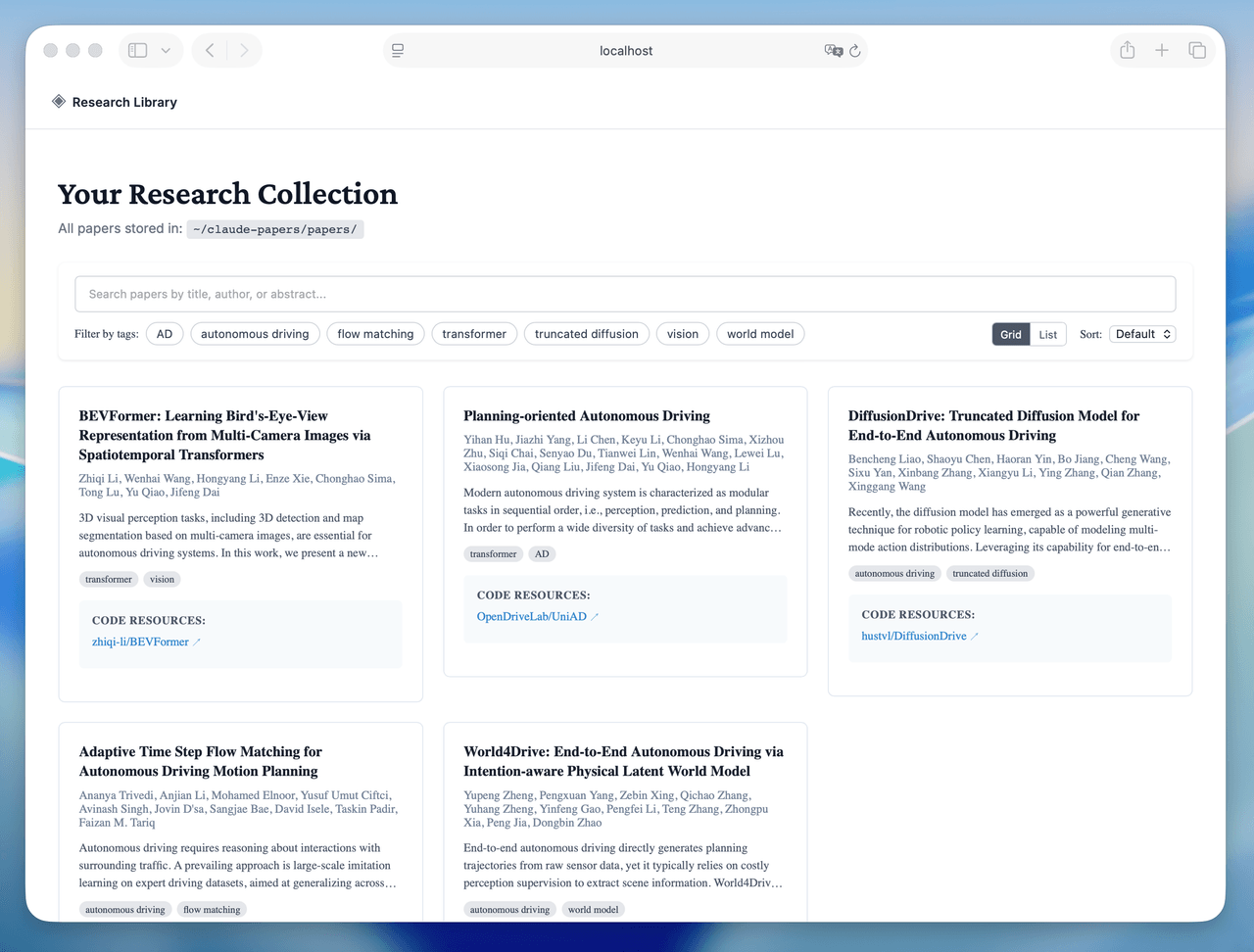 alaliqing/claude-paper
📖 Cross-agent research paper toolkit for Claude Code, Codex, OpenCode, and DeepSeek Harness—quick summaries, deep study…
alaliqing/claude-paper
📖 Cross-agent research paper toolkit for Claude Code, Codex, OpenCode, and DeepSeek Harness—quick summaries, deep study…
-
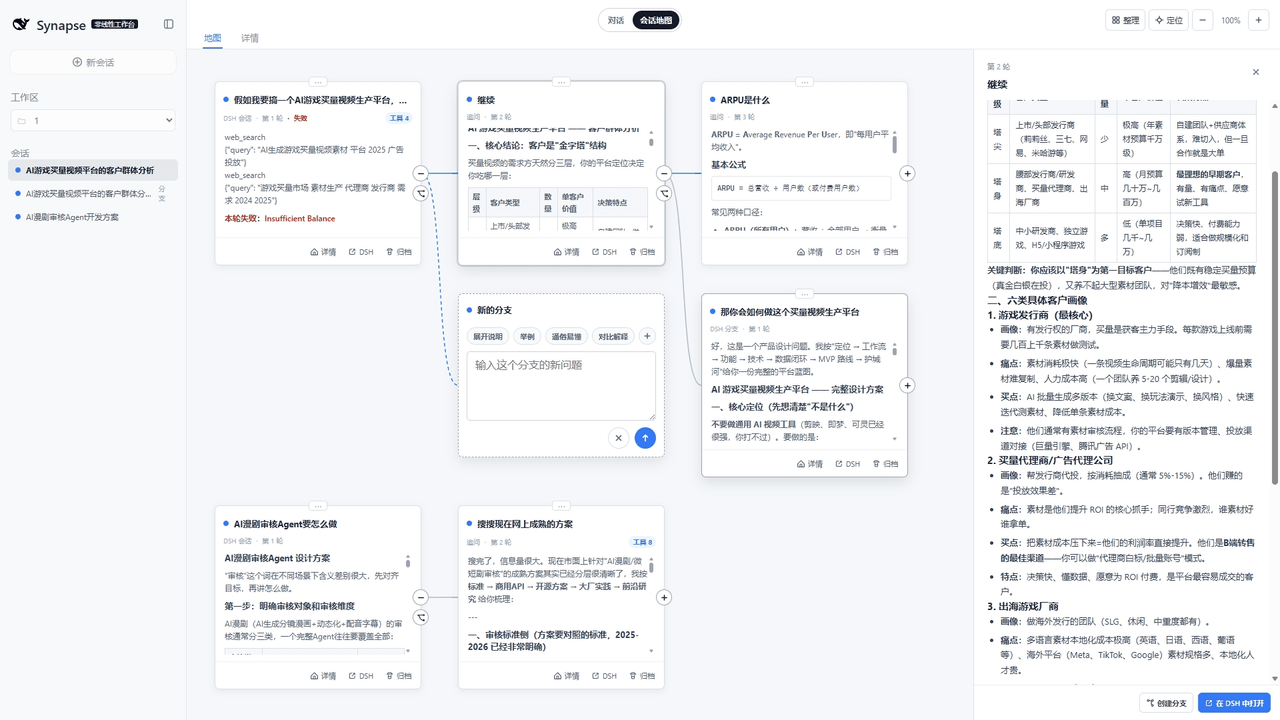 liangmianya/dsh-synapse
A visual, non-linear conversation workspace plugin for DeepSeek Harness ; A canvas-based session explorer and branching …
liangmianya/dsh-synapse
A visual, non-linear conversation workspace plugin for DeepSeek Harness ; A canvas-based session explorer and branching …
-
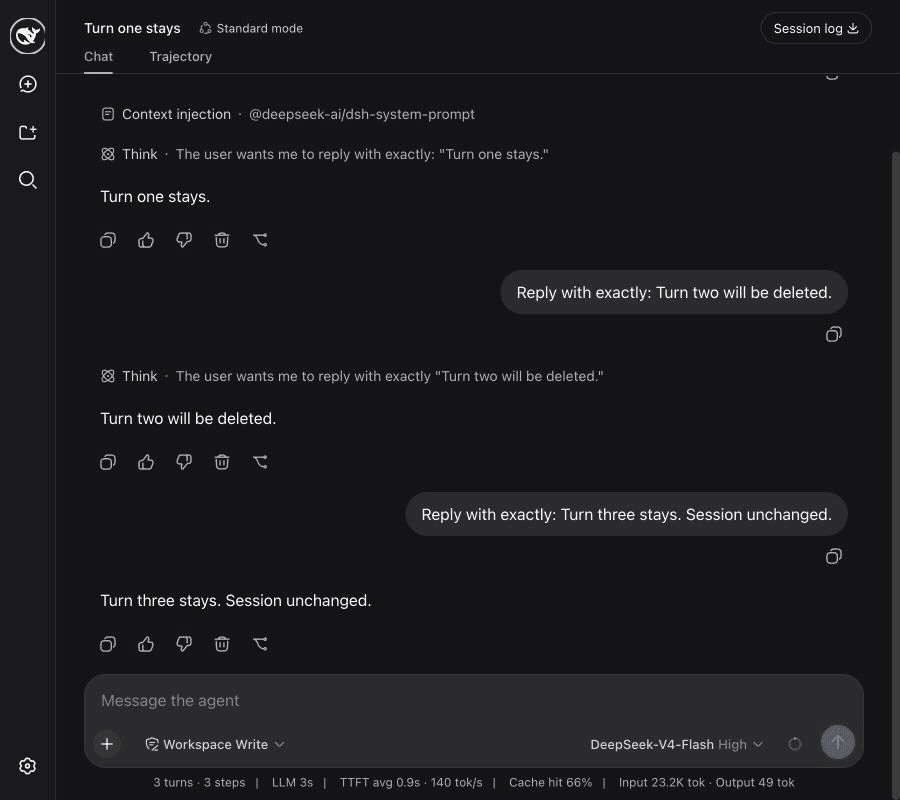 hanshenmesen/dsh-turn-delete
Delete one complete turn from a DeepSeek Harness session without deleting the session
hanshenmesen/dsh-turn-delete
Delete one complete turn from a DeepSeek Harness session without deleting the session
-
 Anionex/dsh-turn-rewind
deepseek harness对话和代码状态回退插件 | DSH — rewind conversation and workspace state, powered by a persistent Change Ledger
Anionex/dsh-turn-rewind
deepseek harness对话和代码状态回退插件 | DSH — rewind conversation and workspace state, powered by a persistent Change Ledger
-
 omdsh-dev/dsh-annotation
DSH Web 选中批注插件:选文字→批注→回车随消息发送;气泡隐藏批注块(零闪烁);回复按 Annotation N 逐条对照(可悬浮芯片)。官方 bundle,零核心改动
omdsh-dev/dsh-annotation
DSH Web 选中批注插件:选文字→批注→回车随消息发送;气泡隐藏批注块(零闪烁);回复按 Annotation N 逐条对照(可悬浮芯片)。官方 bundle,零核心改动
-
 Tyan66666/billion-context-dsh
Model-driven context management (Active Context Pruning / ACP) for the DeepSeek Harness — the model decides when and wha…
Tyan66666/billion-context-dsh
Model-driven context management (Active Context Pruning / ACP) for the DeepSeek Harness — the model decides when and wha…
-
 a179-sanae/dsh-auto-collapse