SKzrui/DSH-CLI
dcli is a simple command-line tool for chatting with the DeepSeek Harness in your terminal: one command to start, no server, no port, done when you are. Supports streaming replies, tool calls, per-directory session resume, and API key / model configuration.
catalog 简介 / catalog descriptioncatalog description:DSH‑CLI:轻量命令行,流式输出、工具调用、按目录恢复会话,密钥与模型灵活配置,一条命令对话 DeepSeek Harness。 | Lightweight CLI for DeepSeek Harness – streaming, tool calling, per‑dir session recovery, flexible config. Start with one command.
项目介绍Project Overview
DSH-CLI(dcli)是一款终端内与 DeepSeek Harness 对话的命令行工具,免部署、免端口。支持流式输出、工具调用、按目录恢复会话及 API Key 配置。适合快速交互或脚本化任务。注意:需 Node.js 20+ 及 DeepSeek API Key。
DSH-CLI (dcli) is a terminal tool for chatting with DeepSeek Harness via one command, no server or port needed. It supports streaming output, tool calls, per-directory session resume, and API key/model configuration. Ideal for quick interactive use or scripted one-shot tasks. Requires Node.js 20+ and a DeepSeek API key.
请帮我了解并安装插件:【DSH-CLI】【https://github.com/SKzrui/DSH-CLI】把上面这条消息直接发给当前会话里的 DSH,让它帮你了解并安装。安装命令不一定准确,发给 DSH 更稳。Send this message to DSH in your current session. CLI install commands may not be accurate across systems — DSH will figure it out for you.
或使用命令行安装(适合开发者)Or use CLI install (for developers)
命令行安装CLI Install
dsh plugin --profile web add github:SKzrui/DSH-CLI把 SKzrui/DSH-CLI 加入你的 DSH 配置(web profile)即可启用。
READMEREADME
DSH-CLI (dcli) — a simple CLI for the DeepSeek Harness
DSH-CLI是一款简洁的命令行工具,可在终端内与 DeepSeek Harness 对话:一条命令即可启动,无需部署服务、无需占用端口。支持流式输出、工具调用、按目录独立恢复会话,同时支持 API Key 与模型参数配置。
dcli is a simple command-line tool for chatting with the DeepSeek Harness in your terminal: one command to start, no server, no port, done when you are. Supports streaming replies, tool calls, per-directory session resume, and API key / model configuration.
It is a thin launcher around the Harness's own profile system: it maintains a
cli profile (bundles dsh-base + dsh-headless) under $DSH_HOME/profiles
and injects a small interactive runner plugin (runner/runner.js) that drives
one Agent across many turns, so conversation state, tool results, and the
model's request prefix stay warm between messages.
Features
- Interactive REPL — one live agent per process; streaming replies, real multi-turn continuity (tool state and the model's KV cache stay warm).
- Streaming output with a live view of what the agent is doing — thinking
(dim), tool calls (
⚙ write …), tool results (✔), turn status. - Markdown beautification — tables render as aligned bordered grids
(CJK-aware),
**bold**/*italic*/`code`/~~strike~~/[links](https://github.com/SKzrui/DSH-CLI/blob/HEAD/url)get ANSI styling, headings are bold, bullets and task lists get pretty markers, blockquotes are dimmed, code fences pass through verbatim. Disable withDCLI_FORMAT=0; force on when piped withDCLI_FORMAT=1. - Blue ASCII whale banner with an animated water spout on TTYs.
- Per-directory session resume —
dcli -r/-c/--resume <id>reopen the last conversation in the current directory with full context;dcli --listshows recent sessions; a freshdclioffers to resume. - One-shot scripting —
dcli "task"answers and exits (exit code reflects the turn outcome);dcli -c "task"continues the latest session. - Interactive permissions — tool calls that need approval ask
Allow <tool>? [y/N]right in the terminal. - Interrupt handling — Ctrl+C cancels a live turn, twice force-quits; Ctrl+C/D at the prompt exits cleanly; piped EOF exits cleanly.
- Full harness toolset — file read/write/edit/search, PowerShell, bash, subagents, skills, web search, goals, plan mode, … exactly like the web GUI.
- No extra dependencies — only Node built-ins + the existing
@deepseek-ai/dshinstall; zero npm packages to fetch.
Requirements
- Node.js >= 20
- The DeepSeek API key (via
dcli config set-api-key <key>, orDEEPSEEK_API_KEYenv, or$DSH_HOME/.credentials.yaml). @deepseek-ai/dsh— auto-installed as a dependency of dcli; it can also be installed already (global or in the current directory'snode_modules) and dcli will find it.
Install
# Option 1: npm (recommended — one command installs dcli + the dsh runtime)
npm install -g @harmattan666/dcli

# Option 2: from source
git clone https://github.com/SKzrui/DSH-CLI.git
cd DSH-CLI
npm install        # pulls @deepseek-ai/dsh automatically
npm link           # puts the `dcli` command on PATH

# Configure your API key and go
dcli config set-api-key sk-...
dcli
No other setup is needed: the launcher self-heals the profile on every run
(copies the runner, writes missing manifest/patch files). Machines that
already have dsh (global or local) just work too — the launcher searches the
global prefix, ~/node_modules, the current directory's node_modules, and
every ancestor, in that order.
Usage
dcli                          # interactive session (offers to resume the last
                              # conversation in this directory)
dcli -r, --resume             # resume the most recent session in this directory
dcli -r <id>, --resume <id>   # resume a specific session
dcli -c, --continue           # continue the most recent session, no prompting
dcli --list                   # list recent sessions in this directory
dcli "fix the failing test"   # one-shot: answer and exit (scriptable)
dcli -c "continue the work"   # one-shot: run the task in the latest session
Configuration — dcli config writes the same files the web GUI's Models
page uses ($DSH_HOME/.credentials.yaml + settings.yaml):
dcli config                           # show provider/model/api-key/endpoint
dcli config set-api-key <key>         # store the DeepSeek API key
dcli config unset-api-key             # remove the stored key
dcli config set-base-url <url>        # custom API endpoint (intranet proxy etc.)
dcli config unset-base-url            # reset endpoint to the default
dcli config set-model <id> [--provider <p>] [--reasoning off|high|max]
dcli config list-models               # available models (deepseek-v4-flash/pro)
Intranet / custom endpoint: if the machine cannot reach
api.deepseek.com (e.g. behind an intranet that only allows an internal
relay), point dcli at the internal proxy — either persist it
dcli config set-base-url http://10.0.0.5:8080/deepseek
or set it once per session with /base-url <url> inside the REPL. The
endpoint is read per request, so it applies to the very next message. The
DEEPSEEK_BASE_URL environment variable works too (lower priority than the
stored value).
Sessions persist per directory under $DSH_HOME/sessions, so dcli -c /
dcli -r inside a project picks up exactly that project's conversations —
exit any time and continue later, context intact.
Interactive commands:
| command | meaning |
|---|---|
/help |
show this list |
/sessions |
list recent sessions in this directory |
/resume <id> |
switch to another session |
/new |
start a fresh session |
/apikey <key> |
save the DeepSeek API key immediately |
/model |
show available models + current selection |
/model pro |
switch model live (fuzzy match; no restart, context kept) |
/reasoning <off|high|max> |
set reasoning effort live |
/session |
print the session id (for --resume) |
/clear |
clear the screen |
/quit |
leave (also Ctrl+C at an empty prompt) |
The prompt supports shell-style editing: ↑/↓ browse command history, ←/→ move the caret, Home/End, Backspace/Delete. History is per-session and capped at 200 entries.
While an agent turn is running, Ctrl+C interrupts it; a second Ctrl+C
force-quits. When a tool call needs permission, dcli asks Allow <tool>? [y/N]
right in the terminal.
How it works
bin/dcli.jsresolves thedshlauncher and ensures thecliprofile exists under$DSH_HOME/profiles/cli(manifest, patch layer, runner copy).- It spawns
dsh --profile cli <args…>. - The profile boots
dsh-base(agent, session, tools, sandbox, approvals, persistence, …) plus thedsh-headlesscoding bundle (persona, tool mode, code runtime), with the one-shotheadless-runnerdisabled. runner/runner.jscreates one Agent (ctx.agents.create), then loops: read a line →agent.followup(userMessage)→agent.whenIdle()→sessions.flush(). Livesession/eventappends render streamingassistant/chunks,tool/calls andtool/results; the runner also answersapproval/requestwaterfalls with interactive y/N prompts.
Layout
bin/dcli.js       launcher (resolve dsh → self-heal profile → spawn)
runner/runner.js  interactive runner plugin (copied into the profile dir)
install.ps1       convenience installer (npm link)
Notes / limitations
- Sessions persist under
$DSH_HOME/sessions, grouped per project directory;dcli -c/-r/--resume <id>reopen them with full context. - One-shot mode prints only the final answer (no streaming UI), so it pipes
cleanly:
dcli "list the files" | Out-String. - ANSI colors are used only on a TTY (disable with
NO_COLOR=1). DSH_HOMEoverrides where the profile and sessions live.- If your PowerShell blocks npm's
.ps1shims (execution policy), calldcli.cmdinstead — identical behavior, no policy change needed. - The first run self-initializes
$DSH_HOME/profiles/cli(manifest, patch layer, runner copy) — nothing else to configure.
相关推荐Related
-
 nexu-io/open-design
🎨 Best DeepSeek Harness Design Plugin. The open-source Claude Design alternative. 🖥️ Local-first desktop app. 🖼️ Your…
nexu-io/open-design
🎨 Best DeepSeek Harness Design Plugin. The open-source Claude Design alternative. 🖥️ Local-first desktop app. 🖼️ Your…
-
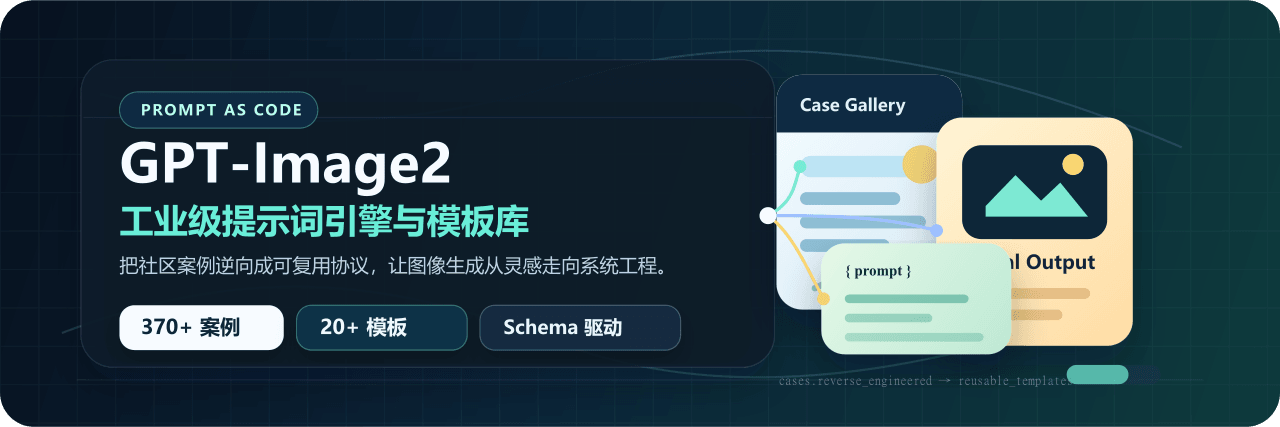 freestylefly/awesome-gpt-image-2
Prompt as Code | GPT-Image2 工业级提示词引擎与模板库,530+ 个案例逆向工程,20+ 套工业级模板,并提炼出Skills,持续更新中
freestylefly/awesome-gpt-image-2
Prompt as Code | GPT-Image2 工业级提示词引擎与模板库,530+ 个案例逆向工程,20+ 套工业级模板,并提炼出Skills,持续更新中
-
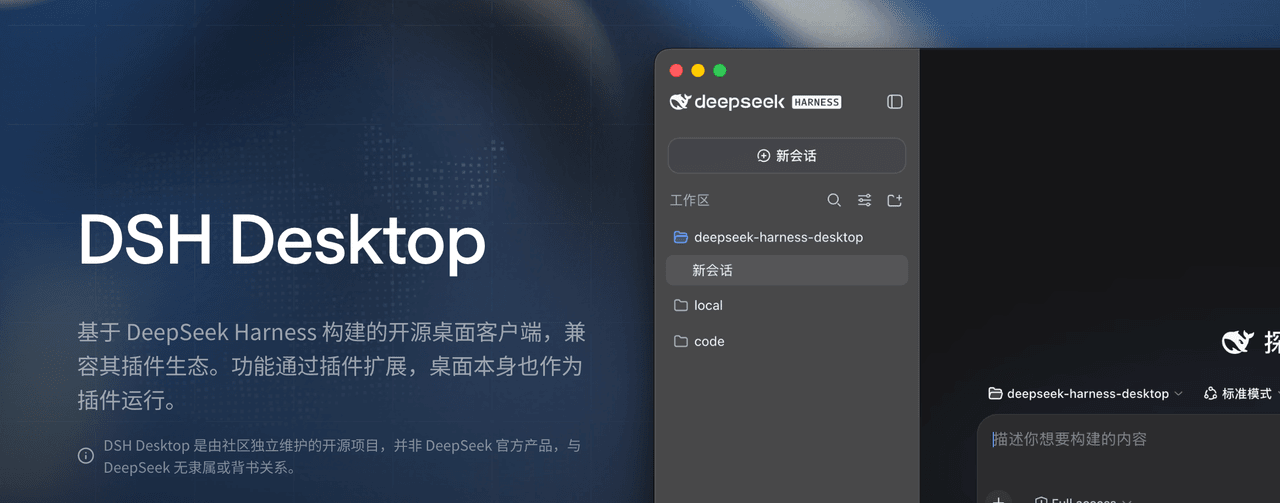 anywhere-labs/dsh-desktop
为 DeepSeek Harness (DSH) 插件生态打造的现代化桌面端解决方案。万物皆「插件」,桌面本身也是「插件」。
anywhere-labs/dsh-desktop
为 DeepSeek Harness (DSH) 插件生态打造的现代化桌面端解决方案。万物皆「插件」,桌面本身也是「插件」。
- Nagi-ovo/voyager Enhancement suite for Gemini, AI Studio, Claude & ChatGPT — plus a prompt manager for any web UI, DeepSeek Harness inclu…
-
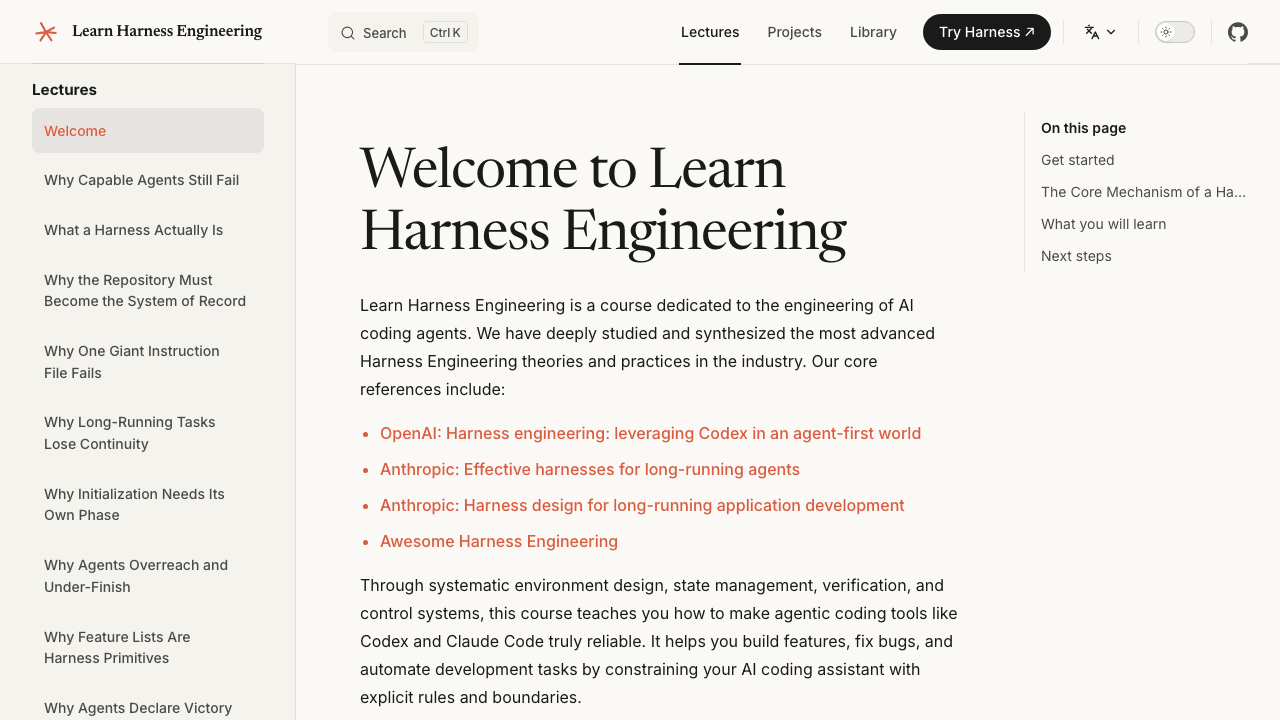 walkinglabs/learn-harness-engineering
Harness engineering beginner tutorial, from 0 to 1
walkinglabs/learn-harness-engineering
Harness engineering beginner tutorial, from 0 to 1
-
 awesome-dsh-plugin/awesome-dsh-plugin
A curated list of plugins for DeepSeek Harness (dsh) · DeepSeek Harness 插件精选列表
awesome-dsh-plugin/awesome-dsh-plugin
A curated list of plugins for DeepSeek Harness (dsh) · DeepSeek Harness 插件精选列表
-
 MemTensor/MemOS
Self-evolving memory OS for LLM & AI Agents: ultra-persistent memory, hybrid-retrieval, and cross-task skill reuse, with…
MemTensor/MemOS
Self-evolving memory OS for LLM & AI Agents: ultra-persistent memory, hybrid-retrieval, and cross-task skill reuse, with…
- yjh051108/dsh-routing-suite dsh-routing-suite — injector + router-standard kit: install the runtime injector first, then the task-aware reasoning-mo…