try-works/dsh-browser-agent
DeepSeek Harness bundle: a Chrome browser for agents (browser_goto / browser_evaluate / browser_screenshot tools) with a live two-way pane inside the DSH Web GUI. The browser engine is a fork of zenbu-labs/terminal-browser with the React Ink terminal UI replaced by a DSH tool surface and web pane.
项目介绍Project Overview
DSH浏览器代理插件为智能体提供真实Chrome浏览器、免密钥网络搜索及实时浏览面板。核心能力包括十五个浏览器工具、六个网络工具和可折叠的浏览器面板。适用于需要网页交互、搜索或人工监控的场景。注意:Chrome作为独立进程运行,崩溃后下次调用会自动重启。
A DSH plugin that gives agents a real Chrome browser, no-key web search, and a live browser pane. It offers fifteen browser tools, six net tools, and a collapsible panel in the DSH Web GUI for real-time monitoring and control. Use it for web research, page automation, or human-in-the-loop browsing. Note: Chrome runs as a separate process, so crashes won't affect the harness.
请帮我了解并安装插件:【dsh-browser-agent】【https://github.com/try-works/dsh-browser-agent】把上面这条消息直接发给当前会话里的 DSH,让它帮你了解并安装。安装命令不一定准确,发给 DSH 更稳。Send this message to DSH in your current session. CLI install commands may not be accurate across systems — DSH will figure it out for you.
或使用命令行安装(适合开发者)Or use CLI install (for developers)
命令行安装CLI Install
dsh plugin --profile web add @try-works/dsh-browser-agent把 try-works/dsh-browser-agent 加入你的 DSH 配置(web profile)即可启用。
READMEREADME
@try-works/dsh-browser-agent
A DeepSeek Harness (DSH) bundle that gives agents a real Chrome browser, a no-key net search tier, and a live window onto the browsing. One shared page, fifteen browser tools, six net tools, and a collapsible browser pane docked inside the DSH Web GUI that streams that page and takes real mouse/keyboard input.
It is a fork of zenbu-labs/terminal-browser with the terminal UI replaced by a DSH tool surface and a web pane — the same idea (pixels out, synthetic input in), built on the harness's own plugin, module, and slot systems. The net search tier ports the no-key engine chain of dabito/pi-lynx (MIT).
What this plugin is and does
- Six net tools for agents —
browser_fetch,browser_search,browser_search_github,browser_search_wikipedia,browser_reddit_search,browser_reddit_thread— no-key, plain-HTTP search and fetch (DuckDuckGo Lite → Brave HTML chain with automatic fallback, plus Reddit access). The cheapest routes for research; degrade to the browser tools when a wall appears. - Fifteen browser tools — navigation, structured DOM interaction, history, capture, accessibility, and tabs — all driving one shared Chrome page that persists across calls, so an agent can navigate, read, interact, and capture.
- A live pane for humans — a right-docked, collapsible, resizable panel in the DSH Web GUI showing that same page in real time. You can watch the agent browse and take over yourself: click, drag, scroll, type, or use the address bar. Everything lands in the page through the Chrome DevTools Protocol.
- Five packaged skills — bundled guidance (plus a search runbook) that teaches agents how to find web sources, navigate, automate pages, verify renders, and manage tabs through the tools.
- URL normalization — tools and address bar accept URLs, hostnames,
localhost:port, existing local file paths, or plain search text.
Chrome runs as a separate OS process launched by the plugin (puppeteer-core), so a browser crash can never take the harness down — the next call simply relaunches.
Install
Prerequisites: a DSH deployment with a profile (the Web surface is needed for the pane; the tools work on any surface).
# install from the npm registry into a profile (the DSH CLI forwards to pnpm
# in the profile directory, then reconciles the profile's plugin bundles)
dsh plugin --profile web add @try-works/dsh-browser-agent
The plugin's own bundle patch mounts the row automatically — no manual
composition edit is needed. Then restart dsh web and hard-refresh the
GUI tab (Ctrl+F5) so the client pane bundle is fetched. The three
browser_* tools appear in the agent's tool set, and the pane docks on the
right edge of the GUI.
Fresh releases and the supply-chain policy — DSH profiles enable pnpm's
minimumReleaseAgecheck. A version published less than 24 hours ago is rejected unless it is listed in the profile'spnpm-workspace.yaml:minimumReleaseAgeExclude: - '@try-works/dsh-browser-agent@0.2.0||0.2.1'One rule per package name — multiple versions go in a single
||union on the same line; separate lines for the same package shadow each other and only the first applies.
Local development
dsh plugin --profile web add link:D:/path/to/dsh-browser-agent
Configuration
All fields are optional (schemastery defaults fill them). Override via the
profile's cordis.patch.yml:
- id: dsh-browser-agent
  config:
    chromePath: 'C:\Program Files\Google\Chrome\Application\chrome.exe'
    viewport: { width: 1920, height: 1080 }
    navTimeoutMs: 45000
    scriptTimeoutMs: 20000
    timeoutMs: 60000
    headed: false
    pane: true
| Field | Default | Purpose |
|---|---|---|
chromePath |
system Chrome on Windows | Absolute path to a Chrome/Chromium executable. |
viewport |
1920 × 1080 |
Default viewport for new pages (and the headed window size). |
navTimeoutMs |
45000 |
page.goto navigation timeout. |
scriptTimeoutMs |
20000 |
page.setDefaultTimeout (script/evaluate timeout). |
timeoutMs |
60000 |
Per-tool execution timeout. |
headed |
false |
Launch a visible Chrome window instead of headless. The window is the same shared page the pane shows — two views of one browser. Needs a desktop session. |
pane |
true |
Serve the browser pane in the Web GUI. Headless/TUI compositions have no web server, so the pane never mounts there regardless. |
userDataDir |
'' (temp profile) |
Chrome profile directory. Empty = a fresh temporary profile per launch. Set an absolute path to persist cookies, logins, and storage across launches (note: session cookies without an expiry are still session-only). |
connectUrl |
'' (disabled) |
CDP browser URL for My Chrome mode. When set, the pane's mode toggle can connect to a Chrome you launched with chrome.exe --remote-debugging-port=9222 --user-data-dir=<non-default dir>, adopting its real tabs, logins, and fingerprint — the mode that passes bot-protection walls (e.g. Cloudflare Turnstile). Launch flags are ignored in connect mode. |
stealth |
false |
Stealth plugin mode: launch our own Chrome without --enable-automation (so navigator.webdriver is false), headed, AutomationControlled disabled, persistent profile. Much better odds against bot walls than plain puppeteer, though not your personal fingerprint — for the sure thing use My Chrome mode. |
searchEngines |
'ddg,brave' |
Engine chain for the net search tools, tried in order: ddg (DuckDuckGo Lite) and brave (Brave HTML). |
siteSearchIntervalMs |
3000 |
Minimum delay between consecutive site-filtered net searches (rate-limit politeness). |
fallbackOnEmpty |
true |
Continue with the next engine when one returns no results. |
fetchTimeoutMs |
15000 |
Per-request timeout for the net tools (fetch/search/reddit). |
The net tools (no-key search & fetch)
The net tier is a port of the pi-lynx engine chain (browser_search =
DuckDuckGo Lite → Brave HTML with automatic fallback), plus a plain-HTTP page
fetch and Reddit access — no Chrome, no API key, no JS rendering. These are
the cheapest routes for research; the browser-search skill's triage puts them
first and degrades to the browser tools when a datacenter IP gets throttled.
| Tool | What it does |
|---|---|
browser_fetch |
Fetch a URL as readable text over plain HTTP: {url, finalUrl, status, text, truncated, links}. |
browser_search |
Search the web: ranked {title, snippet, domain, url} rows plus an instant answer when the engine has one. site: "github" | "wikipedia" | <domain>, engine: "auto" | "ddg" | "brave", maxResults. |
browser_search_github |
browser_search restricted to github.com — repos, issues, discussions. |
browser_search_wikipedia |
browser_search restricted to en.wikipedia.org. |
browser_reddit_search |
Reddit post search (old.reddit HTML first, the public JSON search as fallback): title, subreddit, author, score, comments, permalink. |
browser_reddit_thread |
A Reddit thread via its public .json endpoint: post fields plus the top comments. |
The browser tools
| Tool | What it does |
|---|---|
browser_goto |
Navigate the shared page and return {url, finalUrl, status, title, text, links} — up to 6000 chars of extracted heading/paragraph/list text and 25 links. |
browser_evaluate |
Run a JavaScript expression in page context (document, window, DOM available) and return the JSON-serializable result. |
browser_screenshot |
Capture the current page as a PNG/JPEG data URL ({dataUrl, mime, bytes}); fullPage for the whole page height. |
browser_click |
Click the first element matching a CSS selector; returns the clicked tag/text or ok: false with a message. |
browser_type |
Type text into an input/textarea/select with real key events (React-safe); returns the field value. |
browser_read |
Inner text of a selector (default: whole body), up to 6000 chars, with the match count. |
browser_wait |
Wait until a selector appears (async content done), then return its text. |
browser_back / browser_forward / browser_reload |
History navigation of the active tab. |
browser_a11y |
Compact accessibility tree (role/name/value, up to 400 nodes) — what screen readers consume. |
browser_tabs |
List tabs (index, url, title, active); the other tools act on the active tab. |
browser_tab_open / browser_tab_switch / browser_tab_close |
Manage tabs; popups and target=_blank links open as new tabs. |
The page is shared and persistent: browser_goto to a site, browser_evaluate
to interact with its DOM, browser_screenshot to see it — all the same tab.
URL handling
browser_goto and the pane's address bar accept (matching the terminal-browser
reference semantics):
- full URLs (
https://…,data:,mailto:,about:,view-source:, …) - host-like input (
example.com/docs,localhost:5173—http://for localhost/127.0.0.1,https://otherwise) - existing absolute or
~-expanded local paths (opened asfile://) - anything else → a Google search
The browser pane
Expanded, the pane docks full-height on the right edge (like a mirrored sidebar); collapsed, it shrinks to a thin vertical rail with a toggle. Its left edge is a drag handle — drag to resize (320 px to 85 % of the window), the width persists across reloads, and the whole GUI reflows around it. The header carries back / forward / reload buttons next to the address bar, and the tab strip ends with a browser-mode toggle.
Browser modes
The Plugin / My Chrome toggle in the tab strip switches which browser the agent drives — live, at any time:
- Plugin — the instance this plugin launches (headless by default, with the configured viewport/profile).
- My Chrome — a Chrome you launched yourself with debugging enabled,
connected over CDP. Chrome only opens the debug port on a non-default
profile, so launch it with a dedicated profile directory (e.g. the desktop
shortcut:
chrome.exe --remote-debugging-port=9222 --user-data-dir=C:\Users\you\.dsh\chrome-debug-profile), setconnectUrl, and toggle to My Chrome. Log in once inside that Chrome — logins persist there — and it runs alongside your normal Chrome. Because the plugin never touches its identity (no automation flags, no UA/viewport changes), bot-protection walls such as Cloudflare Turnstile see a real session. Switching back only detaches; your Chrome and its tabs are never closed by the plugin. (Profiles cannot be copied between directories: Chrome's App-Bound Encryption drops cookies moved to a different profile path — the dedicated profile is the one to log into.)
The pane is a real two-way remote:
- Frames out — the pane subscribes to
GET /browser-pane/stream(SSE). The host half drives Chrome'sPage.startScreencast(JPEG frames on visual change only — no screenshot polling) and pushes each frame with the page URL. The screencast follows its subscribers: the first client starts it, the last one stops it, and late subscribers get the current state and last frame replayed immediately. - Input in — pointer and keyboard events post to
/browser-pane/inputand land in the page through the CDP Input domain (Input.dispatchMouseEvent/Input.dispatchKeyEvent). Fidelity matches the terminal-browser reference: double/triple-click counting, modifier bitmasks (Shift/Ctrl/Cmd/Alt on mouse and keys), fractional wheel accumulation with line-mode detent scaling, held-key release on focus loss, and focus emulation while the pane owns the page. - Address bar —
POST /browser-pane/gotonavigates the shared page.
| Route | Purpose |
|---|---|
GET /browser-pane/stream |
SSE frame + state feed (frame / state events). |
POST /browser-pane/input |
Synthetic input: {type: mouse-move | mouse-down | mouse-up | wheel | key-down | key-up, …}. |
POST /browser-pane/goto |
Navigate: {url}. |
POST /browser-pane/mode |
Switch browser mode: {mode: 'own' | 'connect'}. |
How it works
One package, two halves, both mounted from a single composition row:
Host half (Node process) — runs the browser, the tools, the skill, and the pane server:
- A
BrowserRuntimeowns one lazily launched Chrome and a tab session: any number of tabs, one active. On a crash or disconnect the cached handles are cleared and the next call relaunches. - All fifteen tools register on the host
toolsregistry; the five packaged skills register onskills, each with its bundledskills/<name>/directory as its resource base. - The pane server registers the three routes above on the shared web server
(
ctx.webServer), only when one exists. Request bodies are parsed by schemastery schemas at the route boundary. - Tabs: popups and
target=_blanklinks open as new tabs (the terminal-browser tabs-as-popups model) and the pane's tab strip mirrors the session, so the pane, the tools, and any headed window never disagree about which page is live. Blank targets are never closed (a page under creation is blank too); foreign targets are adopted once they carry a real URL. - Background throttling is disabled so frames keep flowing when Chrome is occluded.
Client half (browser bundle) — the pane UI:
package.jsondeclaresdsh.client(platform: "web"), and the built bundle is exported atexports["./client"]. The DSH client-modules host scans enabled entries fordsh.clientpackages, serves the bundle at/plugins/@try-works/dsh-browser-agent/client.js, and the client kernel adopts it as a cordis plugin — no extra composition row required.- The pane registers into the frame-wide
shell.overlayslot declared by the GUI layout, docked to the right edge. The bundle is written withReact.createElement(no JSX);reactitself is a shell-seeded platform module, so the bundle carries no framework bytes.
Lifecycle — registration is wrapped in a ctx.effect generator (the
dsh-recursive-mode pattern): unloading the plugin unregisters the tools and
skill, tears down the pane routes and the screencast, releases held keys, and
closes Chrome.
The bundled skills
The bundle registers five packaged skills on ctx.skills (the dsh-plugin
packaged-skill standard: each skills/<name>/SKILL.md ships in the package
and registers with a directory resourceBase, so relative references resolve
against the bundle's copy):
| Skill | Teaches the agent |
|---|---|
browser-search |
Finding and reading web sources across both tiers — the net tools first (cheapest), then web_search, then the browser tools — with route triage and a full runbook (references/search-engine-access-guide.md — search-engine captchas/403s, SearXNG fallback, Wayback Machine, site search, and API routes). |
browser-navigation |
Moving around the shared page: URL forms (URLs, hostnames, localhost ports, file paths, search text), reading the browser_goto summary, redirects/statuses/timeouts, and the single shared-page model. |
browser-interaction |
DOM automation through browser_evaluate: reading state, clicking, typing, form filling, scrolling, waiting for async content, JSON-safe results, and batching reads into one evaluate. |
browser-visual-check |
Verifying renders with browser_screenshot (viewport/full page, PNG/JPEG) and keeping the shared page presentable for the human watching the live pane. |
browser-multitab |
Working with several pages at once: tab tools, which tab the other tools act on, popups-as-tabs, and tab discipline. |
Development
pnpm install     # links the type-only harness devDependencies
pnpm build       # tsc declarations + tsdown: lib/index.js (host) and lib/client.js (client)
pnpm typecheck   # tsc --noEmit
pnpm test        # offline parser/runtime tests (node --import tsx --test test/net.test.ts)
The net tier is TDD'd: test/net.test.ts runs offline against committed
fixtures in test/fixtures/, and test/net.live.test.ts exercises the real
engines when opted in ($env:DSH_BROWSER_LIVE = '1'; node --import tsx --test test/net.live.test.ts in PowerShell). The live suite tolerates the documented
walls — DDG Lite throttling and Reddit 403s from datacenter IPs are accepted
as environment states, not failures; the parsers are proven by the offline
fixtures.
prepublishOnly runs pnpm build, so npm publish always ships fresh
artifacts.
License
ISC — see LICENSE. This package derives from zenbu-labs/terminal-browser (ISC); see NOTICE.
相关推荐Related
-
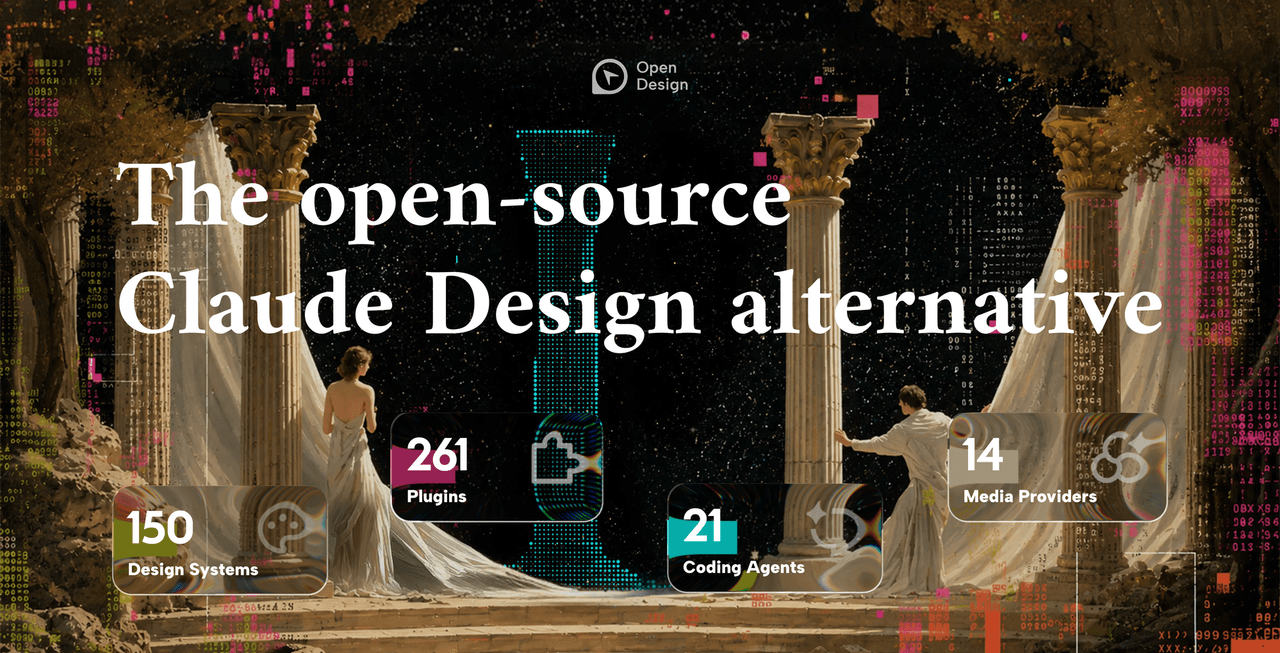 nexu-io/open-design
🎨 Best DeepSeek Harness Design Plugin. The open-source Claude Design alternative. 🖥️ Local-first desktop app. 🖼️ Your…
nexu-io/open-design
🎨 Best DeepSeek Harness Design Plugin. The open-source Claude Design alternative. 🖥️ Local-first desktop app. 🖼️ Your…
-
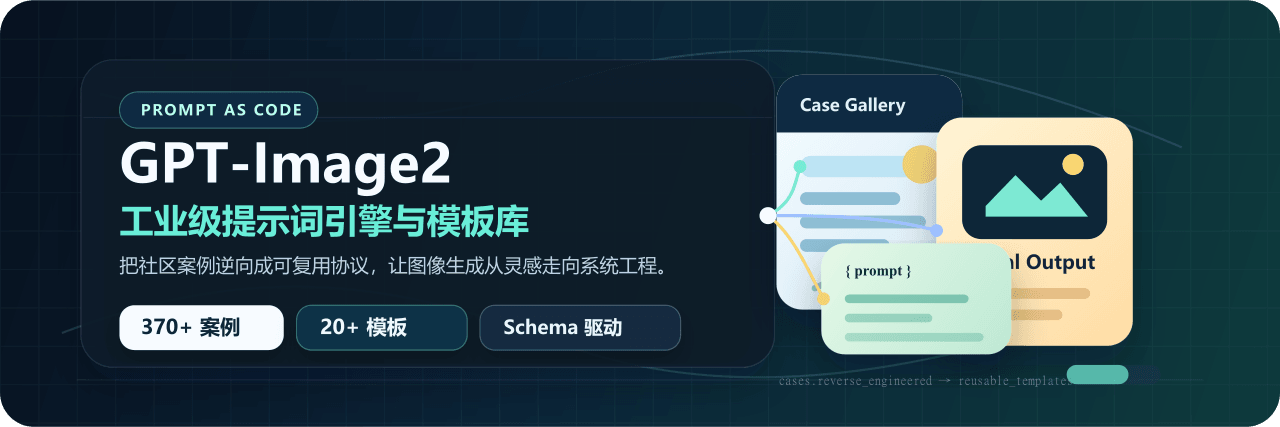 freestylefly/awesome-gpt-image-2
Prompt as Code | GPT-Image2 工业级提示词引擎与模板库,530+ 个案例逆向工程,20+ 套工业级模板,并提炼出Skills,持续更新中
freestylefly/awesome-gpt-image-2
Prompt as Code | GPT-Image2 工业级提示词引擎与模板库,530+ 个案例逆向工程,20+ 套工业级模板,并提炼出Skills,持续更新中
-
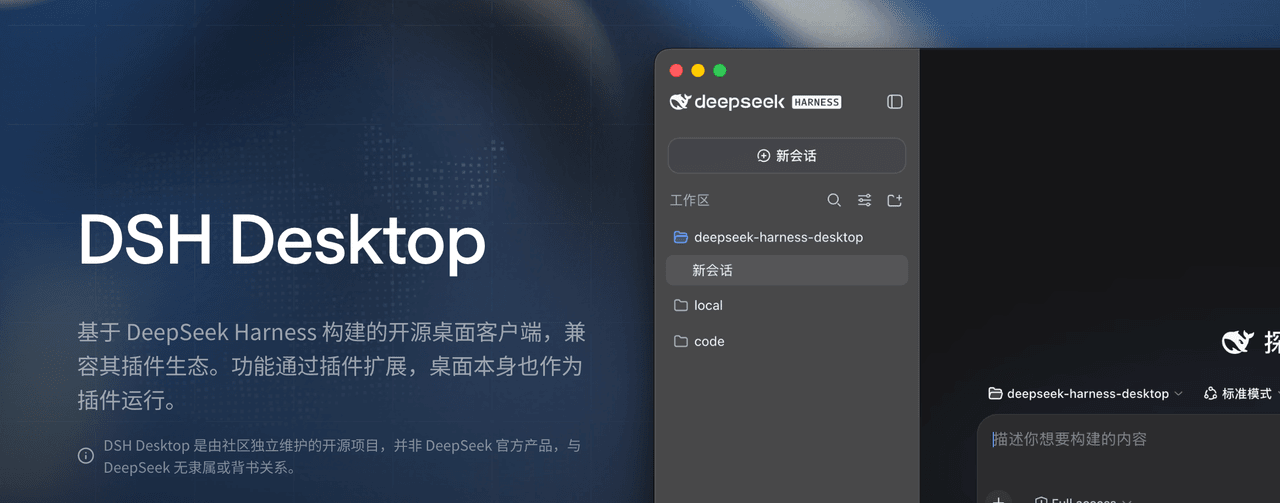 anywhere-labs/dsh-desktop
为 DeepSeek Harness (DSH) 插件生态打造的现代化桌面端解决方案。万物皆「插件」,桌面本身也是「插件」。
anywhere-labs/dsh-desktop
为 DeepSeek Harness (DSH) 插件生态打造的现代化桌面端解决方案。万物皆「插件」,桌面本身也是「插件」。
- Nagi-ovo/voyager Enhancement suite for Gemini, AI Studio, Claude & ChatGPT — plus a prompt manager for any web UI, DeepSeek Harness inclu…
-
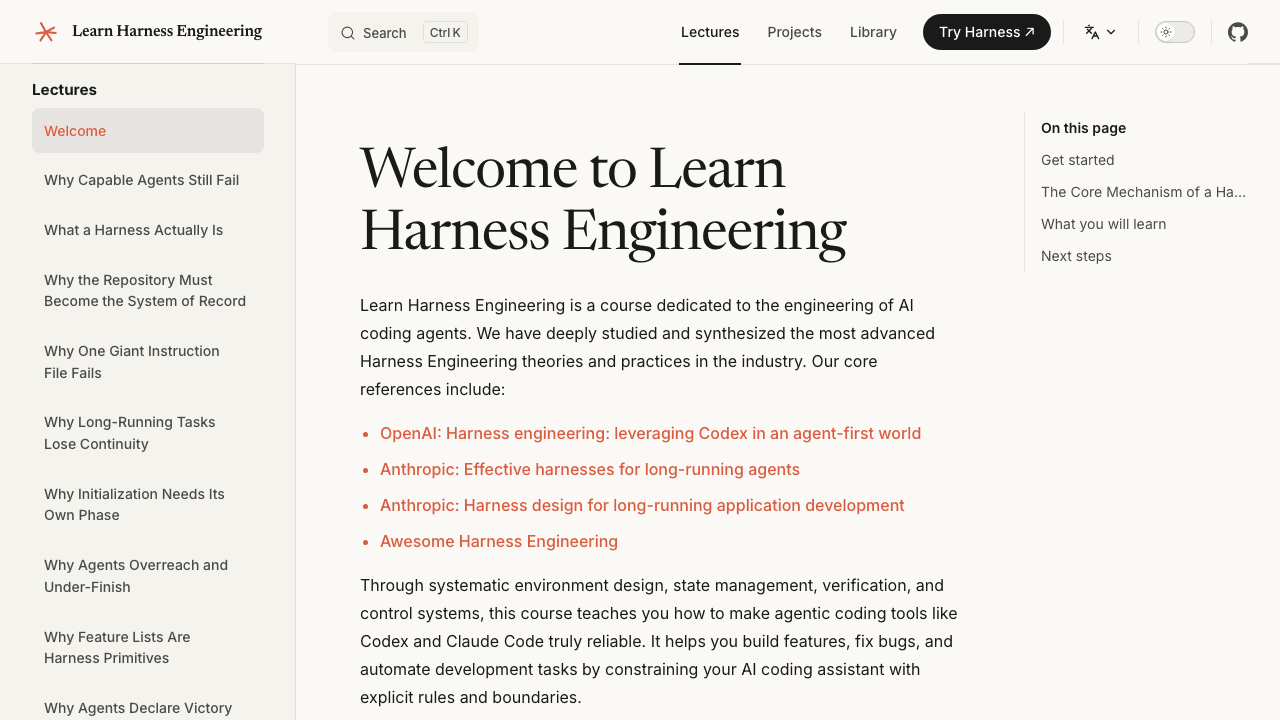 walkinglabs/learn-harness-engineering
Harness engineering beginner tutorial, from 0 to 1
walkinglabs/learn-harness-engineering
Harness engineering beginner tutorial, from 0 to 1
-
 awesome-dsh-plugin/awesome-dsh-plugin
A curated list of plugins for DeepSeek Harness (dsh) · DeepSeek Harness 插件精选列表
awesome-dsh-plugin/awesome-dsh-plugin
A curated list of plugins for DeepSeek Harness (dsh) · DeepSeek Harness 插件精选列表
-
 MemTensor/MemOS
Self-evolving memory OS for LLM & AI Agents: ultra-persistent memory, hybrid-retrieval, and cross-task skill reuse, with…
MemTensor/MemOS
Self-evolving memory OS for LLM & AI Agents: ultra-persistent memory, hybrid-retrieval, and cross-task skill reuse, with…
- yjh051108/dsh-routing-suite dsh-routing-suite — injector + router-standard kit: install the runtime injector first, then the task-aware reasoning-mo…