wulun811/dsh-plugin-vet
deepseek-harness 插件的信任管线:确定性静态扫描(11条规则)+ LLM驱动审计协议 + 两部分计分卡,可选运行时防护(T1哨兵 / T2 fs与child_process钩子)及蜜罐诱饵。仅监控并告警——vet 本身从不阻止或终止操作。
项目介绍Project Overview
@jieai/dsh-plugin-vet 是 DSH 生态的插件信任层安全门,覆盖下载、静态扫描、协议审计、评分决策与运行时看护,含蜜罐诱饵与 GUI 盾牌。安装或挂载第三方插件前可用它检查风险,运行时开启看护可告警敏感访问。注意:它只检查、告警、建议,不自动处置;运行时看护默认关闭,T1 哨兵仅支持 Linux。
@jieai/dsh-plugin-vet is a trust-layer security gate for DSH plugins. It scans packages statically, supports protocol-based audit, produces scorecards, and optionally watches runtime behavior with hooks, sentinels, and honeypot lures. Use it before installing or mounting third-party plugins, or when monitoring sensitive file, process, and network access. It only checks, alarms, and advises; it does not auto-remove or block by default. Runtime guard is opt-in, and the T1 sentinel is Linux-only.
请帮我了解并安装插件:【dsh-plugin-vet】【https://github.com/wulun811/dsh-plugin-vet】把上面这条消息直接发给当前会话里的 DSH,让它帮你了解并安装。安装命令不一定准确,发给 DSH 更稳。Send this message to DSH in your current session. CLI install commands may not be accurate across systems — DSH will figure it out for you.
或使用命令行安装(适合开发者)Or use CLI install (for developers)
命令行安装CLI Install
dsh plugin --profile web add @jieai/dsh-plugin-vet把 wulun811/dsh-plugin-vet 加入你的 DSH 配置(web profile)即可启用。
READMEREADME
@jieai/dsh-plugin-vet — The security gate for DSH plugins
English | 中文


Audit before install, guard at runtime. Run every DSH plugin through dsh-plugin-vet before mounting it: static rules produce a verdict (deterministic, unforgeable), the agent investigates sensitive points and quality issues following the
vet-audit-protocolskill (no one can substitute for that), and a final scorecard is handed to a human/model to decide.Positioning: a monitoring alarm, not an enforcer. vet only does "check → alarm → advise": checks at write time (static scan), watches at run time (runtime guard), and surfaces alarms (scorecard + GUI shield status light). vet never acts on your behalf — it never auto-uninstalls, never kills processes, never rewrites configs; deny mode is an explicit opt-in by the deployer and is not part of the product identity. The final disposition is always decided by the user on their own DSH.
@jieai/dsh-plugin-vet is the trust-layer plugin in the deepseek-harness ecosystem: it occupies the whole
download → scan → audit → score → decide → runtime watch trust pipeline. The runtime watch ships built-in
honeypot lures: anyone quietly rifling through key files gets caught red-handed (opt-in, honeypot.enabled).
It does not provide a plugin marketplace itself (catalog/distribution).
- 📚 Architecture: docs/ARCHITECTURE.md
- 🧾 Audit protocol: AUDIT_PROTOCOL.md
- 🛡️ Security policy: SECURITY.md
- 🤝 Contributing: CONTRIBUTING.md
Notable changes since 0.1.x
If you're upgrading from 0.1.12 or earlier, here's what changed:
- 0.1.13-0.1.15: Landed the NEXT-GEN-PLAN (N1-N6): hidden capability detection (N1), upgrade behavioral diff (N6), anti-obfuscation decoding, environment snapshot tamper-proofing.
- 0.1.16: Security hardening batch: bundle-ized entry (C1, closes the
require(absolute-path)attack surface), ESM blind-spot explicit coverage (C2), content-baseline integrity (M7). - 0.1.17-0.1.19: Bug fixes and noise reduction: npm pack integrity check, rc.8 subpath entryName handling, session-log deletion silence, DSH install-tree exemption widened.
- 0.1.20: Defense statistics panel (see how many plugins you've protected), startup file existence check, esm-guard-coverage dedup, upgrade-cold linked to audit records, red upgrade-diff now tells you to re-run audit protocol.
- 0.1.21: Self-scan trust annotation — when vet itself is scanned (
scan_plugin target=package, self-dogfooding on dsh.so), the result now carries aselfScanTrusted card instead of raw radar-style criticals: declaration-bound capability downgrade (only declared capability tokens are exempted; any undeclared outbound host / env var / credential path / IPC primitive stays red), per-version artifact pin (vet-self-pins.json, publish-bound — upgrades don't false-flag and swapped bytes fail the pin), and a publish gate rejecting releases with used-but-undeclared capabilities. The raw scan (all findings) stays fully visible. Details: docs/ARCHITECTURE.md §5.12. round-16 additions: the pin now covers the shipped artifact (lib/**+ root manifests +docs/**) so production installs (tarball = lib only) reach Trusted instead of being permanently dev-tree, and byte-matching any published pin counts as pinned-match — the upgrade window no longer makes two vet instances distrust each other; official@deepseek-ai/*packages are now statically scanned even on first-seen (only deny escalation is exempted — the hash baseline alone cannot stop name-spoofed tarballs).
If you were only using static scans before, enabling runtimeGuard: watch now gives you the full defense stack: T1 sentinel (memory/fd/child-process monitoring) + T2 hooks (fs/child_process/network interception) + N7 confirmation blocking.
Installation
dsh plugin --profile <profile> add @jieai/dsh-plugin-vet
Install-and-activate chain: pnpm install → reconcilePlugins reads dsh.bundle → on next start loadProfile
resolves the bundle and mounts the plugin. Default configuration is in the Config section below
(fail-open: reports only, never blocks).
Local tarball install (offline or verify-before-release scenario):
dsh plugin --profile <profile> add ./jieai-dsh-plugin-vet-0.1.4.tgz
# or unpack directly into the profile's node_modules:
# tar -xzf jieai-dsh-plugin-vet-0.1.4.tgz -C ~/.dsh/profiles/<profile>/node_modules/@jieai/
// and add an insert mount entry in the profile's cordis.patch.yml:
//   - insert:
//       - id: plugin-vet
//         name: '@jieai/dsh-plugin-vet'
//         config:
//           mode: report
//           autoScan: true
Paths / relative paths / URLs all work (
dsh plugin addfalls back to pnpm'sfile:protocol; a local tgz is resolved directly).First-install time note: the first
dsh plugin addinto a large profile can take several minutes — during that time pnpm does a full dependency resolution, updates the lockfile for 500+ packages and runs supply-chain policy validation over the whole dependency tree (vet itself carries only 2 runtime dependencies; the bulk of the time is parsing/validating the profile's existing tree, not vet). Subsequent installs/updates take seconds (validation results are reused).
Compatibility: vet targets DSH 0.1.0-rc.6+ (peers:
@deepseek-ai/cordis ^4.0.1, dsh-*^0.1.1-rc.1; verified against npm-public0.1.1-rc.2in round-15 and re-verified in the follow-up review). pnpm may warn about unmet peer dependencies — this is expected: profile templates setautoInstallPeers: false, and at runtime the packages resolve from the DSH install closure ($DSH_HOME/profiles/node_modulesfallback layer); you neither need nor should install another copy of the cordis family in the profile.npm-public DSH (0.1.1-rc.2+): a profile loads plugins from
dsh.profile.bundlesin the profile'spackage.json(boot composes bundle layers +cordis.patch.yml+$DSH_HOME/cordis.patch.yml). Afterdsh plugin add, add the package name to that bundle list (or insert it with a patch- insert:row) — otherwise the package is installed but not mounted. vet's config block uses the same row-id form (- id: plugin-vet / config: …). Guarded paths/tests are unchanged.
Watch scope = the profile vet is installed into. vet's guards are in-process events (
internal/plugin) — whichever profile vet is installed into is the one whose loaded plugins it guards. For multi-profile deployments, install vet into every profile you want guarded (dsh plugin --profile <name> add @jieai/dsh-plugin-vet) and pointrequireAuditat the matching profile's cordis.patch.yml.
Config (cordis.yml)
| Key | Default | Description |
|---|---|---|
profile |
standard |
Safety tier (0.3): standard = current defaults (lowest noise); hardened = wakes dormant capabilities (runtime guard, third-party baseline, honeypot; R17/R18/R19 observations surface as yellow); paranoid = hardened + strictest blocking (requireAudit, denyOn: suspicious, N7 family 3/4 block). Presets only override keys still at their default; explicit settings (incl. panel-toggle writes into the patch) always win; verdict semantics never change — see "Safety tiers" below |
mode |
report |
report reports only, never blocks; deny explicitly enables blocking |
autoScan |
true |
Automatically static-scan new plugins (internal/plugin) |
scannerTimeoutMs |
15000 |
Static-scan subprocess timeout |
requireAudit |
false |
Audit gate (opt-in, third-party only — official @deepseek-ai/* packages are governed by content-hash baseline + static scan instead, round-17): when enabled, loading a third-party plugin checks ~/.dsh/vet/audits/ for a health record — report mode logs a yellow audit-required alarm, deny mode blocks. Records are written to disk by hand by the agent following the vet-audit-protocol skill |
rules |
{} (all on) |
Per-rule switches (R1-R19; e.g. {"R17": false} disables the !!js config surface) |
scanSurface |
all on | Static scan-surface switches (0.2.6, engine static-v14+, current static-v16): configFiles (cordis.yml/patch !!js detection, R17), instructionFiles (instruction/skill injection observation, R18); disabling only affects the new surfaces, the legacy surface keeps scanning |
observeLoopback |
true |
Local-API loopback observation (0.2.6 default off; 0.3 default on — loopback + control-plane path + third-party attribution, official attribution exempt, yellow dismissible): when on, plugin requests to 127.0.0.1 enter the N3 ledger, and hits on DSH control-plane paths (/api/, session.*, /plugins/) attributed to third-party plugins raise a yellow loopback-control observation (alarm-only, dismissible). Observation is not a fix — RPC auth is a dsh-side concern |
telemetryDiff |
true |
Telemetry config sensitization (0.2.6): periodically hashes telemetry exporter url/mode fields in profile config; cold start records only; host change → yellow (requires restart verification, G-3 shape). Hashes only — config content never enters alarms/archive |
thirdPartyBaseline |
false (on under hardened/paranoid) |
Third-party post-install integrity baseline (0.2.6): records first-install content hash for non-official packages; same-version content change → red (exempt via acknowledgedPackageHashes). Change-detection, not a trust anchor; the static scan still runs regardless |
denyOn |
critical |
Blocking threshold in mode: deny |
allowlist |
[] |
Package/plugin-id allowlist (skip scanning) |
runtimeGuard |
off |
Runtime guard (performance/stability cost, opt-in): off = disabled; watch enables the T1 sentinel + T2 hooks, alarm-only |
runtimeIntervalMs |
2000 |
T1 sentinel /proc sampling interval |
runtimeMemLimitMb |
2048 |
T1 memory alarm threshold (host VmRSS, over limit → red) |
runtimeForkBurstN |
5 |
T1 child-process burst alarm threshold (single-round delta → red) |
runtimeFdLimit |
512 |
T1 file-descriptor alarm threshold (→ yellow) |
runtimeGrowthMb |
256 |
T1 sustained memory-growth alarm threshold (net RSS growth over the full window → yellow, suspected leak; an early-window spike does not count as window-level sustained growth, so no false positive) |
runtimeGrowthWindowMs |
600000 |
Growth-detection window (default 10 minutes) |
honeypot.enabled |
false |
Honeypot lures (needs runtimeGuard: watch): plants fake key lures in honeypot.dir; T2 reports touches (read/write/delete) of lure paths as a separate honeypot alarm class. Directory/file names and contents carry no honeypot keywords (anti-honeypot), default location ~/.dsh/.local, lure values are well-formed but invalid fake credentials |
honeypot.dir |
'' |
Lure directory; empty = $HOME/.dsh/.local |
osvCheck |
true |
Query Google OSV for known vulnerabilities when scanning package.json (exact-version queries only: ranges (*/>=/^/~) and version-less main packages are skipped, P3-1/P3-3 — avoids stale full-history false positives; since round-7 ranges are no longer stripped to query as exact lower bounds). Verified targets = the plugin itself + direct dependencies (cap 8, official @deepseek-ai/* packages skipped, P3-10); transitive trees exceed the OSV v1 scope and the scan budget. Default on sends package names to api.osv.dev; network failure degrades silently. Set false if privacy-sensitive |
contentBaseline |
true |
Official-package content-hash baseline (P-5): computes a SHA-256 over each @deepseek-ai/* package's files and compares it against the recorded baseline — a same-name impostor (file:/tarball with no registry validation) is judged by the strictest plugin rules on hash mismatch. First-seen stores and trusts the baseline; baseline storage is multi-version by name@version (capped: 1000 files / 50MB / 10s) |
networkEgress |
true |
Runtime network egress observation (P1): wraps http/https/net/http2/tls/dgram/fetch to observe plugin-originated outbound requests (alarm-only; needs runtimeGuard: watch) |
transitiveDeps |
false |
Transitive dependency vulnerability audit (P1, opt-in, default off): shells out to a locally installed upstream-radar CLI (never npx-auto-installed); missing / timeout / unexpected output shape degrades silently to direct-dependency-only. Hits surface as OSV-T medium findings |
confirmBlock |
block |
N7 confirmation block (0.1.14, needs runtimeGuard: watch): only irreversible destruction is intercepted. block (default) — families 1/2 intercept on certain confirmation; alarm — all families alarm-only; off — disabled. Every block throws with an actionable message and writes a red n7-block alarm; process-memory state (cleared on restart) |
confirmBlockFamily3 |
alarm |
N7 family 3 override (persistence/privilege-surface writes: bashrc/cron/systemd/ld.so.preload/sudoers.d/profile.d/autostart/authorized_keys/hosts/ssl). Explicit block is user opt-in — interception risk is the user's choice; default alarms only |
confirmBlockFamily4 |
alarm |
N7 family 4 override (supply-chain/install-state writes: node_modules package files, cordis.patch.yml / cordis.yml / plugin.json). Explicit block is user opt-in; default alarms only |
Official @deepseek-ai/* packages are exempt by default (built-in trust).
Safety tiers (0.3)
profile preset-expands into the existing per-knob config — a deployment-strategy layer, not a second parallel config
system. Three principles:
- Tiers never change verdict semantics — the verdict is produced only by the deterministic static layer (trust boundaries 1/4); tiers only change observation depth, alarm surface, and block scope.
- Explicit beats preset — keys the user set to a non-default value survive; keys written into the vet entry of
the profile
cordis.patch.yml(e.g. the shield's runtime-guard toggle) count as explicit and are never overridden. Known boundary: a key explicitly set to its default value via the plugin config section is indistinguishable from unset and gets the preset applied — the patch is the true explicit channel for "off". - False-positive cost scales with the tier — higher tiers trade noise for coverage (see cost column).
| Tier | Position | Preset expansion | Cost |
|---|---|---|---|
standard (shield label: Light defense / 轻度防御) (default) |
General public, lowest noise | nothing — current defaults | no runtime layer (static + telemetryDiff + official-package baseline only); the shield shows a hint when the runtime guard is off |
hardened (shield label: Medium defense / 中级防御) |
Wake the capabilities already written | runtimeGuard: watch, thirdPartyBaseline: true, honeypot.enabled: true; R17/R18/R19 info observations surface as yellow alarms (alarm-only, verdict unchanged) |
~10-20% hot-path overhead; more dismissible yellows |
paranoid (shield label: High defense / 高级防御) |
High-sensitivity environments | hardened + requireAudit: true, denyOn: suspicious, confirmBlockFamily3/4: block |
highest noise; interception expanded (blocks persistent/install-time writes after confirmation) |
observeLoopback is on for all tiers (0.3): its signal is specific enough (loopback + control-plane path +
third-party attribution; official attribution exempt) that the unattended P15/P16/P17/G-2/G-5 family is back on
the alarm surface at zero user action.
The shield panel has a one-tap tier selector (writes the patch via /vet/profile, preserving other config keys)
and a tier explainer inside the ? help panel — no manual config editing needed; the runtime guard flips
immediately and is persisted to the profile patch, the remaining tier-preset expansion keys apply after a DSH
restart/hot-reload.
Environment variables
All DSH_PLUGIN_VET_* paths are snapshotted at module load (vet loads before third-party
plugins — a plugin changing process.env afterwards cannot redirect vet's storage). Set them in
the host environment (i.e. in the DSH profile/weekly launch script), not from inside a plugin.
| Variable | Default | Purpose |
|---|---|---|
DSH_PLUGIN_VET_CACHE_DIR |
<tmpdir>/dsh-plugin-vet-cache |
Static-scanner report cache (sha-256 keyed, 0600 files) |
DSH_PLUGIN_VET_BASELINE_DIR |
~/.dsh/vet |
Content-baseline store (baseline.json) + N6 capability history (capabilities.json) + version snapshots |
DSH_PLUGIN_VET_ARCHIVE_DIR |
~/.dsh/vet/audits |
Audit health records — where requireAudit looks for <plugin>-<version>-<ts>.md |
DSH_PLUGIN_VET_FORENSICS_DIR |
~/.dsh/vet/forensics |
Forensics journal root (post-confirmation per-plugin recording, 0700 dirs / 0600 files) |
DSH_PLUGIN_VET_CONTRACTS_DIR |
~/.dsh/vet/contracts |
Runtime contract snapshots (state contracts + observation reconciliation) |
DSH_PLUGIN_VET_STATS_DIR |
~/.dsh/vet |
Defense statistics (stats.json, atomic write, 0600) |
DSH_VET_SIDECAR_PID |
(internal) | T1 sentinel PID registry that survives hot reloads — internal, do not set |
Tools
scan_plugin— deterministic static scan:target=dynamic-code(source string) /package(package directory) /file(single file). Returns a scorecard (verdict + staticScore + findings). The verdict is produced only by static rules. OptionalscanBasis:npm(default — registry tarball artifact, R12 entry/ patch checked against the real release) /git(source-only repo, wherelib/etc. usually aren't committed — R12 entry/patch-missing findings drop to info so git-only rescan doesn't false-positive). Since 0.1.21 the scorecard's capability block also reports the R16 ghost/zombie dependency fields (declared vs imported vs installed).vet_diff— read-only, purely local: prints the stored version history of a package and the behavior diff between its last two recorded versions (N6). Outputs hosts/fsPaths/spawnCmds/imports added|removed and network/exec capability flips. No scan, no network.vet_label— read-only, purely local: prints the human-readable "capability nutrition label" (M2) for a package — the files it touches, the hosts / subprocesses it references, its third-party imports (capability unknown), and its network/exec capability flags, plus a summary of the last upgrade diff. Sources from the same local N6 capability history; the label represents declared (static-side) capabilities — runtime observed/dormant capabilities are the domain of the running shield. No scan, no network.vet-audit-protocol(skill) — audit-process protocol (AUDIT_PROTOCOL.md): the agent audits a new plugin in preset steps — scan_plugin static criteria (incl. R12 Cordis/DSH contract) → read manifest/source → verify each finding → proactively dig deeper (network/files/processes/credentials/library semantics) → contract & code-quality audit (step 4.5: entry/Config-schema consistency, error handling/synchronous blocking/resource leaks/async correctness and other "badly written" issues — statically clean ≠ worth installing) → hand-write a health record to~/.dsh/vet/audits/<plugin>-<version>-<ts>.mdusing the system write capability. vet ships no audit tooling and does not investigate for the agent — it only provides the criteria and the on-disk convention.
Shield panel (0.4 revamp)
The GUI was reskinned per the OBSIDIAN MOSS GOLD design mock (dark recipe; a matching light variant ships in the same token set) and rebuilt as a layer stack — secondary panels slide out flush against the main panel's right edge (never the browser's right edge); the whole stack shifts left when space runs out — panels never overlay one another — and Esc pops layers one at a time:
| Layer | Panel | Contents |
|---|---|---|
| L1 | Main | 3 ring+trend composite cards (memory/CPU/fd: value and direction in one card), foldable memory/IO details, runtime guard + safety tier, defense stats, audit bar, upgrade-diff & honeypot floating cards |
| L2 | Alerts timeline / Recent plugins / Audit & Honeypot / About | timeline = rail+dot+card (dismiss/restore/copy); recent plugins = scan-record corridor, 20 per page with "Load more" paging (round-21); audit center = pending-audit backlog + honeypot touches |
| L3 | Plugin details (the only third level) | 6-axis capability radar, rule-hit wall, OSV/AI-review meta, upgrade diff, declared-side nutrition label |
Data additions (read-only, backward compatible): GET /vet/status.json gains metricsHistory
(64-point trend), audit (pending/new/plugin index/honeypot) and lastUpgradeDiff; new
GET /vet/plugin?name= detail endpoint; new local scan-summary store
~/.dsh/vet/scan-summaries.json written by both the auto-scan and vet-gate paths.
Honest scope: radar/nutrition reflect the declared static capability surface (same
discipline as vet_label); the "blocked" mark comes from the N7 family-1 list.
Automatic behavior
internal/pluginauto-scan (autoScan: true): newly installed third-party npm packages are static-scanned on load;denymode + verdict ≥denyOn→ load rolled back.- Audit gate (
requireAudit: true): loading a third-party plugin without a health record —reportmode logs a yellowaudit-requiredalarm (enters the /vet/status.json alarm list, plugin loads normally);denymode rolls back the load (referencesvet-audit-protocolas a prompt to audit first). Records match by exact version (P-1): after a plugin upgrade the old version's record no longer authorizes the new version — re-audit is required to clear the alarm/block. Third-party only (round-17): official@deepseek-ai/*packages are governed by content-hash baseline + static scan (decision 1: first-seen/match still fully scanned, only deny escalation exempt), so DSH-bundled official plugins never fireaudit-required. tools/executeinterception:cordis_define/run_code/workfloware scanned before execution (cordis_run's real schema carries no code payload, so the guard slot stays dormant as a tripwire — if a future schema adds code/source/script payloads it is scanned immediately; zero false positives today);reportmode prefixes non-clean results withVET:(clean executions don't pollute machine-readable output),denymode blocks outright (isError).- Runtime guard (
runtimeGuard: watch) — alarm-only:- T1 sentinel: a sidecar subprocess reads the host /proc every
runtimeIntervalMs(VmRSS / child-process count / fd count) and streams alarm JSON lines back to the host → shield turns yellow/red. - T2 hooks: in-process wrappers around fs / child_process (incl. fs.promises); dangerous operations
(sensitive-path writes/deletes, key-file reads, subprocesses with shell/download/exfiltration keywords,
honeypot-lure touches,
~/.dshconfig-root reconnaissance) are attributed via the stack to the plugin package name before alarming; official packages get full-class noise reduction via attribution (capability grant — official packages are the platform itself; their high-frequency~/.dshsession/config/storage reads don't spam; third parties can't forge attribution). Never blocks a call. Self-harm exemptions (fixed after real-world false positives):- node_modules package-directory exemption: package names/inner files are public artifacts — package
names containing credential/secret words are normal ecosystem (
@aws-sdk/credential-provider-*,@deepseek-ai/dsh-credentials-local, etc.), and both host module resolution (require.resolve's internal realpathSync/stat of inner package.json) and vet's own scan reads touch them at high frequency, so they no longer false-positive as fs-probe; path segments before node_modules still judged normally (~/.ssh/node_modules/xstill hits .ssh), and write/delete of system roots (/usr etc.) still alarms. - Attribution excludes vet itself: the wrapper frame is always the top of the alarm stack, and the vet root never participates in attribution mapping — host/unowned alarms are no longer pinned on vet (the alarm still fires, attributed to the real caller).
- Toolchain temp artifacts (tsc
<src>.<pid>.<uuid>.tmpdir,*.tmp,*.temp,*.swp, etc.) are auto-exempt — the secrets/credentials in their names are just source filenames being compiled; deleting them is cleanup, not destruction; parent segments still judged normally (~/.ssh/config.bakstill alarms).
- node_modules package-directory exemption: package names/inner files are public artifacts — package
names containing credential/secret words are normal ecosystem (
- T1 sentinel: a sidecar subprocess reads the host /proc every
- GUI shield: a browser half registers into
conversation.session.header.actionsand polls /vet/status.json to show a green/yellow/red light + alarm count. Activation requires adsh webrestart (client-modules only scans thedsh.clientdeclaration at startup).- Interaction: clickable — clicking expands the alarm panel (live metrics: memory/CPU/I-O/
child-process/fd; guard status: when off, one click writes a
runtimeGuard: watchconfig (takes effect on restart); alarm list with severity/attribution/per-item advice; recent-scan echo, refresh, updated time), outside clicks close it; when alarms exist a count badge appears next to the shield (green/yellow/red theme color, light/dark adaptive). - Per-item dismiss: each alarm can be "dismissed" — display-only (no longer counts toward shield level or count), the record is kept and can be "restored"; a dismissed alarm auto-expires once the alarm stops, so a recurrence is visible again (and can be dismissed again). Dismiss state shares the alarm store's lifecycle (resets on restart). Auth boundary (P3-12 recorded): dismiss/restore only do same-origin validation (alarm-only display-layer risk — a same-origin page script could hide alarms, but records aren't deleted and nothing else is affected; acceptable within the system).
- Display caps: the panel shows the latest 8 alarms; the store is a ring buffer capped at 20, deduped per id within 60s, 24h TTL (sustained triggers naturally renew) — 100 alarms are not displayed in full, and needn't be (new alarms push out the oldest). Recent-scan echo (suspicious → yellow) also expires on the 24h TTL (P3-2: one suspicious scan no longer turns the shield permanently yellow; sustained scanning renews naturally).
- Interaction: clickable — clicking expands the alarm panel (live metrics: memory/CPU/I-O/
child-process/fd; guard status: when off, one click writes a
Static rule table (R1-R19)
| ID | Name | Default level | Scope | Determinism |
|---|---|---|---|---|
| R1 | constructor-chain escape | critical | code + files | certain/likely |
| R2 | Dynamic execution (eval/Function/import/require) | high (files) / medium (code; bin entries drop to medium) | both | certain/likely |
| R3 | Direct process access (runtime-graded; read-only members/generic/bin entries/app-type packages → info) | critical (host) / high (sandbox) | both | certain |
| R4 | Host closure capture (agent/TextEncoder…) + host-global prototype pollution | critical (code) / high (files, independent of targetKind) | both | certain/likely |
| R5 | ctx-escape attempt signal (withheld members/undeclared services; ctx.logger and other officially injected services are allowlisted) |
medium | code only | likely |
| R6 | String coarse-scan fallback (obfuscation signals need combined evidence with dynamic execution) | info | both | heuristic |
| R7 | Hardcoded secrets | high | both | likely |
| R9 | Resource safety (unbounded allocation / exit-less synchronous loops / spawn-in-loop / ReDoS / non-terminating recursion / growth patterns in loops) | high (allocation/dead-loop/fork) / medium (ReDoS/recursion/Map.set) / info (resident loops/+=/Promise.all) | both | certain/likely/heuristic |
| R10 | Supply chain (package.json install hooks incl. prepare/preuninstall; dependency manifest → info; OSV exact-version vulnerability query, opt-in osvCheck, network fail-open) | high (install hooks) / info (dependency manifest; OSV advisory) | files | likely/heuristic |
| R11 | Destructive file operations (fs deletes / sensitive-path reads-writes) | high (sensitive paths) / medium (deletes) | both | likely |
| R12 | Cordis/DSH contract (entry file / bundle-patch declaration / name / engines.node) | high (missing patch / missing entry) / medium (no entry / missing name) / info (low node version) | files | certain/likely |
| R13 | Hardcoded network exfiltration sinks (Discord/Telegram/Slack webhooks, cloud-metadata endpoints, .onion) in string literals | high | both | likely |
| R14 | Download-and-exec primitives in shipped non-JS scripts (.sh/.bash/.ps1/.cmd/.bat/.psm1/.zsh: curl | sh, encoded PowerShell, IEX, certutil…; python -c / ruby -e / perl -e download-exec included) | high (plugin) / info (generic) | files |
| R15 | Dynamic network targets (fetch / WebSocket / http(s).request | get / net.connect whose target argument cannot be statically resolved — "deliberately obscured" target) | info (observation; escalates only when other signals stack, e.g. N1 hidden capability fires) | both |
| R16 | Dependency consistency audit: ghost deps (imported by code but not declared in package.json — resolves only via transitive hoisting) and zombie deps (declared in package.json but missing from node_modules) | info (advisory; never into verdict) | files | heuristic |
| R17 | !!js config injection (root-level cordis.yml / cordis.patch.yml / plugin.yml !!js expressions: presence observation + dangerous-verb enumeration + base64/hex decode hook-in; "verb + exfil-host/credential-path" double combos → high; test/CI dirs and generic packages stay info. Text extraction only, never executed) |
high (double combo) / info (single verb / observation) | files (surface.configFiles; engine static-v14+) | likely (double combo) / heuristic (observation) |
| R18 | Instruction/skill injection observation | |||
| R19 | Typosquat observation (package name / deps vs a curated core list of official @deepseek-ai names: Levenshtein <=1 or visual homoglyphs — dshh / d5h / dsh_tool_bash; only against the curated core list; everything else is covered by R10 dep manifest + OSV + manual pre-install review) | info (observation; never into verdict) | files | heuristic |
| (AGENTS.md / CLAUDE.md / CODEGOV.md and SKILL.md under skills/ or *.skill dirs: combined-text features — instruction rewrite × credential/exfil/persistence action, ≥2 independent group hits to fire; v1 all-info observation, escalation after real-corpus tuning) | info (observation; never into verdict) | files (surface.instructionFiles; engine static-v14+) | heuristic | |
| ghost deps (imported by code but not declared in package.json — resolves only via transitive hoisting) and zombie deps (declared in package.json but missing from node_modules) | info (advisory; never into verdict) | files | heuristic |
Engine pipeline additions (0.1.13): besides the rule set, the scanner now produces a per-package capability manifest (N1) — hosts/fsPaths/spawnCmds/imports/hasNetwork/hasExec extracted from source (plus R16
ghostDeps/zombieDepsdependency-consistency fields from the package.json vs node_modules audit) (declaration-side facts, never verdicts, conservative over-collection) — and runs a literal decode preprocessor (N2) that statically decodes base64 / hex / Buffer.from / String.fromCharCode / constant concatenation / template literals (all-literal arguments only, ≤4KB, ≤2 nesting layers, never executes code) and feeds the decoded text back into R13/R7/R11 matching (findings carrydecodedFromand the original line for audit). Capabilities enable the cross-layer diff (see Runtime monitoring below).
Scoring model
staticScore = max(0, 100 - Σ(severity weight × hits × confidence coefficient))
verdict (the single authoritative judgment; heuristics never upgrade): critical ≥ 1 → critical; otherwise
high ≥ 1 → suspicious; otherwise → clean. The verdict is produced only by the static layer: staticScore
and verdict are shown separately and never merged into a single total.
Capability boundary (honest list)
Static scanning is a "speed bump + forensics layer", not a security boundary. The following is split by impact on the verdict, and the forms it explicitly does not detect are listed truthfully (all empirically verified).
Detected — verdict-level (changes the verdict)
| Rule | Problem class | Hit → verdict | Verified |
|---|---|---|---|
| R1 | Constructor-chain escape: x.constructor("return process") / x["constructor"]("return " + "process") / new (globalThis.constructor.constructor)("return process")() (dot/bracket-access + new forms; string args statically evaluable: literals/templates/concatenation/const bindings; new supports const-alias tracking) |
critical | matrix + multi-file ✓ |
| R2 | Dynamic execution: eval() / Function() / new Function / new AsyncFunction (incl. parenthesized new (Function)(...); escape-string args → critical) / (async)=>{}.constructor capture (round-7.2: new X.constructor reported only when the base is a function literal — new n.constructor(n.type, n) object-clone no longer false-positives) / vm.runInContext/runInNewContext / dynamic import() / require() |
high (files) / medium (code, escape-string → critical); bin entries judged as generic code, drop to medium | matrix + round-7/7.2 regression ✓ |
| R3 | Direct process access: getBuiltinModule/mainModule/module/exit (incl. reallyExit) → critical; side-effect members (kill/abort/chdir/umask/setuid/dlopen/binding, etc.) and unknown members → high; read-only members (round-7.1): env/cwd/platform/pid/argv/execPath/stdin/stdout/stderr/nextTick/on, etc. → info capability surface (reading cwd/env/pid isn't an escape channel; no-bin MCP/tool plugins like bridges no longer get hurt); runtime='sandbox' caps at high; shape degradation: generic packages / bin entry files / app-type packages → info |
critical / high / info | matrix + round-7.1 regression ✓ |
| R4 | Host-closure capture: reading .constructor of agent/parallel/pipeline/phase/log/TextEncoder/TextDecoder/btoa/atob or feeding Object.getPrototypeOf (code scenario); host-global prototype pollution: <builtin>.prototype.<member> = ... override assignments and Object.defineProperty(<builtin>.prototype, ...) (Object/Array/String/Function/TextEncoder/URL/Buffer and 40+ builtins, round-7) |
critical (code) / high (files, since round-7.1 independent of targetKind — pollution semantics don't distinguish plugins from generic packages, generic no longer drops to info) | matrix + round-7 regression ✓ |
| R7 | Hardcoded secrets: sk- / AKIA / AIza / gh[pousr]_ / xox[baprs]- / env-var assignment / URL-embedded keys (placeholders excluded) |
high → suspicious | matrix ✓ |
| R9 | Resource safety: new Array(2**31) / Buffer.alloc(1GB) unbounded allocation (≥1e8), while(true)/for(;;) exit-less synchronous loops (freezes the host; round-7.2: a labeled break whose label wraps the loop — outer: for(;;){ ... break outer } — counts as an exit signal), spawn/exec/fork/new Worker in exit-less loops (fork bomb) |
high → suspicious; ReDoS nested quantifiers (a+)+-class and overlapping alternation branches `(a |
aa)+→ medium (first-char-disjoint branches like(?:[^'] |
| R10 | Supply chain: preinstall/install/postinstall/prepare/uninstall/preuninstall hooks in package.json scripts (arbitrary code execution at install time) → high; dependency manifest → info (known-vulnerability check: OSV exact-version query, osvCheck can be disabled) |
high → suspicious (install hooks) | matrix ✓ |
| R11 | Destructive file operations: fs.unlink/rm/rmdir(+Sync) deleting sensitive paths (/etc/root/.ssh etc.) → high, plain deletes → medium; fs.writeFile etc. writing sensitive paths → high; fs.readdir traversing sensitive directories → medium |
high → suspicious (sensitive paths); medium not into verdict | matrix ✓ |
| R12 | Cordis/DSH contract: missing declared dsh.bundle.patch file → high; no entry (no main/exports["."] and no root index.js) → medium; declared entry file missing → high; plugin-intent package missing name → medium; engines.node major < 22 → info |
high → suspicious (declared mount point/entry missing means guaranteed failure); medium/info not into verdict | matrix ✓ |
| R13 | Network exfil: hardcoded Discord/Telegram/Slack webhooks, cloud-metadata endpoints (169.254.169.254 / metadata.*.internal / 100.100.100.200) and .onion destinations in string literals | high → suspicious | matrix + R13 tests ✓ |
| R14 | Non-JS scripts: curl | sh, wget | sh, PowerShell download-pipe / -enc / IEX, certutil/bitsadmin/mshta/regsvr32/rundll32 in .sh/.bash/.ps1/.cmd/.bat/.psm1/.zsh (python -c / ruby -e / perl -e download-exec also covered; generic → info) |
Detected — advisory level (downgrades score only, never changes the verdict)
| Rule | Problem class | Note |
|---|---|---|
| R5 | ctx-escape attempt signal: accessing sandbox-withheld framework members / undeclared services (ctx.plugin, etc.) |
code scenario only; medium |
| R6 | String coarse scan: concatenated escape features, getBuiltinModule/child_process/dangerous-require module references, obfuscation features (String.fromCharCode/Buffer.from(base64)/atob(/charCodeAt — since round-7 reported only when combined with an in-file dynamic-execution signal (eval/new Function/vm etc.); routine byte handling for terminal protocols/encoding no longer false-positives) |
info/heuristic |
| R8 | Scan timeout / file-too-large skip | info meta-rule |
Runtime monitoring (when runtimeGuard: watch) — alarm only
| Layer | Mechanism | Catches | Limits |
|---|---|---|---|
| T1 sentinel | Subprocess polling host /proc | Memory bomb (>memLimit), sustained memory growth (leak; net window growth alarms by multiple), fork bomb (child-process burst), fd surge | Granularity = host-global (plugins share the process; can't attribute to a plugin) |
| T2 hooks | In-process wrapping of fs/child_process (incl. fs.promises) | Sensitive-path writes/deletes (/etc, ~/.ssh, .env…), key-file reads, spawn with shell/download-exfiltration keywords | Stack attribution best-effort; per-call wrapper overhead (I/O-heavy <5%, hot paths 10-20% range) |
| N1 capability diff (0.1.13) | Declared capability manifest (scanner, registered at plugin load) vs observed runtime actions (T2) | Hidden capability executed (observed sensitive action with zero static footprint incl. imports) → red n1-hidden; imports non-empty ⇒ 「capability unknown」 conservatively covers any action; only sensitive actions participate |
Requires a prior scan of the plugin (auto-scan registers it); statically-visible-but-unused capabilities are recorded as dormant, shown in the nutrition label (M2, 0.1.16) |
| N3 exfil/destruction ledger (0.1.14) | Per-plugin byte counters (sensitive-read / net-write, lifecycle cumulative) + 10s destruction signature windows + sequence signatures (READ_SECRET → SPAWN curl/wget/nc, READ_SECRET → NET_WRITE) | Read-secret-then-send-data: yellow n3-exfil (both counters > 0), red n3-exfil-match (magnitudes match — whole-package exfil), red sequence signatures (30s window); destruction family: mass delete / mass rename-to-encrypted-marker / read-then-overwrite-in-place / write amplification → yellow, two+ signatures together → red n3-ransom; honeypot/canary-confirmed (N4) plugins get lowest thresholds | No session/content inspection (bytes + operation-shape only); cross-session/ultra-slow exfil, native-binary internals, fd-level reads, fetch bodies not counted (documented boundary); per-plugin attribution best-effort |
| N4 canary watermark (0.1.14) | High-entropy canaries embedded in honeypot lure values (in-memory set); network URL/body (write/end), dgram messages, fetch URLs/bodies and spawn args scanned for them | Canary found outbound → red canary-leak (100% exfil confirmation; direct / URL-decode / one base64-decode variants; offending plugin marked suspected in the N3 ledger) |
Only confirms exfiltration of honeypot material; canary sharding/reassembly not countered (documented); needs honeypot lures (idempotent lures keep their canary) |
| Integrity canaries (0.1.14) | Small marker files under ~/.dsh (fixed content + self sha256); write/delete → red kind integrity |
Earliest ransomware trigger on the profile/credentials surface (backstop to N3 destruction signatures) | Scope limited to ~/.dsh (documented); reads not alarmed |
| N7 confirmation block (0.1.14) | Wrapper-level intercept of destructive fs ops after certain confirmation (families 1/2) plus optional family 3/4 upgrade-to-block; guards: official attribution / unattributed ops / vet self IO never blocked, exact file-level credential matching, fail-open decision path | Family 1: post-confirmation (N3 ransom-signature combo / integrity-canary write-delete / N4 canary leak) destructive fs ops (write/unlink/rename/cp/truncate/createWriteStream) of that plugin throw; family 2: single-shot immediate block of credential-body deletion + overwrite-to-existing (exact files: ~/.ssh/id_*, ~/.dsh/.credentials.yaml, ~/.aws/credentials, .pgpass, .netrc, .git-credentials, .npmrc); families 3/4: yellow persistence-write / install-write alarms (never blocked by default) |
Blocked set is process memory (restart clears); config changes need restart; recoverable writes (appendFile, new files) are never blocked; family 3/4 become blocking only via explicit user override (confirmBlockFamily3/4: block) |
| N6 version behavioral diff (0.1.15) | Per-name@version capability manifests (N1 output) recorded locally at ~/.dsh/vet/capabilities.json (0600, LRU 1000 versions) on every auto-scan; on upgrade the new manifest is diffed against the previous recorded version (by recordedAt, no semver parsing) |
New capabilities vs. the previous version → yellow upgrade-diff (new hosts/fsPaths/spawnCmds/imports/network-or-exec gain); a new high-sensitivity combination (exec+network / sensitive-path+network / sensitive-path+exec) → red; cold start (first install): records only, exec+network double-high gets a yellow upgrade-cold notice; removed capabilities are audit-only, never alarmed; vet_diff tool prints local history + last-two-version behavior changelog |
Compares declared manifests only (runtime-hidden or dependency-carried capability changes are covered by N1 hidden-capability/N2 decode, not the manifest diff); "previous version" = last version actually scanned here; same-version reinstall not diffed (content-baseline hash covers same-version tampering); local-only (no network), alarm-only |
| Forensics mode (0.1.21, P0-2) | After N4 canary confirmation, the confirmed-malicious plugin is armed and every subsequent fs/child_process/network op of that plugin is appended to ~/.dsh/vet/forensics/<plugin>-<ts>.jsonl (0600/0700, fail-open) |
Full micro-activity timeline for a confirmed-bad plugin — "no disturbance at rest, full net once confirmed" | In-memory armed set (cleared on restart); no session-content capture (operation-shape + target only, same data plane as N3); forensics is an enhancement, never a block path |
| Hook integrity heartbeat (0.1.21, P0-2 #2) | Every T2 wrapper is branded with a module-closure-private Symbol; a periodic check (runtimeIntervalMs×4, min 5s) re-verifies the current module exports still carry the brand |
Wrapper stripped/replaced (plugin rewrote a built-in module export to bypass T2) → yellow t2:hook-heartbeat listing the lost ops; alarm-only |
Brand lives on the function object — a copied toString() cannot spoof it; only surfaces vet wrapped this process; brand absent → taken as stripped (conservative); TTL-bounded alarm, recovery via re-apply |
| Shield | Browser conversation.session.header.actions + /vet/status.json |
Green/yellow/red light + alarm count | Requires dsh web restart to activate |
Explicitly not detected (empirically verified)
| Form | Empirical result |
|---|---|
Indirect references: alias function const f = Function; f(...), process["getBuiltinModule"], globalThis.process, indirect eval (0, eval) |
The alias-to-Function form (const f = Function; f(...)) remains undetected — R6 info or zero findings, verdict=clean (no variable-alias tracking; R1 alias tracking covers only .constructor); round-9 (0.1.16) / F4: process["getBuiltinModule"] (bracket access) → critical, globalThis.process.* → member-graded (critical/high/info), (0, eval)/globalThis.eval/window.eval/globalThis['eval'] → R2 high — all now caught |
| Runtime/externally constructed payloads: base64 strings, hex/charCode assembly, reading code from network/env/args, self-modifying code | 0.1.13 (N2): statically decodable base64/hex/charCode/constant-concat payloads are decoded and fed back to R13/R7/R11 (exfil/secret/destructive-path shapes now caught); direct Function(atob(...))/eval(atob(...)) calls are flagged by R2 regardless of arguments; the empirically-tested zero-finding floor is now only the alias/dynamic-base constructor form (x.constructor with a runtime-constructed argument) plus payloads sourced from network/env/args/self-modification; 0.1.15 (N5/R15): such network sinks are flagged info ("刻意遮蔽" — runtime target not auditable from source) |
Non-source files: .jsx/.tsx/.vue/binaries/wasm, arbitrary .md/.yml, and .json outside package.json |
Not in the general scan surface; shell/PowerShell/batch scripts (.sh/.bash/.ps1/.cmd/.bat/.psm1/.zsh) are covered by R14 (download-and-exec); package.json itself is always parsed (R10 install hooks/dependency manifest, R12 contract, R16 dep consistency); 0.2.6 (R17/R18): root-level configs cordis.yml/cordis.patch.yml (!!js) and instruction/skill files AGENTS.md/SKILL.md gained narrow surface-gated extras; README/docs still not scanned |
| Dependency chain/supply chain (partial — the rest is R10's actual scan surface): full import/require graph resolution, licenses, author reputation | Not parsed beyond the checks below; scanned instead: package.json install hooks (R10, incl. prepare/preuninstall → high), dependency manifest (R10 → info), known-vulnerability matching via OSV exact-version query (opt-in osvCheck, network, fail-open), import/node_modules consistency (R16 ghost/zombie deps → info) |
| Runtime behavior: network exfiltration, dynamic prototype-pollution chains, dead loops/resource exhaustion, timing, permission abuse | No dataflow/behavior analysis; static <builtin>.prototype override assignments are caught by R4 (round-7); 0.1.13 (N2): statically decodable base64/hex/charCode/constant-concat payloads are now caught (decoded corpus fed back to R13/R7/R11); runtime-constructed payloads read from network/env/args remain undetected statically — the cross-layer diff (N1) surfaces them as hidden capabilities when the runtime actually executes a sensitive action the static manifest never declared ; 0.1.14 (N3): the runtime ledger correlates per-plugin sensitive reads with outbound writes (bytes + sequence + destruction signatures), partially closing low-traffic exfil and pure-JS file-destruction; cross-session/ultra-slow exfil remains out of scope (read and write not in the same plugin lifetime) |
Semantic knowledge: the actual services a plugin injects, process in bundler polyfills, shadowing boundary |
R5 only recognizes 4 variable names; shadowing check is a v1 heuristic (undercounts) |
Legitimate process use by host tool packages (process.env config reads, process.stdin/stdout protocol, process.execPath spawn) |
Resolved: targetKind grading — non-DSH plugin packages/official packages (generic) downgrade R3/R2/R10/R9 dead-loop to capability-surface/advice (info/medium), not into verdict; DSH plugin packages stay strict. round-7 adds shape downgrades: app-type packages (package.json declares bin) and bin entry files are likewise downgraded to capability surface; round-7.1 read-only member classification: pure read-only members (cwd/env/platform/pid, etc.) drop to info even in plugin mode (no-bin MCP/tool plugins like bridges no longer hurt); side-effect/escape members (kill/exit, etc.) stay high/critical. 187 official packages tested all clean (0.1.1-rc.2 installed set) |
Trust boundaries
- The verdict is produced only by the deterministic static layer — rules are regex/AST judgments, not spoofable by prompt injection.
- The static layer is physically isolated from plugin code — the scanner is a separate process; the AST is read-only and never eval'd.
- Review goes through the agent protocol — the agent follows the vet-audit-protocol skill steps (static criteria first, sensitive points dug into one by one); the verdict is unaffected by the review step.
- No single merged score — merging the verdict with subjective assessment is forbidden, to avoid polluting the verdict boundary.
- This product is not a security boundary — positioned as a "speed bump + forensics layer" (bypassable forms in Known Limitations 1 below, aligned with DSH's official stance).
- Fail-open by default — default
mode: report;denyis explicitly enabled by the deployer. - Alarm-only — the runtime guard only watches, never kills; vet's automatic behavior (deny interception) exists only in the explicitly enabled opt-in mode. Alarms only carry advice; disposition is always left to the user on their DSH.
0.1.16 hardening batch (security review)
Fixes from the full code review (C1–C4 critical, M5–M9 major/minor, rule patches; ENGINE static-v12):
- C1 — host side is published as a single bundle (
lib/index.bundle.js); guard internals (setRootIndexing/withVetSelfIo/confirmBlock/canaryStore/capabilityDiff) are closure-private and no longer ship as importable modules — an in-process plugin can no longer disable T2/N7/N4/N1 by absolute-pathrequire. Internal state is also no longer exported by the bundle. Companion fix: package-internal resources (AUDIT_PROTOCOL.md / scanner-bin entry / T1 sidecar / self root) are now resolved form-agnostically bysrc/pkg-root.ts(upward package.json search + candidate existence) — the old fixed two-level..locators broke under the bundle main and made a plain restart ENOENT on AUDIT_PROTOCOL.md. - C2 — ESM named imports (
import { readFileSync } from 'node:fs') bypass all T2 hooks by Node's interop snapshot (verified). The N1 manifest now flags this (esmNamedBuiltins) and, underruntimeGuard: watch, a yellowesm-guard-coveragenotice is recorded so the coverage gap is explicit, not silent. - C3 —
DSH_PLUGIN_VET_CACHE_DIR/DSH_PLUGIN_VET_BASELINE_DIRare snapshotted at module load; in-processprocess.envtampering can no longer redirect stores/cache. The scanner cache verifies a host-injected random nonce on read — forgedcleancache entries (verified attack) are now ignored. - C4 —
Error.prepareStackTrace/stackTraceLimittampering is detected: attribution becomes untrustworthy → redattribution-tamperedalarm + N7 family-2 credential blocks still apply via a sentinel identity. - M5 — T2 now wraps
symlink/link/chmod/chown/mkdir/mkdtemp/utimes/lutimes(+Sync, write surface) andlstat/lstatSync(probe surface). - M6/M7/M8/M9 — R9 fork-bomb covers sync spawn variants · capability/baseline stores self-check for
external overwrite (
vet-store-tamperyellow) ·isSensitiveFsPathmatches path segments instead of substrings · sidecar kill verifies/proc/<pid>/cmdlinebefore SIGTERM (PID-reuse protection). - Rule patches — R2 global/indirect eval forms + require-concat folding, R3
globalThis.process.*member policy, R4Reflect.defineProperty, R9 escaped-paren ReDoS counting, R10preparehook, R14 python/ruby/perl download-exec, R15 undici sinks (see Static rule table). - Session-log rotation noise —
isSessionLogFilenow also recognizes sharded session files (session.jsonl.zstd.<shard>); an unattributed session-log deletion under~/.dsh/sessions/**is downgraded from redfs-destroyto yellow (host self-maintenance can't attack itself), while an attributed deletion stays red (possible evidence destruction).
Known Limitations
- Static scanning is not a security boundary: obfuscated/encoded/dynamically generated code can bypass the
AST rules; R6 only provides a "suspicious" signal.
1b. Source enumeration limits:
internal/pluginauto-scan only recursively collects ≤6 levels deep, non-hidden (non-dot-prefixed) .js/.ts/.mjs/.cjs files — deep or hidden directories are silently unscanned (no warning); use scan_plugin(target=package) manually for a full directory scan. - Agent review can be prompt-injected: the verdict never comes from the review step, but the agent may miss things — the confidence field lets users know.
internal/pluginguard doesn't cover runtime dynamic-mount escapes: the vm path is intercepted at the call layer by thetools/executeguard.- R5 is code-only: ctx access in files scenarios isn't reported by default (high false-positive rate).
- Scan duration: large plugin packages may time out and skip (R8 info); agent review proceeds per the vet-audit-protocol steps.
- The verdict is the static layer's deterministic judgment; the agent's subjective assessment is recorded in the health record and doesn't constitute a security guarantee.
- /vet/status.json has no auth: the shield's polling needs anonymous GET, and the route itself isn't authenticated — if dsh web binds to a non-loopback address, LAN clients can read scan conclusions/alarm targets. vet is an alarm-only observer and won't overreach into access control; if you care, keep loopback binding or trust your network (the POST guard toggle already has same-origin validation; no-Origin requests are rejected).
@deepseek-ai/*is trusted by default: if the official ecosystem is ever compromised, tighten this (v1 keeps the switch). scan_plugin judges official packages as generic (capability-surface downgrade) — an official-package supply-chain attack would let static downgrade mask process access (recorded, P-5; official packages are the platform itself, same policy as the internal/plugin official exemption). vet's own exemption is likewise narrowed (P-3): it now matches by name AND verifies via realpath that the target is the current vet instance — a same-name impostor package (file: install has no registry validation) is judged by the strictest plugin rules.- R10's known-vulnerability check depends on an OSV network query: on by default, sending "package
name + exact version" to api.osv.dev (disclosed in the README config section; set
osvCheck: falseif you care); network failure/timeout degrades silently to skip (never false-blocks); only exact versions are queried —*/>=/^/~ranges and version-less main packages are skipped (P3-1/P3-3; round-7 fix:^/~no longer strip their prefix to query as exact lower bounds — the lower bound being affected while the actually installed version is already fixed would false-positive). Transitive-dependency vulnerability scanning is opt-in (transitiveDeps: true, default off) — it shells out to a locally installedupstream-radar(never auto-installed); when it isn't installed, times out, or its output shape is unexpected it degrades silently to direct-dependency-only. Independent of OSV, R16 (0.1.21, see the Static rule table) audits the local declaration↔import↔installation consistency (ghost/zombie deps) with no network. - R11 only recognizes
fs.*forms: destructured/aliased calls (const { unlinkSync } = require('fs')) and runtime paths are missed (empirically recorded; a static boundary). - T1/T2 are "security cameras", not "vaults": they catch obvious mischief (memory/fork bombs,
sensitive-path operations, third-party spawn) but not worker threads/native plugins/low-traffic slow
exfiltration; T2 doesn't cover ESM named-import snapshots,
process.binding, and other side channels. Since 0.1.16 the ESM named-import blind spot is explicit: the N1 manifest flagsesmNamedBuiltinsandruntimeGuard: watchrecords a yellowesm-guard-coveragenotice instead of silent loss of coverage, and attribution tampering (Error.prepareStackTrace/stackTraceLimit) emits redattribution-tamperedalarms with N7 family-2 credential blocks still enforced. - T2 attribution & noise reduction: stack attribution is best-effort (shared services/timers across plugins can mis-attribute); official-package spawn is not alarmed by default (capability grant).
- Shield activation requires a
dsh webrestart: client-modules scans thedsh.clientdeclaration at startup; the browser won't load the shield before the restart, but the /vet/status.json endpoint and the runtime guard (host side) take effect on restart. - Runtime guard is off by default (
runtimeGuard: 'off'): wrapping fs/child_process carries performance and stability costs; opt-in. process.killstays high (intentional, round-7.1): kill is a side-effect member and doesn't degrade with the read-only members — but a plugin killing its own spawned child (MCP/bridge-style) is a normal capability surface (dsh-bridges tested: 98/134 cleared; the remaining highs are all process.kill in run.js/util.js). Statically distinguishingprocess.kill(child.pid)(pid from this package's own spawn return) from arbitrary pids needs dataflow analysis — high cost, low benefit; kept as-is, to be ruled out manually by the agent during vet-audit-protocol review (conclusion recorded in the health record).- Platform support (Linux-first, graceful degradation elsewhere): the static scan layer (scanner-bin /
scan_plugin / R1-R12 / OSV), T2 runtime hooks, honeypot, GUI shield and audit protocol are all pure JS and
run cross-platform (macOS/Windows). The T1 sentinel is Linux-only: it depends on /proc for
VmRSS/children/fd; on non-Linux the sentinel is skipped via an explicit platform gate (0.1.21, P0-6) — no
sentinel is spawned, zero respawn/sentinel-down noise, and the metrics panel falls back to -1/0 (no errors,
by design). T2 sensitive paths match by path-segment name (backslashes are normalized,
so
.ssh/.env/credentialsetc. hit on Windows too), but the "system-root prefix" (/etc /usr /var) is POSIX-shaped: on Windows, write/delete ofC:\Windows\System32-style paths bypasses the system-root judgment (segment-name/keyword checks still apply); macOS has /etc /usr /var, so T2 is fully functional. Consistent with DSH current Linux-first adaptation state.
Development
npm run build       # scanner-bin + src compiled to lib/ + client bundle
npm run typecheck   # full tsc --noEmit
npm test            # build + vitest (250 cases, incl. coverage thresholds)
npx vitest run --coverage   # coverage report (lines/functions >= 70%, branches >= 50%)
Layout: scanner-bin/ static engine (separate process); src/ plugin body (tools/guards/audit/report/guard);
src/client/ GUI shield; test/ fixtures + unit tests + adversarial matrix. Architecture in
docs/ARCHITECTURE.md.
License
MIT.
相关推荐Related
-
 nexu-io/open-design
🎨 Best DeepSeek Harness Design Plugin. The open-source Claude Design alternative. 🖥️ Local-first desktop app. 🖼️ Your…
nexu-io/open-design
🎨 Best DeepSeek Harness Design Plugin. The open-source Claude Design alternative. 🖥️ Local-first desktop app. 🖼️ Your…
-
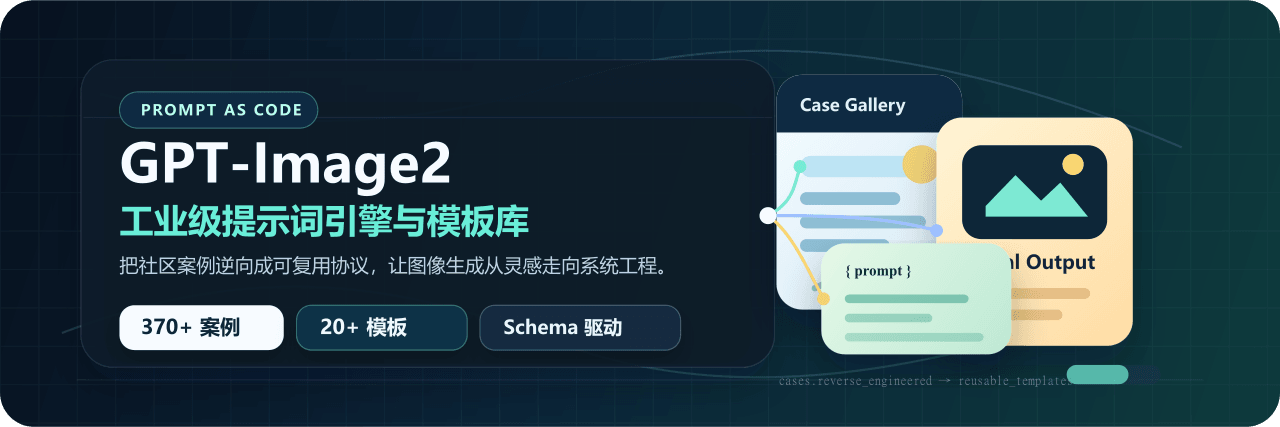 freestylefly/awesome-gpt-image-2
Prompt as Code | GPT-Image2 工业级提示词引擎与模板库,530+ 个案例逆向工程,20+ 套工业级模板,并提炼出Skills,持续更新中
freestylefly/awesome-gpt-image-2
Prompt as Code | GPT-Image2 工业级提示词引擎与模板库,530+ 个案例逆向工程,20+ 套工业级模板,并提炼出Skills,持续更新中
-
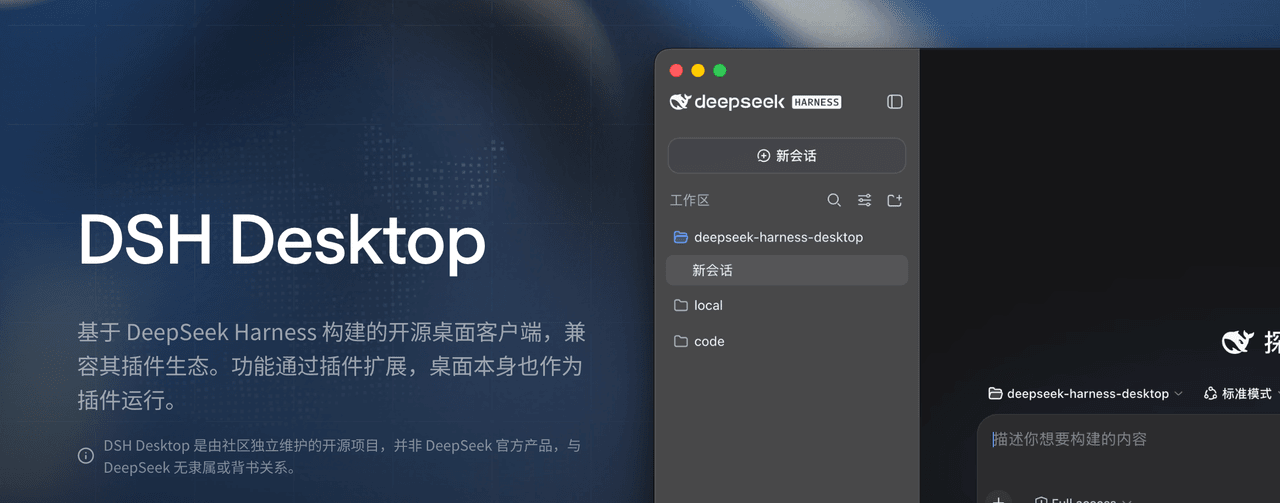 anywhere-labs/dsh-desktop
为 DeepSeek Harness (DSH) 插件生态打造的现代化桌面端解决方案。万物皆「插件」,桌面本身也是「插件」。
anywhere-labs/dsh-desktop
为 DeepSeek Harness (DSH) 插件生态打造的现代化桌面端解决方案。万物皆「插件」,桌面本身也是「插件」。
- Nagi-ovo/voyager Enhancement suite for Gemini, AI Studio, Claude & ChatGPT — plus a prompt manager for any web UI, DeepSeek Harness inclu…
-
 walkinglabs/learn-harness-engineering
Harness engineering beginner tutorial, from 0 to 1
walkinglabs/learn-harness-engineering
Harness engineering beginner tutorial, from 0 to 1
-
 awesome-dsh-plugin/awesome-dsh-plugin
A curated list of plugins for DeepSeek Harness (dsh) · DeepSeek Harness 插件精选列表
awesome-dsh-plugin/awesome-dsh-plugin
A curated list of plugins for DeepSeek Harness (dsh) · DeepSeek Harness 插件精选列表
-
 MemTensor/MemOS
Self-evolving memory OS for LLM & AI Agents: ultra-persistent memory, hybrid-retrieval, and cross-task skill reuse, with…
MemTensor/MemOS
Self-evolving memory OS for LLM & AI Agents: ultra-persistent memory, hybrid-retrieval, and cross-task skill reuse, with…
- yjh051108/dsh-routing-suite dsh-routing-suite — injector + router-standard kit: install the runtime injector first, then the task-aware reasoning-mo…