xiaoheizi1212/dsh-computer-use
DeepSeek Harness 的模型无关计算机使用:隔离浏览器、Windows 原生辅助程序、第三方视觉感知,以及 Chrome Cookie 桥接器。
项目介绍Project Overview
dsh-computer-use 是 DeepSeek Harness 的模型无关电脑操作插件,提供 ctx.computerUse 接口与六个工具,支持 fake、Playwright 隔离浏览器、Windows 原生助手三种后端,并用文本规划器加第三方视觉模型完成观察与操作,含审批、域名白名单和会话日志。适合浏览器或 Windows 桌面自动化。注意:Windows 后端仅支持 Windows,视觉模型须实际支持图片输入。
dsh-computer-use is a model-agnostic Computer Use plugin for DeepSeek Harness. It exposes ctx.computerUse and six tools, with fake, isolated Playwright Chromium, and Windows native-helper providers. A text planner plus a third-party vision model handles observation and action, with fail-closed approvals, domain allowlists, and replayable logs. Use it for browser or Windows desktop automation. Caveat: the Windows provider is Windows-only, and the vision model must truly accept images.
请帮我了解并安装插件:【dsh-computer-use】【https://github.com/xiaoheizi1212/dsh-computer-use】把上面这条消息直接发给当前会话里的 DSH,让它帮你了解并安装。安装命令不一定准确,发给 DSH 更稳。Send this message to DSH in your current session. CLI install commands may not be accurate across systems — DSH will figure it out for you.
或使用命令行安装(适合开发者)Or use CLI install (for developers)
命令行安装CLI Install
dsh plugin --profile web add dsh-computer-use把 xiaoheizi1212/dsh-computer-use 加入你的 DSH 配置(web profile)即可启用。
READMEREADME
dsh-computer-use
Model-agnostic Computer Use capability for DeepSeek Harness: an isolated browser, a Windows native helper, provider-neutral observation, a Chrome Cookie Bridge for importing your logged-in sessions, and a text planner (DeepSeek) plus a third-party vision model for perception.
Platform & License
- License: MIT — open source, free to use, modify, and redistribute.
- Platform: the
windowsprovider's native helper is Windows-only; theplaywrightbrowser provider and everything else are cross-platform. - macOS: not currently developed — the author has no macOS environment. Developers are welcome to contribute a macOS version.
Credits
1st version — created using DeepSeek-V4-Pro-0813 with DeepSeek Harness.
Token usage: 223,443,625 tokens · 99% cache hit rate.
What it provides
- A capability seam
ctx.computerUse(start/listTargets/observe/act/stop). - Six model-facing tools:
computer_observe,computer_act,computer_stop,computer_take_over,computer_resume,computer_perceive. - Three providers behind one seam:
fake(deterministic tests),playwright(isolated Chromium),windows(native helper). - A perception layer:
accessibilitymode (no image) andanalyzemode (screenshot → third-party vision model → structured result). - Risk-classified, fail-closed approval + domain allowlist + a full
computer/*replayable session log.
Required plugins (harness dependencies)
| Package | Why |
|---|---|
@deepseek-ai/dsh-llm-pi-ai |
Hosts the third-party vision route (declares input:['text','image']) |
@deepseek-ai/dsh-llm |
The image content block and createUserMessage |
@deepseek-ai/dsh-attachment (+ -local) |
Persists screenshots as content-addressed refs |
@deepseek-ai/dsh-credentials (+ -local) |
Resolves the vision API key per request |
@deepseek-ai/dsh-user-approval |
One-shot fail-closed action approval |
@deepseek-ai/dsh-tools / -session / -system-prompt |
Tool registry, session log, guidance |
@deepseek-ai/dsh-llm-deepseek is text-only and cannot be the vision model — it is the planner.
Configuration
All options live on the dsh-computer-use/plugin row (config:), for example in your profile's cordis.patch.yml:
- id: computer-use
  name: dsh-computer-use/plugin
  config:
    provider: playwright
    visionProvider: xiaomi
    visionModel: mimo-v2.5
You can also flip the whole capability on/off live from the DeepSeek Harness GUI — the plugin registers a
computer-usesettings section (Settings →computer-use), soenabled,provider, and the browser/import options above are editable without editing YAML.
Core
| Option | Default | Meaning |
|---|---|---|
enabled |
true |
Master toggle — false turns the whole capability off |
provider |
fake |
Backend: fake (tests) | playwright (browser) | windows (desktop) |
tools |
true |
Register the model-facing tools |
confirmActions |
true |
One-shot confirmation before risky computer_act calls |
visionProvider / visionModel |
— | llm-pi-ai route + model used by computer_perceive analyze |
visionMaxTokens |
2000 |
Vision output token cap |
allowedDomains |
[] |
Hostnames the browser may act inside (empty = no restriction) |
windowsHelperCommand |
'' |
Native helper executable (defaults to the bundled lib/native/win32-x64/dsh-computer-use-helper.exe) |
Browser (Playwright) session
| Option | Default | Meaning |
|---|---|---|
browserHeadless |
true |
Headless (default) or a visible window. false = 正常模式(弹窗) |
browserWindowState |
normal |
Visible-window state: normal | maximized | minimized(先 launch、后应用状态) |
reuseBrowserProfile |
false |
Use a persistent (dedicated) browser profile instead of an isolated context |
browserUserDataDir |
— | Persistent profile's "User Data" ROOT dir (non-default; e.g. ~/.dsh/browser-profiles/main) |
browserProfileName |
Default |
Profile directory name inside browserUserDataDir |
importCookies |
false |
Import cookies so the isolated browser shares the user's logins |
importPasswords |
false |
Import saved passwords for autofill |
importHistory |
false |
Import browsing history as injected context |
cookiesFile |
— | Playwright storage-state JSON ({ "cookies": [...] }) loaded when importCookies |
passwordManagerCsv |
— | Password-manager CSV export (name,url,username,password) when importPasswords |
Windows (desktop) provider
| Option | Default | Meaning |
|---|---|---|
windowsWindowState |
normal |
Target-window state: normal | maximized | minimized(minimized = 先激活后最小化) |
Scripting: import cookies / passwords / history
The browser starts isolated (no cookies, no profile) by default. To give it your logged-in state:
A. Cookie Bridge (recommended — works with Chrome 127+ App-Bound Encryption)
Chrome 127+ encrypts cookies with App-Bound Encryption, so a separate process cannot read your existing profile's cookies. The Cookie Bridge sidesteps this by running inside Chrome: a small extension reads cookies via chrome.cookies (plaintext — Chrome decrypts them itself) and POSTs them to a local receiver.
# 1. Install the companion extension ONCE (see github.com/xiaoheizi1212/dsh-cookie-bridge):
#    chrome://extensions → Developer mode → "Load unpacked" → the extension folder.
# 2. Start the receiver:
pnpm exec tsx scripts/import-cookies-server.ts
# 3. Either click the extension icon and pick a domain, or drive it from the agent:
pnpm exec tsx scripts/request-cookies.ts all x.com,xiaohongshu.com
Then point the plugin at the saved cookies.json:
- id: computer-use
  config:
    provider: playwright
    importCookies: true
    cookiesFile: "C:/path/to/dsh-computer-use/cookies.json"
Cookie values only travel from Chrome to
127.0.0.1(never to a remote host), and only the cookies for the domains you pick are exported. Multiple exports merge (deduped by domain|path|name).
B. Dedicated browser profile (log in once manually)
Use a plugin-owned, non-default profile. Chrome refuses remote debugging on its real User Data dir, and copying a profile does not carry App-Bound cookies, so the supported path is a fresh dedicated profile where you log in once:
- id: computer-use
  config:
    provider: playwright
    reuseBrowserProfile: true
    browserUserDataDir: "C:/Users/you/.dsh/browser-profiles/main"
    browserProfileName: "Default"
    browserHeadless: false   # visible window so you can log in
⚠️ Reusing your existing Chrome profile is NOT supported: Chrome 127+ App-Bound Encryption + the "no remote debugging on the default data dir" restriction are designed to block it.
Passwords / history (reserved)
- Passwords —
importPasswords: trueexpects apasswordManagerCsvexport (name,url,username,password); reserved switch, wire your own autofill bridge first. - History —
importHistory: trueis a reserved switch; inject the top visited origins as model context in your own adapter.
Every import weakens isolation. Import only what the task needs, and never enable import while the
allowedDomainslist is empty.
Vision model
Recommended default: qwen2.5-vl-72b-instruct over an OpenAI-compatible gateway (self-hosted vLLM, DashScope, OpenRouter). Alternatives: gpt-4o-mini, glm-4v-flash, llava-v1.6-34b, internvl2-76b, mimo-v2.5.
Configure the vision route in your profile's settings.yaml (or the base llm-pi-ai section):
llm-pi-ai:
  providers:
    vision:
      apiKeyEnv: VISION_API_KEY
      api: openai-completions
      baseURL: https://your-vision-endpoint/v1
      defaultInput: [text, image]
      models:
        - id: qwen2.5-vl-72b-instruct
          contextWindow: 131072
          input: [text, image]
pi-ai does not verify modality declarations: a model declared image-capable but that is not will fail mid-turn after the message is durable. Verify the chosen model actually accepts images before committing it.
Install & load
dsh plugin --profile web add dsh-computer-use
npx playwright install chromium   # once, for the playwright provider
The bundle's cordis.patch.yml mounts ctx.computerUse (package root) and the tool/provider plugin (dsh-computer-use/plugin, provider fake). Override provider in your profile patch to select playwright or windows.
Providers
fake— deterministic in-memory provider for contract tests and keyless demos.playwright— isolated Chromium: observe (screenshot →ctx.attachments+ accessibility tree with short-lived element ids) and act (click-element/click-coordinate/type-text/press-key/scroll/drag/set-value/activate-target). Headless by default; headed + window-state viabrowserHeadless/browserWindowState.windows— a thin adapter over the native-helper protocol (src/native/*); the self-contained helper (dsh-computer-use-helper.exe, UI Automation + Windows.Graphics.Capture + SendInput) is built bypnpm build. Target window state viawindowsWindowState.
Policy
- Actions are risk-classified deterministically by type, never by page content:
scroll/activate-target→read(no confirmation);type-text/set-value/drag→local;click-*/press-key→external(one-shot confirmation).destructive/financial/authare domain/policy determinations deferred to the Harness permission extension. allowedDomainsrestricts the Playwright provider to acting only inside the listed hostnames; an out-of-allowlist target fails withTARGET_NOT_ALLOWED.- Prompt-injection boundary: the classifier and the allowlist never read page text, accessibility names, or screenshot content, so untrusted page content cannot grant permission.
Development
pnpm install
pnpm build      # tsdown bundles src into lib/ + dotnet publish the native helper into lib/native/win32-x64
pnpm test       # keyless contract tests (fake/framing/transport/windows/perception) + Playwright (needs Chromium)
pnpm typecheck
Source uses explicit .ts import specifiers (harness convention); tsdown rewrites them to .js.
Documentation
- Protocol — the versioned native-helper wire protocol (framing, handshake, methods, screenshot channel).
- Security — threat model and safety invariants.
- Provider authoring — how to add a provider to the
ctx.computerUseseam.
License
MIT
相关推荐Related
-
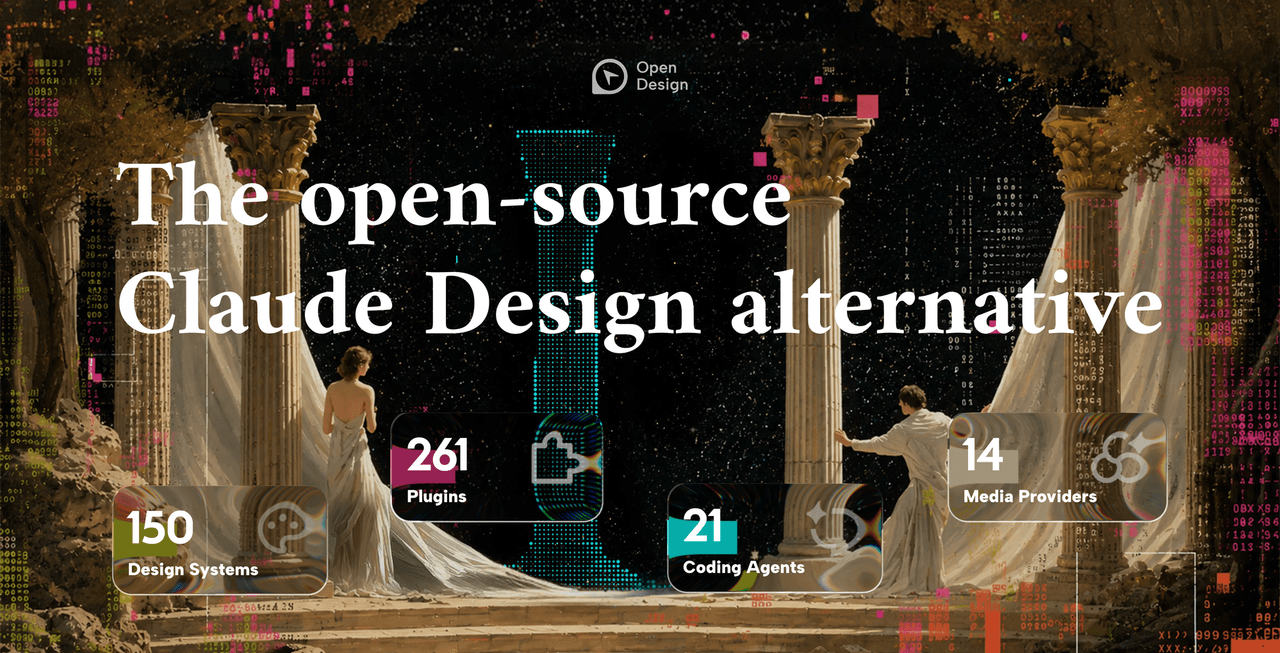 nexu-io/open-design
🎨 Best DeepSeek Harness Design Plugin. The open-source Claude Design alternative. 🖥️ Local-first desktop app. 🖼️ Your…
nexu-io/open-design
🎨 Best DeepSeek Harness Design Plugin. The open-source Claude Design alternative. 🖥️ Local-first desktop app. 🖼️ Your…
-
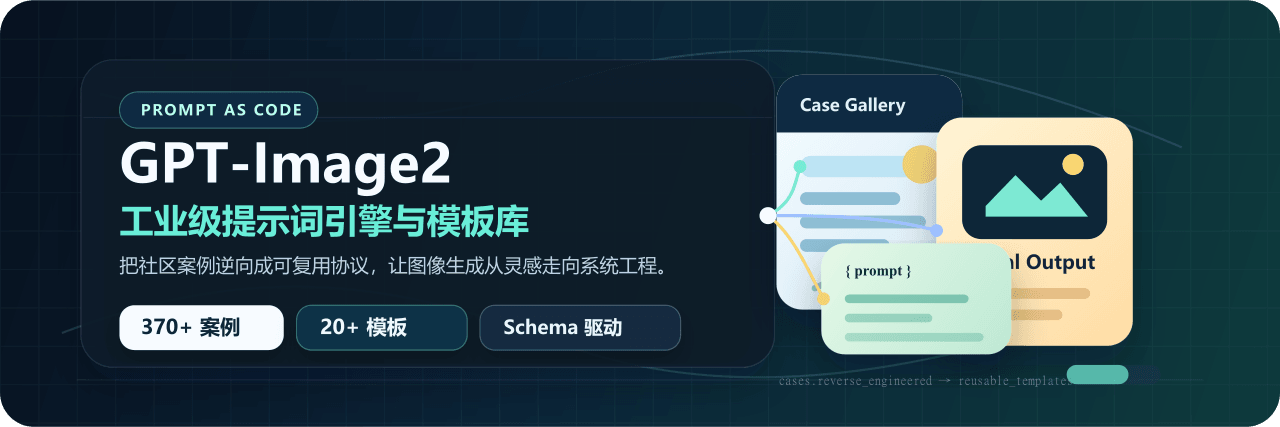 freestylefly/awesome-gpt-image-2
Prompt as Code | GPT-Image2 工业级提示词引擎与模板库,530+ 个案例逆向工程,20+ 套工业级模板,并提炼出Skills,持续更新中
freestylefly/awesome-gpt-image-2
Prompt as Code | GPT-Image2 工业级提示词引擎与模板库,530+ 个案例逆向工程,20+ 套工业级模板,并提炼出Skills,持续更新中
-
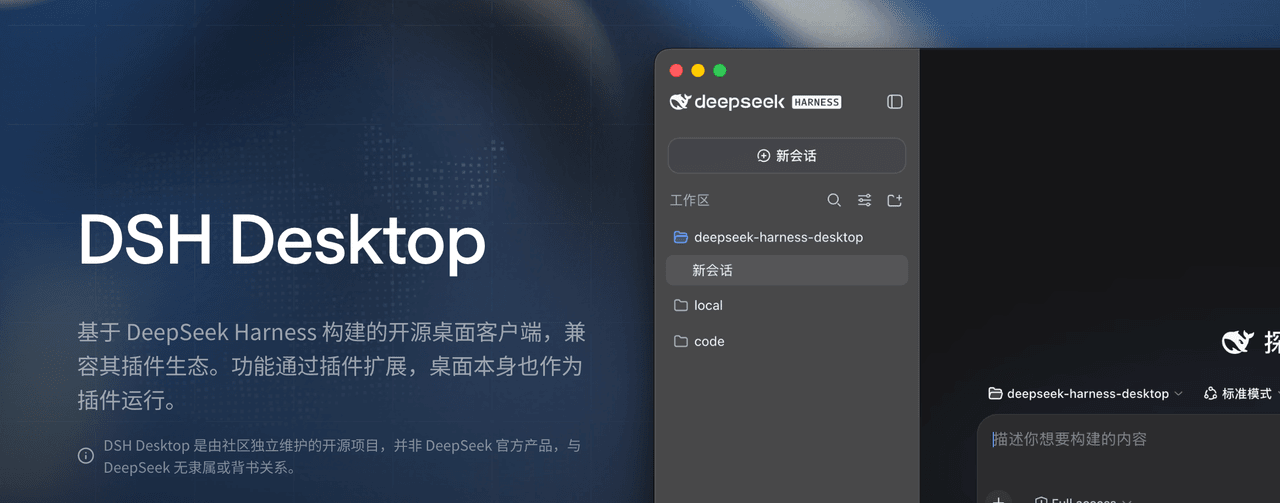 anywhere-labs/dsh-desktop
为 DeepSeek Harness (DSH) 插件生态打造的现代化桌面端解决方案。万物皆「插件」,桌面本身也是「插件」。
anywhere-labs/dsh-desktop
为 DeepSeek Harness (DSH) 插件生态打造的现代化桌面端解决方案。万物皆「插件」,桌面本身也是「插件」。
- Nagi-ovo/voyager Enhancement suite for Gemini, AI Studio, Claude & ChatGPT — plus a prompt manager for any web UI, DeepSeek Harness inclu…
-
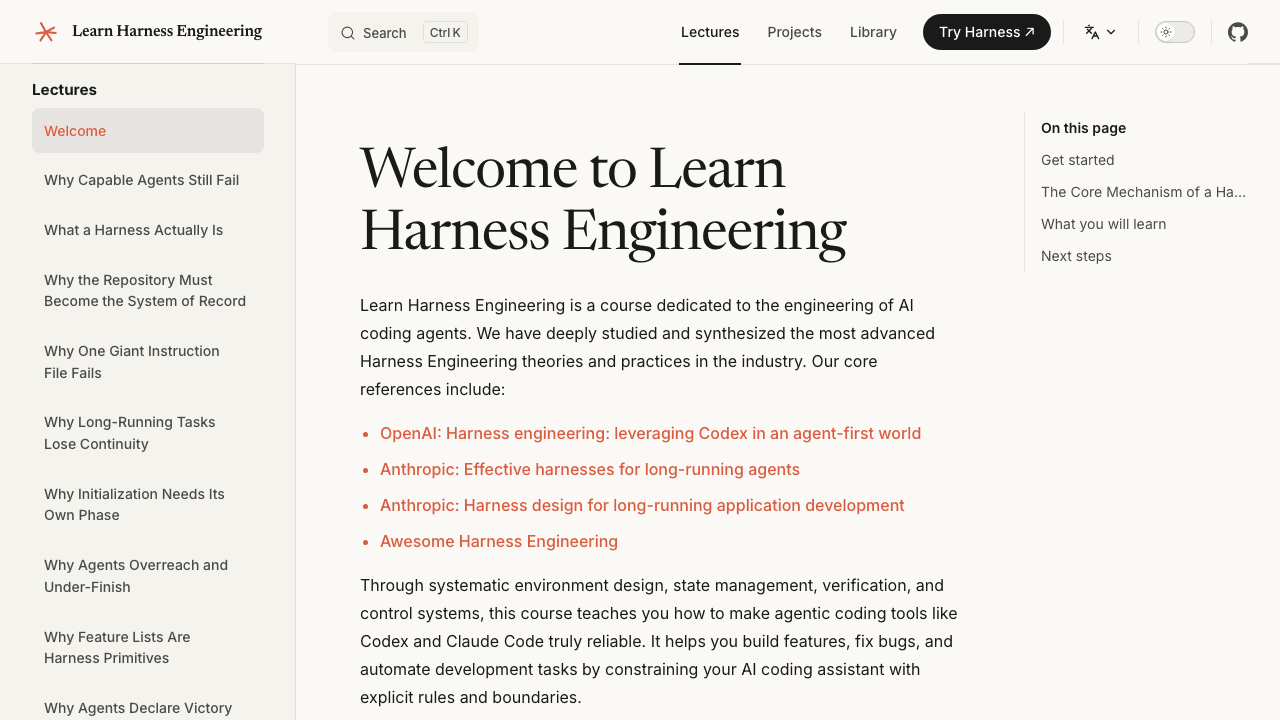 walkinglabs/learn-harness-engineering
Harness engineering beginner tutorial, from 0 to 1
walkinglabs/learn-harness-engineering
Harness engineering beginner tutorial, from 0 to 1
-
 awesome-dsh-plugin/awesome-dsh-plugin
A curated list of plugins for DeepSeek Harness (dsh) · DeepSeek Harness 插件精选列表
awesome-dsh-plugin/awesome-dsh-plugin
A curated list of plugins for DeepSeek Harness (dsh) · DeepSeek Harness 插件精选列表
-
 MemTensor/MemOS
Self-evolving memory OS for LLM & AI Agents: ultra-persistent memory, hybrid-retrieval, and cross-task skill reuse, with…
MemTensor/MemOS
Self-evolving memory OS for LLM & AI Agents: ultra-persistent memory, hybrid-retrieval, and cross-task skill reuse, with…
- yjh051108/dsh-routing-suite dsh-routing-suite — injector + router-standard kit: install the runtime injector first, then the task-aware reasoning-mo…