yhfgyyf/dsh-auto-preset-router
A DeepSeek Harness profile bundle that adds an Auto Agent Preset. The first direct user prompt is classified by the fixed deepseek-official/deepseek-v4-flash model, then the untouched prompt runs under one of DSH's four shipped presets with the model selected for that session. After mounting the target preset, an isolated second V4 Flash call
catalog 简介 / catalog descriptioncatalog description:Routes the first DSH prompt to Standard, PTC, Minimal, or Cordis with DeepSeek V4 Flash.
项目介绍Project Overview
DSH Auto Preset Router 是一个 DeepSeek Harness 插件包,新增 Auto 代理预设。它先用 V4 Flash 模型对首个用户提示分类,再在四个内置预设中选择对应预设运行。适合需要自动路由任务的场景。注意:首个提示文本会发送给 V4 Flash,即使会话使用其他模型。
DSH Auto Preset Router is a DeepSeek Harness plugin bundle adding an Auto agent preset. It classifies the first direct user prompt via the V4 Flash model, then routes the untouched prompt to one of four shipped presets. Use it for automatic task routing across standard, code, minimal, or cordis workflows. Caveat: the first prompt text is sent to V4 Flash even when the session uses a different model.
请帮我了解并安装插件:【dsh-auto-preset-router】【https://github.com/yhfgyyf/dsh-auto-preset-router】把上面这条消息直接发给当前会话里的 DSH,让它帮你了解并安装。安装命令不一定准确,发给 DSH 更稳。Send this message to DSH in your current session. CLI install commands may not be accurate across systems — DSH will figure it out for you.
或使用命令行安装(适合开发者)Or use CLI install (for developers)
命令行安装CLI Install
dsh plugin --profile web add github:yhfgyyf/dsh-auto-preset-router把 yhfgyyf/dsh-auto-preset-router 加入你的 DSH 配置(web profile)即可启用。
READMEREADME
DSH Auto Preset Router
A DeepSeek Harness profile bundle that adds an Auto Agent Preset. The first
direct user prompt is classified by the fixed
deepseek-official/deepseek-v4-flash model, then the untouched prompt runs
under one of DSH's four shipped presets with the model selected for that
session. After mounting the target preset, an isolated second V4 Flash call
selects likely necessary installed tool and Skill names from a bounded,
JSON-framed catalog; deterministic lexical ranking is the failure fallback.
Auto appends only those bounded names. It never loads a Skill body or changes
the target preset's tool prefix.
Routing policy
| Target | Selected for |
|---|---|
standard |
Web/current information, mixed non-programming work, general assistance, full tool ecosystem, or ambiguity |
code |
Any repository/source-code analysis or programming task, plus broad batch/parallel tool orchestration |
minimal |
Demanding self-contained reasoning, mathematics, or algorithmic analysis with no repository or programming work |
cordis |
Non-programming DSH preset/Cordis conceptual or runtime work |
The classifier uses no tools, reasoning effort off, temperature 0, and a
16-token output limit. On DSH rc.1 it receives the first prompt text plus safe
attachment metadata (name, dimensions, and media type), never image bytes.
A failed or ambiguous classification falls back to standard.
While Auto waits for the first prompt, it mounts only DSH's official filesystem
Skill catalog provider so Web and TUI can offer user-invocable /skill-name
entries. Auto itself still exposes no model-facing tools; after routing, the
selected preset owns Skill loading and prompt injection.
Install
DeepSeek Harness 0.1.1-rc.1 or a compatible later build is required.
dsh plugin --profile web add github:yhfgyyf/dsh-auto-preset-router
dsh plugin --profile web add github:yhfgyyf/dsh-progressive-tools
dsh web
For a separately installed TUI profile that composes the official
agent-presets service, install the bundle into that profile too:
dsh plugin --profile tui add github:yhfgyyf/dsh-auto-preset-router
dsh plugin --profile tui add github:yhfgyyf/dsh-progressive-tools
dsh --profile tui
The bundle keeps the official roster service, contributes its package-owned
read-only preset through that roster, and sets the assembly default to auto.
It does not rewrite settings.yaml. An explicit user setting remains
authoritative; set this if needed:
agent-presets:
  default: auto
After the first prompt is routed, DSH records auto-router/classified and then
agent-preset/selected before the first real turn. The classification event
contains classifierProvider, classifierModel, rawOutput, finalPreset,
fallbackUsed, errorCode, latencyMs, capabilitySelection, toolHints,
and skillHints. The
session is then locked to the
selected preset by DSH's normal non-empty-session rule.
When at least one installed summary matches, a plugin-owned
<auto-capability-hints> message follows the untouched first user message. It
names at most five tools and three Skills. With dsh-progressive-tools, the
agent uses search_tools/describe_tools for deferred schemas; selected Skills
continue through DSH's official stable skill(name) loader.
Remove
dsh plugin --profile web remove dsh-auto-preset-router
dsh plugin --profile tui remove dsh-auto-preset-router
Existing sessions retain the preset recorded in their durable history. A local
$DSH_HOME/.agent-presets/auto directory, if present, is shadowed while this
bundle is installed and is never modified. Removing the bundle removes its
roster contribution on the next process start.
Privacy and failure behavior
The first prompt text and attachment metadata are sent to DeepSeek V4 Flash
even when the session uses a different model. Image bytes are never sent to
the classifier. The untouched multimodal prompt goes through DSH's native rc.1
attachment path after routing, so the session's selected model must genuinely
declare image input. DeepSeek's shipped Flash and Pro routes are text-only;
rc.1 adds the official deepseek-v4-flash-vision-exp image model. DSH refuses
the send and retains the draft until that model, or another image-capable
route, is selected. Prompts over 24,000 characters are reduced to their
beginning and end. Classifier failures route to standard.
Development
npm test
npm run check
npm pack --dry-run
With a configured TUI profile and DeepSeek credentials, the optional live gate runs one fresh session for each target (and creates four short session logs):
npm run test:live:tui
The repository uses the current DSH plugin distribution contract:
package.json declares dsh.bundle.patch, and cordis.patch.yml composes the
package through dsh plugin --profile … add ….
相关推荐Related
-
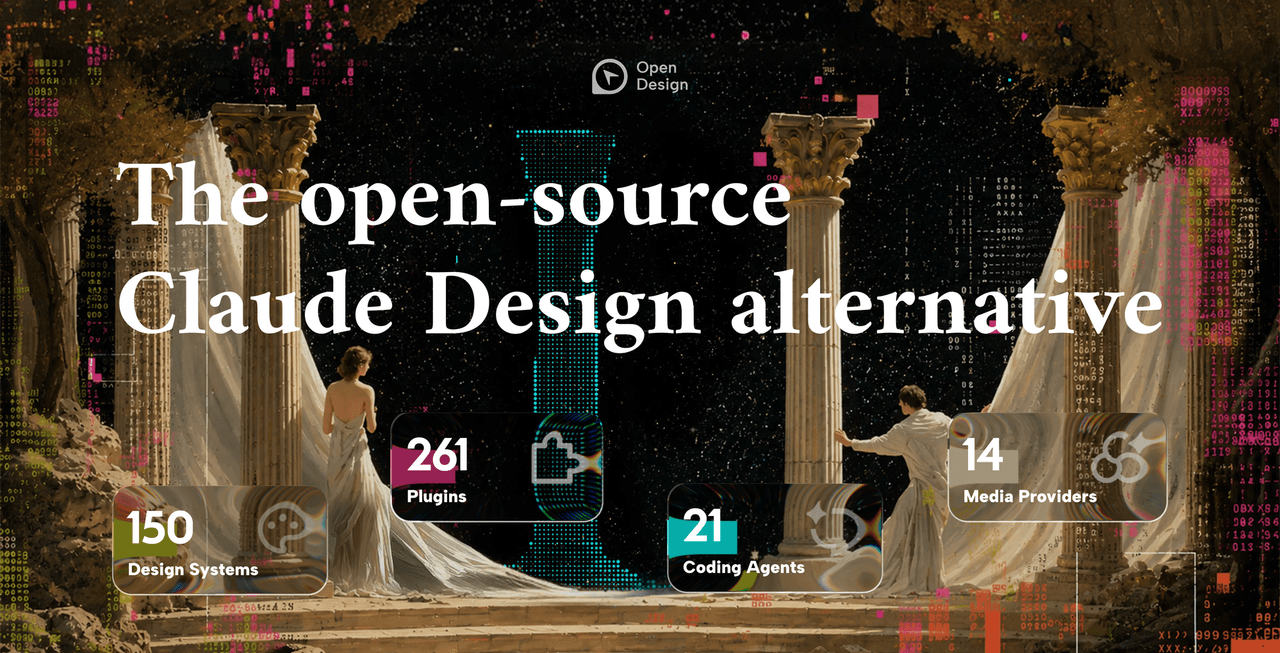 nexu-io/open-design
🎨 Best DeepSeek Harness Design Plugin. The open-source Claude Design alternative. 🖥️ Local-first desktop app. 🖼️ Your…
nexu-io/open-design
🎨 Best DeepSeek Harness Design Plugin. The open-source Claude Design alternative. 🖥️ Local-first desktop app. 🖼️ Your…
-
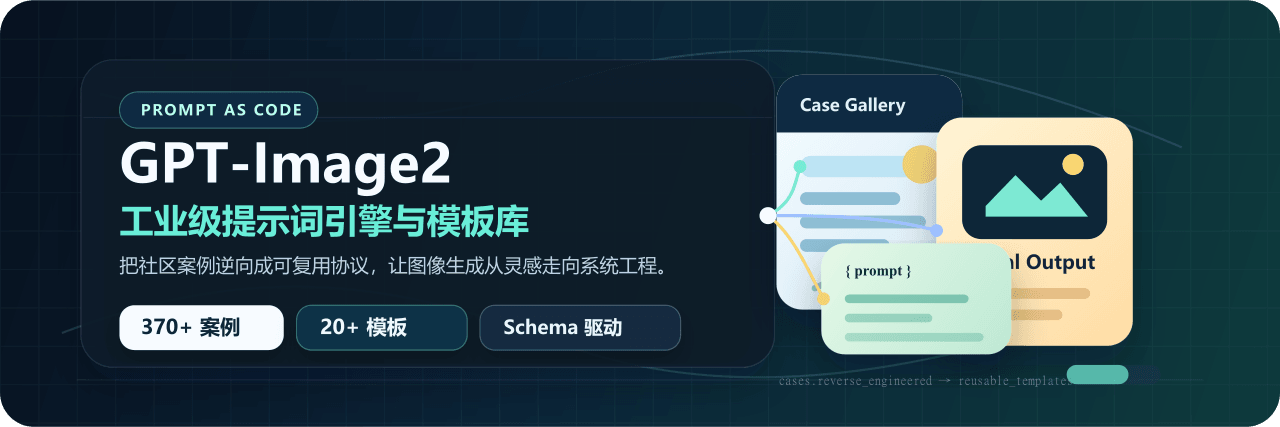 freestylefly/awesome-gpt-image-2
Prompt as Code | GPT-Image2 工业级提示词引擎与模板库,530+ 个案例逆向工程,20+ 套工业级模板,并提炼出Skills,持续更新中
freestylefly/awesome-gpt-image-2
Prompt as Code | GPT-Image2 工业级提示词引擎与模板库,530+ 个案例逆向工程,20+ 套工业级模板,并提炼出Skills,持续更新中
-
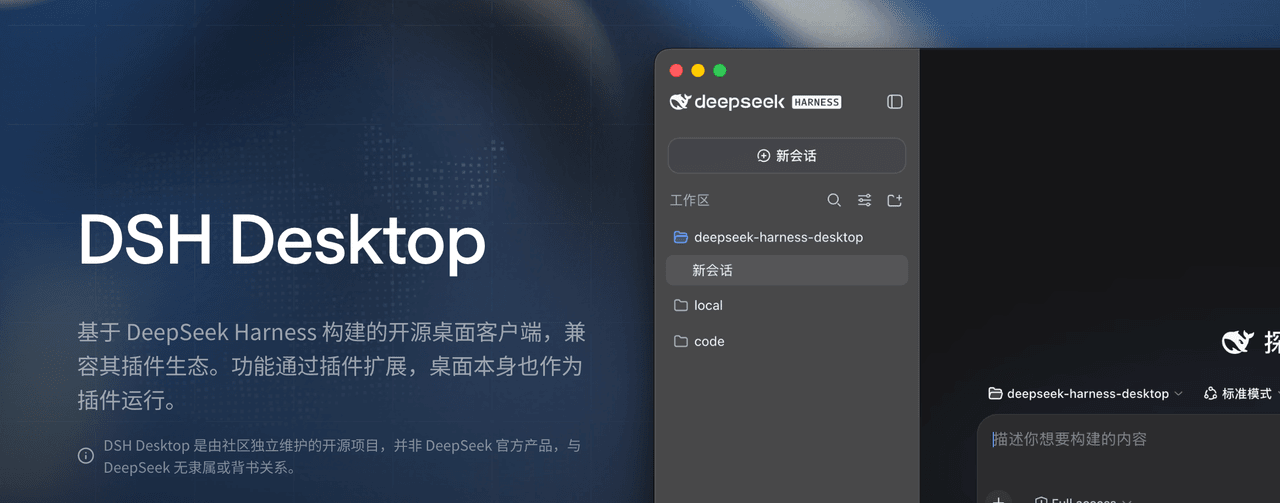 anywhere-labs/dsh-desktop
为 DeepSeek Harness (DSH) 插件生态打造的现代化桌面端解决方案。万物皆「插件」,桌面本身也是「插件」。
anywhere-labs/dsh-desktop
为 DeepSeek Harness (DSH) 插件生态打造的现代化桌面端解决方案。万物皆「插件」,桌面本身也是「插件」。
- Nagi-ovo/voyager Enhancement suite for Gemini, AI Studio, Claude & ChatGPT — plus a prompt manager for any web UI, DeepSeek Harness inclu…
-
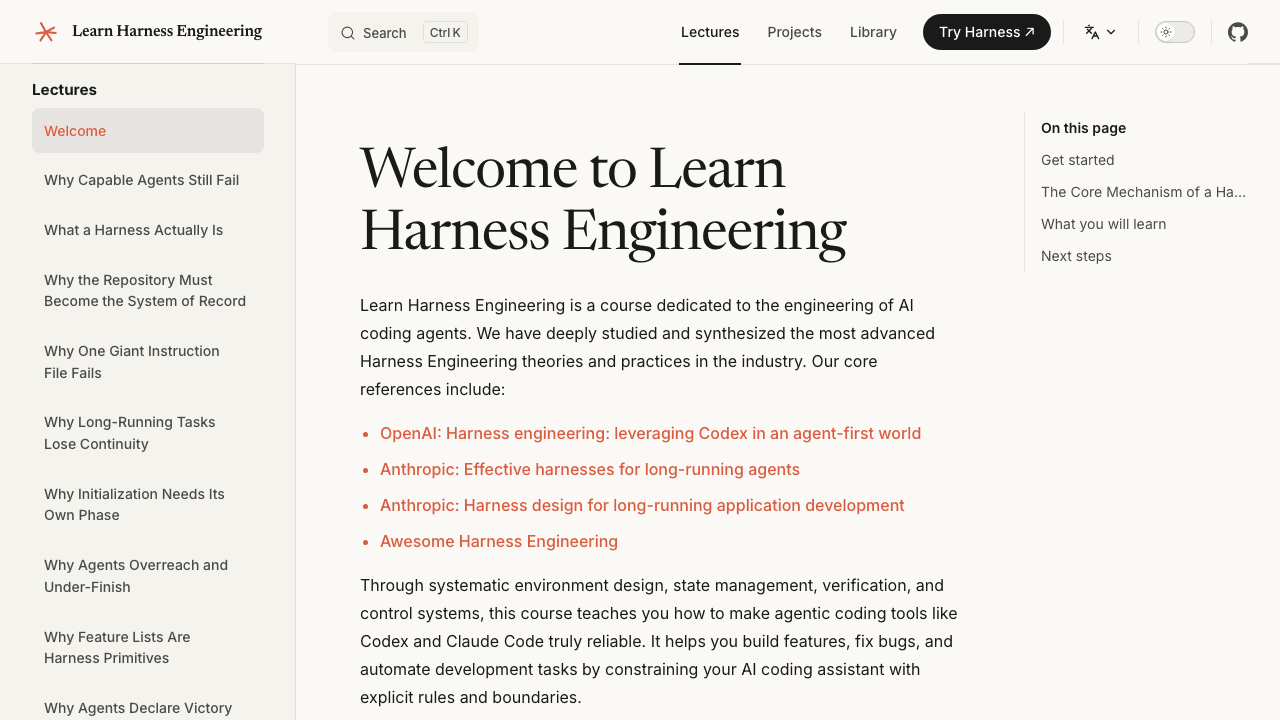 walkinglabs/learn-harness-engineering
Harness engineering beginner tutorial, from 0 to 1
walkinglabs/learn-harness-engineering
Harness engineering beginner tutorial, from 0 to 1
-
 awesome-dsh-plugin/awesome-dsh-plugin
A curated list of plugins for DeepSeek Harness (dsh) · DeepSeek Harness 插件精选列表
awesome-dsh-plugin/awesome-dsh-plugin
A curated list of plugins for DeepSeek Harness (dsh) · DeepSeek Harness 插件精选列表
-
 MemTensor/MemOS
Self-evolving memory OS for LLM & AI Agents: ultra-persistent memory, hybrid-retrieval, and cross-task skill reuse, with…
MemTensor/MemOS
Self-evolving memory OS for LLM & AI Agents: ultra-persistent memory, hybrid-retrieval, and cross-task skill reuse, with…
- yjh051108/dsh-routing-suite dsh-routing-suite — injector + router-standard kit: install the runtime injector first, then the task-aware reasoning-mo…