Zenjibad/dsh-any-attachment
dsh 捆绑包:在 DeepSeek Harness Web UI 中附加任意文件类型——文本类文件内联展示,二进制文件以工作区路径引用形式呈现,栅格文件则通过内置管道处理。
Project Overview项目介绍
This is a native plugin bundle built exclusively for DeepSeek Harness (DSH), designed to extend the DSH Web UI with the ability to attach any file type via pathless @-mentions. To install the plugin, run the command dsh plugin --profile web add https://github.com/Zenjibad/dsh-any-attachment in your terminal, then restart dsh web and hard-refresh your browser page to activate it. No changes are made to the core DSH repository, and no files are written to your existing user workspace, so it does not risk altering or cluttering your existing project files. After installation, you can start using the attachment features right away without any extra configuration steps.
When you start composing a message, you can type @ to pull up a flat list of all files in your current session workspace, filtered automatically to exclude hidden files and node_modules directories. You can type additional characters to filter the list by name, pick the file you want, and a pathless @name chip will be inserted directly into your message draft. You can also drag and drop a local file directly onto the composer, or click the + button to upload a local file for attachment. All uploaded files are stored privately in the $DSH_HOME/attachments-any/ directory, and never added to your public project workspace.
This plugin is released under the open source MIT license, so it is free to use, modify, and distribute for both personal and commercial projects. It has a few documented limits: individual files cannot exceed 25MB in size, @-list file depth is capped at 4 levels below the workspace root, and the @-list will show a maximum of 500 sorted entries. Raster image files like PNG, JPEG, WEBP, and GIF still route through DSH’s built-in image processing pipeline so vision models can read them correctly. You can run node --test to test the plugin after making local modifications to the codebase.
这是DeepSeek Harness(DSH)的原生插件包,用于让DSH的Web界面支持以无路径@提及的方式添加任意类型的文件。用户可以在输入框输入@选择工作区文件,也可以拖放文件或点击+按钮把文件添加到消息中,代理随后就会使用自身工具直接读取目标文件。该插件可通过DSH内置的CLI命令一键安装,安装后重启DSH Web并刷新页面即可使用。
使用该插件添加文件时,输入@后会弹出当前会话工作区的文件列表,可输入关键词过滤筛选,选择后就会插入无路径的@文件名标签。上传的文件会私密存储在$DSH_HOME/attachments-any/目录下,不会写入用户的工作区,光栅图像会保留原有的图像处理流程,不改变原有核心逻辑。
该插件遵循MIT许可协议免费开源,对单文件大小限制为25MB,@列出的文件深度最多为工作区根目录下的4层,最多列出500个条目,自动排除隐藏文件和node_modules目录。存储路径为私密目录,不会污染用户现有工作空间,可通过DSH插件命令快速添加或移除。
请帮我安装这个 DSH 插件。安装前先完成【兼容性检查 + 安全性检查】,检查通过再动手。

插件:dsh-any-attachment(Zenjibad/dsh-any-attachment)
仓库:https://github.com/Zenjibad/dsh-any-attachment
本站详情页:https://www.yhbd.top/plugins/zenjibad-dsh-any-attachment/
本站登记:类型 bundle · 归类 原生 DSH 插件 · 许可证 MIT · ⭐ 2 · 最近提交 2026-08-14 · 主语言 JavaScript

按下面顺序执行,每步先把结论告诉我,再进入下一步:

【1 兼容性检查】
① 我这边:DSH 版本、Node 版本、操作系统、当前 profile(web / desktop)。
② 读它的 README、package.json、插件 manifest,列出它要求的 DSH 版本 / Node 版本 / 操作系统 / 外部依赖 / 需要另外先装的运行时。
③ 逐条比对,结论只写「满足 / 不满足 / 未知」三种;不满足的给出可行替代方案。
④ 检查是否和我已装的插件冲突:命令名重复、skill / tool 重名、端口占用、重复注册的 MCP server。

【2 安全性检查】
① 仓库可信度:和上面「本站登记」是否一致;star / fork 数、创建时间、最近提交,是否归档或长期停更。
② 安装脚本:逐行看 package.json 的 preinstall / install / postinstall,以及 install.sh、setup.ps1 之类脚本。出现 curl|bash、下载后直接执行、混淆代码、访问与插件功能无关的域名,立刻停下来告诉我,不要继续装。
③ 依赖:列出新增依赖,标出无人维护、或与知名包拼写近似的可疑包(typosquatting)。
④ 权限与副作用:它会读写哪些目录、访问哪些域名、需要哪些 DSH 权限(filesystem / network / shell / clipboard 等),以及怎么卸载和回滚。
⑤ 如果它要求 sudo / 管理员权限,或权限明显超出功能所需,先停下来问我。

【3 安装】
上面两步没有「不满足」和「高危项」时才执行;用官方推荐方式安装,不要自行提权。

【4 汇报】
用表格输出:检查项 / 结论 / 依据 / 是否需要我决策。拿不准的一律写「未知」并说明要我怎么确认——不要猜,也不要替我决定。
Send this message to DSH in your current session: it verifies compatibility and security first (answering met / not met / unknown item by item) and only installs once everything checks out — it will stop and ask you if it finds a high-risk item. The box scrolls; the copy is the full prompt. CLI install commands may not be accurate across systems, so DSH is the safer route.把上面这条消息直接发给当前会话里的 DSH:它会先核对兼容性与安全性(逐条给「满足 / 不满足 / 未知」),确认没问题再安装,有高危项会停下来问你。框内可滚动,复制到的是完整提示词;安装命令不一定准确,发给 DSH 更稳。
- Only 2 stars - very few users, little community feedback星标只有 2,几乎没人在用,遇到问题缺少社区反馈
DSH walks through these 9 checksDSH 会逐条核对这 9 项
Compatibility兼容性
- DSH, Node, OS and profile requirementsDSH 版本 / Node 版本 / 操作系统 / profile 是否满足要求
- External dependencies and runtimes (Electron / Python / Docker, ...)外部依赖与运行时(Electron / Python / Docker 等)是否齐备
- Conflicts with installed plugins: command names, skill / tool names, ports, duplicate MCP registration与已装插件是否冲突:命令名、skill / tool 重名、端口占用、重复 MCP 注册
Security安全性
- Repo matches the facts registered here; archived or abandoned?仓库是否与页面登记一致,是否归档或长期停更
- Safety of preinstall / install / postinstall and install.sh / setup.ps1preinstall / install / postinstall 与 install.sh、setup.ps1 是否安全
- curl|bash, download-then-execute, obfuscation, unrelated domains → stop immediatelycurl|bash、下载即执行、混淆代码、无关域名 → 立刻停止
- Typosquatting or unmaintained packages among the new dependencies新增依赖里有没有 typosquatting 或无人维护的包
- Requested permissions vs. what the feature actually needs申请了哪些权限、是否超出功能所需(filesystem / network / shell / clipboard)
- Any sudo / admin requirement, plus uninstall and rollback是否要求 sudo / 管理员权限,以及卸载与回滚方式
Anything uncertain must be marked unknown with a note on how to confirm it. This site's signal screen is a static snapshot, not a security audit.拿不准的必须标「未知」并说明要我怎么确认。本站的信号筛查是静态快照,不能替代安全审计。
Or use CLI install (for developers)或使用命令行安装(适合开发者)
CLI Install命令行安装
dsh plugin --profile web add https://github.com/Zenjibad/dsh-any-attachment把 Zenjibad/dsh-any-attachment 加入你的 DSH 配置(web profile)即可启用。
READMEREADME
dsh-any-attachment
A DeepSeek Harness (dsh) plugin bundle that lets the Web UI attach files of any type as pathless @-mentions: type @ to pick a workspace file, or drop a file (or use the + button) to tag it into your message — the agent then reads the file itself with its own tools. Mentions carry the name only, never a path. Raster images keep flowing through the built-in image pipeline. No changes to the harness repo, and nothing is written into your workspaces.
How mentions work
@-list: in the composer, type@and a menu shows the session workspace's files, recursively and flat (src/main.ts,docs/guide.md, …). Type more to filter; pick one and a pathless@namechip is inserted into the draft.- Drop / + button: drop a local file onto the composer (or click +) and it is stored privately; the draft gains an
@<stored-name>chip — no path, no drive letter. - Send as usual (Enter or the send button) — every mention chip resolves to its exact file location in the sent message (
@name (C:\...\absolute\path)), so the agent reads the file directly instead of guessing where it lives. - Raster images (png/jpeg/webp/gif) still route to the built-in image pipeline (vision models see them).
- Files live under
$DSH_HOME/attachments-any/— private, never dumped into a workspace.
Install
dsh plugin --profile web add https://github.com/Zenjibad/dsh-any-attachment
Restart dsh web, then hard-refresh the page.
Limits
| Guard | Value |
|---|---|
| Max bytes per file | 25 MB |
@-list depth |
4 levels below the workspace root |
@-list entries |
500 (sorted, /-separated relative paths) |
@-list exclusions |
hidden (.-prefixed) entries and node_modules |
| Name | basename only; traversal, separators, drive letters rejected |
| Storage | private store under $DSH_HOME/attachments-any, never a workspace |
How it works
- Host (
lib/): registers an RPC channel/attachments-any(authoritytrusted-host, same LAN fence as/api).list { sessionId }walks the session workspace recursively and returns relative paths;uploadvalidates base64/size/name, writes into the private store, and returns the stored name (deduped with-2suffixes). A system-prompt section tells the agent that a referenced@namelives at./<name>relative to its working directory, or in the private store otherwise. - Client (
client/): composer+button (conversation.input.left), a capture-phase drop handler, and an@fileinput-trigger source (workspace autocomplete, pathless picks). Rasters route throughcreateDraftImages/addImages; everything else uploads via the channel and the mention@<name>is appended to the composer draft viainputActions.setDraft.
Showing the opening section of the README — the full document lives in the repository以上为 README 开头摘要,完整文档在仓库内 · View the full README on GitHub →在 GitHub 查看完整 README →
Related相关推荐
-
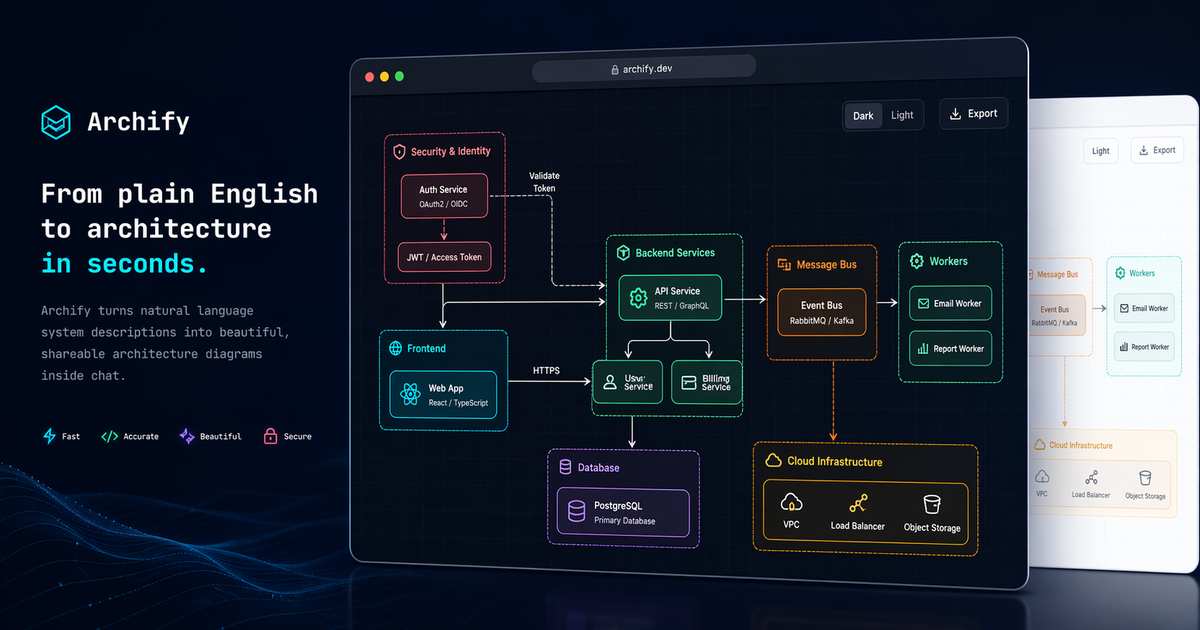 tt-a1i/archify
Agent skill for beautiful, verifiable architecture, workflow, sequence, data-flow, and lifecycle diagrams—self-contained…
tt-a1i/archify
Agent skill for beautiful, verifiable architecture, workflow, sequence, data-flow, and lifecycle diagrams—self-contained…
-
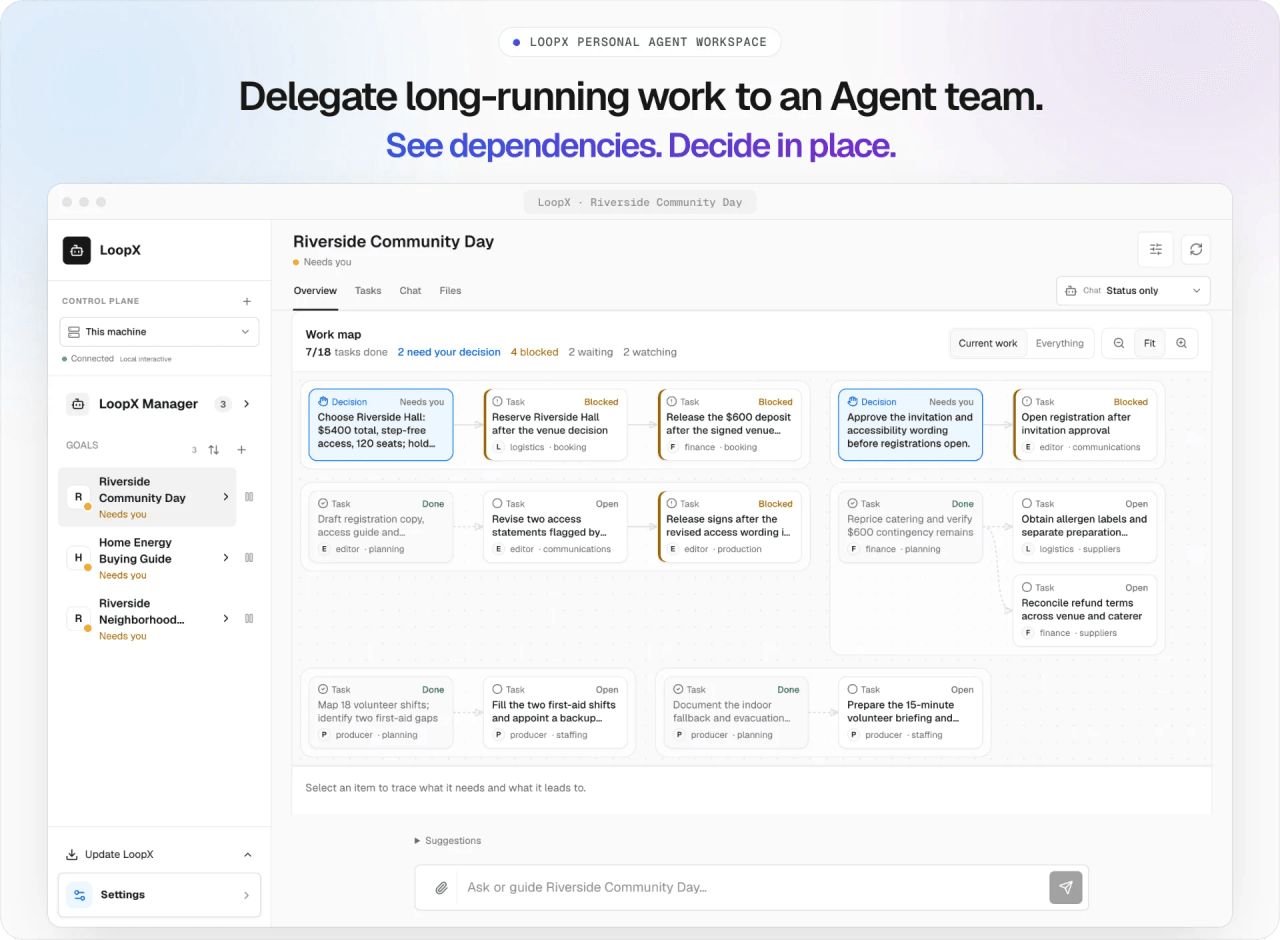 loopx-project/loopx
A control plane with a durable state kernel for long-horizon agents and teams. Keep work moving and improving across ses…
loopx-project/loopx
A control plane with a durable state kernel for long-horizon agents and teams. Keep work moving and improving across ses…
-
 ZSeven-W/openpencil
The world's first open-source AI-native vector design tool and the first to feature concurrent Agent Teams. Design-as-Co…
ZSeven-W/openpencil
The world's first open-source AI-native vector design tool and the first to feature concurrent Agent Teams. Design-as-Co…
-
 omdsh-dev/DSH-better-sidebar
开放的侧边栏底座,支持三方拓展注册新侧边栏页面。内置文件渲染编辑/终端/侧边对话/Git/子代理页面 | Open sidebar foundation, supports third-party extensions to registe…
omdsh-dev/DSH-better-sidebar
开放的侧边栏底座,支持三方拓展注册新侧边栏页面。内置文件渲染编辑/终端/侧边对话/Git/子代理页面 | Open sidebar foundation, supports third-party extensions to registe…
-
 foryourhealth111-pixel/Vibe-Skills
Intelligent Skill routing and workflow orchestration for AI agents — +21.12 pp reward, −29.6% tokens on SkillsBench with…
foryourhealth111-pixel/Vibe-Skills
Intelligent Skill routing and workflow orchestration for AI agents — +21.12 pp reward, −29.6% tokens on SkillsBench with…
-
 NanmiCoder/dsh-agent-teams
AgentTeams plugin for DeepSeek Harness
NanmiCoder/dsh-agent-teams
AgentTeams plugin for DeepSeek Harness
-
 LiPu-jpg/Openwrite
dsh-Openwrite:OpenWrite 的 DeepSeek Harness 小说创作插件,含统一创作 Agent、90 个小说工具、原生工作台与标准审稿 DAG
LiPu-jpg/Openwrite
dsh-Openwrite:OpenWrite 的 DeepSeek Harness 小说创作插件,含统一创作 Agent、90 个小说工具、原生工作台与标准审稿 DAG
- chenxiachan/thoughtdag Your thinking deserves a map: an infinite canvas where LLM conversations grow into an editable thought graph. Wires are …