孩子使用 AI 工具安全吗?Is It Safe for Children to Use AI Tools?
你十岁的孩子刚找聊天机器人帮忙写读书报告,十几岁的孩子则靠一款 AI 应用「梳理」一天的情绪——问题落到你头上:这些到底安不安全?假设孩子可以用 AI,在一个真实的、时间紧张的家庭里,负责任的使用又该是什么样子?这里给出清晰可用的答案——不制造恐慌,也不一刀切禁止——依据是证据和平台自己的实际表述。
Your ten-year-old has just turned to a chatbot for help on a book report; your teenager leans on an AI app to "process" their day — and the question lands on you: is any of this actually safe? Assuming children can use AI tools, what does responsible use look like inside a real, time-stretched household? Here is a clear, usable answer — no panic-mongering, no sweeping bans — based on what the evidence and the platforms themselves actually state.
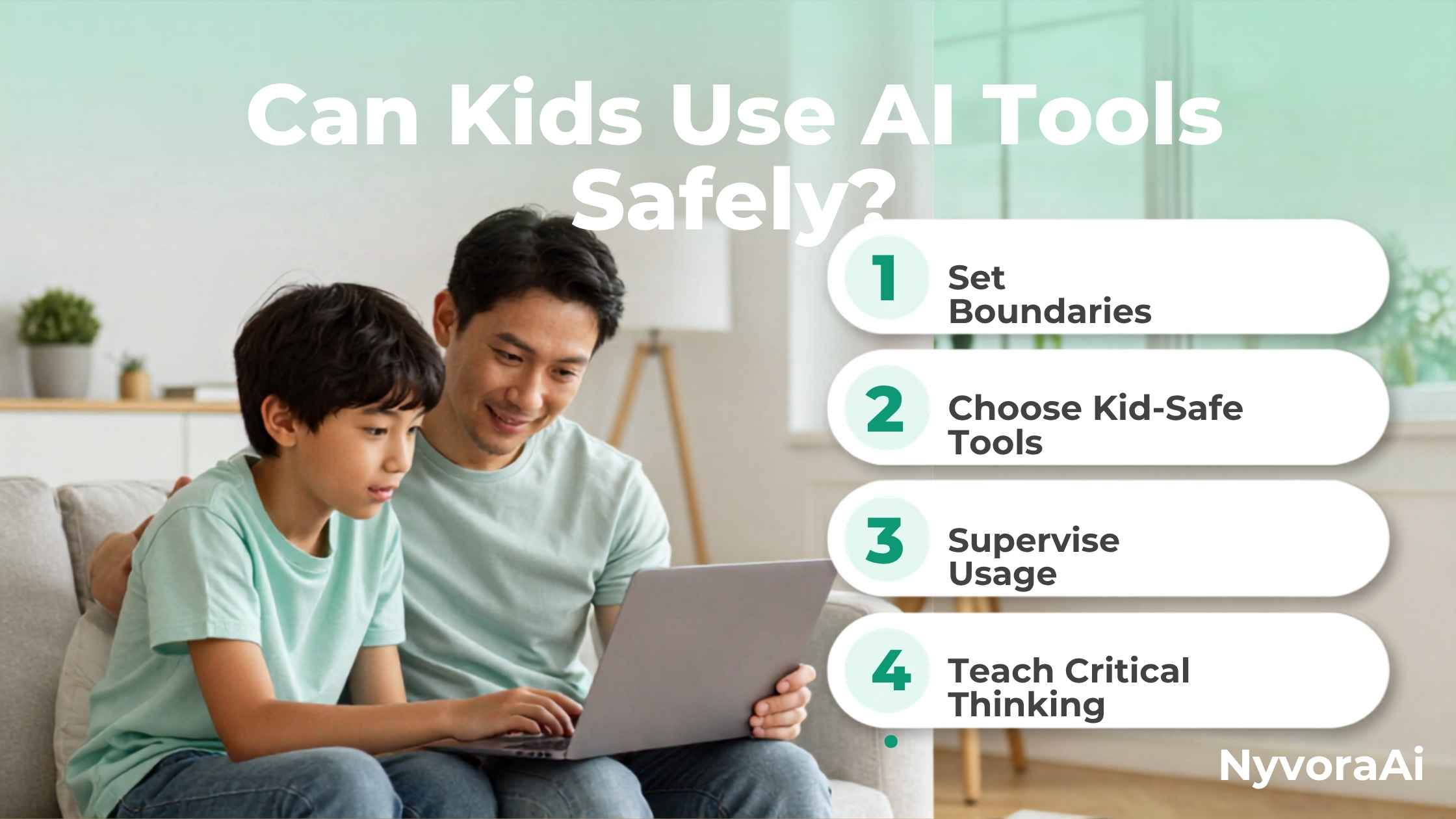
很少有哪种技术,能这么快从「技术圈玩的东西」变成「我家孩子饭桌上提起的话题」。作业助手、绘画应用、语音助手和聊天机器人伙伴,无论家长有没有准备,如今都真切地进入了许多家庭的童年。变化这么快,恰恰解释了为什么这么多家长共享同一个疑问:孩子能安全地用 AI 吗,还是我们把一个尚无人完全理解的东西迎进了家门?
坦率地说:AI 对孩子并无内在危险,但多数工具在设计时并没有把孩子当作主要用户——真正的风险正藏在这道落差里。落到实践,安全跟着四件事走:孩子用哪款工具、年龄多大、开了哪些设置,以及家长是否足够早地介入,在坏习惯扎根之前先立住好习惯。
如果你家孩子已经在好奇这项技术底层如何运作,这份好奇心恰好是开启安全对话的好入口。我们这篇用平实语言写就的什么是 AI,为什么人人都在谈论它,很适合在任何具体工具登场之前先一起读。
01简短答案:护栏搭好之后就是安全的
不妨把 AI 聊天机器人看成 21 世纪初的互联网:确实有用,也越来越难回避——而它对孩子的安全,多半建立在成年人先采取若干有准备的步骤之后。没人会毫无引导地把开放的互联网直接塞给孩子;这里的逻辑完全相同。
核心问题并不是 AI「聪明到能骗过孩子」。关键在于,多数聊天机器人是语言预测系统,主要在成年人书写的文本上训练,为就几乎任何话题展开开放式对话而建。孩子未必总能判断:一个语气笃定的回答其实是错的,或者一段对话已经越界。好奇这些工具为什么出错时还听起来那么有把握?我们这篇AI 与机器学习的界线在哪里可以充当入门读物,讲清聊天机器人的回复究竟是什么。
令人欣慰的是:一旦机制想通,安全动作就水到渠成——让工具匹配孩子的年龄,打开本来就有的控制功能,并尽早参与,让正确的习惯先成形。
02家长实操:为孩子安全配置 AI
接下来这套配置流程不需要你身上有任何技术细胞——家长可以直接照着走:
这些步骤没有一个要求技术能力——这让人松口气,毕竟多数发问的家长并不是 AI 专家,只是想为自家做个稳妥判断。等年纪更大的孩子开始更独立地探索时,我们这篇新手最易上手的 AI 工具很适合一起读,共同挑选年龄相称的产品。
03互动演示:看安全过滤器如何读一条消息
设想孩子把这里展示的这句话打进聊天机器人。每个按钮都会揭示:一套靠谱的安全系统会在这句话的哪些位置发出标记,依据又是什么。
04如今年龄规则到底长什么样
多数主流 AI 公司给账户年龄设了下限——通常是 13——与管理儿童在线行为的通用数据保护规则保持一致。低于这条线,孩子只该使用专为儿童打造的工具,而不是让家长抱着侥幸心理把通用聊天机器人交给他们。
看清这一点也有帮助:「AI」并不是风险单一的一件东西。有的产品不过是在写作应用里提供拼写助手,有的推送推荐信息流,还有的以陪伴者身份进行开放式对话。三者技术上都算 AI,但它们让孩子面对的风险却天差地别。我们这篇AI 与机器学习的界线在哪里能补充有用背景:一旦看懂内部机制,判断哪款工具适合哪个年龄就容易得多。
| 年龄段 | 建议方式 | 原因 |
|---|---|---|
| 8 岁以下 | 只使用儿童专用、过滤严格的 AI 应用,且家长在旁 | 尚不具备判断不安全或令人困惑内容的能力 |
| 8–12 岁 | 在监督下使用儿童设计的工具,共用设备,设时间上限 | 独立性在增长,但仍需有人引导习惯 |
| 13–17 岁 | 启用控制的青少年账户,定期沟通,保持对话开放 | 多数平台在法律上已允许使用;监督仍然重要 |
| 18 岁以上 | 标准成人账户,同样的批判性思维习惯依然适用 | 拥有完整平台访问权,但良好的数字习惯仍有价值 |
05AI 真正帮得上孩子的地方
一旦配置妥当,AI 能切实托举孩子的学习与创造力。下面这些领域是它回报最高的地方:
作业概念讲解
创意写作练习
儿童安全的图像生成
语言练习
引导式学习助手
家庭协作项目
如果想找一个风险确实很低的家庭起点,我们盘点的新手最易上手的 AI 工具为零基础读者而写——对在孩子身边一起学习的家长同样有用。
06真正值得家长关注的风险
多数关于「AI 与孩子」的报道都在渲染恐惧;真实的隐患比标题暗示的更明确,也更可控。下面才是真正值得留意的东西。
真正的隐患所在:
- ✗
私人信息过度分享
✗ 孩子有时把聊天机器人当作私人日记,报上姓名、学校信息或所在位置,却不明白这些数据可能被怎样存储或再利用。
- ✗
错误或编造的答案
✗ 模型会满怀把握地断言错误信息——在作业辅导中,只要答案未经核对,这就格外危险。
- ✗
情感过度依赖
✗ 有些孩子绕过家人朋友,转而向陪伴式机器人寻求情感支持,这种替代会在不知不觉中变得不健康。
- ✗
接触不适龄内容
✗ 通用聊天机器人并非只为孩子打造;过滤一旦关闭,对话就可能漂向不适龄的话题。
- ✗
批判性思维减弱
✗ 让 AI 直接代完成作业、而不是辅助学习,会悄悄侵蚀这份作业本来要锻炼的解决问题能力。
07隐私与情感健康
内容只构成图景的一半。两个不那么显眼的问题同样值得摊开来说:数据发出后去了哪里,以及这款工具月复一月对孩子情绪状态做了什么。
如果你是对这些感到有点喘不过气的非技术型家长,请放心——你远不是一个人,而且把这件事管好并不需要成为 AI 专家。我们这篇非技术人士能否每天使用 AI专门写给想要实用、不带行话指引的家长和普通用户——这种方式在引导孩子时同样奏效。
08读者最常问的问题
孩子能安全使用 AI 工具吗?
孩子从什么年龄开始用 AI 工具比较合适?
孩子用聊天机器人时,哪些风险最要紧?
有专门为儿童打造的 AI 工具吗?
家长怎样监督孩子使用 AI?
聊天机器人能取代孩子的家教吗?
AI 公司对儿童使用产品有规定吗?
孩子使用 AI 工具之前,家长该教些什么?
09结语
那么,孩子能安全使用 AI 工具吗?在多数家庭里可以——前提是把安全当作家长主动搭建出来的东西,而不是被动期待的结果。这意味着选择年龄相称的工具、启用既有的控制功能、一起定下几条清晰的基本规则,并随着孩子好奇心与独立性的增长真正参与其中。
AI 不会消失,在孩子的世界里假装它不存在也算不上什么策略。处理得好的家庭,往往把 AI 素养当作任何其他生活技能一样对待:靠真实对话逐步培养,而不是完全听天由命。如果这个话题勾起了你对 AI 实际如何运作的更广好奇,我们这篇新手学 AI 难吗很适合全家接着读。
Rarely has a technology moved so fast from "what the tech crowd uses" to "something my child raised over dinner." Homework aides, drawing apps, voice assistants and chatbot companions now genuinely belong to childhood across many households, planned or not. That velocity is precisely why so many parents share one question: can children use AI tools safely, or have we welcomed into the home something nobody yet fully understands?
The candid answer: AI carries no inherent danger to children, yet the majority of these tools weren't designed around a child as their main user — and that gap is where genuine risk sits. In practice, safety tracks four things: which tool the child uses, their age, the settings switched on, and whether a parent steps in early enough to anchor good habits before poor ones take hold.
If your child is already poking at how the technology works underneath, that curiosity doubles as a perfect safety-conversation opener. Our plain-language guide to what AI is and why it suddenly dominates conversation makes a genuinely good shared read before any specific tool enters the picture.
01The Short Answer: Safe Once the Guardrails Go Up
Treat AI chatbots roughly like the internet of the early 2000s: genuinely useful, ever harder to avoid — and safe for children largely after an adult has taken a handful of deliberate steps. Nobody handed a child the open internet with zero guidance; identical logic holds here.
The core issue isn't an AI "clever enough to fool children." It is that most chatbots are language-prediction systems, trained largely on adult-written text, built to sustain open-ended dialogue on nearly any subject. Children can't always judge when a confidently delivered answer is simply wrong, or when a conversation has wandered off limits. Curious why these tools sound so certain while mistaken? Our piece on AI versus machine learning: where the line sits primer-walks through what a chatbot reply really is.
The encouraging part: once the mechanics click, the safety moves follow naturally — match the tool to the child's age, switch on the controls already available, and stay involved early, so the right habits form first.
02A Parent's Walkthrough: Safe AI Setup for a Child
You don't need a technical bone in your body for the setup routine that follows — parents can walk straight through it:
None of these steps demands technical skill — a relief, given that most parents asking the question aren't AI specialists, just people trying to make a sound household call. When an older child starts exploring more independently, our guide to the gentlest AI tools for beginners works well as a shared read for choosing something age-matched together.
03Interactive Demo: Watching a Safety Filter Read a Message
Picture a child typing the line shown here into a chatbot. Each button reveals where a solid safety system would raise a flag inside that one sentence, and on what grounds.
04What the Age Rules Really Look Like Now
Most leading AI firms set a floor for account age — commonly 13 — tracking the general data-protection rules governing children online. Below that line, a child should only ever use tools built expressly for kids, never a general-purpose chatbot while a parent simply crosses their fingers.
It also helps to see that "AI" is no single thing with one risk level. One product may offer nothing more than a spelling aide inside a writing app; another may push a recommendation feed; a third may hold open-ended dialogue as a companion. All three technically count as AI, yet they expose a child to vastly different risk. Our explainer on AI versus machine learning: where the line sits adds useful context: once the internals make sense, judging which tool suits which age gets far easier.
| Age Band | Suggested Approach | The Reason |
|---|---|---|
| Under 8 | Only child-specific, heavily filtered AI apps, alongside a parent | Not yet able to judge unsafe or bewildering content |
| 8–12 | Supervised use of child-built tools, shared device, time caps | Independence is growing, but guided habits remain essential |
| 13–17 | Teen accounts with controls active, routine check-ins, open dialogue | Access is legally permitted on most platforms; supervision still counts |
| 18+ | Standard adult account, with the same critical-thinking habits | Full platform access, yet sound digital habits stay valuable |
05Where AI Genuinely Helps Children
Once the setup is right, AI can give a child's learning and creativity a genuine lift. The following areas are where it tends to pay off most:
Homework Concepts Explained
Creative Writing Drills
Child-Safe Image Making
Language Practice
Guided Study Aides
Joint Family Projects
For a genuinely low-risk starting point as a family, our roundup of the gentlest AI tools for beginners is written for complete newcomers — just as useful for a parent learning beside their child.
06The Risks That Actually Deserve a Parent's Attention
Most "AI and children" coverage leans on fear; the real hazards are sharper and far more controllable than headlines imply. These are the things genuinely worth tracking.
Where the Genuine Hazards Sit:
- ✗
Oversharing Private Details
✗ Children sometimes treat a chatbot as a private journal, handing over names, school facts or location details without grasping how that data might be stored or reused.
- ✗
Wrong or Fabricated Answers
✗ Models can assert falsehoods with total certainty — a particular danger in homework help whenever the answer goes unverified.
- ✗
Emotional Over-Dependence
✗ Some children lean on companion-style bots for emotional support instead of family or friends, and the substitution can quietly turn unhealthy.
- ✗
Stumbling Into Unsuitable Material
✗ General-use chatbots aren't built solely for children; with filters off, dialogue can drift into subjects unsuitable for the age.
- ✗
Weakened Critical Thinking
✗ Letting AI complete schoolwork outright, rather than aid learning, can quietly erode the very problem-solving skills the assignment existed to build.
07Privacy and Emotional Wellbeing
Content is only half the picture. Two less obvious questions deserve equal airtime: what happens to a child's data after it's sent, and what the tool does to their emotional state month after month.
Swamped by all of this as a non-technical parent? Take heart — you're far from alone, and managing this well takes no AI expertise. Our guide on whether a non-technical person can use AI daily speaks directly to parents and everyday users seeking practical, jargon-free guidance — the same tone that works when guiding a child.
08Questions Readers Ask Most
Can children use AI tools safely?
What age suits a first start with AI tools?
Which hazards matter most when children use chatbots?
Do child-specific AI tools exist?
How can parents keep an eye on a child's AI use?
Can chatbots take the place of a child's tutor?
Do AI firms set rules covering children?
What should children learn before using AI tools?
09Closing Thoughts
So, can children use AI tools safely? In most households, yes — provided safety is something parents actively construct rather than passively hope for. That means age-matched tools, the controls that already exist, a few shared ground rules, and genuine involvement as curiosity and independence grow.
AI is here to stay, and pretending otherwise within a child's world is no real strategy. Families who navigate it well treat AI literacy like any life skill: built gradually through real conversation, never surrendered to chance. If this raised wider curiosity about how AI actually works, our guide to whether AI is hard for beginners to learn makes a strong next read for the whole family.