机器学习是什么,训练又是怎么进行的Machine Learning: What It Is and How the Training Happens
一谈到 AI,总有人提「训练」,但很少有人能说清它到底指什么。下面把整个过程一步步摊开:机器如何从数据里学会模式,而让人头大的数学部分全部略去。
The word "training" gets thrown around whenever AI comes up, yet few people can say what it involves. Below is the whole process laid out step by step — how machines pick up patterns from data — with the intimidating math left out.
计算机忽然能认出照片里的猫、当场把一句话译成另一种语言,或者猜到你下一部想看什么电影——答案几乎总是机器学习。它与普通软件最大的区别在于:这些行为不是被写进去的。没有任何一行代码会去检查尖耳朵和胡须,然后判定「这是猫」。
它是被训练出来的。数以百万计的样例摆在它面前,模式便自行浮现。计算史上少有哪次转变像这次一样影响深远:从手写指令,转向从模式中学习。不过具体机制仍值得用大白话讲清楚——所谓「训练」一款软件,究竟发生了什么?
本文就把这个过程揭开。我们会讲清机器学习的含义、模型从数据中学习的路径,以及这项技术为何正在悄悄重画从医疗到日常社交信息流的一切。
01机器学习究竟指什么?
机器学习的本质,是人工智能中专注于「让系统从数据里获得经验」的一个分支。把传统编程的分工调转过来,差别立刻清楚:传统做法把规则和数据一起交给计算机,它返回答案;机器学习则交出数据和答案,由计算机自己找出规则。
用水果来打比方更容易理解。没人靠念定义教孩子认识苹果,而是给他看十个苹果——有红的、有绿的、有带斑点的——过不了多久,他就摸到了「苹果之所以是苹果」的共性,连从没见过的苹果也能认出来。机器学习走的是同一条路,只是把十个样例换成了数十亿个数据点。
别把这一切和单纯的自动化混为一谈。自动化沿着固定步骤走,机器学习则不一样,它会变、会适应。两者的分界具体落在哪里,我们那篇如何区分 AI 与自动化做了很实际的梳理。
02模型训练的过程是怎样的?
训练是件既严苛又反复的事,并没有一个写着「学习」的按钮可按。下面是它从原始数据走到可用 AI 的完整路径:
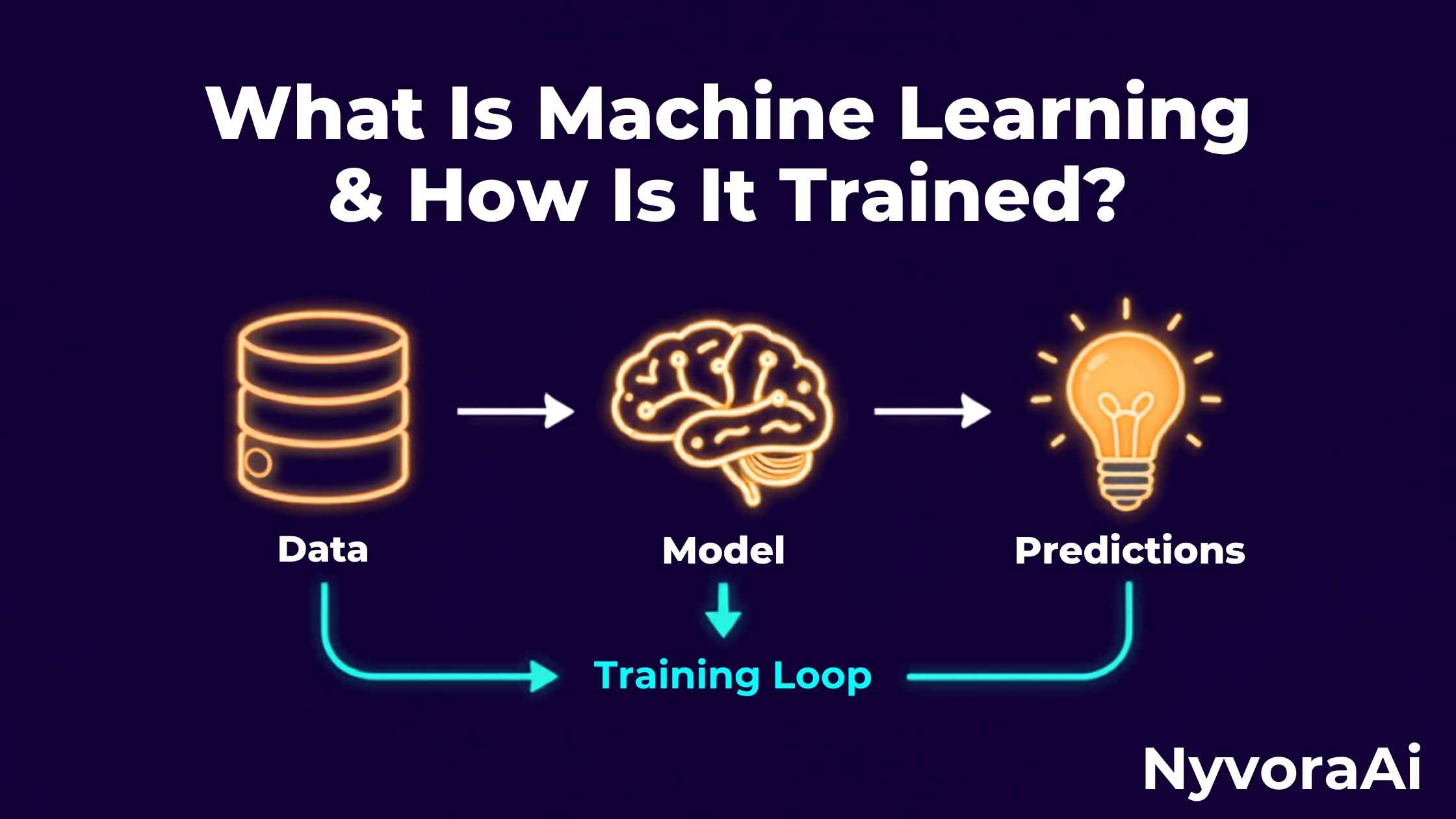
- DATA输入海量数据集
- PREDICT模型试着给出一个答案
- ERROR测量误差有多大
- ADJUST重新修订内部参数
- REPEAT循环往复,直到准确率足够高
第一步:准备数据并做分词
第一步是清洗与格式化——输入一团乱,什么也学不到。计算机读不懂文字和图像,只认数字。文本要经过分词(tokenization):把句子切成更小的片段(token),再逐一转成数值向量。这套「文字变数学」的细节,我们在分词如何把文字变成数字那篇深挖里完整讲过。
第二步:作出预测
一份数据输入后,模型依靠当下的内部设定(也就是参数或权重)给出答案。这些设定最初是随机的,所以早期预测完全是胡说:给它看一张狗的照片,它可能很笃定地说是「烤面包机」。
第三步:计算损失
接着把模型的答案与正确答案(即标签)对照。猜测与现实之间的差距,被称为损失(loss),也叫误差。训练的全部目的,就是把这个损失数值推向零。
第四步:反向传播与参数调整
学习真正发生的地方就在这里。借助一种叫反向传播(backpropagation)的数学方法,误差被反向追溯,数十亿个内部参数做出微调,使同一个错误在下一次更不容易重演。这本质上是无数次极细微的自我纠错。
03为什么非要那么多数据?
「大数据」这个词几乎总和 AI 绑在一起。它之所以重要,原因在泛化(generalization)。只用白猫训练模型,它学到的「猫」就等于白色毛茸茸的动物;一旦遇到黑猫就束手无策。反过来,把涵盖各种颜色、各种光线、各种姿态的数百万张猫图喂给它,它抓住的就是猫的根本特征,而不是背下来的一堆具体图像。
这也正是如今的大语言模型(LLMs)几乎把整个公开互联网都吃下去的原因。只有这种规模与多样性的信息量,才能撑起对细微差别、语境和罕见情形的处理能力。想更深入地了解缘由,可读我们那篇为什么训练 AI 需要如此海量的数据。
04机器学习的三大类型
学习并非只有一种套路。工程师会根据目标选择不同的训练策略:
- 监督学习:数据附带正确答案,也就是标签。就像一个同时拿着课本和答案册的学生。垃圾邮件过滤、图像识别都属于这一类。
- 无监督学习:数据不带标签,模型必须自己找出隐藏的结构与规律。可以想象把一堆打乱拼图块交给学生,让他按形状或颜色分类,而盒盖上的图案不许看。
- 强化学习:模型与环境互动,靠试错积累经验。做对了得到奖励,做错了受到惩罚。让 AI 玩复杂的电子游戏、操控机器人,用的就是这种方式。
05训练中的难题:偏见与幻觉
训练并不会带来完美。原材料来自人类产出的数据,人类的偏见也就随之混入。如果用来训练招聘算法的历史数据对某些群体不利,AI 就会把这种倾向学过去并放大。这在业内被视为核心伦理难题之一。
另一个陷阱是过拟合:模型把训练数据背得太熟,一旦遇上略有差异的新信息就失灵。它成了过去的专家,对未来却毫无用处。想让它既稳健又公平,必须在初始训练结束后再做严苛的测试与微调(fine-tuning)。
06幕后的架构:Transformer
你今天用到的东西几乎都建在同一种架构之上——Transformer。自 2017 年提出以来,它让模型能够同时关注句子中的多个部分,对语境的理解远胜此前的方法。想看懂推动当下 AI 热潮的引擎,我们那篇AI 中的 Transformer 模型是什么用大白话做了拆解。
语言翻译就是被这套架构改变的领域之一。现代机器学习模型不再逐词替换,而是把握整句话的情感与结构,结果读起来自然得令人意外。这段演进过程,我们在AI 翻译的运作机制里有更详细的梳理。
07常见问题解答
用大白话怎么解释机器学习?
训练一个模型具体包括什么?
机器学习为什么需要这么多数据?
AI 与机器学习有什么区别?
模型会出错吗?
A computer that suddenly spots a cat in a photograph, converts a sentence into another language on the spot, or knows which film you will want next — machine learning is nearly always the explanation. What sets this apart from ordinary software is that no one wrote the behavior in. There is no line of code anywhere that checks for pointy ears and whiskers and concludes "cat."
The computer learned it instead. Millions of examples were put in front of it until the patterns emerged on their own. Few shifts in the history of computing have been this consequential: away from hand-written instructions, toward learning from patterns. Yet the mechanics still deserve a plain answer — what is actually happening when you "train" software?
This guide lifts the lid on that process. We cover what machine learning means, the route a model takes to learn from data, and the reason the technology is quietly redrawing everything from healthcare to the social feed you scroll each day.
01So What Does Machine Learning Really Mean?
Machine learning (ML) is, at bottom, a corner of artificial intelligence devoted to systems that draw lessons from data. Flip the traditional arrangement around and the difference becomes obvious: conventional programming hands the computer both rules and data, and it returns answers. Machine learning hands over data and answers, and the computer works out the rules.
Fruit makes a useful comparison. Nobody teaches a child what an apple is by reading out a definition. Instead the child is shown ten apples — a red one, a green one, one with spots — and before long grasps the general shape of apple-ness well enough to name one they have never laid eyes on. Machine learning runs on the same idea, only scaled from ten examples to billions of data points.
Do not confuse any of this with plain automation. Automation runs down a fixed sequence of steps; ML behaves differently because it shifts and adapts. Where exactly the line between the two falls is the subject of our guide on telling AI and automation apart, which walks through it in practical terms.
02What Happens During Model Training?
Training is demanding and repetitive; there is no button marked "learn" to press. What follows traces the path from raw data through to an AI that actually functions:
- DATAMassive datasets go in
- PREDICTThe model attempts an answer
- ERRORThe size of the mistake is measured
- ADJUSTInternal parameters get revised
- REPEATRepeat the cycle until accuracy is high
Step 1: Getting Data Ready, and Tokenizing It
Cleaning and formatting come first — nothing can be learned from messy input. Words and pictures mean nothing to a computer; numbers do. Text goes through tokenization, a step that chops sentences into smaller pieces (tokens) and turns each one into a numerical vector. The full mechanics of that text-to-math conversion are covered in our deep dive on how tokenization turns text into numbers.
Step 2: Making a Prediction
A piece of data goes in, and the model answers using whatever its current internal settings — parameters, or weights — happen to be. Those settings start out random, so early answers are nonsense: shown a dog, the model may confidently call it a "toaster."
Step 3: Measuring the Loss
Next, the answer gets held up against the correct one, known as the label. Whatever gap separates the guess from reality carries the name loss, or error. Driving that loss figure toward zero is the entire point of training.
Step 4: Backpropagation, Then Adjustment
Here is where learning actually occurs. Through a mathematical method known as backpropagation, the error gets traced backwards and billions of internal parameters nudge slightly, arranged so the same mistake is less likely on the next pass. It amounts to endless, tiny acts of self-correction.
03What Makes All That Data Necessary?
The phrase "big data" gets attached to AI constantly. Generalization is the reason it matters. Train a model only on white cats and its understanding of cat will be white furry animal; confront it with a black cat and it falls apart. Show it millions of cat images spanning every color, every lighting condition and every pose, and what it picks up is the underlying essence rather than a set of memorized pictures.
Which is exactly why today's Large Language Models (LLMs) are fed what amounts to the whole public internet. Volume and diversity of that order are what allow nuance, context and rare situations to be handled at all. Our article on why training AI takes such enormous data goes further into the reasons.
04Three Approaches to Machine Learning
Learning does not follow one single formula. Engineers pick a strategy to match the objective:
- Supervised Learning: Correct answers, called labels, come attached to the data. Picture a student who has both the textbook and the answer key. Spam filtering and image recognition are typical uses.
- Unsupervised Learning: No labels come with the data, so hidden structures and patterns have to be discovered unaided. Imagine handing a student a heap of jumbled puzzle pieces and asking for a sort by shape or color — with the box lid kept hidden.
- Reinforcement Learning: An environment is interacted with, and lessons come from trial and error. Good moves earn rewards, bad ones draw penalties. Playing complicated video games or driving robots is how this shows up in practice.
05Where Training Goes Wrong: Bias and Hallucination
Training does not produce perfection. Human-generated data is the raw material, so human biases ride along with it. Feed a hiring algorithm historical data that disfavors certain demographics and the AI will absorb that pattern and magnify it. The field treats this as one of its central ethical problems.
Overfitting is the other trap: the training data gets memorized so thoroughly that slightly different, new material defeats the model. It turns into an expert on the past and nothing else. Robustness and fairness have to be earned through hard testing and fine-tuning once the initial training phase ends.
06The Engine Underneath: Transformer Architecture
Nearly everything you use today — translation apps, chatbots — rests on one architecture: the Transformer. Since its introduction in 2017, it has let models attend to several parts of a sentence at the same time, which yields far better context handling than earlier approaches. Our explainer on the Transformer architecture decodes the machinery behind the current AI boom in plain language.
Language translation is one field this architecture transformed. Rather than swapping words one by one, a modern ML model grasps the sentiment and structure of the whole sentence, and the output sounds strikingly natural as a result. That evolution is traced further in our piece on the mechanics of AI translation.