backrooms-yrc/dsh-openai-gateway
Expose DeepSeek Harness (dsh) as an OpenAI-compatible API server — /v1/chat/completions + /v1/models, backed by real agent sessions with tools and workspaces. 把 DeepSeek Harness 暴露为 OpenAI 兼容 API 服务端。
Project Overview项目介绍
dsh-openai-gateway is a DSH-native plugin that exposes DeepSeek Harness (dsh) as an OpenAI-compatible HTTP API. It is installed with dsh plugin --profile web add github:backrooms-yrc/dsh-openai-gateway#v0.1.1 and runs inside the dsh web process, but it spins up its own independent listener (default 127.0.0.1:41540) so that pure Bearer-token clients can reach the agent without being trapped behind the browser-session login gate that plugins such as @xgone/dsh-remote install. Endpoints include POST /v1/chat/completions (streaming and non-streaming), GET /v1/models, GET /v1/models/:id, and GET /healthz; non-standard response fields dsh_session_id and dsh_tool_calls are additive and do not break standard OpenAI clients.
The intended workflow is: install the plugin, restart dsh web (e.g. dsh web --host 127.0.0.1 --port 41539 --no-open), read the actual port from $DSH_HOME/openai-gateway/state.json and the auto-generated bearer key from api-keys.json, and then point any OpenAI SDK — Raycast, IDE plug-ins, Python or Node scripts — at http://127.0.0.1:<port>/v1. Sessions are stateless by default (all messages concatenated into one prompt), but X-DSH-Session: new or the dsh_session body field upgrades the call to a sticky session that survives across requests with continuous workspace and context, automatically resuming after dsh restarts.
It targets developers who want standard OpenAI tooling to drive a real dsh agent with tools and workspace. The plugin depends on @deepseek-ai/dsh-agent, dsh-llm, dsh-session, dsh-home-paths, and schemastery; link installs do not fetch peer dependencies and require manual symlinks into dsh's internal copies, and there is no build step — pure JavaScript. Known v0.1 limits: tool_calls are surfaced only as counts plus SSE comment frames, request-side tools/tool_choice are ignored, there is no per-key quota or rate limiting, maxSessions defaults to 16 with LRU eviction, timeoutSeconds defaults to 300 seconds, and the release is tested only against dsh 0.1.1-rc.2 with no compatibility promise; license is MIT.
dsh-openai-gateway 是一个面向 DeepSeek Harness(dsh)的原生插件,作用是把 dsh 暴露为兼容 OpenAI 的 HTTP API 服务。它由 dsh plugin --profile web add github:backrooms-yrc/dsh-openai-gateway#v0.1.1 安装并在 dsh web 进程内加载,额外自建独立 HTTP 监听(默认 127.0.0.1:41540),自管 Bearer 鉴权,避免与 @xgone/dsh-remote 这类登录门插件的浏览器会话冲突,提供 POST /v1/chat/completions(流式与非流式)、GET /v1/models、GET /healthz 等端点。
典型流程是:安装后用 dsh web --host 127.0.0.1 --port 41539 --no-open 重启,从 $DSH_HOME/openai-gateway/state.json 取端口、从 api-keys.json 取 key,再用任意 OpenAI SDK 把 base_url 指向本机端口即可驱动 dsh 的真实 Agent 会话(默认 stateless;可通过 X-DSH-Session 启用粘性会话并复用工作区)。面向需要让 Raycast、IDE 插件、脚本等标准 OpenAI 客户端复用 dsh 工具与工作区的开发者。
依赖 @deepseek-ai/dsh-agent、dsh-llm、dsh-session、dsh-home-paths、schemastery(link 模式需自行符号链接 dsh CLI 内部副本),纯 JS 无构建步骤;首次启动端口被占会记 FATAL 日志,端口冲突需改 cordis.patch.yml 后重启。v0.1 已知限制:tool_calls 不投影为 OpenAI 帧、无每 key 配额与限速、被逐出 maxSessions(默认 16,LRU)簿记的旧 Agent 由 dsh 注册表回收,单轮超时 timeoutSeconds 默认 300s;许可证 MIT,仅针对 dsh 0.1.1-rc.2 测试。
请帮我安装这个 DSH 插件。安装前先完成【兼容性检查 + 安全性检查】,检查通过再动手。

插件:dsh-openai-gateway(backrooms-yrc/dsh-openai-gateway)
仓库:https://github.com/backrooms-yrc/dsh-openai-gateway
本站详情页:https://www.yhbd.top/plugins/backrooms-yrc-dsh-openai-gateway/
本站登记:类型 plugin · 归类 原生 DSH 插件 · 许可证 MIT · ⭐ 2 · 最近提交 2026-08-23 · 主语言 JavaScript

按下面顺序执行,每步先把结论告诉我,再进入下一步:

【1 兼容性检查】
① 我这边:DSH 版本、Node 版本、操作系统、当前 profile(web / desktop)。
② 读它的 README、package.json、插件 manifest,列出它要求的 DSH 版本 / Node 版本 / 操作系统 / 外部依赖 / 需要另外先装的运行时。
③ 逐条比对,结论只写「满足 / 不满足 / 未知」三种;不满足的给出可行替代方案。
④ 检查是否和我已装的插件冲突:命令名重复、skill / tool 重名、端口占用、重复注册的 MCP server。

【2 安全性检查】
① 仓库可信度:和上面「本站登记」是否一致;star / fork 数、创建时间、最近提交,是否归档或长期停更。
② 安装脚本:逐行看 package.json 的 preinstall / install / postinstall,以及 install.sh、setup.ps1 之类脚本。出现 curl|bash、下载后直接执行、混淆代码、访问与插件功能无关的域名,立刻停下来告诉我,不要继续装。
③ 依赖:列出新增依赖,标出无人维护、或与知名包拼写近似的可疑包(typosquatting)。
④ 权限与副作用:它会读写哪些目录、访问哪些域名、需要哪些 DSH 权限(filesystem / network / shell / clipboard 等),以及怎么卸载和回滚。
⑤ 如果它要求 sudo / 管理员权限,或权限明显超出功能所需,先停下来问我。

【3 安装】
上面两步没有「不满足」和「高危项」时才执行;用官方推荐方式安装,不要自行提权。

【4 汇报】
用表格输出:检查项 / 结论 / 依据 / 是否需要我决策。拿不准的一律写「未知」并说明要我怎么确认——不要猜,也不要替我决定。
Send this message to DSH in your current session: it verifies compatibility and security first (answering met / not met / unknown item by item) and only installs once everything checks out — it will stop and ask you if it finds a high-risk item. The box scrolls; the copy is the full prompt. CLI install commands may not be accurate across systems, so DSH is the safer route.把上面这条消息直接发给当前会话里的 DSH:它会先核对兼容性与安全性(逐条给「满足 / 不满足 / 未知」),确认没问题再安装,有高危项会停下来问你。框内可滚动,复制到的是完整提示词;安装命令不一定准确,发给 DSH 更稳。
- Only 2 stars - very few users, little community feedback星标只有 2,几乎没人在用,遇到问题缺少社区反馈
DSH walks through these 9 checksDSH 会逐条核对这 9 项
Compatibility兼容性
- DSH, Node, OS and profile requirementsDSH 版本 / Node 版本 / 操作系统 / profile 是否满足要求
- External dependencies and runtimes (Electron / Python / Docker, ...)外部依赖与运行时(Electron / Python / Docker 等)是否齐备
- Conflicts with installed plugins: command names, skill / tool names, ports, duplicate MCP registration与已装插件是否冲突:命令名、skill / tool 重名、端口占用、重复 MCP 注册
Security安全性
- Repo matches the facts registered here; archived or abandoned?仓库是否与页面登记一致,是否归档或长期停更
- Safety of preinstall / install / postinstall and install.sh / setup.ps1preinstall / install / postinstall 与 install.sh、setup.ps1 是否安全
- curl|bash, download-then-execute, obfuscation, unrelated domains → stop immediatelycurl|bash、下载即执行、混淆代码、无关域名 → 立刻停止
- Typosquatting or unmaintained packages among the new dependencies新增依赖里有没有 typosquatting 或无人维护的包
- Requested permissions vs. what the feature actually needs申请了哪些权限、是否超出功能所需(filesystem / network / shell / clipboard)
- Any sudo / admin requirement, plus uninstall and rollback是否要求 sudo / 管理员权限,以及卸载与回滚方式
Anything uncertain must be marked unknown with a note on how to confirm it. This site's signal screen is a static snapshot, not a security audit.拿不准的必须标「未知」并说明要我怎么确认。本站的信号筛查是静态快照,不能替代安全审计。
Or use CLI install (for developers)或使用命令行安装(适合开发者)
CLI Install命令行安装
dsh plugin --profile web add github:backrooms-yrc/dsh-openai-gateway#v0.1.1把 backrooms-yrc/dsh-openai-gateway 加入你的 DSH 配置(web profile)即可启用。
READMEREADME
dsh-openai-gateway
Expose DeepSeek Harness (dsh) as an OpenAI-compatible API server — POST /v1/chat/completions (stream + non-stream) and GET /v1/models. Every API call is backed by a real agent session with tools and a workspace, so any OpenAI client (SDK, Raycast, scripts, IDE plugins…) can drive your agent by just filling in a base URL and an API key.
把 DeepSeek Harness 暴露为 OpenAI 兼容 API 服务端:每次 API 调用背后是带工具、带工作区的真实 Agent 会话。


工作原理
OpenAI 客户端 ──(可选: 反向代理 /v1)──▶ 插件独立 HTTP 监听 ──▶ dsh Agent 会话
                                        (自带 Bearer 鉴权)      (模型+工具+工作区)
dsh 共享 Web 服务器的路由会被登录门插件(如 @xgone/dsh-remote)整体包装,纯 Bearer 的 API 客户端拿不到浏览器会话。因此本插件自建独立监听、鉴权完全自理——API 流量与 Web UI 的登录门互不干扰,可分别暴露。
安装(完整流程)
1. 安装插件
dsh plugin --profile web add github:backrooms-yrc/dsh-openai-gateway#v0.1.1
2. 重启 dsh web
首次新增包需要重启一次:
# 先停掉正在运行的 dsh web,再以你的原参数启动,例如:
dsh web --host 127.0.0.1 --port 41539 --no-open
3. 找到你的端口和 API key
端口:默认 127.0.0.1:41540(这只是本插件的默认值,与 dsh 本身的端口无关,完全可以改)。权威查询方式——监听成功后插件会把实际地址写进状态文件,port: 0(随机端口)场景同样适用:
cat $DSH_HOME/openai-gateway/state.json
# {"host": "127.0.0.1", "port": 41540, "pid": 12345, "startedAt": "..."}
API key:未配置时首次启动自动生成一个,0600 权限落盘:
cat $DSH_HOME/openai-gateway/api-keys.json
# {"keys": ["sk-dsh-..."]}
自检:
curl http://127.0.0.1:41540/healthz
# {"ok":true,"service":"dsh-openai-gateway"}
4. 发起第一次调用
KEY=$(python3 -c "import json;print(json.load(open('$HOME/.dsh/openai-gateway/api-keys.json'))['keys'][0])")
PORT=$(python3 -c "import json;print(json.load(open('$HOME/.dsh/openai-gateway/state.json'))['port'])")

curl http://127.0.0.1:$PORT/v1/chat/completions \
  -H "Authorization: Bearer $KEY" -H "Content-Type: application/json" \
  -d '{"model":"default","messages":[{"role":"user","content":"你好"}]}'
DSH_HOME默认是~/.dsh;用环境变量DSH_HOME自定义过的以实际为准。
端口说明(重要)
41540是本插件的默认端口,不是 dsh 官方约定。它被占用时插件不会启动 dsh 崩溃,但会记录FATAL: port ... already in use日志,且state.json不会更新、/healthz不通——此时换一个端口即可;- 修改端口(在 profile 的
cordis.patch.yml或$DSH_HOME/cordis.patch.yml中):
Showing the opening section of the README — the full document lives in the repository以上为 README 开头摘要,完整文档在仓库内 · View the full README on GitHub →在 GitHub 查看完整 README →
Related相关推荐
-
 weijiafu14/pi2dsh
Bridge the Pi and DeepSeek Harness ecosystems: one Pi Host ABI runs unmodified Pi extensions as native DSH plugins. 打通 P…
weijiafu14/pi2dsh
Bridge the Pi and DeepSeek Harness ecosystems: one Pi Host ABI runs unmodified Pi extensions as native DSH plugins. 打通 P…
-
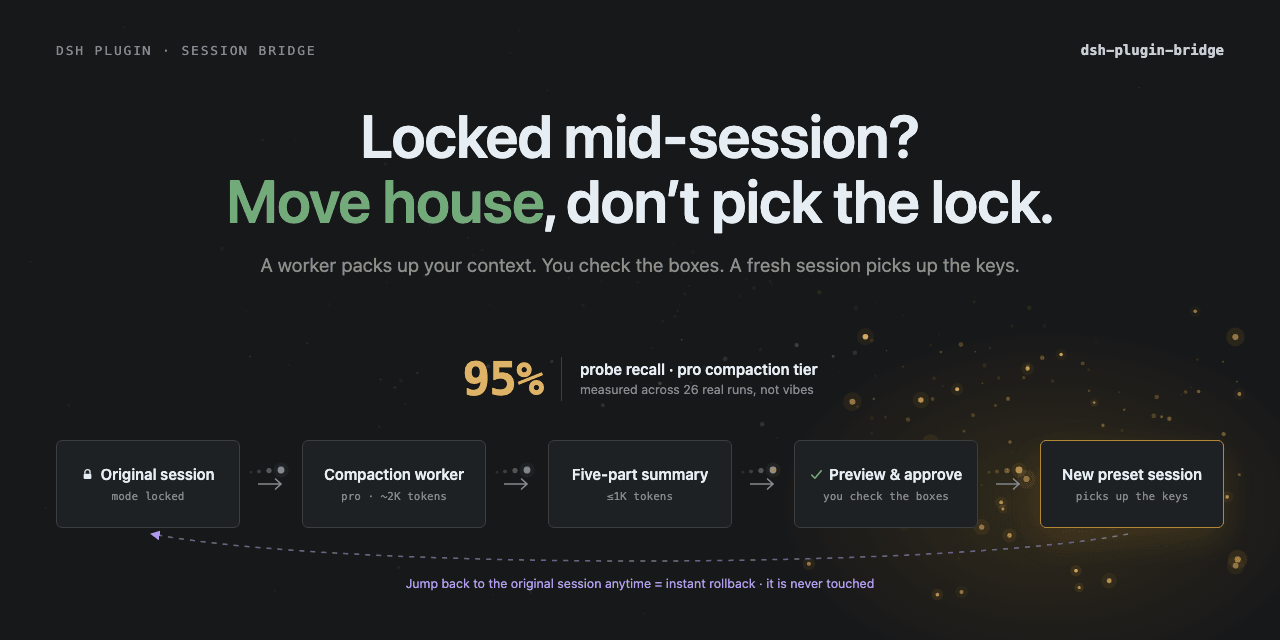 Totoro-qaq/dsh-plugin-bridge
DeepSeek Harness plugin for previewable cross-preset session migration. Fixed-schema handoffs preserve state, source-mod…
Totoro-qaq/dsh-plugin-bridge
DeepSeek Harness plugin for previewable cross-preset session migration. Fixed-schema handoffs preserve state, source-mod…
-
 Renzic-Stone/DSH-EasyRewrite
DSH Web内目前最无感的消息撤回、重编辑插件,原版体验,兼容性强,功能简单可开关,设置丰富,现代化轻量ui框架。The most seamless message recall & re-edit plugin for DSH Web …
Renzic-Stone/DSH-EasyRewrite
DSH Web内目前最无感的消息撤回、重编辑插件,原版体验,兼容性强,功能简单可开关,设置丰富,现代化轻量ui框架。The most seamless message recall & re-edit plugin for DSH Web …
-
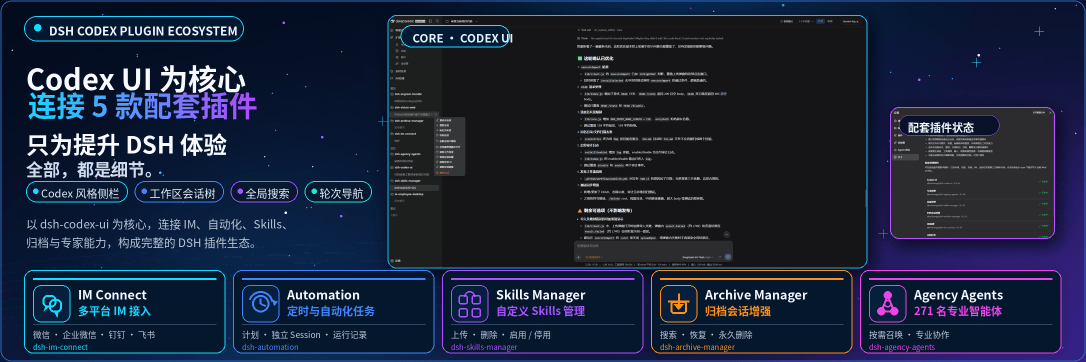 MichengAI/dsh-codex-ui
DSH Codex UI — 为 DeepSeek Harness Web 提供 Codex 风格侧栏、工作区会话树、全局搜索和轮次导航 · A Codex-style sidebar, workspace session tree, gl…
MichengAI/dsh-codex-ui
DSH Codex UI — 为 DeepSeek Harness Web 提供 Codex 风格侧栏、工作区会话树、全局搜索和轮次导航 · A Codex-style sidebar, workspace session tree, gl…
-
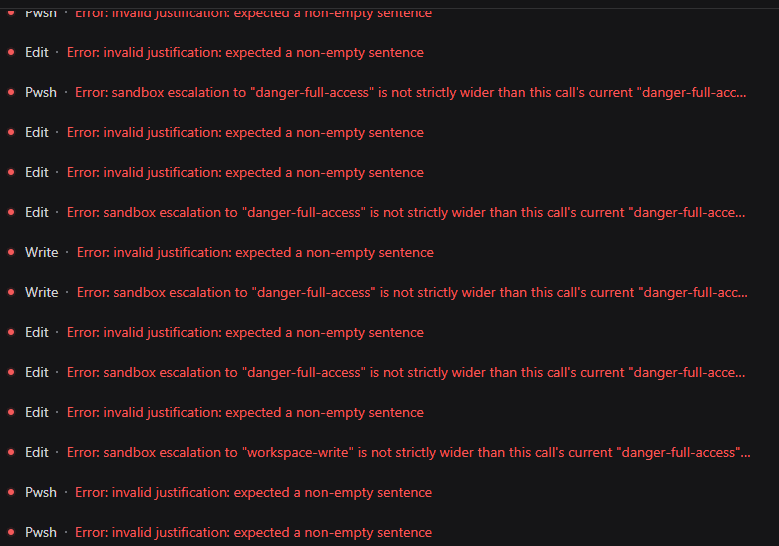 HakureiMonika/dsh-sandbox-escalation-fix
Session-aware sandbox escalation compatibility plugin for DeepSeek Harness/DSH第三方模型会话沙箱升级兼容插件
HakureiMonika/dsh-sandbox-escalation-fix
Session-aware sandbox escalation compatibility plugin for DeepSeek Harness/DSH第三方模型会话沙箱升级兼容插件
-
 PerryLink/dsh-claude-move
Four-source migration wizard for DeepSeek Harness: move Claude Code, Codex, OpenCode and Hermes sessions, memories, skil…
PerryLink/dsh-claude-move
Four-source migration wizard for DeepSeek Harness: move Claude Code, Codex, OpenCode and Hermes sessions, memories, skil…
- hkkz9522/dsh-session-manager DeepSeek Harness session manager: delete, archive, move sessions across workspaces, migrate presets, favorites, review-l…
-
 Chang-Tong/dsh-import-agents
Import pi / opencode / codex / claude-code sessions, chat history, and agents into DeepSeek Harness — one-click Sync but…
Chang-Tong/dsh-import-agents
Import pi / opencode / codex / claude-code sessions, chat history, and agents into DeepSeek Harness — one-click Sync but…