Cavan-Ou/hermes-dsh-collab
经过实战检验的多Agent协作手册,适用于DeepSeek Harness:模型层路由、规格纪律、git单写者规则——作为可安装技能。在多Agent管线中运行DSH的实战协作规范。
Project Overview项目介绍
This is a native skill plugin built explicitly for DeepSeek Harness (DSH), designed to integrate DSH as a task executor into Hermes AI orchestration pipelines. It enables automated task dispatch, execution, and verification, with quality gates that do not rely on AI self-reporting to catch hidden errors. It supports two installation methods: you can install it directly via the official DSH plugin command, or clone the repository manually and copy the skill folder to your local DSH skills directory. After installation completes, the skill loads automatically on your next DSH session, and you can run three quick checks to verify it works correctly.
This plugin targets developers who need to run long, unattended multi-agent AI pipelines for software projects. It follows a clear separation of responsibilities that has been tested in a real 14-day production pipeline with 30 total commits. The Hermes orchestrator writes the task dispatch spec, DSH executes the task following pre-defined rules, and Hermes handles post-execution quality verification. You only need to step in when a quality gate fails, which eliminates the need for constant manual oversight of routine task stages.
This plugin requires DSH version 0.1.x running on a headless profile, and it has been fully verified to work on DSH 0.1.0-rc.6. It is released under the open-source MIT license, so you can use, modify, and distribute it freely per the terms of the license. There is one known limit that the plugin explicitly documents: the upstream DeepSeek Pro model channel may be unavailable at times. It also lists 12 common pitfalls encountered during real-world use, complete with symptoms, root causes, and step-by-step fixes for each issue.
这是一个专为DeepSeek Harness(DSH)打造的原生技能插件,用于将DSH接入Hermes多AI代理编排流水线,实现任务的自动分发、执行与验证。它支持两种安装方式:通过DSH官方插件命令dsh plugin add安装,也可手动克隆仓库后复制到DSH技能目录完成安装,安装后重启DSH会话即可自动加载。它定位于填补编排器与执行器之间的操作规范缺口,减少因规则缺失导致的返工。
该插件适用于需要无人值守运行长期多AI任务流水线的开发者,完整工作流程为Hermes编写任务分发规范,DSH按预定义规则执行任务,Hermes负责后续质量验证,开发者仅需在质量门检测失败时介入处理。插件内置了经过14天实际项目验证的规则,包括模型路由分层、规范三原则、Git单写者规则等多项约束,避免不规范操作。
该插件依赖0.1.x版本的DSH,需使用无头配置文件运行,当前验证兼容的DSH版本为0.1.0-rc.6,采用MIT许可协议免费开源。需要注意的是,当前DeepSeek Pro模型通道上游可能不稳定,插件已明确标注该限制,还记录了实际使用中遇到的12种常见陷阱及对应解决方案。
请帮我安装这个 DSH 插件。安装前先完成【兼容性检查 + 安全性检查】,检查通过再动手。

插件:hermes-dsh-collab(Cavan-Ou/hermes-dsh-collab)
仓库:https://github.com/Cavan-Ou/hermes-dsh-collab
本站详情页:https://www.yhbd.top/plugins/cavan-ou-hermes-dsh-collab/
本站登记:类型 plugin · 归类 原生 DSH 插件 · 许可证 MIT · ⭐ 7 · 最近提交 2026-09-11 · 主语言 JavaScript

按下面顺序执行,每步先把结论告诉我,再进入下一步:

【1 兼容性检查】
① 我这边:DSH 版本、Node 版本、操作系统、当前 profile(web / desktop)。
② 读它的 README、package.json、插件 manifest,列出它要求的 DSH 版本 / Node 版本 / 操作系统 / 外部依赖 / 需要另外先装的运行时。
③ 逐条比对,结论只写「满足 / 不满足 / 未知」三种;不满足的给出可行替代方案。
④ 检查是否和我已装的插件冲突:命令名重复、skill / tool 重名、端口占用、重复注册的 MCP server。

【2 安全性检查】
① 仓库可信度:和上面「本站登记」是否一致;star / fork 数、创建时间、最近提交,是否归档或长期停更。
② 安装脚本:逐行看 package.json 的 preinstall / install / postinstall,以及 install.sh、setup.ps1 之类脚本。出现 curl|bash、下载后直接执行、混淆代码、访问与插件功能无关的域名,立刻停下来告诉我,不要继续装。
③ 依赖:列出新增依赖,标出无人维护、或与知名包拼写近似的可疑包(typosquatting)。
④ 权限与副作用:它会读写哪些目录、访问哪些域名、需要哪些 DSH 权限(filesystem / network / shell / clipboard 等),以及怎么卸载和回滚。
⑤ 如果它要求 sudo / 管理员权限,或权限明显超出功能所需,先停下来问我。

【3 安装】
上面两步没有「不满足」和「高危项」时才执行;用官方推荐方式安装,不要自行提权。

【4 汇报】
用表格输出:检查项 / 结论 / 依据 / 是否需要我决策。拿不准的一律写「未知」并说明要我怎么确认——不要猜,也不要替我决定。
Send this message to DSH in your current session: it verifies compatibility and security first (answering met / not met / unknown item by item) and only installs once everything checks out — it will stop and ask you if it finds a high-risk item. The box scrolls; the copy is the full prompt. CLI install commands may not be accurate across systems, so DSH is the safer route.把上面这条消息直接发给当前会话里的 DSH:它会先核对兼容性与安全性(逐条给「满足 / 不满足 / 未知」),确认没问题再安装,有高危项会停下来问你。框内可滚动,复制到的是完整提示词;安装命令不一定准确,发给 DSH 更稳。
- Only 7 stars - very few users, little community feedback星标只有 7,几乎没人在用,遇到问题缺少社区反馈
DSH walks through these 9 checksDSH 会逐条核对这 9 项
Compatibility兼容性
- DSH, Node, OS and profile requirementsDSH 版本 / Node 版本 / 操作系统 / profile 是否满足要求
- External dependencies and runtimes (Electron / Python / Docker, ...)外部依赖与运行时(Electron / Python / Docker 等)是否齐备
- Conflicts with installed plugins: command names, skill / tool names, ports, duplicate MCP registration与已装插件是否冲突:命令名、skill / tool 重名、端口占用、重复 MCP 注册
Security安全性
- Repo matches the facts registered here; archived or abandoned?仓库是否与页面登记一致,是否归档或长期停更
- Safety of preinstall / install / postinstall and install.sh / setup.ps1preinstall / install / postinstall 与 install.sh、setup.ps1 是否安全
- curl|bash, download-then-execute, obfuscation, unrelated domains → stop immediatelycurl|bash、下载即执行、混淆代码、无关域名 → 立刻停止
- Typosquatting or unmaintained packages among the new dependencies新增依赖里有没有 typosquatting 或无人维护的包
- Requested permissions vs. what the feature actually needs申请了哪些权限、是否超出功能所需(filesystem / network / shell / clipboard)
- Any sudo / admin requirement, plus uninstall and rollback是否要求 sudo / 管理员权限,以及卸载与回滚方式
Anything uncertain must be marked unknown with a note on how to confirm it. This site's signal screen is a static snapshot, not a security audit.拿不准的必须标「未知」并说明要我怎么确认。本站的信号筛查是静态快照,不能替代安全审计。
Or use CLI install (for developers)或使用命令行安装(适合开发者)
CLI Install命令行安装
dsh plugin --profile headless add github:Cavan-Ou/hermes-dsh-collab把 Cavan-Ou/hermes-dsh-collab 加入你的 DSH 配置(web profile)即可启用。
READMEREADME
hermes-dsh-collab
Hook DeepSeek Harness into your Hermes pipeline: automated dispatch, execution, and verification — with quality gates that don't trust self-reports.





简体中文版见 README.zh.md
Your AI assistant can work all day. The question is whether you can walk away.
This skill makes it safe to: Hermes writes the dispatch spec, DSH executes it, Hermes verifies it — and you only step in when a quality gate actually fails. Distilled from a real 14-day pipeline (30 commits, 7/7 stages shipped without rework).
Dependencies: DSH 0.1.x (headless profile) + any orchestrator agent (built and tested with Hermes).
Why this exists
Hermes is your personal assistant. DSH is a capable executor. The gap is the operating contract between them: what a good dispatch spec looks like, which model tier to use for which stage, who is allowed to commit, and how verification actually happens.
Most pipelines skip that contract and pay for it in rework. Recent work (COPE) shows planner/executor separation works — but only when the executor's behavior is controlled. This skill encodes those controls, from a pipeline where they were tested:
- Model-tier routing — Flash (
reasoning: max) for routine stages and for looking at images (the main model is natively multimodal — no vision tier, no vision patch), Pro for multi-file refactors and long synthesis (its channel is currently down upstream; the table says so instead of pretending otherwise). When in doubt: try Flash once — rework means escalate. - Spec 3 iron rules — Plan first · test first (TDD red→green) · scope declaration. A spec missing any of these is not shippable.
- Git single-writer — only the orchestrator commits. The executor never touches git, so history stays linear and auditable.
- Quality gates owned by the orchestrator — full test suite + build + diff-vs-scope audit + real browser walkthrough. Self-reports are not evidence.
- Write-back via cwd —
cd <project> && dsh --profile headless "task"writes straight back. No /tmp mirrors, no patch handoffs. - Pitfalls with receipts — every entry is a real incident: patch config replaces whole sections (not deep-merge),
readchokes on binaries whileread_imageneeds the model to declare image input, stale backend processes invalidate green tests…
Showing the opening section of the README — the full document lives in the repository以上为 README 开头摘要,完整文档在仓库内 · View the full README on GitHub →在 GitHub 查看完整 README →
Related相关推荐
-
 CodermanYHZ/dsh-node-flow
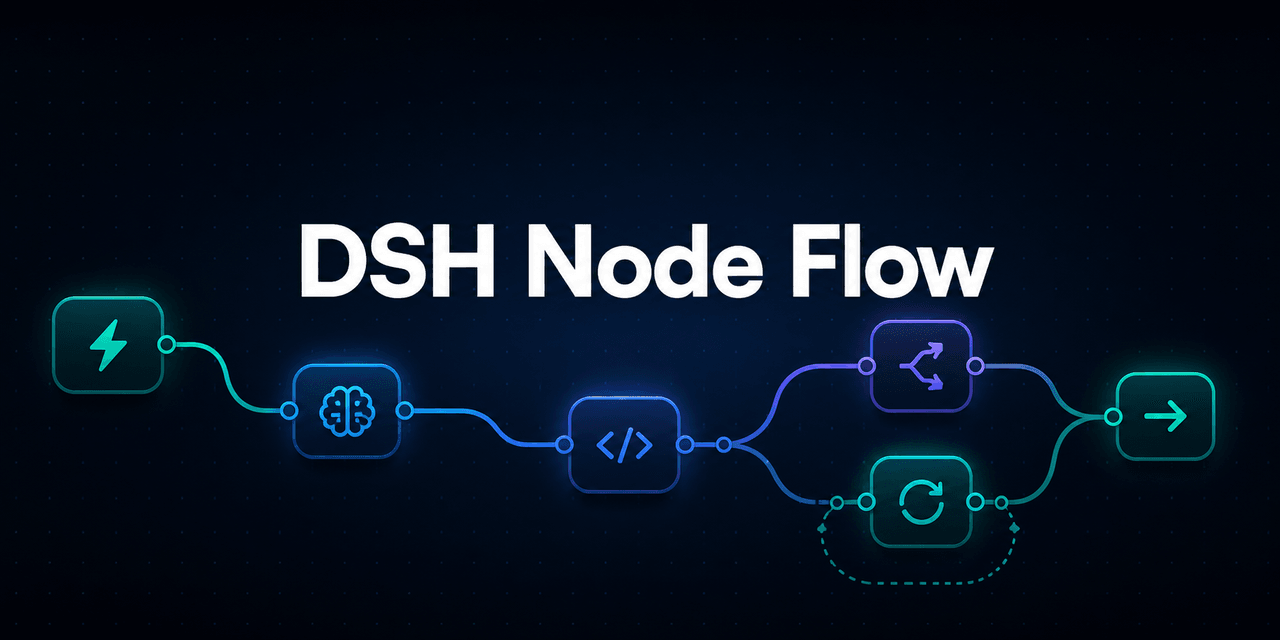
节点式 DSH 工作流画布:编排子代理、代码、条件、循环与定时任务,支持模型路由与 AI 生成指南。 Node-mode DSH workflow canvas: orchestrate sub-agents, code, conditio…
CodermanYHZ/dsh-node-flow
节点式 DSH 工作流画布:编排子代理、代码、条件、循环与定时任务,支持模型路由与 AI 生成指南。 Node-mode DSH workflow canvas: orchestrate sub-agents, code, conditio…
-
 humblebanana/open-record-replay
Open-source macOS record-and-replay workflow recorder for computer use agents. Captures mouse, keyboard, and UI events a…
humblebanana/open-record-replay
Open-source macOS record-and-replay workflow recorder for computer use agents. Captures mouse, keyboard, and UI events a…
-
 feicaiclub/deepseek-harness-whitepaper
DeepSeek Harness 白皮书 · 131 页入门加进阶综合教程:从装上它、看懂它,到自己扩展它。面向想深入研究 agent harness 的开发者,所有结论回源码核对。
feicaiclub/deepseek-harness-whitepaper
DeepSeek Harness 白皮书 · 131 页入门加进阶综合教程:从装上它、看懂它,到自己扩展它。面向想深入研究 agent harness 的开发者,所有结论回源码核对。
- diguike/book-deepseek-harness 《一切皆插件》— DeepSeek Harness 源码精读、Mini 实现与插件开发实战。21 章 + 可运行的 mini-dsh + 真实插件案例,全部数据实测。
-
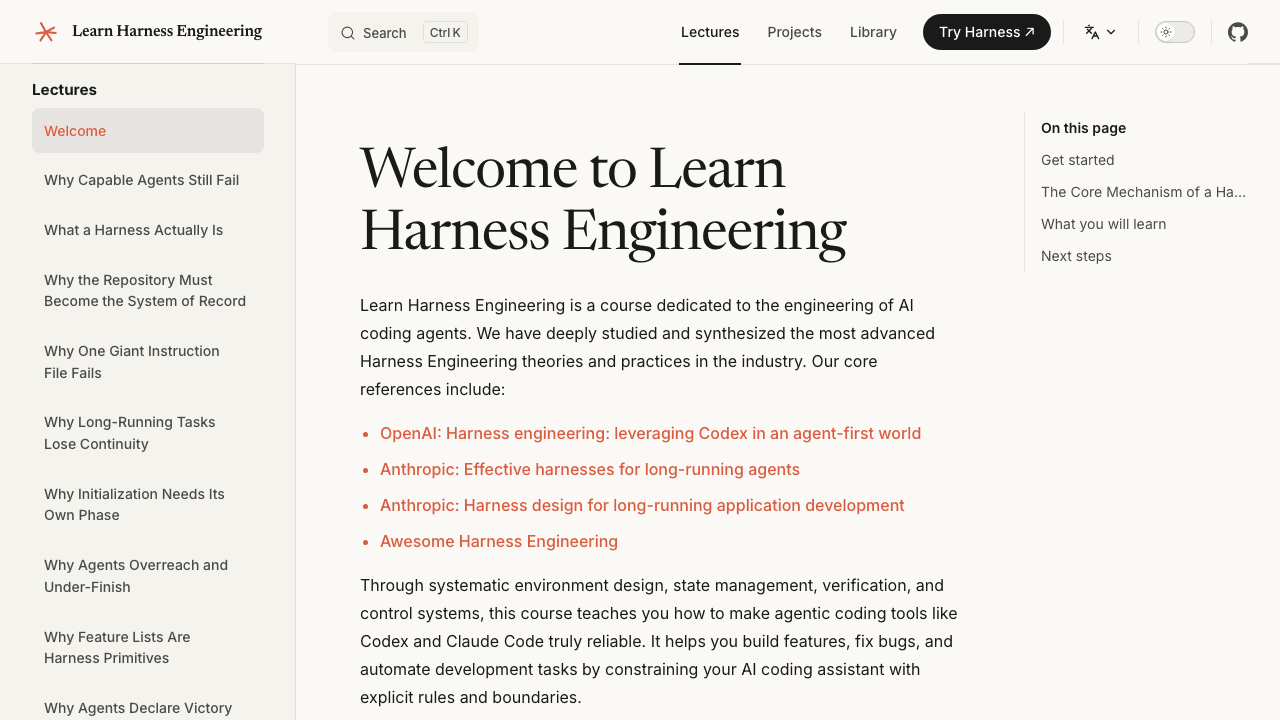 walkinglabs/learn-harness-engineering
Harness engineering beginner tutorial, from 0 to 1
walkinglabs/learn-harness-engineering
Harness engineering beginner tutorial, from 0 to 1
-
 Electricitysheep/dsh-handbook
DeepSeek Harness (dsh) 从 0 到 1 深度手册:安装/插件开发/性能调优/实测案例/同模型多 Agent 实测对比(中文 + 英文 PDF)
Electricitysheep/dsh-handbook
DeepSeek Harness (dsh) 从 0 到 1 深度手册:安装/插件开发/性能调优/实测案例/同模型多 Agent 实测对比(中文 + 英文 PDF)
-
 pingfanfan/hello-dsh
从零开始,看懂 DeepSeek Harness 的「万物皆可插件」— 零基础插件开发教程(含 22 个中文技能实例)| Zero-to-plugin tutorial for DeepSeek Harness
pingfanfan/hello-dsh
从零开始,看懂 DeepSeek Harness 的「万物皆可插件」— 零基础插件开发教程(含 22 个中文技能实例)| Zero-to-plugin tutorial for DeepSeek Harness
- liangdabiao/dsh-plugin-developer-skill dsh-plugin-developer — DeepSeek Harness 插件开发 Skill > 指导 AI Agent 从 0 到 1 开发、构建、安装、测试 DeepSeek Harness(dsh)插件。基于 **dsh 0…