DNAlec/dsh-auto-approve
DeepSeek Harness 自动审批插件:关键词 + 审核模型审核表。
Project Overview项目介绍
This is a plugin built exclusively for DeepSeek Harness (DSH) that automatically approves or rejects tool calls based on user-configured keywords and a judge model. It supports customizing approval, rejection, and manual review actions for every combination of tool call category and risk level, and routes all uncertain calls to the original DSH manual approval flow. To install, users run the DSH CLI command dsh plugin --profile web add github:DNAlec/dsh-auto-approve to pull directly from GitHub, or install the published npm package after a tagged release, then restart the dsh web service for changes to take effect. After the first successful start, the plugin automatically adds the Auto-approve permission preset to the current profile's configuration file.
After installation, all configuration is done through the DSH settings panel's Auto-approve page, and no manual file editing is required for most common use cases. Users walk through a simple setup flow: select an auto-approve mode, sort keywords into reject, human, and allow buckets, map actions to category-risk level pairs, configure the judge model settings, and finally set the session permission to Auto-approve. This plugin is designed for DSH power users who want to reduce frequent manual approval interruptions during long agent sessions, and automate consistent handling of low-risk routine tool calls to keep sessions moving without constant user input.
The plugin is released under the permissive MIT open source license, and requires no extra third-party dependencies beyond a working DSH installation. There are a few important caveats for users to note: setting the judge model's max token output cap too low will cause reasoning failures, which add unnecessary latency and can lead to all calls falling back to manual review. When upgrading the plugin, if DSH has updated its base permission presets, users need to manually merge configuration changes, and uninstalling the plugin does not delete existing user configuration or audit log data to prevent permanent data loss.
这是专门为 DeepSeek Harness (DSH) 开发的原生插件,核心功能是基于自定义关键词和可配置的裁判模型,自动批准或拒绝工具调用。插件支持按调用类别和风险等级配置不同的处理动作,无法判定的调用会转交到原有的网页人工审批流程。用户可以通过 DSH 命令行工具安装,既可以直接从 GitHub 拉取安装,也可以在版本 tagged 后从 npm 进行安装,安装后需要重启 dsh web 服务生效。
插件安装完成后,用户可以在 DSH 设置面板的「自动审批」页面完成全部配置。配置流程包括选择自动审批模式、设置关键词分桶、配置不同分类对应不同风险等级的处理动作、选择裁判模型并调整相关参数,最后将会话权限设置为自动审批即可开始使用。该插件面向需要减少 DSH 运行中人工审批打断、希望批量处理低风险常规工具调用的深度 DSH 用户。
插件遵循 MIT 开源协议,没有额外的第三方依赖,使用时需要注意几个要点:第一,裁判模型的输出 token 上限需要合理设置,过小会导致推理失败,增加不必要的调用延迟;第二,插件升级时如果 DSH 基础预设发生变更,需要用户手动合并更新配置文件;第三,卸载插件不会删除用户的配置和审计日志目录,避免数据意外丢失。
请帮我安装这个 DSH 插件。安装前先完成【兼容性检查 + 安全性检查】,检查通过再动手。

插件:dsh-auto-approve(DNAlec/dsh-auto-approve)
仓库:https://github.com/DNAlec/dsh-auto-approve
本站详情页:https://www.yhbd.top/plugins/dnalec-dsh-auto-approve/
本站登记:类型 plugin · 归类 原生 DSH 插件 · 许可证 MIT · ⭐ 3 · 最近提交 2026-09-16 · 主语言 JavaScript

按下面顺序执行,每步先把结论告诉我,再进入下一步:

【1 兼容性检查】
① 我这边:DSH 版本、Node 版本、操作系统、当前 profile(web / desktop)。
② 读它的 README、package.json、插件 manifest,列出它要求的 DSH 版本 / Node 版本 / 操作系统 / 外部依赖 / 需要另外先装的运行时。
③ 逐条比对,结论只写「满足 / 不满足 / 未知」三种;不满足的给出可行替代方案。
④ 检查是否和我已装的插件冲突:命令名重复、skill / tool 重名、端口占用、重复注册的 MCP server。

【2 安全性检查】
① 仓库可信度:和上面「本站登记」是否一致;star / fork 数、创建时间、最近提交,是否归档或长期停更。
② 安装脚本:逐行看 package.json 的 preinstall / install / postinstall,以及 install.sh、setup.ps1 之类脚本。出现 curl|bash、下载后直接执行、混淆代码、访问与插件功能无关的域名,立刻停下来告诉我,不要继续装。
③ 依赖:列出新增依赖,标出无人维护、或与知名包拼写近似的可疑包(typosquatting)。
④ 权限与副作用:它会读写哪些目录、访问哪些域名、需要哪些 DSH 权限(filesystem / network / shell / clipboard 等),以及怎么卸载和回滚。
⑤ 如果它要求 sudo / 管理员权限,或权限明显超出功能所需,先停下来问我。

【3 安装】
上面两步没有「不满足」和「高危项」时才执行;用官方推荐方式安装,不要自行提权。

【4 汇报】
用表格输出:检查项 / 结论 / 依据 / 是否需要我决策。拿不准的一律写「未知」并说明要我怎么确认——不要猜,也不要替我决定。
Send this message to DSH in your current session: it verifies compatibility and security first (answering met / not met / unknown item by item) and only installs once everything checks out — it will stop and ask you if it finds a high-risk item. The box scrolls; the copy is the full prompt. CLI install commands may not be accurate across systems, so DSH is the safer route.把上面这条消息直接发给当前会话里的 DSH:它会先核对兼容性与安全性(逐条给「满足 / 不满足 / 未知」),确认没问题再安装,有高危项会停下来问你。框内可滚动,复制到的是完整提示词;安装命令不一定准确,发给 DSH 更稳。
- Only 3 stars - very few users, little community feedback星标只有 3,几乎没人在用,遇到问题缺少社区反馈
DSH walks through these 9 checksDSH 会逐条核对这 9 项
Compatibility兼容性
- DSH, Node, OS and profile requirementsDSH 版本 / Node 版本 / 操作系统 / profile 是否满足要求
- External dependencies and runtimes (Electron / Python / Docker, ...)外部依赖与运行时(Electron / Python / Docker 等)是否齐备
- Conflicts with installed plugins: command names, skill / tool names, ports, duplicate MCP registration与已装插件是否冲突:命令名、skill / tool 重名、端口占用、重复 MCP 注册
Security安全性
- Repo matches the facts registered here; archived or abandoned?仓库是否与页面登记一致,是否归档或长期停更
- Safety of preinstall / install / postinstall and install.sh / setup.ps1preinstall / install / postinstall 与 install.sh、setup.ps1 是否安全
- curl|bash, download-then-execute, obfuscation, unrelated domains → stop immediatelycurl|bash、下载即执行、混淆代码、无关域名 → 立刻停止
- Typosquatting or unmaintained packages among the new dependencies新增依赖里有没有 typosquatting 或无人维护的包
- Requested permissions vs. what the feature actually needs申请了哪些权限、是否超出功能所需(filesystem / network / shell / clipboard)
- Any sudo / admin requirement, plus uninstall and rollback是否要求 sudo / 管理员权限,以及卸载与回滚方式
Anything uncertain must be marked unknown with a note on how to confirm it. This site's signal screen is a static snapshot, not a security audit.拿不准的必须标「未知」并说明要我怎么确认。本站的信号筛查是静态快照,不能替代安全审计。
Or use CLI install (for developers)或使用命令行安装(适合开发者)
CLI Install命令行安装
dsh plugin --profile web add @dnalec/dsh-auto-approve把 DNAlec/dsh-auto-approve 加入你的 DSH 配置(web profile)即可启用。
READMEREADME
dsh-auto-approve
English | 中文
A DeepSeek Harness plugin that auto-approves or rejects tool calls with keywords and a judge model that returns a category plus a risk level. Every category has three cells (low / medium / high), all yours to configure. Uncertainty goes to the original Web approval dialog.
Install
dsh plugin --profile web add github:DNAlec/dsh-auto-approve
Or from npm, after a tagged release:
dsh plugin --profile web add @dnalec/dsh-auto-approve
To pin a reproducible version, append
#vX.Y.Z(the tag must matchpackage.json, which the publish workflow checks).
Restart dsh web. The first start adds the Auto-approve permission preset to the current profile's cordis.patch.yml; if that write fails, the log line names the file and the reason.
Setup
Settings → Auto-approve. Each control on the page carries one line of hint; the rules live here:
- Auto-approve mode — in-workspace writes skip approval (
workspace-write, recommended), or send them through the judge (read-only). Clicking a mode writes it; restartdsh web, then re-select Auto-approve or start a new session. - Keywords — three buckets: reject / human / allow. They match the tool name, command, path, and working directory, plus the values of custom-tool (MCP and friends) arguments with unrecognized names; they never see written contents, code bodies, or numeric/boolean switches (
{content:"rm -rf /"},{recursive:true}are judged by the model only). Reject/human words also match the tool name; allow words match neither the tool name nor the session directory, sobash/writeis never allowed as a class. - Criteria table — a row is an English
id+ a description (state when to pick this id) + three cells (low/medium/high → action). The judge sees only the id and the description; the plugin runs the action in the (row, level) cell.othercannot be deleted, but its description and cells are editable. The id is what the approval history shows. - Risk levels — all three descriptions go into the prompt. When the level is unreadable (default
high) also decides which cell of that row runs, so it decides the outcome: ahighfallback rejects such calls,mediumasks a human,lowallows them. - Judge model — model, reasoning effort, judge timeout, the judge request limit, the output budget (tokens), and whether a call that is over the limit / hit the collection guard goes to a human or is rejected (arguments not captured are always rejected; not configurable — see “How it works”). The same card holds the judge prompt:
{{criteria}}inserts the criteria table and{{levels}}the level descriptions; a missing placeholder appends that block. It is editable, and restoring writes the shipped template of the language you pick and switches the language to it. The output budget (judge.maxTokens, default 8192, range 256-32768) caps how much the judge may write on its first attempt (reasoning tokens share that cap with the answer). A small cap breaks judgments: the model thinks by default, and locally it spent 3.7k-8.3k characters (≈2-5k tokens) on reasoning per call, so the old 1024 cap was always eaten by reasoning → empty answer → the plugin retried with a bigger budget, i.e. every judgment paid a wasted model call (double latency, tighter against the 20s timeout); the 2026-09-14 “every judgment goes to a human” outage was this chain at its extreme (the retry then was only 2048 and got eaten too).maxTokensis a cap, not a reservation — a model that does not think stops when done, so a generous value costs no extra time and only removes that doomed first call. It applies to routes that may reason (no effort configured but the route reports reasoning still counts); routes without reasoning stay at 256. The scene is visible in Test judgment and in the audit log. - Model-initiated human review (off by default) — when on, auto-rejections carry their reason and the model may escalate one operation to a human. The tool name is editable (restart to rename) and the notice language is Chinese or English. Enabling it turns the approval dialog into a channel the model can wake you through — including while it is being driven by untrusted content.
- Set the session permission to Auto-approve.
Showing the opening section of the README — the full document lives in the repository以上为 README 开头摘要,完整文档在仓库内 · View the full README on GitHub →在 GitHub 查看完整 README →
Related相关推荐
-
 Minglink/dsh-infinite-gen-4
DeepSeek v4.1 flash 网络安全红队工具(无限四代) 求 Star 收藏 ⭐欢迎大家提交项目的改进
Minglink/dsh-infinite-gen-4
DeepSeek v4.1 flash 网络安全红队工具(无限四代) 求 Star 收藏 ⭐欢迎大家提交项目的改进
-
 kenryu42/cc-safety-net
A pre-execution guard for AI coding agents. It blocks destructive Git and file system commands, plus common attempts to …
kenryu42/cc-safety-net
A pre-execution guard for AI coding agents. It blocks destructive Git and file system commands, plus common attempts to …
-
 hyhmrright/brooks-lint
AI code reviews grounded in 12 classic engineering books — decay risk diagnostics with book citations, severity labels, …
hyhmrright/brooks-lint
AI code reviews grounded in 12 classic engineering books — decay risk diagnostics with book citations, severity labels, …
-
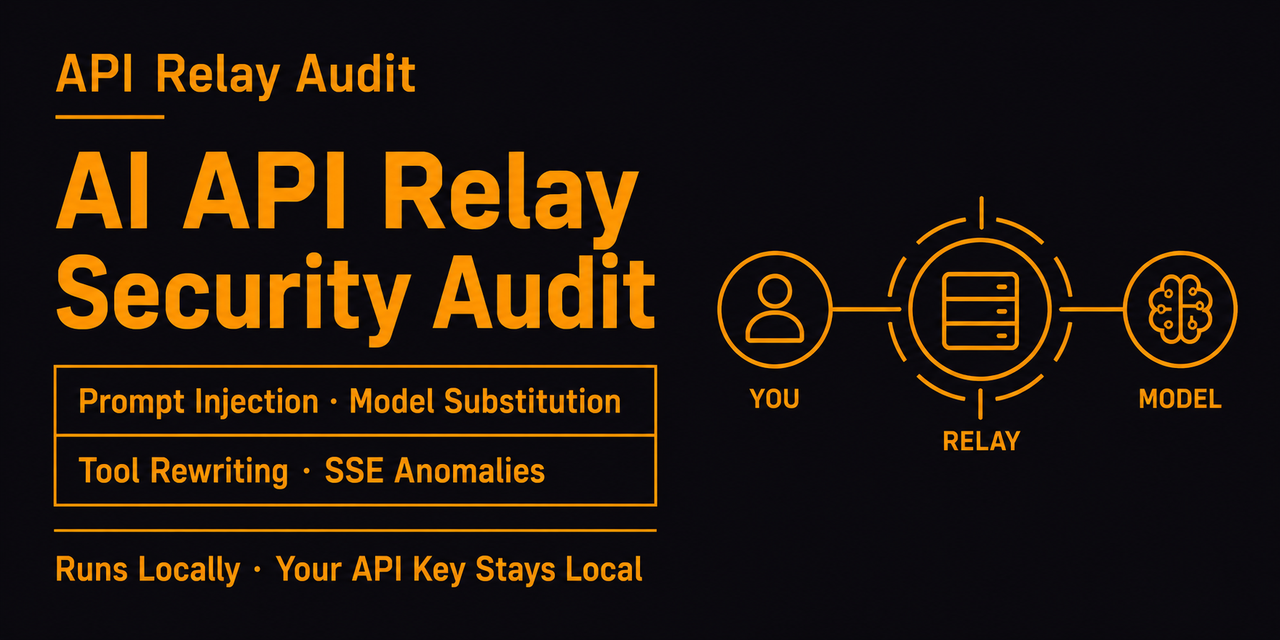 toby-bridges/api-relay-audit
Local security audit for AI API relays and LLM proxies: detects prompt injection, model substitution, tool-call rewritin…
toby-bridges/api-relay-audit
Local security audit for AI API relays and LLM proxies: detects prompt injection, model substitution, tool-call rewritin…
-
 hashgraph-online/hol-guard
Open-source antivirus for AI agents: block risky tools, secret access, prompt injection, malicious packages, MCP servers…
hashgraph-online/hol-guard
Open-source antivirus for AI agents: block risky tools, secret access, prompt injection, malicious packages, MCP servers…
-
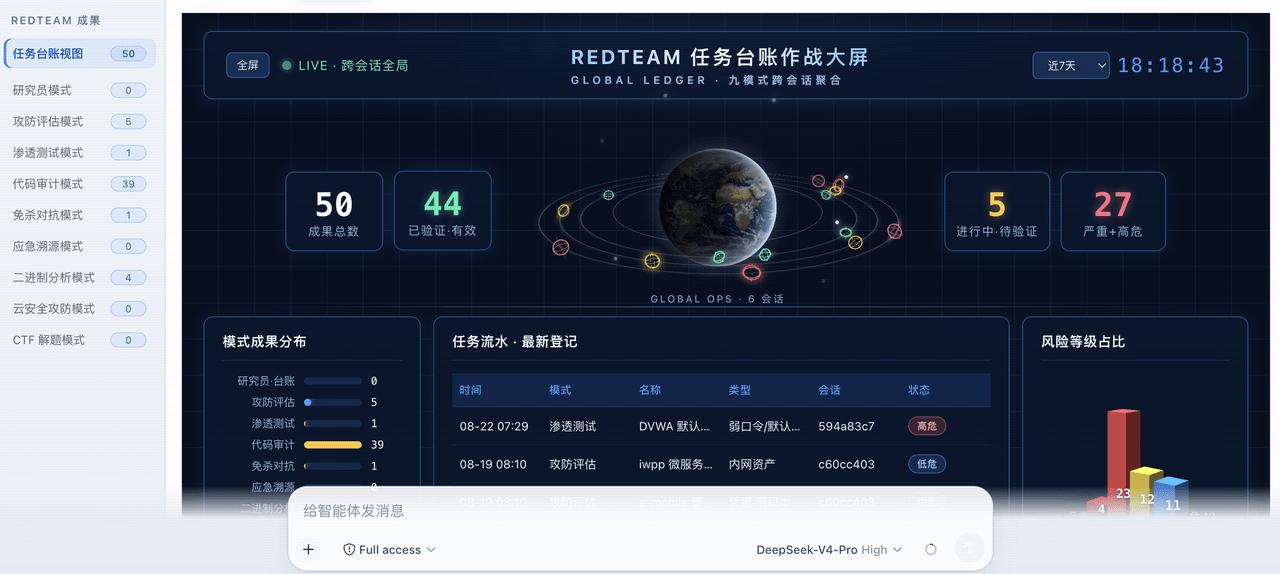 SeaOf0/dsh-redteam-model
基于dsh web实现的多种模式,目的是服务于redteam进行授权的安全研究,覆盖渗透测试、红队评估、代码审计等范围领域,请勿用于非法行为。(允许二开,赋予模块各位自己的业务逻辑,方法论只有自己熟练的才好用,好的方法论=好的生态)
SeaOf0/dsh-redteam-model
基于dsh web实现的多种模式,目的是服务于redteam进行授权的安全研究,覆盖渗透测试、红队评估、代码审计等范围领域,请勿用于非法行为。(允许二开,赋予模块各位自己的业务逻辑,方法论只有自己熟练的才好用,好的方法论=好的生态)
-
 howmp/dsh-pentest
面向 DeepSeek Harness(dsh)的渗透测试模式 @CloverSecLabs
howmp/dsh-pentest
面向 DeepSeek Harness(dsh)的渗透测试模式 @CloverSecLabs
-
 saya-ch/dsh-mobile
DeepSeek Harness 的 Android App 与安全远程访问插件,支持局域网/远程连接和高度自定义的移动界面与扩展能力。
saya-ch/dsh-mobile
DeepSeek Harness 的 Android App 与安全远程访问插件,支持局域网/远程连接和高度自定义的移动界面与扩展能力。