huyang2024/dsh-openai-api
OpenAI-compatible HTTP surface for DeepSeek Harness (dsh): POST /v1/chat/completions, POST /v1/responses, GET /v1/models over the harness webServer + llm runtime
Project Overview项目介绍
This is a native plugin built exclusively for DeepSeek Harness (DSH) that exposes an OpenAI-compatible HTTP API surface backed by live DSH agent sessions. To install it, you run either dsh plugin --profile web add github:huyang2024/dsh-openai-api to pull from GitHub, or add a local checkout via the file path. After installation, you must add an inject entry to your DSH profile’s cordis.patch.yml file, then restart the profile to activate the plugin. Once active, it serves three endpoints: /v1/chat/completions, /v1/responses, and /v1/models. Unlike a thin LLM proxy, every API request is routed through a live DSH agent that has access to all the tools, file system access, skills, and persona configured in your DSH profile.
Each session is uniquely identified by a combination of API key tenant and the optional X-Agent-Preset request header. Each distinct API key gets its own separate tenant space, so different clients will never share a session even if they target the same agent preset. If no API keys are configured in the plugin settings, the service only accepts requests from loopback addresses, a hardening measure to prevent accidental unauthenticated exposure of agent access to the local network. Client-side tool definitions are ignored entirely; the DSH agent always controls which tools get called and the flow of execution for each request.
This plugin is released under the permissive MIT open source license, with no associated cost or restrictions on use. To connect to the API, you can use any standard OpenAI API client by pointing its base URL to your local DSH endpoint and using any configured API key for authentication. Local development can be done by cloning the repository, checking syntax with node --check lib/index.js, and running smoke tests against a faked agent service with node test/smoke.mjs. Cross-origin requests from unauthenticated browsers are blocked by default unless explicitly allowed via the plugin’s allowedOrigins configuration option.
这是一个专门为DeepSeek Harness(DSH)开发的原生插件,为DSH提供了兼容OpenAI API标准的HTTP服务接口,依托DSH本身实际运行的代理会话提供服务。安装完成后,DSH的Web服务器会额外开放三个标准端点:聊天补全接口、Responses API子集接口、模型ID获取接口,所有请求都由运行中的DSH原生代理会话处理,它并非简单的LLM反向代理,而是让每个调用都能获得DSH代理的完整能力,包括配置好的工具、文件访问、技能和预设人设。
典型使用流程是,用户通过DSH命令行将插件安装到指定DSH配置文件后,修改配置文件插入该插件,配置好路径前缀、允许的API密钥、默认模型和工作目录等参数,重启DSH配置后即可使用。任意兼容OpenAI API标准的客户端都可以连接该接口,调用DSH原生代理的能力。这个插件面向需要将现有OpenAI API客户端对接进DSH生态的开发者。
该插件采用MIT许可证开源,无使用成本,会话标识通过API密钥租户和X-Agent-Preset请求头区分,不同密钥对应独立会话,未配置API密钥时仅允许本地回环访问,避免未授权访问风险。首次运行需要配置DSH的web配置文件补丁,完成后重启对应配置文件才能生效。
请帮我安装这个 DSH 插件。安装前先完成【兼容性检查 + 安全性检查】,检查通过再动手。

插件:dsh-openai-api(huyang2024/dsh-openai-api)
仓库:https://github.com/huyang2024/dsh-openai-api
本站详情页:https://www.yhbd.top/plugins/huyang2024-dsh-openai-api/
本站登记:类型 plugin · 归类 原生 DSH 插件 · 许可证 MIT · ⭐ 3 · 最近提交 2026-09-11 · 主语言 JavaScript · 未检测到 DSH 插件清单

按下面顺序执行,每步先把结论告诉我,再进入下一步:

【1 兼容性检查】
① 我这边:DSH 版本、Node 版本、操作系统、当前 profile(web / desktop)。
② 读它的 README、package.json、插件 manifest,列出它要求的 DSH 版本 / Node 版本 / 操作系统 / 外部依赖 / 需要另外先装的运行时。
③ 逐条比对,结论只写「满足 / 不满足 / 未知」三种;不满足的给出可行替代方案。
④ 检查是否和我已装的插件冲突:命令名重复、skill / tool 重名、端口占用、重复注册的 MCP server。

【2 安全性检查】
① 仓库可信度:和上面「本站登记」是否一致;star / fork 数、创建时间、最近提交,是否归档或长期停更。
② 安装脚本:逐行看 package.json 的 preinstall / install / postinstall,以及 install.sh、setup.ps1 之类脚本。出现 curl|bash、下载后直接执行、混淆代码、访问与插件功能无关的域名,立刻停下来告诉我,不要继续装。
③ 依赖:列出新增依赖,标出无人维护、或与知名包拼写近似的可疑包(typosquatting)。
④ 权限与副作用:它会读写哪些目录、访问哪些域名、需要哪些 DSH 权限(filesystem / network / shell / clipboard 等),以及怎么卸载和回滚。
⑤ 如果它要求 sudo / 管理员权限,或权限明显超出功能所需,先停下来问我。

【3 安装】
上面两步没有「不满足」和「高危项」时才执行;用官方推荐方式安装,不要自行提权。

【4 汇报】
用表格输出:检查项 / 结论 / 依据 / 是否需要我决策。拿不准的一律写「未知」并说明要我怎么确认——不要猜,也不要替我决定。
Send this message to DSH in your current session: it verifies compatibility and security first (answering met / not met / unknown item by item) and only installs once everything checks out — it will stop and ask you if it finds a high-risk item. The box scrolls; the copy is the full prompt. CLI install commands may not be accurate across systems, so DSH is the safer route.把上面这条消息直接发给当前会话里的 DSH:它会先核对兼容性与安全性(逐条给「满足 / 不满足 / 未知」),确认没问题再安装,有高危项会停下来问你。框内可滚动,复制到的是完整提示词;安装命令不一定准确,发给 DSH 更稳。
- Only 3 stars - very few users, little community feedback星标只有 3,几乎没人在用,遇到问题缺少社区反馈
- No DSH plugin manifest detected - it may only carry the dsh-plugin topic, so the install method must be confirmed on the spot未检测到 DSH 插件清单:可能只是打了 dsh-plugin 话题,安装方式要现场确认
DSH walks through these 9 checksDSH 会逐条核对这 9 项
Compatibility兼容性
- DSH, Node, OS and profile requirementsDSH 版本 / Node 版本 / 操作系统 / profile 是否满足要求
- External dependencies and runtimes (Electron / Python / Docker, ...)外部依赖与运行时(Electron / Python / Docker 等)是否齐备
- Conflicts with installed plugins: command names, skill / tool names, ports, duplicate MCP registration与已装插件是否冲突:命令名、skill / tool 重名、端口占用、重复 MCP 注册
Security安全性
- Repo matches the facts registered here; archived or abandoned?仓库是否与页面登记一致,是否归档或长期停更
- Safety of preinstall / install / postinstall and install.sh / setup.ps1preinstall / install / postinstall 与 install.sh、setup.ps1 是否安全
- curl|bash, download-then-execute, obfuscation, unrelated domains → stop immediatelycurl|bash、下载即执行、混淆代码、无关域名 → 立刻停止
- Typosquatting or unmaintained packages among the new dependencies新增依赖里有没有 typosquatting 或无人维护的包
- Requested permissions vs. what the feature actually needs申请了哪些权限、是否超出功能所需(filesystem / network / shell / clipboard)
- Any sudo / admin requirement, plus uninstall and rollback是否要求 sudo / 管理员权限,以及卸载与回滚方式
Anything uncertain must be marked unknown with a note on how to confirm it. This site's signal screen is a static snapshot, not a security audit.拿不准的必须标「未知」并说明要我怎么确认。本站的信号筛查是静态快照,不能替代安全审计。
Or use CLI install (for developers)或使用命令行安装(适合开发者)
CLI Install命令行安装
dsh plugin --profile web add github:huyang2024/dsh-openai-api把 huyang2024/dsh-openai-api 加入你的 DSH 配置(web profile)即可启用。
READMEREADME
@huyang2024/dsh-openai-api
OpenAI-compatible HTTP surface for DeepSeek Harness, backed by real DSH agent sessions.
After this plugin is installed into a dsh profile, the harness web server additionally serves:
| Endpoint | Purpose |
|---|---|
POST /v1/chat/completions |
Chat Completions API (streaming + non-streaming) |
POST /v1/responses |
Responses API subset (streaming + non-streaming) |
GET /v1/models |
Advertised model id |
What "agent-backed" means
Each request is served by a live DSH agent session (the harness agents registry + the agent loop), so every call gets the agent's full world: its configured tools, bash/files access, skills, prompt sections, and preset persona. This is an agent gateway, not a thin LLM proxy:
- The agent owns tool use. Client-side
tools/tool_choice/ function-call messages are rejected — the agent decides what tools to call and why. - Streaming deltas arrive once per committed assistant message, not per token. Reasoning, tool calls, and token-level chunk streams stay off the wire; only committed assistant text reaches the client.
- The first request for a
(key, preset)pair seeds a session by rendering the client's full message array into a labeled transcript prompt; later requests admit only the latest user turn (the session already holds the history).
Session identity
(API key tenant, X-Agent-Preset):
- The accepted apiKey namespaces the caller — one session per key, so different keys never share a session even for the same preset, and a client resumes its own session on reconnect.
- The
X-Agent-Presetheader names the preset the session joins (absent → the profile default). Resolved only at session creation.
Install
# from GitHub
dsh plugin --profile web add github:huyang2024/dsh-openai-api

# or from a local checkout
dsh plugin --profile web add file:/absolute/path/to/dsh-openai-api
Then compose an insert in the profile's user patch layer — $DSH_HOME/profiles/web/cordis.patch.yml. New rows reach the tree only through insert::
- insert:
    - id: openai-api
      name: '@huyang2024/dsh-openai-api'
      inject: [webServer]
      config:
        pathPrefix: '/v1'     # optional, default shown
        apiKeys: []           # optional; see below
        model: default        # optional; model id advertised at /v1/models
        provider: ''          # optional; provider route for created sessions
        cwd: ''               # optional; absolute working directory for sessions
Showing the opening section of the README — the full document lives in the repository以上为 README 开头摘要,完整文档在仓库内 · View the full README on GitHub →在 GitHub 查看完整 README →
Related相关推荐
-
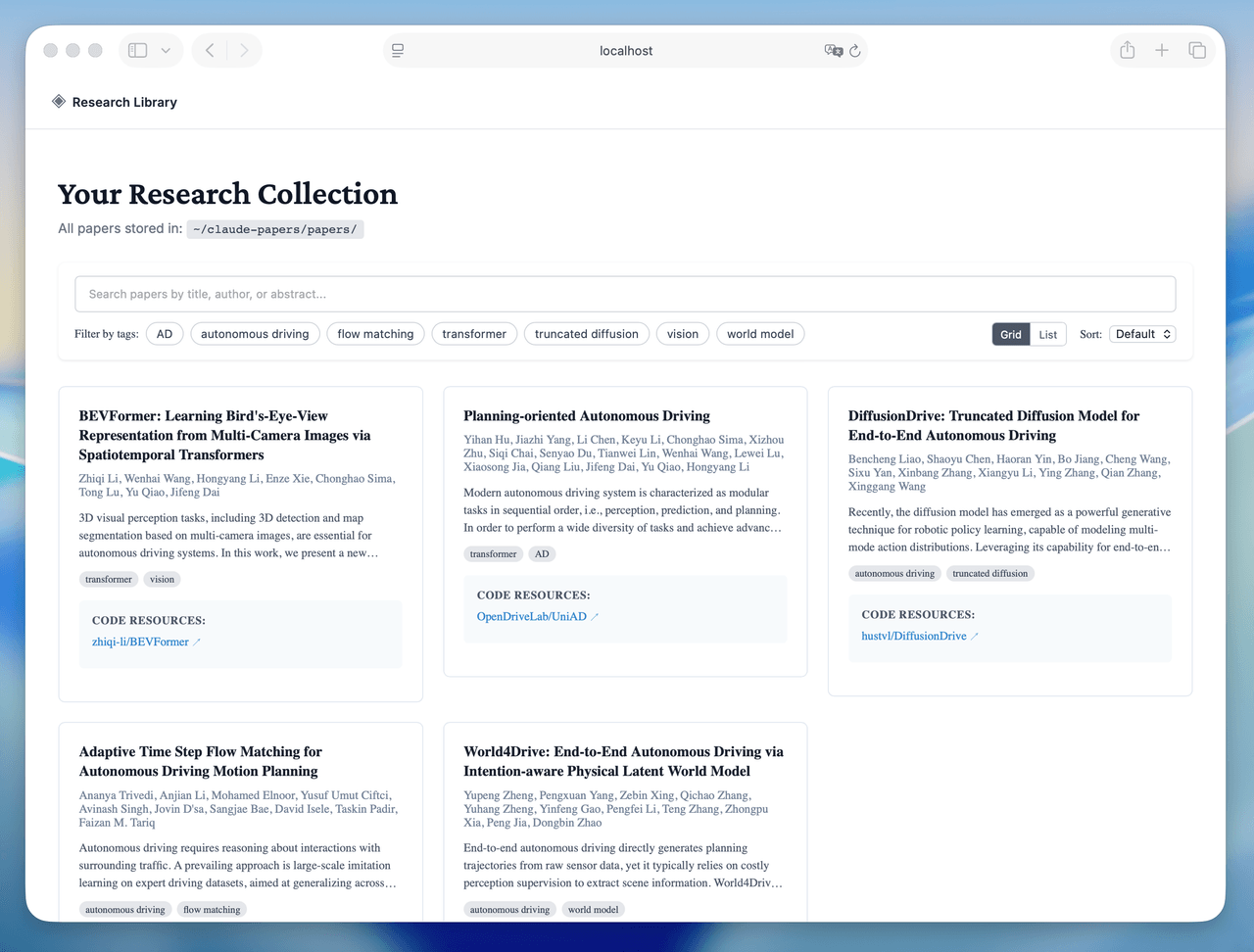 alaliqing/claude-paper
📖 Cross-agent research paper toolkit for Claude Code, Codex, OpenCode, and DeepSeek Harness—quick summaries, deep study…
alaliqing/claude-paper
📖 Cross-agent research paper toolkit for Claude Code, Codex, OpenCode, and DeepSeek Harness—quick summaries, deep study…
-
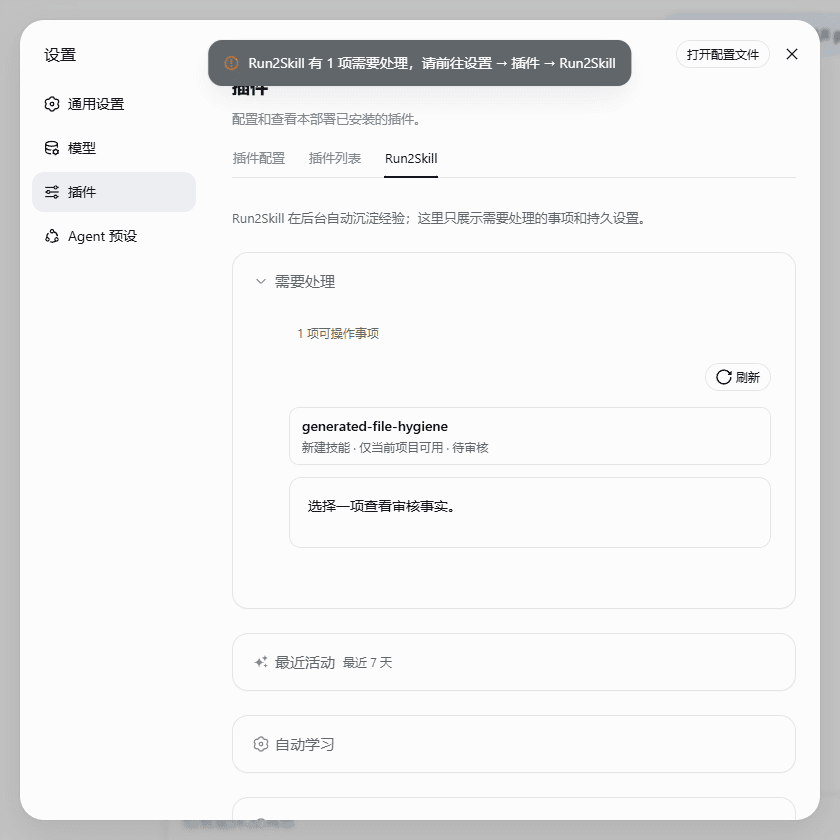 qkycir-123/dsh-run2skill
Automatically turn successful DeepSeek Harness sessions into reusable, reviewable Agent Skills.
qkycir-123/dsh-run2skill
Automatically turn successful DeepSeek Harness sessions into reusable, reviewable Agent Skills.
-
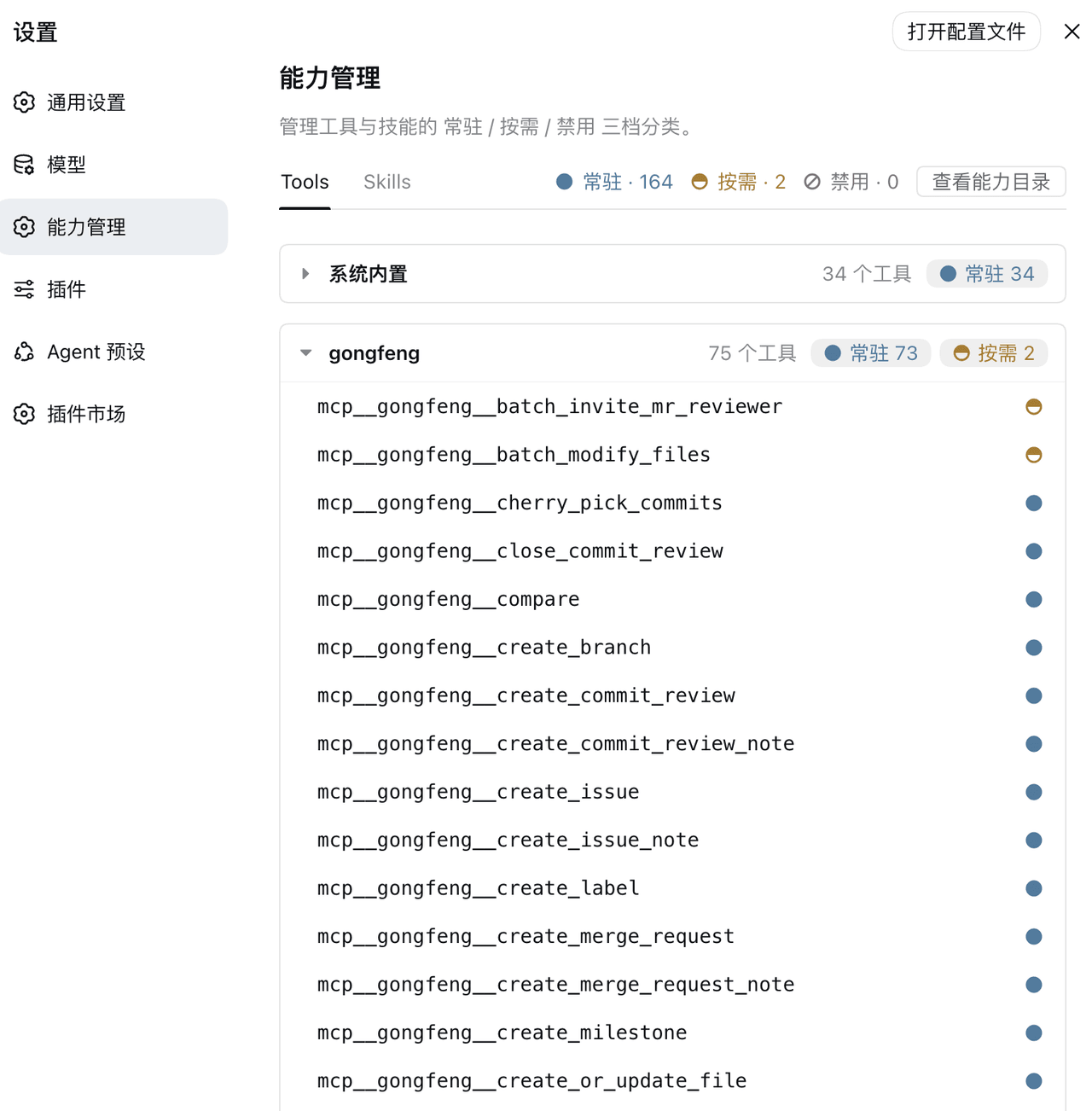 PKUfudawei/dsh-capability-menu
一个面向 DeepSeek Harness 的统一能力管理插件,为 Tools/Skills 提供常驻、按需、禁用三档暴露策略,以减少上下文占用并支持运行时动态发现与执行。
PKUfudawei/dsh-capability-menu
一个面向 DeepSeek Harness 的统一能力管理插件,为 Tools/Skills 提供常驻、按需、禁用三档暴露策略,以减少上下文占用并支持运行时动态发现与执行。
-
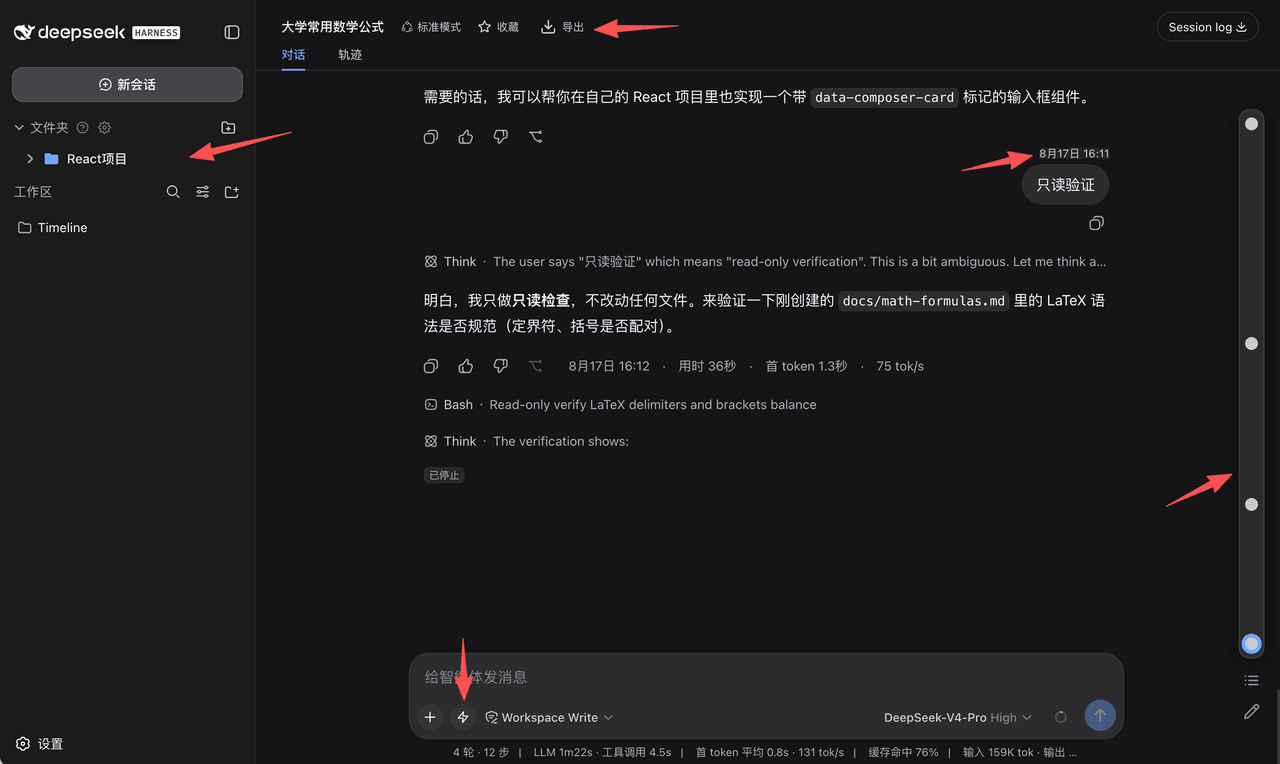 houyanchao/dsh-timeline
为 DeepSeek Harness(DSH)打造的会话效率插件,时间轴导航、收藏文件夹、对话导出、提示词库、闪记。
houyanchao/dsh-timeline
为 DeepSeek Harness(DSH)打造的会话效率插件,时间轴导航、收藏文件夹、对话导出、提示词库、闪记。
-
 a735624258/dsh-skill-picker
DeepSeek Harness 技能选择器:在输入框旁点选技能,自动插入官方 /技能名 手势,随消息一起发送
a735624258/dsh-skill-picker
DeepSeek Harness 技能选择器:在输入框旁点选技能,自动插入官方 /技能名 手势,随消息一起发送
- PerryLink/dsh-output-styles Claude Code outputStyles for DeepSeek Harness - session-scoped, durable, runtime-switchable model output styles (/style …
-
 Chael-Chael/dsh-reference-anything
The best DeepSeek Harness plugin for referencing anything — enhanced @ menu for commands, skills, files, agent sessions,…
Chael-Chael/dsh-reference-anything
The best DeepSeek Harness plugin for referencing anything — enhanced @ menu for commands, skills, files, agent sessions,…
- omdsh-dev/dsh-plugin-skills Agent skills for building and testing DeepSeek Harness plugins — from scaffolding a new plugin package to choosing the r…