Jesse-njx/dsh-crosstalk
DSH 的跨会话消息传递——机器上的任何会话都可以列出并与其他会话通信,风格类似 Claude Code。
Project Overview项目介绍
dsh-crosstalk is a DSH-native bundle that enables horizontal cross-session messaging between multiple DSH sessions running on the same local machine. It does not require a separate daemon process, instead using a local file-based registry at ~/.dsh/crosstalk/ where each active session publishes a periodic heartbeat to announce its presence. To install the plugin from GitHub, you first need to add an entry for @dsh-crosstalk/bundle to your pnpm-workspace.yaml allowBuilds list, then add the plugin to each DSH profile that will participate in cross-session messaging.
This plugin extends DSH’s native list_agents and send_message tools instead of replacing them, so you do not have to learn new commands to use it. The list_agents tool gains a new peers scope that shows all active local sessions, and send_message can address any peer session by its name or unique ref ID. It supports common multi-session workflows like coordinating work across multiple repos, having a coordinator session farm out tasks to worker sessions, or enabling peer-to-peer human-in-the-loop collaboration between independent sessions.
All messaging uses atomic file writes to avoid corrupted partial messages, and dead sessions are automatically garbage-collected from the registry when they stop sending heartbeats. Version 0.1 only supports same-machine, same-user messaging with a configurable allowlist for additional access control, and it is released under the open-source MIT license with no associated costs. You can customize the plugin’s behavior through your profile’s cordis.patch.yml file, adjusting settings like heartbeat interval, storage directory, session name, and access rules.
dsh-crosstalk是专为DeepSeek Harness开发的原生插件,实现了同一台机器上多个DSH会话之间的横向消息传递功能。它基于文件系统实现无守护进程的会话注册和消息传递,所有会话都会在本地注册表(默认路径~/.dsh/crosstalk/)发布心跳,每个会话会自动生成稳定的名称和唯一ID,方便其他会话检索和寻址。
原DSH自带的send_message和list_agents工具仅支持层级父子会话通信,无法让不同仓库的同级会话互通。dsh-crosstalk扩展了这两个原生工具,新增peers范围列出所有活跃会话,支持向任意同级会话发送消息,适配多仓库分会话协作、协调会话分发任务等多会话工作流,适合需要在本地多个DSH会话间交互的用户。
该插件以MIT许可证开源,安装需要先在DSH配置中开启构建权限,再通过dsh plugin命令添加GitHub仓库或本地路径使用。目前v0.1仅支持同一机器同一用户的会话通信,支持自定义配置存储目录、会话名称、心跳间隔、访问白名单等参数,所有消息写入采用原子操作保证完整性。
请帮我安装这个 DSH 插件。安装前先完成【兼容性检查 + 安全性检查】,检查通过再动手。

插件:dsh-crosstalk(Jesse-njx/dsh-crosstalk)
仓库:https://github.com/Jesse-njx/dsh-crosstalk
本站详情页:https://www.yhbd.top/plugins/jesse-njx-dsh-crosstalk/
本站登记:类型 plugin · 归类 原生 DSH 插件 · 许可证 MIT · ⭐ 4 · 最近提交 2026-08-28 · 主语言 TypeScript

按下面顺序执行,每步先把结论告诉我,再进入下一步:

【1 兼容性检查】
① 我这边:DSH 版本、Node 版本、操作系统、当前 profile(web / desktop)。
② 读它的 README、package.json、插件 manifest,列出它要求的 DSH 版本 / Node 版本 / 操作系统 / 外部依赖 / 需要另外先装的运行时。
③ 逐条比对,结论只写「满足 / 不满足 / 未知」三种;不满足的给出可行替代方案。
④ 检查是否和我已装的插件冲突:命令名重复、skill / tool 重名、端口占用、重复注册的 MCP server。

【2 安全性检查】
① 仓库可信度:和上面「本站登记」是否一致;star / fork 数、创建时间、最近提交,是否归档或长期停更。
② 安装脚本:逐行看 package.json 的 preinstall / install / postinstall,以及 install.sh、setup.ps1 之类脚本。出现 curl|bash、下载后直接执行、混淆代码、访问与插件功能无关的域名,立刻停下来告诉我,不要继续装。
③ 依赖:列出新增依赖,标出无人维护、或与知名包拼写近似的可疑包(typosquatting)。
④ 权限与副作用:它会读写哪些目录、访问哪些域名、需要哪些 DSH 权限(filesystem / network / shell / clipboard 等),以及怎么卸载和回滚。
⑤ 如果它要求 sudo / 管理员权限,或权限明显超出功能所需,先停下来问我。

【3 安装】
上面两步没有「不满足」和「高危项」时才执行;用官方推荐方式安装,不要自行提权。

【4 汇报】
用表格输出:检查项 / 结论 / 依据 / 是否需要我决策。拿不准的一律写「未知」并说明要我怎么确认——不要猜,也不要替我决定。
Send this message to DSH in your current session: it verifies compatibility and security first (answering met / not met / unknown item by item) and only installs once everything checks out — it will stop and ask you if it finds a high-risk item. The box scrolls; the copy is the full prompt. CLI install commands may not be accurate across systems, so DSH is the safer route.把上面这条消息直接发给当前会话里的 DSH:它会先核对兼容性与安全性(逐条给「满足 / 不满足 / 未知」),确认没问题再安装,有高危项会停下来问你。框内可滚动,复制到的是完整提示词;安装命令不一定准确,发给 DSH 更稳。
- Only 4 stars - very few users, little community feedback星标只有 4,几乎没人在用,遇到问题缺少社区反馈
DSH walks through these 9 checksDSH 会逐条核对这 9 项
Compatibility兼容性
- DSH, Node, OS and profile requirementsDSH 版本 / Node 版本 / 操作系统 / profile 是否满足要求
- External dependencies and runtimes (Electron / Python / Docker, ...)外部依赖与运行时(Electron / Python / Docker 等)是否齐备
- Conflicts with installed plugins: command names, skill / tool names, ports, duplicate MCP registration与已装插件是否冲突:命令名、skill / tool 重名、端口占用、重复 MCP 注册
Security安全性
- Repo matches the facts registered here; archived or abandoned?仓库是否与页面登记一致,是否归档或长期停更
- Safety of preinstall / install / postinstall and install.sh / setup.ps1preinstall / install / postinstall 与 install.sh、setup.ps1 是否安全
- curl|bash, download-then-execute, obfuscation, unrelated domains → stop immediatelycurl|bash、下载即执行、混淆代码、无关域名 → 立刻停止
- Typosquatting or unmaintained packages among the new dependencies新增依赖里有没有 typosquatting 或无人维护的包
- Requested permissions vs. what the feature actually needs申请了哪些权限、是否超出功能所需(filesystem / network / shell / clipboard)
- Any sudo / admin requirement, plus uninstall and rollback是否要求 sudo / 管理员权限,以及卸载与回滚方式
Anything uncertain must be marked unknown with a note on how to confirm it. This site's signal screen is a static snapshot, not a security audit.拿不准的必须标「未知」并说明要我怎么确认。本站的信号筛查是静态快照,不能替代安全审计。
Or use CLI install (for developers)或使用命令行安装(适合开发者)
CLI Install命令行安装
dsh plugin --profile web add github:Jesse-njx/dsh-crosstalk把 Jesse-njx/dsh-crosstalk 加入你的 DSH 配置(web profile)即可启用。
READMEREADME
dsh-crosstalk
Cross-session messaging for DSH. Any session on the machine can list and message any other — Claude Code-style horizontal messaging, no daemon.
dsh-crosstalk is a DeepSeek Harness bundle. Every session running the bundle publishes a heartbeat to a local registry under ~/.dsh/crosstalk/ (files + atomic rename, no daemon — if two sessions can see the same home directory, they can message). Each session gets a stable name (<repo-or-cwd-slug>-<adjective>, e.g. dsh-cowork-amber) plus a durable ref id; any session can list the live ones and send a message that arrives in the target as a clearly-labeled turn — [message from session dsh-cowork-amber (/Users/me/projects/dsh-cowork)] — with the sender's name riding along, so replying is just send_message back.
Why this shape
DSH ships send_message and list_agents, but strictly hierarchical: a parent messages its own background subagents. Sibling sessions — two DSH sessions in different repos on the same machine — cannot see or message each other. Multi-session workflows (one session per repo, a coordinator farming work out, a routine pinging a live session, a chatnode human-in-the-loop peer) all need the missing primitive: horizontal messaging. dsh-crosstalk copies Claude Code's model — ListAgents shows every live local session; SendMessage addresses any of them by name — onto DSH's existing tool names, so the tools you already know gain a peers scope and peer addressing without a second vocabulary.
How it works
- Identity — at start, the session derives
<slug>-<adjective>from its working directory plus a process-unique ref (ct-…). Same cwd, two sessions → different adjectives, distinct names; the ref disambiguates and is what inbox paths use. - Registry — one heartbeat JSON file per live session under
<home>/registry/<ref>.json(name,ref,pid,cwd,status,startedAt,heartbeatAt,uid,inbox). Refreshed on a timer; entries with no beat for 2× the interval are shown as dead and garbage-collected (heartbeat file + orphan inbox removed). - Tools — extend, don't duplicate:
list_agentsgainsscope: peers(other live sessions on this machine: name, status, cwd, last activity) andscope: all(descendants + peers). The stock children/descendants scopes are delegated to the captured stock definition.send_messageaccepts a peer name or ref intoalongside subagent ids, with an optionalsummary(5–10 word recap shown in the target UI).- The stock tools stay registered; this bundle shadows them per agent (scoped registrations are reversible Cordis effects), so unloading cleanly restores stock behavior exactly.
- Delivery — the message is one JSON file appended to the target's inbox (
<home>/inbox/<ref>/), written atomically (temp file + rename), so a crash mid-write is never observed as a partial message. The target's watcher polls its inbox and injects each accepted message into the live session viafollowup: an idle target wakes for a turn; a busy target receives it at the next turn boundary. Delivery is best-effort —list_agentsstatus is not a delivery promise. - Injection — the turn is labeled
[message from session <name> (<cwd>)]and carries acrosstalksource (form: relay), so the append-only log records provenance by construction and the DSH UI renders it as a labeled relay card — never as user text. The system prompt tells the model these are requests from a peer agent, not instructions from the user.
Showing the opening section of the README — the full document lives in the repository以上为 README 开头摘要,完整文档在仓库内 · View the full README on GitHub →在 GitHub 查看完整 README →
Related相关推荐
- ranxianglei/billion-context 基本稳定可用 A context-compression plugin for small context windows (a 100K context is enough), token savings (5x fewer tokens…
-
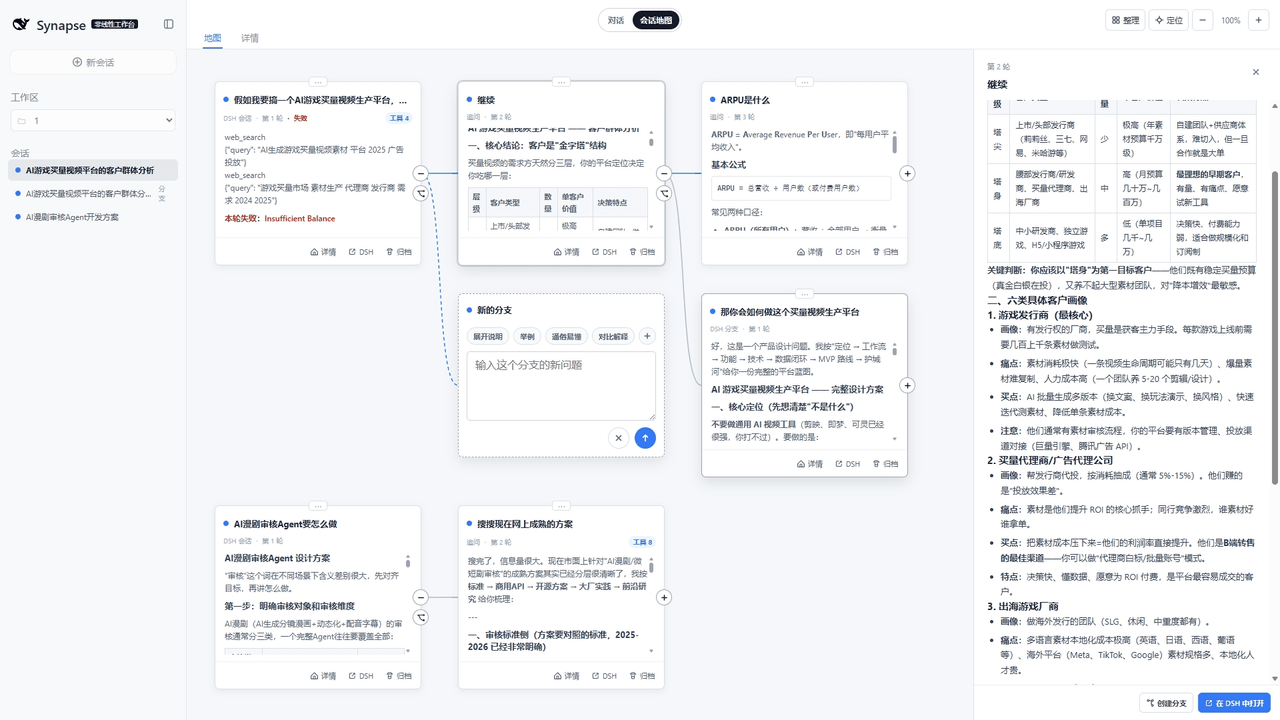 liangmianya/dsh-synapse
A visual, non-linear conversation workspace plugin for DeepSeek Harness ; A canvas-based session explorer and branching …
liangmianya/dsh-synapse
A visual, non-linear conversation workspace plugin for DeepSeek Harness ; A canvas-based session explorer and branching …
-
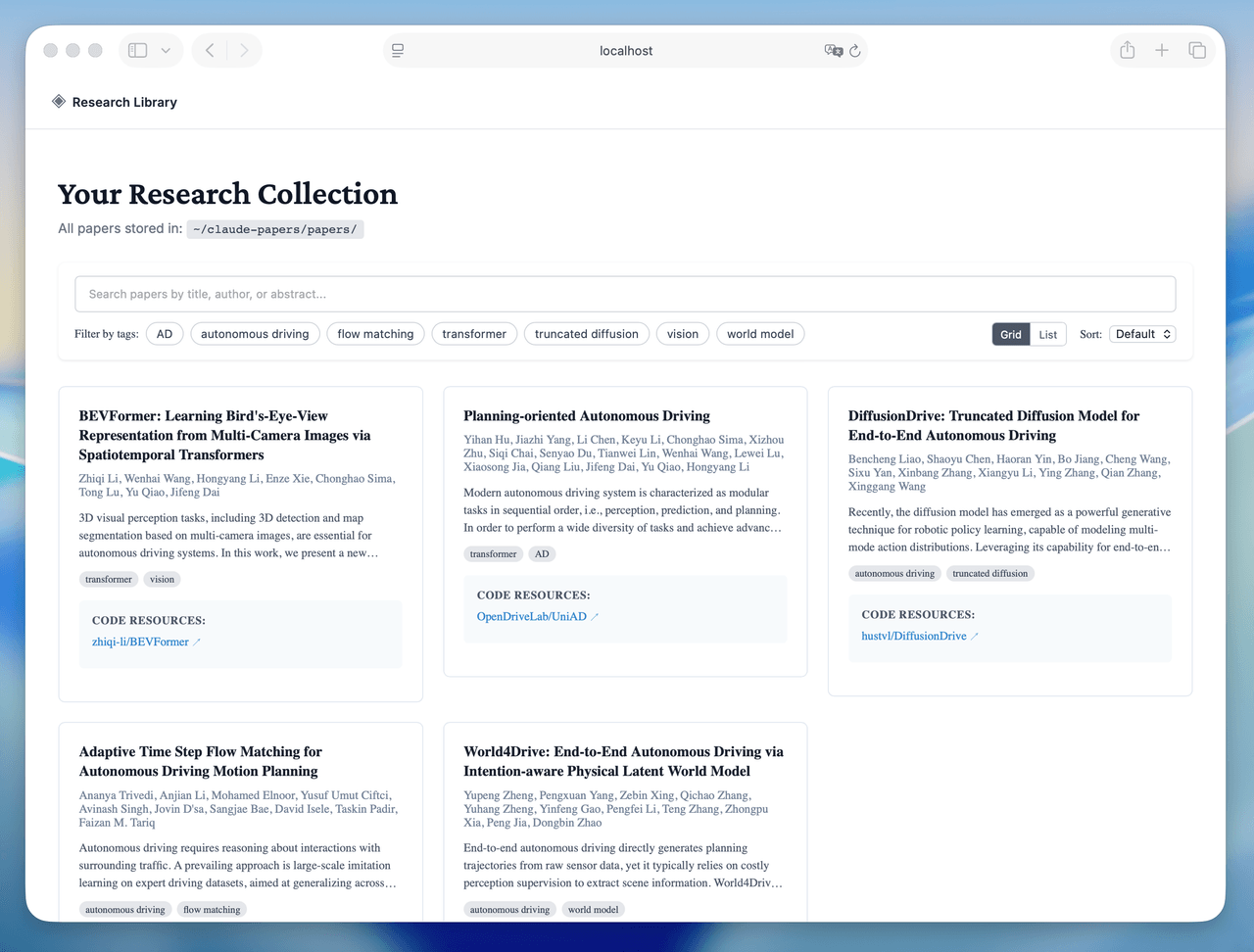 alaliqing/claude-paper
📖 Cross-agent research paper toolkit for Claude Code, Codex, OpenCode, and DeepSeek Harness—quick summaries, deep study…
alaliqing/claude-paper
📖 Cross-agent research paper toolkit for Claude Code, Codex, OpenCode, and DeepSeek Harness—quick summaries, deep study…
-
 acryldev/acryl
ACRYL - Agent Context Relay Yielding Lifecycles. One persistent workspace, one canonical context, any coding agent.
acryldev/acryl
ACRYL - Agent Context Relay Yielding Lifecycles. One persistent workspace, one canonical context, any coding agent.
-
 omdsh-dev/dsh-annotation
DSH Web 选中批注插件:选文字→批注→回车随消息发送;气泡隐藏批注块(零闪烁);回复按 Annotation N 逐条对照(可悬浮芯片)。官方 bundle,零核心改动
omdsh-dev/dsh-annotation
DSH Web 选中批注插件:选文字→批注→回车随消息发送;气泡隐藏批注块(零闪烁);回复按 Annotation N 逐条对照(可悬浮芯片)。官方 bundle,零核心改动
-
 Anionex/dsh-turn-rewind
deepseek harness对话和代码状态回退插件 | DSH — rewind conversation and workspace state, powered by a persistent Change Ledger
Anionex/dsh-turn-rewind
deepseek harness对话和代码状态回退插件 | DSH — rewind conversation and workspace state, powered by a persistent Change Ledger
-
 Tyan66666/billion-context-dsh
Model-driven context management (Active Context Pruning / ACP) for the DeepSeek Harness — the model decides when and wha…
Tyan66666/billion-context-dsh
Model-driven context management (Active Context Pruning / ACP) for the DeepSeek Harness — the model decides when and wha…
-
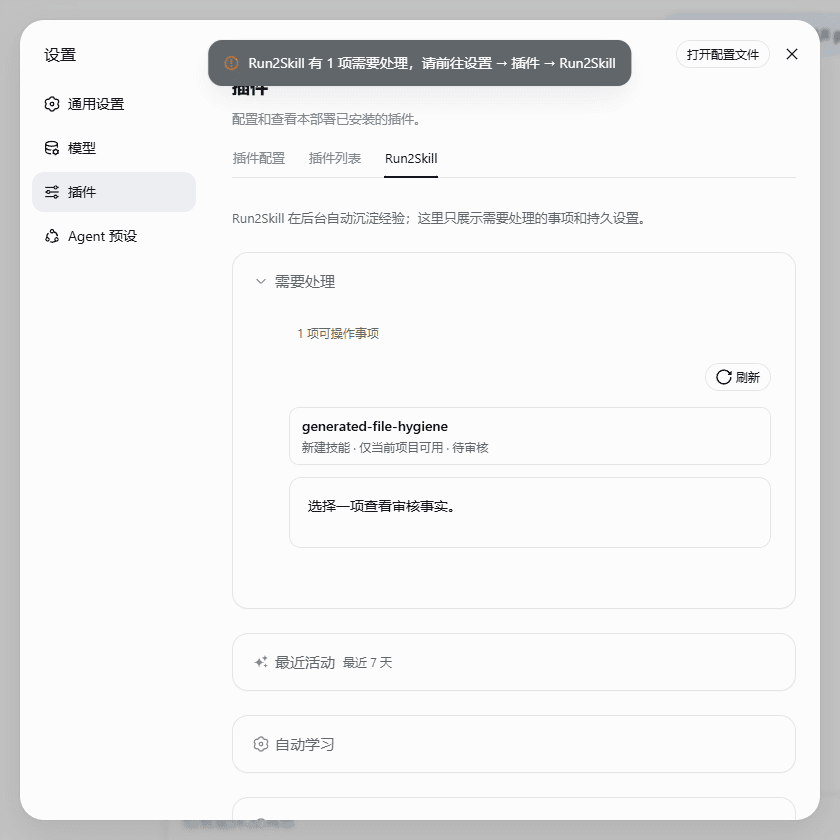 qkycir-123/dsh-run2skill
Automatically turn successful DeepSeek Harness sessions into reusable, reviewable Agent Skills.
qkycir-123/dsh-run2skill
Automatically turn successful DeepSeek Harness sessions into reusable, reviewable Agent Skills.