lesliechowsh/dsh-memo
Memo — session memory search for DeepSeek Harness agents (memo_search / memo_remember / memo_stats on the official sessionQuery service). Every benchmark number is the shipped product's own, with the experiment trail published.
编辑导读Editor's Brief
## 核心特性
- Memo 提供三个工具:memo_search、memo_remember 和 memo_stats,可通过一个插件命令搜索过往 DSH 会话和已存储的笔记。
- memo_search 返回匹配的会话、片段、时间戳、匹配模式和笔记,并支持可选的数量限制、会话过滤、时间过滤和笔记标签。
- memo_remember 会以 JSONL 记录形式追加持久笔记并返回已存储的笔记;相同文本会被报告为重复,而不会再次追加。
- memo_stats 提供语料概览,包含会话数量、最近会话和笔记数量,无需查询参数。
- 该插件通过官方 sessionQuery 后端搜索 DSH 会话语料,并将提炼后的笔记保存在本地人类可读文件中。
## 使用场景
- Agent 可以通过定位某个主题、决策或短语先前出现过的会话,回答关于过往对话的问题。
- Agent 可以使用 memo_remember 存储明确的事实、偏好、约定或项目决策,并稍后通过 memo_search 检索。
- 当相关上下文仅部分已知时,Agent 可以通过会话标识符、epoch 毫秒时间边界或笔记标签缩小历史搜索范围。
- Agent 可以先通过 memo_stats 查看可用记忆量和最近活动,再发起更有针对性的搜索。
## 技术细节
- 安装命令会将该插件添加到 DSH web profile,并在首次使用时启用平台会话搜索索引,除非后续补丁禁用该行为。
- 搜索处理结合了完整查询短语步骤与加权 token 步骤,对结果去重,并将短语命中排在加权命中之前。
- 会话事件会被索引到一个倒排索引中,并持久化保存在 $DSH_HOME/memo/index.json;笔记则存储在 $DSH_HOME/memo/notes.jsonl。
- 该插件不需要向量数据库、embedding API、外部 API key、后台索引器或网络调用;如果会话查询索引已关闭或缺失,它会报告错误。
## 注意事项
- 默认的内存索引会在重新启动后重建,因此在大型语料中的首次搜索可能比后续搜索更慢。
- 中文查询依赖将连续汉字串作为加权短语;如果不修改上游分词器,则无法在连续汉字串内进行词级搜索。
- 基准测试数据描述的是词法检索下的会话定位命中率,而不是端到端回答准确率;涉及助手引述或偏好的问题召回率较低。
## Core Features
- Memo exposes three tools, memo_search, memo_remember, and memo_stats, for searching past DSH sessions and stored notes from one plugin command.
- memo_search returns matching sessions, snippets, timestamps, match modes, and notes, with optional limits, session filters, time filters, and note tags.
- memo_remember appends durable notes as JSONL records and returns the stored note, while identical text is reported as a duplicate instead of appended again.
- memo_stats provides a corpus overview containing session count, recent sessions, and note count without requiring query parameters.
- The plugin searches the DSH session corpus through the official sessionQuery backend and keeps distilled notes in a local human-readable file.
## Use Cases
- Agents can answer questions about prior conversations by locating sessions where a topic, decision, or phrase previously appeared.
- Agents can store explicit facts, preferences, conventions, or project decisions with memo_remember and retrieve them later through memo_search.
- Agents can narrow historical search by session identifier, epoch-millisecond time boundary, or note tags when the relevant context is partially known.
- Agents can inspect available memory volume and recent activity through memo_stats before issuing more targeted searches.
## Technical Details
- The install command adds the plugin to the DSH web profile and enables the platform session-search index on first use unless a later patch disables it.
- Search processing combines a whole-query phrase step with a weighted token step, deduplicates results, and orders phrase hits before weighted hits.
- Conversation events are indexed into an inverted index persisted at $DSH_HOME/memo/index.json, while notes are stored at $DSH_HOME/memo/notes.jsonl.
- The plugin does not require a vector database, embedding API, external API keys, background indexer, or network calls, and it reports a closed or missing session-query index as an error.
## Notes
- The default in-memory index is rebuilt after a fresh boot, so the first search in a large corpus can be slower than later searches.
- Chinese queries rely on contiguous Han runs as weighted phrases, and word-level search inside a run is unavailable without an upstream tokenizer change.
- Benchmark figures describe session-localization hit rates under lexical retrieval, not end-to-end answer accuracy, and assistant-quoted or preference questions show lower recall.
安装Install
dsh plugin --profile web add dsh-memo@latest把 lesliechowsh/dsh-memo 加入你的 DSH 配置(web profile)即可启用。
READMEREADME
Memo


Your agent remembers everything you've done together — one plugin command, nothing else to run.
Quick example
You: "Did we ever discuss Dieter Rams?" Agent calls
memo_search("Dieter Rams")→
{
  "sessions": [
    {
      "sessionId": "session-49924467-9cd1-414a-9998-f207782c72ad",
      "title": "Weniger theme design",
      "snippet": "…'DESIGN DIETER RAMS' is a registered trademark, and the Rams Foundation actively manages the name and estate…",
      "time": 1787078839061,
      "mode": "phrase"
    }
  ],
  "notes": [],
  "limit": 10
}
Agent: "Yes — we researched it in the Weniger theme project: 'DESIGN DIETER RAMS' is a registered trademark, so the product was renamed Weniger…"
Install
dsh plugin --profile web add dsh-memo@latest
Restart dsh web — the three memo_* tools appear in your agent's tool list. That's the whole setup. (Uninstall: dsh plugin --profile web remove dsh-memo; manual profile-edit steps for CLI-less deployments are in CONTRIBUTING.md.)
One thing the install does for you: DSH ships full-text session search opt-in — the platform default is openAt: never, so searchSessions/searchEvents are disabled until something turns them on. Memo's package carries a patch that enables the platform's built-in index on first use (openAt: first-search). Two honest consequences, both by DSH's design:
- The index lives in memory, so a fresh boot rebuilds it on the first search. On a large corpus that first search is slow; every later search in the same process is fast.
- Want a durable index instead? Add a
pathin your profile'scordis.patch.yml:
- id: session-query-sqlite
  config:
    path: /path/to/your/dsh-home/storages/session-search.sqlite
    openAt: first-search
If your deployment deliberately wants search off, re-disable it in a later patch layer (openAt: never); Memo then serves notes only and reports the disabled state honestly instead of fabricating hits. This applies to DSH ≥ 0.1.0-rc.7, the version that introduced the opt-in default.
What you get
- Every past session, searchable. Ask in plain language ("did we ever decide…?") and get the matching session, snippet, and evidence back in one tool call.
- Nothing else to run. No vector database, no embedding API, no API keys, no background indexer — it searches the corpus DSH already records, through the official
sessionQuerybackend. - Everything stays local. Sessions stay in DSH's store; your distilled notes are one human-readable JSONL file.
Memo deliberately does not re-index your history into its own store. If you need cross-app memory outside DSH with embedding-based search, projects like Mem0 or Letta are built for that.
Tools
memo_search(query, limit?, sessionId?, since?, tags?)
Search every past session in the workspace plus your memo notes. limit defaults to 10 (cap 50); sessionId restricts to one session; since filters by epoch-ms; tags filters notes by tag. Returns { sessions, notes, limit }:
sessions:{ sessionId, title (null when untitled), snippet, time, mode }— ordered phrase-first, then by weighted token/pair score;modeis"phrase"(verbatim question hit) or"terms".notes: most recent matches, newest last.- When the deployment's session-query index is closed or the service is missing, the result carries an
errorstring instead of fabricated hits. Chinese queries get run-level recall (contiguous Han runs as weighted phrases) plus acjkWarningdescribing the remaining limit — see Requirements.
memo_remember(text, tags?)
Write one durable note — facts, decisions, preferences that survive across sessions and appear in memo_search results. Returns { ok, note, path }; identical text returns the existing note as { ok: true, duplicate: true, note } instead of appending. Notes are one JSONL record per line at $DSH_HOME/memo/notes.jsonl.
memo_stats()
Corpus overview, no parameters: { sessions: 19, recent: […], notes: 4 }.
How it works
  memo_search(query)
   1. phrase step    whole query as one FTS5 phrase → top 10 sessions
   2. weighted step  ≤8 tokens (content words + CJK runs) +
                     merged by df-proxy IDF weights (term idf×4,
                     pair length × max idf; df estimated per query
                     with capped-50 counts, length fallback),
                     time-desc tiebreak — content words fill the
                     window first, stopwords only leftovers
   3. phrase first, then weighted, dedup, top 10
                    ── official sessionQuery (FTS5) ──
        DSH session corpus (live + persisted events)   + notes.jsonl
Memo does not build a second durable store: DSH's sessionQuery service is the single source of truth, read through its exact-read APIs. A search costs one listSessions (to spot new sessions) plus in-memory index lookups — zero FTS backend calls (0.12.0; earlier versions made up to 26, see CHANGELOG).
Usage
Try it in 60 seconds
After installing, ask your agent these three things in one conversation. Each one needs memory of the previous exchange, so each exercises the search:
- "Remember this: npm is the only official release channel for this project." (the agent writes a note)
- "What was the 'release channel' convention we wrote down?" (the agent must recall it —
memo_searchfinds the note) - "Also remember: demo data lives in the bench directory." then "Where did we say the demo data lives?" (a second round of the same loop)
You just experienced the whole product: write, recall, write, recall — no setup beyond the install, no external service involved.
Day-to-day
The agent reaches for memo_search by itself when the answer depends on history ("Did we ever discuss SSH-based coding agents?"). Filter when you know the neighborhood: memo_search(query: "benchmark", since: 1787000000000). Write distilled facts with memo_remember(text: …, tags: "naming,convention"), find them later with memo_search(query: "naming", tags: "convention"). Every session hit carries a snippet (the best-matching event); the top 3 hits also carry events — up to 3 matching events each — so the agent can read the actual passage instead of a one-line match.
Startup, freshness, and the slow backend
DSH's session-query FTS backend reconciles its whole live corpus on every call — on slow machines a single call can take tens of seconds. Memo does not use that path: it indexes the conversation events (user and assistant messages, compaction summaries, session titles — the authoritative record; streaming chunks are ~90% of raw bytes and fold into the indexed messages, source-verified) into an inverted index persisted at $DSH_HOME/memo/index.json. Boots load it in seconds; a background refresh then picks up new sessions with pauses between reads so the Web UI stays available. Injected workspace instructions (<system-reminder blocks) are not indexed — they repeat in every session and would pollute ranking. The current conversation is skipped (it is already in your agent's context), and very large sessions are indexed once rather than re-read at every boot (their reads are synchronous multi-minute server-side operations); searches over them cover content up to the last index. Notes search is unaffected and always current.
Design & research grounding
Memo maps onto the memory taxonomy of Memory for Large Language Models (Zhoubian, Zhang, Kharlamov & Tang — THUNLP · Tsinghua / NUS): explicit representation (independently addressable JSONL), online updates (DSH appends as it happens), long-term persistence.
Benchmark
Measured under the exact pipeline memo_search ships — reproduced in harnesses over the same FTS5 engine class the backend uses. Full protocol, environment, and the variant-selection experiment log: bench/.
LongMemEval-S (arXiv:2410.10813, 500 questions, 54-session haystacks per question):
hit@1 78.2% · hit@5 92.4% · hit@10 97.4% · MRR 0.847
| Question type | n | hit@1 | hit@5 | MRR |
|---|---|---|---|---|
| multi-session | 133 | 78.2% | 96.2% | 0.863 |
| temporal-reasoning | 133 | 75.9% | 90.2% | 0.821 |
| knowledge-update | 78 | 96.2% | 98.7% | 0.972 |
| single-session-user | 70 | 88.6% | 97.1% | 0.933 |
| single-session-assistant | 56 | 64.3% | 87.5% | 0.745 |
| single-session-preference | 30 | 43.3% | 66.7% | 0.556 |
LoCoMo10 (1986 questions, cross-dataset check): hit@1 60.2% · hit@5 87.2% · MRR 0.718 — read hit@1 there, not hit@10 (see below).
LongMemEval-M (500 new questions, ~500-session pools — the scale / anti-overfitting check):
hit@1 54.6% · hit@5 78.6% · hit@10 83.8% · MRR 0.645 (random hit@1 on this pool ≈ 0.2% → ≈ 273× random)
The S → M drop (hit@1 78.2% → 54.6%) tracks the ~10× larger pool; the per-type rank order was verified identical across S and M under the 0.6.0 pipeline (the same pipeline structure 0.8.0 extends). The 0.8.0 weighting was selected on S and confirmed positive on ALL five 100-question M segments (measured segment by segment, not once after the fact).
LongMemEval-CN cross-lingual (Chinese questions over the original English haystacks): hit@1 44.6% (up from 33.6% before the 0.7.0 CJK tokenization — CJK runs unblock the weighted step for mixed queries, so single untranslated Latin tokens are now actually queried). Every gain still comes from those Latin tokens: pure-Chinese queries over English sessions cannot match, and the gap is translation, not tokenization. A Chinese-session evaluation corpus does not exist publicly yet.
Scope — read these numbers for what they are:
- Session-localization hit@k (~54 / ~27-session pools), not end-to-end answer accuracy — not comparable to Mem0 / Zep / LangMem (LLM reader + judge pipelines).
- Signal-to-noise: random hit@1 is ≈1.9% on S (54 sessions), ≈3.7% on LoCoMo (~27), ≈0.2% on M (~500); Memo's 78.2% / 60.2% / (M below) are ≈41× / ≈16× / ≈260× that. LoCoMo's random hit@10 is already ≈37%.
- On the M scale we now publish our own numbers: hit@5 76.6%. The paper's retrieval table (BM25 R@5 63–68%, Contriever/Stella R@5 72–76%) uses Recall@k over rounds; ours is session hit@k — close but not the same protocol, so no parity claim. Memo is a sparse lexical retriever near its class's ceiling.
- Known ceilings: assistant-quoted and preference questions are the lexical floor — their evidence often shares no words with the question (33.3% / 30.0% hit@1 on S / M).
- The length-as-rarity weighting ("long word ≈ content word") is an English statistical regularity; it does not transfer to Chinese.
A note from the maintainer, before the claims
I started Memo because I kept getting burned by memory tools whose benchmark numbers I couldn't reproduce. So this project runs on one rule: publish only what the shipped product measures, and publish the trail that produced it.
- The harnesses are copies of the real pipeline — page sizes, ranking, truncation. Same dataset bytes, same numbers. When I caught the harness over-collecting candidates the product could never see, the published numbers went down (0.3.1), not up.
- Rejected experiments are published too. Equal-weight bigrams collapsed hit@1 to 5.2%; a wider per-term page wasn't worth 2× the API calls; a deterministic re-implementation of a time-aware expansion idea from a paper I respect made temporal recall worse — negative results are results, so they're in the log with the exact numbers.
- My mistakes are in the CHANGELOG, not deleted. Session ids read from the wrong field (0.3.0); titles silently nulled (0.3.1); three review-found bugs in 0.5.0, one of which — stopwords crowding content words out of the query window — had the headline recall number understated for two releases. Fixed, re-measured, written down.
- Limitations are stated where they hurt. The weak types are named with their numbers; the English-only weighting assumption and the CJK backend limitation are declared above, not hidden.
- No strawman baselines, no borrowed numbers.
If you find a number here that doesn't reproduce, that is the highest-value bug report this project can receive — please open an issue.
Requirements
- DeepSeek Harness with the
sessionQueryservice (shipped in the standardwebprofile); the deployment's session-query index must be open —memo_searchreports a closed index honestly instead of guessing. - Chinese / CJK: the backend's unicode61 index stores contiguous Han runs as single tokens. Memo searches those runs as weighted phrases (0.7.0), so a session is found when any run of the query appears verbatim. Word-level search inside a run is impossible without an index-side tokenizer change —
memo_searchsays so viacjkWarning(details inbench/). - Notes need
$DSH_HOMEresolvable at tool-execution time. No other services, no API keys, no network calls.
Roadmap
- LoCoMo10 secondary benchmark · LongMemEval-CN cross-lingual benchmark
- Tag search and note deduplication · 0.5.0 bug fixes (content-word-first tokenization, empty-token note leak, newline-safe append)
- Deterministic time-aware retrieval tested and rejected with published evidence
- LongMemEval-M (500-session pools) scale / anti-overfitting check — hit@1 52.6%, type ranking identical to S
- Chinese run-level recall (0.7.0) + built-in functional regression set (
bench/zh.cjs, self-built, NOT a benchmark) - Chinese-session evaluation corpus (blocked: none exists publicly; benchmark-level Chinese numbers need it) · word-level recall inside runs (blocked: upstream tokenizer change)
- End-to-end QA (retrieval + answer) — needs model-quota approval
- Dense retrieval for the lexical ceiling — deliberately out of scope while "nothing else to run" holds
Support & contributing
- Questions and bug reports: GitHub Issues
- Reproduce the benchmark or add a new one: CONTRIBUTING.md
- Security reports: SECURITY.md — Memo never sends data off your machine.
License
MIT — see LICENSE.
For agents reading this file
project:    dsh-memo
domain:     agent memory / session retrieval
audience:   DSH (DeepSeek Harness) users who want their agent to remember
interfaces: three model tools — memo_search / memo_remember / memo_stats
runtime:    DSH host plugin (Node), no extra services, no vector DB
storage:    the official DSH session corpus + one plain JSONL notes file
status:     beta — no breaking API changes inside the 0.x line; see CHANGELOG
support:    GitHub Issues
相关推荐Related
- deepseek-ai/deepseek-harness DeepSeek Harness (dsh) — 由 DeepSeek AI 开发的开源 agent harness(智能体框架)。一切皆插件:核心 + 插件 + 技能 = 可热插拔的 AI 编程工作台。DeepSeek Harness: …
-
 amruthpillai/reactive-resume
A one-of-a-kind resume builder that keeps your privacy in mind. Completely secure, customizable, portable, open-source a…
amruthpillai/reactive-resume
A one-of-a-kind resume builder that keeps your privacy in mind. Completely secure, customizable, portable, open-source a…
-
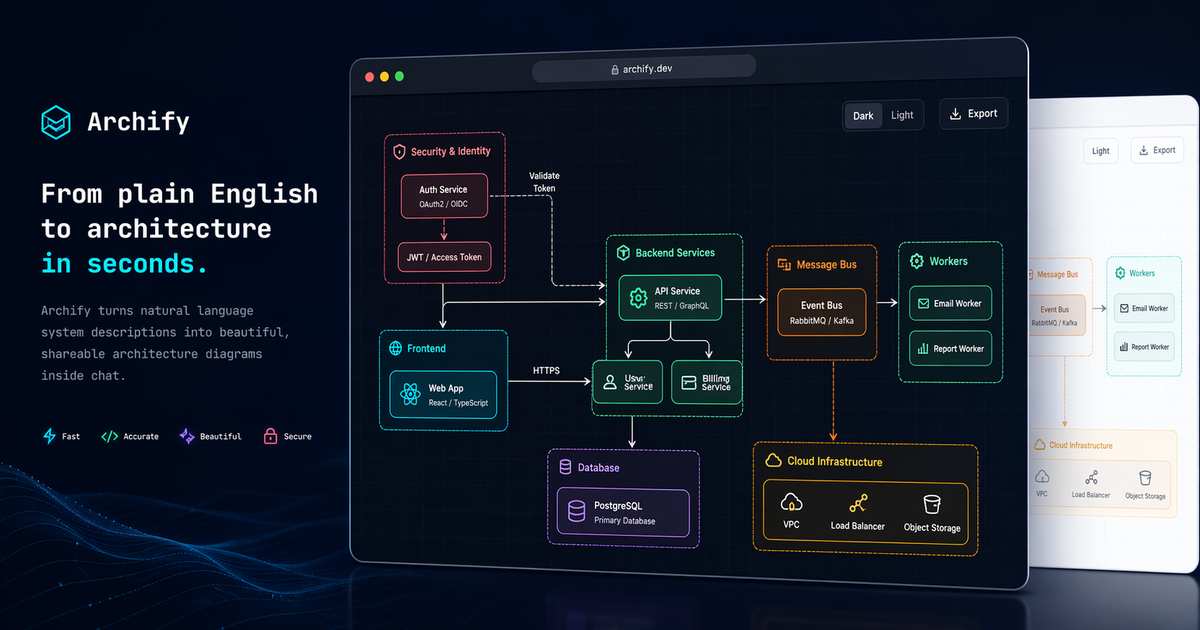 tt-a1i/archify
Agent skill for beautiful, verifiable architecture, workflow, sequence, data-flow, and lifecycle diagrams—self-contained…
tt-a1i/archify
Agent skill for beautiful, verifiable architecture, workflow, sequence, data-flow, and lifecycle diagrams—self-contained…
-
 strukto-ai/mirage
The World's First Unified Virtual Filesystem For AI Agents
strukto-ai/mirage
The World's First Unified Virtual Filesystem For AI Agents
-
 liustack/modlens
The first vision plugin for DeepSeek Harness, and the vision bridge for every text-only coding agent. Paste an image, ge…
liustack/modlens
The first vision plugin for DeepSeek Harness, and the vision bridge for every text-only coding agent. Paste an image, ge…
-
 omdsh-dev/DSH-better-sidebar
开放的侧边栏底座,支持三方拓展注册新侧边栏页面。内置文件渲染编辑/终端/Git/子代理页面 | Open sidebar foundation, supports third-party extensions to register new…
omdsh-dev/DSH-better-sidebar
开放的侧边栏底座,支持三方拓展注册新侧边栏页面。内置文件渲染编辑/终端/Git/子代理页面 | Open sidebar foundation, supports third-party extensions to register new…
-
 dsh-market/dsh-market
The plugin market inside DeepSeek Harness — browse, search, one-click install · DSH 可视化插件市场
dsh-market/dsh-market
The plugin market inside DeepSeek Harness — browse, search, one-click install · DSH 可视化插件市场
-
 GanyuanRan/Aegis
Make AI coding agents architecture-aware: baseline-first, evidence-verified, drift-checked, and safe across long tasks.
GanyuanRan/Aegis
Make AI coding agents architecture-aware: baseline-first, evidence-verified, drift-checked, and safe across long tasks.