Linxiushen/dsh-workflow-isolate
基于QuickJS/WASM隔离的工作流引擎,用于DeepSeek Harness,具备有界资源控制。
Project Overview项目介绍
dsh-workflow-isolate is a drop-in WorkflowEngine for DeepSeek Harness that runs model-written orchestration scripts in QuickJS/WASM. It preserves DSH workflow hooks and lifecycle events while bounding guest memory, stack, interrupt fuel, wall time, worker termination, and child-agent budgets. Use it when workflow scripts are not fully trusted. Caveat: QuickJS/WASM is not perfect isolation; the host subagent provider remains trusted, so review the security model before cross-trust deployment.
dsh-workflow-isolate 是 DSH 的可替换 WorkflowEngine,用 QuickJS/WASM 运行模型编写的编排脚本,保留 workflow 钩子与生命周期,并限制内存、栈、中断燃料、截止时间、worker 终止和子代理预算。适合运行不完全可信的工作流脚本。注意:它不是完美沙箱,宿主子代理提供方仍受信,跨信任边界部署前需读安全模型。
请帮我安装这个 DSH 插件。安装前先完成【兼容性检查 + 安全性检查】,检查通过再动手。

插件:dsh-workflow-isolate(Linxiushen/dsh-workflow-isolate)
仓库:https://github.com/Linxiushen/dsh-workflow-isolate
本站详情页:https://www.yhbd.top/plugins/linxiushen-dsh-workflow-isolate/
本站登记:类型 plugin · 归类 原生 DSH 插件 · 许可证 MIT · ⭐ 3 · 最近提交 2026-10-01 · 主语言 TypeScript

按下面顺序执行,每步先把结论告诉我,再进入下一步:

【1 兼容性检查】
① 我这边:DSH 版本、Node 版本、操作系统、当前 profile(web / desktop)。
② 读它的 README、package.json、插件 manifest,列出它要求的 DSH 版本 / Node 版本 / 操作系统 / 外部依赖 / 需要另外先装的运行时。
③ 逐条比对,结论只写「满足 / 不满足 / 未知」三种;不满足的给出可行替代方案。
④ 检查是否和我已装的插件冲突:命令名重复、skill / tool 重名、端口占用、重复注册的 MCP server。

【2 安全性检查】
① 仓库可信度:和上面「本站登记」是否一致;star / fork 数、创建时间、最近提交,是否归档或长期停更。
② 安装脚本:逐行看 package.json 的 preinstall / install / postinstall,以及 install.sh、setup.ps1 之类脚本。出现 curl|bash、下载后直接执行、混淆代码、访问与插件功能无关的域名,立刻停下来告诉我,不要继续装。
③ 依赖:列出新增依赖,标出无人维护、或与知名包拼写近似的可疑包(typosquatting)。
④ 权限与副作用:它会读写哪些目录、访问哪些域名、需要哪些 DSH 权限(filesystem / network / shell / clipboard 等),以及怎么卸载和回滚。
⑤ 如果它要求 sudo / 管理员权限,或权限明显超出功能所需,先停下来问我。

【3 安装】
上面两步没有「不满足」和「高危项」时才执行;用官方推荐方式安装,不要自行提权。

【4 汇报】
用表格输出:检查项 / 结论 / 依据 / 是否需要我决策。拿不准的一律写「未知」并说明要我怎么确认——不要猜,也不要替我决定。
Send this message to DSH in your current session: it verifies compatibility and security first (answering met / not met / unknown item by item) and only installs once everything checks out — it will stop and ask you if it finds a high-risk item. The box scrolls; the copy is the full prompt. CLI install commands may not be accurate across systems, so DSH is the safer route.把上面这条消息直接发给当前会话里的 DSH:它会先核对兼容性与安全性(逐条给「满足 / 不满足 / 未知」),确认没问题再安装,有高危项会停下来问你。框内可滚动,复制到的是完整提示词;安装命令不一定准确,发给 DSH 更稳。
- Only 3 stars - very few users, little community feedback星标只有 3,几乎没人在用,遇到问题缺少社区反馈
DSH walks through these 9 checksDSH 会逐条核对这 9 项
Compatibility兼容性
- DSH, Node, OS and profile requirementsDSH 版本 / Node 版本 / 操作系统 / profile 是否满足要求
- External dependencies and runtimes (Electron / Python / Docker, ...)外部依赖与运行时(Electron / Python / Docker 等)是否齐备
- Conflicts with installed plugins: command names, skill / tool names, ports, duplicate MCP registration与已装插件是否冲突:命令名、skill / tool 重名、端口占用、重复 MCP 注册
Security安全性
- Repo matches the facts registered here; archived or abandoned?仓库是否与页面登记一致,是否归档或长期停更
- Safety of preinstall / install / postinstall and install.sh / setup.ps1preinstall / install / postinstall 与 install.sh、setup.ps1 是否安全
- curl|bash, download-then-execute, obfuscation, unrelated domains → stop immediatelycurl|bash、下载即执行、混淆代码、无关域名 → 立刻停止
- Typosquatting or unmaintained packages among the new dependencies新增依赖里有没有 typosquatting 或无人维护的包
- Requested permissions vs. what the feature actually needs申请了哪些权限、是否超出功能所需(filesystem / network / shell / clipboard)
- Any sudo / admin requirement, plus uninstall and rollback是否要求 sudo / 管理员权限,以及卸载与回滚方式
Anything uncertain must be marked unknown with a note on how to confirm it. This site's signal screen is a static snapshot, not a security audit.拿不准的必须标「未知」并说明要我怎么确认。本站的信号筛查是静态快照,不能替代安全审计。
Or use CLI install (for developers)或使用命令行安装(适合开发者)
CLI Install命令行安装
dsh plugin --profile web add github:Linxiushen/dsh-workflow-isolate把 Linxiushen/dsh-workflow-isolate 加入你的 DSH 配置(web profile)即可启用。
READMEREADME
dsh-workflow-isolate

简体中文 | Architecture | Security model | Compatibility
dsh-workflow-isolate is a drop-in WorkflowEngine for DeepSeek Harness that runs model-written orchestration scripts in QuickJS/WASM. It preserves the DSH workflow hooks and lifecycle events while adding an independent JavaScript runtime, bounded guest memory and stack, interrupt fuel, a host wall deadline, forced worker termination, and child-agent budgets.
DeepSeek Harness's official worker-thread engine deliberately uses node:vm as an API-shaping mechanism. Its documentation states that it is not a security boundary and calls for a different engine when scripts are not trusted. This project explores that engine seam without changing the model-facing workflow tool.
[!IMPORTANT] QuickJS/WASM is a stronger language boundary than
node:vm, not a claim of perfect isolation. The host-side subagent provider remains trusted and can use its configured model, tools, network, and credentials. Runtime vulnerabilities, side channels, supply-chain compromise, and host denial of service remain relevant. Read the security model before deploying it across trust boundaries.
Why this exists
Model-written workflow code sits in an unusual middle ground: it needs enough JavaScript to coordinate many agents, but it should not inherit Node.js authority merely because the harness is written in Node. dsh-workflow-isolate narrows that gap:
- A fresh QuickJS runtime and realm are created for every workflow run.
- The guest receives only
args,agent,parallel,pipeline,phase, andlog; noprocess,require, Node module loader, filesystem, network, or timers are injected. - Only a plain-JSON projection crosses the guest boundary. Functions and symbols cannot cross; cycles, sparse arrays, non-finite numbers, and exotic prototypes are rejected.
- QuickJS heap, stack, and interrupt-fuel limits constrain script computation. A host wall deadline and worker termination cover code that does not cooperate with cancellation.
- Concurrency, total-agent, and per-combinator item caps bound orchestration fan-out.
- Child agents stay on the host and are reached only through a narrow RPC bridge to the configured DSH subagent provider.
- The engine preserves
WorkflowRun, never-rejecting results, bounded disposal, and pairedworkflow/*lifecycle events expected by DSH consumers.
Showing the opening section of the README — the full document lives in the repository以上为 README 开头摘要,完整文档在仓库内 · View the full README on GitHub →在 GitHub 查看完整 README →
Related相关推荐
-
 PerryLink/dsh-auto-review
Second-model AI auto-review for DeepSeek Harness approval requests: a read-only reviewer subagent returns structured all…
PerryLink/dsh-auto-review
Second-model AI auto-review for DeepSeek Harness approval requests: a read-only reviewer subagent returns structured all…
-
 PerryLink/dsh-mcp-panel
MCP management console for the official DeepSeek Harness MCP client: /mcp command with health diagnostics and pipeline t…
PerryLink/dsh-mcp-panel
MCP management console for the official DeepSeek Harness MCP client: /mcp command with health diagnostics and pipeline t…
- LaplaceYoung/oh-my-dsh oh-my-dsh:面向 DSH (DeepSeek Harness) 的插件生态——700+ 插件,只通过扩展接缝注册,不修改 agent-loop 骨架
-
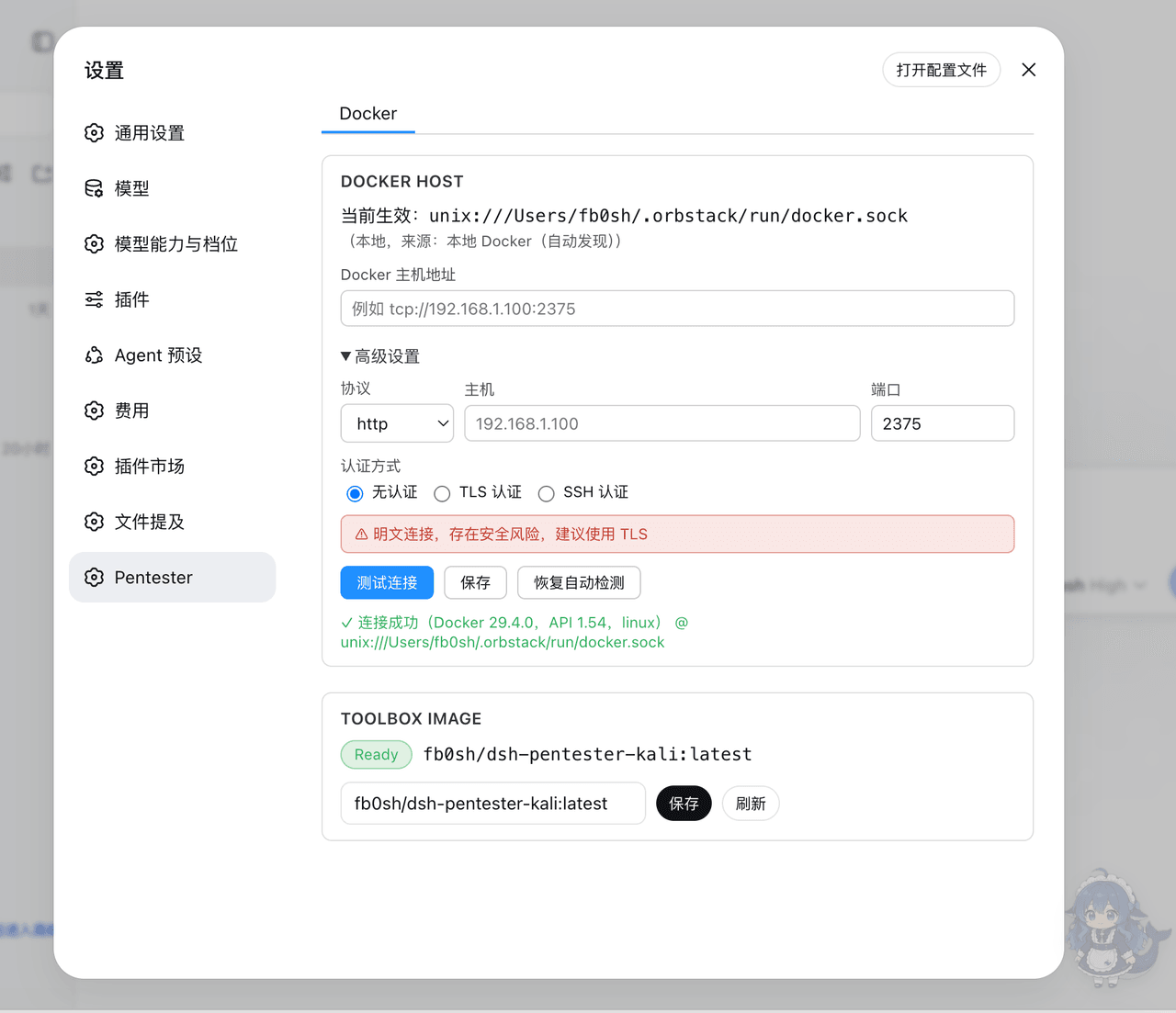 fb0sh/dsh-pentester
基于 DeepSeek Harness 的多 Agent PTES 渗透测试编排插件,支持自动化侦察、漏洞分析、验证与报告,使用 Docker/Kali 隔离工具箱 | Multi-agent PTES penetration testin…
fb0sh/dsh-pentester
基于 DeepSeek Harness 的多 Agent PTES 渗透测试编排插件,支持自动化侦察、漏洞分析、验证与报告,使用 Docker/Kali 隔离工具箱 | Multi-agent PTES penetration testin…
-
 shaokeyibb/dsh-plugin-product-subagents
Role-based Codex / Claude Code / ACP subagent providers for the DeepSeek Harness — continuable children, durable session…
shaokeyibb/dsh-plugin-product-subagents
Role-based Codex / Claude Code / ACP subagent providers for the DeepSeek Harness — continuable children, durable session…
- PerryLink/dsh-skill-pack-security Security-audit skill pack + plugin_vet supply-chain gate for DeepSeek Harness (dsh): 8 bilingual agent skills (secret sc…
-
 lusblead/dsh-Kingdom
在 DSH 中建立属于你的 Agent 王国——让 Agent 拥有角色、权限、领地与治理秩序,并通过事实验证机制与权威账本,让每一次执行、声明与裁决都可核验、可追溯。
lusblead/dsh-Kingdom
在 DSH 中建立属于你的 Agent 王国——让 Agent 拥有角色、权限、领地与治理秩序,并通过事实验证机制与权威账本,让每一次执行、声明与裁决都可核验、可追溯。
-
 JayZz210l/deepseek-harness-for-ide
把 DeepSeek Harness 完整搬进 JetBrains IDE:智能体对话、工具审批、目标与计划、子智能体与 Workflow。装插件、配一次 API Key,即可对话。DeepSeek Harness — agent chat…
JayZz210l/deepseek-harness-for-ide
把 DeepSeek Harness 完整搬进 JetBrains IDE:智能体对话、工具审批、目标与计划、子智能体与 Workflow。装插件、配一次 API Key,即可对话。DeepSeek Harness — agent chat…