qjf44/dsh-plugin-thinking-api
Project Overview项目介绍
This is a native plugin built exclusively for DeepSeek Harness (DSH). It lets users configure any OpenAI-compatible API, like Tencent CodeBuddy or self-hosted vLLM, in a single configuration block, and enables thinking mode for supported models automatically out of the box. It also fixes a common compatibility bug that causes third-party OpenAI endpoints to reject requests from DSH’s default adapter. The default adapter uses the OpenAI developer role for unapproved third-party endpoints, which many APIs hard-reject, and this plugin forces use of the compatible system role to bypass this common issue.
The plugin reuses all core functionality from DSH’s official @deepseek-ai/dsh-llm-pi-ai adapter, including streaming response handling, credential resolution, image processing, and timeout management. This means the core functionality stays up to date with DSH core updates, and the plugin only maintains the small model/provider assembly layer that injects the correct compatibility settings. Users can choose between two setup methods: editing the YAML configuration file manually, or using the guided one-click setup wizard built into DSH’s Web GUI. The wizard even supports fetching model lists from the endpoint and auto-configuring thinking mode for reasoning models.
To install the plugin, users add it as a dependency to their DSH profile’s package.json and add it to the bundle list, then reinstall dependencies and restart DSH. The plugin automatically registers itself via a pre-configured patch, so no manual patch edits are required after installation. API keys are never stored in plain text in the configuration file; users can export them as environment variables or add them via DSH’s Web UI credentials manager. The plugin is released under the permissive MIT open source license, and bug reports and contributions are welcome via GitHub Issues and pull requests.
这是一个原生 DeepSeek Harness (DSH) 插件,用于在一个配置块中完成任意 OpenAI 兼容 API 的配置,并且可以免费为配置的模型启用深度思考模式。它同时修复了一个常见问题:DSH 默认适配器会对未进入白名单的第三方 OpenAI 兼容 API 使用 developer 角色,导致这类 API 硬拒绝请求,该插件可以强制使用 system 角色绕过这个问题。
插件复用了 DSH 官方 dsh-llm-pi-ai 适配器的核心能力,包括流处理、凭据解析、图像处理等功能,自身只负责模型和提供商的组装层,写入正确的兼容配置。它既支持用户手动编辑配置文件完成配置,也提供了 Web GUI 中的一键配置向导,新手也可以不用碰 YAML 文件就能快速完成 API 接入。
安装方式是在个人配置文件的 package.json 中添加依赖和捆绑列表,重启 DSH 即可,插件会自动完成注册,不需要手动修改补丁配置文件。该插件遵循 MIT 开源协议,会持续适配 DSH 的版本更新,用户遇到使用问题可以直接在 GitHub 提交 Issue 反馈。
请帮我安装这个 DSH 插件。安装前先完成【兼容性检查 + 安全性检查】,检查通过再动手。

插件:dsh-plugin-thinking-api(qjf44/dsh-plugin-thinking-api)
仓库:https://github.com/qjf44/dsh-plugin-thinking-api
本站详情页:https://www.yhbd.top/plugins/qjf44-dsh-plugin-thinking-api/
本站登记:类型 plugin · 归类 原生 DSH 插件 · 许可证 MIT · ⭐ 2 · 最近提交 2026-09-11 · 主语言 JavaScript

按下面顺序执行,每步先把结论告诉我,再进入下一步:

【1 兼容性检查】
① 我这边:DSH 版本、Node 版本、操作系统、当前 profile(web / desktop)。
② 读它的 README、package.json、插件 manifest,列出它要求的 DSH 版本 / Node 版本 / 操作系统 / 外部依赖 / 需要另外先装的运行时。
③ 逐条比对,结论只写「满足 / 不满足 / 未知」三种;不满足的给出可行替代方案。
④ 检查是否和我已装的插件冲突:命令名重复、skill / tool 重名、端口占用、重复注册的 MCP server。

【2 安全性检查】
① 仓库可信度:和上面「本站登记」是否一致;star / fork 数、创建时间、最近提交,是否归档或长期停更。
② 安装脚本:逐行看 package.json 的 preinstall / install / postinstall,以及 install.sh、setup.ps1 之类脚本。出现 curl|bash、下载后直接执行、混淆代码、访问与插件功能无关的域名,立刻停下来告诉我,不要继续装。
③ 依赖:列出新增依赖,标出无人维护、或与知名包拼写近似的可疑包(typosquatting)。
④ 权限与副作用:它会读写哪些目录、访问哪些域名、需要哪些 DSH 权限(filesystem / network / shell / clipboard 等),以及怎么卸载和回滚。
⑤ 如果它要求 sudo / 管理员权限,或权限明显超出功能所需,先停下来问我。

【3 安装】
上面两步没有「不满足」和「高危项」时才执行;用官方推荐方式安装,不要自行提权。

【4 汇报】
用表格输出:检查项 / 结论 / 依据 / 是否需要我决策。拿不准的一律写「未知」并说明要我怎么确认——不要猜,也不要替我决定。
Send this message to DSH in your current session: it verifies compatibility and security first (answering met / not met / unknown item by item) and only installs once everything checks out — it will stop and ask you if it finds a high-risk item. The box scrolls; the copy is the full prompt. CLI install commands may not be accurate across systems, so DSH is the safer route.把上面这条消息直接发给当前会话里的 DSH:它会先核对兼容性与安全性(逐条给「满足 / 不满足 / 未知」),确认没问题再安装,有高危项会停下来问你。框内可滚动,复制到的是完整提示词;安装命令不一定准确,发给 DSH 更稳。
- Only 2 stars - very few users, little community feedback星标只有 2,几乎没人在用,遇到问题缺少社区反馈
DSH walks through these 9 checksDSH 会逐条核对这 9 项
Compatibility兼容性
- DSH, Node, OS and profile requirementsDSH 版本 / Node 版本 / 操作系统 / profile 是否满足要求
- External dependencies and runtimes (Electron / Python / Docker, ...)外部依赖与运行时(Electron / Python / Docker 等)是否齐备
- Conflicts with installed plugins: command names, skill / tool names, ports, duplicate MCP registration与已装插件是否冲突:命令名、skill / tool 重名、端口占用、重复 MCP 注册
Security安全性
- Repo matches the facts registered here; archived or abandoned?仓库是否与页面登记一致,是否归档或长期停更
- Safety of preinstall / install / postinstall and install.sh / setup.ps1preinstall / install / postinstall 与 install.sh、setup.ps1 是否安全
- curl|bash, download-then-execute, obfuscation, unrelated domains → stop immediatelycurl|bash、下载即执行、混淆代码、无关域名 → 立刻停止
- Typosquatting or unmaintained packages among the new dependencies新增依赖里有没有 typosquatting 或无人维护的包
- Requested permissions vs. what the feature actually needs申请了哪些权限、是否超出功能所需(filesystem / network / shell / clipboard)
- Any sudo / admin requirement, plus uninstall and rollback是否要求 sudo / 管理员权限,以及卸载与回滚方式
Anything uncertain must be marked unknown with a note on how to confirm it. This site's signal screen is a static snapshot, not a security audit.拿不准的必须标「未知」并说明要我怎么确认。本站的信号筛查是静态快照,不能替代安全审计。
Or use CLI install (for developers)或使用命令行安装(适合开发者)
CLI Install命令行安装
dsh plugin --profile web add github:qjf44/dsh-plugin-thinking-api把 qjf44/dsh-plugin-thinking-api 加入你的 DSH 配置(web profile)即可启用。
READMEREADME
dsh-plugin-thinking-api
简体中文 · English
DeepSeek Harness plugin: configure any OpenAI-compatible API in one block and get thinking mode for free — while dodging the developer-role rejection that breaks such APIs.

What it solves
Three problems in one plugin:
- Configure any OpenAI-compatible API in one block — Tencent CodeBuddy, self-hosted vLLM, or any relay — no hand-writing
reasoningEfforts,thinkingFormat, or pi-ai provider internals. - Thinking mode out of the box — set
thinking: trueon a model and it gains reasoning levels automatically. - Fixes the
content_filter/developer-role bug — this is the subtle one.
The bug this fixes
When a model declares reasoning, pi-ai rewrites the system prompt into the OpenAI developer role unless it recognizes the endpoint as a non-standard vendor. Third-party APIs that are not on pi-ai's built-in allowlist (Tencent CodeBuddy is a prime example) therefore receive a developer message, which many endpoints hard-reject with content_filter — while the exact same request using system succeeds.
The official dsh-llm-pi-ai adapter drops the compat.supportsDeveloperRole field when it builds models, so you cannot fix this from settings.yaml alone. This plugin builds the pi-ai models itself and injects compat.supportsDeveloperRole: false directly, forcing the system role.
How it stays maintainable
The plugin reuses the official PiAiAdapter class (exported by @deepseek-ai/dsh-llm-pi-ai): its streaming, chunk translation, credential resolution, idle-timeout watchdog, and image handling all keep evolving with DSH. This plugin only owns the small "model/provider assembly" layer where the correct compat is written in.
Showing the opening section of the README — the full document lives in the repository以上为 README 开头摘要,完整文档在仓库内 · View the full README on GitHub →在 GitHub 查看完整 README →
Related相关推荐
-
 xiajiajun516/dsh-config-manager
DeepSeek Harness (DSH) backup & restore plugin — export, import, migrate and sync your complete DSH configuration, plugi…
xiajiajun516/dsh-config-manager
DeepSeek Harness (DSH) backup & restore plugin — export, import, migrate and sync your complete DSH configuration, plugi…
-
 Chang-Tong/dsh-import-agents
Import pi / opencode / codex / claude-code sessions, chat history, and agents into DeepSeek Harness — one-click Sync but…
Chang-Tong/dsh-import-agents
Import pi / opencode / codex / claude-code sessions, chat history, and agents into DeepSeek Harness — one-click Sync but…
-
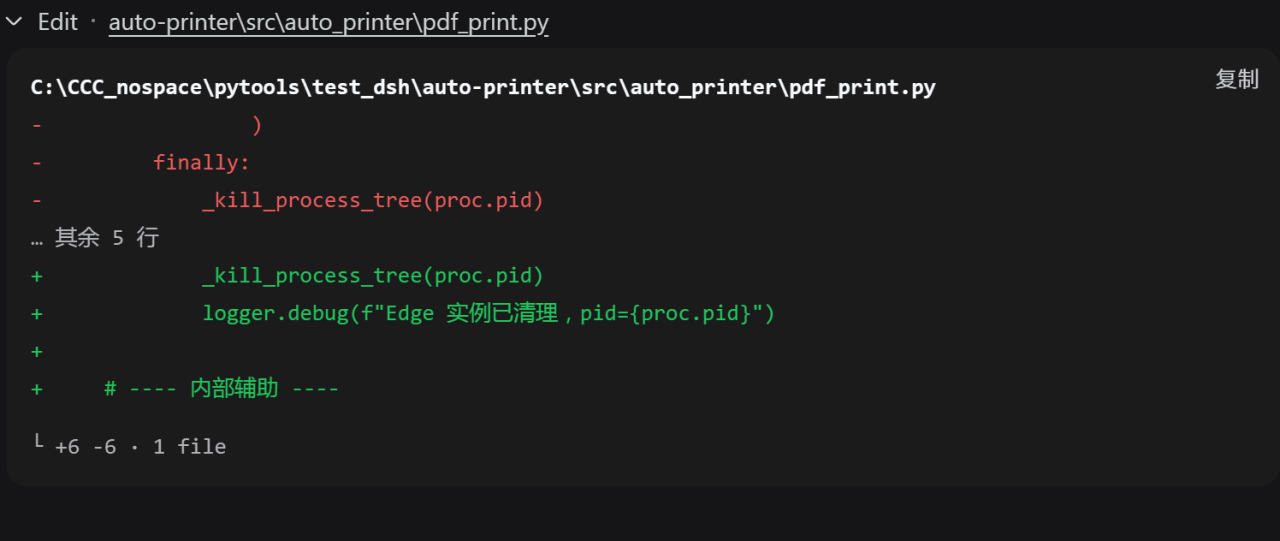 better-er/dsh-edit-diff
「DSH·质量 diff」:接管 edit/write 及 extraTools 配置的其他工具卡片,行级去重与行内高亮,消除相同内容在删除与新增两区的重复;兼容 PTC 模式。
better-er/dsh-edit-diff
「DSH·质量 diff」:接管 edit/write 及 extraTools 配置的其他工具卡片,行级去重与行内高亮,消除相同内容在删除与新增两区的重复;兼容 PTC 模式。
-
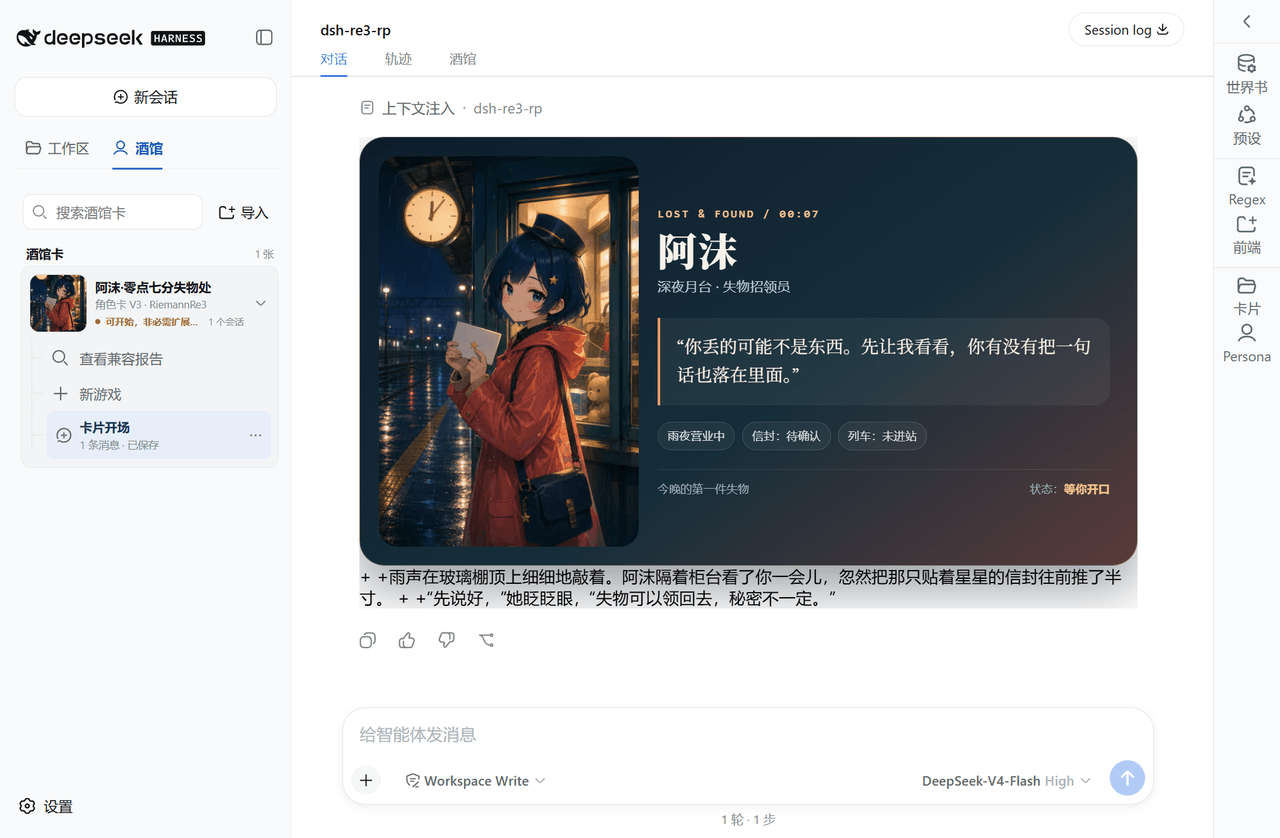 RiemannRe3/DSH-RolePlay
DeepSeek Harness 的 Tavern 角色卡兼容与原生 Agent RolePlay 插件。
RiemannRe3/DSH-RolePlay
DeepSeek Harness 的 Tavern 角色卡兼容与原生 Agent RolePlay 插件。
-
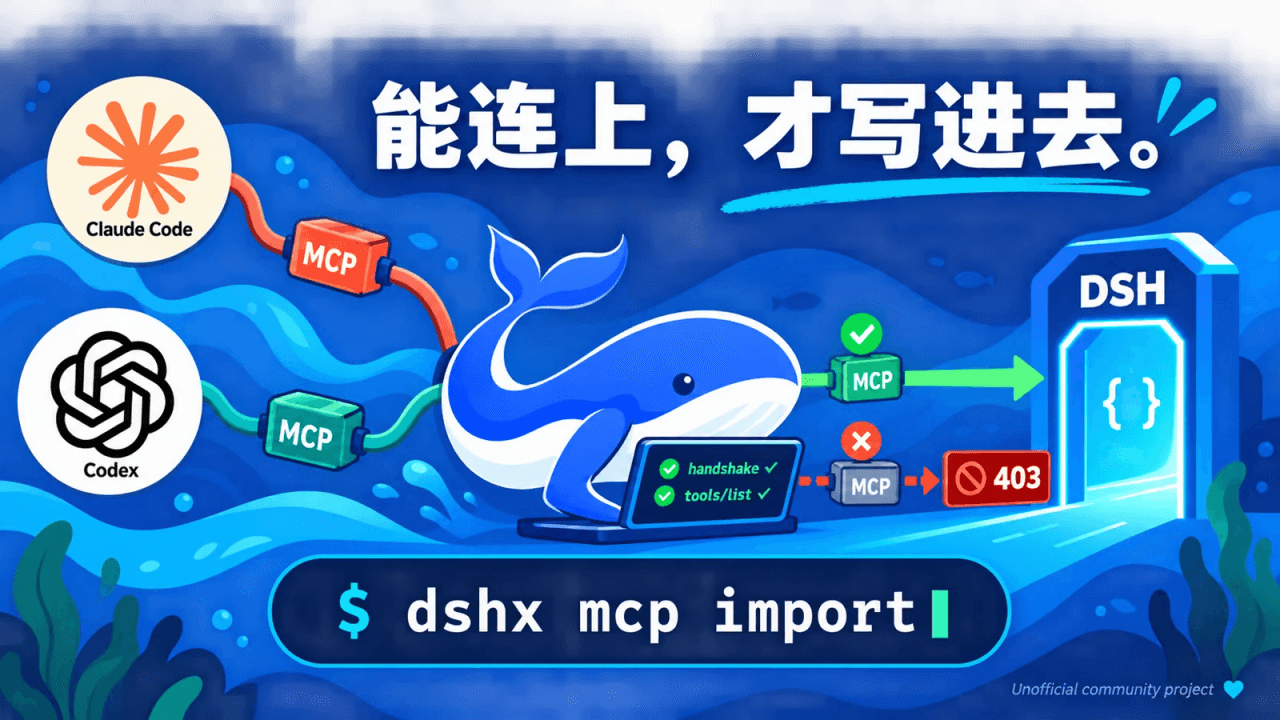 why913/dshx
DeepSeek Harness(dsh)的 MCP / Skill / 记忆管理工具:写入前先连接自检,连不上不写;从 Claude Code / Codex 一键迁移;可装成 dsh 插件,在 Web 里用 /mcp 命令和卡片操作。
why913/dshx
DeepSeek Harness(dsh)的 MCP / Skill / 记忆管理工具:写入前先连接自检,连不上不写;从 Claude Code / Codex 一键迁移;可装成 dsh 插件,在 Web 里用 /mcp 命令和卡片操作。
-
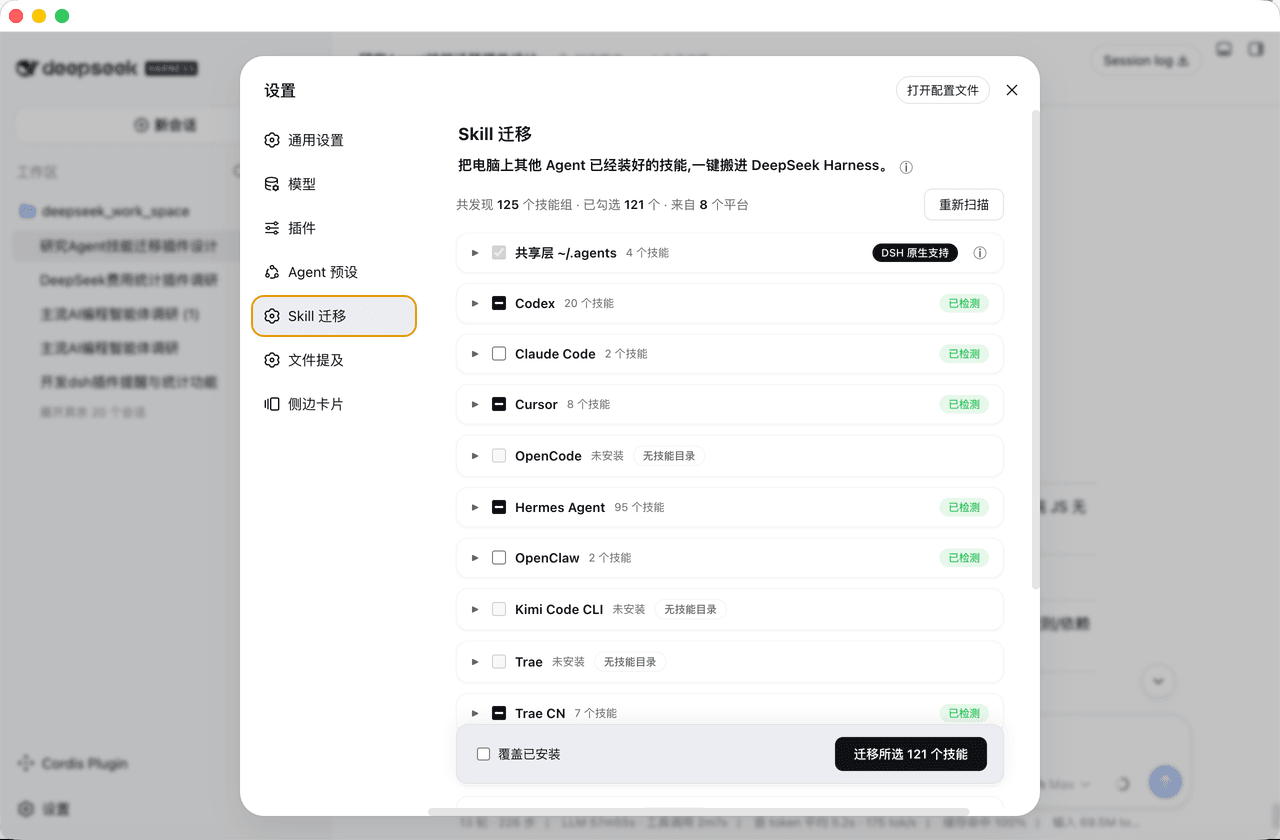 mjylfz/dsh-skill-mover
把其他 Agent 的技能一键搬进 DeepSeek Harness:支持 14 个平台 + 共享层识别、同名技能合并、不重复搬运、可回滚。DSH 技能搬家插件 (skill mover).
mjylfz/dsh-skill-mover
把其他 Agent 的技能一键搬进 DeepSeek Harness:支持 14 个平台 + 共享层识别、同名技能合并、不重复搬运、可回滚。DSH 技能搬家插件 (skill mover).
-
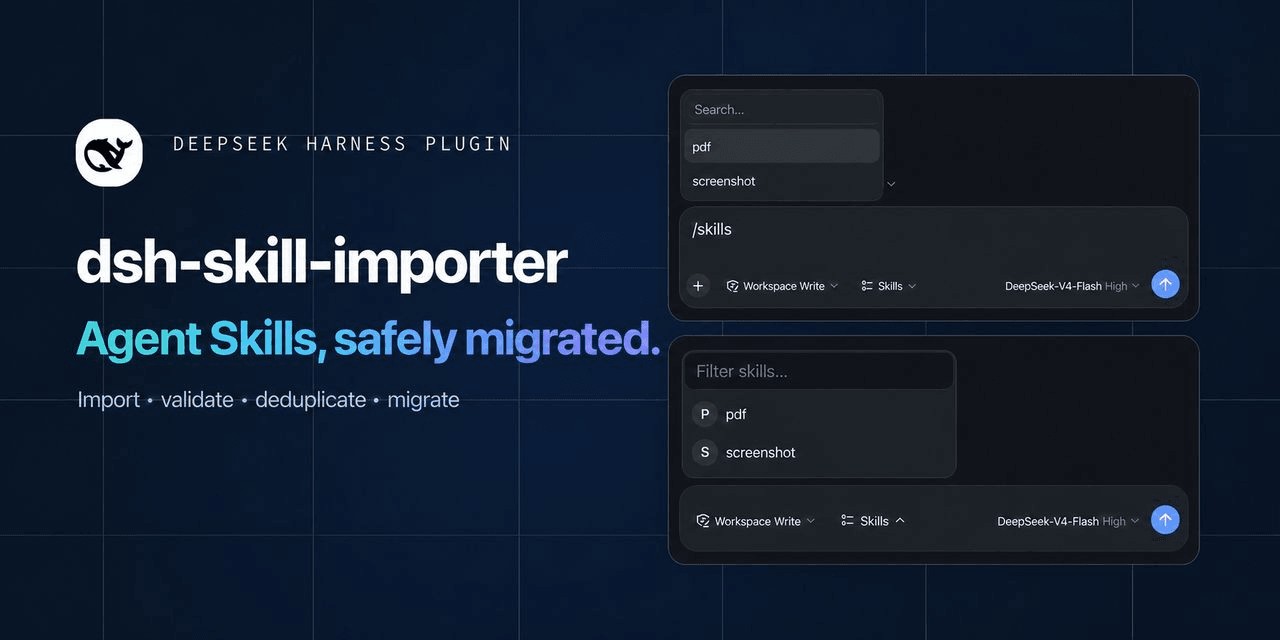 saitamahang/dsh-skill-importer
Import, validate, manage, and migrate Agent Skills for DeepSeek Harness (DSH), Claude Code, Codex, and other AI coding a…
saitamahang/dsh-skill-importer
Import, validate, manage, and migrate Agent Skills for DeepSeek Harness (DSH), Claude Code, Codex, and other AI coding a…
-
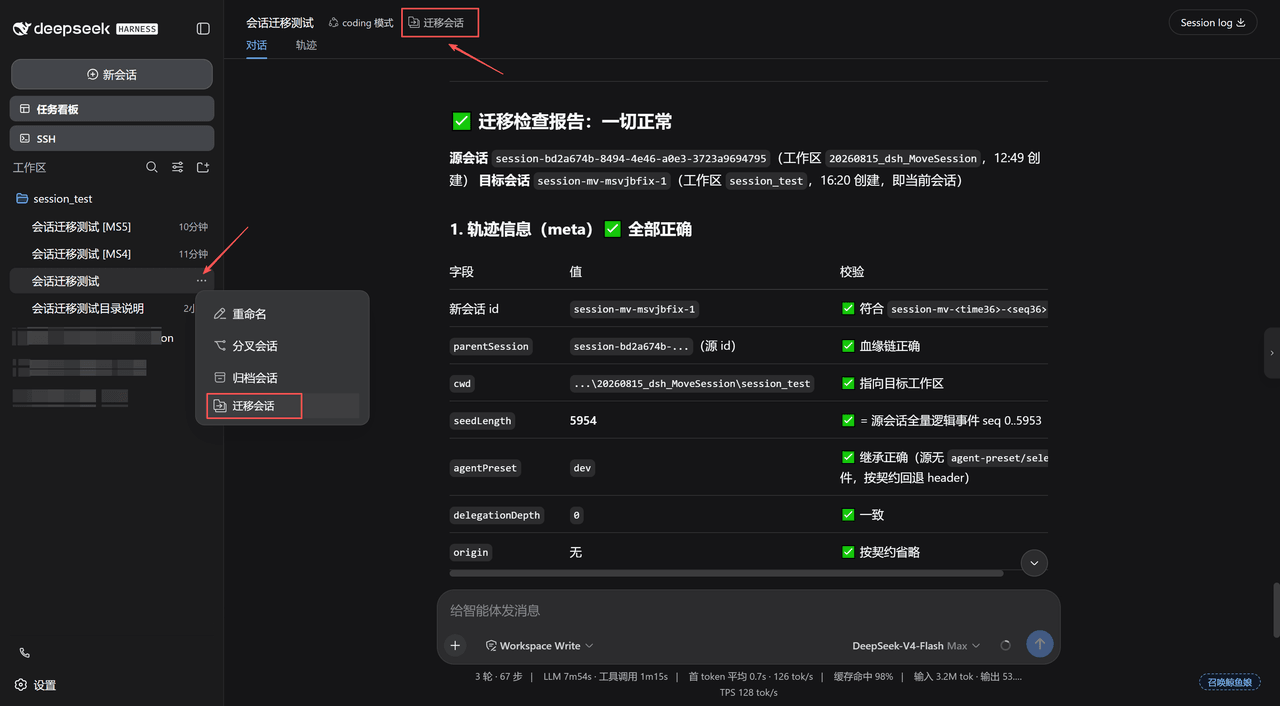 hucj09/dsh-move-session
DSH Web GUI 跨工作区会话迁移插件: 一键迁移原会话到其他工作区,保留完整上下文、会话历史、Agent 预设与模型选择等,支持保留或归档原会话。
hucj09/dsh-move-session
DSH Web GUI 跨工作区会话迁移插件: 一键迁移原会话到其他工作区,保留完整上下文、会话历史、Agent 预设与模型选择等,支持保留或归档原会话。