studyzy/dsh-lazy-tools
Project Overview项目介绍
dsh-lazy-tools is a deferred tool-loading plugin built specifically for DeepSeek Harness 0.2.0-rc.2, inspired by the CodeBuddy defer mechanism. It is installed as an external bundle through dsh plugin --profile <profile> add git:github.com/studyzy/dsh-lazy-tools, or locally as add link:/path/to/dsh-lazy-tools during development, and injects a single cordis plugin named lazy-tools via cordis.patch.yml. The plugin exposes two new agent-scope tools, tool_search and defer_execute_tool, which observe tool name, description, and parameters without ever modifying the underlying registry, and hide deferred tools at the system-prompt/assemble waterfall so their JSON schemas never enter the model context. peerDependencies pin @deepseek-ai/dsh-* 0.2.0-rc.2, @deepseek-ai/cordis 4.0.4, and @deepseek-ai/schemastery 3.18.4, so the harness preflight accepts it directly; after upgrading DSH, realign these versions, rerun pnpm install && pnpm run check, and re-add the bundle.
The default policy is Defer(*), with a small resident core (read, write, edit, bash, glob, grep, web_search, web_fetch, ask_user_question, skill) kept always visible, and three guards (tool_search, defer_execute_tool, run_code) pinned so they cannot be deferred by Defer(*). Users override defaults in cordis.patch.yml under the plugin's config field using CodeBuddy-style Defer(pattern) / NoDefer(pattern) entries; * is the only wildcard, bare names are equivalent to the wrapped form, and noDefer always wins over defer. The Web and Desktop builds additionally expose a visual configuration page at Settings → Built-in plugins → Lazy tools with six fields mirroring the YAML keys, where defer and noDefer accept comma-separated input. When autoTune is left at its default true, the plugin scans up to autoTuneWindowDays (30) days of project history keyed by absolute cwd, promotes the autoTuneTopN (20) most frequent tools to resident, and writes the result to a per-project store that overrides the global config; autoTuneMinSamples (200) gates the rewrite so brand-new projects keep using globals.
Tool sources are treated uniformly: host composition tools, agent preset tools, MCP servers, and tools registered after the agent was created all pass through the same defer and search logic, and the plugin never loosens any other restrict policy — tools blocked elsewhere return unavailable from tool_search. Development requires Node 22 or 24 with pnpm, plus scripts typecheck, typecheck:tests, test (vitest unit and integration), lint (oxlint), build (tsc + tsdown to lib/), verify:client (browser-kernel contract check), and the umbrella check; CI in .github/workflows/ci.yml runs them on both Node majors. Documented limits include: an activated tool only appears in the next request, deferred tool names are invisible until searched, session state is not persisted across resume or fork, the plugin is a no-op under PTC presentation except for the pinned run_code, and a missing UI tab after a client-side change is fixed by restarting DSH so its negative client-plugin cache resets. The project ships under the MIT license.
dsh-lazy-tools 是一个面向 DeepSeek Harness 0.2.0-rc.2 的延迟工具加载插件,灵感来自 CodeBuddy 的 Defer 机制。它在 agent 层注入一个名为 lazy-tools 的 cordis 插件,通过 tool_search 与 defer_execute_tool 两个新工具,把工具 schema 排除在模型可见列表之外,模型只在需要时按名或关键词检索并激活,从而降低 token 消耗、压缩上下文窗口,同时不改动工具注册表本身。安装方式为 dsh plugin --profile <profile> add git:github.com/studyzy/dsh-lazy-tools,本地开发可用 link: 路径重装。peerDependencies 钉住 @deepseek-ai/dsh-* 0.2.0-rc.2、cordis 4.0.4、schemastery 3.18.4,DSH 的插件兼容性预检会直接放行;升级宿主版本后需要同步更新 package.json 中的版本号并重新 pnpm install。
插件默认采用 Defer(*) 策略,把 read、write、edit、bash、glob、grep、web_search、web_fetch、ask_user_question、skill 作为常驻核心,tool_search、defer_execute_tool、run_code 被钉为守卫,永不延迟。用户可在 profile 的 cordis.patch.yml 中用 CodeBuddy 风格的 Defer(...) / NoDefer(...) 模式覆写,* 为唯一通配符,优先级 noDefer > defer > 自动调优结果。Web 与桌面端另有可视化配置页,路径为设置→内置插件→懒加载工具,六个字段与配置文件一一对应。当 autoTune 开启时,插件会按 cwd 索引项目,扫描该项目近 30 天历史,将调用最频繁的 20 个工具写入项目级存储,并用项目级覆盖全局;统计样本不足 200 次的项目保持全局配置。该方案对宿主 composition、agent preset、MCP 等所有工具来源平面一视同仁,仅在系统提示装配时对模型可见列表做减法。
开发与运行依赖 Node 22 或 24、pnpm,并提供 typecheck、typecheck:tests、vitest、oxlint、tsdown 打包以及 verify:client 浏览器端契约校验脚本,pnpm run check 一键串联。已知的边界条件包括:激活的工具在下一轮请求才进入工具列表,搜索前工具名对模型不可见,状态不跨会话持久化,PTC 呈现模式下除 run_code 之外不生效,项目级配置按绝对路径索引故目录迁移后需手工迁移 ~/.dsh/lazy-tools/projects.json。项目以 MIT 协议发布,源码在 studyzy/dsh-lazy-tools,CI 覆盖 lint、双轮 typecheck、测试与构建;首次在浏览器端运行若界面未出现,重启 DSH 窗口即可刷新客户端插件图缓存。
请帮我安装这个 DSH 插件。安装前先完成【兼容性检查 + 安全性检查】,检查通过再动手。

插件:dsh-lazy-tools(studyzy/dsh-lazy-tools)
仓库:https://github.com/studyzy/dsh-lazy-tools
本站详情页:https://www.yhbd.top/plugins/studyzy-dsh-lazy-tools/
本站登记:类型 plugin · 归类 原生 DSH 插件 · 许可证 MIT · ⭐ 2 · 最近提交 2026-10-01 · 主语言 TypeScript

按下面顺序执行,每步先把结论告诉我,再进入下一步:

【1 兼容性检查】
① 我这边:DSH 版本、Node 版本、操作系统、当前 profile(web / desktop)。
② 读它的 README、package.json、插件 manifest,列出它要求的 DSH 版本 / Node 版本 / 操作系统 / 外部依赖 / 需要另外先装的运行时。
③ 逐条比对,结论只写「满足 / 不满足 / 未知」三种;不满足的给出可行替代方案。
④ 检查是否和我已装的插件冲突:命令名重复、skill / tool 重名、端口占用、重复注册的 MCP server。

【2 安全性检查】
① 仓库可信度:和上面「本站登记」是否一致;star / fork 数、创建时间、最近提交,是否归档或长期停更。
② 安装脚本:逐行看 package.json 的 preinstall / install / postinstall,以及 install.sh、setup.ps1 之类脚本。出现 curl|bash、下载后直接执行、混淆代码、访问与插件功能无关的域名,立刻停下来告诉我,不要继续装。
③ 依赖:列出新增依赖,标出无人维护、或与知名包拼写近似的可疑包(typosquatting)。
④ 权限与副作用:它会读写哪些目录、访问哪些域名、需要哪些 DSH 权限(filesystem / network / shell / clipboard 等),以及怎么卸载和回滚。
⑤ 如果它要求 sudo / 管理员权限,或权限明显超出功能所需,先停下来问我。

【3 安装】
上面两步没有「不满足」和「高危项」时才执行;用官方推荐方式安装,不要自行提权。

【4 汇报】
用表格输出:检查项 / 结论 / 依据 / 是否需要我决策。拿不准的一律写「未知」并说明要我怎么确认——不要猜,也不要替我决定。
Send this message to DSH in your current session: it verifies compatibility and security first (answering met / not met / unknown item by item) and only installs once everything checks out — it will stop and ask you if it finds a high-risk item. The box scrolls; the copy is the full prompt. CLI install commands may not be accurate across systems, so DSH is the safer route.把上面这条消息直接发给当前会话里的 DSH:它会先核对兼容性与安全性(逐条给「满足 / 不满足 / 未知」),确认没问题再安装,有高危项会停下来问你。框内可滚动,复制到的是完整提示词;安装命令不一定准确,发给 DSH 更稳。
- Only 2 stars - very few users, little community feedback星标只有 2,几乎没人在用,遇到问题缺少社区反馈
DSH walks through these 9 checksDSH 会逐条核对这 9 项
Compatibility兼容性
- DSH, Node, OS and profile requirementsDSH 版本 / Node 版本 / 操作系统 / profile 是否满足要求
- External dependencies and runtimes (Electron / Python / Docker, ...)外部依赖与运行时(Electron / Python / Docker 等)是否齐备
- Conflicts with installed plugins: command names, skill / tool names, ports, duplicate MCP registration与已装插件是否冲突:命令名、skill / tool 重名、端口占用、重复 MCP 注册
Security安全性
- Repo matches the facts registered here; archived or abandoned?仓库是否与页面登记一致,是否归档或长期停更
- Safety of preinstall / install / postinstall and install.sh / setup.ps1preinstall / install / postinstall 与 install.sh、setup.ps1 是否安全
- curl|bash, download-then-execute, obfuscation, unrelated domains → stop immediatelycurl|bash、下载即执行、混淆代码、无关域名 → 立刻停止
- Typosquatting or unmaintained packages among the new dependencies新增依赖里有没有 typosquatting 或无人维护的包
- Requested permissions vs. what the feature actually needs申请了哪些权限、是否超出功能所需(filesystem / network / shell / clipboard)
- Any sudo / admin requirement, plus uninstall and rollback是否要求 sudo / 管理员权限,以及卸载与回滚方式
Anything uncertain must be marked unknown with a note on how to confirm it. This site's signal screen is a static snapshot, not a security audit.拿不准的必须标「未知」并说明要我怎么确认。本站的信号筛查是静态快照,不能替代安全审计。
Or use CLI install (for developers)或使用命令行安装(适合开发者)
CLI Install命令行安装
dsh plugin --profile web add git:github.com/studyzy/dsh-lazy-tools把 studyzy/dsh-lazy-tools 加入你的 DSH 配置(web profile)即可启用。
READMEREADME
dsh-lazy-tools
为 DeepSeek Harness 提供的 CodeBuddy 风格延迟工具加载插件。
一个 tool_search + defer_execute_tool 覆盖层,让工具 schema 在真正需要之前
不会进入模型上下文。
减少 token 消耗 · 缩小上下文窗口 · 保持工具可发现



它是做什么的
大多数编码 Agent 会把每一个可用工具的 JSON Schema 都塞进提示词——
包括模型最终根本不会用到的工具。dsh-lazy-tools 颠覆了这个模型:工具
默认被延迟(deferred),只有当模型主动请求时才进入上下文。
装上即用、零配置:默认延迟长尾工具,同时保留一组常驻编码核心
(read/write/edit/bash/glob/grep/web_search/web_fetch/
ask_user_question/skill,详见默认行为)。这个核心只是起点:
开启自动调优后,插件会按项目统计真实使用情况,把每个项目里最常用的工具设为
常驻、其余全部延迟——所以每个项目最终拿到的是适合它自己的那份配置。
被延迟的工具会从模型可见的工具列表里剔除,因此它们的 schema(乃至名字)
永远不会进入模型上下文。模型通过 tool_search 按需发现它们,激活后
即可直接调用。
剔除发生在 system-prompt/assemble 这条 waterfall 上——也就是 agent loop
真正发给模型的那份 per-scope 工具表(它同时决定请求头与提供商的工具声明)。
本插件不修改工具注册表,所以它不关心工具来自哪个平面。
这是一个纯粹的暴露控制层:
- 它不拥有、也不实现任何工具。
- 被延迟的工具是注册表里的普通工具(宿主 composition、agent preset、MCP 等
第三方工具皆可);本插件只从模型可见列表里观察它们的
name/description/parameters用于发现。 - 它不代理执行——
tool_search/defer_execute_tool只负责激活,激活后 模型直接调用该工具本身。
因为完全实现在 agent 层,它适用于任何模型与任何提供商(DeepSeek、
OpenAI、Anthropic、Gemini……),不依赖提供商原生的延迟工具协议(如
Anthropic tool_reference 或 OpenAI 的 deferred-tool input items)。
特性
- 🔍 按需发现 —
tool_search通过精确工具名(tool_names)或关键词 (queries,中英文均可)查找工具,命中即激活。 - ⚡ 懒激活 — 命中的工具记入该 agent 的激活集合,下一轮模型请求即可 直接调用。
- ⚡ 按名激活 —
defer_execute_tool按精确工具名直接激活一个已知工具。 - 🧭 无侵入 — 不碰注册表:只在
system-prompt/assemble上对模型可见的 工具列表做减法,因此与任何其他restrict、任何工具来源、任何平面天然共存, 绝不放宽其他策略。 - 🎛️ 灵活配置 — CodeBuddy 风格
Defer(...)/NoDefer(...)模式,支持*通配符。 - 🛡️ 自保守卫 —
tool_search与defer_execute_tool注册在 agent 自身作用域, 永不被延迟;保留传输run_code同样被钉住,Defer(*)无法把系统锁死。 - 📊 按项目自动调优 — 启动后第一个汇报工作目录的会话会扫描该项目最近
30 天的会话历史,统计
tool/call频率,把最常用的 20 个工具设为常驻、其余 全部延迟。 - 🗂️ 全局 + 项目级两层配置 — 你手写的全局
defer/noDefer对所有项目 生效;自动调优的结果只写进独立的项目级存储,按项目覆盖全局。优先级 项目级 > 全局。全局配置永远不会被扫描结果改写。
Showing the opening section of the README — the full document lives in the repository以上为 README 开头摘要,完整文档在仓库内 · View the full README on GitHub →在 GitHub 查看完整 README →
Related相关推荐
-
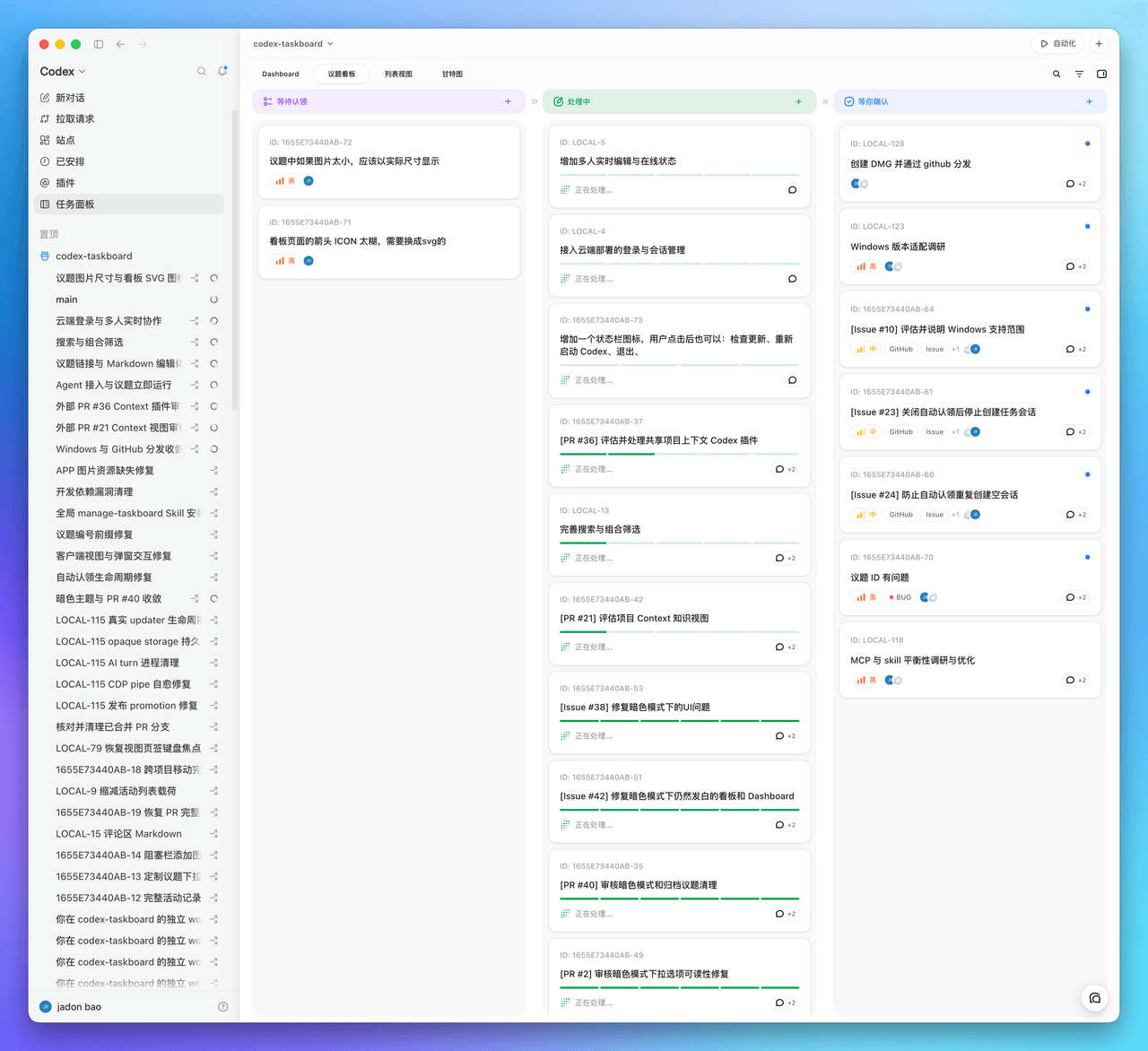 chuspeeism/dashi-taskboard
现代化可灵活嵌入的任务面板,支持 Codex、DeepSeek Harness
chuspeeism/dashi-taskboard
现代化可灵活嵌入的任务面板,支持 Codex、DeepSeek Harness
-
 zhoushoujianwork/easyeda-agent
嘉立创EDA专业版(EasyEDA Pro)自动化:给 AI harness 装上画板的「手」—— 一套 typed 原理图/PCB 动作,CLI / Agent Skill / stdio MCP 三形态融合接入。承接嘉立创「不以卖板赚钱…
zhoushoujianwork/easyeda-agent
嘉立创EDA专业版(EasyEDA Pro)自动化:给 AI harness 装上画板的「手」—— 一套 typed 原理图/PCB 动作,CLI / Agent Skill / stdio MCP 三形态融合接入。承接嘉立创「不以卖板赚钱…
-
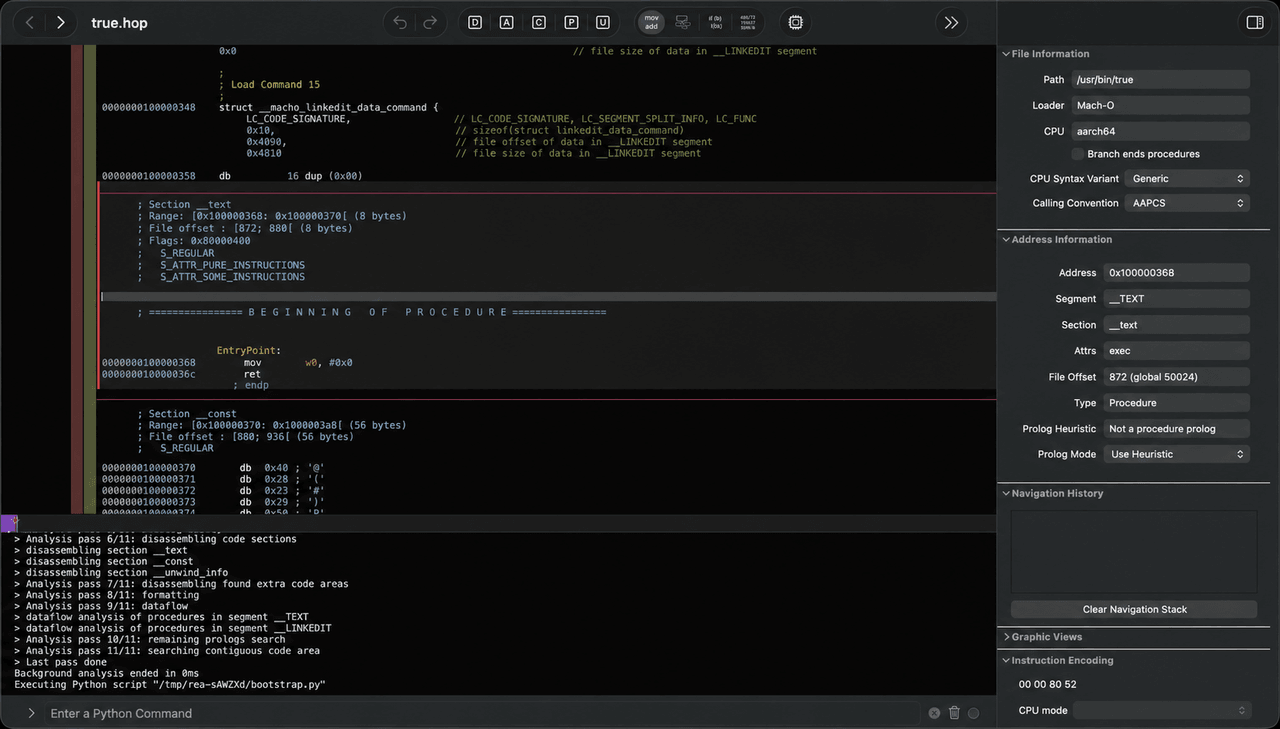 morluto/rea
Reverse engineer anything with agents, from app behavior down to native binaries.
morluto/rea
Reverse engineer anything with agents, from app behavior down to native binaries.
-
 gitroomhq/postiz-agent
Postiz Agents CLI - connect it to Claude / OpenClaw / etc, to schedule social media posts 🤖
gitroomhq/postiz-agent
Postiz Agents CLI - connect it to Claude / OpenClaw / etc, to schedule social media posts 🤖
-
 linhay/harmony-next.skills
Offline HarmonyOS NEXT developer skill library for AI coding assistants. Covers API 12–26 declarations, ArkTS/ArkUI, NDK…
linhay/harmony-next.skills
Offline HarmonyOS NEXT developer skill library for AI coding assistants. Covers API 12–26 declarations, ArkTS/ArkUI, NDK…
-
 yzlnew/infra-skills
A collection of specialized agent skills for AI infrastructure development, enabling Claude Code to write, optimize, and…
yzlnew/infra-skills
A collection of specialized agent skills for AI infrastructure development, enabling Claude Code to write, optimize, and…
-
 liceses/dsh-gitbash-preset
DeepSeek Harness 插件:一键安装「极简模式 (Git Bash)」agent preset —— 把 DSH 自带极简模式中的 bash 调用映射到 Git for Windows 的 bash(MSYS),让 Window…
liceses/dsh-gitbash-preset
DeepSeek Harness 插件:一键安装「极简模式 (Git Bash)」agent preset —— 把 DSH 自带极简模式中的 bash 调用映射到 Git for Windows 的 bash(MSYS),让 Window…
-
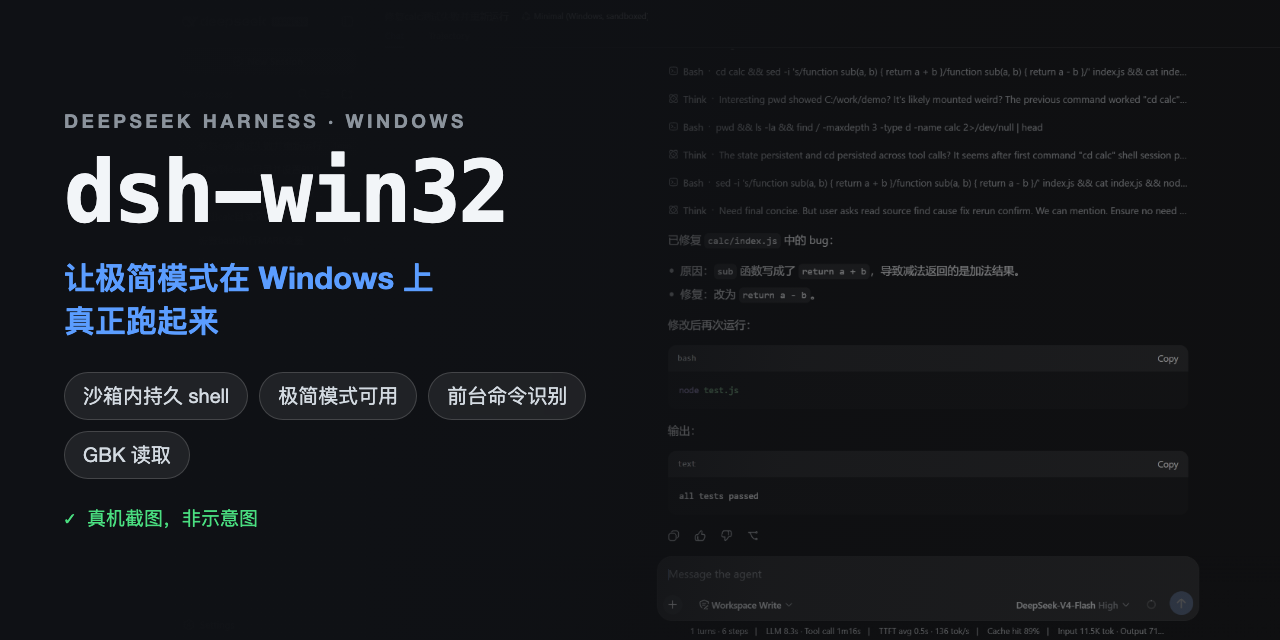 sjh9714/dsh-win32
Fix and diagnose DeepSeek Harness on native Windows. Official PowerShell, Workspace Write, shortcuts, and legacy preset …
sjh9714/dsh-win32
Fix and diagnose DeepSeek Harness on native Windows. Official PowerShell, Workspace Write, shortcuts, and legacy preset …