theoneLee/deepseek-harness-sdk-go
Go SDK for driving DeepSeek Harness
Project Overview项目介绍
DSH plugin: a Go SDK for DeepSeek Harness that spawns the Harness runtime as a subprocess and exchanges line-delimited JSON-RPC 2.0 over stdio. Core capability: resolves, SHA-256 verifies, caches the matching platform runtime, and exposes both a high-level DeepSeekHarness wrapper and a low-level HarnessClient for sessions, notifications, and protocol requests. Use it to embed DeepSeek Harness into Go services, reuse sessions, or drive custom integrations. Caveat: Go 1.26+ is required, the bundled downloader supports only macOS arm64 and Linux amd64/arm64, and DEEPSEEK_API_KEY must be set unless a Cordis composition overrides credentials.
DSH 插件:DeepSeek Harness 的 Go SDK,启动 Harness 运行时子进程,通过 stdio 通信 line-delimited JSON-RPC 2.0 协议。核心能力包括自动解析并校验平台 runtime、缓存复用、提供高层 DeepSeekHarness 与底层 HarnessClient。适用于在 Go 应用中集成 DeepSeek Harness、复用会话、监听通知。注意:默认 runtime 下载器仅支持 macOS arm64 与 Linux amd64/arm64,且需 Go 1.26+ 与 DEEPSEEK_API_KEY。
请帮我了解并安装插件:【deepseek-harness-sdk-go】【https://github.com/theoneLee/deepseek-harness-sdk-go】Send this message to DSH in your current session. CLI install commands may not be accurate across systems — DSH will figure it out for you.把上面这条消息直接发给当前会话里的 DSH,让它帮你了解并安装。安装命令不一定准确,发给 DSH 更稳。
Or use CLI install (for developers)或使用命令行安装(适合开发者)
CLI Install命令行安装
dsh plugin --profile web add github:theoneLee/deepseek-harness-sdk-go把 theoneLee/deepseek-harness-sdk-go 加入你的 DSH 配置(web profile)即可启用。
READMEREADME
DeepSeek Harness Go SDK
English | 中文
Go SDK for driving DeepSeek Harness. The SDK starts the Harness runtime as a subprocess and speaks the line-delimited JSON-RPC 2.0 protocol over stdio. It is a clean-room Go implementation of the protocol and mirrors the layering and activity semantics of the upstream Python SDK.
Requirements
- Go 1.26 or newer.
- macOS arm64/x64, Linux amd64/arm64, or Windows amd64 when using the bundled runtime downloader.
- An explicit
DSHHomeor non-emptyDSH_HOMEenvironment variable. - A
DEEPSEEK_API_KEYenvironment variable, unless the selected profile uses another credential path or a local model proxy.
Install
go get github.com/theoneLee/deepseek-harness-sdk-go
The SDK targets the single-file runtime published by the DeepSeek Harness
project. With no explicit executable, the first Start or Run resolves the
matching platform wheel from a PyPI-style index, verifies SHA-256, extracts it
into a cache, and reuses it on later starts. The default target is runtime
0.1.5-alpha.1, corresponding to upstream tag dsh-v0.1.5-alpha.1.
The matching public runtime wheel must be available before automatic download
can start this version; use DSHBin or RuntimeIndexURL when consuming a
private or pre-publication wheel.
Quick start
package main

import (
	"fmt"

	deepseekharness "github.com/theoneLee/deepseek-harness-sdk-go"
)

func main() {
	harness := deepseekharness.NewDeepSeekHarness(deepseekharness.DeepSeekHarnessConfig{
		DSHHome: "/absolute/path/to/dsh-home",
	})
	defer harness.Close()

	result, err := harness.Run("Say hi.")
	if err != nil {
		panic(err)
	}
	fmt.Println(result.FinalResponse)
}
DeepSeekHarness starts lazily and keeps the subprocess alive across runs.
Always call Close when the harness is no longer needed so the runtime is
reaped promptly.
Configuration
harness := deepseekharness.NewDeepSeekHarness(deepseekharness.DeepSeekHarnessConfig{
	Provider:   "deepseek-official",
	Model:      "deepseek-v4-flash",
	ReasoningEffort: "max",
	MaxTokens:  49_152,
	DSHHome:    "/absolute/path/to/dsh-home",
	Profile:    "sdk",
	Patches:    []string{"/absolute/path/to/patch.yml"},
})
defer harness.Close()
The runtime inherits the parent environment. Env overlays it for the child;
BaseURL and APIKey are convenience fields for
DEEPSEEK_BASE_URL and DEEPSEEK_API_KEY. CWD is sent in the initialize
payload; RuntimeCWD controls the subprocess working directory. DSHHome
overrides the child DSH_HOME; without it, the child must inherit a non-empty
DSH_HOME. Profile defaults to sdk, and each Patches entry becomes an
absolute --patch argument. ReasoningEffort becomes reasoningEffort in
initialize, while MaxTokens == 0 omits maxTokens.
The initialize handshake has its own 30-second default timeout through
InitializeTimeoutSeconds; RequestTimeoutSeconds controls ordinary
requests.
Launch channels are resolved from most explicit to least explicit:
LaunchArgsOverride.CommandwithArgs.DSHBin.RuntimeBinorBridgeBin(deprecated compatibility aliases).DSH_RUNTIME_BIN(deprecated compatibility override).- The bundled runtime downloader.
DSHBin and the bundled downloader append --profile <Profile> and ordered
--patch <absolute path> arguments, and require an explicit Harness home. The
new runtime has no downloaded default cordis.yml; its profile owns runtime
configuration. LaunchArgsOverride remains an internal-style escape hatch for
fake runtimes and bypasses the home check.
Sessions and results
session, err := harness.StartSession("session-reuse")
if err != nil {
	panic(err)
}

result, err := session.Run(
	deepseekharness.BlocksInput([]deepseekharness.JSONObject{
		{"type": "text", "text": "Inspect this task."},
	}),
	func(notification deepseekharness.Notification) {
		if notification.Method == "session.event" {
			// Render or persist the event as needed.
		}
	},
)
Run waits for the prompt's durable agent/inbox/spliced receipt, then
collects notifications until the root session reaches its next idle state.
Notifications from known descendant sessions are included through
subagent.started lineage edges. RunResult.Events contains root-session
events only. FinalResponse is the last committed root assistant text in the
interval, and FinishReason is the last turn/end reason kind when present.
Those values describe the owned activity interval, not an output causally
assigned to only the submitted prompt.
The callback is invoked for each collected notification after the inbox
receipt. FinishReason is a *string; it is nil when no turn ended.
Low-level client
HarnessClient exposes the protocol surface used by advanced integrations:
client := deepseekharness.NewHarnessClient(deepseekharness.HarnessClientOptions{
	DSHBin:  "/path/to/dsh",
	DSHHome: "/absolute/path/to/dsh-home",
	Profile: "sdk",
})
defer client.Close()

if err := client.Start(); err != nil {
	panic(err)
}
_, err := client.Initialize(deepseekharness.InitializeParams{
	CWD: "./workspace", Provider: "deepseek-official", Model: "deepseek-v4-flash",
	ReasoningEffort: "max",
})
The client supports Request, Notify, SessionPrompt, Subscribe,
SubscribeSessionTree, NextNotification, NextRequest, Respond, and
RespondError. Server-to-client requests are queued until the caller answers
them. Notifications that no subscription matched are available through
NextNotification.
Errors
Errors are concrete types suitable for errors.As: JsonRpcError,
RequestTimeoutError, ProtocolError, TransportClosedError,
RuntimeResolveError, and IOError. TransportClosedError includes the
process exit code when available and the last 400 stderr lines.
Development
gofmt -w *.go
go vet ./...
go test -race ./...
GitHub Actions runs formatting, vet, race-enabled tests, and the regular test
suite on Linux and macOS. Releases are created from matching v* tags; see
docs/ROADMAP.md for planned parity work.
For the next upstream tag update, follow the tag update runbook.
Code Contribution Guide
| Area | Requirement |
|---|---|
| Scope | Keep changes focused on the Go SDK and its compatibility with the upstream Python SDK. |
| Implementation | Follow existing package patterns, preserve raw protocol data, and add comments only for non-obvious behavior. |
| Tests | Add or update mechanism tests for protocol, lifecycle, and runtime-resolution changes. |
| Validation | Run gofmt, go vet ./..., and go test -race ./... before opening a pull request. |
| Documentation | Update the relevant English and Chinese docs in docs/ when public behavior changes. |
| Pull request | Explain the behavior change, compatibility impact, and verification commands. Do not include API keys or runtime artifacts. |
The full contributor workflow, including branch, commit, and pull request
guidance, is in docs/CONTRIBUTING.md.
Relationship to DeepSeek Harness
This repository owns the Go SDK. The runtime is published by the
DeepSeek Harness project as
deepseek-harness-runtime-bin. The SDK follows the documented
stdio JSON-RPC protocol
and tracks the Python SDK's public behavior as that implementation evolves.
Related相关推荐
- yjh051108/dsh-routing-suite dsh-routing-suite — injector + router-standard kit: install the runtime injector first, then the task-aware reasoning-mo…
- xiaobright/dsh-anchored-standard Two-phase DeepSeek Harness preset: Minimal-aligned bootstrap, then full Standard tools (Project2 98/99)
-
 jingyunstudio/jingyun-dsh
基于 Jingyun Studio + DeepSeek Harness (DSH) 打造的一站式 AI 商业化桌面客户端,一个将 AI 智能体 / 技能 / 工作流转化为可交易商品的完整商业化平台客户端。 井云为 DSH 注入了完整的商…
jingyunstudio/jingyun-dsh
基于 Jingyun Studio + DeepSeek Harness (DSH) 打造的一站式 AI 商业化桌面客户端,一个将 AI 智能体 / 技能 / 工作流转化为可交易商品的完整商业化平台客户端。 井云为 DSH 注入了完整的商…
-
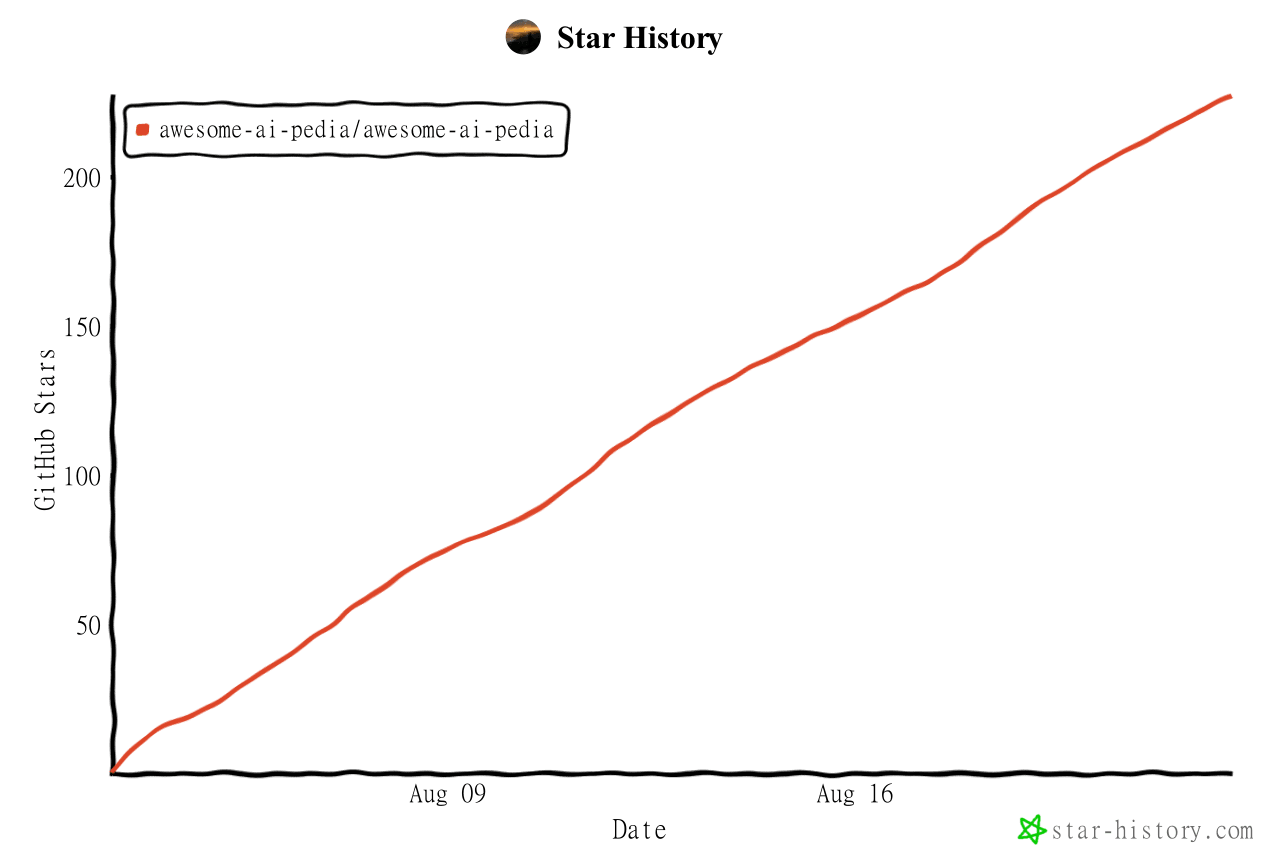 Awesome-AI-Pedia/Awesome-AI-Pedia
AI skills大全 mcp ai知识库 Agent 全维度 AI 资源百科,DSH插件 收录大模型、智能 Agent、RAG 检索增强、多模态、MLOps、AI 应用工具、AI面试集、Vibe coding 大全、零基础学习路线,持续更…
Awesome-AI-Pedia/Awesome-AI-Pedia
AI skills大全 mcp ai知识库 Agent 全维度 AI 资源百科,DSH插件 收录大模型、智能 Agent、RAG 检索增强、多模态、MLOps、AI 应用工具、AI面试集、Vibe coding 大全、零基础学习路线,持续更…
-
 imsai-sh/awesome-deepseek-harness-plugins
DeepSeek Harness plugin store, marketplace and hub — 11,000+ dsh plugins with search, rankings, install commands and a f…
imsai-sh/awesome-deepseek-harness-plugins
DeepSeek Harness plugin store, marketplace and hub — 11,000+ dsh plugins with search, rankings, install commands and a f…
- seriousz158/dsh-memory
-
 yjh051108/dsh-super-injector
推荐组件(非必须):DeepSeek Harness 运行时注入器;已随 dsh-routing-suite 单仓库化保留,本仓库继续维护/发布。
yjh051108/dsh-super-injector
推荐组件(非必须):DeepSeek Harness 运行时注入器;已随 dsh-routing-suite 单仓库化保留,本仓库继续维护/发布。
-
 2BingLing/dsh-market
DeepSeek Harness 插件市场 · 持续收录 6000+ DSH 插件:中文搜索 + 实用五维评分 + 一键安装。Web 版与 DSH 侧边栏插件双形态。Plugin marketplace for DeepSeek Harne…
2BingLing/dsh-market
DeepSeek Harness 插件市场 · 持续收录 6000+ DSH 插件:中文搜索 + 实用五维评分 + 一键安装。Web 版与 DSH 侧边栏插件双形态。Plugin marketplace for DeepSeek Harne…