wldxiaobai/dsh-project-mcp-manager
基于原版 DSH 扩展,提供项目层、用户层更完整 MCP 管理 || Extended from the original DSH code, providing more complete MCP management at both project and user levels
Project Overview项目介绍
This is a project-level MCP auto-loading plugin for DSH. It automatically loads MCP server configurations from <projectRoot>/.dsh/mcp.yml when a DSH session opens, supports hot config reload and scopes tool visibility per working directory. Use it when you need separate MCP setups per DSH project. It has no UI, and config files can carry executable code, so only add configs from trusted projects.
</think_never_used_51bce0c785ca2f68081bfa7d91973934>
这是DSH的项目级MCP自动加载插件,核心能力是打开DSH会话时自动加载项目根目录.dsh/mcp.yml中配置的MCP服务,支持配置热更新,工具作用范围按会话工作目录划分。需要按项目单独配置MCP服务时可使用它。注意该插件无UI,仅提供核心功能,配置文件可携带可执行代码,只应添加可信项目的配置。
请帮我了解并安装插件:【dsh-project-mcp-manager】【https://github.com/wldxiaobai/dsh-project-mcp-manager】Send this message to DSH in your current session. CLI install commands may not be accurate across systems — DSH will figure it out for you.把上面这条消息直接发给当前会话里的 DSH,让它帮你了解并安装。安装命令不一定准确,发给 DSH 更稳。
Or use CLI install (for developers)或使用命令行安装(适合开发者)
CLI Install命令行安装
dsh plugin --profile web add dsh-project-mcp-manager@0.6.0把 wldxiaobai/dsh-project-mcp-manager 加入你的 DSH 配置(web profile)即可启用。
READMEREADME
dsh-project-mcp-manager
English | 中文
A project-level MCP auto-loading plugin for DSH: write MCP server configs in
<projectRoot>/.dsh/mcp.yml or .dsh/mcp.json and they are mounted
automatically (via the official @deepseek-ai/dsh-mcp-client) whenever a dsh
session opens in that project. Changes to the file hot-reload into the running
dsh process, and tool visibility is scoped per session cwd. No UI — core
functionality only.
Capability boundary: this plugin = official @deepseek-ai/dsh-mcp-client
transports + six-layer source governance + per-session isolation.
Transport types are decided by the official client; this plugin does not
implement MCP transports.
If this plugin is useful, a GitHub star is appreciated. Bugs, host mismatches, or ideas belong in Issues — even a short report helps.
Documentation
Feature documentation lives in docs/, English and Chinese side by side:
- Configuration format — native YAML managed block, JSON dialect, divergences from the cordis dialect.
- Configuration sources and layers — the six-layer source model, shadow priority, global vs project mounting, and the read-only legacy Claude Code layer.
${VAR}expansion — mount-time interpolation and its diagnostics.- CLI
dsh-mcp— scopes, write formats, ownership contract.
Design and release records (Chinese): dsh 0.1.5-rc.2 adaptation · dsh 0.1.5-rc.1 adaptation · dsh 0.1.2-rc.1 adaptation · JSON config layer proposal · Runtime robustness & JSON interop proposal · v0.6.0 release notes · v0.4.3 release notes · v0.4.2 release notes · v0.4.1 release notes · v0.4.0 release notes · v0.3.1 release notes.
Code review records (Chinese): TypeScript changes since v0.3.1 · v0.4.3 to v0.6.0 · 7e0088d to 804662f (fix follow-up).
Installation (mount into a profile)
The plugin is mounted through a bundle patch: once the package is added to
dsh.profile.bundles, dsh synthesizes each bundle's patch (the
cordis.patch.yml pointed to by dsh.bundle.patch) into plugin lines at
startup, in order.
Prerequisite: install dsh itself (for users who don't have dsh yet):
npm install -g @deepseek-ai/dsh        # official npm package
npm install -g deepseek-ai/dsh         # or install from the GitHub source
Option 1: the dsh plugin command (recommended) — dsh plugin forwards
pnpm inside the profile directory and handles installing/upgrading
dependencies:
# Install the latest version (web profile shown as an example;
# substitute the name of any other profile, e.g. headless)
dsh plugin --profile web add dsh-project-mcp-manager@latest

# Install a specific version (check available versions with
# npm view dsh-project-mcp-manager versions)
dsh plugin --profile web add dsh-project-mcp-manager@0.6.0
Option 2: install directly with pnpm (equivalent to option 1):
# dshHome defaults to %USERPROFILE%\.dsh (uses $DSH_HOME if set)
cd $env:USERPROFILE\.dsh\profiles\web
pnpm add dsh-project-mcp-manager@latest
Option 3: local development install (a junction that live-syncs your source, so code changes take effect immediately):
cd $env:USERPROFILE\.dsh\profiles\web
pnpm add link:<path-to-your-dsh-mcp-project-source>   # e.g. D:\dev\dsh-mcp-project
dsh ≥ 0.1.2 note: whether the plugin loads depends on the profile's
dsh.profile.bundleslist, and a plainpnpm add link:does not add the package to it. Options 1 and 2 reconcile it automatically; if you ran pnpm by hand, run anydsh plugin --profile web listonce (or checkdsh --profile web --dump-configfor adsh-project-mcp-managerrow) to trigger the bundle reconcile.
Upgrading / pinning versions: re-run the add command from option 1 with
the desired version suffix — @latest upgrades to the newest release, @0.6.0
pins to a specific version.
Build & test
pnpm install
pnpm run build     # tsc → lib/
pnpm test          # node test/test-model.mjs / test-mcp-file / test-json-file / test-json-write / test-registry / test-cli
How it works
- Project discovery: the
session.header.cwdof an active agent session, plus the dsh process start directory → walk up to the nearest ancestor containing.gitas the project root (falls back to the directory itself when there is no.git). - Mounting: each
(project, serverName)pair in the project layers mounts one@deepseek-ai/dsh-mcp-clientinstance (ctx.plugin) on the host ctx and registers it into the global tool layer; multiple sessions inside the same project share a single connection. Project-layer fibers are created only for projects with a live session or the process cwd; after the last session leaves (and the project is not cwd) servers unmount following a 5 minute grace while the catalog entry and watcher remain. Every user-layer row mounts exactly one instance (global, independent of the number of projects) — see configuration sources and layers. - Hot reload: chokidar watches each project root (depth 2, ignoring
node_modules/.git/.hg/.svn), but only edits to the exact config files of
known project roots —
<projectRoot>/.dsh/mcp.yml,<projectRoot>/.dsh/mcp.jsonand<projectRoot>/.mcp.json— trigger a full reconciliation after a 150 ms debounce: added rows are mounted, removed rows are unmounted, and config changes are remounted. A second watcher covers the user layer as exact file paths —~/.dsh/mcp.yml,~/.dsh/mcp.json,~/.dsh/profiles/<active profile>/mcp.json, and$DSH_HOME/dsh-mcp.json(the other plugin's global store; watched only so creating it can be diagnosed, never mounted). chokidar v5 can deliver an event for a watched missing file when it is created, as long as its parent directory exists — never the home directory at large. - Profile name resolution: derived from the loader root include's
config.path(~/.dsh/profiles/<name>/cordis.yml) orctx.baseUrl, and overridable withDSH_MCP_PROFILE=<name>; when it cannot be resolved the profile layer is not read (the other layers still are). - Effective names: when the original
serverNameis unique across the whole catalog (host global rows + all project rows) it keeps its name; on a conflict project rows are renamed top<first 6 hex chars of sha256(project root)>_<original name>(truncated to 32 characters, deterministic and independent of mount order) to avoid the serverName reservation conflicts thatdsh-mcp-clientmakes per process root. Global rows (profile patch lines and user-layer rows) participate in occupancy determination but are never renamed. Model-visible tool names are built from the effective server name and the MCP tool's own name (mcp__<effectiveServerName>__<toolName>), which may differ from theserverNamewritten in the file. - Session visibility: when an agent is created, its session cwd resolves to
a project, and
tools.restrict({ deny })is applied to that agent to deny every project server except those of the session's own project, plus the global servers suppressed by the project's own rows; a session without a cwd falls back to the owner project (subagents), then to the project containing the dsh process cwd. Released when the session is destroyed.
Security boundary
stdio lines in .dsh/mcp.yml, .dsh/mcp.json and .mcp.json spawn their
command inside the dsh host process — config files are executable code
carriers, so only add them in projects you trust. The user layers
(~/.dsh/mcp.yml, ~/.dsh/mcp.json, the profile json) are executable code
carriers too, they just belong to your own machine: user-layer rows mount
globally (one host-level connection, visible to every project) and are no
longer fanned out per project. Lines that fail to mount or are invalid are
skipped with a warning and do not affect other servers. Claude user-state
monoliths such as ~/.claude.json (mixing credentials with project history)
are no longer read at all as of v0.4.0.
Coexistence with other MCP manager plugins
This plugin and @wingsky-1/dsh-mcp-manager both auto-load per-project MCP
servers, but they do not share a file format:
- Project files are mutually incompatible. This plugin reads
{ mcpServers: { … } }in<projectRoot>/.dsh/mcp.json. The other plugin stores{ version, servers: [] }at the same path. A missingmcpServerskey is a legal empty layer here, so the other format would otherwise look like "I configured it but nothing happens". The loader now writes a diagnostic naming that format and suggestingmcpServersor.dsh/mcp.yml. The same hint applies to~/.dsh/dsh-mcp.json. If that file already uses this plugin'smcpServersdialect, the diagnostic tells you to move the object intomcp.json— it is still not loaded from the other plugin's filename. - The same
serverNamecan be started twice (once by each plugin). stdio servers may contend for ports or exclusive resources. - Prefer one plugin per project, or keep this plugin on
.dsh/mcp.ymland the other on.dsh/mcp.json.
globalNames() only sees official loader patch rows, not tools registered by
the other plugin at runtime, so rename-to-avoid-collision does not cover
that other instance.
Related相关推荐
-
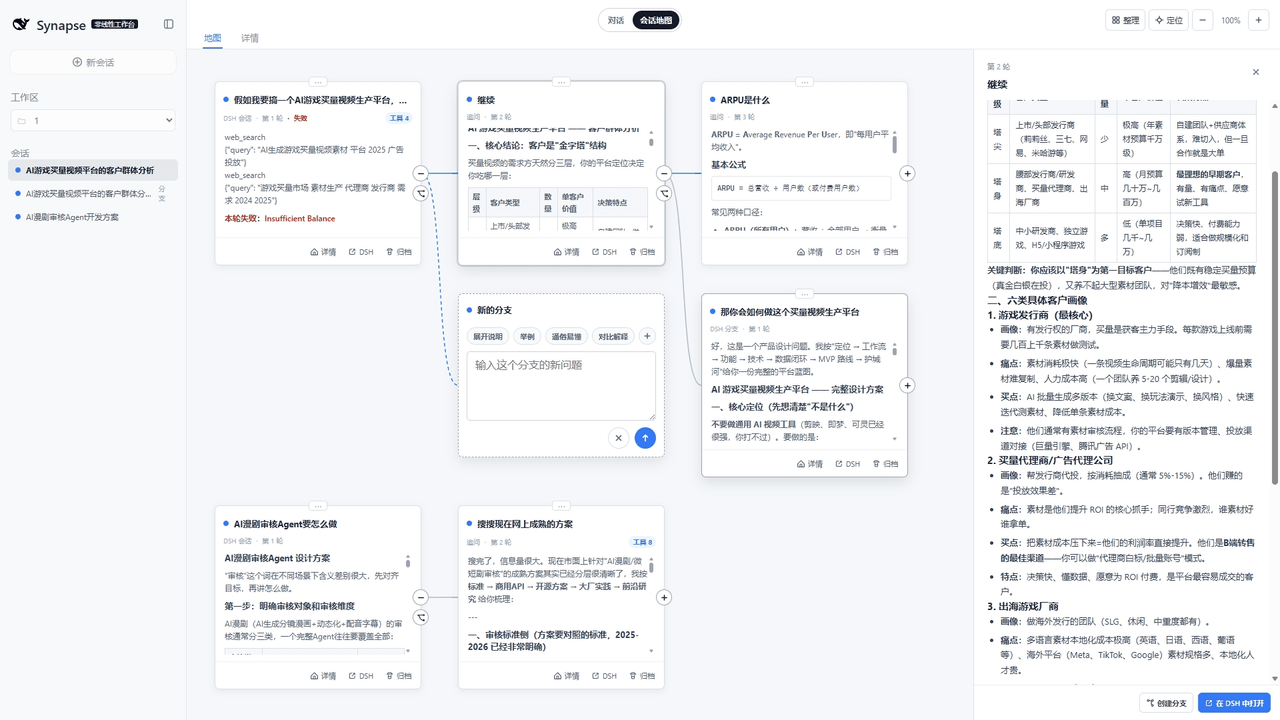 liangmianya/dsh-synapse
A visual, non-linear conversation workspace plugin for DeepSeek Harness ; A canvas-based session explorer and branching …
liangmianya/dsh-synapse
A visual, non-linear conversation workspace plugin for DeepSeek Harness ; A canvas-based session explorer and branching …
-
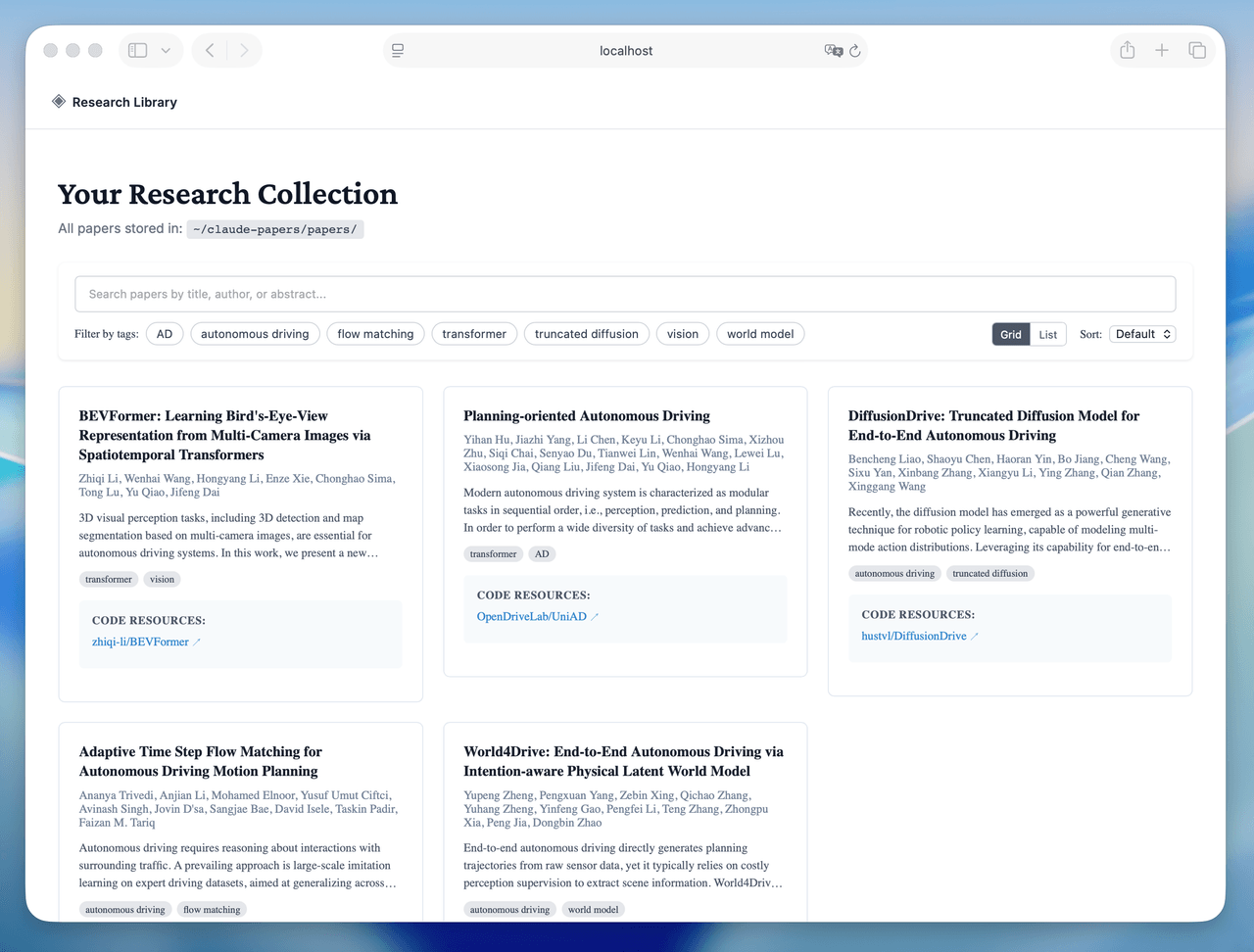 alaliqing/claude-paper
📖 Cross-agent research paper toolkit for Claude Code, Codex, OpenCode, and DeepSeek Harness—quick summaries, deep study…
alaliqing/claude-paper
📖 Cross-agent research paper toolkit for Claude Code, Codex, OpenCode, and DeepSeek Harness—quick summaries, deep study…
-
 omdsh-dev/dsh-annotation
DSH Web 选中批注插件:选文字→批注→回车随消息发送;气泡隐藏批注块(零闪烁);回复按 Annotation N 逐条对照(可悬浮芯片)。官方 bundle,零核心改动
omdsh-dev/dsh-annotation
DSH Web 选中批注插件:选文字→批注→回车随消息发送;气泡隐藏批注块(零闪烁);回复按 Annotation N 逐条对照(可悬浮芯片)。官方 bundle,零核心改动
-
 Anionex/dsh-turn-rewind
deepseek harness对话和代码状态回退插件 | DSH — rewind conversation and workspace state, powered by a persistent Change Ledger
Anionex/dsh-turn-rewind
deepseek harness对话和代码状态回退插件 | DSH — rewind conversation and workspace state, powered by a persistent Change Ledger
-
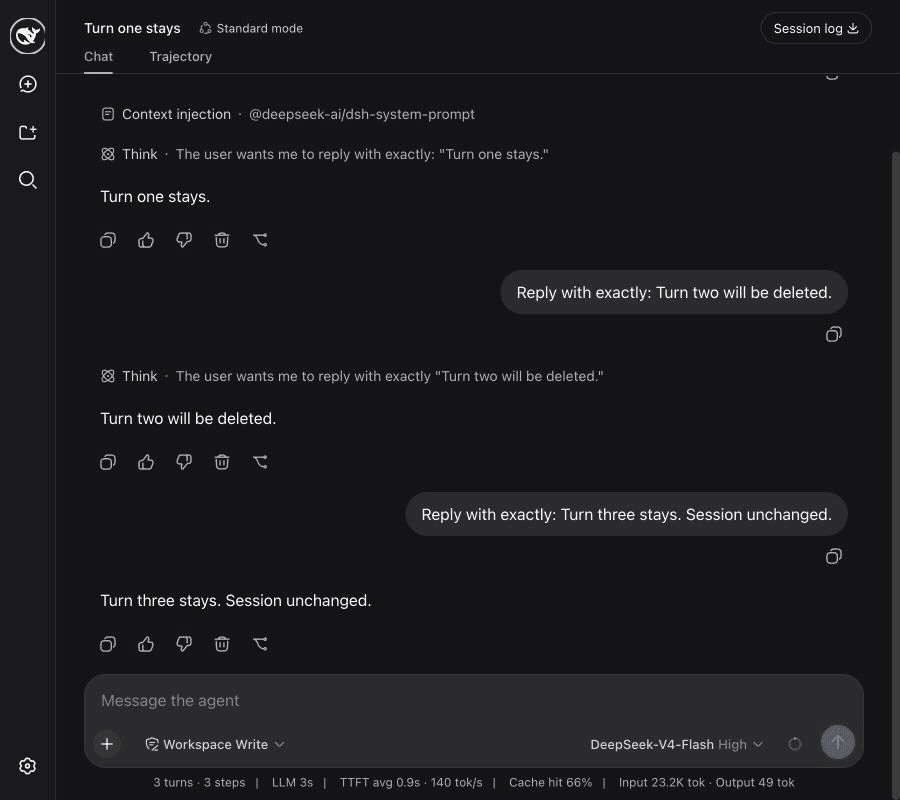 hanshenmesen/dsh-turn-delete
Delete one complete turn from a DeepSeek Harness session without deleting the session
hanshenmesen/dsh-turn-delete
Delete one complete turn from a DeepSeek Harness session without deleting the session
-
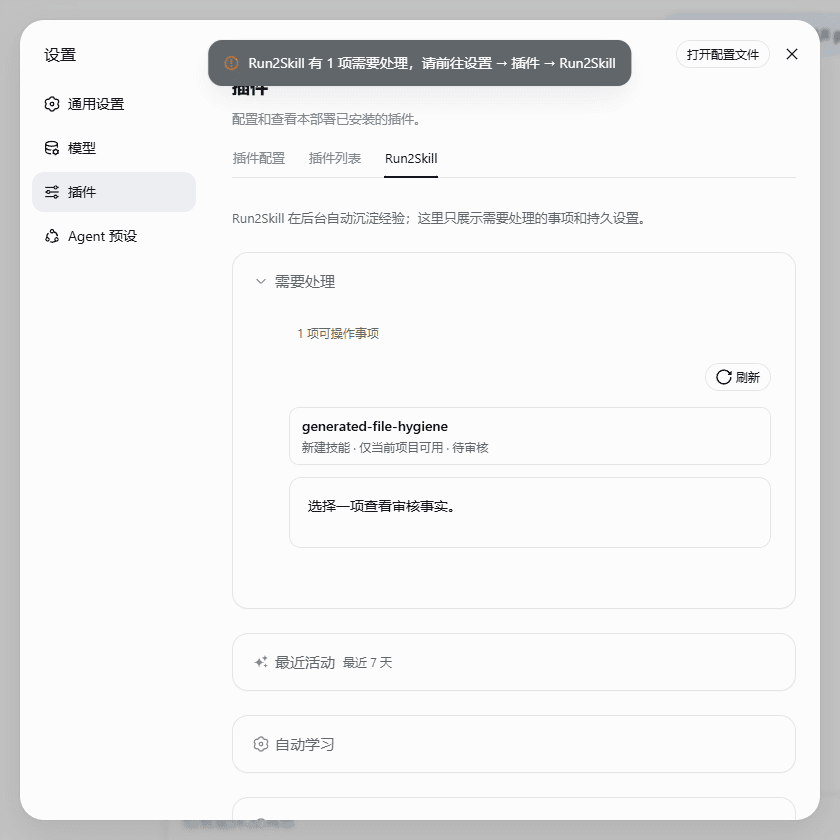 qkycir-123/dsh-run2skill
Automatically turn successful DeepSeek Harness sessions into reusable, reviewable Agent Skills.
qkycir-123/dsh-run2skill
Automatically turn successful DeepSeek Harness sessions into reusable, reviewable Agent Skills.
-
 Tyan66666/billion-context-dsh
Model-driven context management (Active Context Pruning / ACP) for the DeepSeek Harness — the model decides when and wha…
Tyan66666/billion-context-dsh
Model-driven context management (Active Context Pruning / ACP) for the DeepSeek Harness — the model decides when and wha…
-
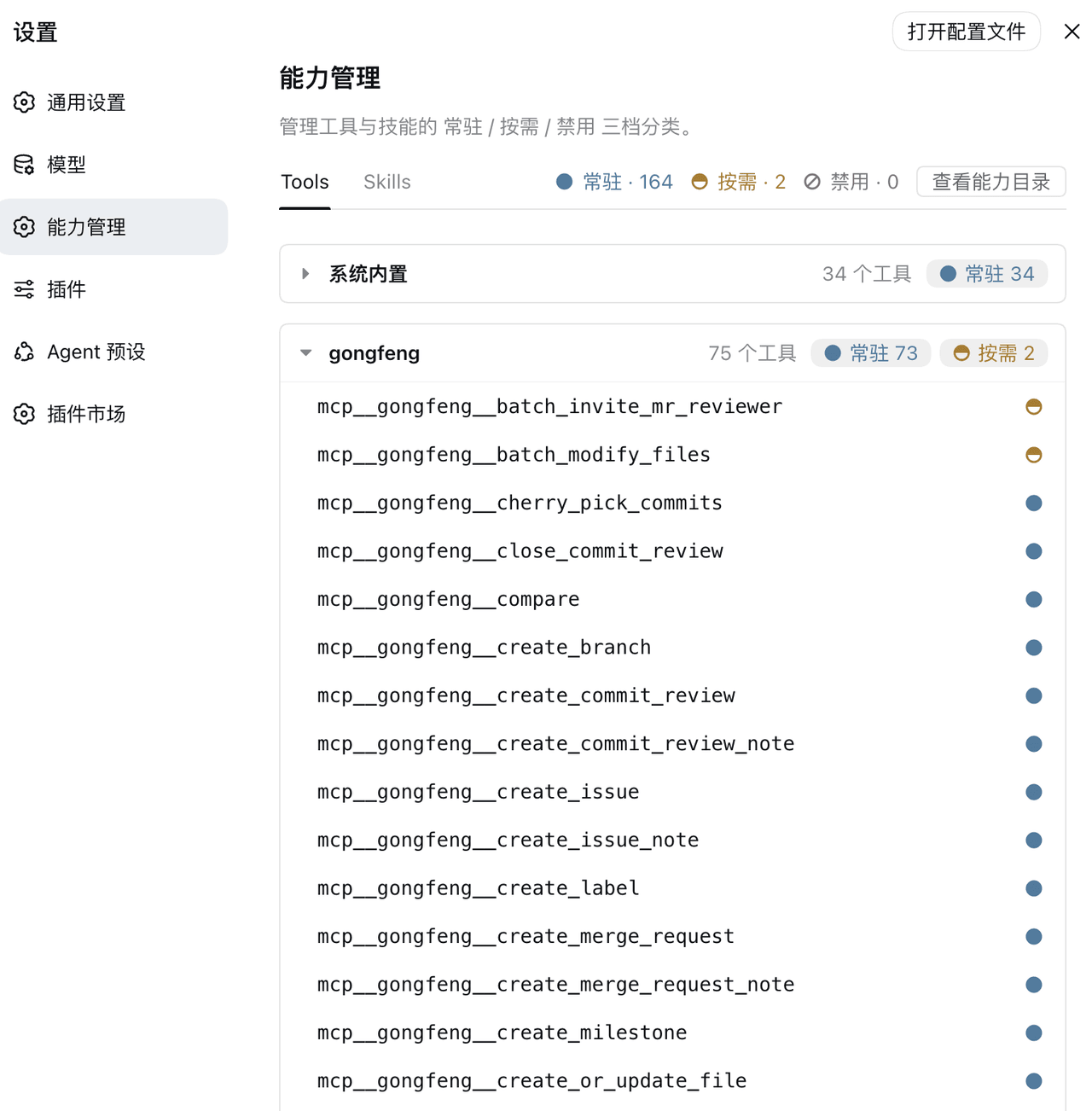 PKUfudawei/dsh-capability-menu
Unified capability menu for DeepSeek Harness: manage exposure level (context footprint) and execution mode of MCP tools …
PKUfudawei/dsh-capability-menu
Unified capability menu for DeepSeek Harness: manage exposure level (context footprint) and execution mode of MCP tools …