wyouwd1/dsh-opencode-models
Manage OpenCode Zen free-tier and Go-tier models in DeepSeek Harness: live listings from opencode.ai, drift per route, four agent tools plus an OpenCode Models settings section.
Project Overview项目介绍
A DSH plugin for managing OpenCode Zen free and Go tier models in DeepSeek Harness. It fetches live model listings from opencode.ai, compares them against the two llm-pi-ai routes in settings.yaml, and exposes four agent tools (oc_model_status, oc_model_add, oc_model_remove, oc_model_sync) plus an "OpenCode Models" settings panel for adding, removing, previewing, and syncing entries across both tiers. Use it when reconciling configured models against current Zen offerings. Caveat: since the listing only reveals ids, any new entry needs assumeDefaults: true (128000/32000/text) until real capacities are known.
DSH 插件,管理 OpenCode Zen 免费档与 Go 档模型:按需拉取 opencode.ai 实时列表,与 ~/.dsh/settings.yaml 中两条 llm-pi-ai 路由对比,提供 oc_model_status、oc_model_add、oc_model_remove、oc_model_sync 四个 agent 工具与"OpenCode Models"设置页,可勾选新增、批量删除、预览漂移后同步。当目录仅暴露 id 时需 assumeDefaults: true 假定 128000/32000/文本,能力会随后续信息被覆盖。
请帮我了解并安装插件:【dsh-opencode-models】【https://github.com/wyouwd1/dsh-opencode-models】Send this message to DSH in your current session. CLI install commands may not be accurate across systems — DSH will figure it out for you.把上面这条消息直接发给当前会话里的 DSH,让它帮你了解并安装。安装命令不一定准确,发给 DSH 更稳。
Or use CLI install (for developers)或使用命令行安装(适合开发者)
CLI Install命令行安装
dsh plugin --profile web add github:wyouwd1/dsh-opencode-models把 wyouwd1/dsh-opencode-models 加入你的 DSH 配置(web profile)即可启用。
READMEREADME
dsh-opencode-models
Manage OpenCode Zen free-tier and Go-tier models in DeepSeek Harness: fetch the live model listings from opencode.ai on demand, compare them with what your routes actually serve, and add or remove entries — through four agent tools and an "OpenCode Models" settings page. The free tier is an explicit official allowlist from the OpenCode Zen docs pricing table (big-pickle, ox-alpha-free, mimo-v2.5-free, hy3-free, nemotron-3-ultra-free, nemotron-3.5-lightning-free, muse-spark-1.2-contributor-free): paid ids the free endpoint also advertises never count, drift or get offered, and suffix-only ids outside that table are not adoptable either.
dsh plugin --profile web add github:wyouwd1/dsh-opencode-models
What it does
DeepSeek Harness serves OpenCode Zen through two llm-pi-ai provider routes configured in ~/.dsh/settings.yaml:
| Route | Tier | Endpoint | Model ids |
|---|---|---|---|
opencode |
Free (PI_AI_API_KEY) |
https://opencode.ai/zen/v1 |
usually -free-suffixed |
opencode-go |
Go subscription | https://opencode.ai/zen/go/v1 |
unsuffixed |
The listing endpoints disclose ids only — no context windows, output caps, modalities, or reasoning levels — and the lists change over time (limited-time models get delisted). This plugin keeps the two layers honest against each other. The same model often has different ids per tier (x-preview-f-free vs x-preview-f); it never mixes them.
Agent tools
| Tool | What it does |
|---|---|
oc_model_status |
Fetches both listings live and reports per tier: configured count, live count, online-but-not-configured ids, delisted-but-still-configured ids. Read-only. |
oc_model_add |
Adds entries to one route. Pass ids copied verbatim from a status report or full models entries. Ids whose capacities the listing hides require assumeDefaults: true (contextWindow 128000, maxTokens 32000, input text) — every assumption is reported so you can correct it later. An id present only in the other tier's listing is refused with the two-tier id rule explained. |
oc_model_remove |
Removes configured ids from one route; reports not-found ids and skips the write when nothing matched. |
oc_model_sync |
Previews drift for both tiers by default. With apply: true it adds every online-not-configured id (assumed capacities flagged); with pruneStale: true it also removes delisted ids. |
Model-list edits take effect on the next request — no restart. This plugin never adds or removes whole routes; declaring a new route (apiKeyEnv/baseURL) stays on the Models page and still needs a restart.
"OpenCode Models" settings section
A section pinned to the TOP of the web settings sidebar shows exactly two cards in order — OpenCode Zen free tier, then Go tier — nothing else. Every configured row has a checkbox and a bulk delete-selected bar trims any mix of models across the two lists in one confirmation, removing them from the conversation model list on the next request: configured entries with a "delisted" flag on stale ones, checkboxes over online-not-configured ids, per-row remove, and a two-click sync (preview → confirm). It reads and writes exclusively through the existing configuration-page contracts — settings.describe / settings.update with expectedRevision, and llm.discoverModels for the live listings — and refreshes only while open when pushed invalidations arrive.
Writes are guarded by the settings revision: if the Models page or another session writes first, this plugin re-reads once instead of overwriting it, and schema-invalid candidates are refused before anything persists.
Install
From a checkout:
dsh plugin --profile web add /path/to/dsh-opencode-models
dsh --profile web
From GitHub (sources install without any build step — the shipped lib/ artifacts are plain ESM):
dsh plugin --profile web add github:wyouwd1/dsh-opencode-models
Requirements: DeepSeek Harness ≥ 0.1.1-rc.1 (the llm-pi-ai adapter family, settings seam, and web app), Node ≥ 22.
Configuration
No config keys. The two tier definitions (route keys, base URLs) follow the official OpenCode Zen endpoint layout and the shared credential comes from each route's existing apiKeyEnv (PI_AI_API_KEY). Missing credentials surface the endpoint's 401 message verbatim in tool output and in the panel.
Assumed capacities
The zen listing discloses nothing but ids, so any entry adopted by id needs capacities from somewhere. This plugin's policy:
- Explicit
modelsentries win — pass real figures when you know them. - Otherwise
assumeDefaults: true(tools) or accepting the panel's checkbox flow fillscontextWindow: 128000, maxTokens: 32000, input: ["text"]. - Every assumed value is reported back by name; correct them via
oc_model_remove+ a full re-add whenever you learn better numbers.
Assuming wrong capacities degrades context filing and output caps; it never blocks requests.
Development
npm test # node:test suites over lib/shared.js, lib/writer.js, lib/tools.js
The host face (lib/index.js) imports no @deepseek-ai/* package: tools register as plain definitions and all services resolve through the cordis context at call time. The browser face (lib/client.js) ships as the closure-factory artifact the module loader expects and requires only platform-seeded modules (react, dsh-client-ui-primitives).
Verification
Reproduce the install smoke test against an isolated DSH home (no effect on your real ~/.dsh):
DSH_HOME=/tmp/ocmm-home dsh plugin --profile web add /path/to/dsh-opencode-models
DSH_HOME=/tmp/ocmm-home dsh --profile web --dump-config | grep opencode-model   # shows the "# == dsh-opencode-models" layer
DSH_HOME=/tmp/ocmm-home dsh --profile web --port 3101 --no-open                 # then open http://127.0.0.1:3101
curl -f http://127.0.0.1:3101/plugins/dsh-opencode-models/client.js             # the served browser half
License
Muse 接入方案
OpenCode Go 的 muse-spark-1.2-contributor(地区受限模型)接入指南(独立路由 + 代理 + 思考档位),见 MUSE.md。
Related相关推荐
- Nagi-ovo/voyager Enhancement suite for Gemini, AI Studio, Claude & ChatGPT — plus a prompt manager for any websites, DeepSeek Harness inc…
-
 crafter-station/petdex
A public gallery of animated pets for Codex, Claude Code, DeepSeek Harness, Hermes, OpenCode, Gemini CLI, and more.
crafter-station/petdex
A public gallery of animated pets for Codex, Claude Code, DeepSeek Harness, Hermes, OpenCode, Gemini CLI, and more.
-
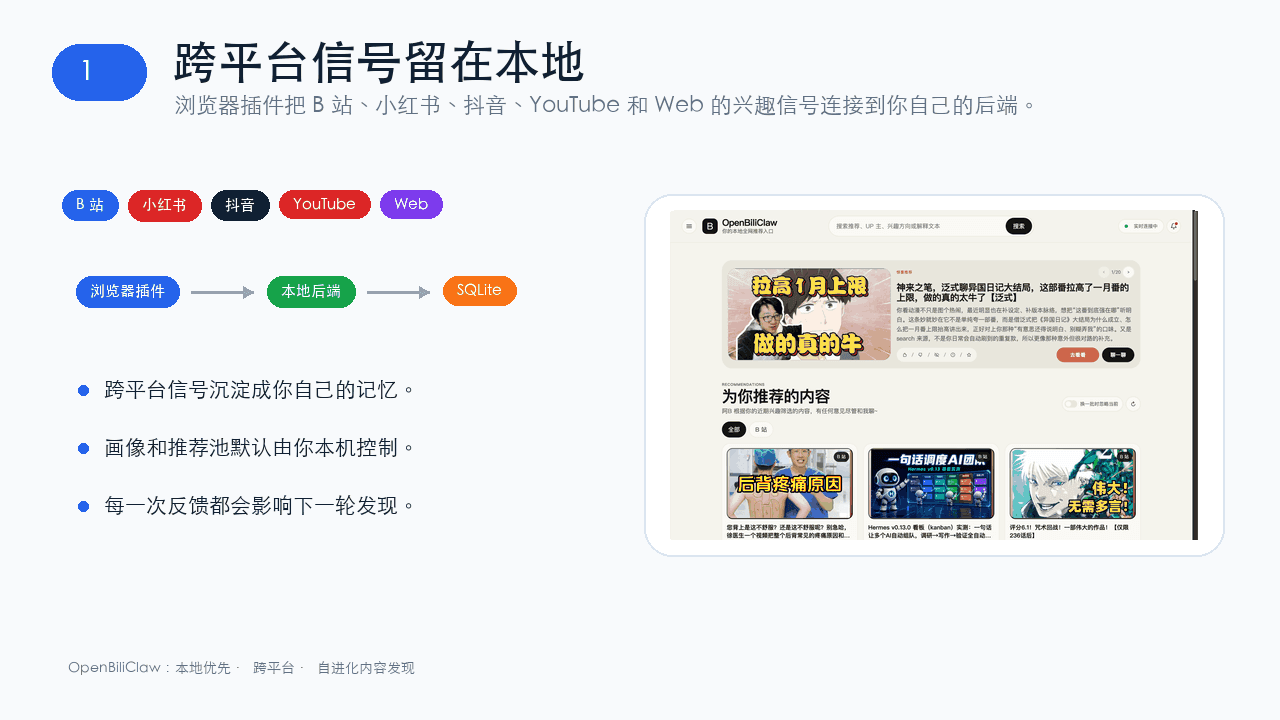 whiteguo233/OpenBiliClaw
本地私有、开源的自进化跨平台 AI 内容发现 Agent:先理解你,再主动从 B站、小红书、抖音、YouTube、X、知乎、Reddit、微博等平台与开放 Web 寻找内容。(支持 deepseek harness 插件) | Local-…
whiteguo233/OpenBiliClaw
本地私有、开源的自进化跨平台 AI 内容发现 Agent:先理解你,再主动从 B站、小红书、抖音、YouTube、X、知乎、Reddit、微博等平台与开放 Web 寻找内容。(支持 deepseek harness 插件) | Local-…
-
 edison7009/EchoBird
One-click install + model switch:Claude Code,Codex CLI (OpenAI), Grok Build (xAI), DeepSeek Harness, Kimi Code (Moonshot…
edison7009/EchoBird
One-click install + model switch:Claude Code,Codex CLI (OpenAI), Grok Build (xAI), DeepSeek Harness, Kimi Code (Moonshot…
-
 V1ki/dsh-plugin-subscriptions
Use ChatGPT (Codex), Claude, and Grok (X Premium) subscriptions as DeepSeek Harness LLM providers — OAuth login in the w…
V1ki/dsh-plugin-subscriptions
Use ChatGPT (Codex), Claude, and Grok (X Premium) subscriptions as DeepSeek Harness LLM providers — OAuth login in the w…
-
 Nwflower/dsh-chat-import
Import 14+ external agent chat histories (Claude Code, Codex, ChatGPT, Cursor, Gemini, Reasonix, opencode, ZCode, Grok B…
Nwflower/dsh-chat-import
Import 14+ external agent chat histories (Claude Code, Codex, ChatGPT, Cursor, Gemini, Reasonix, opencode, ZCode, Grok B…
-
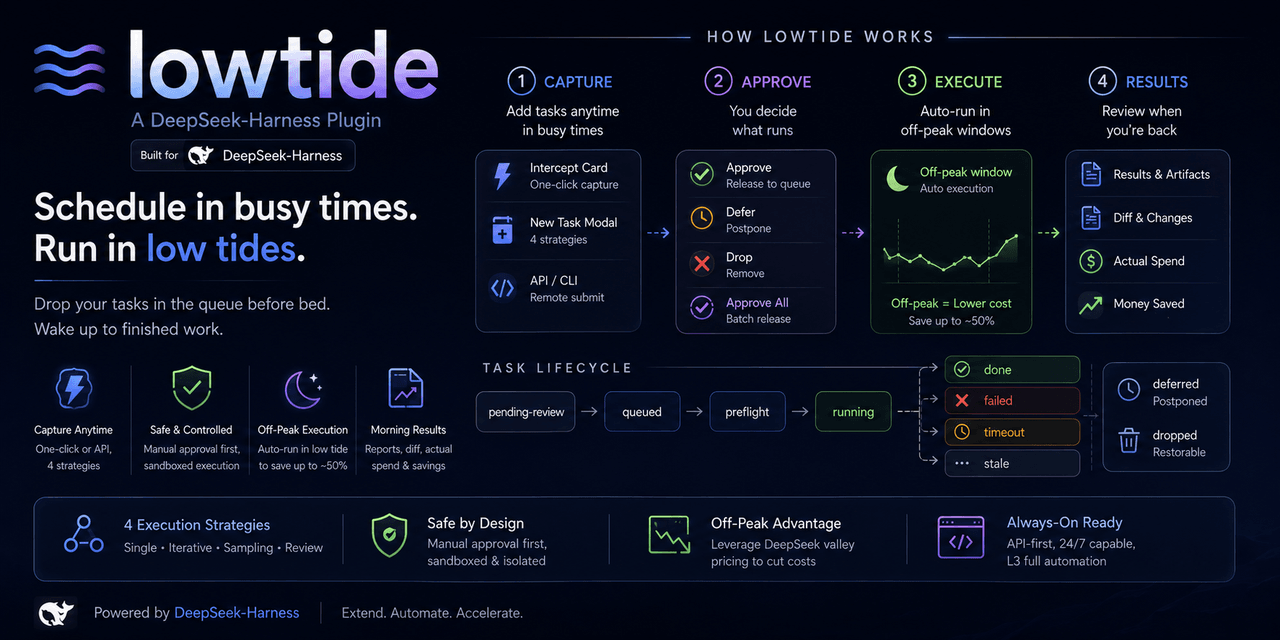 KelaoHu/dsh-lowtide
Time-shifting task delegation for DeepSeek Harness (dsh): plan tasks at leisure, they run unattended off-peak, come back…
KelaoHu/dsh-lowtide
Time-shifting task delegation for DeepSeek Harness (dsh): plan tasks at leisure, they run unattended off-peak, come back…
-
 corrinehu/dsh-workbuddy-connect
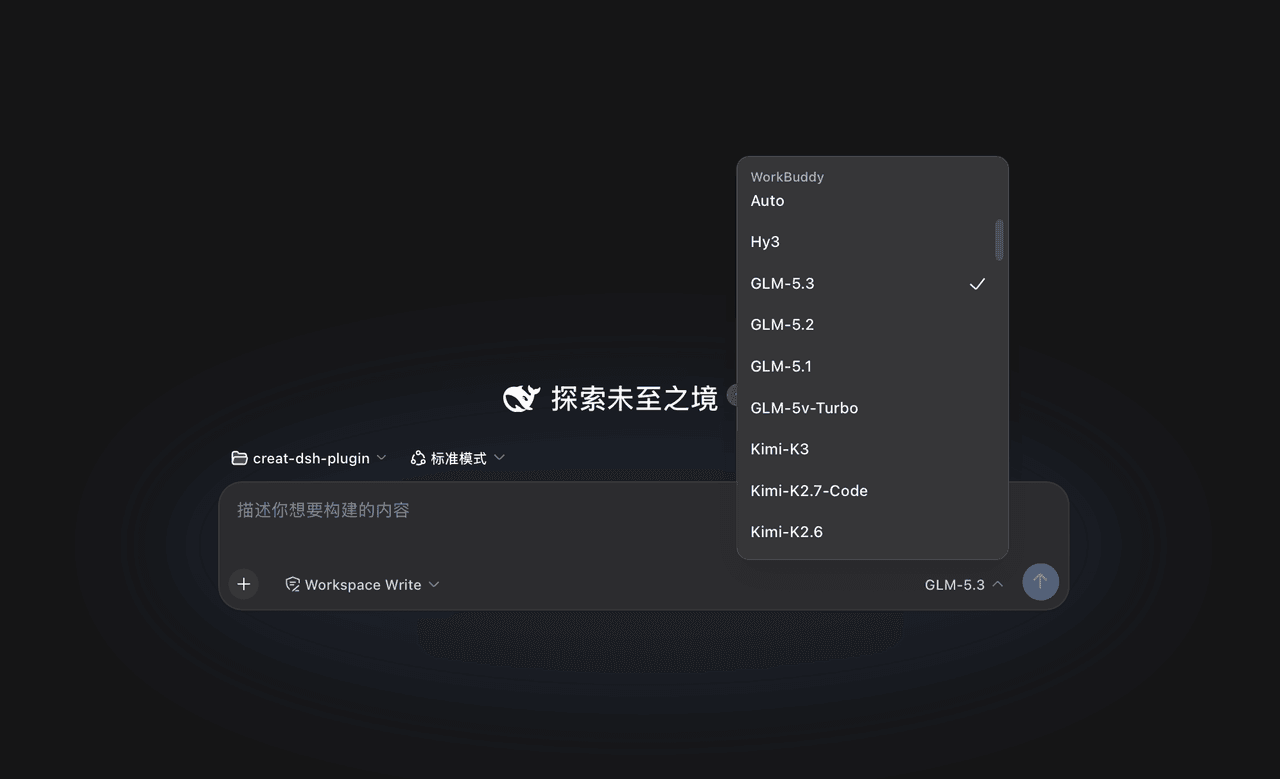
将 WorkBuddy 桌面 App 包含的模型自动接入 DeepSeek Harness,零配置使用。Bring the models in the WorkBuddy desktop app into DeepSeek Harness …
corrinehu/dsh-workbuddy-connect
将 WorkBuddy 桌面 App 包含的模型自动接入 DeepSeek Harness,零配置使用。Bring the models in the WorkBuddy desktop app into DeepSeek Harness …