HapyRain/dsh-router-laya
Auto tier routing for DSH: a locally fine-tuned model picks low/high/max thinking effort per message. Private, <1s, no cloud. 自动档位路由
Project Overview项目介绍
dsh-router-laya is a cordis-style plugin built specifically for DSH (DeepSeek Harness). It watches outgoing messages that carry no explicit tier instruction and silently routes them to one of three thinking tiers — low, high, or max — so that simple chat does not pay for a full deep-thinking budget and hard tasks still escalate when needed. The decision is made by a locally hosted fine-tuned classifier (~846 MB checkpoint) that runs on CPU in under a second and never leaves the machine. The plugin is registered as a normal DSH plugin entry via npm i -g dsh-router-laya followed by npx dsh-router-laya setup, which provisions a Python virtual environment, downloads the weights from GitHub Releases (with Hugging Face and mirror fallbacks and resume support), starts a resident judgment service, and prints the snippet to paste into the user's DSH profile along with two environment variables: ROUTEEXP_ARM=auto and ROUTEEXP_RESPECT_EXPLICIT=1.
In normal use the operator simply types messages into DSH as usual; the plugin inspects each prompt for dictionary cues ("use the highest tier", "continue", "avoid max"), runs the laya classifier on side effects, cross-module dependencies, deep reasoning, code, generation, and conversational compounding, and applies retry-aware escalation across turns before a final constraint pass. The input bar surfaces a live tier chip plus the last twenty rounds of reasoning, and it dims with a startup hint when the local service is offline. It targets DSH users who want auto-pilot behavior across routine sessions, hobbyists willing to host a small local model, and developers who may want to retrain the head on their own corpus using the documented labeling and training pipeline.
Hard requirements are Node ≥ 18, Python ≥ 3.10, and roughly 2 GB of free disk for the virtual environment and checkpoint; the judgment service must stay resident, so users re-run npx dsh-router-laya setup or the bundled service script after a reboot. Each round adds 1–3 seconds of classification latency to time-to-first-token, and if the service is unreachable the plugin degrades to low so the conversation never breaks (observed probability <0.3%); major DSH client updates may require updating the injected client.js. The project code is Apache-2.0, while the judgment model is a fine-tune of convaiinnovations/laya and answerdotai/ModernBERT-large (both Apache-2.0), credited in NOTICE.
dsh-router-laya 是一个面向 DSH(DeepSeek Harness)的 cordis 插件,对未携带明确档位指令的消息,按 low / high / max 自动选择思考档。判定由一个本地微调分类模型完成,权重约 846MB,CPU 上单次推理不到 1 秒,全程离线运行。它在会话内无感检测消息意图、副作用、跨模块依赖、重试等信号,再交由规则引擎决定具体档位,并支持按重试次数沿阶梯自动升档,max 兜底。
典型流程是用户照常在 DSH 中发消息,插件在消息送出前完成档位判定并自动切换,无需手动干预;输入栏还会展示当前档位芯片与近 20 轮判断原因,便于观察。它适合既想省 token、又不愿在每条消息上做手动档位选择,同时接受本地常驻一个判定服务的 DSH 日常用户,以及想把同一思路迁到其他 agent 工作流中的开发者。
依赖与限制:安装用 npm i -g dsh-router-laya 再 npx dsh-router-laya setup,需 Node ≥ 18、Python ≥ 3.10、约 2GB 磁盘;setup 会建虚拟环境、从 GitHub Release 下载权重(HF 与镜像兜底,支持断点续传),并启动常驻判定服务,需在 DSH profile 注册插件行并设 ROUTEEXP_ARM=auto、ROUTEEXP_RESPECT_EXPLICIT=1。首次判定多耗 1–3 秒计入首字延迟;服务不可达时降级到 low(<0.3%);DSH 大版本更新可能需同步适配 client.js;代码 Apache-2.0,判定模型基于 convaiinnovations/laya 与 answerdotai/ModernBERT-large 微调,已在 NOTICE 署名。
请帮我安装这个 DSH 插件。安装前先完成【兼容性检查 + 安全性检查】,检查通过再动手。

插件:dsh-router-laya(HapyRain/dsh-router-laya)
仓库:https://github.com/HapyRain/dsh-router-laya
本站详情页:https://www.yhbd.top/plugins/hapyrain-dsh-router-laya/
本站登记:类型 plugin · 归类 原生 DSH 插件 · 许可证 Apache-2.0 · ⭐ 8 · 最近提交 2026-09-29 · 主语言 Python

按下面顺序执行,每步先把结论告诉我,再进入下一步:

【1 兼容性检查】
① 我这边:DSH 版本、Node 版本、操作系统、当前 profile(web / desktop)。
② 读它的 README、package.json、插件 manifest,列出它要求的 DSH 版本 / Node 版本 / 操作系统 / 外部依赖 / 需要另外先装的运行时。
③ 逐条比对,结论只写「满足 / 不满足 / 未知」三种;不满足的给出可行替代方案。
④ 检查是否和我已装的插件冲突:命令名重复、skill / tool 重名、端口占用、重复注册的 MCP server。

【2 安全性检查】
① 仓库可信度:和上面「本站登记」是否一致;star / fork 数、创建时间、最近提交,是否归档或长期停更。
② 安装脚本:逐行看 package.json 的 preinstall / install / postinstall,以及 install.sh、setup.ps1 之类脚本。出现 curl|bash、下载后直接执行、混淆代码、访问与插件功能无关的域名,立刻停下来告诉我,不要继续装。
③ 依赖:列出新增依赖,标出无人维护、或与知名包拼写近似的可疑包(typosquatting)。
④ 权限与副作用:它会读写哪些目录、访问哪些域名、需要哪些 DSH 权限(filesystem / network / shell / clipboard 等),以及怎么卸载和回滚。
⑤ 如果它要求 sudo / 管理员权限,或权限明显超出功能所需,先停下来问我。

【3 安装】
上面两步没有「不满足」和「高危项」时才执行;用官方推荐方式安装,不要自行提权。

【4 汇报】
用表格输出:检查项 / 结论 / 依据 / 是否需要我决策。拿不准的一律写「未知」并说明要我怎么确认——不要猜,也不要替我决定。
Send this message to DSH in your current session: it verifies compatibility and security first (answering met / not met / unknown item by item) and only installs once everything checks out — it will stop and ask you if it finds a high-risk item. The box scrolls; the copy is the full prompt. CLI install commands may not be accurate across systems, so DSH is the safer route.把上面这条消息直接发给当前会话里的 DSH:它会先核对兼容性与安全性(逐条给「满足 / 不满足 / 未知」),确认没问题再安装,有高危项会停下来问你。框内可滚动,复制到的是完整提示词;安装命令不一定准确,发给 DSH 更稳。
- Only 8 stars - very few users, little community feedback星标只有 8,几乎没人在用,遇到问题缺少社区反馈
DSH walks through these 9 checksDSH 会逐条核对这 9 项
Compatibility兼容性
- DSH, Node, OS and profile requirementsDSH 版本 / Node 版本 / 操作系统 / profile 是否满足要求
- External dependencies and runtimes (Electron / Python / Docker, ...)外部依赖与运行时(Electron / Python / Docker 等)是否齐备
- Conflicts with installed plugins: command names, skill / tool names, ports, duplicate MCP registration与已装插件是否冲突:命令名、skill / tool 重名、端口占用、重复 MCP 注册
Security安全性
- Repo matches the facts registered here; archived or abandoned?仓库是否与页面登记一致,是否归档或长期停更
- Safety of preinstall / install / postinstall and install.sh / setup.ps1preinstall / install / postinstall 与 install.sh、setup.ps1 是否安全
- curl|bash, download-then-execute, obfuscation, unrelated domains → stop immediatelycurl|bash、下载即执行、混淆代码、无关域名 → 立刻停止
- Typosquatting or unmaintained packages among the new dependencies新增依赖里有没有 typosquatting 或无人维护的包
- Requested permissions vs. what the feature actually needs申请了哪些权限、是否超出功能所需(filesystem / network / shell / clipboard)
- Any sudo / admin requirement, plus uninstall and rollback是否要求 sudo / 管理员权限,以及卸载与回滚方式
Anything uncertain must be marked unknown with a note on how to confirm it. This site's signal screen is a static snapshot, not a security audit.拿不准的必须标「未知」并说明要我怎么确认。本站的信号筛查是静态快照,不能替代安全审计。
Or use CLI install (for developers)或使用命令行安装(适合开发者)
CLI Install命令行安装
dsh plugin --profile web add github:HapyRain/dsh-router-laya把 HapyRain/dsh-router-laya 加入你的 DSH 配置(web profile)即可启用。
READMEREADME
dsh-router-laya
一个 DSH 插件:对没有明确档位指令的消息,自动选择思考档(low / high / max)。
做法是在本地跑一个微调过的分类模型(842MB,CPU 推理不到 1 秒),配合会话内的检测无感自动升降档。 全程本地离线,超快响应,适配日常使用,从此让Harness开启"自动驾驶"模式。
为什么做它——以及为什么值得你试试
你大概也有同感:想让 AI 在难题上多想一会儿,就得手动把档位拉满;而大多数日常消息, 拉满纯属浪费——多烧的 token 换不来更好的回答,来回手动切又麻烦,时间,tokens双双爆炸💥!
关于本插件逻辑的一些理论支持:
- DeepSeek 的 V3.2 技术报告专门写了这个机制(thinking budget):模型训练时就按 「在给定的思考 token 预算内最大化准确率」来优化,报告里附了不同预算下的性能曲线。 所谓档位,对应的其实就是这份预算——档位高,能思考的 token 多,消耗也大。
- OpenAI 的 o3-mini 直接按 low/medium/high 三档发布官方成绩:低档在多数任务上已经够用, 高档只在高难任务上拉开差距(官方公告)。
- 《Thoughtology》综述对 R1 系模型的测量:强模型的准确率随思考预算增长很快饱和, 大多数任务用不满大预算,多出来的基本是白烧。
- Qwen3 的按请求预算、Anthropic 的 budget_tokens、LangChain 的 reasoning_effort—— 「档位 ≈ 思考 token 预算帽」已经是行业通行的实现。
档位是真实存在的旋钮,问题只剩一个:谁来判断该拧到几档? 手动切麻烦,全局拉满浪费。 dsh-router-laya 把这个判断交给一个本地小模型: 它先看一眼你的消息,决定需要多少思考,再把请求路由到合适的档位——你只管发消息。 具体来说:
- 省钱:简单消息走 low,思考 token 只有拉满时的零头,不再为简单问题支付推理成本
- 快:低档首字响应更快;本地判定不到 1 秒,无感
- 难事不掉链子:任务复杂或你在重试时自动升档,max 兜底
- 隐私:判定模型本地跑,任务文本不出本机
- 越用越准:判定模型可以随你的使用习惯持续重训
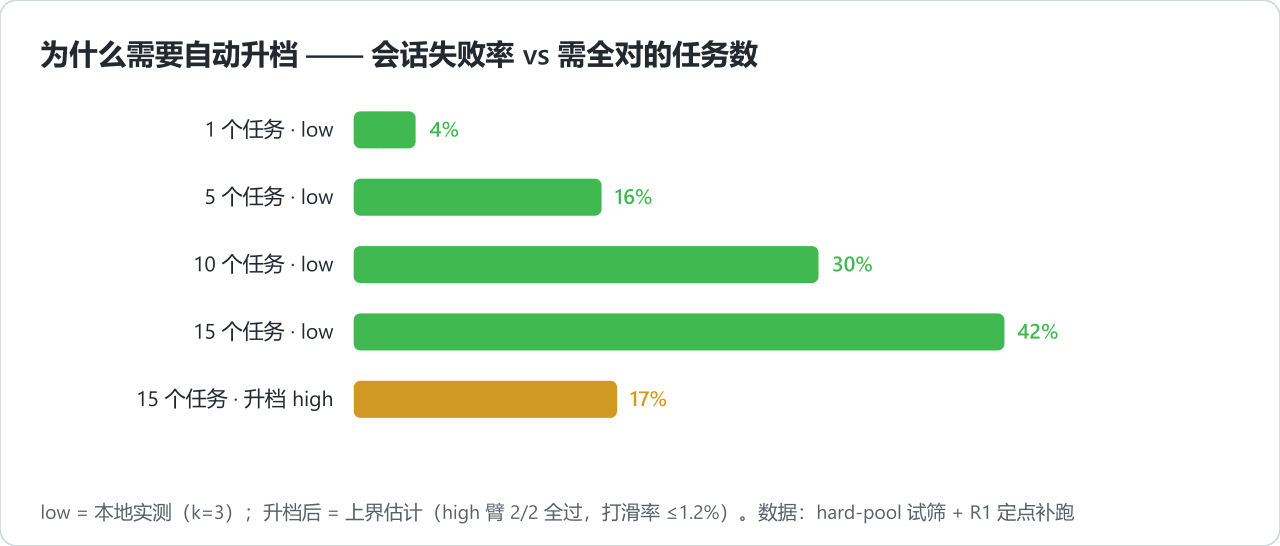
另外我做了 120 多次本地对照实验交叉验证,方向与公开结论一致:单任务 low 档约 96% 成功 (确实不必多花钱);15 个任务连吃 low 档 42% 翻车、升档后约 17%——这就是这个插件要吃的 那一段:
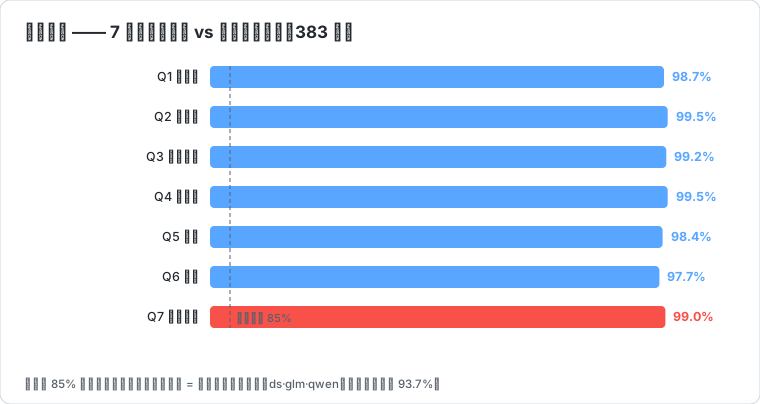
负责判断的 7 题微调分类头,对金标(三模型交叉标注)一致率 99%、本地判定小于 1 秒:
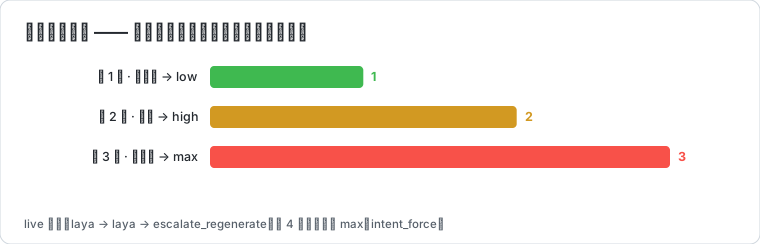
会话内自动升档的实测阶梯——重试两轮,low 到 max:
输入栏有个档位芯片,实时显示当前档位和最近 20 轮的判断原因;服务离线时变灰并给出启动命令。
安装
npm i -g dsh-router-laya
npx dsh-router-laya setup
setup 做三件事:建 Python 虚拟环境、下载 846MB 的 checkpoint(走本仓 GitHub Release, HF 和镜像做兜底,支持断点续传)、启动判定服务。然后按它打印的 snippet 在你的 DSH profile 里注册插件行,设两个环境变量:
ROUTEEXP_ARM=auto
ROUTEEXP_RESPECT_EXPLICIT=1
要求:Node ≥ 18,Python ≥ 3.10,约 2GB 磁盘。判定服务需要常驻(setup 会启动,重启机器后
重跑 npx dsh-router-laya setup 或 service 里的启动脚本)。
它怎么决定档位
按顺序过四层,任何一层命中就停:
- 词典意图:「用最高档」→ 直接定档(一票否决);「继续」→ 保持上轮;「别用 max」→ 记一个约束
- 微调模型:laya接管判定(副作用 / 跨模块 / 步骤依赖 / 深推理 / 代码 / 生成 / 会话复利)→ 规则引擎出档
- 升级:这轮消息是上一轮的重试 → 沿阶梯升一级
- 约束过滤:第 1 层记下的约束最后统一执行
失败路径:判定服务不可达 → 落 low,会话不断(概率极低<0.3%)。
已知边界
- 判定耗时 1–3 秒,计入每轮首字延迟
- 服务需要常驻进程;DSH 大版本更新可能改动前端注入缝,client.js 需要跟着适配
- 权重下载在国内网络走镜像兜底,首次 846MB
数据与复现
README 里的图由 scripts/make_charts.py(纯 stdlib)从实测数据生成,CI 会检查图表是否过期。
实验全记录(试筛、判读规则、标注方案、验收数据)在主开发仓
HapyRain/layaDemo 的 docs/ 目录。(整理后转公开)
写在最后
这个插件目前还在尝试阶段,有不少没做完的地方。当前实现的判断逻辑,针对日常使用是够用的; 如果你要把它用在大项目、高难度任务,或者对识别率有更高要求,建议基于你自己的使用习惯重新 微调一版模型——标注、训练、验收的整条链都是现成的(见上面的数据与复现),换一批你自己的 语料就能重训,本机只要有独立的 GPU 的话几分钟一轮,相当快。
我自己后面有精力的话,也会再用新语料把 Laya 重新微调一版。这次做得比较仓促,见谅。
这本身只是一个小思路。哪里不对、哪里可以更好,欢迎在 GitHub Issues 里提,我都会看。
License
本项目代码为 Apache-2.0。判定模型基于 convaiinnovations/laya 与 answerdotai/ModernBERT-large 两个 Apache-2.0 项目微调而来,按协议要求在 NOTICE 中署名,在此向两个上游项目致谢。
Related相关推荐
- voyager-crew/voyager Enhancement suite for Gemini, AI Studio, Claude, ChatGPT & DeepSeek — plus a prompt manager for any website, DeepSeek Ha…
-
 Q00/ouroboros
Agent OS: the agent gets smarter on its own. We just hold the line: Interview-gated, staged evaluation, budgeted evoluti…
Q00/ouroboros
Agent OS: the agent gets smarter on its own. We just hold the line: Interview-gated, staged evaluation, budgeted evoluti…
-
 crafter-station/petdex
A public gallery of animated pets for Codex, Claude Code, DeepSeek Harness, Hermes, OpenCode, Gemini CLI, and more.
crafter-station/petdex
A public gallery of animated pets for Codex, Claude Code, DeepSeek Harness, Hermes, OpenCode, Gemini CLI, and more.
-
 whiteguo233/OpenBiliClaw
本地私有、开源的自进化跨平台 AI 内容发现 Agent:先理解你,再主动从 B站、小红书、抖音、YouTube、X、知乎、Reddit、微博等平台与开放 Web 寻找内容。(支持 deepseek harness 插件) | Local-…
whiteguo233/OpenBiliClaw
本地私有、开源的自进化跨平台 AI 内容发现 Agent:先理解你,再主动从 B站、小红书、抖音、YouTube、X、知乎、Reddit、微博等平台与开放 Web 寻找内容。(支持 deepseek harness 插件) | Local-…
-
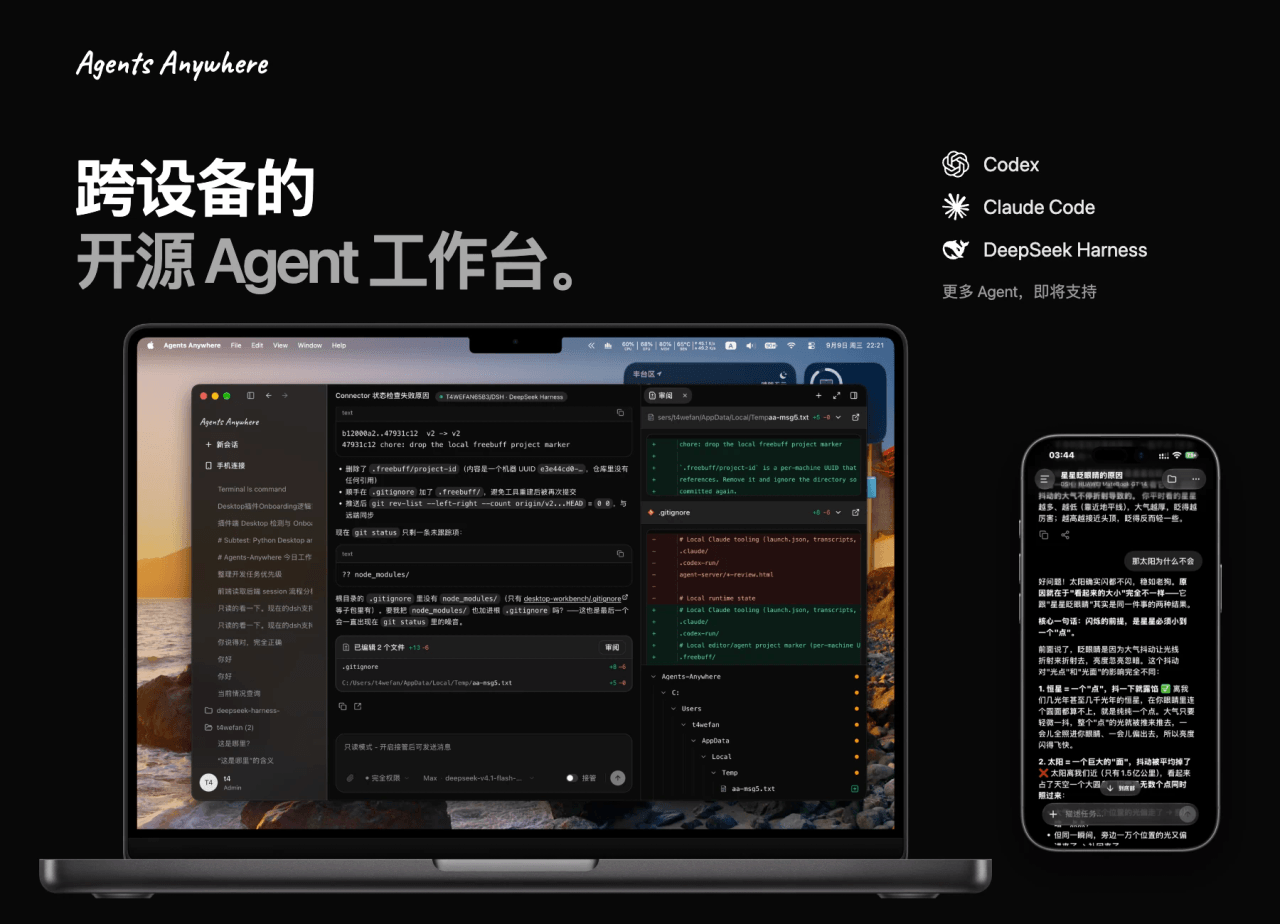 anywhere-labs/Agents-Anywhere
跨设备的开源Agent工作台
anywhere-labs/Agents-Anywhere
跨设备的开源Agent工作台
-
 agentrq/agentrq
AgentRQ: Human-in-loop realtime conversational task manager for AI Agents. Self-hosted! Control your own agents from whe…
agentrq/agentrq
AgentRQ: Human-in-loop realtime conversational task manager for AI Agents. Self-hosted! Control your own agents from whe…
-
 freestylefly/wesight
Open-source desktop AI agent workspace with one-click Claude Code, Codex, OpenClaw, Hermes Agent setup and custom LLM mo…
freestylefly/wesight
Open-source desktop AI agent workspace with one-click Claude Code, Codex, OpenClaw, Hermes Agent setup and custom LLM mo…
- zouyuxuan122/dsh-our-free-model 在 dsh 里装上这个插件即可,无需登录、注册或填 API Key,就能使用包括 Muse Spark 1.3、MiMo V2.6 在内的前沿模型——完全免费,不限量。 All you do is install this plugin i…