omdsh-plugins/omdsh-basemode
The session-mode system for the DeepSeek Harness web GUI: the segment registry every mode plugin registers into, the switch that renders them, and the sidebar dots that colour their conversations
Install
`SessionModes` is a type, and it comes from `@omdsh-plugins/omdsh-basemode/client`. Import it with `import type` and never as a value: a cross-plugin VALUE import either inlines a second copy of this package's runtime into your bundle or asks the shell's frozen module table for a specifier it cannot answer, and the client bundle purity gate fails the build over it. That is why the service is resolved by the string `'sessionModes'` above rather than by this package's exported `SESSION_MODES` constant — a service name is a wire name shared with a runtime, not a symbol shared with a package, and both mode plugins in this collection spell it out for themselves for exactly that reason.

Five things are worth knowing before writing one.

**Exactly one segment is active,** and the registry enforces it rather than trusting contributors to agree: marking one active clears the rest. That is also how a contributor learns it lost the column — it watches its own entry go false and takes its surface down.

**Copy arrives localized.** The switch renders `label`, `hint` and `unavailableHint` as given; it owns two words of its own (`switch.aria`, and the fallback shown when a mode is unavailable and named no reason) and knows no mode's name. Re-`update` the segment on `locale/change`.

**A press is a navigation, never a state write.** `enter` is called and the segment is expected to make the world true — by opening a conversation, starting one, or taking the column — after which whatever derives its `active` flag reports it. Nothing here remembers a mode across a reload; there is no node half, deliberately, so there is no stored posture two tabs can disagree about.

**`owns` is asked per conversation, in display order,** and the first claim wins; a segment marked `fallback` takes whatever no one claims. That is what lets the sidebar mark a whole list by mode with nothing about any particular mode in the code that paints it. A classifier that throws declines that conversation rather than taking the browsing region down.

**`inProject` says whether a mode's conversations live somewhere a person works.** It defaults to true, because that is what a conversation in this product is; a mode that files its own in a store of its own declares `false`. Chat is the one that does. It matters to any surface that derives a DIRECTORY from the conversation on screen — Code mode pressing beside a chat used to open a terminal inside the folder chats are filed in — and asking the registry is what keeps "which of these is Chat" out of every other plugin.

## What the column is showing is not what is selected

`sessions.current` answers "which conversation is SELECTED", and that is the same question as "what is on screen" only while every mode's column is the web conversation. Code mode's is a terminal, and it deliberately never selects the conversation that terminal drives — a selected conversation is one the web host would resume, on a log another process owns. So the selection stays on whatever was open behind the terminal.

A surface beside the column that read the selection was therefore silently wrong rather than missing: `omdsh-sidepanel`'s file tree sat beside a terminal in one project describing another. `column` is the honest answer:
Add omdsh-plugins/omdsh-basemode to your DSH config (web profile) to enable.
README
Expand full README Collapse
README is empty.
Related Plugins
-
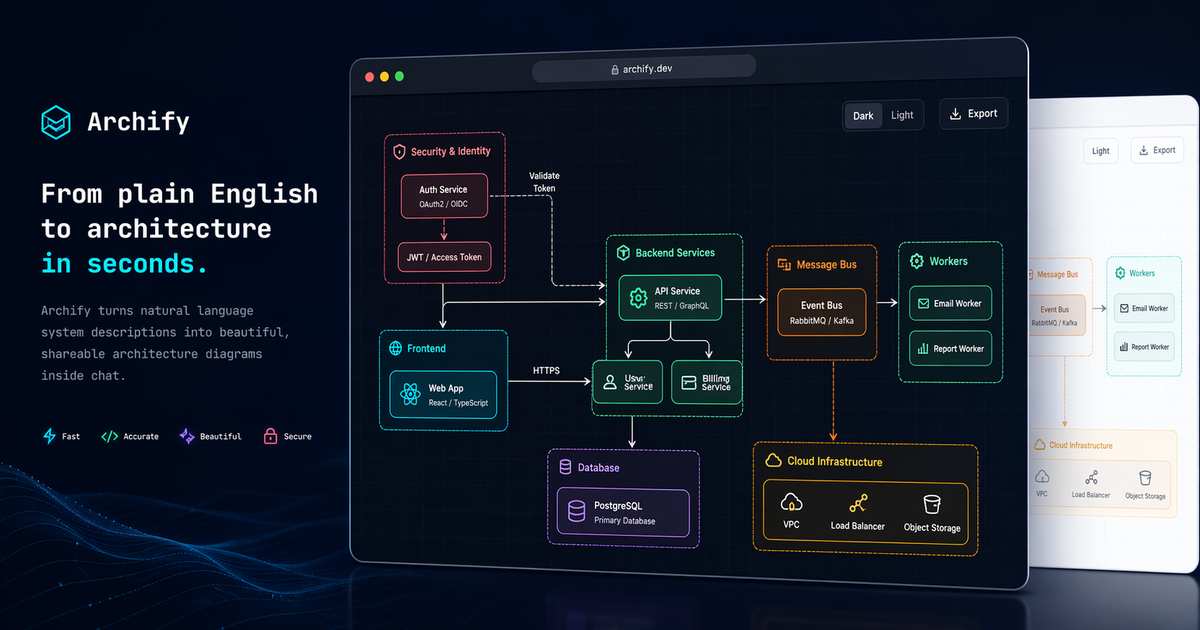 tt-a1i/archify
Agent skill for beautiful, verifiable architecture, workflow, sequence, data-flow, and lifecycle diagrams—self-contained…
tt-a1i/archify
Agent skill for beautiful, verifiable architecture, workflow, sequence, data-flow, and lifecycle diagrams—self-contained…
-
 zhu1090093659/dsh-web-ui
Plugin and skin collection for DeepSeek Harness (DSH) Web UI - task board, git graph, right-side panel, remote mobile UI…
zhu1090093659/dsh-web-ui
Plugin and skin collection for DeepSeek Harness (DSH) Web UI - task board, git graph, right-side panel, remote mobile UI…
-
 strukto-ai/mirage
The World's First Unified Virtual Filesystem For AI Agents
strukto-ai/mirage
The World's First Unified Virtual Filesystem For AI Agents
-
 liustack/modlens
The first vision plugin for DeepSeek Harness, and the vision bridge for every text-only coding agent. Paste an image, ge…
liustack/modlens
The first vision plugin for DeepSeek Harness, and the vision bridge for every text-only coding agent. Paste an image, ge…
-
 omdsh-dev/DSH-better-sidebar
开放的侧边栏底座,支持三方拓展注册新侧边栏页面。内置文件渲染编辑/终端/Git/子代理页面 | Open sidebar foundation, supports third-party extensions to register new…
omdsh-dev/DSH-better-sidebar
开放的侧边栏底座,支持三方拓展注册新侧边栏页面。内置文件渲染编辑/终端/Git/子代理页面 | Open sidebar foundation, supports third-party extensions to register new…
-
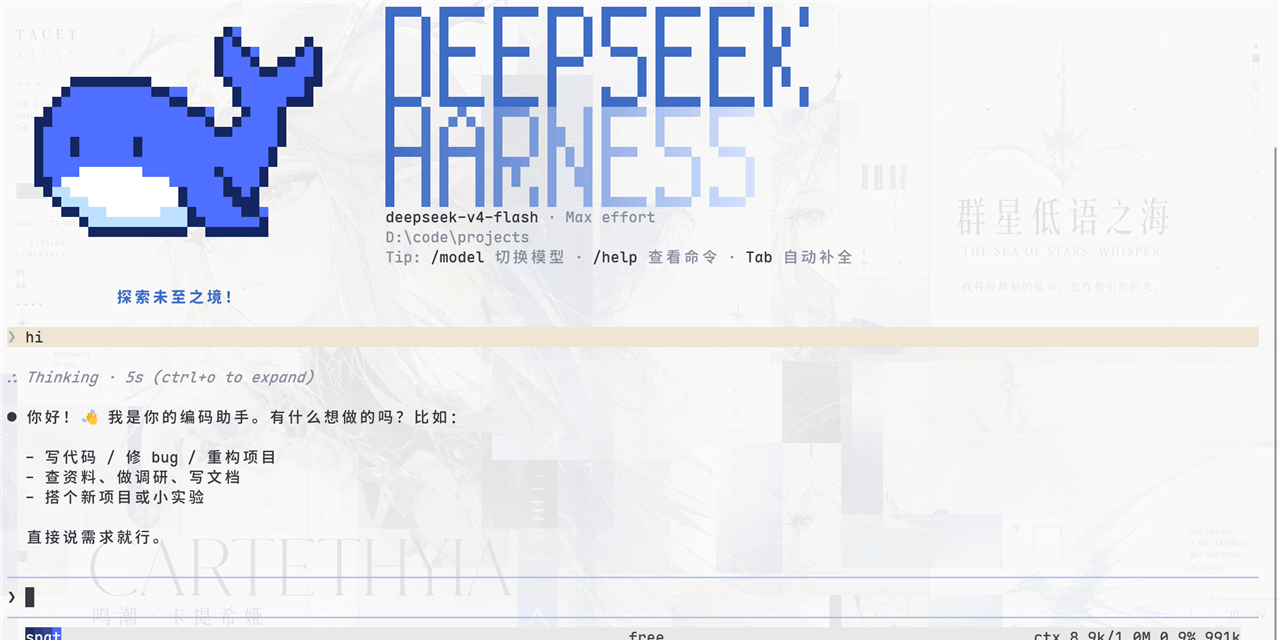 ccch1mneyyy/dsh-TUI
DSH 官方公众号收录的 TUI 补位插件:Claude Code 风,鲸鱼顶栏/实时状态/流式思考/双击 Esc 回滚/上下文进度+TPS。npm 一键装。 DSH official WeChat featured TUI plugin…
ccch1mneyyy/dsh-TUI
DSH 官方公众号收录的 TUI 补位插件:Claude Code 风,鲸鱼顶栏/实时状态/流式思考/双击 Esc 回滚/上下文进度+TPS。npm 一键装。 DSH official WeChat featured TUI plugin…
-
 agentrq/agentrq
AgentRQ: Human-in-loop realtime conversational task manager for AI Agents. Self-hosted! Control your own agents from whe…
agentrq/agentrq
AgentRQ: Human-in-loop realtime conversational task manager for AI Agents. Self-hosted! Control your own agents from whe…
-
 GanyuanRan/Aegis
Make AI coding agents architecture-aware: baseline-first, evidence-verified, drift-checked, and safe across long tasks.
GanyuanRan/Aegis
Make AI coding agents architecture-aware: baseline-first, evidence-verified, drift-checked, and safe across long tasks.