omdsh-plugins/omdsh-codemode
Code mode for the DeepSeek Harness web GUI: a third segment beside Chat and Work whose column is the harness's own terminal, running in the conversation's workspace
Install
A deployment whose runtime was **not** started by `dsh` — a packaged shell, a test — sets `command` (and `args`) instead; without either, the socket refuses with a message saying so rather than guessing at a binary.

Those four knobs — `profile`, `command`, `args`, `reconnectGraceMs` — are a plain TypeScript interface on the host half, not a [settings namespace](https://omdsh-plugins.github.io/conventions/?lang=en#rule-1). So they are edited where the sample above puts them, in the profile's own `cordis.patch.yml`, and this plugin's card in the plugin hub carries no form. They are composition facts rather than a person's preferences — which launcher a deployment re-executes is decided once, by whoever assembled the profile.

Whichever launcher is resolved, it is invoked with **`--session-id <id>`** appended, because Code mode names the conversation it starts. The profile it boots must understand that flag: [omdsh-tui](https://github.com/omdsh-plugins/omdsh-tui) takes it as create-or-continue for exactly that session, which is what makes a Code conversation something the sidebar can hold and a click can reopen.

## Security

The socket hands out a live agent process, so it is fenced exactly like `/api`: a `Host` header naming us (loopback, or an authority the deployment was told to serve) plus same-origin browser markers. This is a DNS-rebinding and cross-site defence, not authentication — a deployment that publishes `/api` to a network publishes this with it.

## Install

Requires a `dsh` on your PATH, and the web profile that carries the mode switch.
Add omdsh-plugins/omdsh-codemode to your DSH config (web profile) to enable.
README
Expand full README Collapse
README is empty.
Related Plugins
-
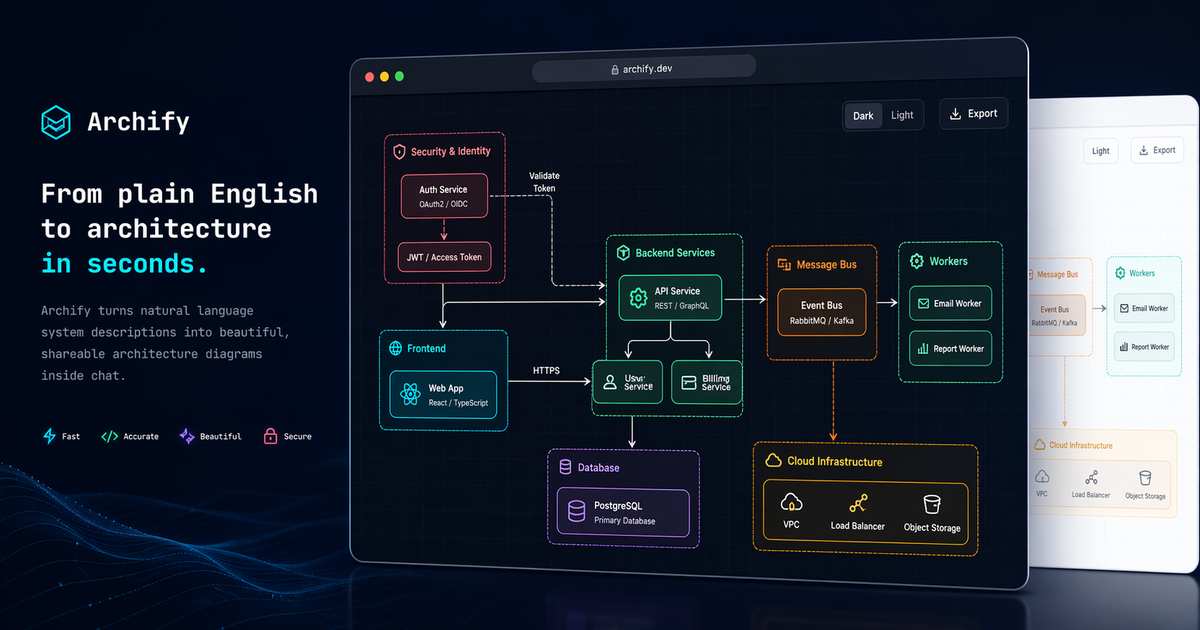 tt-a1i/archify
Agent skill for beautiful, verifiable architecture, workflow, sequence, data-flow, and lifecycle diagrams—self-contained…
tt-a1i/archify
Agent skill for beautiful, verifiable architecture, workflow, sequence, data-flow, and lifecycle diagrams—self-contained…
-
 zhu1090093659/dsh-web-ui
Plugin and skin collection for DeepSeek Harness (DSH) Web UI - task board, git graph, right-side panel, remote mobile UI…
zhu1090093659/dsh-web-ui
Plugin and skin collection for DeepSeek Harness (DSH) Web UI - task board, git graph, right-side panel, remote mobile UI…
-
 strukto-ai/mirage
The World's First Unified Virtual Filesystem For AI Agents
strukto-ai/mirage
The World's First Unified Virtual Filesystem For AI Agents
-
 liustack/modlens
The first vision plugin for DeepSeek Harness, and the vision bridge for every text-only coding agent. Paste an image, ge…
liustack/modlens
The first vision plugin for DeepSeek Harness, and the vision bridge for every text-only coding agent. Paste an image, ge…
-
 omdsh-dev/DSH-better-sidebar
开放的侧边栏底座,支持三方拓展注册新侧边栏页面。内置文件渲染编辑/终端/Git/子代理页面 | Open sidebar foundation, supports third-party extensions to register new…
omdsh-dev/DSH-better-sidebar
开放的侧边栏底座,支持三方拓展注册新侧边栏页面。内置文件渲染编辑/终端/Git/子代理页面 | Open sidebar foundation, supports third-party extensions to register new…
-
 ccch1mneyyy/dsh-TUI
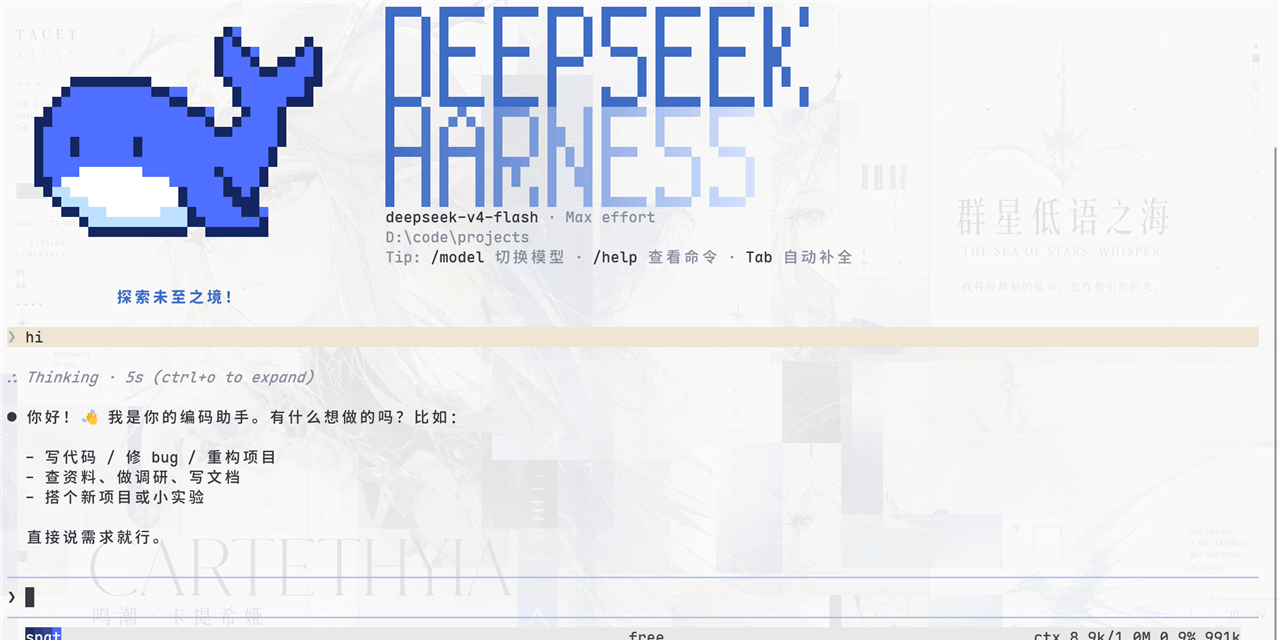
DSH 官方公众号收录的 TUI 补位插件:Claude Code 风,鲸鱼顶栏/实时状态/流式思考/双击 Esc 回滚/上下文进度+TPS。npm 一键装。 DSH official WeChat featured TUI plugin…
ccch1mneyyy/dsh-TUI
DSH 官方公众号收录的 TUI 补位插件:Claude Code 风,鲸鱼顶栏/实时状态/流式思考/双击 Esc 回滚/上下文进度+TPS。npm 一键装。 DSH official WeChat featured TUI plugin…
-
 agentrq/agentrq
AgentRQ: Human-in-loop realtime conversational task manager for AI Agents. Self-hosted! Control your own agents from whe…
agentrq/agentrq
AgentRQ: Human-in-loop realtime conversational task manager for AI Agents. Self-hosted! Control your own agents from whe…
-
 GanyuanRan/Aegis
Make AI coding agents architecture-aware: baseline-first, evidence-verified, drift-checked, and safe across long tasks.
GanyuanRan/Aegis
Make AI coding agents architecture-aware: baseline-first, evidence-verified, drift-checked, and safe across long tasks.