RSLN-creator/dsh-web-bridge
Use your logged-in web AI (DeepSeek, GLM, Kimi, Qwen, Doubao...) as model providers in DeepSeek Harness. Web models emit tool calls, DSH runs them under its native permission system, and results return to the same web session. No API keys.
Project Overview项目介绍
This is a native plugin built exclusively for DeepSeek Harness (DSH) that connects logged-in web-based AI chatbots to the DSH workflow. When a web AI model generates a tool call, the plugin routes it to DSH’s native permission system to execute the local tool, then sends the result back to the original web session without bypassing DSH’s permission checks. The plugin is not published to the npm registry, so the only way to install it is via a packaged .tgz file. Users can either download the pre-built tgz from the GitHub Releases page, or clone the repo and package it from source using pnpm.
After installation, you must restart the DSH web process for the plugin to take effect, because the running process only loads the new code after a restart. First run requires two dependencies: Node.js 22.13 or newer, and the Microsoft Edge browser, and no browser extensions are needed to use this plugin. Once you start DSH web, you can navigate to the local address http://127.0.0.1:3080, log in to your desired web AI site via the plugin settings, and then select the corresponding model from the DSH model selector to start using it. The plugin currently supports major web AI sites including DeepSeek, GLM, Kimi, Tongyi Qianwen, and Doubao.
The plugin handles cross-origin resource issues common when loading third-party web AI sites in an iframe, automatically rewriting cross-domain static resource URLs to fix CORS errors and SPA router mismatches. It includes many useful features such as automatic rate limit backoff and retry, adaptation for both old and new versions of web AI UIs, import of local browser login cookies, and import of existing web chat history into DSH sessions. All core functionality is covered by automated tests, and the project maintains a full test matrix to verify that each supported site loads and works correctly with the latest UI updates.
这是 DeepSeek Harness(DSH)的原生插件,作用是将已登录的网页端 AI 接入 DSH 工作流。网页模型产生的工具调用会由 DSH 原生权限系统执行本地工具,执行结果会回传给同一个网页会话,保留 DSH 原有的权限审核流程。本插件不发布到 npm registry,唯一交付物是打包好的 .tgz 安装包,用户可选择下载预构建包或从源码自行打包。
安装完成后必须重启 DSH 才能生效,首次运行需要依赖 Node.js 22.13+ 和 Microsoft Edge 浏览器,无需安装浏览器扩展。启动后会在本地 3080 端口打开服务,用户在 DSH 设置中完成网页站点登录后,即可在 DSH 侧选对应的网页模型使用。它支持 DeepSeek、GLM、Kimi、通义千问、豆包等多个主流网页 AI 站点。
本插件处理了多站点跨域资源问题,会自动改写跨域静态资源地址,解决 CORS 错误和 SPA 路由不匹配问题。它支持限流自动退避重试、不同版本网页 UI 适配、导入本机浏览器登录态、网页历史导入 DSH 会话等功能,当前完整适配多个主流站点的最新 UI,提供了完整的测试验收流程来保证功能可用性。
请帮我安装这个 DSH 插件。安装前先完成【兼容性检查 + 安全性检查】,检查通过再动手。

插件:dsh-web-bridge(RSLN-creator/dsh-web-bridge)
仓库:https://github.com/RSLN-creator/dsh-web-bridge
本站详情页:https://www.yhbd.top/plugins/rsln-creator-dsh-web-bridge/
本站登记:类型 plugin · 归类 原生 DSH 插件 · 许可证 MIT · ⭐ 8 · 最近提交 2026-10-03 · 主语言 JavaScript · 未检测到 DSH 插件清单

按下面顺序执行,每步先把结论告诉我,再进入下一步:

【1 兼容性检查】
① 我这边:DSH 版本、Node 版本、操作系统、当前 profile(web / desktop)。
② 读它的 README、package.json、插件 manifest,列出它要求的 DSH 版本 / Node 版本 / 操作系统 / 外部依赖 / 需要另外先装的运行时。
③ 逐条比对,结论只写「满足 / 不满足 / 未知」三种;不满足的给出可行替代方案。
④ 检查是否和我已装的插件冲突:命令名重复、skill / tool 重名、端口占用、重复注册的 MCP server。

【2 安全性检查】
① 仓库可信度:和上面「本站登记」是否一致;star / fork 数、创建时间、最近提交,是否归档或长期停更。
② 安装脚本:逐行看 package.json 的 preinstall / install / postinstall,以及 install.sh、setup.ps1 之类脚本。出现 curl|bash、下载后直接执行、混淆代码、访问与插件功能无关的域名,立刻停下来告诉我,不要继续装。
③ 依赖:列出新增依赖,标出无人维护、或与知名包拼写近似的可疑包(typosquatting)。
④ 权限与副作用:它会读写哪些目录、访问哪些域名、需要哪些 DSH 权限(filesystem / network / shell / clipboard 等),以及怎么卸载和回滚。
⑤ 如果它要求 sudo / 管理员权限,或权限明显超出功能所需,先停下来问我。

【3 安装】
上面两步没有「不满足」和「高危项」时才执行;用官方推荐方式安装,不要自行提权。

【4 汇报】
用表格输出:检查项 / 结论 / 依据 / 是否需要我决策。拿不准的一律写「未知」并说明要我怎么确认——不要猜,也不要替我决定。
Send this message to DSH in your current session: it verifies compatibility and security first (answering met / not met / unknown item by item) and only installs once everything checks out — it will stop and ask you if it finds a high-risk item. The box scrolls; the copy is the full prompt. CLI install commands may not be accurate across systems, so DSH is the safer route.把上面这条消息直接发给当前会话里的 DSH:它会先核对兼容性与安全性(逐条给「满足 / 不满足 / 未知」),确认没问题再安装,有高危项会停下来问你。框内可滚动,复制到的是完整提示词;安装命令不一定准确,发给 DSH 更稳。
- Only 8 stars - very few users, little community feedback星标只有 8,几乎没人在用,遇到问题缺少社区反馈
- No DSH plugin manifest detected - it may only carry the dsh-plugin topic, so the install method must be confirmed on the spot未检测到 DSH 插件清单:可能只是打了 dsh-plugin 话题,安装方式要现场确认
DSH walks through these 9 checksDSH 会逐条核对这 9 项
Compatibility兼容性
- DSH, Node, OS and profile requirementsDSH 版本 / Node 版本 / 操作系统 / profile 是否满足要求
- External dependencies and runtimes (Electron / Python / Docker, ...)外部依赖与运行时(Electron / Python / Docker 等)是否齐备
- Conflicts with installed plugins: command names, skill / tool names, ports, duplicate MCP registration与已装插件是否冲突:命令名、skill / tool 重名、端口占用、重复 MCP 注册
Security安全性
- Repo matches the facts registered here; archived or abandoned?仓库是否与页面登记一致,是否归档或长期停更
- Safety of preinstall / install / postinstall and install.sh / setup.ps1preinstall / install / postinstall 与 install.sh、setup.ps1 是否安全
- curl|bash, download-then-execute, obfuscation, unrelated domains → stop immediatelycurl|bash、下载即执行、混淆代码、无关域名 → 立刻停止
- Typosquatting or unmaintained packages among the new dependencies新增依赖里有没有 typosquatting 或无人维护的包
- Requested permissions vs. what the feature actually needs申请了哪些权限、是否超出功能所需(filesystem / network / shell / clipboard)
- Any sudo / admin requirement, plus uninstall and rollback是否要求 sudo / 管理员权限,以及卸载与回滚方式
Anything uncertain must be marked unknown with a note on how to confirm it. This site's signal screen is a static snapshot, not a security audit.拿不准的必须标「未知」并说明要我怎么确认。本站的信号筛查是静态快照,不能替代安全审计。
Or use CLI install (for developers)或使用命令行安装(适合开发者)
CLI Install命令行安装
dsh plugin --profile web add dsh-webcode-bridge把 RSLN-creator/dsh-web-bridge 加入你的 DSH 配置(web profile)即可启用。
READMEREADME
Harness Web Bridge
English · 中文
Use your logged-in web AI — DeepSeek, GLM (Z.ai), Kimi, Qwen, Doubao — as model providers inside DeepSeek Harness. Web models emit tool calls, DSH executes them under its native permission and approval system, and the results go back into the same web session.
No API keys. It drives the site through your own browser login.
dsh plugin --profile web add dsh-webcode-bridge
Why
Most "web model" integrations are fragile in the same three ways: they scrape HTML, they lose the conversation when the page reloads, and they bypass the host's tool permissions. This plugin is built the other way around:
| Concern | How it is handled |
|---|---|
| Tool permissions | The web model only proposes calls. DSH runs them with its own permission and approval system — the bridge cannot bypass it. |
| Session continuity | A per-session cursor keeps the web conversation alive across turns, across restarts, and after history rewrites. When the web session is lost the bridge replays the full first turn instead of silently starting over. |
| Long prompts | Over-threshold bodies are delivered as a file attachment, bypassing the composer's write-stall and truncation limits, with an automatic fallback to plain text if any step fails. |
| Rate limits | A configurable send gap (global and per site) plus automatic backoff-and-retry on the site's own rate-limit response. |
Features
- Real site rendering in the DSH right sidebar. Not a screenshot, not a mock — the actual site, loaded through a same-origin mirror so you can type, scroll and click in it. Login state persists.
- Per-site protocol teaching. Each site is taught the tool-call shape it actually accepts
(DeepSeek's native token format, GLM's ```json code block,
<tool_call>tags elsewhere). The protocol is recomputed from the live tool list every time, so it never drifts. - Per-site and global settings. Model, instruction, send gap and prompt-delivery mode can each be set globally and overridden for a single site — changing one site never disturbs the others.
- Multi-account. One site can hold several independent logins; each gets its own browser profile and its own request pacing.
- Observable. Every delivery, fallback and rate-limit event is projected into
GET /__webcode/status, so "did it actually work" is answerable from the UI instead of from logs.
Showing the opening section of the README — the full document lives in the repository以上为 README 开头摘要,完整文档在仓库内 · View the full README on GitHub →在 GitHub 查看完整 README →
Related相关推荐
-
 Aisland-SJL/dsh-reminder
🔔 Cross-window completion & approval notifications for DeepSeek Harness — popup reminders that bring you back to DSH, C…
Aisland-SJL/dsh-reminder
🔔 Cross-window completion & approval notifications for DeepSeek Harness — popup reminders that bring you back to DSH, C…
-
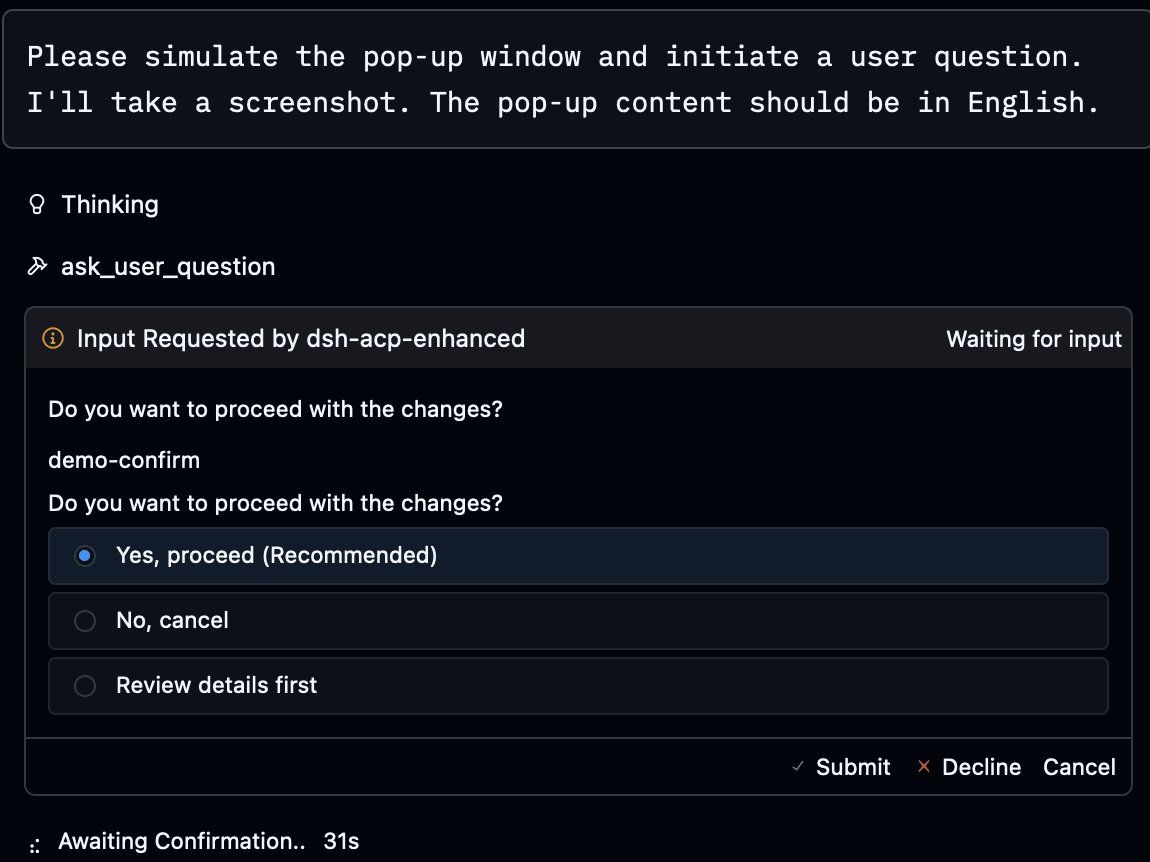 grunmin/dsh-acp-enhanced
Enhanced ACP (Agent Client Protocol) server for DeepSeek Harness (dsh) — drop-in bridge for the Zed editor: block-level …
grunmin/dsh-acp-enhanced
Enhanced ACP (Agent Client Protocol) server for DeepSeek Harness (dsh) — drop-in bridge for the Zed editor: block-level …
-
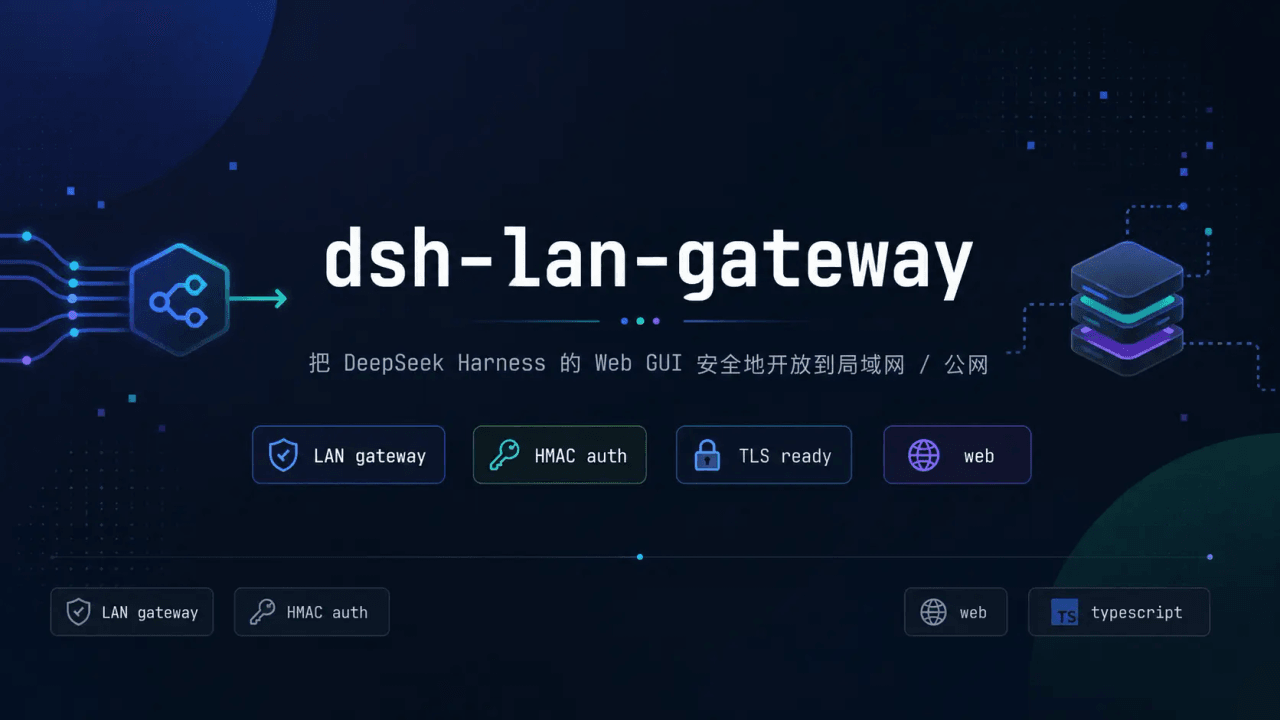 rice-awa/dsh-lan-gateway
把 DeepSeek Harness 的 Web GUI 安全地开放到局域网或公网,自带密码鉴权,支持可选的TLS。Securely expose DeepSeek Harness's Web GUI to your local netwo…
rice-awa/dsh-lan-gateway
把 DeepSeek Harness 的 Web GUI 安全地开放到局域网或公网,自带密码鉴权,支持可选的TLS。Securely expose DeepSeek Harness's Web GUI to your local netwo…
- wang-22-code/dsh-qqbot-bridge 让 DeepSeek Harness(DSH)住进 QQ:基于腾讯官方 Bot API,支持私聊白名单、持久会话、模型切换与远程权限审批。
-
 kenryu42/cc-safety-net
A pre-execution guard for AI coding agents. It blocks destructive Git and file system commands, plus common attempts to …
kenryu42/cc-safety-net
A pre-execution guard for AI coding agents. It blocks destructive Git and file system commands, plus common attempts to …
-
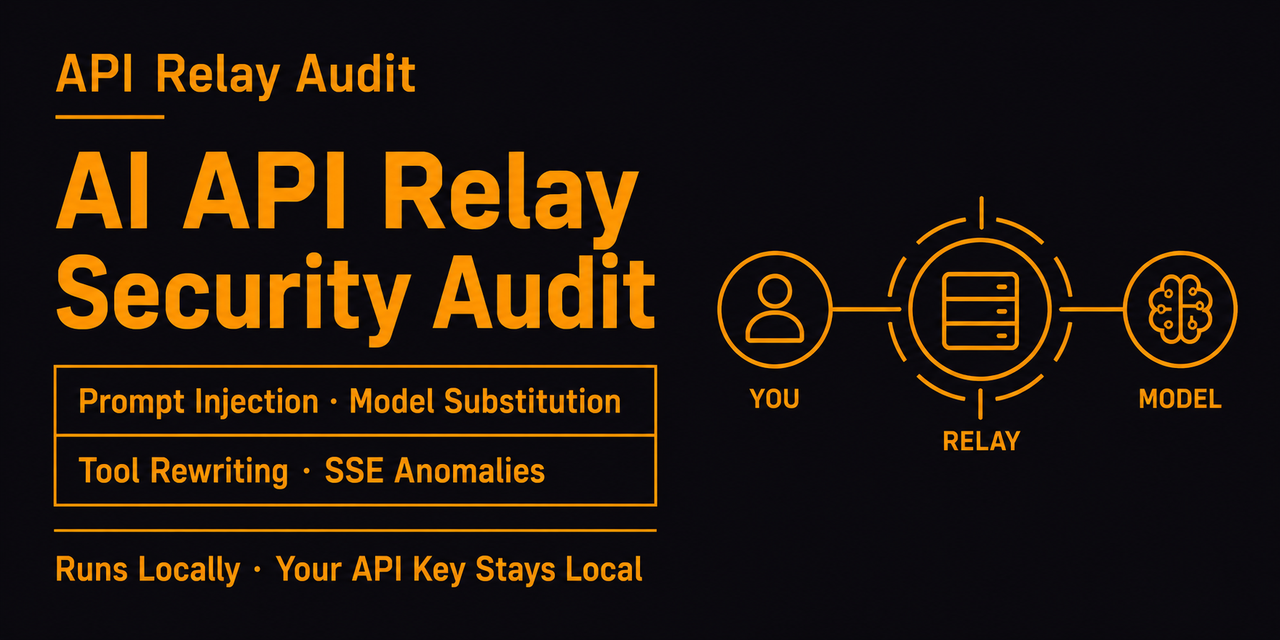 toby-bridges/api-relay-audit
Local security audit for AI API relays and LLM proxies: detects prompt injection, model substitution, tool-call rewritin…
toby-bridges/api-relay-audit
Local security audit for AI API relays and LLM proxies: detects prompt injection, model substitution, tool-call rewritin…
-
 saya-ch/dsh-mobile
DeepSeek Harness 的 Android App 与安全远程访问插件,支持局域网/远程连接和高度自定义的移动界面与扩展能力。
saya-ch/dsh-mobile
DeepSeek Harness 的 Android App 与安全远程访问插件,支持局域网/远程连接和高度自定义的移动界面与扩展能力。
-
 liguobao/ds-harness-remote
一个基于 DeepSeek Harness 插件机制构建的多端远程访问方案,通过安全、低延迟、端到端加密的 P2P 优先网络,支持从 PC、Android 和 Web 随时访问并操作远程 Harness 和 CodeX。 (A multi-…
liguobao/ds-harness-remote
一个基于 DeepSeek Harness 插件机制构建的多端远程访问方案,通过安全、低延迟、端到端加密的 P2P 优先网络,支持从 PC、Android 和 Web 随时访问并操作远程 Harness 和 CodeX。 (A multi-…