SPYQWER1/dsh-codex-tools
Project Overview项目介绍
This is a native plugin built exclusively for DeepSeek Harness (DSH), that adds three tools sourced directly from ChatGPT Codex to the DSH platform. You can install the plugin two ways: via DSH’s CLI by running dsh plugin --profile web add github:SPYQWER1/dsh-codex-tools for the Git version, or dsh plugin --profile web add dsh-codex-tools for the npm package. After installation completes, you must restart your DSH instance (either via dsh web or dsh --profile web) to activate the plugin, and you can remove it later with the corresponding remove command in the DSH CLI.
It is targeted at DSH users who already have an active ChatGPT/Codex subscription and want to access Codex’s tools without leaving their DSH workflow. Users can configure a custom auth directory by setting the CODEX_HOME environment variable. The plugin resolves user credentials in order of priority: it first checks for environment variables, then DSH-stored credentials OPENAI_CODEX_API_KEY and OPENAI_CODEX_REFRESH_TOKEN, then falls back to the local Codex auth file in the configured or default directory. If the request returns an HTTP 401 error, the plugin will automatically refresh the access token and save the updated authentication state back to the auth file.
The plugin is released under the permissive MIT open source license, so it can be used and modified freely within the terms of the license. It relies on an internal unofficial endpoint used by the official Codex CLI, which is not documented publicly and may be changed or restricted by OpenAI at any time without advance notice. Model-generated search summaries may contain errors, so users should always verify key information against the original source URLs returned by the plugin. Usage of web search and image generation counts against the user’s ChatGPT subscription usage quota, and all use must comply with OpenAI’s Terms of Service.
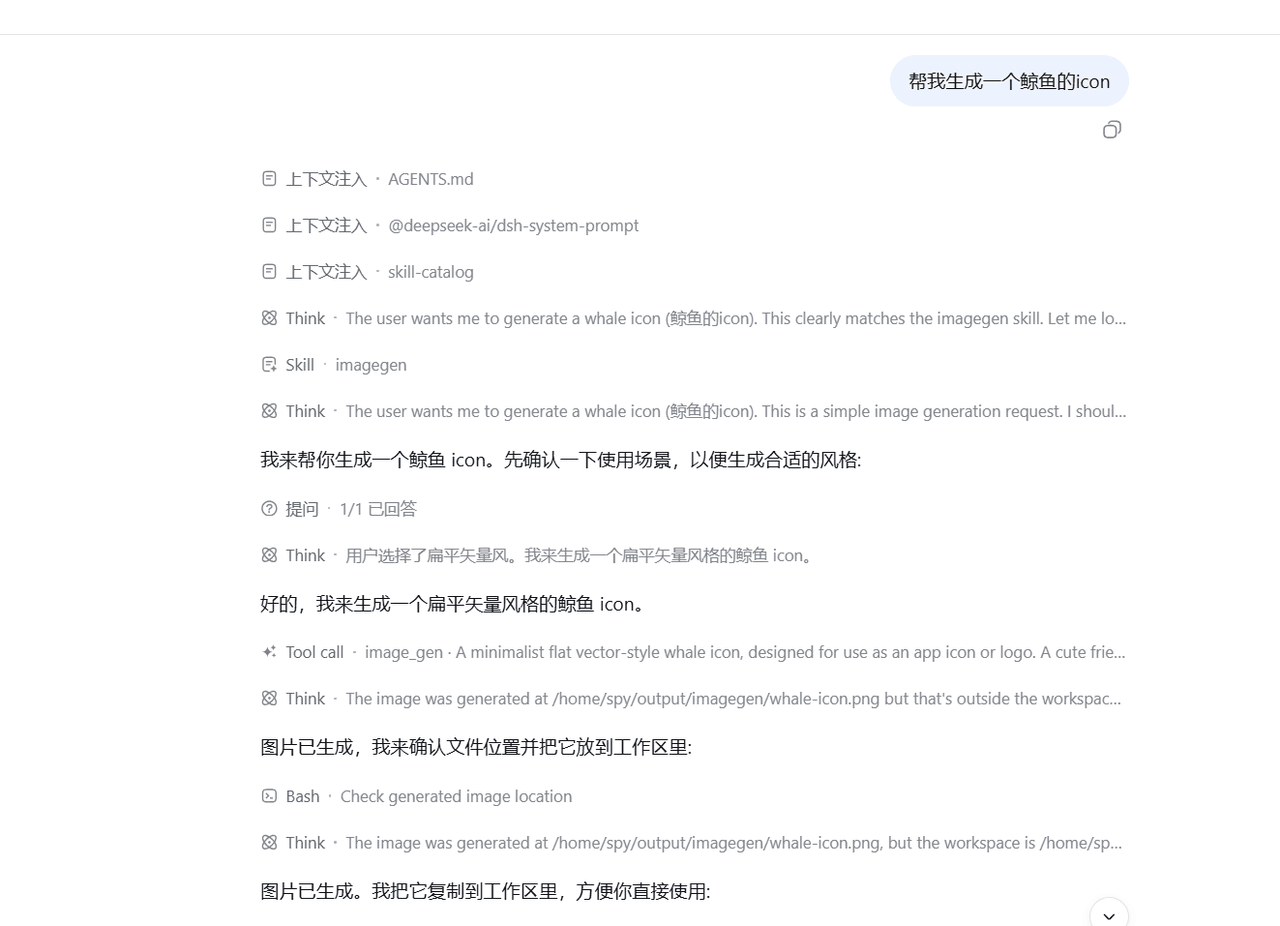
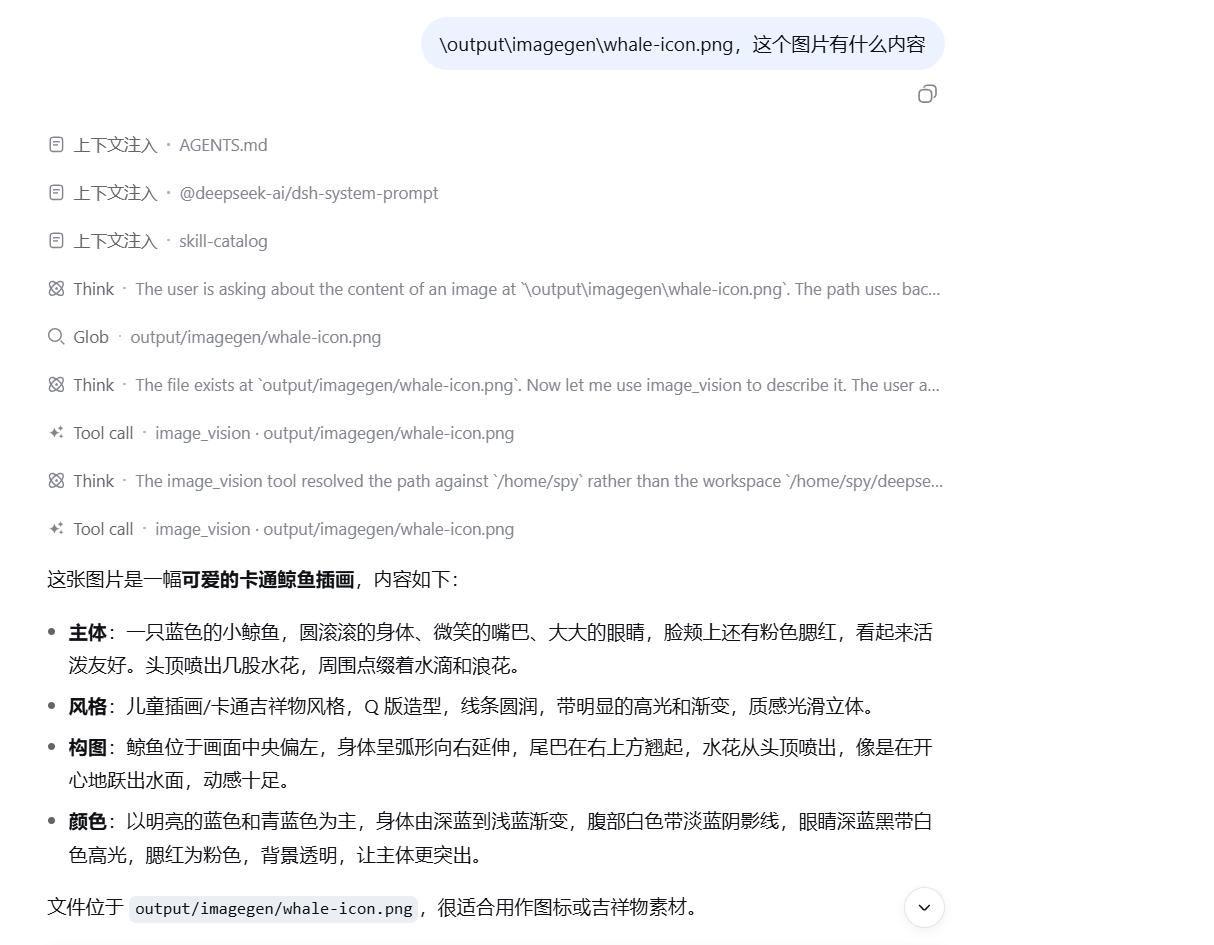
这是一个专为DeepSeek Harness(DSH)开发的原生插件,封装了三个来自ChatGPT Codex的工具,分别是公开网络搜索codex_web_search、图像生成image_gen和图像内容理解image_vision。插件本身不提供ChatGPT登录凭证或LLM服务,需要用户已有有效的Codex/ChatGPT登录状态才能使用。可通过DSH命令行从GitHub或npm源安装,安装后重启DSH即可完成启用。
该插件面向需要在DSH工作流中同时调用Codex原生工具能力的开发者。使用时,凭证会优先从环境变量读取,其次读取DSH存储的凭证信息,最后从Codex默认的本地认证文件~/.codex/auth.json读取。如果访问返回401未授权错误,插件会自动刷新令牌并将更新后的登录状态持久化到对应认证文件中。
插件遵循MIT开源许可协议,使用时需要注意它调用的是Codex CLI的内部非公开API,该接口可能随时变更或停止服务。网络搜索结果由模型生成,需以原始来源内容为准,图像生成和网络搜索都会计入ChatGPT订阅的用量配额,使用需遵守OpenAI的服务条款。
请帮我安装这个 DSH 插件。安装前先完成【兼容性检查 + 安全性检查】,检查通过再动手。

插件:dsh-codex-tools(SPYQWER1/dsh-codex-tools)
仓库:https://github.com/SPYQWER1/dsh-codex-tools
本站详情页:https://www.yhbd.top/plugins/spyqwer1-dsh-codex-tools/
本站登记:类型 plugin · 归类 原生 DSH 插件 · 许可证 MIT · ⭐ 4 · 最近提交 2026-08-27 · 主语言 JavaScript

按下面顺序执行,每步先把结论告诉我,再进入下一步:

【1 兼容性检查】
① 我这边:DSH 版本、Node 版本、操作系统、当前 profile(web / desktop)。
② 读它的 README、package.json、插件 manifest,列出它要求的 DSH 版本 / Node 版本 / 操作系统 / 外部依赖 / 需要另外先装的运行时。
③ 逐条比对,结论只写「满足 / 不满足 / 未知」三种;不满足的给出可行替代方案。
④ 检查是否和我已装的插件冲突:命令名重复、skill / tool 重名、端口占用、重复注册的 MCP server。

【2 安全性检查】
① 仓库可信度:和上面「本站登记」是否一致;star / fork 数、创建时间、最近提交,是否归档或长期停更。
② 安装脚本:逐行看 package.json 的 preinstall / install / postinstall,以及 install.sh、setup.ps1 之类脚本。出现 curl|bash、下载后直接执行、混淆代码、访问与插件功能无关的域名,立刻停下来告诉我,不要继续装。
③ 依赖:列出新增依赖,标出无人维护、或与知名包拼写近似的可疑包(typosquatting)。
④ 权限与副作用:它会读写哪些目录、访问哪些域名、需要哪些 DSH 权限(filesystem / network / shell / clipboard 等),以及怎么卸载和回滚。
⑤ 如果它要求 sudo / 管理员权限,或权限明显超出功能所需,先停下来问我。

【3 安装】
上面两步没有「不满足」和「高危项」时才执行;用官方推荐方式安装,不要自行提权。

【4 汇报】
用表格输出:检查项 / 结论 / 依据 / 是否需要我决策。拿不准的一律写「未知」并说明要我怎么确认——不要猜,也不要替我决定。
Send this message to DSH in your current session: it verifies compatibility and security first (answering met / not met / unknown item by item) and only installs once everything checks out — it will stop and ask you if it finds a high-risk item. The box scrolls; the copy is the full prompt. CLI install commands may not be accurate across systems, so DSH is the safer route.把上面这条消息直接发给当前会话里的 DSH:它会先核对兼容性与安全性(逐条给「满足 / 不满足 / 未知」),确认没问题再安装,有高危项会停下来问你。框内可滚动,复制到的是完整提示词;安装命令不一定准确,发给 DSH 更稳。
- Only 4 stars - very few users, little community feedback星标只有 4,几乎没人在用,遇到问题缺少社区反馈
DSH walks through these 9 checksDSH 会逐条核对这 9 项
Compatibility兼容性
- DSH, Node, OS and profile requirementsDSH 版本 / Node 版本 / 操作系统 / profile 是否满足要求
- External dependencies and runtimes (Electron / Python / Docker, ...)外部依赖与运行时(Electron / Python / Docker 等)是否齐备
- Conflicts with installed plugins: command names, skill / tool names, ports, duplicate MCP registration与已装插件是否冲突:命令名、skill / tool 重名、端口占用、重复 MCP 注册
Security安全性
- Repo matches the facts registered here; archived or abandoned?仓库是否与页面登记一致,是否归档或长期停更
- Safety of preinstall / install / postinstall and install.sh / setup.ps1preinstall / install / postinstall 与 install.sh、setup.ps1 是否安全
- curl|bash, download-then-execute, obfuscation, unrelated domains → stop immediatelycurl|bash、下载即执行、混淆代码、无关域名 → 立刻停止
- Typosquatting or unmaintained packages among the new dependencies新增依赖里有没有 typosquatting 或无人维护的包
- Requested permissions vs. what the feature actually needs申请了哪些权限、是否超出功能所需(filesystem / network / shell / clipboard)
- Any sudo / admin requirement, plus uninstall and rollback是否要求 sudo / 管理员权限,以及卸载与回滚方式
Anything uncertain must be marked unknown with a note on how to confirm it. This site's signal screen is a static snapshot, not a security audit.拿不准的必须标「未知」并说明要我怎么确认。本站的信号筛查是静态快照,不能替代安全审计。
Or use CLI install (for developers)或使用命令行安装(适合开发者)
CLI Install命令行安装
dsh plugin --profile web add dsh-codex-tools把 SPYQWER1/dsh-codex-tools 加入你的 DSH 配置(web profile)即可启用。
READMEREADME
dsh-codex-tools
A DeepSeek Harness plugin that registers three tools provided by ChatGPT Codex:
| Tool | Function |
|---|---|
codex_web_search |
Searches the public web and returns a summary with source URLs. |
image_gen |
Generates a bitmap image. It does not edit or transform an existing image. |
image_vision |
Reads a local image and returns a description or an answer to a question about it. |
It consumes an existing Codex/ChatGPT login; it does not provide login or an LLM provider.
Runtime requirements
- DeepSeek Harness.
- A ChatGPT/Codex login state, either
codex loginwith an auth file, or credentials in DSH:OPENAI_CODEX_API_KEYOPENAI_CODEX_REFRESH_TOKEN
Credentials are resolved from CODEX_ACCESS_TOKEN and CODEX_REFRESH_TOKEN environment variables first (the plugin maps the DSH credential names above to these variables). If those are absent, the transport reads $CODEX_HOME/auth.json when CODEX_HOME is set, or ~/.codex/auth.json otherwise. Set CODEX_HOME to choose another auth directory; the default is ~/.codex. After an HTTP 401, a transport refreshes the access token once and attempts to persist the refreshed login state to that auth file. When the plugin injects DSH credentials, the refresh code may still write to the auth file selected by CODEX_HOME or the default path.
Installation
# Git
dsh plugin --profile web add github:SPYQWER1/dsh-codex-tools

# npm
dsh plugin --profile web add dsh-codex-tools
Restart after installation (dsh web or dsh --profile web).
Remove it with dsh plugin --profile web remove dsh-codex-tools.
Screenshots
Image generation
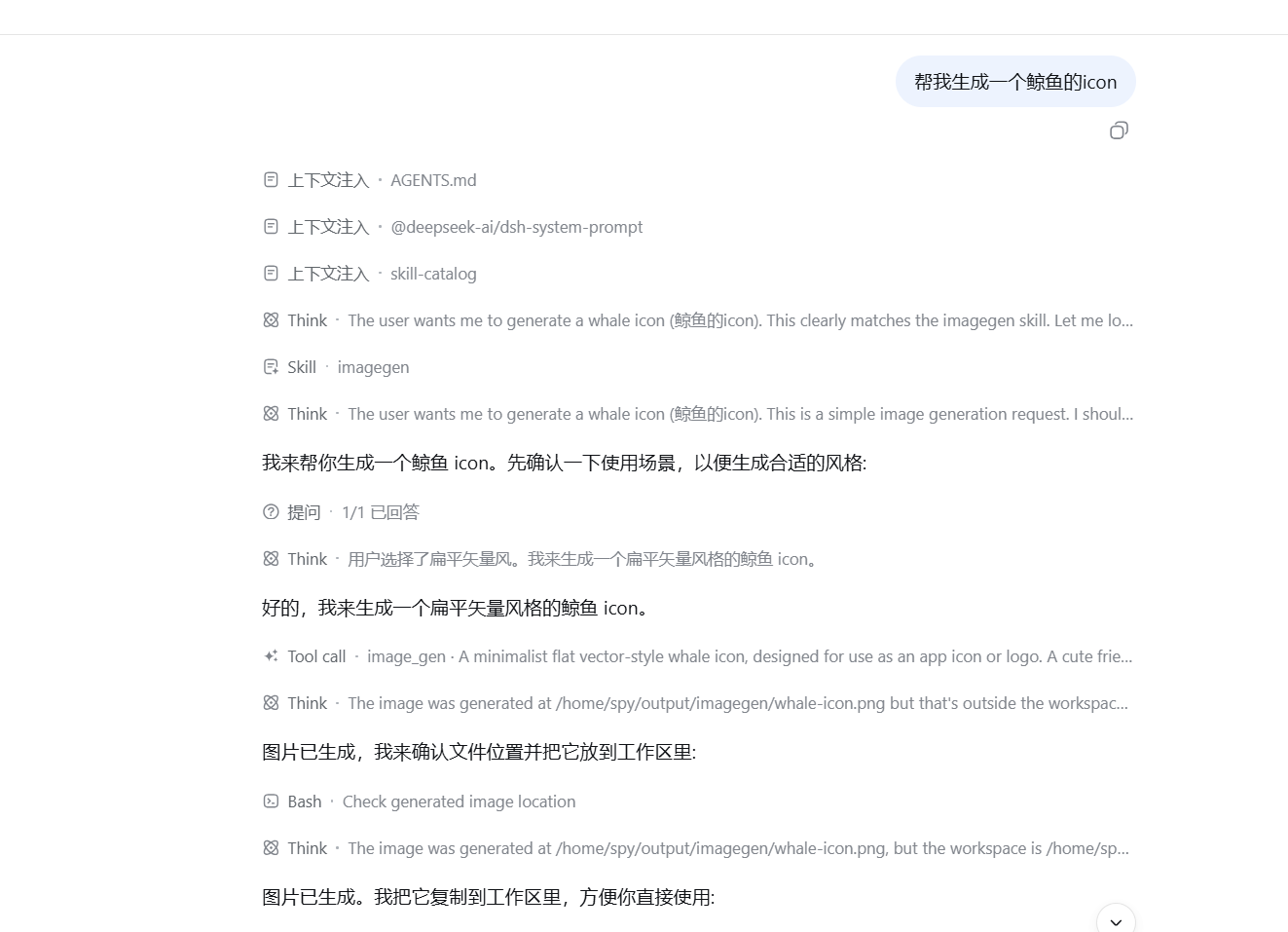
Image vision
Tool parameters
codex_web_search
| Parameter | Type | Default / limits |
|---|---|---|
query |
string (required) | Public-web research question. |
maxSources |
integer | 5; from 1 to 10. |
freshness |
string | cached, or live for time-sensitive queries. |
model |
string | gpt-5.4-mini. |
The result contains summary and sources; each source has a title, URL, and snippet.
Showing the opening section of the README — the full document lives in the repository以上为 README 开头摘要,完整文档在仓库内 · View the full README on GitHub →在 GitHub 查看完整 README →
Related相关推荐
-
 omdsh-dev/dsh-browser
Chrome sidebar extension that lets DeepSeek Harness operate your browser directly, no vision capabilities required. 一款 C…
omdsh-dev/dsh-browser
Chrome sidebar extension that lets DeepSeek Harness operate your browser directly, no vision capabilities required. 一款 C…
- Fisfzy/dsh-ego-browser DSH(DeepSeek Harness)插件:把 ego-lite 浏览器(给 AI Agent 用的 Chromium)接入 HARNESS——13 个结构化 ego_* 工具(文本语义快照、语义定位点击、表单填充、截图、CDP 控制、…
-
 yinnho/aginxbrowser
The browser built for AI agents — fetch live pages as markdown, render JS/SPAs with built-in V8, take screenshots withou…
yinnho/aginxbrowser
The browser built for AI agents — fetch live pages as markdown, render JS/SPAs with built-in V8, take screenshots withou…
- PerryLink/dsh-talk Voice-first session loop for DeepSeek Harness: a composer microphone button with browser/local speech-to-text (Web Speec…
-
 BrambleXu/dsh-annotate
Visual browser element annotation for DeepSeek Harness, capturing DOM, styles, accessibility data, comments, and viewpor…
BrambleXu/dsh-annotate
Visual browser element annotation for DeepSeek Harness, capturing DOM, styles, accessibility data, comments, and viewpor…
-
 welsione/dsh-mmx-bridge
一个工具 = MiniMax 全部多模态能力:DSH 纯文本模型看图/画图/生视频/说话/唱歌/翻唱/搜索/查额度 | One mmx_bridge tool = all MiniMax multimodal (VLM/image/vide…
welsione/dsh-mmx-bridge
一个工具 = MiniMax 全部多模态能力:DSH 纯文本模型看图/画图/生视频/说话/唱歌/翻唱/搜索/查额度 | One mmx_bridge tool = all MiniMax multimodal (VLM/image/vide…
- Aik358/dsh-literature DSH Literature 文献侧窗插件:在 DeepSeek Harness 侧边栏识别 DOI/arXiv/标题、抓取元数据与全文、写入本地文献库或导出目录,内置 PDF 阅读器。
-
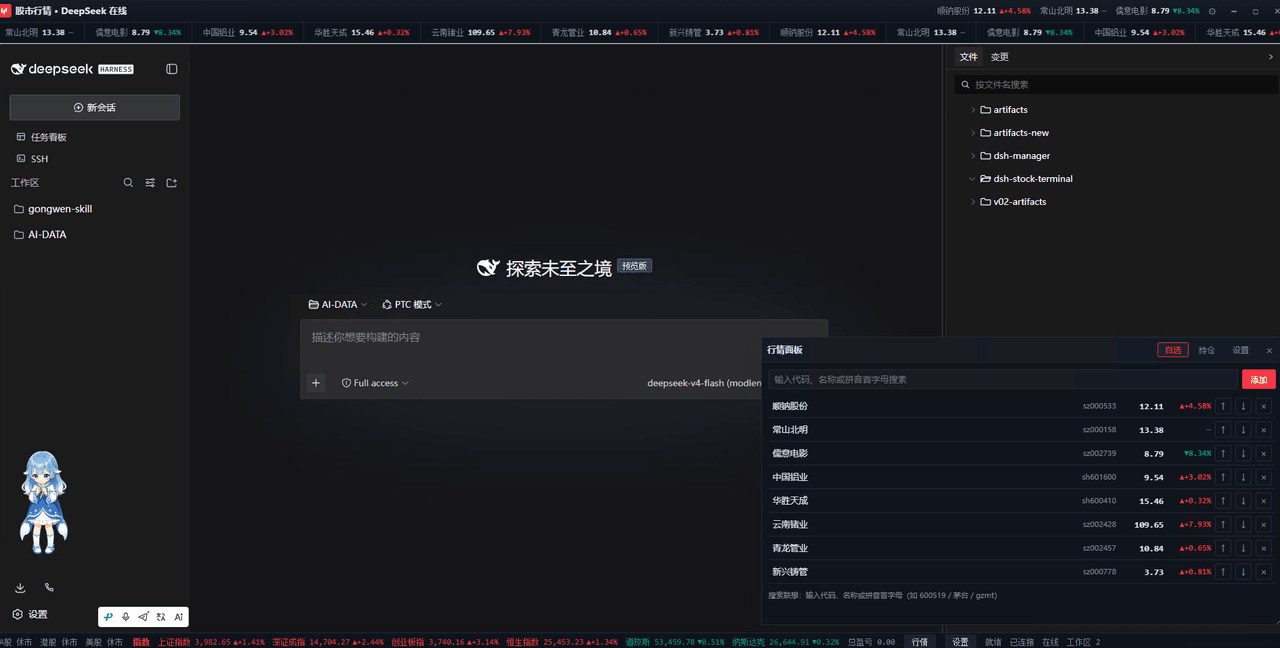 linhut/dsh-stock-terminal
股市行情皮肤+功能插件:DSH Web GUI 全局交易终端视觉 + 实时行情面板(A股/港股/美股/加密/外汇),自选跑马灯、首字母模糊搜索、持仓盈亏管理
linhut/dsh-stock-terminal
股市行情皮肤+功能插件:DSH Web GUI 全局交易终端视觉 + 实时行情面板(A股/港股/美股/加密/外汇),自选跑马灯、首字母模糊搜索、持仓盈亏管理