用 AI 更快写博客文章:完整工作流Writing Blog Posts Faster With AI: A Complete Workflow
速度和质量不一定要二选一。选对流程,AI 能大幅压缩写博客的耗时,而最终发布出来的文章依然带着你自己的语气、读起来顺畅,也经得起谷歌的标准。下面是按步骤拆解的版本。
Speed and quality don't have to be a trade-off. Pick the right workflow and AI will strip hours off your blog writing, yet the published post still carries your voice, reads cleanly for people and meets what Google expects. Below is the step-by-step version.
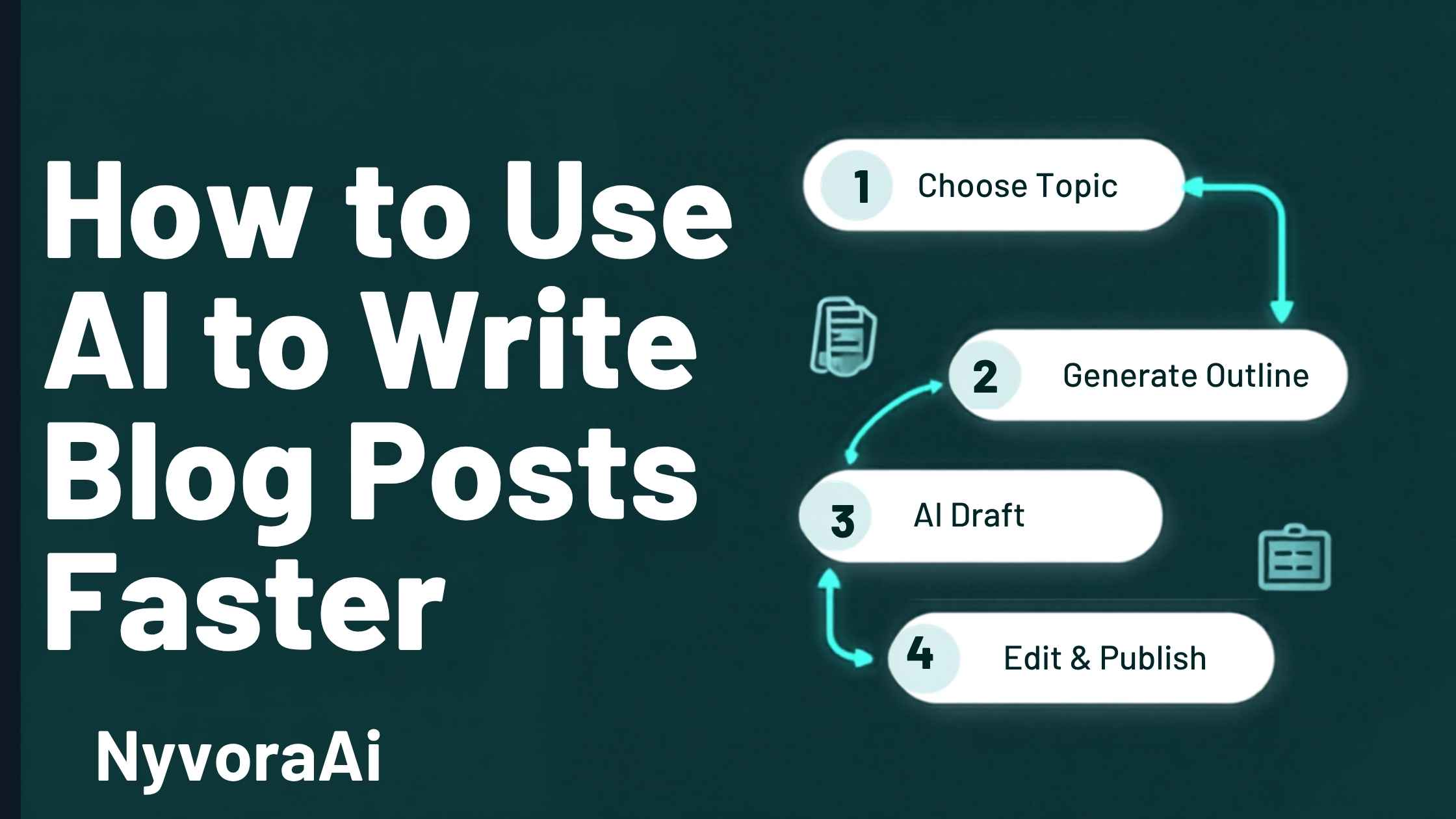
盯着空白文档干坐二十分钟才敲出第一句——有过这种经历的人都清楚,写博客的时间到底消耗在哪儿。慢的很少是「写」这个动作本身,而是反复停顿、重头再来、顺手去查资料,以及一遍遍自我怀疑。AI 并不能替你思考,但它几乎能消除上述所有阻力——省下来的时间正是从这儿来的。
下面这套完整的实操流程,讲的是如何用 AI 加快博客产出:让一篇文章从模糊的想法走到可以发布,只花往常一小部分时间,同时避开读者和谷歌都能一眼识破的平淡、千篇一律的文字。如果你对「如何给 AI 下指令」还很陌生,下面所有内容都适合配合我们这篇 为 AI 工具写出更好的提示词 一起看。
01博客写作到底为什么值得用 AI?
直说就是:想长期把博客更下去,光靠自己几乎撑不住。让人停更的很少是「没灵感」,而是每写一篇花掉的时间远超它应得的,于是「下周一定写」越堆越多。AI 改变的就是这道算式——过去最拖沓的几个环节,查资料、搭提纲、出初稿,从几个小时压缩成几分钟。
先弄清这套系统真正擅长什么,很有必要。大语言模型靠训练数据里的规律来预测并生成通顺文字,这和负责分类、识别的 AI 完全是两回事——比如 AI 如何识别垃圾邮件 里讲的那类模型。写作助手属于生成式一路,理解这个分界(我们在 生成式 AI 与判别式 AI 里展开讲过),就能同时看清它作为写作工具的长处与边界。
优势是快,而且文字通顺。短板在于:什么是真的、什么是新的、你的读者究竟关心什么,你不告诉它,它就一概不知。正因如此,下面的流程只把 AI 当作快速出初稿的引擎,而不是生产成品的机器。
02AI 辅助博客写作的七步流程
按这个顺序走,一个模糊的选题就能变成可发布的成稿,质量还不打折。每一步都有明确职责;漏掉任何一步,写出来的文章往往就开始显得空。
- 1
先确定搜索者真正想要什么
1 先定下一件事:搜索的人想要什么——快速答案、横向对比,还是一套完整教程?这一个判断决定了后面所有内容的样子。
- 2
先出几份候选提纲
2 让 AI 给出几种不同的组织方式,再挑出最贴合真实读者需求的那一种(也可以把两种合并),并按这位读者最需要的顺序排列。
- 3
一个段落一个段落起草
3 一口气索要整篇文章,得到的往往是内容肤浅、彼此重复的段落。一个段落一个段落来,每次给出明确指令,产出会明显有用得多。
- 4
把你自己的经验和例子放进去
4 能不能排上去,往往就差在这一步。加入一个真实案例、一个只有你会知道的数字,或者一个 AI 独自给不出的判断。
- 5
逐条核实具体说法
5 模型可以语气笃定却依然说错。统计数据、名称、日期,以及任何精确得可疑的说法,都要在「发布」二字靠近之前就核实清楚。
- 6
按你的语气和节奏修改
6 把稿子朗读出来。凡是听着像官方通稿的句子一律删掉,让句子长短错落,并清除 AI 反复使用的那些套话。
- 7
补上搜索与 AI 都需要的结构
7 表意清晰的小标题、简短的常见问题、指向站内相关文章的链接,再加上一段直白的总结,能让读者和 AI 系统都更容易理解并展示这篇内容。
03让提示词真正省下时间
含糊的提示词换来含糊的初稿,几乎得从头重写,用 AI 提速的意义也就没了。精确的提示词换来的稿子只需轻度编辑。用例子看这个差距最直观。
规律很清楚:受众、格式、篇幅,再加一条限制条件,全部提前说明。这四样齐了,拿回来的稿子就是可以靠编辑打磨的,而不是必须从零重建的。
04让文字保持人的温度,也保持有用
谷歌其实说得很直白:使用 AI 这件事本身不会让页面被降权;无用、单薄,或者主要为操纵排名而存在、而不是为读者服务,才会。没人要求你把「用过 AI」藏起来——关键在于成品要对得起别人花在上面的那几分钟。
几个具体习惯,决定了文字读起来像人写的,还是像机器填充的。把空泛的说法换成具体的——别说「AI 能省时间」,而要说:过去要花 25 分钟才搭好的提纲,现在大约四分钟就能成形。让句子长短不齐,别全是一个长度往前走。最重要的是,加入模型独自绝不可能给出的东西:一个真实的观点、一次犯错换来的教训,或者只有你亲历过才知道的细节。
还有一点值得记住:写作助手只是生成式 AI 的一个应用分支,和能 作曲、能根据一段文字提示生成图片的工具属于同一类技术。它们确实是很有天赋的模式补全器,但「到底什么才值得说」这个判断,仍然得由人来下。
05让人找到你:SEO、GEO 与 AEO 一起发力
写得快却没人看,等于白写。因此文章要照顾三套彼此重叠的机制:生成式引擎优化(GEO)决定 AI 搜索工具与对话助手如何呈现你;答案引擎优化(AEO)针对精选摘要和直接答案框;而更传统的搜索引擎优化(SEO)仍然决定普通排名的好坏。
实际上,这三者的相互助力远大于相互冲突。每个小节开口就把答案直说出来、小标题老实用描述性措辞而不是玩机灵、结尾配上一块紧凑的常见问题——同一篇文章往往能同时满足三套机制。AI 搜索工具尤其偏爱把事实说白、把说法出处交代清楚的文字,而不是让人读完好幾段铺垫才看到一个观点。
面向搜索引擎
面向 AI 助手
面向答案框
面向手机读者
面向信任信号
面向站内链接
06拖慢你的几个常见错误
07AI 最能帮上忙的几个环节
AI 辅助并不是在每个环节都同样划算。清楚它究竟能加速哪些步骤、哪些不能,才不至于白费力气,硬让工具去做它本就不擅长的事。
- 列提纲——这是 AI 最出彩的地方:几秒钟就给出好几种结构方案,而这些原本要让你对着空白页干耗二十分钟。
- 研究摘要——对已经有所了解的主题,它压缩得很快;但遇到陌生的事实或数据,绝不能只靠它这一个来源。
- 初稿——快速把文字落到纸面很管用,但最终润色、个人语气和真正的洞见都不行。
- 标题与元描述——擅长快速产出一大批备选,剩下的挑选交给你。
- 为清晰度做编辑——用来揪出别扭的措辞很好用,但判断什么才叫有趣、什么叫准确,不能指望它。
下面的模拟器可以粗略估算出 AI 现实中能帮你省下多少写作时间——取决于文章有多长,以及你把流程中多大一部分交了出去。
08大家最常问的问题
怎样才能用 AI 更快地写博客文章?
谷歌会惩罚由 AI 写的博客文章吗?
AI 起草的文章还能在谷歌上排上去吗?
用 AI 写博客文章,哪种做法最快?
借助 AI 写的博客文章,多长才合适?
09结语
用 AI 加快博客写作,绝不是把思考外包给模型。外包出去的是那些缓慢、机械的活,从而把时间换回来,留给只有人才能完成的部分:作出判断、调用亲身经验、持有真正的观点。照着上面七步走,提示词写得具体而不含糊,并且永远不要省掉一次认真的编辑——这样做出来的文章,写得快,也真正值得一读。
在这个过程中,速度和质量从来就不是对立的。真正的堵点一直是那张空白页——而把它挪开,恰恰是 AI 擅长的事。
Twenty minutes of staring at an empty page before the first sentence lands — anyone who has been through that already understands where the hours in blogging disappear to. The act of writing is seldom the bottleneck; stopping and restarting, detouring into research, and endless second-guessing are. Thinking is not something AI takes off your plate. What it does take is nearly all of that drag, and that is precisely where the hours come back.
What follows is the full working method for speeding up blog production with AI — one that carries a post from rough idea to upload-ready in a fraction of the usual time while dodging the bland, interchangeable prose that readers and Google alike now recognise instantly. If instructing AI is new territory for you, everything below goes well with our guide to writing stronger prompts for AI tools.
01What Makes AI Worth Using for Blogging?
Ask plainly and the answer is that keeping a blog going over time is close to impossible unaided. Running dry on ideas is rarely what drives people away; what does is the way a single post swallows far more hours than it deserves, until the pile of "next week, definitely" keeps stacking up. AI redraws that equation. The stages that used to drag — digging up research, shaping an outline, producing a rough draft — collapse from hours into minutes.
Clarity helps here about what these systems genuinely do well. A large language model predicts and produces fluent text by drawing on patterns absorbed from its training data — an entirely different job from the AI that sorts or flags things, such as the models described in how AI flags spam emails. Assistants built for writing belong to the generative family, and grasping that split — unpacked further in generative vs. discriminative AI — accounts for both what they can do for a writer and where they stop.
Fluency, delivered quickly — that is the upside. The downside is that truth, timeliness and your particular readers' concerns are all invisible to it until you supply them. Hence the workflow further down treats AI as a rapid engine for first drafts rather than a machine that outputs finished copy.
02A Seven-Step Workflow for AI-Assisted Blogging
Follow this order and a hazy topic turns into something you can publish, with no drop in quality. Every step earns its place; leave one out and the resulting post is likely to read thin.
- 1
Decide what the searcher actually wants
1 Settle one question first: is the searcher after a fast answer, a side-by-side comparison, or a complete walkthrough? That single call determines the shape of everything downstream.
- 2
Generate several candidate outlines
2 Have AI propose several ways the topic could be organised, then take whichever fits a real reader's needs best — or merge two of them — and arrange the sequence around what that reader needs.
- 3
Build the draft section by section
3 Request the entire post in a single shot and you tend to get shallow sections that repeat themselves. Work section by section, giving precise instructions each time, and the output is markedly more useful.
- 4
Work in your own knowledge and examples
4 Whether the piece ranks often comes down to this step. Bring in a concrete example, a figure only you would know, or a judgement call AI has no way of generating by itself.
- 5
Verify each concrete claim
5 A model can sound utterly sure and still be mistaken. Check figures, names and dates — and anything that seems conveniently exact — long before the word "publish" comes anywhere near it.
- 6
Edit for your voice and pacing
6 Say the draft aloud. Delete whatever sounds like corporate boilerplate, vary your sentence lengths, and strip out the recycled phrasing AI keeps falling back on.
- 7
Add the structure search and AI both need
7 Descriptive headings, a brief FAQ, links to your own related posts and a plain summary all make it easier for people and for AI systems to grasp and surface the piece.
03Prompting in a Way That Saves Real Time
A hazy prompt returns a hazy draft you must rewrite almost from zero, which wipes out the whole reason for bringing AI in. A precise prompt returns something that only needs light editing. The gap shows up fastest through examples.
The pattern is consistent: audience, format, length and one constraint, all named up front. Put those four together and what comes back is a draft you can shape with edits rather than one you have to rebuild from nothing.
04Keeping the Writing Human — and Genuinely Useful
Google has said so plainly enough: having AI in the process is not what gets a page marked down. Being unhelpful, being thin, or existing mainly to game rankings instead of serving a reader is. Nobody is asking you to conceal AI's role — the point is that the finished article should be worth the minutes someone spends on it.
A handful of habits are what separate writing that reads as human from filler that reads as machine output. Trade vague claims for concrete ones — rather than saying AI saves time, say that an outline which once cost you 25 minutes now comes together in roughly four. Keep your sentences uneven so they don't all march along at one length. Above all, put in something the model could never have supplied by itself: a genuine opinion, a lesson that came out of a mistake, or a detail you only know because you were there.
Worth keeping in mind too: writing assistants are simply one application of generative AI at large — the same family of technology behind tools that compose music or turn a text prompt into an image. Gifted pattern-completers, yes, but deciding what is actually worth saying remains a human call.
05Getting Found: SEO, GEO and AEO Working Together
Writing fast counts for nothing if nobody reads the result, so the piece has to be shaped for three overlapping systems. Generative engine optimization (GEO) governs how AI search tools and conversational assistants present you; answer engine optimization (AEO) targets featured snippets and direct-answer panels; and the older discipline of search engine optimization (SEO) still decides ordinary rankings.
In reality the three pull in the same direction far more than they pull apart. Open every section with the answer stated plainly, choose headings that describe rather than tease, and close with a tight FAQ — and the same post tends to satisfy all three at once. AI search tools especially reward writing that says what it means and makes clear where a claim came from, instead of making readers wade through paragraphs of throat-clearing to reach the point.
For Search Engines
For AI Assistants
For Answer Boxes
For Phone Readers
For Signals of Trust
For Links Inside Your Site
06Mistakes That Cost You Time
07The Stages Where AI Helps Most
AI assistance does not pay off equally at every stage. Being clear about which steps it genuinely accelerates — and which it doesn't — stops you burning effort pushing the tool into work it was never built for.
- Outlining — this is where AI shines: several possible structures appear in seconds, work that would otherwise cost you twenty minutes of staring at nothing.
- Research summaries — fast at condensing a subject you already know well, but it must never be the only place you check an unfamiliar fact or figure.
- First drafts — effective at getting text down quickly, poor at final polish, personal voice and real insight.
- Headlines and meta descriptions — excellent at producing a broad set of candidates fast, leaving you the job of picking between them.
- Editing for clarity — handy for spotting clumsy wording, though it is not the thing to trust when judging what is interesting or accurate.
The simulator below gives you a rough estimate of the writing time AI might actually give back, depending on how long your posts run and how much of the process you delegate.
08Questions People Ask Most
What's the way to write blog posts faster using AI?
Does Google punish posts written with AI?
Can a post drafted by AI still rank in Google?
Which method gets a blog post written with AI the quickest?
What length should a blog post written with AI help be?
09The Bottom Line
Writing blog posts faster with AI has nothing to do with outsourcing your thinking to a model. What you outsource is the slow mechanical labour, which buys back hours for the work only a person can do: exercising judgement, drawing on lived experience, holding an actual point of view. Run the seven steps above, prompt with precision rather than vagueness, and never skip a proper editing pass — do that and the posts come out quick to produce and worth the time they ask of a reader.
Speed and quality were never truly at odds in this process. The blank page was always the thing slowing you down — and clearing it aside is precisely what AI does well.